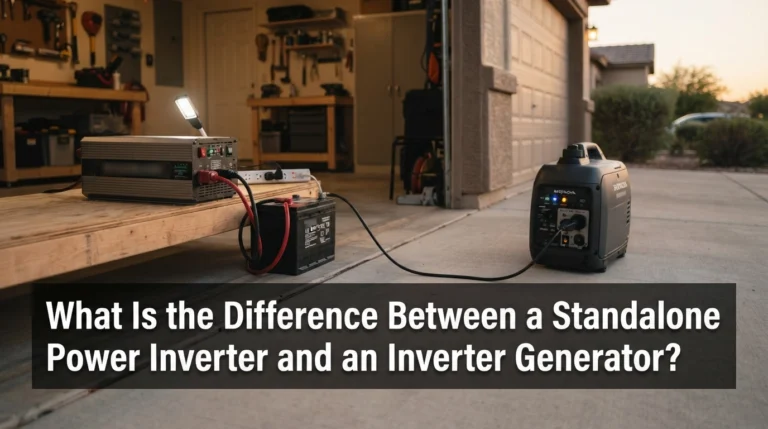
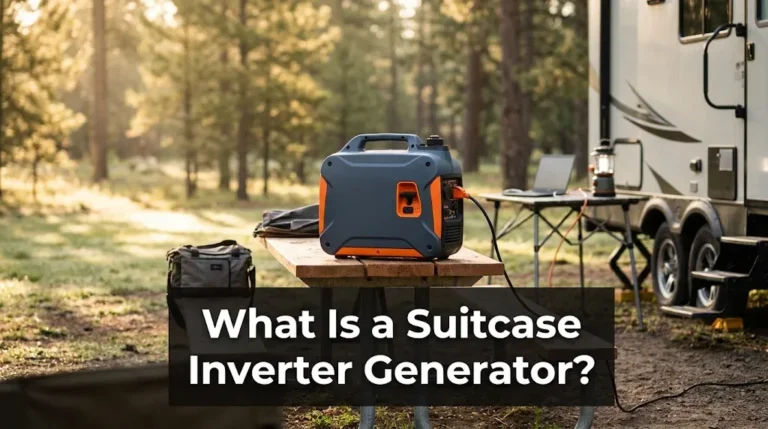
Inverter Generator vs. Regular Generator: What’s the Difference?
Quick Answer
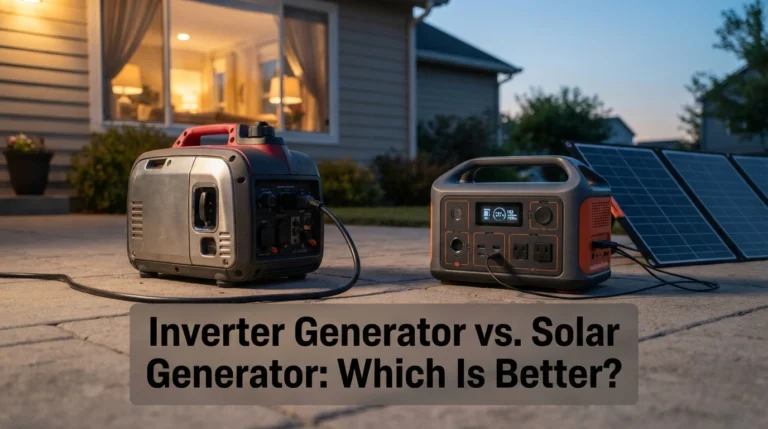
An inverter generator makes cleaner, steadier power and runs quieter at light loads, while a regular generator makes raw power more cheaply and usually offers more watts for the money. Pick an inverter for phones, laptops, a CPAP, or a modern fridge. Pick a regular generator for heavy tools or whole-home backup on a tight budget. Learn how an inverter generator works before you choose.
The core difference in one line
- Power quality: Inverters produce a clean sine wave with low total harmonic distortion, often under 3%.
- Noise: Inverters slow down at light loads, so they are usually quieter than open-frame models.
- Fuel use: Inverters sip fuel at part load, while regular generators run at a fixed speed.
- Price per watt: Regular generators cost less per watt and reach higher outputs more easily.
- Portability: Small inverters are lighter and easier to carry than most conventional units.
Start here
- List your must-run loads first, then match running watts and starting watts.
- If any load is sensitive electronics, put clean power ahead of raw watts.
I’ve helped neighbours, campers, and homeowners sort this choice for years, and the confusion is almost always the same.
Both machines burn fuel and make electricity. The difference is how they shape that electricity, how loud they run, and what they cost to own.
This guide goes deeper than a quick verdict. You’ll see how each type works, what the numbers mean, and which one fits your home, RV, campsite, or job site as of 2026.
In This Guide
- What Is an Inverter Generator?
- What Is a Regular (Conventional) Generator?
- Inverter Generator vs Regular Generator: Side-by-Side Comparison
- How Do They Make Power Differently?
- Which One Is Quieter — and Why Does Noise Matter?
- Which One Is Better for Sensitive Electronics?
- Fuel Use, Runtime, and Eco Mode: What Changes Day to Day?
- Which Generator Fits Your Use? Home, RV, Camping, and Job Site
- What Size Do You Need? Running Watts vs Starting Watts
- Frequently Asked Questions
- The Bottom Line
What Is an Inverter Generator?
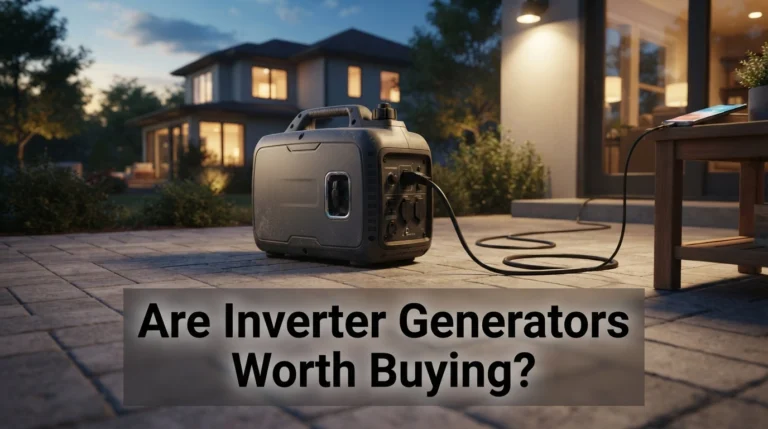
An inverter generator is a portable generator that converts its power twice before it reaches your devices.
That extra step is the whole point. It lets the engine speed vary with the load while the output stays steady.
How an inverter generator works in plain English
The engine spins an alternator and makes raw alternating current, or AC power.
Electronics then turn that AC into direct current, or DC, and back into clean AC again.
A microprocessor controls the final wave. It holds voltage and frequency close to 120 volts and 60 Hz in North America.
What makes it different in daily use?
- Variable speed: The engine slows down when demand drops.
- Clean sine wave: The output looks much closer to grid power.
- Low THD: Total harmonic distortion, or THD, is often under 3% on inverter models.
- Enclosed case: Many small inverters sit inside a plastic shell that muffles sound.
- Parallel capability: Many models can link with a second matching unit for more watts.
THD is a measure of how distorted the power wave is. Lower THD means smoother power for sensitive gear.
Section Takeaway: An inverter generator trades raw size for control, giving you cleaner power, less noise, and better fuel use at light loads.
What Is a Regular (Conventional) Generator?
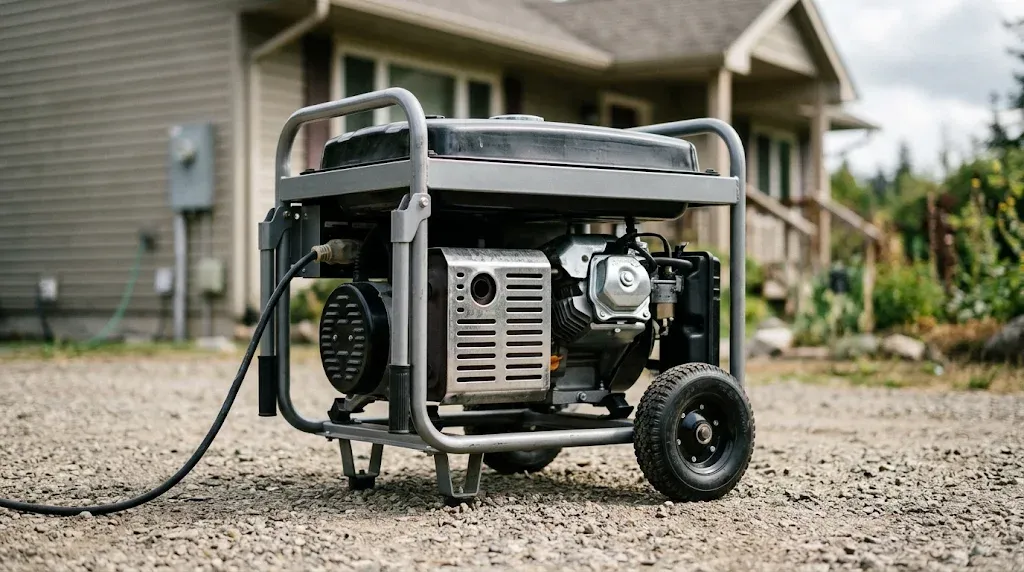
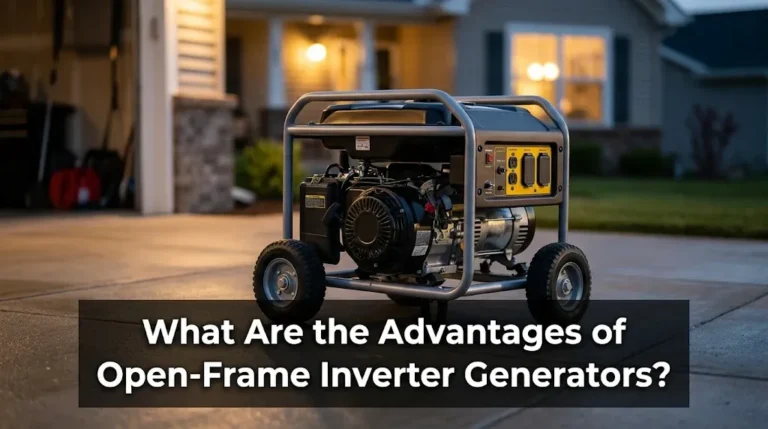
A regular generator is also called a conventional generator or an open-frame generator.
It makes power in one step. The engine drives an alternator directly, with no DC conversion in between.
Why does a regular generator run at a fixed speed?
Frequency depends on engine speed. To hold 60 Hz, the engine must spin at a steady 3,600 rpm.
It stays at that speed even when you plug in only a phone charger. That is why fuel use and noise stay high at light loads.
Where does a regular generator shine?
- More watts for less money: Conventional models often cost far less per running watt.
- Higher outputs: It is easy to find 5,000 to 12,000 running-watt models.
- Simple design: Fewer electronic parts can mean simpler repairs in some cases.
- Heavy loads: Big motors, well pumps, and large tools suit this design.
- Dual fuel and tri-fuel options: Many large models run on gasoline, propane, or natural gas.
The trade-off is power quality. THD on a conventional generator is often 15% to 25%, so check the spec sheet before you plug in sensitive electronics.
Safety note: Run any generator outdoors, at least 20 feet from your home, with the exhaust pointed away from windows, doors, and vents. The U.S. Consumer Product Safety Commission warns that generators can produce deadly carbon monoxide in minutes.
Section Takeaway: A regular generator is the workhorse choice — louder and rougher, but stronger and cheaper per watt.
Inverter Generator vs Regular Generator: Side-by-Side Comparison
Which type wins? It depends on what you plug in.
Use this table to compare the traits that matter most in real use.
| Feature | Inverter Generator | Regular Generator |
|---|---|---|
| Power quality | Clean sine wave, often under 3% THD | Rougher wave, often 15% to 25% THD |
| Noise | Quieter, often 50 to 60 dBA at quarter load | Louder, often 68 to 78 dBA at rated load |
| Fuel use | Throttles down, sips fuel at light loads | Fixed speed, uses more fuel at light loads |
| Typical size | 1,000 to 4,500 running watts | 3,500 to 12,000 running watts |
| Weight | Lighter, often 30 to 110 pounds | Heavier, often 100 to 250 pounds |
| Price per watt | Higher upfront cost | Lower upfront cost |
| Best for | Electronics, camping, RVs, quiet use | Home backup, tools, large motors |
Noise figures above are general ranges, not promises for a specific model. Always check the spec sheet, and note the load and distance used for the rating.
Section Takeaway: Inverters win on quality, noise, and efficiency, while regular generators win on watts per dollar and maximum output.
How Do They Make Power Differently?
The power path is the real difference, not the fuel or the brand.
Once you see the path, the noise, fuel, and THD gaps make sense.
What happens inside an inverter generator?
Fuel burns in the engine, and the engine spins a compact alternator.
The alternator makes high-frequency AC power. That power is rough and changes with engine speed.
Next, a rectifier turns it into DC power. Then an inverter module rebuilds it as clean 120-volt AC.
The engine can slow down because the electronics, not the engine speed, set the final frequency. Learn more in our guide to how inverter generator technology works.
What happens inside a regular generator?
Fuel burns, the engine spins, and the alternator makes AC power in one pass.
There is no rebuild step. The output follows the engine speed directly.
A governor tries to hold speed steady when loads switch on. It works, but voltage can dip and surge for a moment.
Does the difference matter for a fridge or a pump?
Most fridges, pumps, and heaters tolerate rougher power. Their motors and heating elements are forgiving.
Laptops, phones, and medical devices need a steadier wave. That is where the inverter earns its price.
Section Takeaway: An inverter rebuilds power for stability, while a regular generator delivers it straight from the engine — simpler, but less steady.
Which One Is Quieter — and Why Does Noise Matter?
An inverter generator is usually the quieter choice, especially at light loads.
Noise matters more than most first-time buyers expect. It affects sleep, neighbours, and campsite rules.
Why are inverters quieter?
- Slower engine: Eco mode lets the engine idle down when demand is low.
- Enclosed case: The shell blocks and absorbs sound.
- Smaller engine: A 2,000-watt inverter has less to muffle than a 10,000-watt workhorse.
Many small inverters are rated around 50 to 60 dBA at quarter load, measured at 23 feet. Many open-frame models are rated around 68 to 78 dBA.
When does noise decide the purchase?
See our roundup of the quietest portable generators if low noise is your top priority.
Section Takeaway: If you will run it near people, at night, or at a campsite, quiet is not a luxury — it is the deciding feature.
Which One Is Better for Sensitive Electronics?
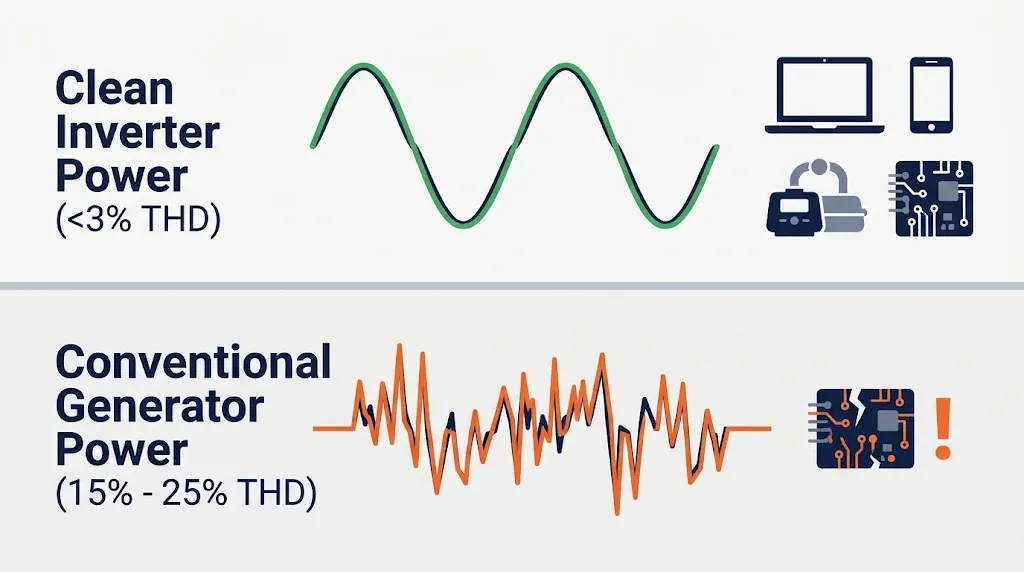
An inverter generator is the safer pick for sensitive electronics.
Clean power protects the boards and chargers that modern life depends on.
What counts as sensitive electronics?
- Phones and laptops: Chargers and batteries prefer a steady wave.
- CPAP machines: Medical gear needs stable voltage.
- Modern fridges and furnaces: Control boards can fault on rough power.
- TVs and routers: Small electronics are easy to damage over time.
- Power tool chargers: Battery chargers often list clean-power needs in the manual.
THD is the number to watch. Under 3% is a common inverter target, and many makers print it on the spec sheet.
Consumer Reports often notes power quality as a key split between inverter and conventional models. Check your device manual too, since some makers warn against high-THD power.
For a deeper look, see our guide to the best portable generator for sensitive electronics.
Section Takeaway: If it has a chip, a board, or a battery, choose clean inverter power first.
Fuel Use, Runtime, and Eco Mode: What Changes Day to Day?
Fuel use is where an inverter quietly saves you money and trips to the gas can.
A regular generator burns fuel at a steady rate. An inverter matches its thirst to the load.
What is eco mode, really?
Eco mode, also called economy mode or eco-throttle, lets the engine slow down at light loads.
With a phone charger plugged in, the engine may barely rise above idle. With a fridge compressor kicking on, it revs up fast.
How long will each type run?
Runtime depends on tank size, load, and fuel type. A small inverter may run 8 to 12 hours at quarter load on a gallon or two.
Safety note: Let the engine cool before refuelling, and store fuel outside in an approved container, away from living spaces. The Centers for Disease Control and Prevention also stresses keeping generators outdoors and far from windows because of carbon monoxide risk.
For broader energy and backup guidance, Energy.gov offers plain-language advice on home energy and emergency preparedness.
Section Takeaway: Eco mode is the inverter’s daily advantage — less fuel, less noise, and fewer refills when loads are light.
Which Generator Fits Your Use? Home, RV, Camping, and Job Site
Start with the place, not the brand. The right type changes with the job.
Here is how I think through the four most common uses.
Home backup during an outage
A regular generator often wins for whole-home backup. You need watts for a fridge, sump pump, furnace blower, and lights at once.
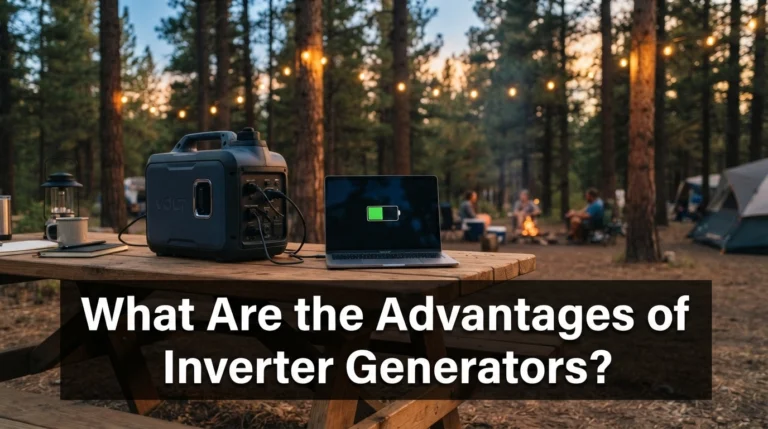
RV and camping
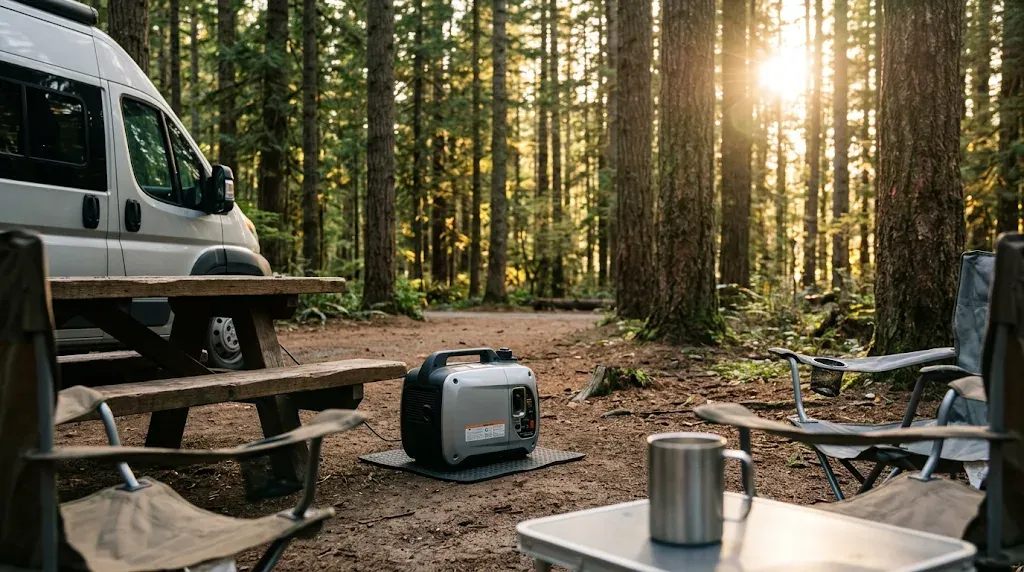
An inverter is the clear pick here. It is quiet, light, and kind to RV air conditioners with soft-start kits and to laptops inside.
A 2,000 to 3,500 running-watt inverter covers most RV essentials. Check your air conditioner starting watts before you buy.
See our best portable inverter generator guide for models sized for RV and camping use.
Tailgating and small-space use
Small inverters shine at tailgates and small gatherings. They are easy to carry, quiet enough to talk over, and safe for phones and speakers.
Job sites and heavy tools
A regular generator usually wins on a job site. Saws, compressors, and welders need surge power and do not care about THD.
Section Takeaway: Home and job sites lean conventional, while RV, camping, and tailgating lean inverter — match the type to the place first.
What Size Do You Need? Running Watts vs Starting Watts
Size is not about the biggest number on the box. It is about two numbers, not one.
Running watts keep a device going. Starting watts, also called surge watts, get a motor spinning.
How do I do the wattage math?
- List running watts: Add up everything you will run at the same time.
- Add the biggest start: Add the highest starting watts among your motor loads.
- Leave a margin: Keep 10% to 20% headroom so the generator is not maxed out.
A fridge may run on 150 watts but need 600 watts to start. A window AC may run on 1,000 watts but need 2,200 watts to start.
What size fits common uses?
- Phones and lights: 1,000 to 2,000 running watts is often enough.
- Fridge plus basics: 2,000 to 3,500 running watts covers most small outage kits.
- RV with AC: 3,000 to 4,500 running watts is a common target.
- Home essentials: 5,000 to 7,500 running watts covers a fridge, pump, and furnace blower.
- Whole-home backup: 10,000 running watts or more, or a standby unit, is often needed.
Learn the full method in our guide to running watts vs starting watts.
Safety note: Use a transfer switch or interlock installed by a licensed electrician for any home hookup, and check your owner’s manual before use.
Section Takeaway: Add running watts, add the biggest start, leave headroom — that simple math prevents most overload trips.
Frequently Asked Questions
Can an inverter generator run a refrigerator?
Yes, in most cases. A small inverter can run a modern fridge, but check its starting watts first. A fridge compressor needs a short surge to start, so leave headroom.
Can a regular generator damage electronics?
It can, over time, if THD is high. Lights and motors are usually fine, but laptops, CPAP machines, and control boards prefer clean inverter power. Check the spec sheet and your device manual.
Is an inverter generator worth the extra cost?
Yes, if you run sensitive electronics, camp near others, or use light loads often. The fuel and noise savings add up. If you only need raw watts for tools, a regular generator is better value.
Can I parallel two inverter generators?
Many inverter models support it with a parallel kit. Two matched units can double your running watts. Use only the kit and models your manual approves.
Do inverter generators use less fuel?
Yes, at light and part loads. Eco mode slows the engine when demand drops. At full load, the gap shrinks, so size the unit to your real loads.
Can I use a regular generator for home backup?
Yes, and many homeowners do. Choose enough running and starting watts, and connect through a transfer switch or interlock installed by a licensed electrician. Never plug a generator into a wall outlet.
Which generator is best for camping?
A small enclosed inverter is usually best for camping. It is quiet, light, and safe for phones and laptops. Check campsite rules on hours and noise before you go.
The Bottom Line
An inverter generator is the better choice when power quality, noise, and fuel use matter most.
A regular generator is the better choice when you need maximum watts for the lowest price.
List your loads, check starting watts, and let sensitive electronics decide the type. That one step will save you from the most common buying mistake.

Hi, I’m Michael Turner. I own a generator workshop in the United States and founded HomeGeneratorBlog to share practical, hands-on guidance about generator installation, maintenance, troubleshooting, safety, and backup power solutions. My goal is to help homeowners make smarter, more confident decisions through clear and reliable information