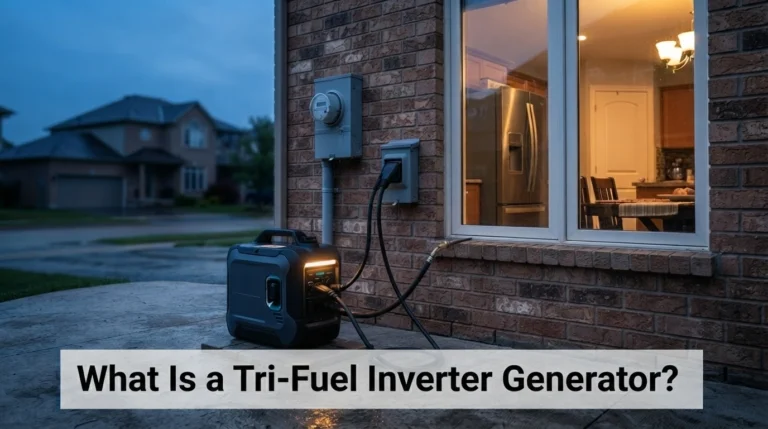
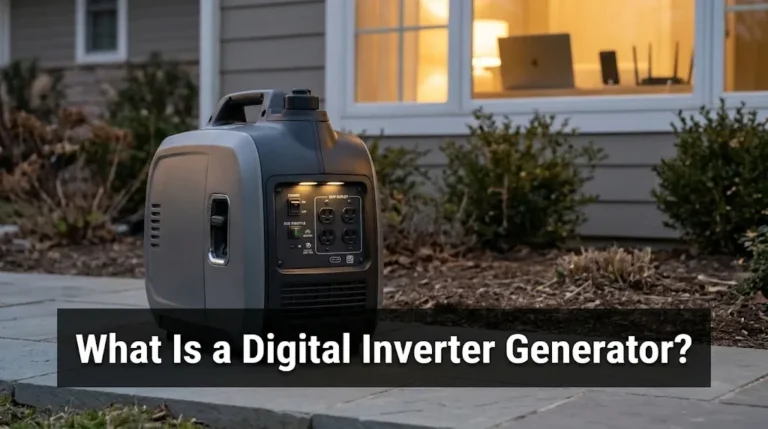
What Is a Suitcase Inverter Generator? Explained
Quick Answer
A suitcase inverter generator is a small, enclosed portable generator with a carry handle, like a suitcase. It makes clean, stable power for phones, laptops, and other sensitive electronics. Learn how an inverter generator works before you size one for your needs.
What makes it a suitcase generator
- Enclosed case: A plastic shell covers the engine and muffles sound.
- Carry handle: One handle lets you lift it with one hand.
- Clean power: It produces a stable sine wave for electronics.
- Small output: Most models run from 1,000 to 4,500 starting watts.
- Quiet running: Many run far quieter than open-frame models.
Best first step
- Add up the running watts, then add the largest starting watts on top.
- Pick a model with headroom above that total.
A suitcase inverter generator looks simple at first glance. You see a small box, a handle, and a few outlets, but that shape pairs inverter power with a portable, enclosed design you can carry without a wheel kit.
This guide explains what the term means, how the power stays clean, and where this size fits. It also covers sizing, common loads, buying checks, and safe use, as of 2026.
In This Guide
- What Is a Suitcase Inverter Generator?
- How Does a Suitcase Inverter Generator Work?
- Suitcase Inverter Generator vs Open-Frame Inverter Generator: What Is the Difference?
- What Size Suitcase Inverter Generator Do You Need?
- What Can a Suitcase Inverter Generator Run?
- How Do You Choose a Suitcase Inverter Generator?
- How Do You Use and Maintain a Suitcase Inverter Generator Safely?
- Frequently Asked Questions
What Is a Suitcase Inverter Generator?
A suitcase inverter generator is a compact, enclosed inverter generator built for carrying by hand. The name comes from its shape and handle, not from a separate power technology.
Most models sit in a hard plastic case with vents, a top handle, and a small fuel tank. The inverter controls the power output so voltage and frequency stay steady under changing loads.
That steady output is called clean power. It suits laptops, phones, tablets, CPAP machines, and other sensitive electronics.
Clean power is often described with THD, or total harmonic distortion. Lower THD means a smoother wave, so check the spec sheet for the exact model.
Why is it called a suitcase generator?
The name is a nickname for the form factor. A rectangular case, a handle, and a weight you can lift give it that look.
Some models weigh under 50 pounds when fueled. Others in the larger suitcase class weigh more, so check the listed weight before you buy.
Is a suitcase generator the same as an enclosed inverter generator?
Yes, in most listings the terms overlap. A suitcase generator is one type of enclosed inverter generator, with the engine inside a sound-dampening case that also protects it during transport.
Section Takeaway: A suitcase inverter generator is an enclosed, carry-by-hand inverter generator, and its value is clean, stable power in a portable case.
How Does a Suitcase Inverter Generator Work?
It works in three stages. The engine makes raw power, the alternator turns it into AC power, and the inverter reshapes it into clean AC power.
That last step is the key difference from a conventional generator. A conventional generator must run fast all the time, while an inverter generator can vary engine speed with load and still hold voltage steady.
Learn more in this guide to inverter generator technology.
What happens when you add a load?
The engine speeds up to meet the demand. The inverter keeps the output wave stable as the load changes.
That is why starting watts matter. A motor may need two to three times its running watts for a second or two at startup.
What does eco-mode do?
Eco-mode, also called economy mode or eco-throttle, lets the engine idle down under light loads. It saves fuel, lowers noise, and stretches runtime on a small tank.
Turn eco-mode off for large motor loads. A slow engine may struggle to meet a sudden surge, so check runtime at 25% and 50% load on the spec sheet.
Safety note: Run a generator outdoors, well away from windows, doors, and vents. Never run it in a garage, tent, or enclosed space, even with the door open.
Section Takeaway: The engine makes power, the inverter cleans it, and eco-mode lets the engine slow down when the load is light.
Suitcase Inverter Generator vs Open-Frame Inverter Generator: What Is the Difference?
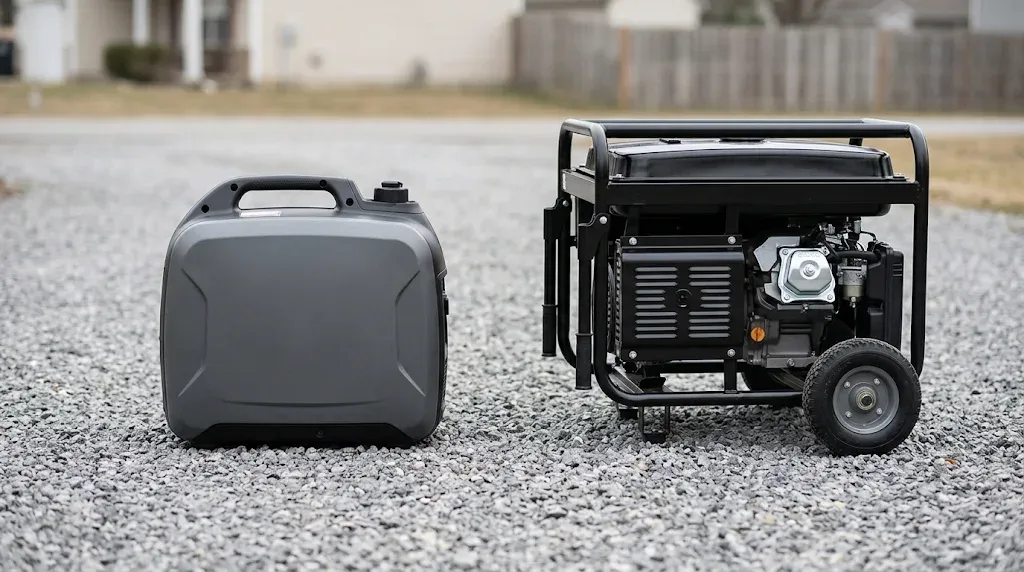
The main difference is the case. A suitcase model encloses the engine, while an open-frame model leaves it exposed on a steel frame.
That one choice shapes noise, weight, size, and cost. Suitcase models suit camping and tailgating, while open-frame models suit larger loads and longer runs.
| Feature | Suitcase inverter generator | Open-frame inverter generator | Conventional portable generator |
|---|---|---|---|
| Enclosure | Enclosed plastic case | Exposed steel frame | Exposed steel frame |
| Typical noise | Quieter at light load | Louder than suitcase models | Often the loudest of the three |
| Typical size | 1,000 to 4,500 starting watts | 3,000 to 12,000 starting watts | 3,000 to 15,000 starting watts |
| Clean power | Yes, low THD | Yes, low THD | No, higher THD in most cases |
| Portability | Carry by hand | Wheels and handles, heavier | Wheels and handles, heavier |
| Best for | Camping, RVs, tailgating, light backup | RV AC, home backup, job sites | Large loads, tools, whole-home backup |
Noise ratings need context. A dB rating at quarter load is not the same as full-load noise next to a tent, so compare the quietest portable generators on the same load and distance.
When does a suitcase model win?
It wins when weight, size, and noise matter more than raw watts. A laptop, a CPAP machine, and a phone charger all benefit from stable inverter power.
When does an open-frame model win?
It wins when you need more watts for longer. An RV air conditioner, a sump pump, and a furnace blower often need that headroom.
Section Takeaway: Choose a suitcase model for quiet, carry-by-hand power, and choose an open-frame model when watts and runtime matter more than weight.
What Size Suitcase Inverter Generator Do You Need?
Start with your loads, not with a brand. List each item, its running watts, and its starting watts.
Running watts are the steady draw. Starting watts are the brief surge when a motor starts.
Add the running watts together, then add the largest starting watts once on top. That total is your minimum, so pick a generator with headroom above it.
What are the common size bands?
- 1,000 to 2,000 watts: Phones, laptops, lights, a small fan, and a CPAP machine.
- 2,000 to 3,000 watts: The list above, plus a small fridge, a TV, and light kitchen loads in turn.
- 3,000 to 4,500 watts: A larger fridge, a microwave in short bursts, and some small RV air conditioners with a soft start.
These bands are guides, not guarantees. Most first-time buyers land in the 2,000-watt class, so compare 2,000-watt portable generators if that fits your list.
How do you do the wattage math?
- Write down each item you want to run at the same time.
- Find its running watts on the label or manual, and add them together.
- Find the highest starting watts in the list and add it once.
- Choose a generator rated above that total for both running and starting watts.
Example: a fridge at 150 running watts and 600 starting watts, plus lights at 100 watts, totals 250 running watts and 850 watts at startup. Start the fridge first, then add the next load.
Can you link two suitcase generators together?
Many suitcase models are parallel-capable. A parallel kit links two matching units so they share the load, giving you more watts without a much larger unit.
Check the manual for the exact kit and pairing rules. Do not pair units from different makers, and do not mix models unless the manual allows it.
Section Takeaway: Add running watts, add the largest starting watts once, and buy above that total with headroom.
What Can a Suitcase Inverter Generator Run?
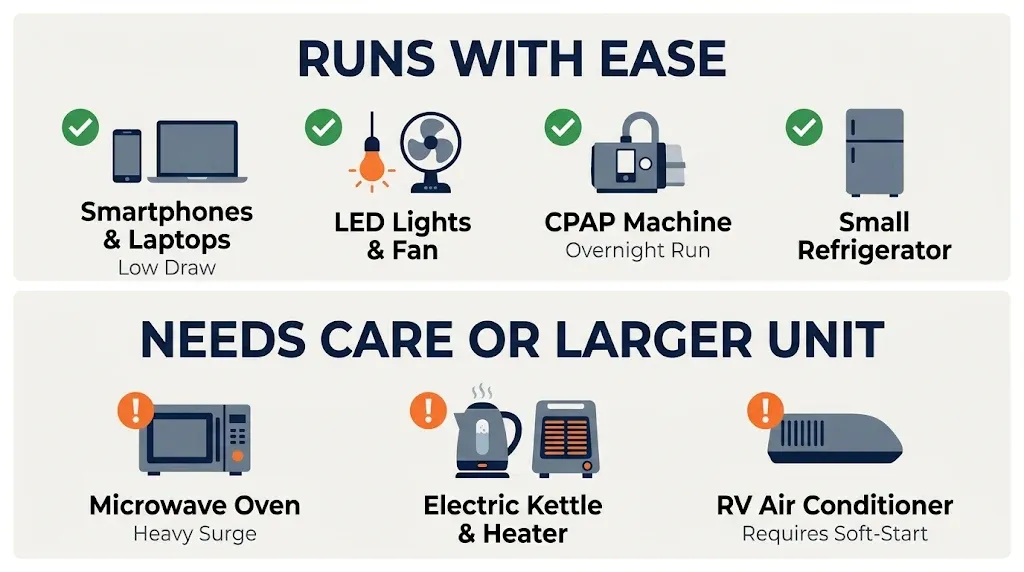
A suitcase inverter generator runs light and medium loads well. It struggles with large heating and cooling loads, so think in watts, not item names.
What does it run easily?
- Phones and laptops: Low draw, and they benefit from clean inverter power.
- LED lights and a small fan: Light loads that leave headroom for other items.
- CPAP machine: A common overnight load, but check the draw with a humidifier on.
- TV and router: A useful pair during an outage, if the total stays low.
- Small fridge: Often fine, if you account for the startup surge.
What needs care or a larger unit?
- Microwave: A short, heavy draw that may use most of the unit’s output.
- Electric kettle or heater: High, steady draws that can overload a small unit fast.
- RV air conditioner: A large startup surge, unless a soft-start device is fitted.
- Power tools: Some tools surge hard at startup, so check both watt numbers.
- Window AC: Possible in the larger suitcase class, but only with careful sizing.
Clean power matters most for sensitive electronics. See our guide to portable generators for sensitive electronics if laptops, medical devices, or audio gear are your main load.
What can it not run?
It cannot run a whole house. A central AC, an electric water heater, and an electric stove need far more watts than this class provides, so a larger portable or standby unit is the right tool there.
Safety note: Use a transfer switch or interlock installed by a licensed electrician for any home hookup. Never backfeed a house through a wall outlet.
Section Takeaway: A suitcase generator covers phones, laptops, lights, a CPAP machine, and a small fridge, but it is not a whole-house power source.
How Do You Choose a Suitcase Inverter Generator?
Choose by watts, noise, weight, runtime, and outlets. Brand comes after those five checks.
Which specs matter most?
- Running and starting watts: Match both numbers to your load list, with headroom.
- Noise in dB: Compare ratings at the same load and distance.
- Weight with fuel: Lift weight matters more than dry weight.
- Runtime at 25% and 50% load: These two points show real use better than one headline figure.
- Tank size: A larger tank means fewer refuels, but it also adds weight.
- THD: Look for low THD for sensitive electronics.
- Outlets: Check for 120V outlets, USB ports, and a 30A RV outlet if you need one.
- Start type: Most small models use recoil start, while larger ones may offer electric start.
- CO safety features: Many newer models include a CO sensor with auto shutoff.
Compare the best portable inverter generators by these same checks.
What about fuel type?
Most suitcase inverter generators run on gasoline, which is easy to find but goes stale in storage. Some larger inverter models offer dual fuel, with propane as a second option that stores longer.
What should you check before you buy?
- Measure your storage space, so the unit fits your car, RV bay, or shed.
- Check the outlet layout against your cords and plugs.
- Read the warranty length and what it covers.
- Check parts and service access for the brand in your area.
Section Takeaway: Match watts, noise, weight, runtime, and outlets to your real use, then compare brands on those same checks.
How Do You Use and Maintain a Suitcase Inverter Generator Safely?
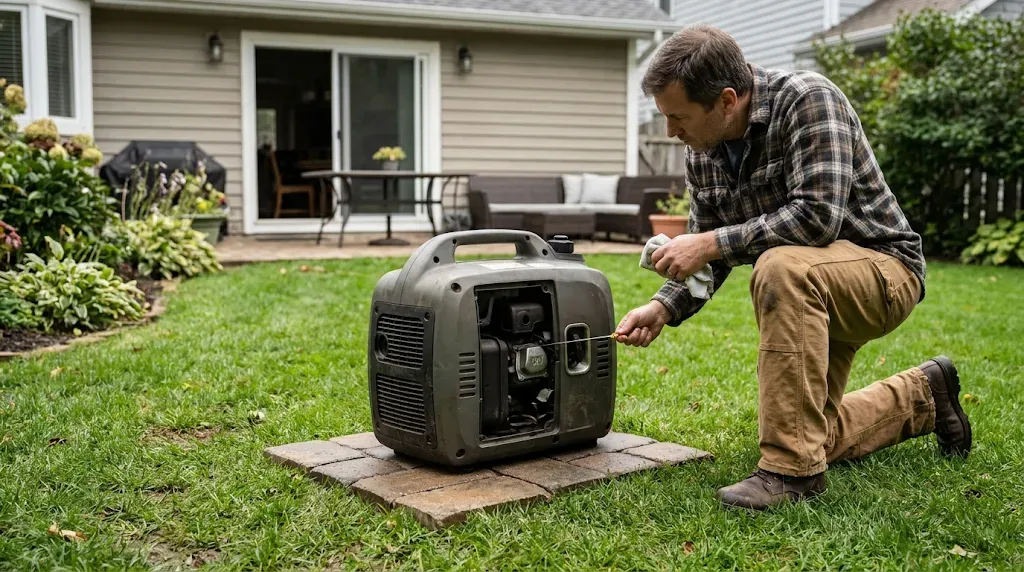
Safe use starts before you pull the starter cord. Place the unit outdoors, on level ground, with the exhaust pointed away from people and buildings, and never cover a running generator.
Where should you place it?
Place it at least 20 feet from your home, tent, or RV, with the exhaust facing away. That distance is the guidance safety agencies commonly give for portable generators.
Keep windows, doors, and vents closed on the side facing the unit. Carbon monoxide is colorless and odorless, so use a battery-powered CO detector where you sleep.
The U.S. Consumer Product Safety Commission publishes generator safety guidance. The Centers for Disease Control and Prevention covers carbon monoxide risks.
Safety note: Never run a generator indoors, in a garage, or in a tent. Run it outdoors only, well away from windows, doors, and vents.
How do you start and stop it?
- Check the oil and fuel level before each use.
- Move the fuel valve to open and set the choke as the manual directs.
- Start the engine, let it settle, then set eco-mode for the load.
- Add loads one at a time, starting with the largest motor load.
- To stop, remove loads first, let the engine run briefly, then switch it off.
- Close the fuel valve and let the unit cool before you store it.
What maintenance does it need?
- Oil: Check it before each use, and change it on the schedule in your manual.
- Air filter: Clean or replace it when it looks dirty.
- Spark plug: Inspect it at the manual interval, and replace it when worn.
- Fuel: Use fresh fuel, and treat stored fuel with stabilizer if the manual allows it.
- Storage: Run it dry or drain fuel for long storage, per your manual.
Stale fuel is a common cause of hard starting. Fresh fuel and proper storage often avoid that repair.
The U.S. Environmental Protection Agency covers fuel and emissions, and the U.S. Department of Energy covers home energy use.
Section Takeaway: Place it outdoors and far from buildings, add loads one at a time, and keep oil and fuel fresh.
Frequently Asked Questions
Is a suitcase inverter generator good for camping?
Yes, for most camping loads it is a good fit. It is quiet and light, and it powers phones, lights, a small fridge, and a CPAP machine.
Can a suitcase inverter generator run a refrigerator?
Yes, many can run a small or standard fridge, if you size for the startup surge. Add its running watts plus its starting watts to your total.
Can a suitcase inverter generator run an RV air conditioner?
Some larger suitcase models can, but many small ones cannot. An RV AC needs a large startup surge, so check both watt numbers and consider a soft-start device.
How quiet is a suitcase inverter generator?
Many are rated in the 50s dB at quarter load, which is quieter than most open-frame models. Real noise depends on load, eco-mode, and distance.
Can you run a suitcase inverter generator in the rain?
No, you should not run it in open rain without proper shelter. Keep it dry under a roof-style cover that leaves airflow open on all sides, and never enclose a running generator.
Do suitcase inverter generators need a transfer switch?
Yes, for any home hookup you need a transfer switch or interlock installed by a licensed electrician. For camping, you can plug items directly into the generator outlets with suitable cords.
If a suitcase inverter generator fits your loads, it is hard to beat for quiet, portable power. Size it with headroom, place it outdoors and far from buildings, and keep the fuel fresh.

Hi, I’m Michael Turner. I own a generator workshop in the United States and founded HomeGeneratorBlog to share practical, hands-on guidance about generator installation, maintenance, troubleshooting, safety, and backup power solutions. My goal is to help homeowners make smarter, more confident decisions through clear and reliable information