What Is a Tri-Fuel Inverter Generator?
Quick Answer
A tri-fuel inverter generator is an inverter generator that can run on gasoline, propane, and natural gas. It makes clean, stable power with total harmonic distortion (THD) under 3%, so it is safe for phones, laptops, and other sensitive electronics. Read our tri-fuel portable generator guide if you want the full fuel-by-fuel breakdown.
Why the third fuel matters
- Three fuel choices: You can switch fuels when one runs out, goes stale, or costs more.
- Clean sine wave power: The inverter rebuilds the power into a smooth sine wave for electronics.
- Quieter, steadier running: The engine slows down under light loads instead of racing at full speed.
- Lower output on gas: Propane and natural gas usually give 10–20% less power than gasoline, so check the spec sheet.
- Best for outages: It suits homeowners who want backup power without depending on one fuel alone.
Start here
- Add up your running watts first, then check the starting watts of your largest motor.
- Pick the fuel you can store safely and refill easily in your area.
I’ve run a fridge and a CPAP through a multi-day outage, and the fuel question always mattered more than the brand on the side.
This guide goes deeper than a one-line definition. You’ll learn how the three fuels work, what each one costs you in power, and when a tri-fuel inverter generator is worth the extra weight and price.
In This Guide
- What Is a Tri-Fuel Inverter Generator?
- How Does a Tri-Fuel Inverter Generator Work?
- What Are the Three Fuels, and How Do They Compare?
- Tri-Fuel Inverter Generator vs Dual-Fuel Inverter Generator
- How Much Power Do You Get on Each Fuel?
- When Does a Tri-Fuel Inverter Generator Make Sense?
- How Do You Switch Fuels Safely?
- What Should You Check Before You Buy One?
- How Do You Maintain a Tri-Fuel Inverter Generator?
- Frequently Asked Questions
What Is a Tri-Fuel Inverter Generator?
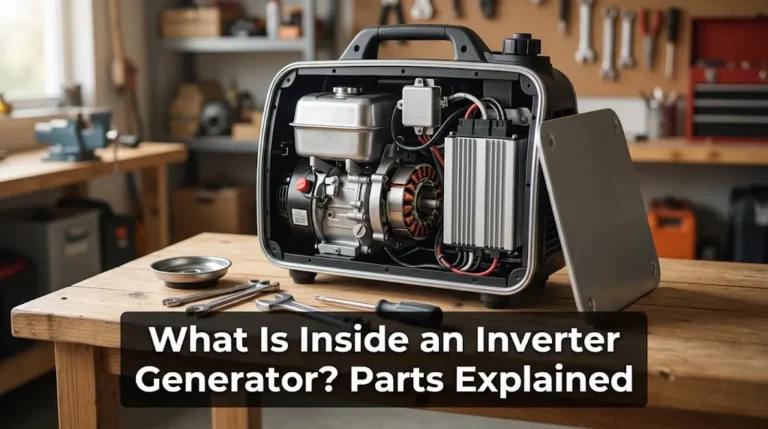
An inverter generator is a portable generator that makes raw AC power, turns it into DC power, then rebuilds it into clean, stable AC power.
A tri-fuel inverter generator adds one more choice to that design. It can burn gasoline, propane, or natural gas, and you pick the fuel that fits the moment.
Think of it as two ideas joined together. The inverter part protects your electronics, and the tri-fuel part protects your fuel supply.
That split matters in a real outage. Gas stations can close, lines can stretch for hours, and stored gasoline can go stale in a few months.
Propane stores far longer than gasoline. Natural gas, where you have a home line, needs no cans or trips at all.
What does “tri-fuel” actually mean?
Tri-fuel means three fuels, not three engines. One engine runs on all three, with a fuel selector and separate feeds for each type.
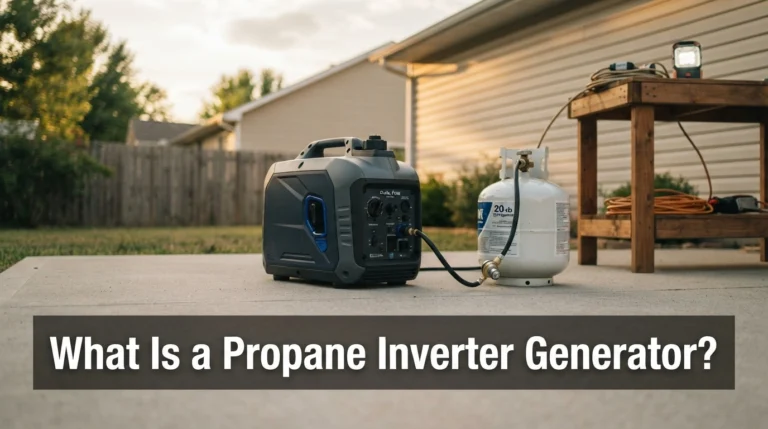
Gasoline flows from the tank through the carburetor. Propane and natural gas flow through a regulator and a gas inlet instead.
You do not mix fuels at the same time. You run one fuel, stop the engine, switch the selector, then start on the next fuel.
What does “inverter” add?
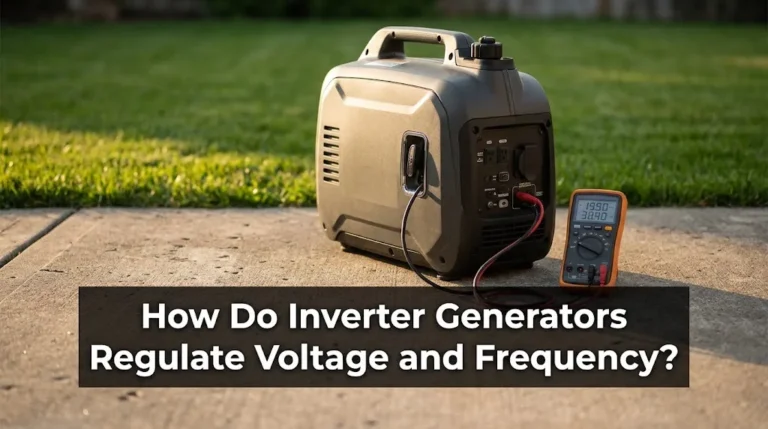
An inverter generator controls voltage and frequency with electronics, not engine speed alone. That control keeps the output steady when loads switch on and off.
Most inverter generators hold total harmonic distortion, or THD, under 3%. THD measures how far the power wave strays from a clean sine wave.
Conventional open-frame generators often run at 10–25% THD, though some sources list 6–25% for conventional models. That rougher power can stress laptops, TVs, and medical devices.
Section Takeaway: A tri-fuel inverter generator gives you clean power for electronics plus a backup plan when one fuel runs out.
How Does a Tri-Fuel Inverter Generator Work?
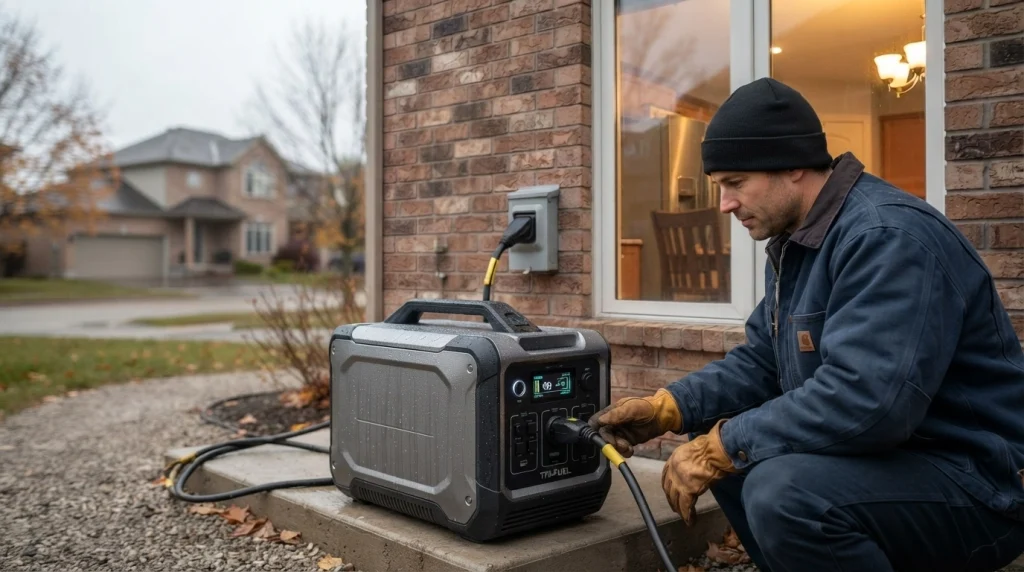
The process has three steps, and the fuel choice changes only the first one. The engine burns fuel, the alternator makes raw AC power, and the inverter cleans it up.
That path is called AC-DC-AC. It sounds technical, but the idea is simple: make rough power, fix it, then send out smooth power.
Step 1: The engine burns your chosen fuel
Gasoline, propane, or natural gas all spin the same engine. Each fuel reaches the engine through its own path and regulator.
The engine speed changes with the load. A light load means a slower, quieter engine, while a heavy load speeds it up.
Step 2: The alternator makes raw AC power
The spinning engine drives an alternator, which makes alternating current. That raw power is not yet clean enough for sensitive gear.
Its voltage and frequency can wobble as loads change. The inverter stage exists to fix that wobble.
Step 3: The inverter rebuilds clean power
The inverter turns the raw AC into DC, then back into AC at a steady 120 volts and 60 Hz. The result is a clean sine wave, the smooth shape mains power should have.
Eco mode, also called eco-throttle, lets the engine idle down further under light loads. It saves fuel and cuts noise, but it can lag for a split second when a large motor starts.
I learned that lag during a cold night when a window AC kicked on. The generator surged, the lights dipped, and then it settled, so I now switch eco mode off for motor-heavy loads.
Safety note: Run any generator outdoors, at least 20 feet from your home, with the exhaust pointed away from windows, doors, and vents.
Section Takeaway: The fuel feeds the engine, but the inverter decides how clean the power that reaches your devices will be.
What Are the Three Fuels, and How Do They Compare?
No fuel wins on every point. Gasoline is easy to find, propane stores well, and natural gas never needs a refill trip.
The right choice depends on your outage pattern, your storage space, and your local fuel prices. Compare them on power, storage, and hassle before you buy.
| Fuel | Typical power | Storage | Best for |
|---|---|---|---|
| Gasoline | Full rated power | Goes stale in months; use stabilizer | Short outages, camping, job sites |
| Propane | About 10% less than gasoline | Stores for years in a sealed tank | Long storage, RVs, storm prep |
| Natural gas | About 10–20% less than gasoline | No storage; piped to your home | Long home outages with a gas line |
Gasoline: most power, most upkeep
Gasoline gives you the full rated watts on the spec sheet. It is also the easiest fuel to buy in normal times.
Its weakness is storage. Gasoline can gum up a carburetor, so run the carb dry or use stabilizer if you store the unit for months.
Propane: clean burn, long shelf life
Propane burns cleaner than gasoline and leaves less carbon buildup. A sealed propane tank can sit for years without going stale.
It does cost you some power, often around 10%. Cold weather can also cut tank pressure, so keep tanks warm and upright.
Natural gas: endless supply, lower power
Natural gas needs a home gas line and a proper hookup. Once connected, you do not haul cans or swap tanks.
It usually gives the lowest output of the three, often 10–20% below gasoline. A licensed plumber or gas fitter should make the connection, and local codes may apply.
Safety note: Never connect a generator to a home gas line yourself unless you are qualified and local rules allow it; a leak can be far more dangerous than a dead fridge.
Section Takeaway: Gasoline gives full power, propane gives long storage, and natural gas gives an endless supply at lower output.
Tri-Fuel Inverter Generator vs Dual-Fuel Inverter Generator
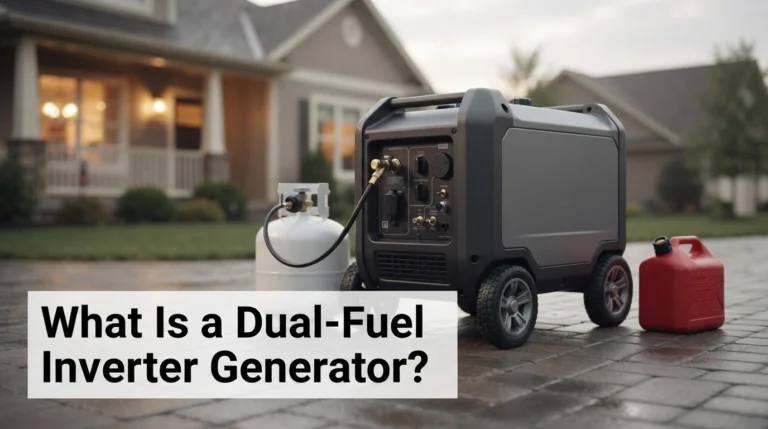
A dual-fuel inverter generator runs on gasoline and propane. A tri-fuel model adds natural gas as the third option.
That one extra fuel changes the outage math. Propane still runs out, but a home gas line does not need refilling.
Read our dual-fuel portable generator guide if you want the two-fuel version explained on its own. The core inverter tech is the same in both types.
When is dual-fuel enough?
Dual-fuel is enough when you can store a few propane tanks and refill them. It costs less, weighs less, and has fewer fittings to maintain.
Campers and RV owners often stop here. They carry propane anyway, and they rarely have a natural gas line at a campsite.
When is tri-fuel worth it?
Tri-fuel is worth it when outages last days and gas stations may close. A home natural gas line keeps the fridge cold after the propane tanks run dry.
It also suits homes that already use natural gas for heat or cooking. The hookup cost is easier to justify when the line is already there.
- Choose dual-fuel if you camp, travel, or want a simpler, lighter unit.
- Choose tri-fuel if you prepare for multi-day home outages and have a gas line.
- Skip both if you only need short, light backup and a single-fuel inverter model covers your loads.
Section Takeaway: Dual-fuel covers most buyers, while tri-fuel pays off when a home gas line can carry you through a long outage.
How Much Power Do You Get on Each Fuel?
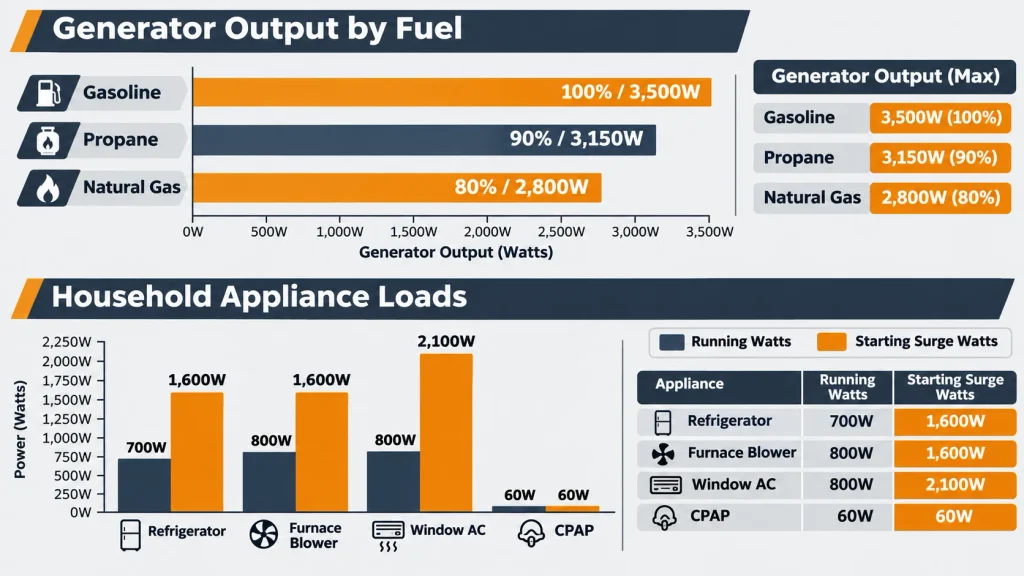
Start with two numbers: running watts and starting watts. Running watts are what a device uses while it runs, and starting watts are the short surge when a motor starts.
A fridge may run at 700 watts but need 1,200 watts to start. That surge is why so many buyers pick a generator that is too small.
Check the spec sheet for each fuel. Most tri-fuel models list a lower running wattage on propane and natural gas than on gasoline.
A worked example for a home outage
Picture a winter outage with a 3,500 running-watt inverter generator. On gasoline it gives 3,500 running watts, on propane about 3,150, and on natural gas about 2,800.
Now add the loads. A fridge at 700 running watts, a furnace blower at 800, a CPAP at 60, LED lights at 60, and phone charging at 20 add up to 1,640 running watts.
That total fits all three fuels with room to spare. The pinch comes at startup, when the fridge and furnace blower may surge together.
Stagger those starts by a few seconds. Turn on the fridge, wait for it to settle, then start the furnace blower.
| Load | Running watts | Starting watts |
|---|---|---|
| Refrigerator | 600–800 | 1,200–2,000 |
| Furnace blower | 750–900 | 1,300–2,000 |
| Window AC, 8,000 BTU | 700–900 | 1,800–2,500 |
| CPAP machine | 40–100 | 40–100 |
| Laptop and phone charging | 50–100 | 50–100 |
These are typical ranges, not guarantees for one model. Your fridge label, furnace manual, and generator spec sheet give the exact numbers.
Leave a 20% safety margin if you can. A generator that runs at full load all night will be louder, hotter, and shorter-lived than one running at 70%.
Section Takeaway: Size for starting watts on your weakest fuel, not for running watts on gasoline alone.
When Does a Tri-Fuel Inverter Generator Make Sense?
It makes sense when fuel supply is your main risk. It makes less sense when weight, price, or simple camping power is the priority.
Ask yourself how long your outages last. A two-hour outage needs a different plan than a three-day one.
Home backup during long outages
Long outages are the clearest case. You can start on gasoline, switch to propane when the tank runs low, then move to natural gas for the long stretch.
That chain buys you time without a fuel run. It also keeps the fridge, furnace blower, and CPAP running while you wait for power to return.
RV and camping use
RV owners gain less from the third fuel. Most campsites offer propane, but few offer a natural gas hookup.
A tri-fuel model still works fine for RV use. It is just heavier and pricier than a dual-fuel model that does the same camping job.
Job sites and tailgating
Job sites need simple, rugged power. Gasoline is easy to carry there, and propane tanks add bulk.
Tailgating has the same trade-off. A smaller, lighter inverter generator often beats a tri-fuel unit for a few hours of fun.
Section Takeaway: Buy tri-fuel for long home outages, and buy simpler when your trips are short and your fuel is easy to carry.
How Do You Switch Fuels Safely?
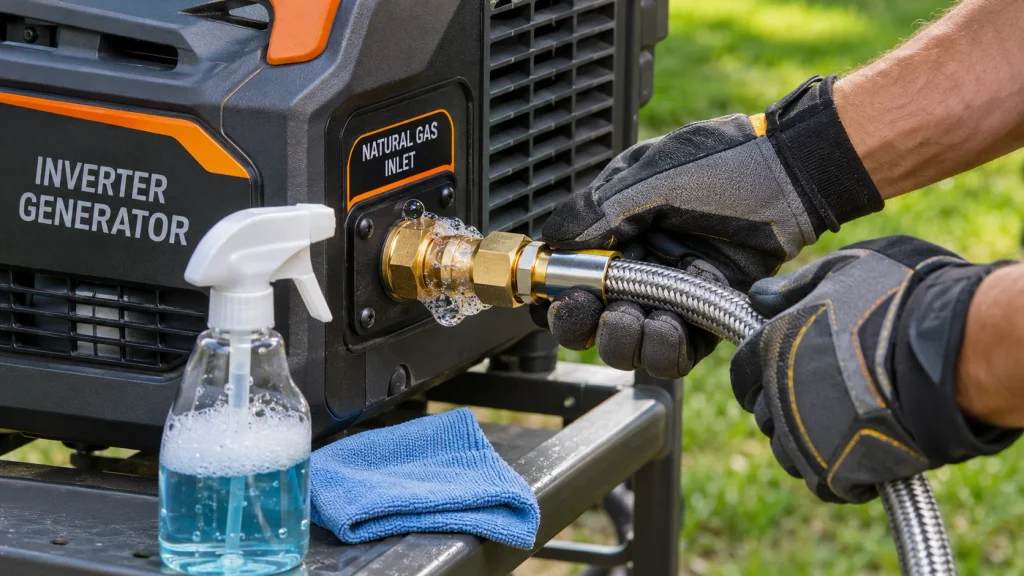
Switching fuels is simple, but the order matters. Never switch while the engine is running, and never force a fitting that does not seat cleanly.
Your owner’s manual gives the exact steps for your model. Use it as the final word, even if a video shows a shortcut.
- Stop the engine and let it cool for a few minutes before you touch any fuel line.
- Close the fuel valve for the fuel you just used, then disconnect it if the manual says to.
- Connect the next fuel and check the fitting for leaks with soapy water, never with a flame.
- Move the selector to the new fuel, then start the engine as the manual directs.
- Check the load before you plug devices back in, since output may be lower on gas.
Propane tanks should sit upright, outdoors, and away from the exhaust. Natural gas needs a shutoff valve you can reach fast.
Keep a carbon monoxide detector with fresh batteries in your home during any outage. The CDC carbon monoxide guidance explains why CO is so dangerous: you cannot see it or smell it, and it can build up fast indoors.
Our portable generator carbon monoxide safety guide covers placement and detector use in more detail.
Safety note: Run generators outdoors and well away from windows, doors, and vents, and never run one in a garage, even with the door open.
Section Takeaway: Stop the engine, switch the selector, check for leaks, then restart, and never rush a fuel change.
What Should You Check Before You Buy One?
Price and watts get the most attention, but the small details decide whether you will enjoy the unit. Check the outlets, the noise, and the gas fittings before you commit.
As of 2026, most tri-fuel inverter models sit in the mid-size portable range. They are heavier than single-fuel inverter models of the same watts.
Power, outlets, and parallel capability
Match the running watts to your loads on propane, not just on gasoline. That lower number is the one you will live with in a long outage.
Look for the outlets you need: household 120V, a 30A RV outlet, and USB ports for phones. Parallel capability lets you link two matching units later for more power.
Noise, weight, and runtime
Check the dB rating and the distance it was measured at, since dB numbers mean little without that distance. A unit rated at 58 dB at 23 feet is not the same as one rated at 58 dB at 7 feet.
Weight matters more than most buyers expect. A 100-pound unit is a two-person lift, so check for wheels and a folding handle.
Runtime at 25% load tells you more than runtime at full load. Most home backup use sits well below full load for hours at a time.
Gas fittings and warranty
Confirm what hoses and regulators come in the box. A missing propane hose or natural gas quick-connect can add cost and delay.
Check the warranty length and what it covers for the fuel system. The U.S. Consumer Product Safety Commission also publishes generator safety recalls and guidance worth a quick check before you buy.
See our best tri-fuel portable generator roundup if you want to compare models by watts, weight, and features.
Section Takeaway: Buy for your weakest fuel, your real outlets, and your ability to lift and store the unit.
How Do You Maintain a Tri-Fuel Inverter Generator?
Tri-fuel models need the same care as other inverter generators, plus a little extra for the gas system. The gas fittings, hoses, and regulator need regular checks.
A short routine after each use saves you from a dead generator when the next storm hits. I keep mine on a simple checklist taped inside the storage box.
After each use
- Run the carb dry if you used gasoline, or drain it per the manual.
- Check hoses and fittings for cracks, wear, or loose clamps.
- Let it cool before you cover it or put it away.
Every few months
- Change the oil per your manual, usually after the first 20–30 hours, then at regular intervals.
- Clean or replace the air filter, especially after dusty job-site use.
- Test-start the unit on each fuel you plan to use, so a bad hose does not surprise you in an outage.
- Check the spark plug and replace it when the manual says to.
Store propane tanks outdoors, upright, and away from heat. Store gasoline in an approved can, with stabilizer, and away from living spaces.
For deeper care tips, see our inverter portable generator guide and our propane portable generator guide. The U.S. Department of Energy also offers general backup-power and energy guidance.
Safety note: Use a transfer switch or interlock installed by a licensed electrician for any home hookup, and never backfeed power through a household outlet.
Section Takeaway: Maintain the gas system as carefully as the engine, and test every fuel before you need it.
Frequently Asked Questions
Can a tri-fuel inverter generator run on all three fuels at once?
No, it runs on one fuel at a time. You stop the engine, switch the selector, then start on the next fuel.
Does a tri-fuel inverter generator use more fuel than a dual-fuel model?
Not at the same load, but output drops on propane and natural gas. You may need a larger unit to match the gasoline watts you want.
Is a tri-fuel inverter generator safe for sensitive electronics?
Yes, when it is a true inverter model with THD under 3%. That clean power suits laptops, phones, TVs, and CPAP machines.
Can I connect a tri-fuel inverter generator to my home natural gas line?
Yes, with the right hookup and local approval. A licensed plumber or gas fitter should make the connection and check for leaks.
How long does propane last in storage?
Propane can last for years in a sealed, upright tank stored outdoors. Gasoline, by contrast, can go stale in a few months without stabilizer.
Do tri-fuel inverter generators cost more than dual-fuel models?
Yes, they usually cost more and weigh more. The extra regulator, fittings, and selector add cost, so buy tri-fuel only if you will use the third fuel.
A tri-fuel inverter generator is not the cheapest or lightest choice. It is the choice for a homeowner who wants clean power and a fuel plan that does not end when one tank runs dry.
If your outages last days, you have a natural gas line, and you want to keep a fridge, furnace blower, and CPAP running, this type earns its place. Size it on your weakest fuel, test every fuel before the storm, and keep it 20 feet from your home.

Hi, I’m Michael Turner. I own a generator workshop in the United States and founded HomeGeneratorBlog to share practical, hands-on guidance about generator installation, maintenance, troubleshooting, safety, and backup power solutions. My goal is to help homeowners make smarter, more confident decisions through clear and reliable information