What Features Should You Look for When Buying an Inverter Generator?
Quick Answer
Start with size, clean power, noise, runtime, and safety. Match running watts vs starting watts to your real loads, pick a model with low total harmonic distortion for electronics, and check the decibel rating, fuel type, outlets, and carbon monoxide shutoff before you buy.
Check these five features first
- Right size: Add up running watts, then add the highest starting watts for one motor at a time.
- Clean power: Look for low THD, usually under 3%, for laptops, phones, and medical devices.
- Low noise: Compare decibel ratings at the same load and distance, not just the lowest number on the box.
- Long runtime: Check runtime at 25% load with eco mode on, plus tank size and fuel type.
- Real safety: Choose CO shutoff, low-oil shutdown, overload protection, and covered outlets.
I’ve run inverter generators through multi-day outages, quiet campsites, and noisy job sites. I’ve also watched buyers pick the wrong size, then wonder why the fridge kept tripping the overload light.
This guide goes deeper than a spec sheet. You’ll learn how to size one, read noise and runtime numbers honestly, and spot the features that matter after the first year.
In This Guide
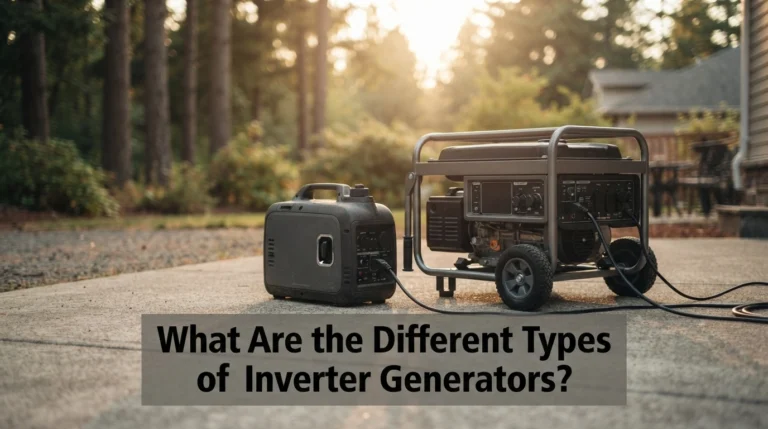
- What Is an Inverter Generator, and How Is It Different?
- How Much Power Do You Really Need?
- How Clean Does the Power Need to Be?
- How Quiet Should an Inverter Generator Be?
- What Fuel Type, Tank Size, and Runtime Matter Most?
- Which Outlets, Starting Options, and Parallel Capability Do You Need?
- How Portable Should It Be, and What About Build Quality?
- What Safety Features Should You Never Skip?
- How Do You Compare Inverter Generators Side by Side?
- Frequently Asked Questions
What Is an Inverter Generator, and How Is It Different?
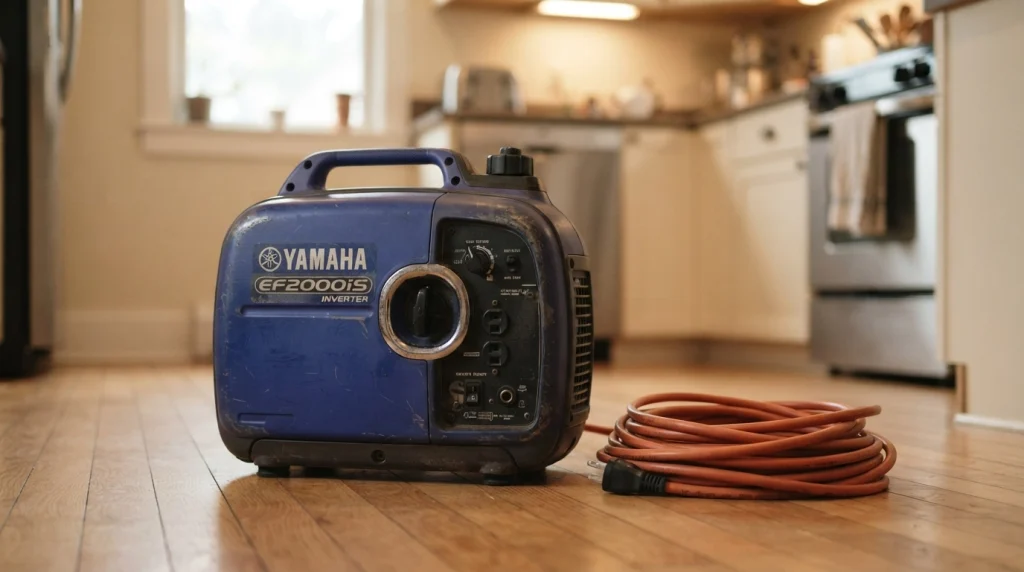
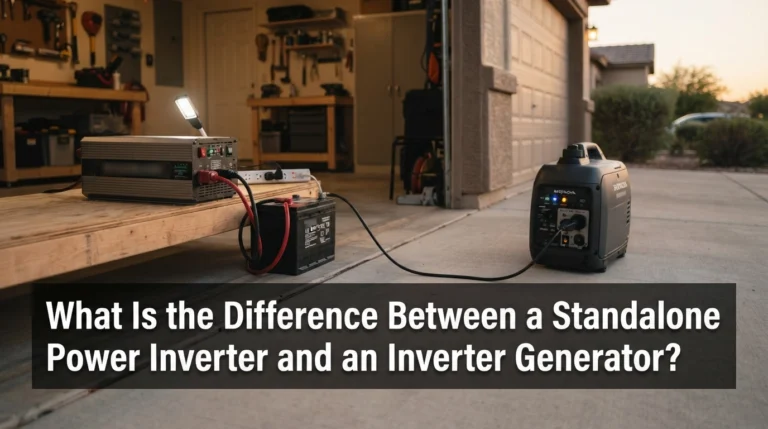
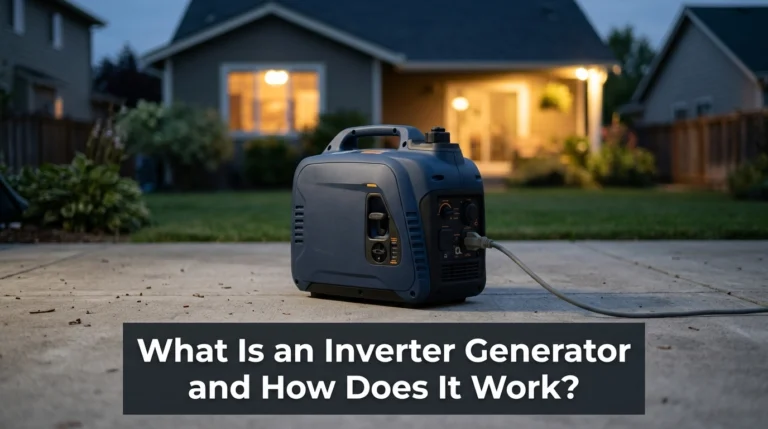
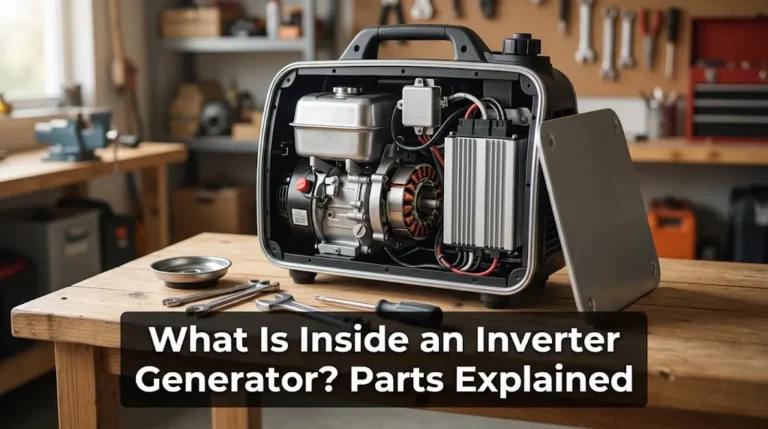
An inverter generator is a portable generator that makes clean, stable power for sensitive electronics. It creates AC power, converts it to DC, then inverts it back to clean AC.
That extra step sounds complex. It gives you steadier voltage and frequency than most open-frame conventional generators.
A conventional generator runs at one fixed engine speed. It holds 3,600 RPM whether you run a phone charger or a full fridge.
An inverter generator changes engine speed to match the load. It idles down for light loads and ramps up only when you need more power.
That difference shows up in three places. You get quieter running, better fuel use at light loads, and power that suits laptops and CPAP machines.
I learned this during a three-night outage. My old open-frame unit ran loud all night for a fridge and a few lights, while my inverter unit dropped to a low hum once the fridge cycled off.
Read the full comparison before you decide. An inverter generator vs a regular generator is not just about noise, it is about power quality, fuel use, and weight too.
Section takeaway: Buy an inverter generator when you need clean power, quiet running, and light-load fuel savings, not just raw watts.
How Much Power Do You Really Need?
Size is the first feature to get right. Too small, and the generator trips under load, and too big, and you carry more weight and burn more fuel than you need.
What are running watts and starting watts?
Running watts are the steady power an appliance uses once it is on. Starting watts are the short surge a motor needs to start.
A fridge may run on 150 to 200 watts. It may need 600 to 1,200 watts for a few seconds to start the compressor.
How do you add up your loads?
List every item you must run at the same time. Write its running watts next to it, then add those running watts together.
Add the largest single starting watts from your list, not every starting surge at once. That total is your minimum, so add 10 to 20% headroom on top.
Use this quick math as a starting point:
- Fridge plus lights and phones: About 800 to 1,200 running watts, with a fridge surge on top.
- Fridge plus CPAP and a laptop: About 900 to 1,400 running watts, depending on the CPAP model.
Check the spec sheet for both numbers. Some brands headline starting watts and hide running watts in small print, yet running watts decide what you can run all day.
For more detail on the two ratings, see the Department of Energy guidance on home energy use and appliance loads, then check your own appliance plates.
Section takeaway: Add running watts first, add one starting surge second, then buy with headroom so motors start cleanly.
How Clean Does the Power Need to Be?
Clean power means stable voltage and a smooth sine wave. It protects phones, laptops, TVs, and medical devices from damage.
Total harmonic distortion, or THD, measures that cleanliness. Lower THD means smoother power, and most inverter generators list THD under 3%.
Many conventional generators run much higher, often above 10%. That gap matters for sensitive electronics, because a rough wave can cause buzzing or overheating in chargers and control boards.
Check the spec sheet for a THD figure. If the maker does not list one, treat that as a warning sign.
Voltage regulation matters too. A good inverter holds voltage steady when a fridge cycles on and off, and that steadiness kept my CPAP running all night during an outage.
Section takeaway: Choose low THD and stable voltage when you will run electronics, medical devices, or modern appliances.
How Quiet Should an Inverter Generator Be?
Noise is a feature, not a footnote. A loud generator wears you out, annoys neighbours, and breaks campsite rules.
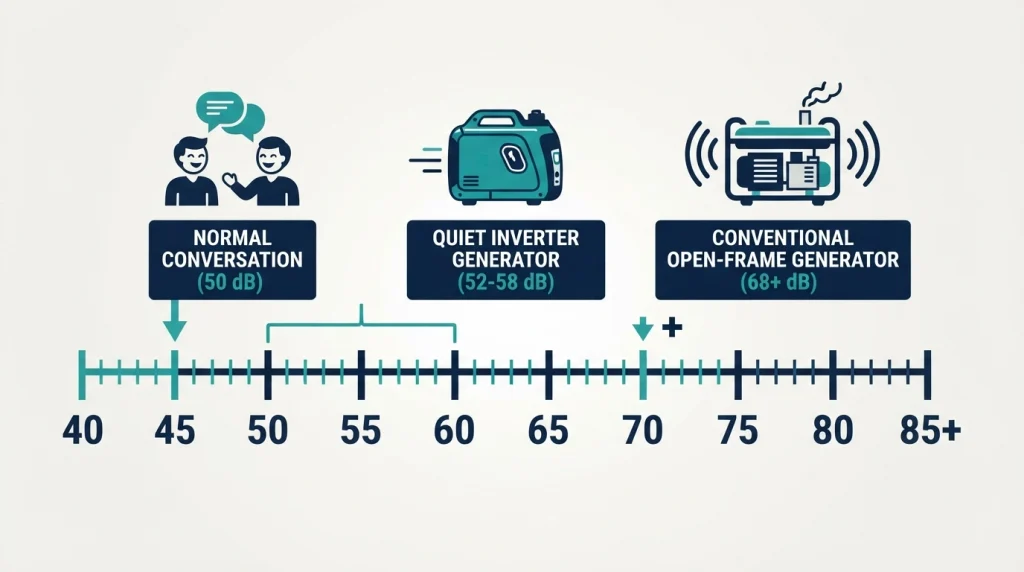
Manufacturers rate noise in decibels, or dB. A lower number means a quieter generator, so compare ratings at the same load and distance.
A 52 dB rating at quarter load is not the same as 52 dB at full load. Most brands test at 7 metres, about 23 feet, so check the test distance first.
Typical ranges help you judge a spec sheet:
- Very quiet inverter models: About 50 to 58 dB at quarter load, close to normal conversation.
- Larger or open-frame models: Often 68 dB or more, hard to ignore at close range.
Eco mode helps here. It lets the engine slow down at light loads, which cuts noise as well as fuel use.
For a direct comparison, read how inverter models stack up when makers claim they are quieter than conventional generators in real use.
Section takeaway: Compare dB at the same load and distance, then favour enclosed cases and eco mode for real quiet.
What Fuel Type, Tank Size, and Runtime Matter Most?
Fuel choice shapes runtime, storage, and convenience. Get it wrong, and you will run out at the worst time.
Gasoline is the most common fuel for inverter generators. It is easy to find, but it goes stale in weeks without stabiliser.
Propane stores far longer than gasoline. It also burns cleaner and avoids carburettor gumming from stale fuel.
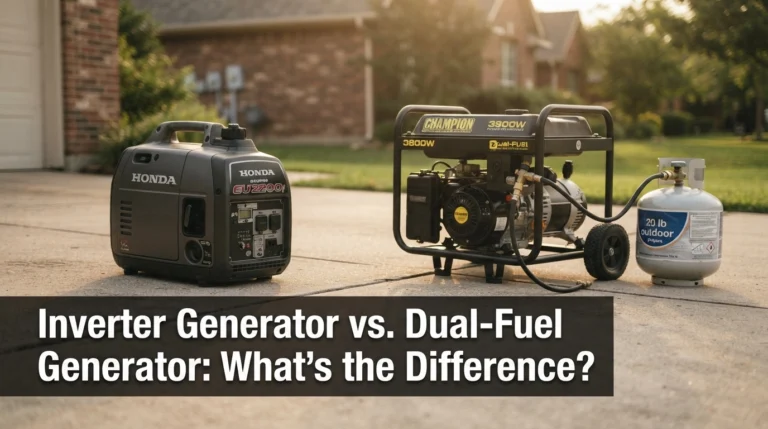
A dual-fuel inverter generator runs on gasoline or propane. That flexibility helps in an outage when one fuel runs short.
Check runtime at 25% load, not just at full load. That partial-load number matches how most people use a generator at home.
A small unit may run 8 to 10 hours at quarter load on one tank. A larger unit may run less, because it burns more fuel even at light loads.
Stale fuel causes most hard starts I see. I drain the carburettor or run the unit dry before long storage, per the manual, and I store fuel in an approved container away from living space.
Check EPA guidance on safe fuel storage and small-engine emissions when you set up your routine.
Safety note: Store fuel outdoors in an approved container, away from heat and living areas, and never refuel a hot generator.
Section takeaway: Pick the fuel you can store and find in an outage, then check quarter-load runtime with eco mode on.
Which Outlets, Starting Options, and Parallel Capability Do You Need?
Outlets decide what you can plug in without adapters. Count them before you buy, not after.
Most inverter generators offer two 120V household outlets. Larger models add a 30A RV outlet, a 30A twist-lock, or USB ports.
Check for GFCI protection on household outlets. It cuts power fast if current leaks, which matters outdoors in wet weather.
Starting options change daily use more than most buyers expect. Recoil pull-start works, but it gets old in cold weather.
Electric start adds a battery and a button. Remote start adds a key fob, so you can start the unit from inside the RV or house.
Parallel capability lets you link two matching inverter generators. A parallel kit joins them to double your available power.
That feature helps RV owners most. You can run one small unit for light loads, then pair a second one for the air conditioner.
Safety note: Use a transfer switch or interlock installed by a licensed electrician for home hookups, and check your owner’s manual before you connect anything.
Section takeaway: Match outlets to your real plugs, pick a start method you will use in cold weather, and keep parallel as a growth path.
How Portable Should It Be, and What About Build Quality?
Portability is weight, handles, wheels, and shape together. One number never tells the whole story.
Small inverter generators weigh about 40 to 55 pounds. Mid-size models often weigh 70 to 100 pounds or more.
Lift the unit by its handle before you buy if you can. A balanced handle feels far lighter than a lopsided one.
Wheels help above 70 pounds. Look for large, never-flat wheels that roll over gravel and grass, not just smooth concrete.
Check the warranty and parts support as well. A longer warranty helps, but only if the maker stocks filters, spark plugs, and carburettor parts.
Section takeaway: Test the carry, wheels, and service access in person, because weight on paper hides balance and build.
What Safety Features Should You Never Skip?
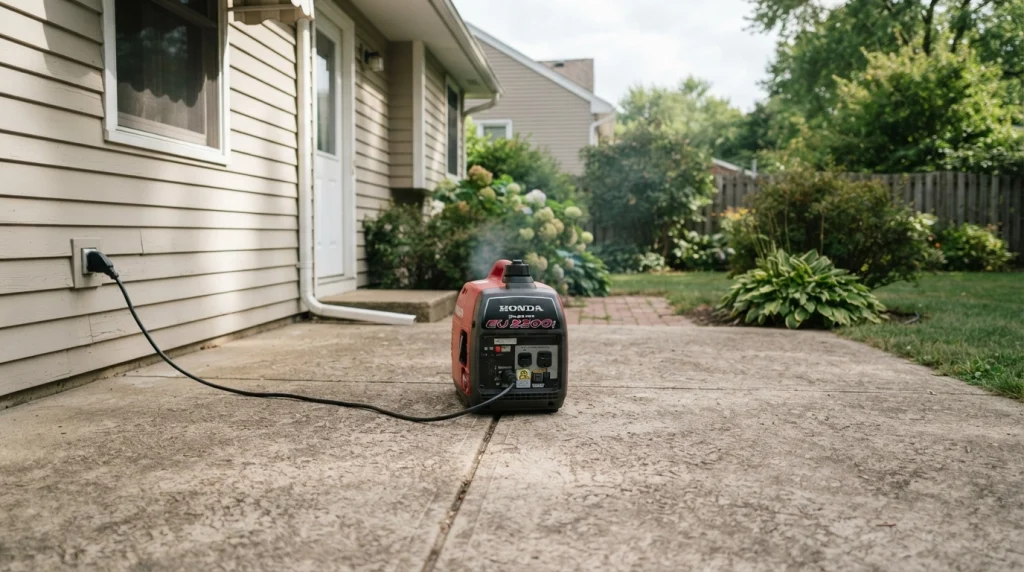
Safety features protect your family, your home, and the generator itself. Do not treat them as extras.
Carbon monoxide shutoff is the most important one. It stops the engine when CO builds up around the unit.
CO is colourless and odourless. You cannot see it or smell it, and it can build up fast in a garage or near a window.
Always run a generator outdoors, at least 20 feet from your home. Keep it away from windows, doors, and vents, even when the wind seems fine.
Read the carbon monoxide safety guidance for your model, and check the CDC advice on CO poisoning prevention before your first run.
Low-oil shutdown protects the engine. It stops the unit before low oil causes seizure and costly damage.
Overload protection protects your appliances. It cuts output when you draw too much, instead of letting voltage sag.
The Consumer Product Safety Commission tracks generator CO incidents and safety standards, and its guidance is a good check before you buy.
Safety note: Never run a generator indoors, in a garage, or under a covered porch, even with doors open, and keep CO alarms working inside your home.
Section takeaway: Choose CO shutoff, low-oil shutdown, and overload protection first, then place the unit outdoors and far from the house.
How Do You Compare Inverter Generators Side by Side?
Compare models on the same use case, not on headline watts alone. A 2,000-watt unit and a 5,000-watt unit serve different jobs.
Start with your must-run list from the sizing section. That list sets your minimum running watts, then compare noise, runtime, fuel type, weight, and outlets at that size.
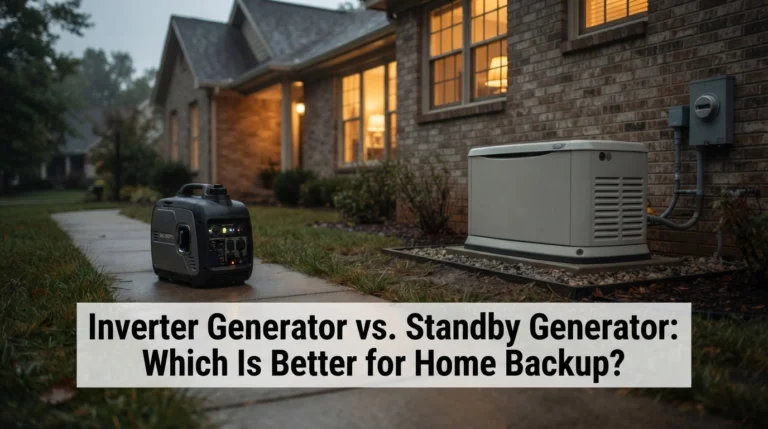
A quiet, light unit wins for camping, while a larger, dual-fuel unit wins for home backup. Use the table below as a starting point, and check each spec sheet before you buy.
| Use case | Typical running watts | What it can run | Best fit |
|---|---|---|---|
| Camping and tailgating | 1,600 to 2,200 | Phones, lights, small fridge, CPAP | Light, quiet, easy to carry |
| RV without roof AC | 2,200 to 3,000 | Fridge, microwave in short bursts, chargers | RV outlet, parallel ready |
| RV with roof AC | 3,000 to 4,500 | Roof AC, fridge, lights, chargers | High starting watts, 30A RV outlet |
| Home backup, essentials only | 3,500 to 5,000 | Fridge, freezer, furnace blower, sump pump, lights | Dual fuel, long runtime, transfer-switch ready |
| Home backup, larger loads | 5,000 or more | Essentials plus window AC or well pump | Parallel capable, large tank, electric start |
Section takeaway: Pick the size for your must-run list first, then compare noise, runtime, fuel, and safety at that size.
Frequently Asked Questions
What size inverter generator do I need for a fridge and a CPAP?
Most setups need about 900 to 1,400 running watts, plus the fridge starting surge. Add headroom for lights and charging, then check the spec sheet for running watts, not just starting watts.
Can an inverter generator run a refrigerator?
Yes, most inverter generators can run a modern fridge. Check the fridge running watts and starting surge first, then pick a unit with enough running watts and headroom.
Is an inverter generator better than a conventional generator?
It is better for electronics, noise, and light-load fuel use. A conventional generator may cost less for the same watts, but it runs louder and gives rougher power.
How long can an inverter generator run on one tank?
It depends on size, load, and eco mode. Many small units run 8 to 10 hours at quarter load, while larger units run less at the same load share, so check the 25% load figure.
What is a good THD for an inverter generator?
Look for THD under 3% for sensitive electronics. If the maker does not list THD, ask for it or choose a model that does.
Do I need a transfer switch for home backup?
Yes, for safe home hookups you need a transfer switch or interlock installed by a licensed electrician. Never backfeed through a household outlet, as it can harm utility workers and damage your home.
Buying the right inverter generator comes down to honest math and honest specs. Size it for your real loads, check clean power and noise at the same test conditions, and never skip CO safety.

Hi, I’m Michael Turner. I own a generator workshop in the United States and founded HomeGeneratorBlog to share practical, hands-on guidance about generator installation, maintenance, troubleshooting, safety, and backup power solutions. My goal is to help homeowners make smarter, more confident decisions through clear and reliable information