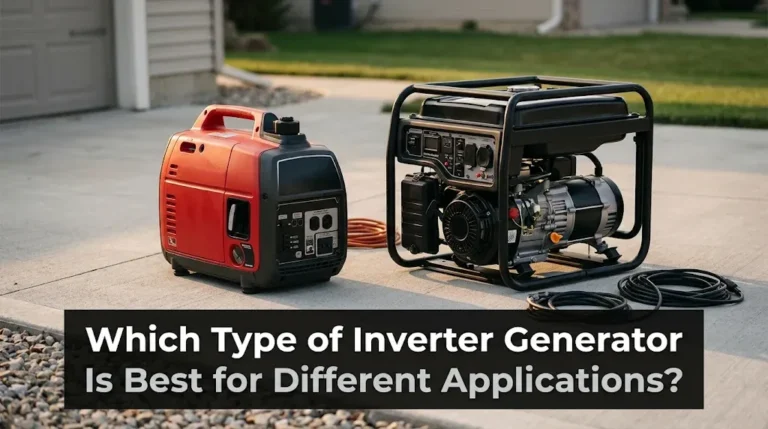
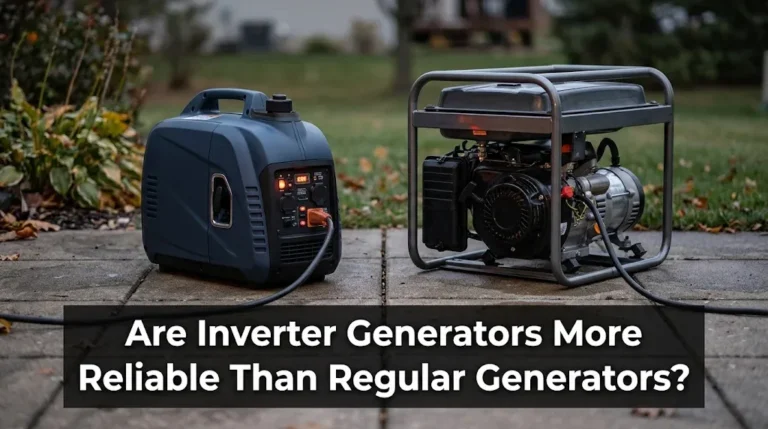
Inverter Generator vs. Dual-Fuel Generator: What’s the Difference?
Quick Answer
An inverter generator describes how power is made, while a dual-fuel generator describes which fuels it can burn. Many models are both, so the real choice is clean, quiet inverter power versus fuel flexibility. Learn how a dual-fuel inverter generator combines both features before you buy.
Choose an inverter generator if you need:
- Clean power: It produces stable, low-distortion power for laptops, phones, and medical devices.
- Quiet operation: It runs softer than most open-frame models, which matters at campsites.
- Better fuel use: It slows the engine under light loads instead of running flat out.
- Easy carrying: Smaller inverter models are lighter and simpler to move and store.
Choose a dual-fuel generator if you need:
- Fuel backup: You can switch to propane if gasoline runs out or goes stale.
- Long storage: Propane stores far longer than gasoline without degrading.
- Home backup: Larger dual-fuel models can run more household loads during an outage.
I’ve run both types through real outages, RV trips, and noisy job sites, and the labels confuse more buyers than they help.
An inverter generator and a dual-fuel generator are not direct opposites. One term covers power quality, and the other covers fuel choice.
This guide explains both in plain language, compares them side by side, and helps you pick the right setup for home backup, camping, or RV use as of 2026.
In This Guide
- What Is an Inverter Generator?
- What Is a Dual-Fuel Generator?
- Inverter Generator vs. Dual-Fuel Generator: Key Differences at a Glance
- How Do They Compare on Power Quality, Noise, and Fuel Use?
- Which Generator Is Better for Home Backup, RV, and Camping?
- How Much Power Do You Need?
- Fuel Storage, Maintenance, and Running Costs
- Which Should You Choose?
- Frequently Asked Questions
What Is an Inverter Generator?
An inverter generator is a portable generator that converts raw power into clean, stable electricity.
It makes alternating current, changes it to direct current, then rebuilds it as a smooth sine wave. That extra step keeps voltage and frequency steady when loads change.
How does an inverter generator work?
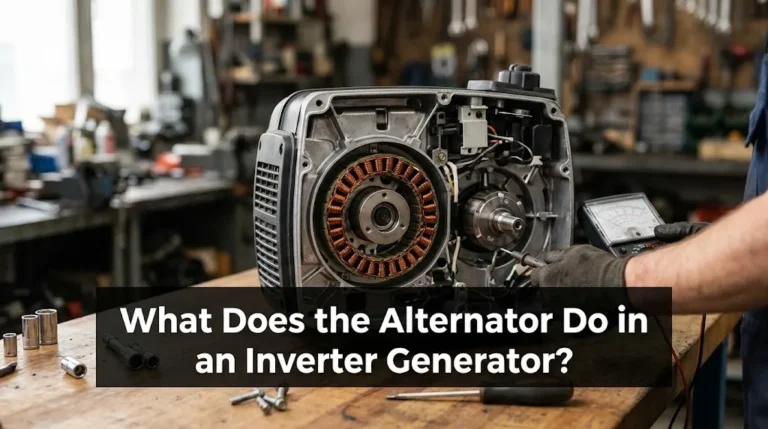
The engine drives an alternator that creates high-frequency power. An inverter module then shapes that power into a clean sine wave.
This design lets the engine speed up or slow down with demand. A light phone-charging load needs far less engine speed than a fridge compressor starting up.
- Clean sine wave: Smooth power with low total harmonic distortion, often under 3% on quality models.
- THD: Total harmonic distortion measures how rough the power wave is, and lower is safer for electronics.
- Eco-throttle: Economy mode lowers engine speed at light loads to save fuel and cut noise.
- Parallel capability: Many models link two units together for double the power when you need it.
I first noticed the difference during a three-day outage. My old open-frame unit ran loud all night, even with only a fridge and a few lights plugged in.
My inverter unit settled into a low hum once the fridge cycled off. It used less fuel, and my laptop charger stayed cool instead of buzzing.
What can an inverter generator run?
Most portable inverter models range from about 1,000 to 4,500 running watts. Larger parallel-ready pairs can cover more, but single units stay best for light to medium loads.
Typical loads include a refrigerator, CPAP machine, lights, phones, laptops, a TV, and a small window AC. A large RV air conditioner often needs a bigger unit or a soft-start device.
Check the spec sheet for running watts and starting watts before you buy. Starting watts cover the short surge when a motor starts, and running watts cover steady use.
Section Takeaway: An inverter generator prioritizes clean, quiet, fuel-efficient power, which makes it ideal for electronics, camping, and RV use.
What Is a Dual-Fuel Generator?

A dual-fuel generator is a generator that can run on two fuels, usually gasoline and propane.
Some models also add natural gas, but those are called tri-fuel generators. The dual-fuel label alone normally means gasoline plus propane.
How does a dual-fuel generator switch fuels?
Most dual-fuel models have a fuel selector dial or switch. You connect the propane hose and tank, turn the selector to propane, and start the unit.
Some models let you switch while running, while others need a shutdown first. Your owner’s manual gives the exact steps for your model, so follow it closely.
- Gasoline mode: Usually gives the highest rated watts and the easiest cold starts.
- Propane mode: Usually gives about 10% less power, but propane stores longer and burns cleaner.
- Fuel selector: The dial or valve that tells the engine which fuel system to use.
- Propane hose: The line that connects the generator regulator to a standard propane tank.
Propane saved me during a storm outage two years ago. Gas stations near me lost power, and the lines stretched for blocks once they reopened.
I had two full propane tanks from my grill in the garage. That fuel ran my fridge, lights, and CPAP for another full day without a gas run.
Is a dual-fuel generator also an inverter generator?
It can be, but it is not automatic. Dual-fuel describes fuel choice, while inverter describes power quality.
Many modern dual-fuel models are inverter models too. Others are open-frame conventional models with a dual-fuel carburetor kit.
Read the product name and spec sheet carefully. Look for the words inverter, clean sine wave, and low THD if you need safe power for electronics.
Safety note: Run any generator outdoors, at least 20 feet from your home, and well away from windows, doors, and vents. Never run one in a garage, even with the door open.
Section Takeaway: A dual-fuel generator gives you a second fuel option when gasoline is scarce, stale, or hard to store.
Inverter Generator vs. Dual-Fuel Generator: Key Differences at a Glance
The fastest way to compare them is to separate the two ideas. Inverter is about power quality, and dual-fuel is about fuel flexibility.
Once you split those ideas, the trade-offs become clear. You can then decide which feature matters more for your use.
| Feature | Inverter Generator | Dual-Fuel Generator |
|---|---|---|
| What it means | How power is made and cleaned | Which fuels it can burn |
| Fuel options | Usually gasoline only, unless it is also dual-fuel | Gasoline and propane |
| Power quality | Clean sine wave, low THD | Varies, clean only if it is also an inverter model |
| Noise | Quieter, often 50-60 dB at 25% load from 23 feet | Varies widely, open-frame models are louder |
| Fuel efficiency | High at light loads thanks to eco-throttle | Depends on engine type, propane often runs a bit shorter |
| Size and weight | Compact and lighter in the same watt class | Often larger, especially above 5,000 watts |
| Best for | Camping, RV, electronics, light home backup | Long outages, storm prep, larger home loads |
| Typical price | Higher per watt, but lower fuel use over time | Wide range, dual-fuel inverter models cost more |
Use the table as a starting point, not a final verdict. Two models with the same label can still differ a lot in noise, runtime, and build quality.
Always compare the spec sheet for running watts, starting watts, THD, dB rating, and runtime at 25% and 50% load. Those numbers tell you more than the box label.
Section Takeaway: Inverter and dual-fuel are different features, and the best buy is often a dual-fuel inverter generator that gives you both.
How Do They Compare on Power Quality, Noise, and Fuel Use?
Power quality matters most when you run sensitive electronics. Noise matters most at night and at campsites.
Fuel use matters most during long outages, when every gallon counts. Here is how each type performs in real use.
Which type gives cleaner power?
An inverter generator gives cleaner power by design. It holds voltage and frequency steady, even when a fridge or pump cycles on and off.
A conventional dual-fuel generator without an inverter can still run fridges, lights, and power tools well. It may not be the best choice for laptops, CPAP machines, or modern furnace controls.
If you need clean power and fuel choice together, look for a dual-fuel inverter generator. It gives you stable power on either gasoline or propane.
Learn more about the propane inverter generator option if you want clean power with long-storing fuel. It explains how propane models work and what size fits common loads.
Which type is quieter?
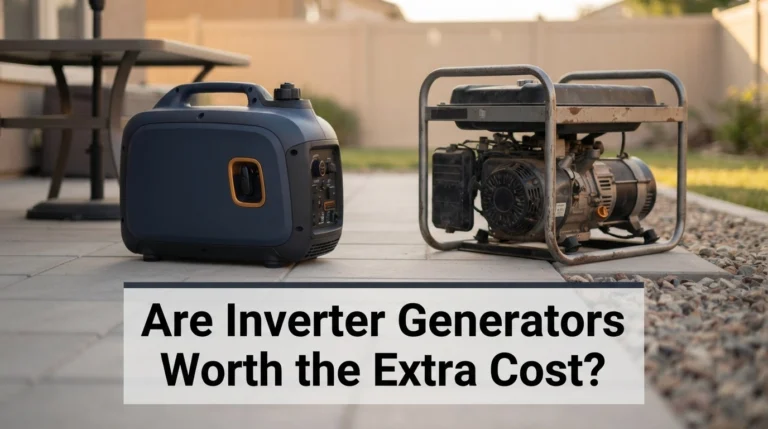
Inverter generators are usually quieter than open-frame models. Their enclosed cases muffle sound, and eco-mode lets the engine slow down.
Many small inverter models rate around 52-59 dB at quarter load from about 23 feet. That is close to normal conversation, and it is far easier to live with overnight.
Open-frame dual-fuel models often rate 68-76 dB at the same distance. That sound carries across a yard and can draw complaints at a campground.
I learned this the hard way at a state park. My neighbor’s open-frame unit drowned out our campfire talk, even from two sites away.
My inverter unit, set to eco-mode, faded into the background once the fridge settled. Noise etiquette matters, and quiet power buys you goodwill.
Which type uses fuel more efficiently?
Inverter models win at light and medium loads. They throttle down instead of holding full engine speed all day.
A 2,200-watt inverter unit can run 8-12 hours on a gallon or two at quarter load, depending on the model. Check the spec sheet, because tank size and load change the result a lot.
Dual-fuel models add a different kind of efficiency. Propane may give slightly less runtime per tank, but it does not go stale like gasoline.
That trade-off matters in an emergency. A generator that starts on stored propane beats a gasoline unit with a gummed-up carburetor.
Safety note: Store gasoline in approved containers, away from living spaces and ignition sources, and add fuel stabilizer if you store it for months. Store propane tanks outdoors, upright, and away from heat.
Section Takeaway: Inverter models lead on clean power, noise, and light-load efficiency, while dual-fuel models lead on fuel security during long outages.
Which Generator Is Better for Home Backup, RV, and Camping?

The best choice depends on what you run and where you run it. A small camping setup and a whole-home backup plan need different tools.
Start with your loads, then match the generator to them. Size and fuel choice follow from that list.
Which is better for home backup?
For light home backup, a 3,000-4,500-watt inverter generator covers a fridge, freezer, lights, phones, laptop, and CPAP. It stays quiet enough to run overnight without shaking the house.
For heavier home backup, a larger dual-fuel model makes more sense. A 7,500-9,500-watt dual-fuel unit can handle a sump pump, furnace blower, well pump, and more lights at once.
If you want home circuits powered safely, use a transfer switch or interlock kit installed by a licensed electrician. Never plug a generator into a wall outlet, because backfeeding can injure utility workers.
Read the dual-fuel portable generator guide before you size a larger home unit. It walks through fuel choice, sizing, and common setup questions.
Which is better for RV use?
For most RV owners, an inverter generator is the better pick. It gives clean power for the RV converter, TV, and laptops, and it stays quiet at camp.
A 3,000-3,500-watt inverter model often runs a 13,500 BTU RV air conditioner, especially with a soft-start kit. A 2,200-watt model may run it too, but only with careful load control.
Dual-fuel inverter models add a useful RV perk. Many campgrounds sell propane nearby, and you can run the generator from the same fuel you use for cooking and heat.
Check your RV outlet type before you buy. A 30-amp RV plug is common, while larger rigs may need a 50-amp setup or a parallel kit.
Which is better for camping and tailgating?
For camping, a small inverter generator wins on noise, weight, and fuel use. A 2,000-2,200-watt unit fits in a car trunk and runs lights, phones, and a small fan with ease.
For tailgating, the same logic holds. You want quiet power for a TV, speaker, and mini-fridge without shouting over the engine.
A large dual-fuel open-frame unit is overkill for most campsites. It is heavy, loud, and hard to justify when a compact inverter model does the job.
Section Takeaway: Choose an inverter for RV and camping, and choose a larger dual-fuel model when home backup needs more watts and fuel backup.
How Much Power Do You Need?
Wattage math prevents the most common generator mistake. Buyers pick a unit by price, then overload it on the first hot afternoon.
Do the math before you shop. It takes ten minutes, and it saves you a return trip.
What are running watts vs. starting watts?
Running watts are the steady power a device uses while it runs. Starting watts are the short surge a motor needs to start.
A fridge may use 150-200 running watts but need 600-800 starting watts. A window AC may use 1,000 running watts but need 2,000 or more to start.
Add your running watts together, then add the largest starting surge on top. That total is your minimum size, and a 20% margin gives you room to breathe.
See the running watts vs. starting watts guide for a step-by-step sizing method. It shows how to list loads and avoid overload shutdowns.
What size fits common uses?
| Use case | Typical running watts | Good starting point |
|---|---|---|
| Phones, lights, laptop | 300-600 watts | 1,000-2,200-watt inverter |
| Fridge, freezer, CPAP, lights | 800-1,500 watts | 2,200-3,500-watt inverter |
| RV with 13,500 BTU AC | 1,800-2,800 watts | 3,000-3,500-watt inverter |
| Home essentials plus sump pump | 3,000-5,000 watts | 5,000-7,500-watt dual-fuel |
| Larger home backup | 5,000-8,000 watts | 7,500-9,500-watt dual-fuel |
These are general ranges, not guarantees for every appliance. Older fridges, well pumps, and large AC units can surge higher than the averages above.
Read the nameplate on each appliance when you can. It lists watts or amps, and amps times volts gives you watts.
What happens if you overload a generator?
Most inverter models shut down cleanly on overload. You will see a warning light, and the power will cut out until you remove a load and restart.
That shutdown protects the generator, but it also kills your fridge mid-cycle. It is better to plan the load than to learn the limit during a storm.
Start large motors one at a time. Let the fridge settle, then add the next load, and keep a small margin for the next surge.
Section Takeaway: Add running watts, add the biggest starting surge, then add a 20% margin before you choose a size.
Fuel Storage, Maintenance, and Running Costs
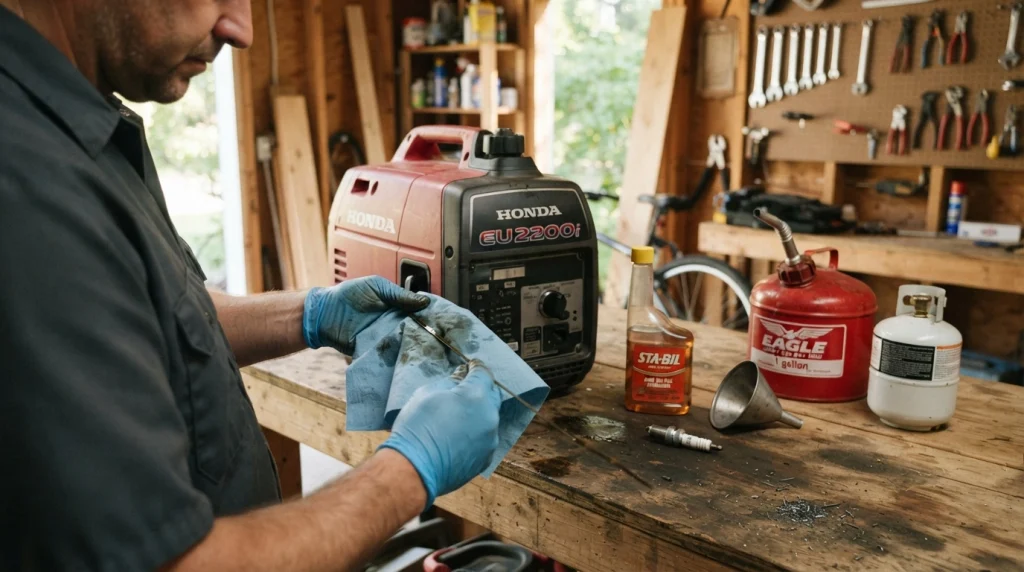
A generator is only useful if it starts when you need it. Fuel storage and simple maintenance decide that more than brand or price.
Gasoline goes stale, propane lasts, and oil changes keep the engine alive. Plan for all three before storm season.
How should you store gasoline and propane?
Gasoline starts to degrade in 30-90 days without stabilizer. Old fuel clogs carburetors, causes surging, and makes hard starts common.
Use fuel stabilizer, rotate stored gasoline every few months, and run the carburetor dry before long storage if your manual allows it. That simple habit prevents most no-start calls.
Propane stores for years without degrading. Keep tanks outdoors, upright, and out of direct heat, and check hoses and regulators for cracks before each season.
A gasoline inverter generator still makes sense if you use it often and rotate fuel. It gives full rated power and easy starts when fuel stays fresh.
What maintenance does a generator need?
Follow the break-in steps in your owner’s manual first. Many models need an early oil change after the first 5-20 hours, then regular changes after that.
- Oil: Check the level before each use and change it per your manual, often every 50-100 hours.
- Air filter: Clean or replace it when dusty, because a clogged filter causes surging and poor starts.
- Spark plug: Inspect it yearly and replace it when fouled or worn.
- Fuel system: Drain or stabilize old fuel, and test-run the unit monthly for 15-20 minutes under light load.
I test mine on the first Saturday of each month. I plug in a fan and a light, let it warm up, and check for leaks, smoke, or odd sounds.
That habit caught a cracked fuel line once before a storm. A ten-minute check saved me a dead generator when I needed it most.
Which type costs more to run?
Inverter models usually cost less to run at light loads. Eco-mode sips fuel when demand drops, which adds up over a multi-day outage.
Dual-fuel models can cost more per hour on propane in some areas. Propane prices vary by region and season, so compare local prices before you stock up.
Upfront price also matters. A dual-fuel inverter model often costs more than a gasoline-only inverter in the same watt class, but it buys fuel flexibility.
Think in total cost, not sticker price. Fuel, oil, and a single failed start during an outage cost more than the price gap between models.
For safety and cost guidance, the U.S. Department of Energy site covers home energy and backup-power basics. It is a useful starting point before a larger home setup.
Safety note: Let the engine cool before refueling, and never refuel a hot generator near an open flame. Wipe up spills before you restart the unit.
Section Takeaway: Propane stores longer, gasoline needs rotation, and monthly test runs keep either type ready.
Which Should You Choose?
There is no single winner, because inverter and dual-fuel solve different problems. Your loads, location, and fuel access should drive the pick.
Use the simple rules below to narrow it fast. Then check watts, noise, and the spec sheet before you buy.
Choose an inverter generator if you:
- Run laptops, phones, CPAP machines, or other sensitive electronics often.
- Camp, tailgate, or use an RV where quiet power matters.
- Need light to medium home backup and want low fuel use.
- Want a compact unit you can carry alone.
Choose a dual-fuel generator if you:
- Want a backup fuel when gasoline stations lose power or run dry.
- Store fuel for months and want propane’s long shelf life.
- Need larger home backup watts for pumps, furnace blowers, and more circuits.
- Already keep propane tanks for a grill, RV, or home heat.
Choose a dual-fuel inverter generator if you:
- Want clean power and fuel flexibility in one unit.
- Need RV power with propane available at campgrounds.
- Want quiet home backup with a propane fallback for long outages.
- Can pay a bit more upfront for fewer compromises.
Explore the different types of inverter generators if you are still weighing size and fuel options. It breaks down suitcase, mid-size, dual-fuel, and tri-fuel designs in one place.
My own setup is a mid-size dual-fuel inverter unit for home backup, plus a small suitcase inverter for camping. That pair covers outages and weekends without one loud, heavy compromise.
Your setup may differ, and that is fine. Match the generator to your real loads, not to a spec sheet fantasy.
For independent safety context, Consumer Product Safety Commission guidance covers generator placement and carbon monoxide risks. The CDC also publishes carbon monoxide safety basics for home use.
Safety note: Use a transfer switch or interlock installed by a licensed electrician for home circuits, and keep a battery carbon monoxide alarm in your home during generator use.
Section Takeaway: Pick inverter power for quiet, clean loads, pick dual-fuel for fuel security and larger backup, and pick both when you can.
Frequently Asked Questions
Is a dual-fuel generator better than an inverter generator?
Neither is better in every case, because they describe different features. An inverter generator gives cleaner, quieter power, while a dual-fuel generator gives you gasoline and propane options.
Can a dual-fuel generator be an inverter generator?
Yes, many models are both. A dual-fuel inverter generator makes clean sine-wave power and can run on gasoline or propane, so it covers both needs in one unit.
Do dual-fuel generators lose power on propane?
Yes, most lose about 10% of their rated watts on propane. A 4,000-watt gasoline rating may drop to about 3,600 watts on propane, so size with that drop in mind.
Can an inverter generator run a refrigerator?
Yes, most 2,200-watt and larger inverter models can run a modern fridge. Check starting watts first, because the compressor surge needs extra headroom beyond steady running watts.
Are inverter generators safe for electronics?
Yes, quality inverter models with low THD are safe for laptops, phones, TVs, and CPAP machines. Look for a clean sine wave rating and THD under 3% on the spec sheet.
How long does propane last in storage?
Propane lasts for years in a sealed tank because it does not degrade like gasoline. Store tanks outdoors and upright, and inspect hoses and valves before use.
Should I buy a dual-fuel inverter generator for home backup?
Yes, if you want quiet, clean power with a fuel fallback during long outages. It costs more upfront, but it covers electronics, fuel shortages, and longer runtimes in one unit.
Still weighing size, noise, and fuel? Start with your watt list, pick the smallest unit that covers it with margin, and test it before storm season. A generator you have tested beats a bigger one you have never started.

Hi, I’m Michael Turner. I own a generator workshop in the United States and founded HomeGeneratorBlog to share practical, hands-on guidance about generator installation, maintenance, troubleshooting, safety, and backup power solutions. My goal is to help homeowners make smarter, more confident decisions through clear and reliable information