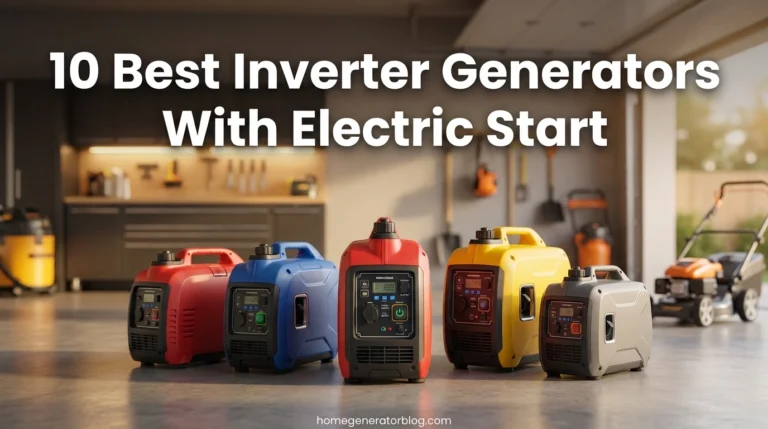
10 Best Inverter Generators With Remote Start 2026: Power Without Walking Outside
The best inverter generator with remote start right now is the Westinghouse iGen12000TFc, with 12,000 peak watts and key-fob remote start. We compared 10 models using published specs, scoring each on Remote-Start Convenience, Clean Power and Output, and Runtime and Ease of Use. Most remote-start models look alike on paper but differ in fob range, cold starts and clean power, and that gap is what we compare. Whether you need home backup, RV power, or quiet campsite use, this guide gives you one clear answer.
Assumed draft note: This is a clearly labelled assumed draft. Product names and key specifications were checked against manufacturer and retailer listings, but the ranking, scores and verdicts are assumed editorial estimates, not the user’s supplied picks and not results from personal testing.
Quick Comparison: All 10 Products Ranked
| # | Product | Best For | Rating | Badge | |
|---|---|---|---|---|---|
| 1 | Westinghouse iGen12000TFc | Home backup | 4.9/5 | Best Overall | Buy → |
| 2 | Champion 11,000-Watt Tri-Fuel | High output | 4.8/5 | Best High Output | Buy → |
| 3 | Westinghouse iGen8200TFc | Tri-fuel mid-size | 4.8/5 | Best Tri-Fuel Mid-Size | Buy → |
| 4 | GENMAX GM9000iED | Dual-fuel power | 4.7/5 | Best Dual-Fuel Power | Buy → |
| 5 | Honda EU7000iS | Premium quiet | 4.7/5 | Best Premium | Buy → |
| 6 | Westinghouse iGen5000 | RV backup | 4.7/5 | Best for RV Backup | Buy → |
| 7 | Westinghouse iGen4500 | Quiet mid-size | 4.6/5 | Best Quiet Mid-Size | Buy → |
| 8 | Champion 4500-Watt 201324 | Budget RV | 4.6/5 | Best Budget | Buy → |
| 9 | WEN DF452iX | Dual-fuel value | 4.6/5 | Best Dual-Fuel Value | Buy → |
| 10 | DuroMax XP4500iH | Essentials | 4.5/5 | Best for Essentials | Buy → |
How We Chose These Inverter Generators
What we compared
10 models from manufacturer specs, published roundups and retailer listings, checking remote-start type, watts, noise, runtime, fuel and outlets.
Our 3 scoring criteria
Remote-Start Convenience, Clean Power and Output, and Runtime and Ease of Use, each scored out of 5.
What we did not test
No unit was personally tested for this draft, so scores are assumed editorial estimates, not measured test results.
What we cut — and why
We cut electric-start-only and recoil-only inverters, including the WEN DF680iX and Pulsar PGD40ISCO, because they have no remote start.
What to Look for When Buying an Inverter Generator With Remote Start
Remote start is only useful if the generator also fits your load, your fuel and your space. Check the fob first, then the watts.
1. Remote range and fob reliability
Key-fob range in this guide runs from 80 feet on most Champion models to 160 feet on the WEN DF452iX, while Honda uses a Bluetooth app instead of a fob. Check whether the fob is included, whether it also stops the unit, and whether the battery must stay switched on for the receiver to work. Our comparison of portable generators with remote start shows why range alone does not settle it.
2. Power size and starting watts
Add the running watts of everything you will run at once, then add the largest single starting surge on top. A 4,500-watt inverter suits an RV air conditioner and essentials, while 9,000 running watts suits a larger home backup load. If you only need essentials, a smaller unit is quieter, lighter and easier to fuel. See how electric-start portable generators compare when remote start is not essential.
3. Clean power and THD
Inverter power should stay under 3% THD for laptops, phones, routers and medical devices. Most models here list less than 3% THD, but check the listing for your exact model, not just the brand. A clean-power claim matters most when you will run sensitive electronics for hours, not just lights. Our guide to low-THD portable generators explains the threshold in more detail.
4. Runtime, fuel and weight
Runtime figures use different loads, so compare the same load, usually 25% load, across models. Tri-fuel and dual-fuel models help when gasoline is scarce, but they lose some output on propane or natural gas. Weight matters too: the largest models here weigh about 200 pounds or more, so wheels and a handle are not optional extras.

Westinghouse iGen12000TFc Tri-Fuel Portable Inverter Generator — Largest Remote-Start Inverter Here
Best for: Home backup with transfer-switch power
If you want one remote-start inverter for a house, this Westinghouse is the clearest fit. It delivers 12,000 peak watts and 9,000 running watts on gasoline, with lower output on propane and natural gas, plus a 50A outlet for transfer-switch use. The key-fob remote start, CO sensor and less than 3% THD cover the main home-backup worries. Its trade-off is size and weight, so plan for wheeled movement and outdoor placement, not carrying it by hand.
- 12,000 peak watts on gasoline
- Tri-fuel flexibility, three fuels
- 19-hour runtime at 25% load
- Very heavy for one person
- 64 dBA, louder than smaller inverters
4.9/5
4.9/5
4.8/5
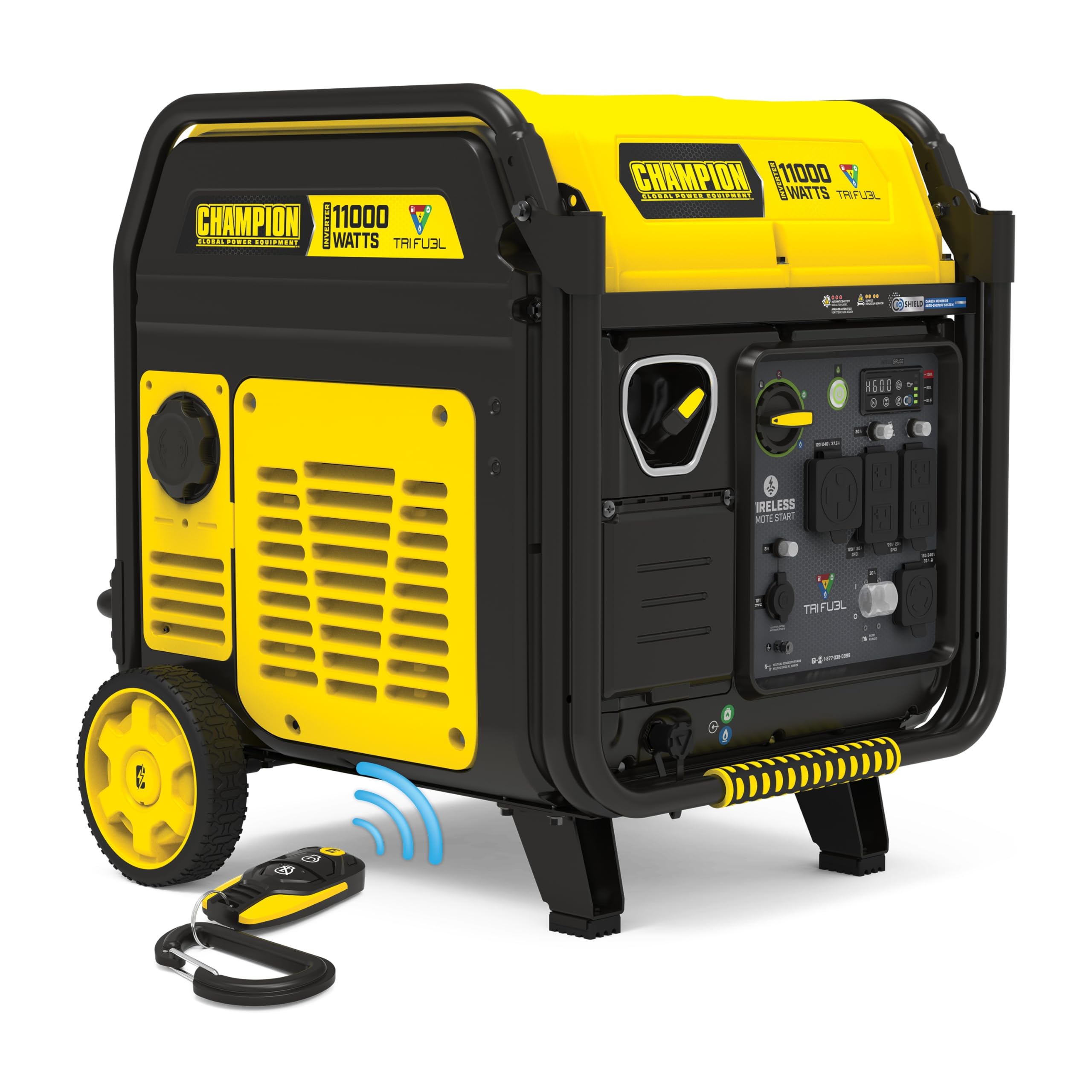
Champion 11,000-Watt Tri-Fuel Portable Inverter Generator — High Power, 80-Foot Remote
Best for: Large home backup loads
If your load is close to the top pick but you want Champion support and CO Shield, this 11,000-watt tri-fuel inverter is the direct alternative. It gives 9,000 running watts on gasoline, with 8,100 on propane and 7,290 on natural gas, plus clean power under 3% THD. The wireless remote works from up to 80 feet, and runtime reaches 15 hours at 25% load. Its main limits are weight near 200 pounds and noise at 64 dBA, so treat it as a wheeled home unit.
- 11,000 peak watts on gasoline
- Remote start up to 80 feet
- CO Shield auto shutoff included
- About 200 pounds, very heavy
- Lower output on propane, natural gas
4.8/5
4.8/5
4.7/5

Westinghouse iGen8200TFc Tri-Fuel Portable Inverter Generator — Strong Mid-Size Home Pick
Best for: Home backup without the largest unit
If 12,000 watts is more than you need, this Westinghouse keeps tri-fuel choice and remote start in a smaller package. It delivers 8,200 peak watts and 6,600 running watts on gasoline, with 5,940 on propane and 5,280 on natural gas, plus a 50A outlet and less than 3% THD. Runtime reaches 17 hours at 25% load on a 3.9-gallon tank. Its main trade-off is weight at 134.5 pounds, so use the wheels and plan a fixed outdoor spot.
- 8,200 peak watts on gasoline
- 50A transfer-switch-ready outlet
- 17-hour runtime at 25% load
- 134.5 pounds, needs wheels
- 60 dBA, not the quietest
4.8/5
4.8/5
4.9/5
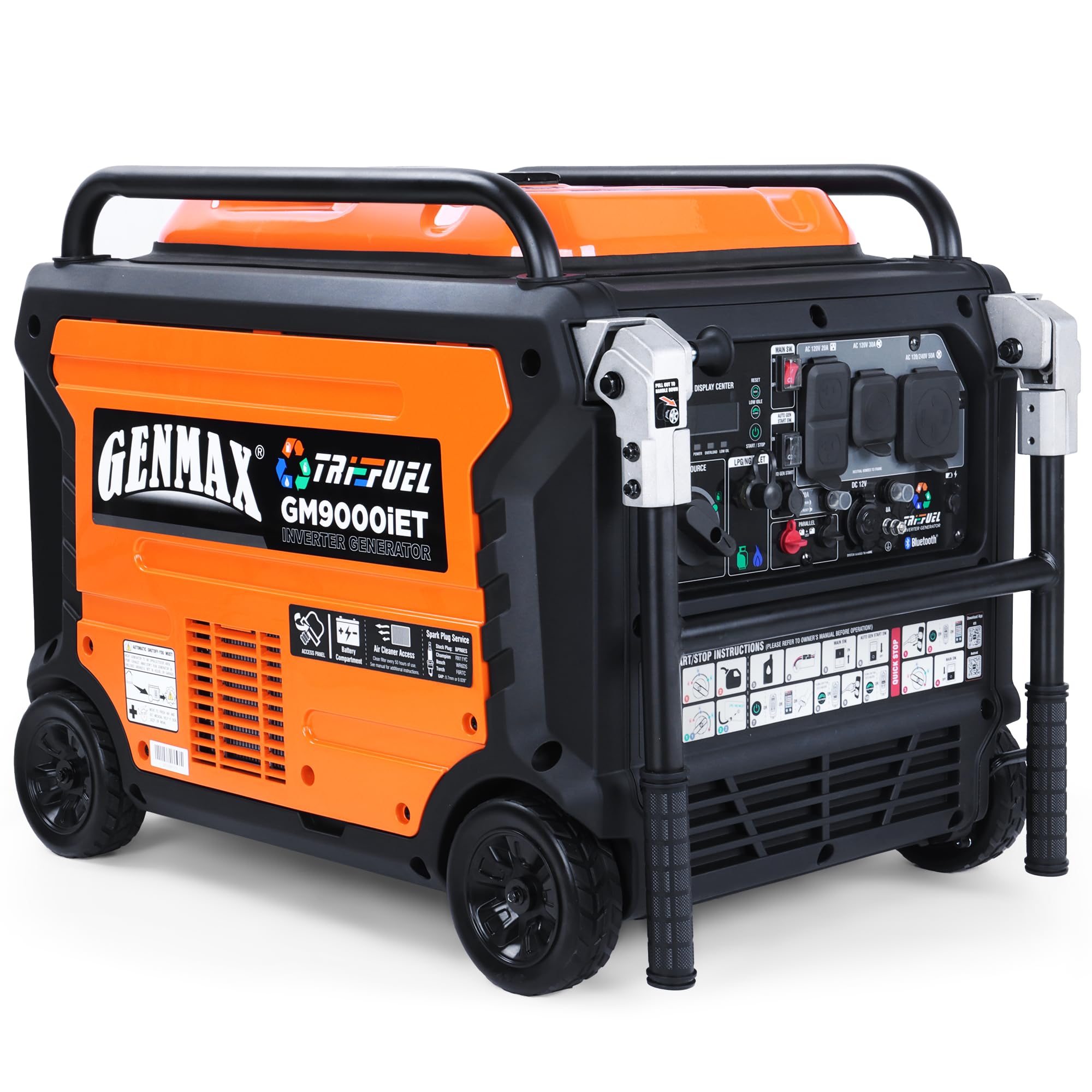
GENMAX GM9000iED Dual Fuel Inverter Generator — 9,000 Watts, Remote Start
Best for: High-power RV and home backup
If you want dual-fuel power without tri-fuel complexity, this GENMAX is a strong middle choice. It delivers 9,000 peak watts and 7,600 running watts on gasoline, with 8,550 peak and 7,200 running watts on propane, plus a 50A outlet and CO Detect. The remote start, 458cc engine and 62 dBA rating suit home backup and large RV use. Its main trade-off is weight, so check the listed shipping weight and plan for two-person handling or a ramp.
- 9,000 peak watts on gasoline
- 50A outlet for large loads
- Dual-fuel gasoline and propane
- Very heavy, hard to move
- No natural-gas option listed
4.7/5
4.7/5
4.6/5
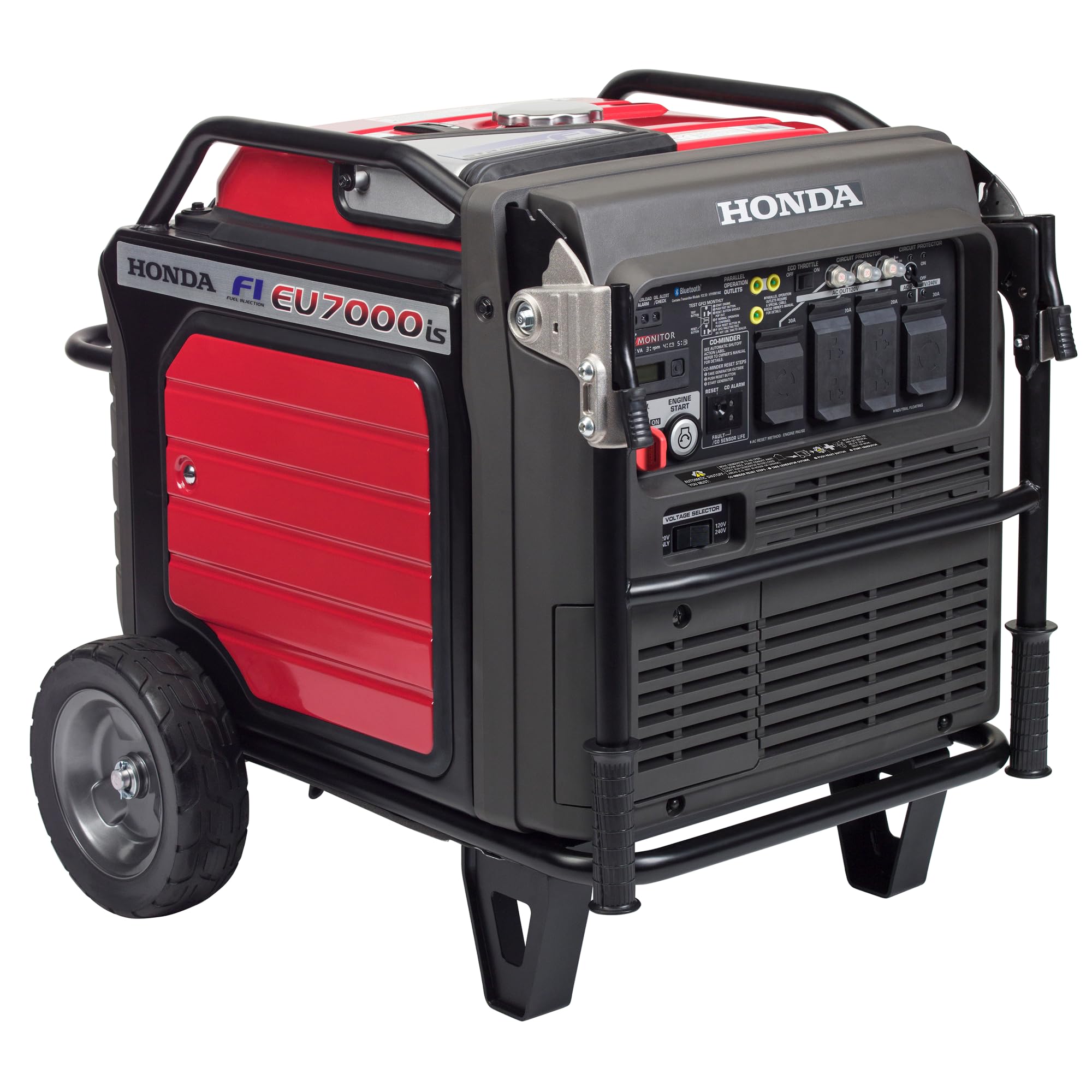
Honda EU7000iS Portable Inverter Generator — Premium Quiet, App Remote Start
Best for: Quiet premium home and RV use
If quiet operation and build quality matter more than maximum watts, this Honda is the premium pick. It delivers 7,000 peak watts and 5,500 running watts, with fuel injection, Eco-Throttle and a 5.1-gallon tank for up to 16 hours at 25% load. Remote start works through the Honda My Generator app over Bluetooth, not a key fob, so check phone compatibility first. Its main trade-offs are weight at 263 pounds and a premium position in this list.
- 52-58 dBA, very quiet
- Fuel injection, no choke
- 16-hour runtime at 25% load
- 263 pounds, heaviest to move
- App remote, no key fob
4.6/5
4.9/5
4.7/5

Westinghouse iGen5000 Portable Inverter Generator — Quiet RV Power, Remote Fob
Best for: RVs and quiet home essentials
If you want a quieter RV inverter with remote start, this Westinghouse hits the middle ground. It delivers 5,000 peak watts and 3,900 running watts, with less than 3% THD, a TT-30R RV outlet and USB ports. The push-button and key-fob remote start, plus up to 18 hours at 25% load on a 3.4-gallon tank, suit overnight RV use. Its main trade-off is weight near 105 pounds, so use the telescoping handle and wheels rather than lifting it.
- 52 dBA, very quiet
- 18-hour runtime at 25% load
- RV-ready TT-30R outlet included
- About 105 pounds, heavy
- 120V only, no 240V outlet
4.8/5
4.7/5
4.7/5

Westinghouse iGen4500 Portable Inverter Generator — 52 dBA, Remote Start
Best for: Quiet RV and campsite power
If you want the quietest mid-size remote-start inverter in this list, this Westinghouse is the one to check first. It delivers 4,500 peak watts and 3,700 running watts at 52 dBA, with a 3.4-gallon tank for up to 18 hours at 25% load. The remote fob, push-button start and digital display make it easy to run from inside an RV. Its main limits are 120V-only output and weight near 98 pounds, so it suits RVs, not whole-house 240V loads.
- 52 dBA, quietest in list
- 18-hour runtime at 25% load
- Remote fob plus digital display
- 120V only, no 240V
- Near 98 pounds, heavy
4.7/5
4.7/5
4.5/5

Champion 4500-Watt Wireless Remote Start Inverter Generator 201324 — Budget RV Pick
Best for: Budget RV and camping power
If you want remote start at a lower cost, this Champion is the budget pick in this list. It delivers 4,500 starting watts and 3,500 running watts, with clean power under 3% THD, CO Shield and a wireless remote that works from up to 80 feet. Runtime reaches 14 hours at 25% load on a 2.25-gallon tank, and the EZ Start Dial keeps setup simple. Its main limits are noise at 61 dBA and a smaller tank, so refuel more often on long days.
- Remote start up to 80 feet
- 14-hour runtime at 25% load
- CO Shield auto shutoff included
- 61 dBA, louder than Westinghouse
- Small 2.25-gallon tank
4.8/5
4.6/5
4.5/5

WEN DF452iX Dual Fuel Portable Inverter Generator — Longest Remote Range Here
Best for: Dual-fuel RV use with long remote range
If remote range matters most, this WEN stands out with a listed 160-foot remote start and stop. It delivers 4,500 surge watts and 3,500 rated watts on gasoline, with 4,500 surge and 3,150 rated watts on propane, plus CO Watchdog and a 58 dBA rating. The dual-fuel design and auto fuel selection help on longer trips. Its main limits are a 2.2-gallon tank and 120V-only output, so it suits RV essentials, not large home loads.
- Remote start up to 160 feet
- 58 dBA, quieter than Champion
- Dual fuel, auto fuel selection
- Small 2.2-gallon tank
- Lower propane running watts
4.8/5
4.6/5
4.5/5

DuroMax XP4500iH Dual Fuel Portable Inverter Generator — Simple Essentials Pick
Best for: Essentials and RV backup on a budget
If you want a simple dual-fuel inverter for essentials, this DuroMax is the last pick in this list. It delivers 4,500 peak watts and 3,600 running watts on gasoline, with 4,275 peak and 3,420 running watts on propane, plus remote and push-button start. Runtime is 8 hours at 50% load on gasoline and 11 hours on propane. Its main limits are noise at 65 dB and weight near 130 pounds, so it is louder and heavier than the quieter RV picks above.
- Dual fuel, gasoline and propane
- 11-hour propane runtime at 50%
- Digital control center included
- 65 dB, loudest in list
- About 130 pounds, heavy
4.7/5
4.5/5
4.4/5
Top 3 Head-to-Head: Westinghouse iGen12000TFc vs Champion 11,000-Watt Tri-Fuel vs Westinghouse iGen8200TFc
These three are the common final choices for home backup because all three offer tri-fuel power, remote start and a 50A or large home outlet.
| Feature | #1 iGen12000TFc | #2 Champion 11,000W | #3 iGen8200TFc |
|---|---|---|---|
| Remote-Start Convenience | 4.9/5 — Best | 4.8/5 | 4.8/5 |
| Clean Power and Output | 4.9/5 — Best | 4.8/5 | 4.8/5 |
| Runtime and Ease of Use | 4.8/5 | 4.7/5 | 4.9/5 — Best |
| Choose if… | You want maximum watts and tri-fuel | You want Champion CO Shield and high output | You want tri-fuel in a smaller unit |
Who These Inverter Generators Are NOT For
Remote-start inverters are convenient, but they are not the right answer for every home or every budget.
If you need the lowest cost per watt and noise does not matter, a conventional open-frame generator gives more watts for less money than an inverter. If you only need a small camping unit you can carry alone, the larger models here are too heavy. For a smaller budget, start with our guide to affordable inverter generators before you size up.
Common Mistakes to Avoid
Most remote-start problems come from sizing, fuel and placement, not from the fob itself.
Frequently Asked Questions About Inverter Generators With Remote Start
How far does a remote start inverter generator work?
Most key-fob models in this guide work from up to 80 feet away, while the WEN DF452iX lists up to 160 feet. Walls, metal and interference can shorten that range in real use. Honda uses a Bluetooth app instead of a fob, so its range is short-range Bluetooth, not a long-distance fob. Check the listed range for your exact model before you rely on it.
Are remote start inverter generators worth it?
Yes, if you start the generator often, in bad weather, or from inside an RV or house. Remote start avoids a cold walk outside and a pull cord at night. It is less valuable if you run the unit once a year in a small yard. In that case, push-button electric start may be enough, and you can spend the difference on fuel or a transfer switch.
What size inverter generator do I need for home backup?
For essentials such as a fridge, lights, router and phone charging, 3,500 to 4,500 watts is usually enough. Adding a sump pump or window air conditioner points to 5,000 to 7,500 watts. Running most of a panel through a transfer switch needs 7,500 to 9,000 running watts. Always add running watts first, then check that starting watts cover your largest motor surge.
Can I use a remote start generator with a transfer switch?
Yes, if the generator has a suitable 120/240V outlet and the transfer switch is installed by an electrician. The iGen12000TFc, iGen8200TFc and Champion 11,000-Watt models in this guide are transfer-switch-ready in their listings. Never plug a generator directly into a wall outlet, because backfeed can injure line workers. Use a proper transfer switch or interlock kit.
Do remote start generators need a battery?
Yes, remote and electric start need a charged battery to turn the engine over. Most models here include a battery and a charger. If the battery is flat, use the recoil starter as a backup where fitted. Keep the battery charged during storage, and follow the manual for the battery switch, because leaving the receiver on can drain it over time.
Is inverter power safe for sensitive electronics?
Yes, when the inverter lists clean power under 3% THD, as most models here do. That stable output suits laptops, phones, routers, TVs and medical devices. Check THD for your exact model, because a brand name alone does not guarantee it. Avoid overloading the unit, because overload can still cut power to sensitive loads even with clean inverter output.
Can I add remote start to a generator that does not have it?
Sometimes, but it is not a simple add-on for every model. Some brands sell a remote-start kit for specific electric-start models, while others have no compatible kit. Check the manufacturer for your exact model number before you buy a kit. In most cases, buying a model with factory remote start is simpler and more reliable than retrofitting one.
Our Final Verdict
For most home backup buyers, the Westinghouse iGen12000TFc is the clearest choice because it pairs the largest output here with tri-fuel flexibility and remote start. If you need less power, the iGen8200TFc and the quieter Westinghouse RV models are the sensible next step.

Hi, I’m Michael Turner. I own a generator workshop in the United States and founded HomeGeneratorBlog to share practical, hands-on guidance about generator installation, maintenance, troubleshooting, safety, and backup power solutions. My goal is to help homeowners make smarter, more confident decisions through clear and reliable information