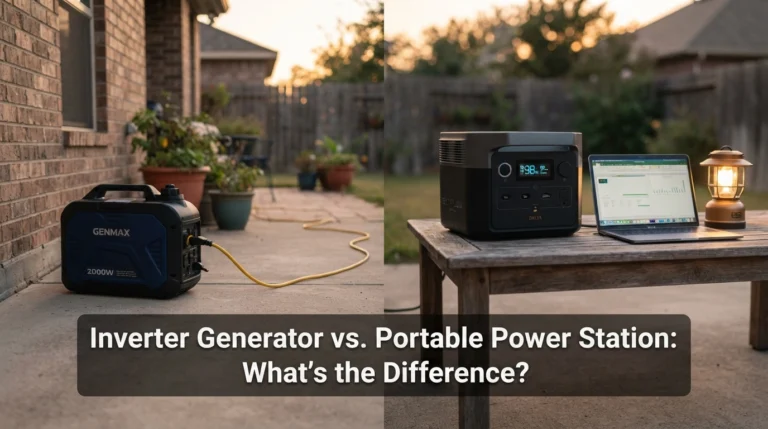
Can an Inverter Generator Run a Coffee Maker? Wattage, Sizes & Safe Setup
Quick Answer
Yes, an inverter generator can run a coffee maker. Most drip coffee makers need 600 to 1,200 watts, so a 2,000-watt inverter generator handles one easily, and you can size your inverter generator for coffee plus lights, phones, and a fridge.
What works best
- Best match: A 2,000-watt inverter generator runs most drip and single-serve makers with power to spare.
- Check the label: Read the watts on your coffee maker before you plug it in.
- Watch the peak: Heating elements draw steady power, but the first heat-up is the hardest pull.
- Keep it simple: Brew coffee first, then add other loads one at a time.
- Use clean power: An inverter generator gives stable, clean sine wave power for electronic controls.
Avoid this mistake
- Do not run a 1,500-watt espresso machine and a microwave on a small 1,000-watt generator at the same time.
- Turn off eco mode for the first brew if the generator surges or the maker cycles on and off.
I have brewed coffee on inverter generators in campgrounds, RV parks, and during multi-day outages at home. It is one of the small comforts that makes a power cut feel normal again.
This guide goes deeper than a yes-or-no answer. You will learn exact wattage ranges, the right generator size, and the safe setup I use every time.
In This Guide
- How Many Watts Does a Coffee Maker Use?
- What Size Inverter Generator Do You Need for a Coffee Maker?
- Can a 2000-Watt Inverter Generator Run a Coffee Maker?
- Drip vs Keurig vs Espresso vs French Press: Which Is Easiest on a Generator?
- How to Run a Coffee Maker on an Inverter Generator Safely
- What Else Can You Run With Your Coffee Maker?
- Why Your Generator Trips or Won’t Run a Coffee Maker
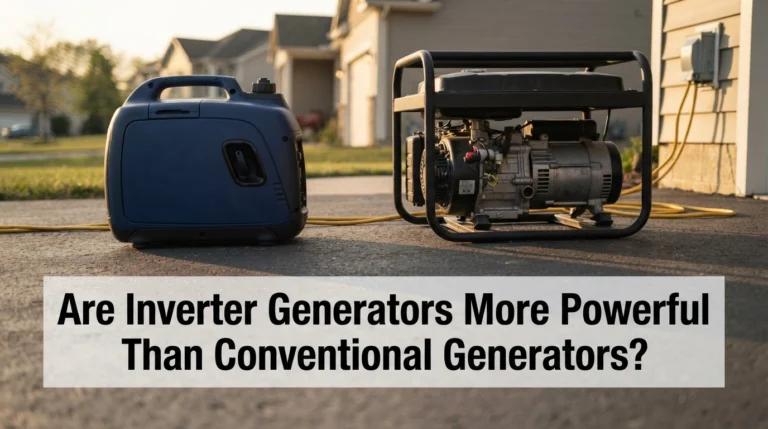
- Inverter Generator vs Conventional Generator for Coffee Makers
- Frequently Asked Questions
How Many Watts Does a Coffee Maker Use?
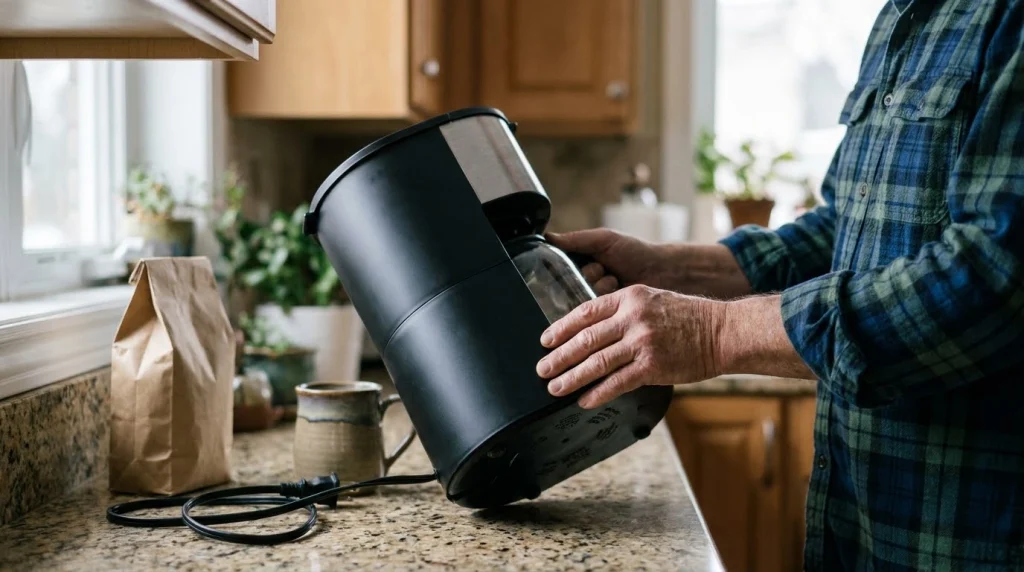
A coffee maker uses 600 to 1,500 watts while it heats water. The exact number depends on the type, size, and heating element.
Most standard drip makers sit in the 900 to 1,200 watt range. Single-serve pod machines often use 1,200 to 1,500 watts during heat-up, then drop lower to keep the water warm.
An inverter generator is a portable generator that makes clean, stable AC power by converting DC power through an inverter. That clean sine wave output matters for coffee makers with digital timers, pumps, and temperature controls.
Coffee makers are resistive loads. That means they draw steady power to heat water, with little or no big startup surge like a fridge compressor or well pump.
Here are typical wattage ranges I use when I plan a brew:
- Small 4-cup drip maker: 600 to 900 watts
- Standard 10-12 cup drip maker: 900 to 1,200 watts
- Single-serve pod machine: 1,200 to 1,500 watts while heating
- Espresso machine: 1,000 to 1,500 watts, sometimes more for dual-boiler models
- Percolator: 600 to 1,000 watts
- French press or pour-over: 0 watts, because you heat water another way
Check the label on the bottom or back of your maker. It lists watts, amps, or volts, and that label beats any online estimate.
If it lists only amps, multiply amps by 120 volts to get watts. A 10-amp maker at 120 volts uses about 1,200 watts.
Section Takeaway: Most coffee makers need 600 to 1,500 watts, so check your label first and plan for the heating peak, not the keep-warm draw.
What Size Inverter Generator Do You Need for a Coffee Maker?
You need a generator with at least 20% more running watts than your coffee maker uses. That headroom keeps the generator from running flat-out and tripping under load.
Running watts are the steady power a generator can supply for hours. Starting watts, also called surge watts, are the short burst it can supply for a few seconds.
Coffee makers do not need a large surge allowance. You still want that 20% margin for heat-up, altitude, and other small loads.
Use this simple math before you brew:
- Step 1: Find your coffee maker watts on its label.
- Step 2: Add the watts of anything else you will run at the same time.
- Step 3: Multiply the total by 1.2 for a safe margin.
- Step 4: Pick a generator with running watts above that total.
Example: a 1,000-watt drip maker plus 100 watts of lights and phone charging equals 1,100 watts. Multiply by 1.2 and you need about 1,320 running watts.
A 2,000-watt inverter generator covers that example with room to spare. A 1,000-watt generator would not.
If you want the full step-by-step method, use my guide on how to calculate the generator wattage you need before you buy or pack for a trip.
Section Takeaway: Add your coffee maker watts plus other loads, multiply by 1.2, and choose a generator with running watts above that number.
Can a 2000-Watt Inverter Generator Run a Coffee Maker?
Yes, a 2,000-watt inverter generator can run almost any home coffee maker. It is the sweet spot for coffee at home, in an RV, and at a campsite.
A typical 2,000-watt inverter generator supplies about 1,600 to 1,800 running watts. That covers a 1,200-watt drip maker and still leaves 400 to 600 watts for lights and charging.
I have run a 12-cup drip maker on a 2,000-watt unit during an outage while a fridge cycled in the background. The trick was timing.
I brewed first, let the pot finish, then plugged the fridge back into the same circuit. Staggering loads is the habit that prevents most overload trips.
A 1,000-watt generator is a different story. It may run a small 600-watt maker, but it will struggle with a standard 1,200-watt drip maker.
A 3,000-watt or 3,500-watt inverter generator gives you real freedom. You can brew coffee, run a fridge, and charge devices at the same time without watching the load meter.
For more detail on what that size can handle, see how much power a 2000-watt inverter generator provides.
Section Takeaway: A 2,000-watt inverter generator is the practical minimum for most coffee makers, and a 3,000-watt unit adds comfortable headroom for other essentials.
Drip vs Keurig vs Espresso vs French Press: Which Is Easiest on a Generator?
A French press is easiest on a generator because it uses no electricity at all. A drip maker is next, then a percolator, then a pod machine, then an espresso machine.
Pod machines heat fast and draw high watts in short bursts. Espresso machines add pumps and boilers, so they need more steady power and cleaner voltage.
| Coffee maker type | Typical watts | Works on 2,000W? | Best for |
|---|---|---|---|
| Drip, 10-12 cup | 900-1,200 | Yes | Home backup, family mornings |
| Small drip, 4-5 cup | 600-900 | Yes, easily | Camping, solo RV use |
| Single-serve pod | 1,200-1,500 | Yes, alone | One cup at a time |
| Espresso machine | 1,000-1,500 | Yes, if under 1,600W running | Espresso lovers with headroom |
| Percolator | 600-1,000 | Yes | Simple, rugged camping brew |
| French press / pour-over | 0 | Yes | Lowest power, best for small generators |
Which coffee maker should you pack for camping?
Pack a small drip maker or a French press for camping. Both are light, simple, and easy on fuel.
A French press needs only hot water from a kettle. That kettle can run on a camp stove, so you save generator fuel for lights and charging.
Can you run a Keurig on an inverter generator?
Yes, you can run a Keurig on a 2,000-watt inverter generator if you brew it alone. Turn off eco mode first if it hesitates, because the heater needs full power to reach temperature.
Do not run a Keurig and a microwave together on a 2,000-watt unit. That pair can exceed 2,500 watts and trip the overload protection.
Section Takeaway: French press uses no power, drip makers are the easiest electric choice, and pod or espresso machines need a 2,000-watt generator run mostly on their own.
How to Run a Coffee Maker on an Inverter Generator Safely
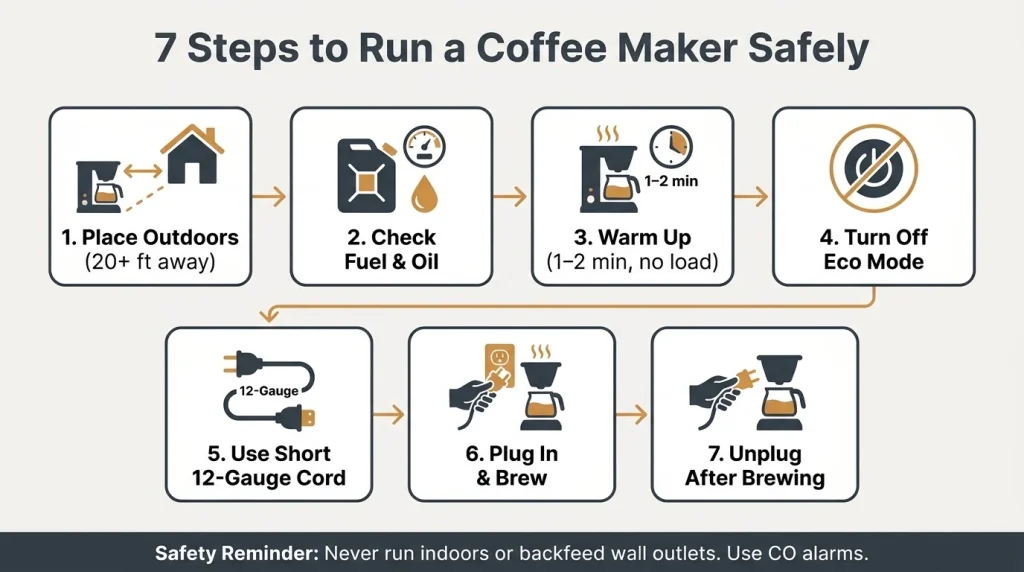
Start the generator first, let it warm up, then plug in the coffee maker. That order gives the engine time to settle before the heating element loads it.
Follow these steps in order:
- Place it outdoors: Set the generator at least 20 feet from your home, RV, or tent, with exhaust pointed away.
- Check fuel and oil: Top up fuel and check oil before you start, per your owner’s manual.
- Warm it up: Start the generator with no load and let it run for 1 to 2 minutes.
- Turn off eco mode: Switch eco-throttle off for the brew, then turn it back on after.
- Use a short, heavy cord: Use a 12-gauge outdoor extension cord if you need one, and keep it as short as possible.
- Plug in the maker: Plug the coffee maker directly into the generator or the cord, then start the brew.
- Unplug after brewing: Unplug the maker once the pot is done so the warming plate does not waste fuel.
Safety note: Run generators outdoors and well away from windows, doors, and vents. Carbon monoxide is colorless and odorless, and it can build up fast indoors.
The CDC and the U.S. Consumer Product Safety Commission both stress outdoor placement and working CO alarms. I keep a battery CO alarm in the RV and one near the house door when a generator runs.
Never backfeed your home through a wall outlet. Use a transfer switch or interlock installed by a licensed electrician if you want to power house circuits.
Keep the coffee maker dry and on a stable surface. Water and a hot plate near a generator cord are a bad mix.
Section Takeaway: Warm up the generator outdoors, turn eco mode off to brew, use a short heavy cord, and unplug the maker when the pot is done.
What Else Can You Run With Your Coffee Maker?
You can run lights, phone chargers, and a laptop with a coffee maker on a 2,000-watt generator. You cannot run a microwave, window AC, or space heater at the same time.
Think in layers. Coffee is a short, high load. Lights and charging are low, steady loads.
Here is a realistic 2,000-watt morning setup:
- Coffee maker: 1,000 watts while brewing
- LED lights: 20 to 40 watts
- Phone charging: 10 to 20 watts
- Laptop charging: 45 to 65 watts
- Total: About 1,100 to 1,150 watts, well within range
A fridge adds 100 to 200 running watts, but 600 to 1,200 starting watts when the compressor kicks on. That is why I brew first and let the fridge cycle after.
If you plan to run a fridge and coffee together often, a 3,000-watt or larger inverter generator is a better fit. See my best portable generator for refrigerator guide for size and runtime trade-offs.
A microwave is another heavy kitchen load. It often needs 1,000 to 1,500 watts on its own, so pair it with coffee only on a larger generator. My best generator for microwave guide covers that pairing in detail.
For RV mornings, I brew coffee, then switch to the water heater or AC. One big load at a time keeps the generator quiet and fuel-efficient.
Section Takeaway: Coffee plus lights and charging fits easily on 2,000 watts, but add a fridge, microwave, or AC only after the coffee is done or on a larger generator.
Why Your Generator Trips or Won’t Run a Coffee Maker
Your generator trips because the total load exceeds its running watts. The coffee maker alone may fit, but coffee plus another heater or motor pushes it over the limit.
Eco mode is the second most common cause. In eco mode, the engine idles low and may not ramp up fast enough when the heating element switches on.
Check these causes in order:
- Overload: Unplug other loads and brew coffee alone.
- Eco mode lag: Turn eco mode off, restart the brew, and watch for a steady run.
- Long thin cord: Swap to a shorter, heavier 12-gauge cord to cut voltage drop.
- Low fuel or stale fuel: Refuel with fresh gasoline and check the fuel valve.
- Dirty air filter: Clean or replace it per your manual if the engine surges.
- Low oil shutdown: Check oil level on flat ground before you restart.
Running watts vs starting watts confuse many owners. Coffee makers need running watts, not a surge allowance, so focus on the steady number on the spec sheet.
My guide on running watts vs starting watts explains that split with real appliance examples.
If the generator still trips with coffee alone, test it with a known 1,000-watt load like a hair dryer on low. That test tells you if the problem is the maker or the generator.
Section Takeaway: Most trips come from overload or eco-mode lag, so brew coffee alone, turn eco off, and use a short heavy cord before you blame the generator.
Inverter Generator vs Conventional Generator for Coffee Makers
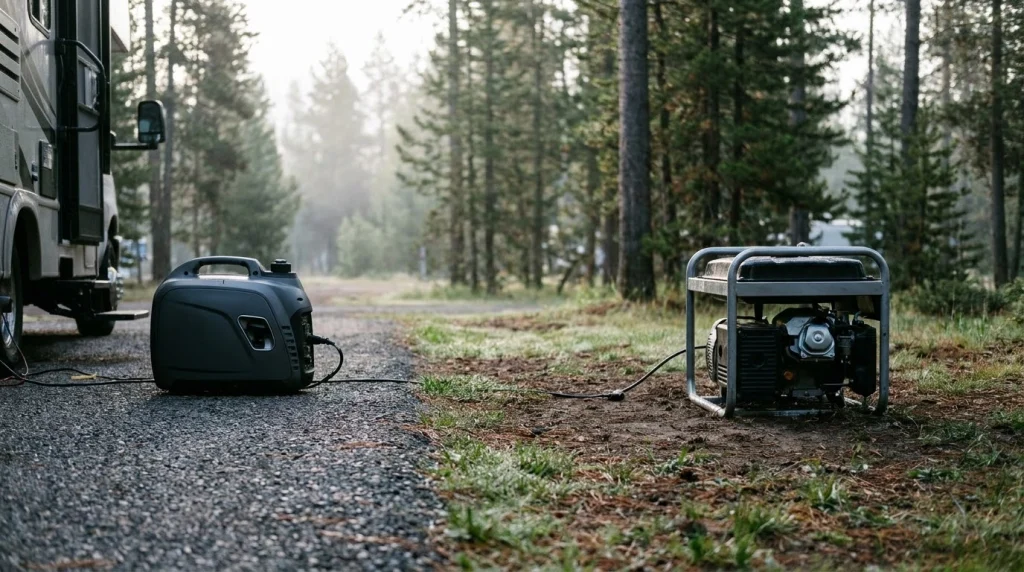
An inverter generator is better for coffee makers with digital controls, pumps, and timers. A conventional open-frame generator can run a simple drip maker, but its power is rougher and louder.
THD, or total harmonic distortion, measures how clean the power waveform is. Inverter generators usually stay under 3% THD, while many conventional models run higher.
Low THD protects sensitive electronics in pod machines and espresso makers. It also keeps the brew temperature steadier.
Inverter models are also quieter at partial load. That matters at 6 a.m. in a campground, where a loud open-frame unit will wake your neighbors.
Conventional generators win on price per watt for big loads. If you only need to run a basic drip maker and power tools, a conventional unit can work.
For coffee, camping, and RV use in 2026, I choose an inverter generator. The clean power, quiet run, and fuel savings in eco mode are worth the premium.
The U.S. Department of Energy and EPA offer general guidance on efficient portable power and outdoor generator use. Check your owner’s manual for your model’s exact THD and load limits.
Section Takeaway: Choose an inverter generator for digital coffee makers and quiet mornings, and save a conventional generator for simple makers and heavy tool loads.
Frequently Asked Questions
Can a 1000-watt inverter generator run a coffee maker?
It can run a small 600-watt maker, but not a standard 1,200-watt drip maker. Check your label first, and brew alone with eco mode off.
How long can an inverter generator run a coffee maker?
A coffee maker only needs 5 to 10 minutes to brew, so runtime is not the limit. A full tank on a 2,000-watt generator can brew many pots across a day.
Can you run a coffee maker on a solar generator?
Yes, if the solar generator or power station supplies at least 1,500 continuous watts. Smaller stations will trip, so use a French press or a low-watt maker instead.
Will a coffee maker damage an inverter generator?
No, a coffee maker will not damage a properly sized inverter generator. Overloading it often, or running it with stale fuel, will shorten its life faster than coffee ever will.
Can I run a coffee maker and a fridge on the same generator?
Yes, on a 3,000-watt generator you can run both together. On a 2,000-watt generator, brew first and let the fridge cycle after to avoid an overload trip.
Should I use eco mode when brewing coffee?
Turn eco mode off while you brew, then turn it back on after. That gives the engine full speed for the heating load and saves fuel once the pot is done.
What is the best coffee maker for an inverter generator?
A small 4-cup or 5-cup drip maker is best for small generators. A French press is best if you want zero watts and the simplest setup.
Coffee on generator power is simple once you know your watts. Check the label, size for 20% headroom, brew first, and keep the generator outdoors.
If you are still choosing a size, start with the sizing guide linked above. Pick the 2,000-watt class for coffee and light loads, or step up to 3,000 watts for coffee plus a fridge.
Brew it, pour it, and enjoy a normal morning even when the power is out. That is the whole point of a good inverter generator.

Hi, I’m Michael Turner. I own a generator workshop in the United States and founded HomeGeneratorBlog to share practical, hands-on guidance about generator installation, maintenance, troubleshooting, safety, and backup power solutions. My goal is to help homeowners make smarter, more confident decisions through clear and reliable information