Are Inverter Generators Worth the Extra Cost?
Quick Answer
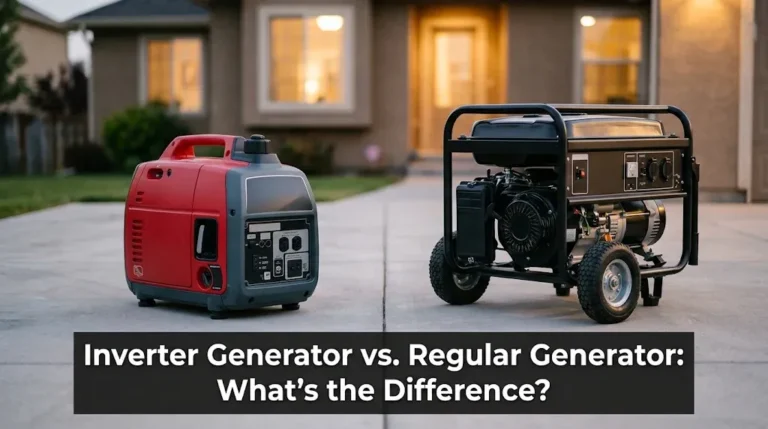
Yes, for most campers, RV owners, and light home-backup users, an inverter generator is worth the extra cost. You pay more up front for quieter power, cleaner power for electronics, and better fuel use at light loads, and those benefits matter every time you use it. If you only need raw watts for big tools or whole-home backup, a conventional generator may give you more power for less money, so check affordable inverter generators before you decide.
Worth it when you need:
- Quiet operation: Inverter models run much quieter than open-frame models, which matters at campsites and in neighborhoods.
- Clean power: Low total harmonic distortion protects laptops, phones, CPAP machines, and other sensitive electronics.
- Fuel savings: Eco-throttle slows the engine at light loads, so a small tank can last much longer.
- Easy carrying: Many inverter models are lighter and smaller, with handles that make one-person setup simple.
- Parallel power: Two small units can join together when you need more watts later.
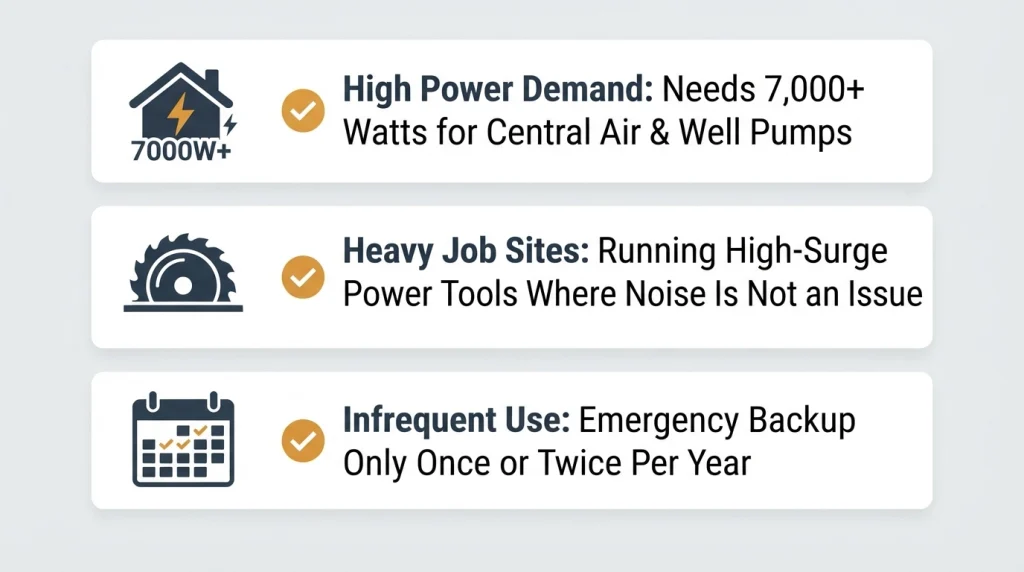
Skip the premium if:
- You need 7,000 watts or more for a large home, well pump, or central air.
- You run heavy power tools on a job site where noise is less of a concern.
- You will use the generator only once or twice a year for short outages.
I have carried both types of generators up driveways, across campsites, and into backyards during outages. The price gap feels real at the checkout, and the difference in daily use feels real too.
This guide goes deeper than a simple yes or no. You will see the actual price gap, what the extra money buys, and how to do the math for your own loads.
In This Guide
What Is an Inverter Generator?
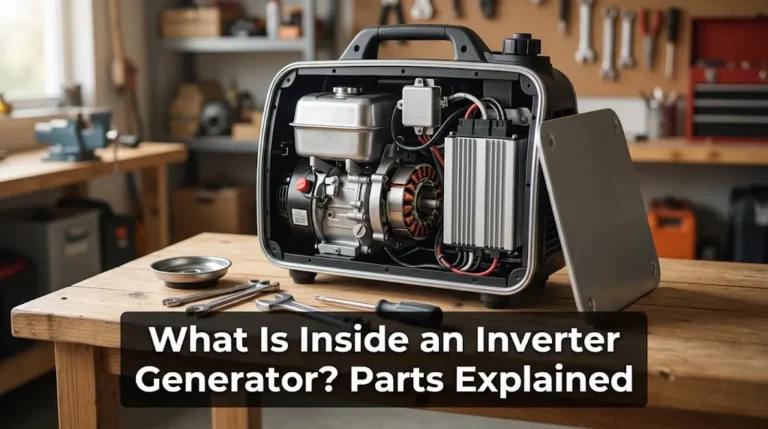
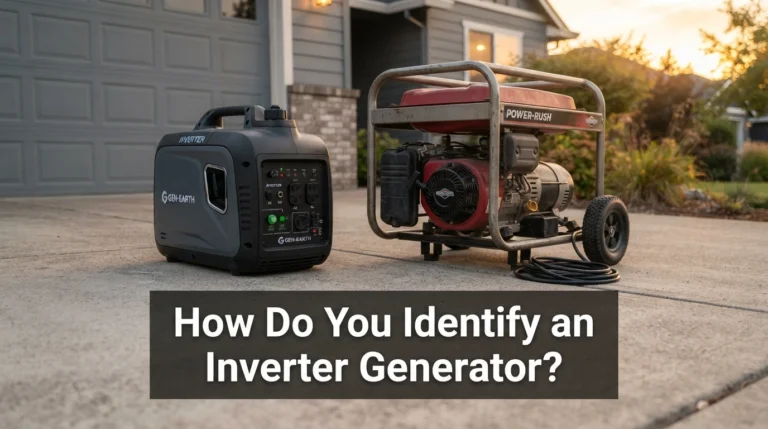
An inverter generator is a portable generator that makes clean, stable power by converting raw power to DC and then back to AC. That extra step lets it hold voltage and frequency steady, even when the load changes.
The result is a pure sine wave output that suits sensitive electronics. A conventional generator spins at a fixed speed and can let voltage drift more under load.
How does the inverter part work?
The engine spins an alternator and makes raw AC power. Electronics then change that power to DC, clean it up, and rebuild it as smooth AC.
That process also lets the engine slow down when demand drops. It does not need to scream at full speed just to keep a phone charger alive.
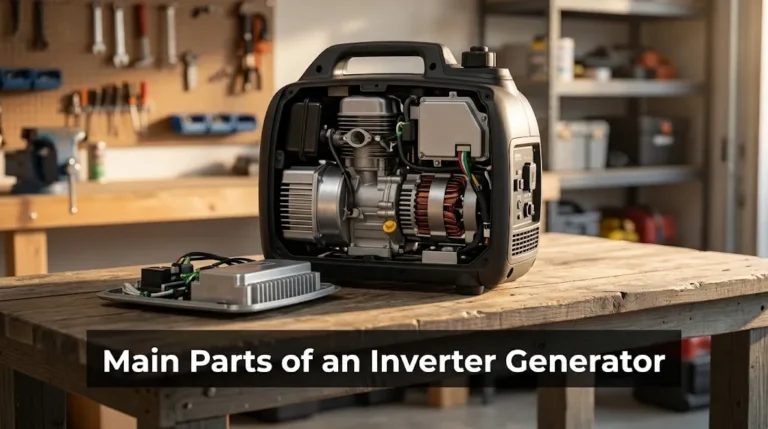
- Engine: Burns gasoline or propane and spins the alternator.
- Alternator: Creates the first rough form of AC power.
- Inverter module: Converts power to DC, then rebuilds it as clean AC.
- Eco-throttle: Adjusts engine speed to match the load and save fuel.
I learned the difference during a multi-day outage. My fridge and CPAP ran steady on an inverter unit, and the lights did not flicker when the fridge compressor kicked on.
That same load on an older open-frame unit felt rougher. The lights dimmed, the engine surged, and I kept checking the fridge.
How an inverter generator works explains the three-stage power path in more detail. It helps to know what happens inside the case before you compare prices.
Section takeaway: An inverter generator costs more because it adds electronics that clean and steady the power, and that clean power is the core value you pay for.
How Much More Does an Inverter Generator Cost?
The premium is real, but it is not the same at every size. Small inverter models often cost two to three times as much as a basic conventional model with similar running watts.
At larger sizes, the gap can narrow in percentage terms. You still pay more, but you also get more usable features for that money.
What does the price gap look like by size?
A 2,000-watt inverter generator often sells in the $500 to $1,200 range as of 2026, depending on brand and features. A basic 2,000-watt conventional unit can cost far less, but it will be louder and heavier for the same watts.
A 3,500-watt inverter model often lands in the $800 to $1,800 range. That size covers a fridge, lights, phones, a CPAP, and a small window AC in many homes.
- 1,000 to 2,000 watts: Best for camping, tailgating, and charging gear.
- 2,200 to 3,500 watts: Best for RV use and light home backup.
- 4,500 watts and up: Best for larger RV air conditioners and heavier home loads.
Brand matters a lot here. Honda and Yamaha sit at the top of the price range, while Champion, Westinghouse, WEN, and Predator often cost less for similar watts.
Check the spec sheet before you trust a price tag. Running watts matter more than the big starting-watts number on the box.
Why do inverter generators cost more to build?
The inverter module, microprocessor controls, and enclosed design add parts and labor. A quiet muffler, sound-dampening case, and eco-throttle system also add cost.
Manufacturers also tune these units for low total harmonic distortion, often under 3 percent. That clean output takes better parts and tighter testing.
Fuel use can offset some of that premium over time. An inverter unit sips fuel at light loads, while a conventional unit burns at full speed even when little is plugged in.
Section takeaway: Expect to pay a clear premium for inverter power, and judge that premium by running watts and real use, not by the biggest number on the box.
What Do You Actually Get for the Extra Money?
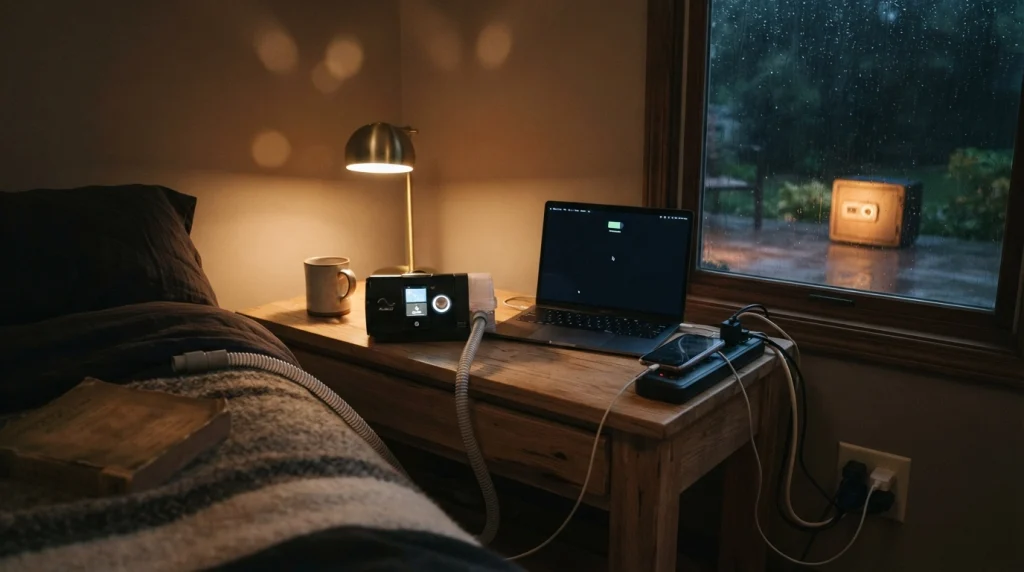
You get four things that show up in daily use. Quiet operation, clean power, better fuel economy, and easier carrying top the list.
Those benefits sound soft until you live with them. Then they shape how often you use the generator and how much you enjoy using it.
Is the power really cleaner?
Yes, in most cases. Inverter generators produce a pure sine wave with low total harmonic distortion, often called THD.
THD measures how much the power wave distorts from a perfect sine shape. Lower THD means safer power for laptops, TVs, medical devices, and modern furnace controls.
Conventional generators can have higher THD, especially under changing loads. That does not mean they will ruin every device, but the risk is higher for sensitive gear.
If you plan to run a CPAP, laptop, or router, clean power is not a luxury. It is the reason many buyers choose an inverter model in the first place.
Our guide to the best portable generators for sensitive electronics shows which features matter most for that use. Look for low THD, stable voltage, and GFCI outlets.
How much quieter is an inverter generator?
A small inverter generator often runs near 50 to 60 decibels at a quarter load, measured from about 23 feet away. A comparable open-frame unit can run 10 to 20 decibels louder, and that gap sounds much bigger than the numbers suggest.
Noise doubles in perceived loudness with roughly every 10-decibel rise. That means a 70-decibel generator can feel twice as loud as a 60-decibel one.
I felt that gap at a campsite once. My inverter unit hummed in the background, and I could still talk without raising my voice.
The neighbor with an open-frame unit had to shout over his. Campers two sites away gave him looks all evening.
Does eco-mode really save fuel?
Yes, when your load is light and steady. Eco-mode, also called economy mode or eco-throttle, lets the engine slow down instead of running at full speed.
A 2,000-watt inverter unit can run 8 to 11 hours on a gallon or so at a quarter load, depending on the model and tank size. Check the spec sheet for runtime at 25 percent and 50 percent load.
That longer runtime also means fewer refills at night. During an outage, that alone can feel worth the premium.
Safety note: Run any generator outdoors and at least 20 feet from your home, with the exhaust pointed away from windows, doors, and vents. Never run one in a garage, even with the door open.
Section takeaway: The extra money buys quieter, cleaner, and more fuel-efficient power, and those gains matter most when you run electronics, camp near others, or need long runtimes.
When Is the Extra Cost Worth It?
The premium pays off fastest in three situations. Camping and RV use, light home backup, and work that needs clean power all reward inverter design.
If your use fits one of those patterns, the extra cost often feels small after the first trip or outage. If it does not, you may be paying for features you will not use.
Is it worth it for camping and RV use?
Yes, for most campers. Quiet power keeps you welcome at campgrounds, and light weight makes setup far easier.
Many campgrounds limit generator hours and noise. A quiet inverter unit lets you run longer without drawing complaints.
RV owners also gain from parallel capability. Two 2,000-watt units can join with a parallel kit to run an RV air conditioner when one unit alone would trip.
That flexibility matters on hot days. You can carry one unit for light trips and add a second only when you need the extra watts.
Is it worth it for home backup?
Yes, for light backup loads. A 3,000-watt inverter unit can run a fridge, freezer, lights, phones, internet router, and CPAP through a short outage.
That setup kept my family comfortable for three days. We rotated the fridge, freezer, and a small fan, and we never lost food.
The key is to size the unit to your real loads. Add up running watts, then add the largest starting watts for a motor like a fridge compressor.
Our roundup of the best portable inverter generators is a good starting point for that size range. Compare running watts, runtime, weight, and noise before you pick a brand.
Is it worth it for sensitive electronics?
Yes, when those devices matter to you. Laptops, phones, routers, TVs, and medical gear all prefer stable voltage and low THD.
Consumer Reports and manufacturer manuals often stress clean power for modern electronics. The Consumer Reports homepage is a useful place to check independent generator notes before you buy.
You can also protect gear with a surge protector, but that does not fix rough power at the source. Clean power from the start is the safer path.
Section takeaway: Inverter power is worth the premium when you camp, run an RV, back up light home loads, or power sensitive electronics on a regular basis.
When Is It Not Worth It?
Sometimes a conventional generator is the smarter buy. The premium does not help if you need raw watts, run heavy tools, or use the unit only once a year.
Be honest about your real loads. A bigger, cheaper unit can beat a small, quiet one when the job is simply to move a lot of power.
Do you need more watts than inverter models offer?
Large homes often need 7,500 watts or more. Central air, a well pump, an electric water heater, and a sump pump can push demand past what most portable inverter units provide.
In that case, a standby generator or a large conventional portable unit may fit better. A transfer switch or interlock kit, installed by a licensed electrician, can then feed key circuits safely.
Our guide to the best generator to buy for home use can help you compare home-backup options by size and use case. Start with your must-run loads, not with a brand name.
Is a conventional generator better for job sites?
Often, yes. Job sites need power for saws, compressors, and other tools that draw high starting watts.
Noise matters less on a busy site, and weight matters less when the unit stays on a truck. A rugged open-frame unit can deliver more watts per dollar in that setting.
Check job-site rules before you buy, though. The OSHA homepage has safety guidance for generator use at work, including placement and grounding.
What if you rarely use a generator?
A cheap unit may make sense if you use it once a year. The fuel savings and quiet operation will not add up fast enough to repay a large premium.
Stale fuel can still cause trouble in any gasoline generator. Run it dry, use fuel stabilizer, or drain the carburetor before long storage, per your manual.
Safety note: Never connect a generator directly to your home wiring without a transfer switch or interlock installed by a licensed electrician. Backfeeding can injure utility workers and damage your home.
Section takeaway: Skip the inverter premium when you need very high watts, run heavy tools, or use a generator so rarely that quiet operation and fuel savings will not repay the cost.
How to Do the Math Before You Buy

Price per watt can mislead you. A cheap 5,000-watt unit is not a deal if you only need 1,800 watts of clean, quiet power.
Do the math in three steps. List your loads, add running and starting watts, then compare total cost over a few years.
What watts do your must-run loads need?
Start with the items you cannot lose. A fridge, freezer, CPAP, lights, and phones cover most light backup plans.
Use the running watts on each appliance label as a guide. Add the largest starting watts once, since motors do not all start at the same moment.
| Appliance | Running watts | Starting watts |
|---|---|---|
| Refrigerator | 150 to 200 | 600 to 1,200 |
| Freezer | 100 to 150 | 500 to 900 |
| CPAP machine | 30 to 60 | 30 to 60 |
| Window AC, 8,000 BTU | 700 to 900 | 1,800 to 2,500 |
| Laptop and phones | 50 to 100 | 50 to 100 |
| LED lights, several rooms | 40 to 80 | 40 to 80 |
Those figures are typical ranges, not specs for one model. Check your appliance labels and the generator spec sheet before you buy.
A fridge plus lights, phones, and a CPAP often needs about 1,200 to 1,500 running watts. Add a window AC, and you may need 2,500 to 3,500 running watts.
Our guide to running watts vs starting watts explains why that split matters. Starting watts decide whether a motor will start, while running watts decide whether it will keep running.
How do you compare total cost, not just sticker price?
Add fuel, oil, maintenance, and accessories to the sticker price. A quiet inverter unit may use less fuel per hour at light loads, and that gap adds up over many camping trips.
Also add a parallel kit, cover, extension cord, and transfer switch if you need them. Those extras can add $100 to $500 to any setup.
Think in years, not weeks. If you camp 20 nights a year, fuel savings and quiet operation may repay the premium in two or three seasons.
If you use the unit twice a year, the payback may take far longer. In that case, a lower sticker price may win.
What hidden costs should you watch?
Repair costs can differ by brand and parts availability. Honda and Yamaha parts are widely available, while some budget brands may have slower support.
Maintenance also matters. Oil changes, air-filter cleaning, and spark-plug checks follow the schedule in your manual, often after the first 20 hours and then every 50 to 100 hours.
Break-in matters too. Run the first tank at light to moderate load, change the oil early, and check for leaks before a long trip.
Section takeaway: Size by running watts first, add the largest starting load once, then compare fuel, maintenance, and accessories over several years before you judge the price.
How to Save Money Without Losing the Benefits
You do not need the most expensive inverter generator to get clean, quiet power. Smart shopping can cut the premium by hundreds of dollars.
Focus on the features you will use every time. Skip the extras that look good on a box but add little in real use.
Should you buy a smaller inverter generator?
Yes, when your loads allow it. A 2,000-watt unit costs far less than a 3,500-watt unit, and it weighs less too.
Many buyers oversize by habit. They buy 4,500 watts for loads that need only 2,000 watts, then pay more for fuel and weight.
List your loads first, then buy the smallest unit that covers them with a 20 percent margin. You can add a second unit later with a parallel kit if your needs grow.
Are dual-fuel inverter generators worth it?
They can be, if you value fuel choice. A dual-fuel model runs on gasoline or propane, and propane stores longer without going stale.
Propane also burns cleaner and avoids carburetor clogs from old gasoline. That can cut maintenance headaches for seasonal users.
Propane often gives slightly fewer watts than gasoline, so check both ratings. The U.S. Department of Energy homepage has general energy guidance that can help you compare fuel options.
What buying tricks actually work?
Buy off-season when you can. Late fall and winter often bring better prices on camping gear, including inverter generators.
Look for factory-refurbished units from trusted sellers, and check the warranty. A short warranty can erase the savings if a repair comes early.
Compare total price, not just the unit price. Free shipping, a cover, or a parallel kit can change the real cost by $100 or more.
- Buy the right size: Do not pay for watts you will not use.
- Check THD: Look for low THD if you run sensitive electronics.
- Test the noise: Compare decibel ratings at the same load and distance.
- Read the manual: Confirm oil type, break-in steps, and maintenance intervals.
Safety note: Store gasoline in an approved container, outdoors and away from heat, and never refuel a hot generator. Let the engine cool before you add fuel.
For carbon monoxide safety, the CDC and CPSC homepages offer clear placement and detector guidance. The EPA homepage also covers small-engine emissions and fuel care.
Section takeaway: Buy the smallest inverter unit that covers your real loads, compare total cost with accessories, and shop off-season to cut the premium without giving up clean, quiet power.
Frequently Asked Questions
Are inverter generators worth the extra cost for home backup?
Yes, for light backup loads like a fridge, lights, phones, and a CPAP. A 2,200 to 3,500-watt inverter unit can cover those loads quietly and efficiently, while a large home with central air may need a bigger conventional or standby unit instead.
How long will an inverter generator last?
Most well-kept inverter generators last many years with regular oil changes, air-filter care, and proper fuel storage. Lifespan depends on hours used, load level, and maintenance, so follow the schedule in your manual and store the unit dry or with stabilizer.
Can an inverter generator run a refrigerator and freezer at the same time?
Yes, in many cases, if the running watts fit and the starting watts do not trip the overload. Add both running loads, add the larger starting surge once, and keep a 20 percent margin for safety before you plug both in.
Are inverter generators quieter than conventional generators?
Yes, most inverter models are much quieter at light loads because eco-throttle slows the engine and the enclosed case dampens sound. Check decibel ratings at the same load and distance, since brands measure noise in different ways.
Do inverter generators use less fuel?
Yes, at light and moderate loads, because the engine slows down when demand drops. At full load, the fuel gap shrinks, so eco-mode helps most for camping, charging, and light backup rather than for running at maximum watts all day.
Is a dual-fuel inverter generator worth the extra cost?
It can be worth it if you want propane for long storage and cleaner burning, or if you already keep propane for camping. Propane may give slightly fewer watts than gasoline, so compare both ratings and decide whether fuel choice matters more than peak power.
What size inverter generator do I need?
Start with your must-run loads, add their running watts, then add the largest starting watts once. Most light home backup needs 2,200 to 3,500 running watts, while camping and charging often need only 1,000 to 2,000 running watts.
If you camp, run an RV, or back up light home loads, the inverter premium buys quiet, clean power you will notice every time you use it. If you need very high watts or use a generator only once a year, a conventional unit may give you more power for less money.
As of 2026, the best choice is still the one that fits your real loads. Size it right, check the spec sheet, and pick the quietest clean-power unit your budget allows.

Hi, I’m Michael Turner. I own a generator workshop in the United States and founded HomeGeneratorBlog to share practical, hands-on guidance about generator installation, maintenance, troubleshooting, safety, and backup power solutions. My goal is to help homeowners make smarter, more confident decisions through clear and reliable information