What Is a Gasoline Inverter Generator?
Quick Answer
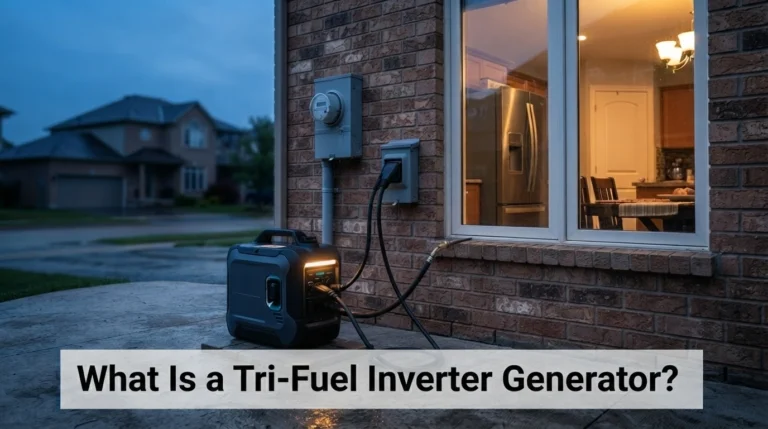
A gasoline inverter generator is a portable power source that burns gasoline to make electricity, then cleans that electricity into a stable sine wave before it reaches your devices. An inverter generator adjusts its engine speed to match the load, so it runs quieter and uses less fuel at light loads than a conventional generator. It is the type I reach for when I need clean power for a fridge, a laptop, or a CPAP machine.
Why it stands out
- Clean power: Total harmonic distortion is typically under 3%, which suits sensitive electronics.
- Quieter running: Engine speed drops at light loads, so noise drops with it.
- Better fuel use: A small tank can last a full evening at quarter load.
- Easy to move: Most models are compact enough for one person to carry.
- Parallel ready: Many models can pair with a second unit for more watts.
Before you buy
- Add up running watts first, then check the highest starting watts in the group.
- Pick a size with headroom, and check the spec sheet for real runtime and noise figures.
I’ve run a gasoline inverter generator through a multi-day outage, on a quiet campsite, and on a job site where the nearest outlet was a long walk away.
Each time, the same three things mattered: clean power, low noise, and fuel that lasted. This guide explains what a gasoline inverter generator is, how it works, and when it is the right call.
In This Guide
- What Is a Gasoline Inverter Generator?
- How Does a Gasoline Inverter Generator Work?
- Gasoline Inverter Generator vs Conventional Generator: What’s the Difference?
- What Can a Gasoline Inverter Generator Power?
- How Long Does the Gas Last, and What Does Eco Mode Do?
- Is a Gasoline Inverter Generator Safe for Sensitive Electronics?
- Who Should Buy a Gasoline Inverter Generator?
- Frequently Asked Questions
- The Bottom Line
What Is a Gasoline Inverter Generator?
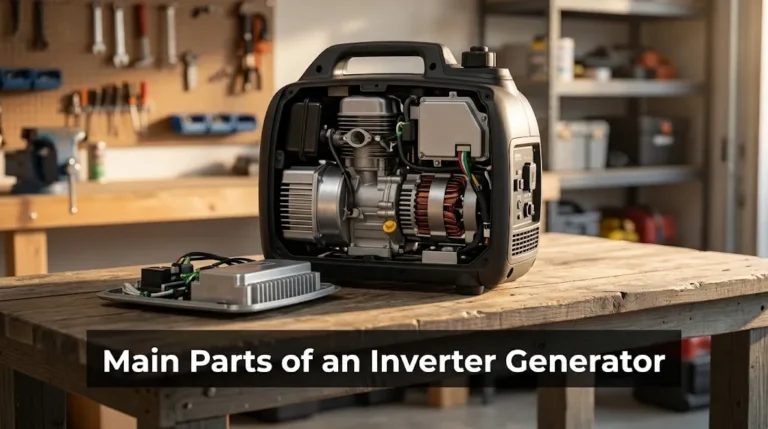
An inverter generator is a portable generator that converts raw engine power into clean, stable AC power through an inverter module.
A gasoline model runs on gasoline only, unless it is also a dual-fuel model. The fuel is the only real difference from a propane inverter generator.
Most gasoline inverter generators sit in the 1,000 to 4,500 running-watt range. Larger parallel-capable models can reach higher totals when paired.
They are built for portable power, not whole-home backup. Think camping, RV trips, tailgating, small job sites, and a short list of home essentials.
What makes it an “inverter” generator?
The name comes from the inverter, not the fuel. That electronic module rebuilds the power into a clean sine wave.
A clean sine wave is smooth, steady power, much like the power from a wall outlet. A rough wave can stress chargers, laptops, and medical devices.
Total harmonic distortion, or THD, measures how clean that wave is. Inverter generators typically stay under 3% THD.
Conventional generators, by contrast, often run at 10-25% THD. That gap is the main reason people choose an inverter model for electronics.
What does “gasoline” change?
Gasoline is easy to find, and most stations carry it. That matters during an outage, when propane may be harder to buy.
Gasoline also packs more energy per gallon than propane in most small generators. That helps runtime on a small tank.
The trade-off is storage. Untreated gasoline can start to degrade in as little as 30 days, and stale fuel is a top cause of hard starts.
Use fresh fuel, add stabilizer if your manual allows it, and run the carburetor dry before long storage. Check your owner’s manual for the exact steps.
Safety note: Store gasoline outdoors in an approved container, away from heat and living spaces, and never refuel a hot generator.
Section Takeaway: A gasoline inverter generator is a portable, gasoline-fuelled generator that delivers clean, stable power, and the inverter, not the fuel, is what makes it safe for sensitive electronics.
How Does a Gasoline Inverter Generator Work?
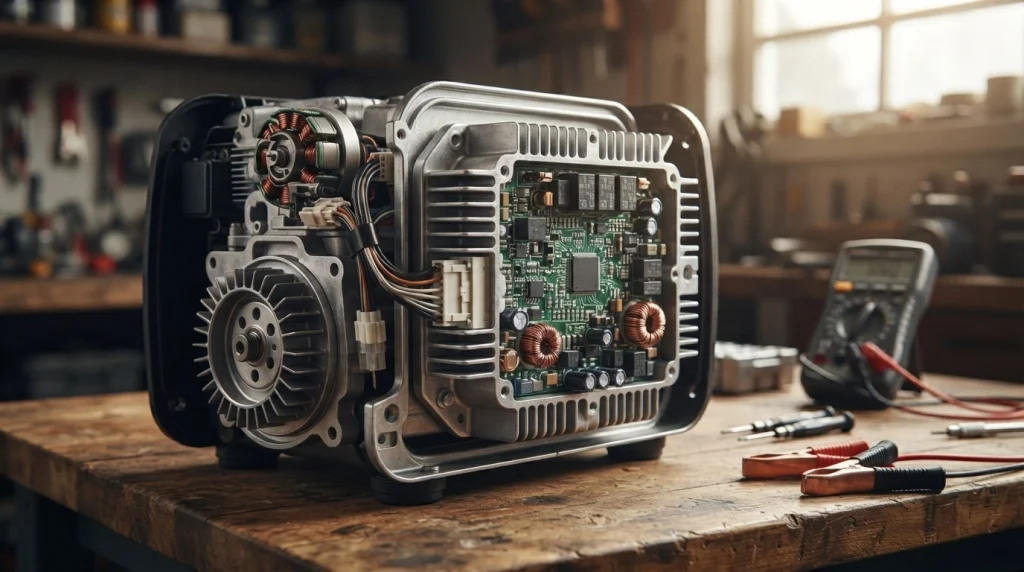
A gasoline inverter generator works in three clear steps. Fuel becomes motion, motion becomes raw electricity, and electronics rebuild that electricity into clean power.
The path is often called AC-DC-AC. It sounds complex, but each step has one job.
Step 1: The engine burns gasoline
The small gasoline engine spins a shaft. That shaft drives the alternator inside the unit.
Unlike a conventional generator, the engine does not have to hold a fixed speed. It can speed up or slow down as the load changes.
That is why an inverter generator gets quieter at light loads. The engine is simply working less hard.
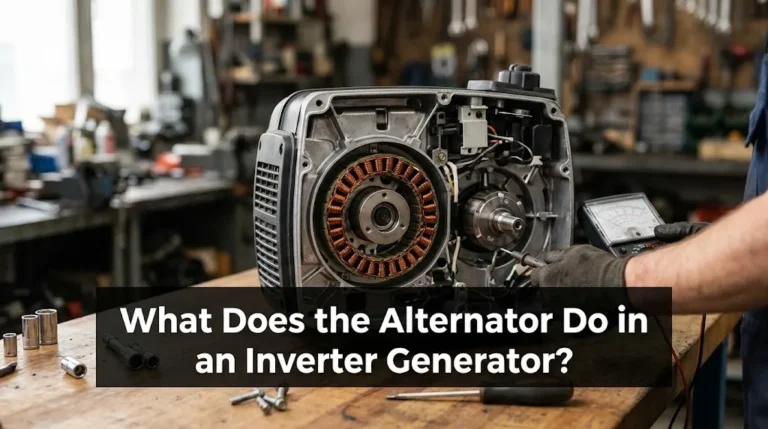
Step 2: The alternator makes raw AC power
The alternator turns that spinning motion into high-frequency AC power. At this stage, the power is rough and unsteady.
It is not ready for a laptop or a fridge control board. It still needs cleaning up.
Step 3: The inverter rebuilds clean power
The inverter first turns the raw AC into DC power. Then it rebuilds that DC into clean 120-volt AC at a steady 60 Hz.
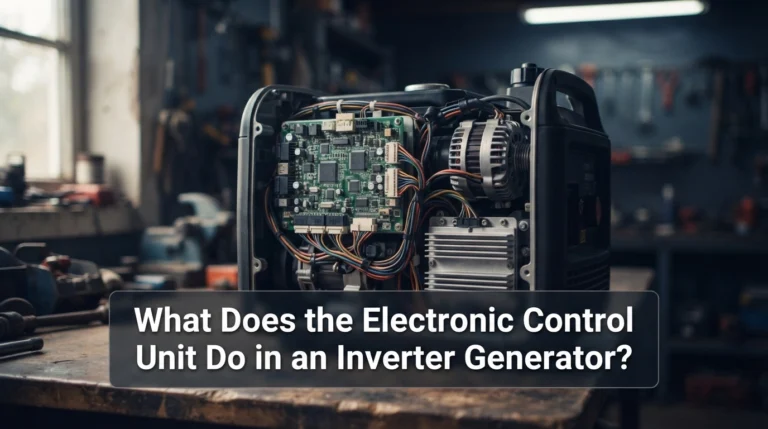
An electronic control unit watches voltage and frequency many times per second. It corrects small swings before they reach your devices.
The result is a stable sine wave with low THD. That is the core advantage of the design.
I noticed the difference during an outage when a window AC cycled on. My old open-frame unit surged and dipped, and the lights flickered.
The inverter unit handled the same load with a smoother sound and no flicker. The AC still drew a big starting surge, but the output stayed steady.
Safety note: Never run a generator indoors, in a garage, or near open windows, doors, or vents, even with the door open.
Section Takeaway: A gasoline inverter generator follows an AC-DC-AC path, and that extra electronic step is what turns rough engine power into clean, steady power for your devices.
Gasoline Inverter Generator vs Conventional Generator: What’s the Difference?
The two types burn the same fuel and do the same basic job. They differ in how they control speed, clean power, and handle noise.
A conventional generator runs at a fixed speed, usually 3,600 RPM, no matter the load. An inverter generator varies its speed to match demand.
That one design choice drives almost every other difference. It affects fuel use, noise, weight, and power quality.
| Feature | Gasoline Inverter | Conventional | Dual-Fuel Inverter |
|---|---|---|---|
| Power quality | Typically under 3% THD | Often 10-25% THD | Typically under 3% THD |
| Noise | Quieter, often 50-60 dBA at quarter load | Louder, often 68-75 dBA or more | Similar to gasoline inverter |
| Fuel use | Throttles down at light loads | Burns near full rate at any load | Throttles down; propane option adds flexibility |
| Size and weight | Compact and lighter for the watts | Larger and heavier, often open-frame | Slightly heavier than gasoline-only |
| Cost | Higher per watt | Lower per watt | Highest of the three, in general |
| Best for | Camping, RVs, electronics, light home backup | Heavy tools, large loads, tight budgets | Outages where fuel choice matters |
Check the spec sheet before you compare noise or runtime. Brands test at different loads and distances, so two numbers may not mean the same thing.
Conventional models still win on raw watts per dollar. They also handle large motor loads well, such as a big well pump or a table saw.
Inverter models win on clean power and quiet running. They are the better pick when the load list includes a laptop, a phone charger, or a CPAP machine.
Section Takeaway: Choose an inverter generator for clean, quiet power at modest loads, and a conventional generator when you need the most watts for the least money and clean power is not the priority.
What Can a Gasoline Inverter Generator Power?
A gasoline inverter generator can power a short list of essentials well. It cannot power a whole house at once.
Size decides the list. A 2,000-watt class unit covers a different set of loads than a 4,500-watt class unit.
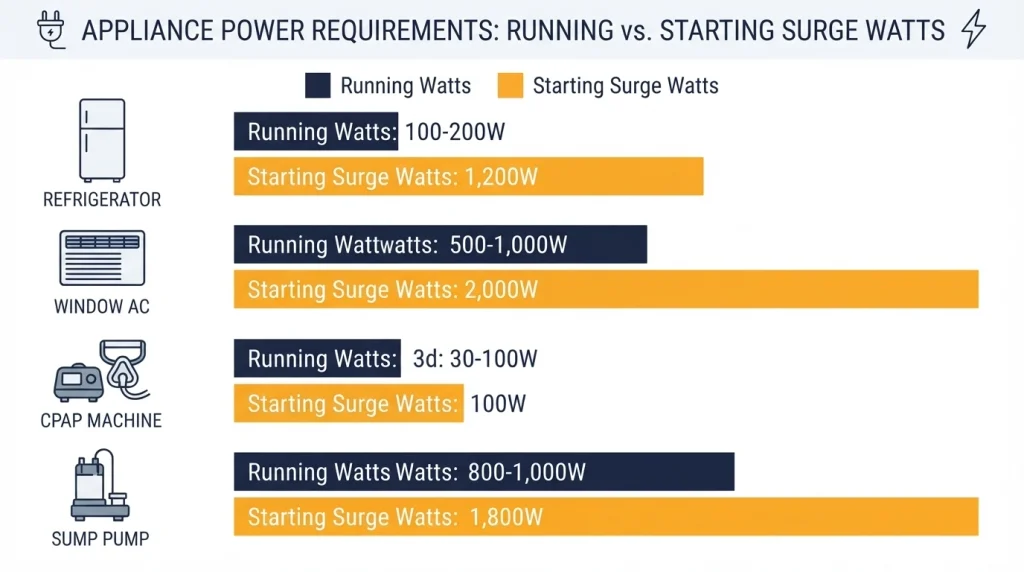
Start with running watts, which is the steady power a device uses. Then check starting watts, which is the short surge a motor needs to start.
A fridge is a good example. It may run on 100-200 watts, but it can need 1,000 watts or more for a second at startup.
That surge is why running watts vs starting watts matters more than the headline watt number. Add the running watts, then add the largest starting surge once.
| Device | Typical running watts | Typical starting watts |
|---|---|---|
| Refrigerator | 100-200 | 800-2,200 |
| Freezer | 100-200 | 800-1,200 |
| Laptop and phone chargers | 50-150 | 50-150 |
| CPAP machine | 30-100 | 30-100 |
| Window AC, small | 500-1,000 | 1,500-2,500 |
| Sump pump, 1/3 HP | 800-1,000 | 1,300-2,000 |
| Microwave, small | 600-1,200 | 600-1,200 |
These are general ranges, not specs for your exact model. Check the label on each device and the spec sheet for your generator.
A 2,200-watt inverter generator can often run a fridge, a few lights, phone chargers, and a CPAP machine together. It will struggle if you add a window AC at the same time.
A 3,500 to 4,500-watt unit gives you more room. It can handle a small window AC plus a fridge, if you stagger the starts.
For RV use, the math changes again. An RV air conditioner has a large starting surge, and a soft-start device can help in some cases.
See the best gas inverter generator for RV guide if camping power is your main use. It covers the sizes RV owners actually use.
Safety note: Use a transfer switch or interlock kit installed by a licensed electrician for any home connection, and never backfeed through a wall outlet.
Section Takeaway: Match the generator to your real load list, not the headline watts, and leave headroom for the largest motor start in the group.
How Long Does the Gas Last, and What Does Eco Mode Do?
Runtime depends on tank size, load, and eco mode. A small load can double the hours you get from one tank.
Most 2,000-watt class inverter generators carry about one gallon of fuel. At quarter load, many run for 8-10 hours on that tank.
At half load, the same tank may last 4-6 hours. At full load, expect far less.
Check the spec sheet for the load level behind each runtime claim. A runtime at 25% load is not the same as a runtime at 50% load.
What is eco mode?
Eco mode, also called eco-throttle or economy mode, lets the engine slow down at light loads. It saves fuel and cuts noise.
It works well for steady, light loads such as lights and chargers. It can struggle when a large motor starts suddenly.
Turn eco mode off before you start a fridge, a window AC, or a sump pump. The engine needs full speed ready for that surge.
Once the motor is running, you can often turn eco mode back on. Test this at home first, not during an outage.
How do I store fuel safely?
Buy only as much gasoline as you will use in the next few weeks. Fresh fuel starts easier and clogs fewer carburetors.
Add stabilizer if your manual allows it, and label the container with the purchase date. Rotate stored fuel into a car or lawn mower before it goes stale.
Run the generator under load for 20-30 minutes every month or two. That keeps the carburetor clear and the battery, if fitted, charged.
Change the oil after the break-in period, often after the first 20 hours, then follow the schedule in your manual. Low-oil shutdown protects the engine, but it is not a substitute for checks.
Safety note: Let the engine cool before refuelling, and keep fuel away from open flames, sparks, and hot exhaust parts.
Section Takeaway: Eco mode saves fuel and noise at light loads, but turn it off for motor starts, and keep fuel fresh if you want an easy start next time.
Is a Gasoline Inverter Generator Safe for Sensitive Electronics?
Yes, in general, a gasoline inverter generator is the safest portable generator type for sensitive electronics. That is its main selling point.
Low THD is the key. A clean sine wave with under 3% THD is close to utility power in most homes.
Laptops, phones, tablets, routers, TVs, and CPAP machines all fall in this group. They need stable voltage and frequency, not just any power.
That does not mean every inverter generator suits every device. Check the THD figure on the spec sheet, and look for a model that states it clearly.
See the best portable generator for sensitive electronics guide for models built around that use. It focuses on the low-THD picks.
What still needs care?
Overload is the most common problem. If you plug in too much, the generator may shut down or drop voltage.
Keep the total load under the running watts rating. Leave a margin of 10-20% when you can.
Use short, heavy-duty extension cords rated for outdoor use. Long, thin cords can drop voltage and heat up.
Ground the generator as your manual directs, and use GFCI outlets where fitted. Water and electricity are a bad mix, especially in rain.
Section Takeaway: A gasoline inverter generator is built for sensitive electronics, but low THD only helps if you stay inside the running-watts limit and use sound cords and outlets.
Who Should Buy a Gasoline Inverter Generator?
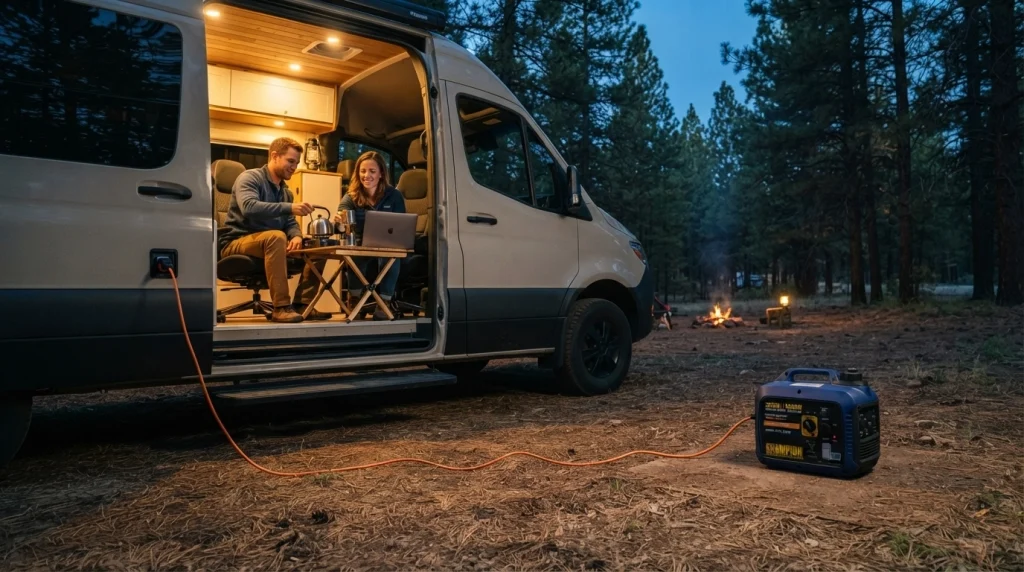
Buy one if you need portable, clean, quiet power for a short list of loads. Skip it if you need to run a whole house or a large workshop.
The best fit is a camper, an RV owner, or a homeowner who wants a fridge, lights, and chargers through a short outage. A tailgater or a small job-site user fits too.
A 2,000-watt class unit suits one person and a light load list. A 3,500-watt class unit suits a family, an RV, or a fridge plus a small AC.
Consider a dual-fuel model if you already store propane. It gives you a second fuel choice when gasoline is scarce.
See the gasoline portable generator buying guide before you compare models. It walks through size, outlets, and fuel choices in one place.
Who should skip it?
Skip a small gasoline inverter generator if you need 240-volt power for a well pump, an electric water heater, or a central AC. Those loads need a larger unit or a standby system.
Skip it too if you need power for days without refuelling. A small tank means frequent refills, even in eco mode.
A portable power station, also called a solar generator, may suit a very light load list better. It is silent and needs no fuel, but it stores far less energy.
For longer outages, plan your fuel supply first. A generator you cannot refuel is just a heavy box.
Safety note: Run any generator outdoors, at least 20 feet from your home, with the exhaust pointed away, and fit working carbon monoxide alarms inside. The portable generator carbon monoxide safety guide explains placement in more detail.
For official guidance, see the CDC carbon monoxide guidance and the Consumer Product Safety Commission generator safety information. The EPA and U.S. Department of Energy also publish general energy and generator guidance.
Section Takeaway: A gasoline inverter generator is the right tool for portable, clean power at modest loads, and the wrong tool for whole-home backup or very large motor loads.
Frequently Asked Questions
Is a gasoline inverter generator the same as a regular inverter generator?
Yes, in most cases. The term “inverter generator” describes the power-cleaning design, while “gasoline” names the fuel. A propane inverter generator uses the same inverter design with a different fuel.
Can a gasoline inverter generator run a refrigerator?
Yes, most 2,000-watt class models can run a standard fridge. Check the fridge’s starting watts first, and turn eco mode off for the start. Keep other large loads off until the fridge is running.
How long will a gasoline inverter generator run on one tank?
It depends on tank size and load. A 2,000-watt class unit may run 8-10 hours at quarter load, and far less at full load. Check the spec sheet for the load level behind the claim.
Is it safe to run a gasoline inverter generator in the rain?
No, not uncovered in rain. Water can damage outlets and create a shock risk. Use a generator-rated shelter that keeps rain off without blocking airflow or trapping exhaust, and keep cords dry.
Can I connect two gasoline inverter generators together?
Many models support parallel operation with a kit. Two matched units can double the available watts, but you must use the kit and models your manual approves. Check the manual before you buy a second unit.
Does a gasoline inverter generator need a break-in period?
Yes, most do. Run it under a light to moderate load first, then change the oil after the break-in period, often after the first 20 hours. Follow the exact schedule in your owner’s manual.
Can I use a gasoline inverter generator inside a garage?
No. Never run a generator indoors, in a garage, or in any enclosed space, even with the door open. Carbon monoxide can build up fast and is colourless and odourless. Run it outdoors, at least 20 feet from the home.
The Bottom Line
A gasoline inverter generator is a small, portable generator that turns gasoline into clean, stable power. Its inverter rebuilds rough engine power into a low-THD sine wave.
That clean power is why it suits laptops, phones, CPAP machines, and fridges. Its variable engine speed is why it runs quieter and uses less fuel at light loads.
As of 2026, it remains the best first pick for camping, RV use, and light home backup. Size it by running watts plus the largest starting surge, keep fuel fresh, and place it outdoors, at least 20 feet from home.
Do that, and a gasoline inverter generator will do the job it was built for: quiet, clean power where you need it, when you need it.

Hi, I’m Michael Turner. I own a generator workshop in the United States and founded HomeGeneratorBlog to share practical, hands-on guidance about generator installation, maintenance, troubleshooting, safety, and backup power solutions. My goal is to help homeowners make smarter, more confident decisions through clear and reliable information