What Are the Limitations of Using an Inverter Generator for Home Backup? 7 Real Limits on Watts
Quick Answer
The main limitations of using an inverter generator for home backup are limited wattage, no 240-volt power on most models, short fuel runtime, and manual setup. Most portable inverter models run essentials such as a fridge, lights, phones, and a furnace fan, but they cannot power an entire house at once.
The biggest limits at a glance
- Low wattage: Most models deliver 1,000 to 5,000 running watts, far below a full home load.
- No 240 volts: Most small inverter generators supply only 120 volts, so they cannot run central air, electric water heaters, or well pumps.
- Short runtime: A small fuel tank often lasts 4 to 10 hours at a light load, and heavy loads drain it faster.
- Manual operation: You must carry it outside, start it, refuel it, and connect loads by hand.
- Load juggling: You must turn some appliances off before you start a motor-driven load such as a fridge compressor.
- Higher cost per watt: Inverter models usually cost more than a conventional generator with the same wattage.
Use it well
- Pick your essentials first, add up their running and starting watts, and leave a safety margin.
- Use a transfer switch or interlock kit installed by a licensed electrician for safe house connections.
I’ve tested inverter generators in my driveway, in a garage outage drill, and during a real storm night when the fridge was the priority. They are quiet, clean, and easy to carry, and they earned a permanent spot in my backup plan.
They are not a whole-house solution, though. This guide explains where they fall short, what they can still do well, and when a larger generator or standby system makes more sense in 2026.
In This Guide
- What Is an Inverter Generator for Home Backup?
- Limited Power Output Is the Biggest Limitation
- What Can an Inverter Generator Not Run?
- How Long Can It Run? Runtime and Fuel Limits
- No Automatic Backup and Manual Setup
- Inverter vs Standby vs Conventional Generator
- Cost, Repairs, and Lifespan Limits
- Safety, Noise, and Placement Limits
- Frequently Asked Questions
- The Bottom Line: Should You Use One for Home Backup?
What Is an Inverter Generator for Home Backup?
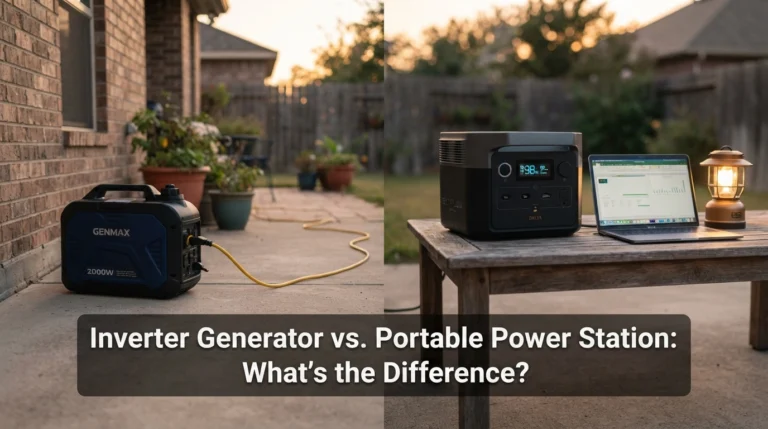
An inverter generator is a portable generator that makes clean, stable power for sensitive electronics. It converts raw engine power to direct current, then back to alternating current through an inverter module.
That extra step keeps voltage and frequency steady as the load changes. It also lets the engine slow down at light loads, which saves fuel and cuts noise.
Why do homeowners choose one?
Most buyers want quiet power for a fridge, lights, phones, a laptop, and a furnace fan. An inverter generator fits that job well, and you can carry many models with one hand.
I learned this the practical way during a short outage. My 2,000-watt unit ran the fridge, a few LED lights, and phone chargers without a hiccup.
What does it not replace?
It does not replace a standby generator or a large portable unit for whole-house use. Its compact engine and small inverter set a hard ceiling on wattage.
Think of it as a smart, portable helper, not a second utility feed. That mindset keeps expectations honest and prevents overload trips.
Section takeaway: An inverter generator gives you clean, quiet, portable power for essentials, but its small size sets a firm limit on total home backup.
Limited Power Output Is the Biggest Limitation
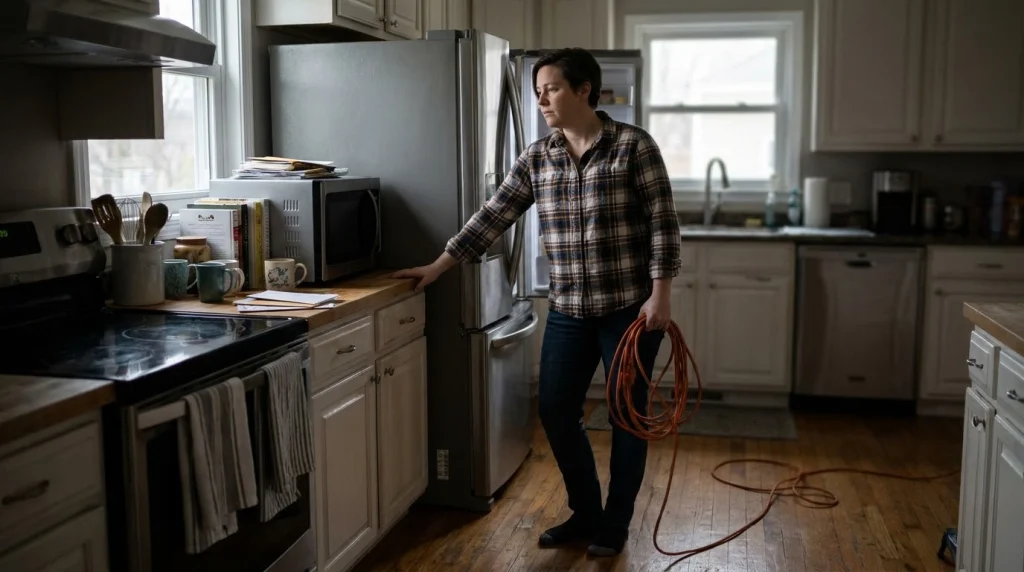
Most inverter generators for home use deliver 1,000 to 5,000 running watts. Larger models exist, but they cost more, weigh more, and still fall short of a typical whole-house load.
A home can draw far more than that when several appliances run at once. A fridge, freezer, sump pump, and microwave can push a small unit past its limit in seconds.
How do starting watts catch people out?
Motor-driven appliances need a short surge to start. A fridge may run on 150 watts but need 600 watts or more for a second at startup.
That surge is where I tripped my first inverter generator. The fridge started fine alone, then the microwave pushed the total over the edge and the overload light came on.
What size do you really need?
Start with a load list, not a guess. Add running watts for everything you want at once, then add the largest starting surge on top.
- 1,000 to 2,000 watts: Lights, phones, laptop, small fan, and a fridge in rotation.
- 3,000 watts: Fridge, freezer, lights, and a few small loads, with careful timing.
- 5,000 watts: More breathing room for a furnace fan, sump pump, and kitchen loads in turns.
- Over 5,000 watts: Look at large inverter models, parallel kits, or a standby system.
If you want a worked sizing check, read the guide on what size inverter generator you need to run a house. It walks through the same watt math in more detail.
Section takeaway: Wattage is the first wall you will hit, so size for starting watts and real simultaneous loads, not for the label on the box.
What Can an Inverter Generator Not Run?
An inverter generator cannot run every appliance in a normal home at the same time. High-heat and high-motor loads are the usual problem, not phones and laptops.
Clean power helps electronics, but clean power does not create extra watts. A 2,000-watt unit still has 2,000 watts, no matter how stable the output is.
Can it run 240-volt appliances?
Most small inverter generators cannot run 240-volt appliances. They supply 120 volts only, through standard household outlets.
That rules out central air, electric ranges, electric water heaters, electric dryers, and many well pumps. Some larger inverter models offer a 240-volt outlet, so check the spec sheet before you buy.
For the full picture on voltage, see can an inverter generator provide 240V power for household circuits.
Which common loads are hardest?
- Central air conditioning: Needs high starting watts and 240 volts on most systems.
- Electric heat: Space heaters and heat strips draw huge continuous watts.
- Well pump: Needs a strong starting surge and often 240 volts.
- Electric water heater: Draws several thousand watts for a long time.
- Microwave plus fridge: Each is fine alone, but together they can overload a small unit.
What can it run well?
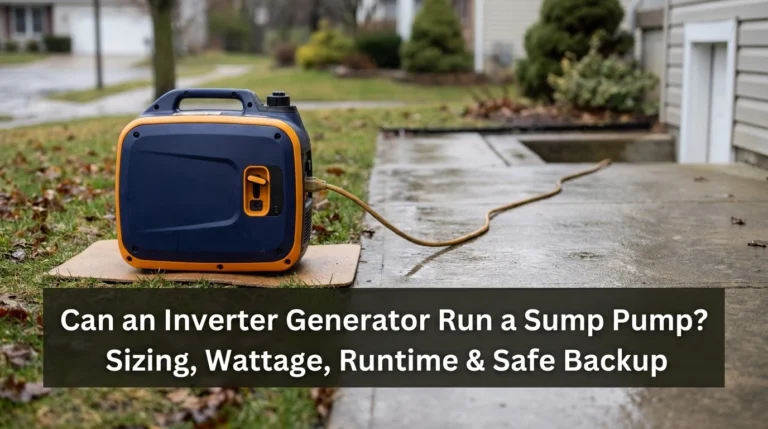
It runs a fridge, freezer, lights, internet router, TV, laptop, phone chargers, and a gas furnace fan. It also handles a sump pump if the watt math works and nothing else heavy starts at the same time.
Rotate loads in an outage. Run the fridge for a few hours, then switch to the freezer, then to a small cooking appliance.
Section takeaway: Most inverter generators handle essentials well, but 240-volt and high-heat loads are usually out of reach without a much larger unit.
How Long Can It Run? Runtime and Fuel Limits
Runtime is the next limit after wattage. A small tank and a small engine mean you must refuel often during a long outage.
Many compact models run 4 to 10 hours at a light load on one tank. At half load or more, that time drops fast.
Why does fuel use rise so fast?
Heavier loads make the engine work harder and burn more fuel. Eco mode helps at light loads, but it cannot beat the basic math of watts in and watts out.
I keep a simple rule in my outage kit. I plan fuel for the night, not for the tank, and I store fuel safely outside in approved containers.
What about overnight use?
Overnight use means a refuel stop in the dark, or a larger tank. Neither is ideal in rain, wind, or freezing weather.
- Small tank: Light, portable, and easy to carry, but needs frequent refills.
- Large tank: Longer runtime, but heavier and harder to move.
- Dual-fuel model: Propane can store longer than gasoline, but output often drops on propane.
- Parallel kit: Two units share the load, yet both still need fuel and attention.
Check your owner’s manual for fuel type, oil type, and storage guidance. The U.S. Environmental Protection Agency also publishes general fuel and emissions guidance for small engines.
Safety note: Never refuel a hot generator, and never store fuel indoors or near a running unit. Let the engine cool first, then refuel outside in fresh air.
Section takeaway: An inverter generator is built for short outages and light loads, not for days of hands-off, whole-house runtime.
No Automatic Backup and Manual Setup
An inverter generator does not start by itself when the power fails. You must notice the outage, go outside, set it up, start it, and connect your loads.
That sounds simple on a calm day. It feels very different at 2 a.m. in rain, when the house is dark and the fridge is warming.
What does manual setup involve?
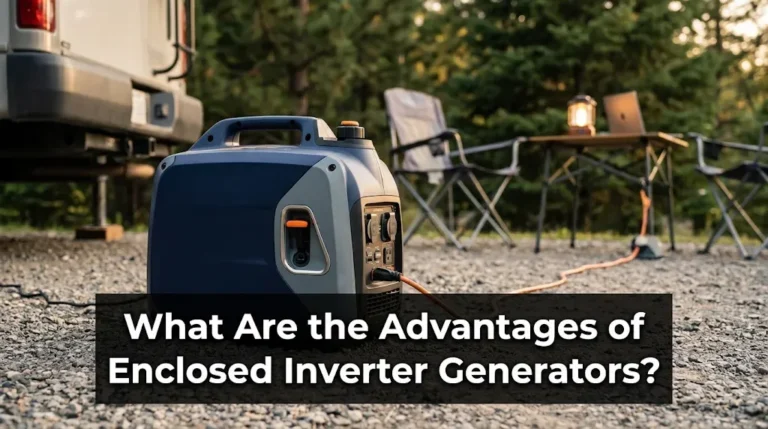
- Move it outside: Place it at least 20 feet from the house, away from doors and windows.
- Start it: Pull-start, push-button, or remote start, depending on the model.
- Connect loads: Use heavy-duty extension cords or a safe house connection.
- Manage loads: Turn appliances on one at a time and watch for overload.
- Refuel and check oil: Stop, cool, refuel, and check oil on the schedule in the manual.
Can you connect it to your house panel?
You can, but only through a safe, code-compliant method. A transfer switch or interlock kit, installed by a licensed electrician, is the safe route.
Never use a suicide cord or backfeed a house outlet. That can energize utility lines and put line workers at serious risk.
Learn the safe options in how to safely connect an inverter generator to a house before your first outage.
Safety note: Keep the generator outside and far from the house, and never run it in a garage, basement, or enclosed porch, even with a door open.
Section takeaway: Inverter generators need you to act, so they are a poor fit if you need power to return on its own while you are away or asleep.
Inverter vs Standby vs Conventional Generator
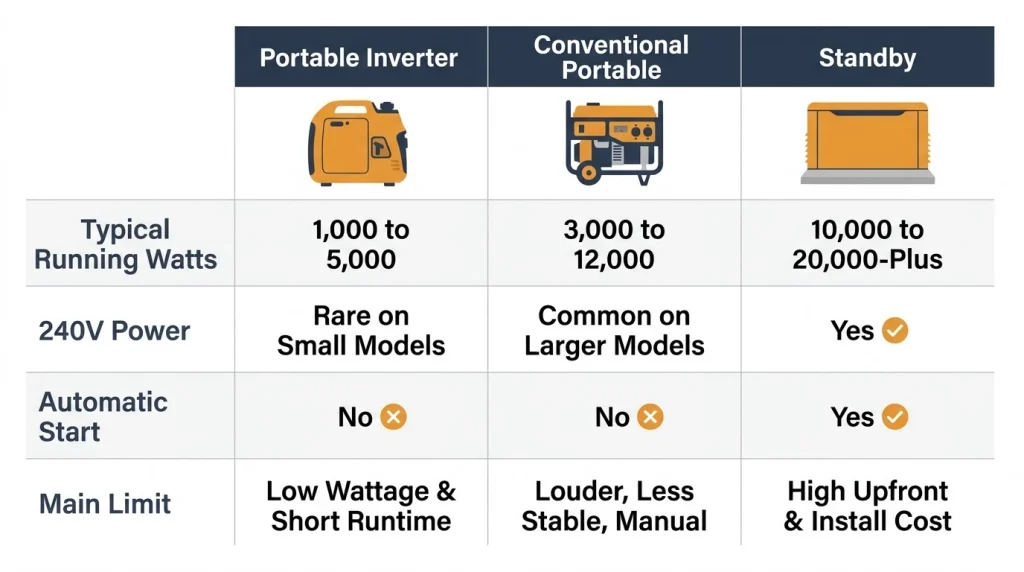
A direct comparison makes the trade-offs clear. Inverter models win on clean power and noise, while standby systems win on capacity and automation.
Conventional portable generators sit in the middle. They often cost less per watt, but they are louder and their power is less stable for sensitive electronics.
| Type | Typical running watts | 240V power | Automatic start | Main limit for home backup |
|---|---|---|---|---|
| Portable inverter | 1,000 to 5,000 | Rare on small models | No | Low total wattage and short runtime |
| Conventional portable | 3,000 to 12,000 | Common on larger models | No | Louder, less stable power, still manual |
| Standby | 10,000 to 20,000-plus | Yes | Yes | High upfront and install cost |
If whole-house coverage is the goal, compare the options in can inverter generators support whole-house backup systems. It explains when paralleling helps and when it still falls short.
For independent buying notes, Consumer Reports is a useful starting point for generator safety and performance topics.
Section takeaway: Choose an inverter for quiet, clean, portable essentials, and choose a larger or standby system when you need 240 volts, high watts, and automatic power.
Cost, Repairs, and Lifespan Limits
Inverter generators usually cost more per watt than conventional models. You pay for the inverter module, the quieter design, and the fuel-efficient engine control.
That premium makes sense for camping and sensitive electronics. It makes less sense if you only need raw watts for a short outage.
What costs more over time?
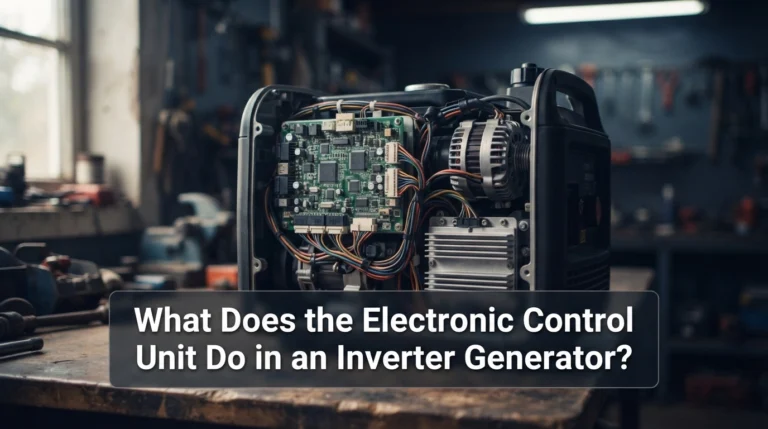
Repairs can cost more, too. The inverter module and control board are electronic parts, and a failure can be costly to diagnose and replace.
Small engines also need regular care. Oil changes, air filter cleaning, spark plug checks, and fresh fuel matter more than most owners expect.
- Oil: Check the level before each use and change it on the manual schedule.
- Fuel: Use fresh fuel or a stabilizer, and do not leave old gasoline in the tank for months.
- Storage: Run the unit monthly for a short test, then store it dry and covered in a safe place.
- Parts: Keep the model and serial number handy when you order filters, plugs, or a replacement battery.
For a broader view of the trade-offs, read the downside of inverter generators. It covers cost, size, and repair points in one place.
Section takeaway: Inverter generators cost more up front and can cost more to repair, so regular maintenance is the best way to protect that investment.
Safety, Noise, and Placement Limits
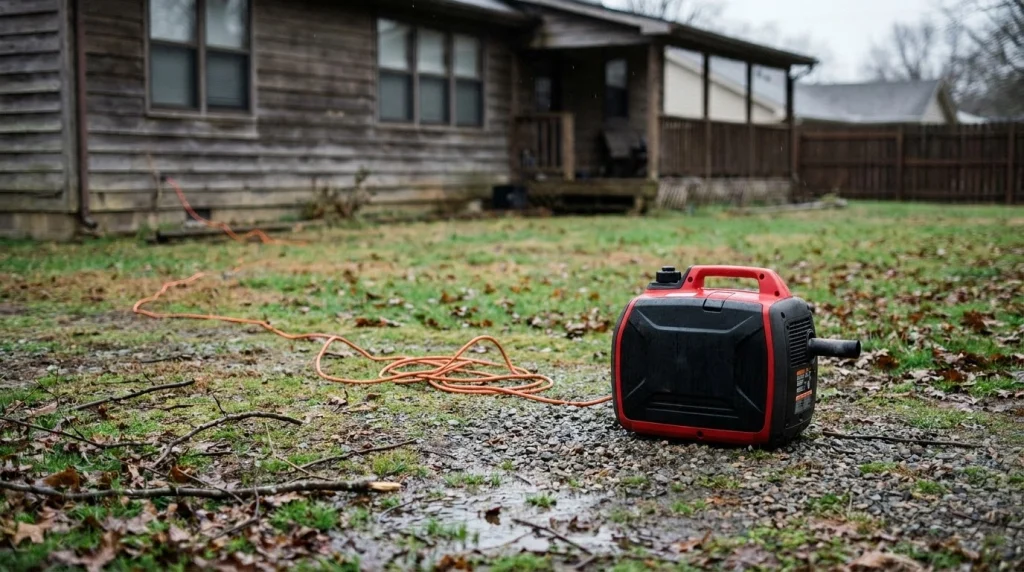
Inverter generators are quieter than most conventional models, but they are not silent. They still make engine noise, exhaust heat, and carbon monoxide.
Placement is a hard limit, not a preference. You cannot run one indoors, in a garage, or close to a window, no matter how quiet it sounds.
What are the main safety limits?
Carbon monoxide is the biggest risk. It is colorless and odorless, and it can build up fast in an enclosed space.
Install battery-powered carbon monoxide alarms on every level of your home. Test them monthly and replace batteries on schedule.
The U.S. Consumer Product Safety Commission publishes generator safety guidance, including placement distance and alarm advice.
What about weather, theft, and noise rules?
- Rain: Keep the unit dry, but never cover it while it runs unless you use a purpose-built running cover with safe airflow.
- Heat: Leave clear space around the exhaust and air intake so the engine can cool.
- Theft: A light, portable unit is easy to carry away, so lock it down when you can.
- Noise rules: Check local quiet hours and HOA rules before you run it overnight.
For general energy and backup planning, the U.S. Department of Energy is a stable source for home energy topics.
Safety note: Run the generator at least 20 feet from your home, point the exhaust away from the house, and never run it under a porch roof or in a tent.
Section takeaway: Safety and placement limits are non-negotiable, so plan your outdoor spot, cords, fuel, and alarms before the outage starts.
Frequently Asked Questions
Can an inverter generator power a whole house?
No, most portable inverter generators cannot power a whole house at once. They can run selected essentials, but central air, electric heat, and other 240-volt loads usually need a much larger or standby system.
What size inverter generator do I need for home backup?
Most homes need at least 3,000 to 5,000 running watts for a useful set of essentials. Add up running watts, add the largest starting surge, and leave a margin before you choose a model.
Can I run my fridge and freezer on an inverter generator?
Yes, in most cases you can run a fridge and freezer, but not always at the same time on a small unit. Start one, let it settle, then start the other, and keep other heavy loads off while they cycle.
Do inverter generators work in cold weather?
Yes, they can work in cold weather, but starting may be harder and fuel can be an issue. Store the unit in a dry place, use the oil grade in your manual, and test it before winter.
Can I use two inverter generators together?
Yes, many models support a parallel kit that links two matching units. It adds watts and runtime, but it also adds cost, fuel use, and setup time.
Is an inverter generator safe for electronics?
Yes, inverter generators are generally safe for phones, laptops, TVs, and other sensitive electronics because they produce stable, low-distortion power. Always check the total harmonic distortion rating in the manual for your model.
The Bottom Line: Should You Use One for Home Backup?
Use an inverter generator when your goal is quiet, clean power for essentials during a short outage. It is a strong fit for a fridge, lights, phones, a laptop, and a furnace fan.
Do not rely on one small unit for whole-house backup, 240-volt loads, or multi-day outages without a clear fuel and load plan. In those cases, a larger inverter model, a parallel pair, a large portable generator, or a standby system is the safer choice.
Pick your must-run loads first, size for starting watts, and set up a safe outdoor spot before the next storm. That simple plan turns a limited tool into a reliable one.

Hi, I’m Michael Turner. I own a generator workshop in the United States and founded HomeGeneratorBlog to share practical, hands-on guidance about generator installation, maintenance, troubleshooting, safety, and backup power solutions. My goal is to help homeowners make smarter, more confident decisions through clear and reliable information