What Are the Advantages of Enclosed Inverter Generators?
Quick Answer
Enclosed inverter generators are quieter, cleaner-running, and easier to live with than open-frame models, because a sound-dampening case wraps the engine and inverter module. That case cuts noise, shields parts from rain and dust, and helps the generator hold a steady, low-distortion output for phones, laptops, and medical devices. If you want backup power that will not dominate a campsite or a quiet street, learn how an inverter generator works first, then match its size to your loads.
The biggest advantages at a glance
- Quieter operation: The case absorbs engine and exhaust noise, so conversation stays possible nearby.
- Cleaner power: The inverter holds voltage and frequency steady, with low distortion for sensitive electronics.
- Better fuel use: Eco-throttle slows the engine under light loads, stretching each tank further.
- Weather protection: The housing shields the engine and outlets from light rain, dust, and knocks.
- Easier to carry: Most enclosed models are compact, with a handle and a balanced shape.
Before you buy
- Add up running watts first, then check starting watts for motors like a fridge compressor.
- Check the spec sheet for noise, runtime, and THD, since figures vary by size and brand.
I have run generators through multi-day outages, on campsites, and beside an RV. The enclosed ones hum instead of roar.
In This Guide
- What Is an Enclosed Inverter Generator?
- Why Are Enclosed Inverter Generators Quieter?
- How Does the Enclosure Help With Clean Power and Fuel Use?
- Enclosed vs Open-Frame Inverter Generators: What Is the Real Difference?
- Where Do Enclosed Inverter Generators Work Best?
- What Are the Trade-Offs You Should Know Before You Buy?
- How Do You Choose the Right Enclosed Inverter Generator?
- Frequently Asked Questions
What Is an Enclosed Inverter Generator?
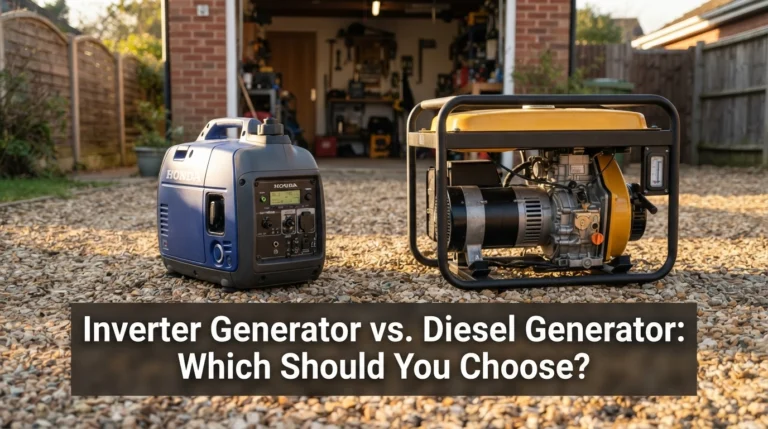
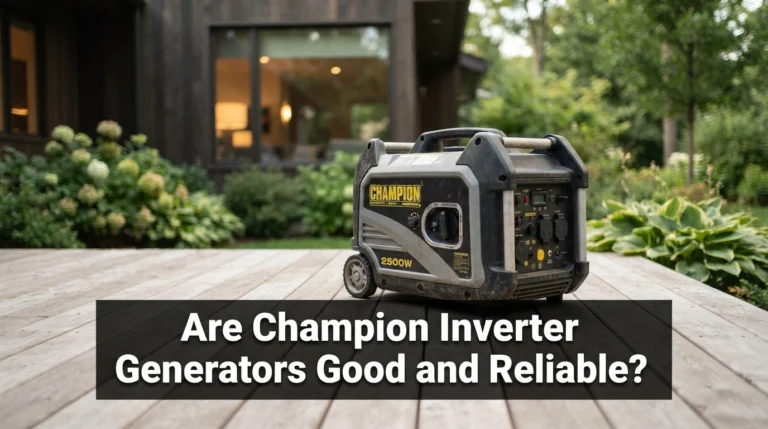
An enclosed inverter generator is a portable inverter generator with its engine, alternator, and inverter module sealed inside a moulded plastic case. The case leaves vents for air and exhaust, but it covers the moving parts.
That case shapes almost every advantage below. It muffles sound and keeps weather off.
How is it different from a suitcase generator?
The two terms often mean the same thing in shops. A suitcase generator is usually a small enclosed inverter with a top handle, built to carry like luggage.
What sits inside the case?
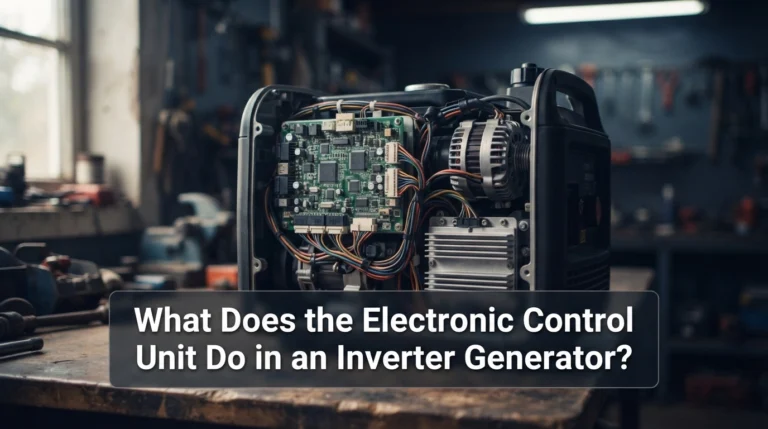
Inside are the same core parts as any inverter generator. The engine spins an alternator, the inverter turns that power into stable alternating current, and a control board manages speed and output.
- Engine: Burns gasoline or, on dual-fuel models, propane too.
- Inverter module: Rebuilds power into a clean sine wave, a smooth, grid-like waveform.
- Eco-throttle: Lets the engine slow down when demand drops.
- Case and vents: Dampen noise and guide cooling air through the unit.
Section takeaway: The case is not decoration. It makes an enclosed inverter quieter, tidier, and better shielded than an open-frame machine.
Why Are Enclosed Inverter Generators Quieter?
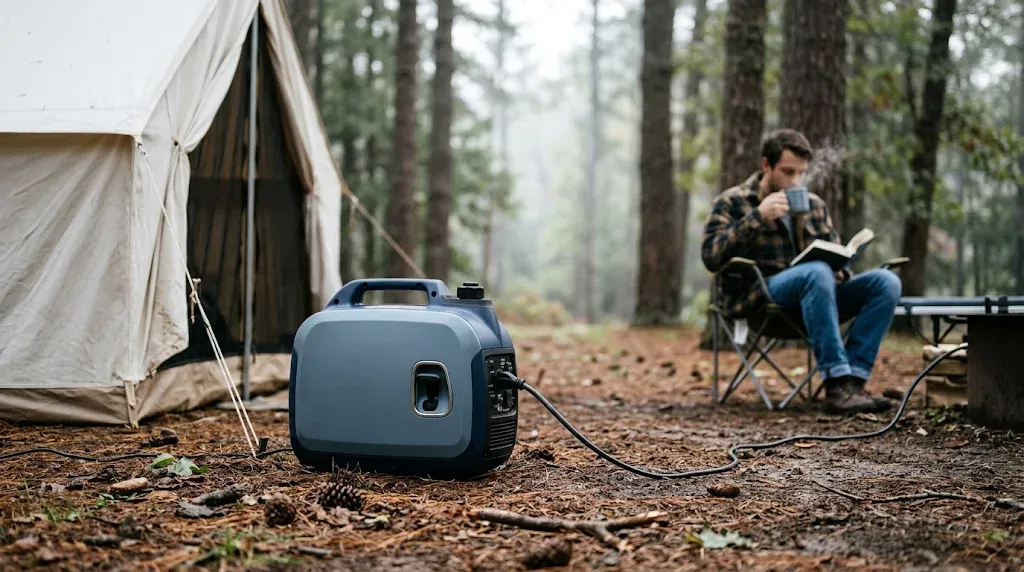
Noise is the first advantage most owners notice, and it is the reason many people switch. An enclosed case traps sound at the source instead of letting it spread.
Open-frame generators leave the engine exposed, so every combustion pulse reaches your ears directly. A closed case breaks that path.
How much quieter are they in practice?
Small enclosed inverters often rate in the high 40s to low 60s in decibels at quarter load, measured at about 23 feet. Larger enclosed models run louder, but they still tend to sit below open-frame units of similar output.
Check the spec sheet for the exact figure and its test load. A quarter-load number will not match full load.
Why does the case help so much?
- Insulated panels: Absorb engine clatter before it leaves the case.
- Tuned muffler: Softens exhaust pulses, the sharpest sound a small engine makes.
- Eco-throttle: Drops engine speed under light loads, so the unit idles down.
I once ran a small enclosed unit outside a tent while a neighbour’s open-frame machine rattled two sites away. Mine faded into the background, and nobody complained.
For a shortlist of the quietest options on the market, see our guide to the quietest portable generators. Compare their rated noise at the same load before you shortlist.
Section takeaway: The enclosure, muffler, and eco-throttle make these the quietest portable generators most buyers can own.
How Does the Enclosure Help With Clean Power and Fuel Use?
The enclosure itself does not make the power clean. The inverter module does that, and the case gives it a stable, protected home.
What is clean power, and why does it matter?
Clean power means a smooth sine wave with steady voltage and frequency. Total harmonic distortion, or THD, measures how far the wave strays from that ideal.
Inverter generators hold THD under 3%, which suits laptops, phones, routers, and CPAP machines. Conventional generators can run far higher.
If you plan to charge a laptop or run a fridge with electronic controls, look for models marketed for low-THD portable generators. Then confirm the THD figure on the spec sheet, not just in a headline.
How does eco-throttle save fuel?
Eco-throttle, also called economy mode, lets the engine slow when demand is low. A phone charger draws little power, so the engine does not need to race.
That slower running stretches a tank by hours on light loads, and cuts noise further.
Turn eco mode off for loads with big starting surges, like a fridge compressor or a window air conditioner. The engine needs full speed ready when that surge hits.
Real runtime still depends on tank size and load. A 2,000-watt enclosed unit may run 8 to 10 hours at quarter load. Larger tanks run longer at the same share of capacity.
Safety note: Run any generator outdoors, at least 20 feet from your home, with exhaust pointed away from windows, doors, and vents. Never run one in a garage, even with the door open.
Section takeaway: Clean power comes from the inverter, fuel savings from eco-throttle, and the enclosure protects both.
Enclosed vs Open-Frame Inverter Generators: What Is the Real Difference?
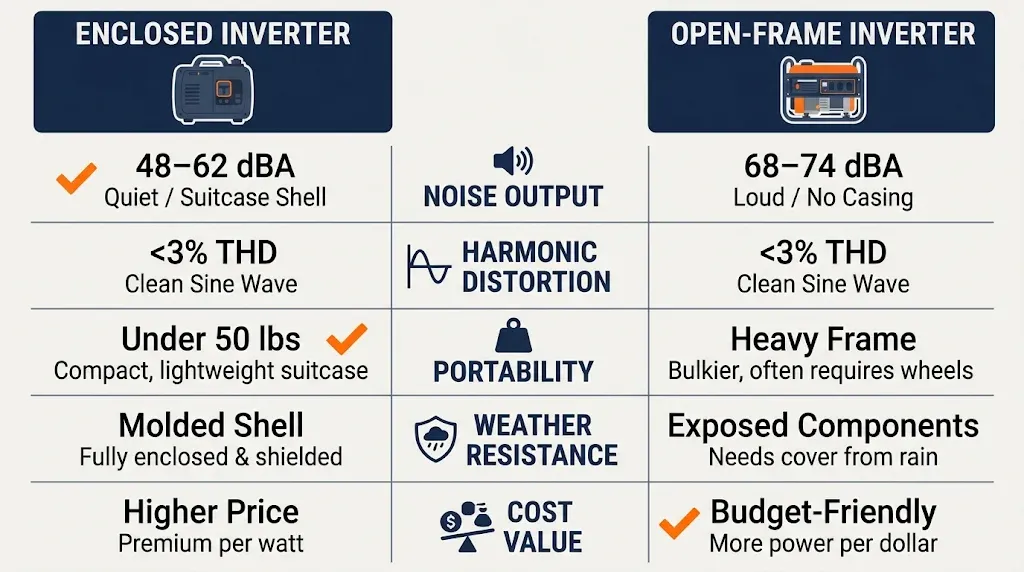
Both types use inverter technology, so both deliver clean power. The difference is the frame around it, and that frame changes noise, size, and cost.
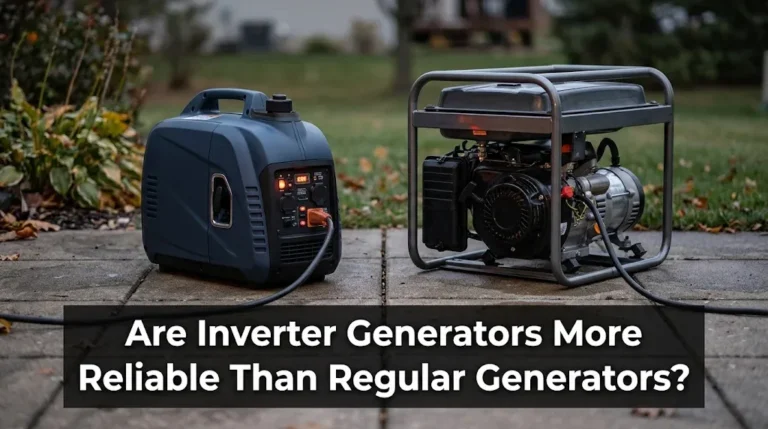
Open-frame inverters leave the engine exposed on a steel tube frame. Enclosed inverters hide it inside a case, trading easy access for quiet and protection.
| Feature | Enclosed inverter | Open-frame inverter | Conventional portable |
|---|---|---|---|
| Noise | Quietest, often high 40s to low 60s dBA at quarter load | Louder, with engine sound unshielded | Loudest of the three in most cases |
| Clean power (THD) | Low, typically under 3% | Low, typically under 3% | Higher, often well above 5% |
| Fuel efficiency | Good, eco-throttle standard on most models | Good, eco-throttle on many models | Lower, engine runs at fixed speed |
| Portability | Compact, smaller sizes often under 50 lbs | Bulkier frame, often heavier for the same watts | Heavy, usually needs wheels for larger sizes |
| Weather protection | Case shields parts from light rain and dust | Exposed parts need a separate shelter in rain | Exposed parts need a separate shelter in rain |
| Typical price | Higher per watt than open-frame | Mid-range, often cheaper per watt | Lowest per watt, but noisier and rougher power |
| Best for | Camping, RVs, home backup for electronics | Job sites, larger loads, budget buyers | Heavy tools and simple resistive loads |
Use the table as a guide, not a verdict. A large enclosed inverter can cost more than a small open-frame one.
Section takeaway: Enclosed and open-frame inverters share clean power, but the case wins on noise and protection while open-frame wins on price per watt.
Where Do Enclosed Inverter Generators Work Best?
Enclosed inverters shine wherever people are close by. Their quiet, compact design fits places where a loud open-frame unit would draw complaints.
They also fit sensitive loads well. That combination of quiet and clean power is hard to beat for everyday backup.
Are they good for camping and RV trips?
Yes, and this is their home turf. Campsites often set quiet hours, and a low hum is far easier to live with than a rattling frame.
Small enclosed units tuck into an RV storage bay or a car boot. Many run a mini fridge, lights, and chargers for a weekend on a few gallons.
For larger RV loads, like a roof air conditioner, check starting watts first. You may need a bigger enclosed unit, or two smaller units linked with a parallel kit.
What about home backup during an outage?
Enclosed inverters cover the essentials well: fridge, freezer, lights, router, phones, and a CPAP machine. A 2,000 to 3,500 running-watt unit handles most of that list, if you stagger the big starts.
They will not run a whole house like a standby generator. Central air, electric water heaters, and well pumps need far more watts.
Our guide to generators for sensitive electronics explains which loads need clean power most, and why a fridge with electronic controls counts.
Safety note: Keep the generator outdoors and away from tents, RV doors, and windows, even when it runs quietly. Carbon monoxide has no smell, so place the unit downwind and fit CO alarms indoors as the CDC and CPSC advise.
Section takeaway: Enclosed inverters are best around people and electronics, from campsites to quiet home backup.
What Are the Trade-Offs You Should Know Before You Buy?
No generator type wins on every front, and enclosed inverters are no exception. Their advantages come with real costs and limits.
Knowing them now saves a return later.
Do enclosed inverters cost more?
Yes, usually. The case, insulation, and tuned muffler add manufacturing cost, so you pay more per watt than for an open-frame inverter.
That premium buys quiet and protection, not extra watts. If your budget is tight and noise does not matter, an open-frame model gives you more power for the same money.
Can they overheat?
A factory enclosure has vents and cooling channels, so it should not overheat in normal outdoor use. Problems start when airflow is blocked, or the unit runs inside a shed, tent, or box.
Never cover a running generator with a tarp or a DIY enclosure. That traps heat and exhaust, and it creates a serious carbon monoxide risk.
Our article on whether an enclosed generator can overheat explains the difference between a factory case and a separate shelter, and why ventilation matters in both.
Are they harder to service?
Sometimes, yes. Oil changes and air-filter checks can mean removing side panels, while an open-frame unit leaves everything in reach.
Routine care is infrequent, so that is a small price for most owners. Follow the oil-change interval in your manual, and keep vents clear.
- Higher price per watt: Budget for the quiet, not just the watts.
- Lower top output: Most enclosed models top out below the largest open-frame units.
- Heavier case: The housing adds some weight.
- Panel removal: Servicing takes a few extra minutes behind covers.
Section takeaway: Enclosed inverters cost more per watt and cap out lower, but those trade-offs rarely cancel their quiet edge.
How Do You Choose the Right Enclosed Inverter Generator?
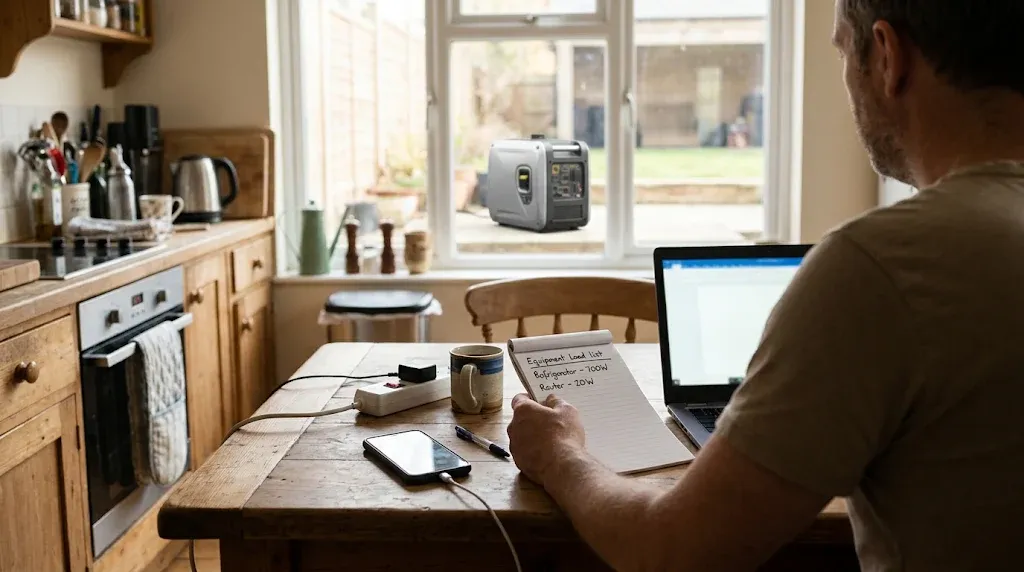
Start with your loads, not with a brand. A generator that cannot start your fridge is no bargain, however quiet it is.
Work through the list below in order.
How do you size one correctly?
List every load you want to run at once, with running watts. Then add the highest starting watts among motor loads, like a fridge or pump.
That total is your minimum running watts, plus a safety margin of about 20%. If the total lands near a model’s limit, step up a size or stagger your loads.
- Add running watts: Fridge, lights, router, chargers, and CPAP together.
- Add the biggest start: Count only one motor starting at a time.
- Check the outlets: Make sure the unit has the 120V outlets and any RV outlet you need.
- Check runtime: Compare tank size and runtime at 25% load on the spec sheet.
- Check noise and THD: Confirm both figures at the same load before you compare brands.
What features are worth paying for?
Prioritise features that match how you will actually use the unit.
- Electric start: Worth it on larger units, or if pull-starting is hard for you.
- Parallel capability: Lets two small units join for bigger loads later.
- Fuel gauge: Saves guesswork during a long outage night.
- CO shutoff: Adds a safety layer if carbon monoxide builds up nearby.
- Dual fuel: Lets you run propane when gasoline is scarce or stale.
As of 2026, most reputable enclosed inverters include eco-throttle and overload protection as standard. Treat those as baseline, not premium extras.
For broader safety and energy guidance, see the U.S. Consumer Product Safety Commission and the Centers for Disease Control and Prevention.
The U.S. Department of Energy covers energy guidance, and Consumer Reports publishes independent generator test notes.
Safety note: For home hookups, use a transfer switch or interlock kit installed by a licensed electrician. Never backfeed a generator through a household outlet, and check your owner’s manual before use.
Section takeaway: Size by running watts plus your biggest motor start, then verify noise, runtime, and THD on the spec sheet.
Frequently Asked Questions
Are enclosed inverter generators quieter than open-frame models?
Yes, in most cases, because the case, insulation, and tuned muffler absorb sound while eco-throttle slows the engine under light loads. Always compare rated noise at the same load, since figures vary by size and brand.
Can an enclosed inverter generator run a refrigerator?
Yes, if it covers running watts plus the fridge’s starting surge. A typical fridge needs 100 to 200 running watts, but its compressor can draw 800 to 1,200 watts for a second at start-up.
Are enclosed inverter generators safe for laptops and phones?
Yes, they are among the safest portable options for electronics. The inverter holds THD low, usually under 3%, which suits laptops, phones, routers, and CPAP machines.
Can you run an enclosed inverter generator in the rain?
Light rain is less risky than with an open-frame unit, since the case shields outlets and parts. Even so, shelter it under an open-sided canopy, keep it outdoors, and never run it in an enclosed space.
Do enclosed inverter generators use less fuel?
They often do on light loads, thanks to eco-throttle slowing the engine when demand drops. Runtime still depends on tank size and load, so compare figures at 25% load.
What size enclosed inverter generator do I need for camping?
Most campers manage with 2,000 to 2,200 starting watts for lights, chargers, a mini fridge, and a fan. Add a bigger unit, or a parallel pair, if you want to run an RV air conditioner.
Enclosed inverter generators earn their place by being quiet, clean, and easy to live with. They will not power a whole house, but for camping, RV trips, and quiet home backup, that trade is often worth it.
List your loads, check noise and THD on the spec sheet, and pick the smallest unit that covers your biggest start with room to spare.

Hi, I’m Michael Turner. I own a generator workshop in the United States and founded HomeGeneratorBlog to share practical, hands-on guidance about generator installation, maintenance, troubleshooting, safety, and backup power solutions. My goal is to help homeowners make smarter, more confident decisions through clear and reliable information