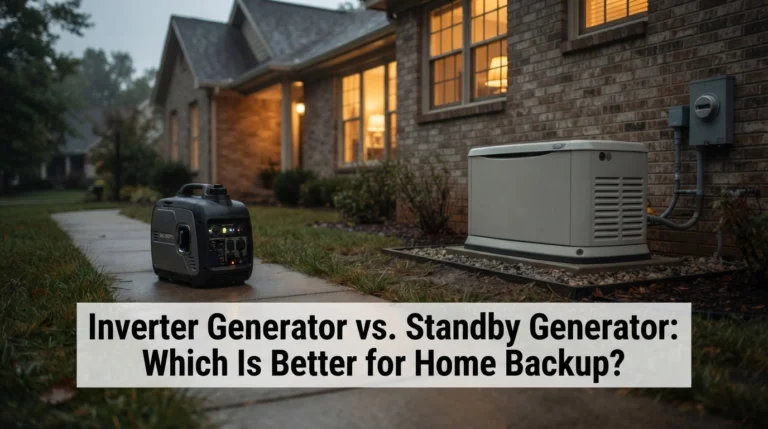
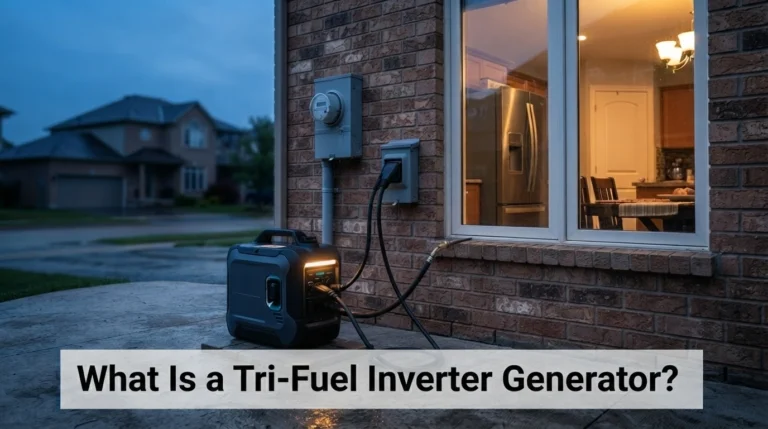
Inverter Generator vs. Diesel Generator: Which Should You Choose?
Quick Answer
Choose an inverter generator for quiet, portable, clean power for sensitive electronics, camping, RV trips, and short home outages. Choose a diesel generator for long runtimes, heavy loads, and extended home backup, especially when you need more power for many hours at a time. Diesel inverter generators exist too, but they are larger, heavier, and far less common than gasoline inverter models.
The Short Verdict
- Best for quiet use: Inverter generators run quieter and adjust engine speed to match the load.
- Best for long outages: Diesel generators often run longer and handle sustained heavy loads better.
- Best for electronics: Inverter power has low total harmonic distortion, so it is safer for laptops, phones, and CPAP machines.
- Best for portability: Small inverter models are light enough to carry, while most diesel models are not.
- Best for fuel storage: Diesel stores longer than gasoline, but it still needs clean, dry storage and regular use.
Start Here
- Add up the running watts and starting watts of the appliances you must power, then match that total to a generator with enough headroom.
- Decide how long you need power, how much noise you can live with, and whether you will move the unit often.
I’ve run both types through real outages, campsite nights, and long workdays. The right choice depends less on brand hype and more on how you will use it.
This guide compares inverter and diesel generators on power quality, noise, fuel, runtime, size, cost, and upkeep. You’ll leave with a clear pick for your home, RV, or job site.
In This Guide
- What Is an Inverter Generator?
- What Is a Diesel Generator?
- Inverter vs. Diesel Generator at a Glance
- Which Is Quieter and Safer for Electronics?
- Fuel Cost, Runtime, and Storage: What Costs More Over Time?
- How Much Power Do You Actually Need?
- Which Should You Choose for Home, RV, Camping, and Job Sites?
- Maintenance, Safety, and Long-Term Ownership
- Frequently Asked Questions
What Is an Inverter Generator?
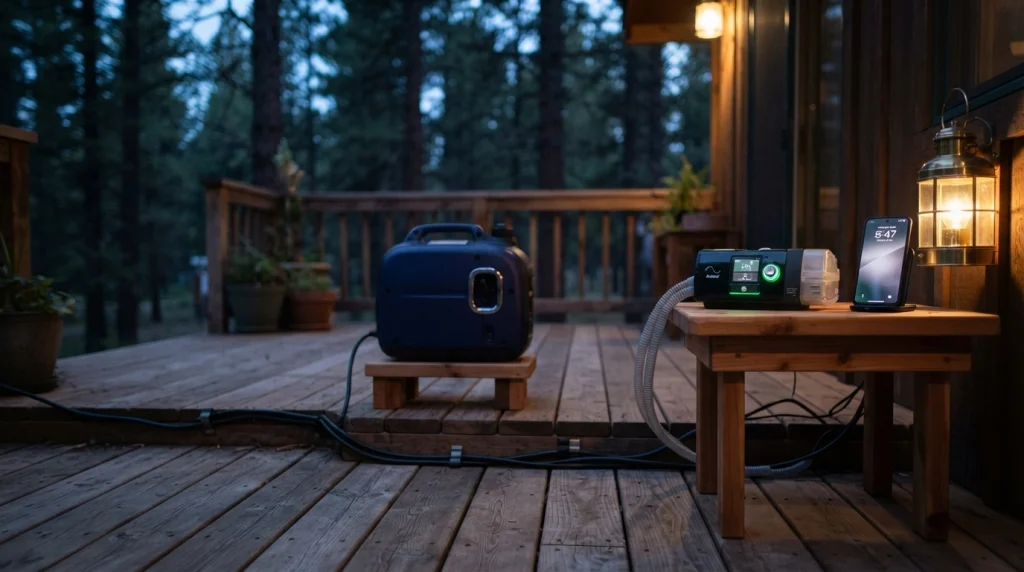
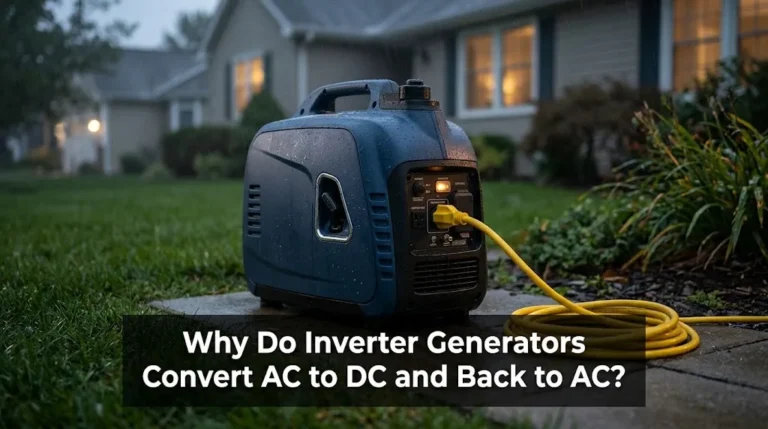
An inverter generator is a portable generator that creates clean, stable power by converting raw alternating current (AC) to direct current (DC), then back to AC at a steady frequency.
That extra step sounds technical, but the result is simple. Your power stays smooth even when the load changes.
Most inverter generators run on gasoline, though propane and dual-fuel models are also common. They use an electronic control unit to adjust engine speed to match demand.
At low load, the engine slows down. That saves fuel and cuts noise.
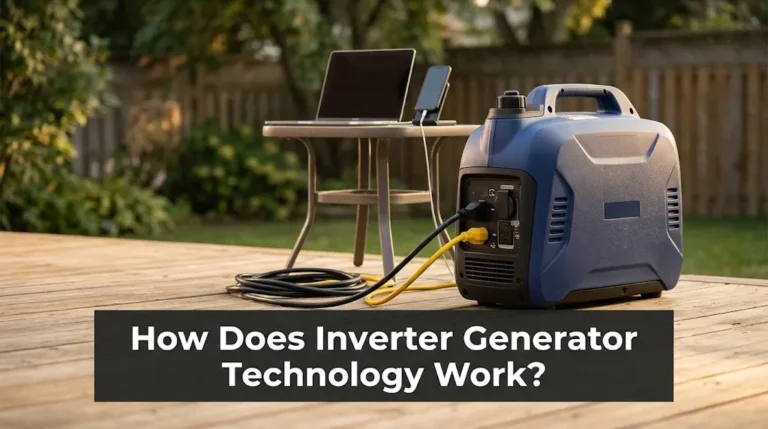
How does inverter technology work in plain terms?
A conventional generator spins at a fixed speed to hold 60 Hz output. An inverter generator does not need to do that.
Its inverter module rebuilds the power after the engine makes it. The engine can run slower when you only charge a phone or run a few lights.
That is why eco mode matters so much. Eco-throttle, or economy mode, lets the unit sip fuel during light use and ramp up when a fridge compressor kicks on.
What are inverter generators best for?
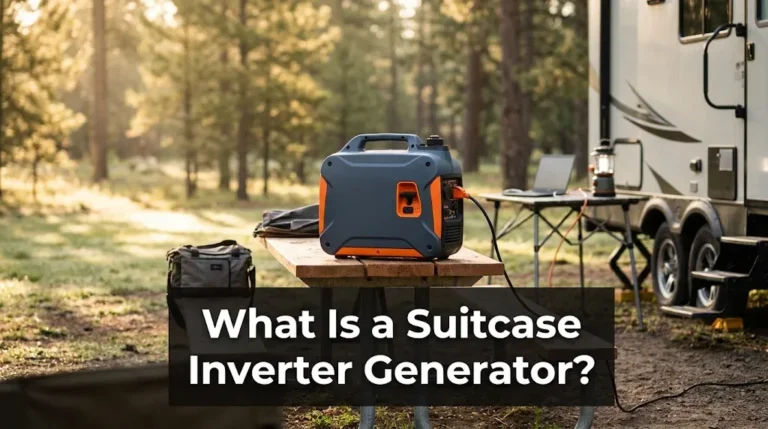
- Camping and RV use: Quiet operation keeps campsite neighbors happy.
- Sensitive electronics: Low total harmonic distortion (THD), often under 3%, protects laptops, phones, and medical devices.
- Short home outages: A 2,000- to 4,500-watt model can run a fridge, lights, phones, and a CPAP machine.
- Portable work: Light models are easy to load, carry, and store.
I once ran a fridge, a CPAP, and phone chargers through a three-day outage on a mid-size inverter generator. It was not silent, but it was quiet enough to sleep near it outside.
The trade-off is size. Most portable inverter generators top out around 3,000 to 7,500 running watts unless you link two in parallel.
Section Takeaway: An inverter generator trades raw size for clean, quiet, fuel-efficient power, which makes it ideal for portable use and sensitive electronics.
What Is a Diesel Generator?
A diesel generator burns diesel fuel in a compression-ignition engine to spin an alternator and make electricity. It does not use spark plugs like a gasoline engine.
Diesel engines are built heavier and run at lower speeds in many designs. That helps them last longer under steady, heavy loads.
Most diesel generators are open-frame portable models, towable units, or fixed standby systems. Small portable diesel models exist, but they are far less common than gasoline inverter models.
Why do people choose diesel for backup power?
Diesel fuel holds more energy per gallon than gasoline. That often means longer runtime from the same size tank.
Diesel engines also handle sustained loads well. They can run a well pump, furnace blower, sump pump, and fridge together for hours.
For farms, workshops, and long outages, that stamina matters. A diesel unit can feel like a workhorse rather than a weekend tool.
What are the downsides of diesel?
- Weight and size: Diesel units are often heavy, bulky, and hard to move alone.
- Noise: Many open-frame diesel models are loud, especially under load.
- Upfront cost: Diesel generators usually cost more than a similar-watt gasoline model.
- Fuel handling: Diesel is messy, and cold weather can cause gelling without proper additives or storage.
If you want a deeper look at diesel-specific models and sizing, read this diesel portable generator guide before you shop.
Safety note: Run any diesel generator outdoors, at least 20 feet from your home, and well away from windows, doors, and vents. Never run it in a garage, even with the door open.
Section Takeaway: A diesel generator is built for long, heavy work, but you pay for that stamina with weight, noise, and a higher price.
Inverter vs. Diesel Generator at a Glance
The fastest way to compare them is side by side. Use this table to spot the trade-offs before you dig into the details.
| Feature | Inverter Generator | Diesel Generator |
|---|---|---|
| Typical size | 1,000–7,500 running watts | 3,000–20,000+ running watts |
| Power quality | Clean sine wave, low THD | Varies; many models have higher THD |
| Noise | Quieter, often 50–60 dB at light load | Louder, often 70 dB or more |
| Fuel | Gasoline, propane, or dual fuel | Diesel only in most models |
| Runtime | Good at light load with eco mode | Often longer at heavy, steady load |
| Portability | Light and easy to carry | Heavy; wheels or a trailer often needed |
| Best use | Camping, RV, electronics, short outages | Long outages, workshops, farms, heavy loads |
Notice the pattern. Inverter models win on quiet and clean power.
Diesel models win on stamina and raw output. Your use case decides which strength matters more.
If you need a shortlist of larger diesel options, compare the best diesel portable generators by wattage, runtime, and outlet layout before you buy.
Section Takeaway: Inverter generators are quieter and cleaner, while diesel generators are stronger for long, heavy runs, so match the table to your longest realistic outage, not your lightest day.
Which Is Quieter and Safer for Electronics?
An inverter generator is almost always the quieter choice. Its enclosed case, slower engine speed, and eco mode all help.
Many small inverter models run around 50 to 60 decibels at quarter load, measured at about 23 feet. That is close to normal conversation level.
Most open-frame diesel generators run much louder. A reading of 70 decibels or more is common, and that feels twice as loud as 60 decibels to most people.
Does noise really matter that much?
Yes, if you camp, live close to neighbors, or run power overnight. Noise complaints are one of the fastest ways a good generator becomes a bad purchase.
At home, noise affects sleep and stress during an outage. On a job site, it affects communication and comfort.
Check the spec sheet for the dB rating and the distance used for that test. Ratings measured at different distances are not directly comparable.
What is clean power, and why does THD matter?
Clean sine wave means the power flows in a smooth, steady wave, like utility power. Total harmonic distortion, or THD, measures how far that wave strays from smooth.
Low THD protects sensitive electronics from damage, glitches, and shortened life. High THD can cause flicker, buzzing, or erratic behavior.
Inverter generators usually keep THD under 3%. Many conventional and diesel open-frame models run higher, so always check the spec sheet for your exact model.
For authoritative safety guidance on generator placement and carbon monoxide risks, see the CDC and the U.S. Consumer Product Safety Commission.
Safety note: Keep every generator outdoors and away from windows, doors, and vents, and use a battery-powered carbon monoxide alarm inside your home during an outage.
Section Takeaway: If quiet operation and safe power for electronics are your top needs, an inverter generator is the clear winner.
Fuel Cost, Runtime, and Storage: What Costs More Over Time?
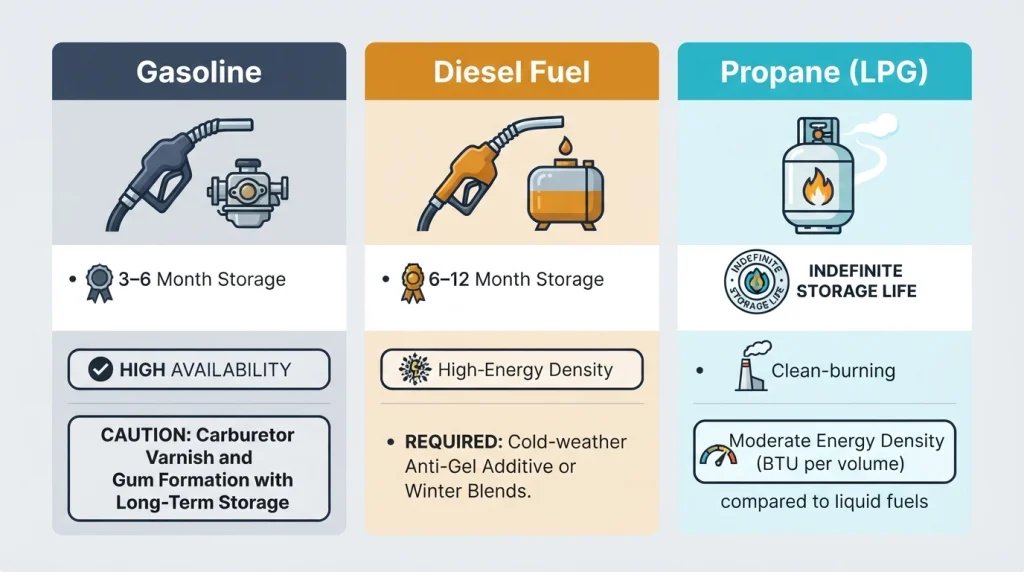
Fuel cost is not just the price at the pump. It is price, efficiency, runtime, and how long fuel stays usable in storage.
Diesel often costs more per gallon than gasoline, but it can deliver more runtime per gallon under heavy load. Gasoline is easier to find, yet it goes stale faster.
That trade-off shapes your real cost over a year of outages, camping trips, and test runs.
How long will each type run?
Runtime depends on tank size, load, and eco mode. A small inverter generator may run 8 to 12 hours at quarter load on a gallon or two of gasoline.
A larger diesel model may run 10 to 20 hours or more on a full tank at half load. Larger tanks and steadier engines help here.
Do not trust a single runtime number on a box. Look for runtime at 25% load and at 50% load, then plan for the higher load.
Which fuel stores better?
- Gasoline: Goes stale in 3 to 6 months without stabilizer, and it can clog a carburetor.
- Propane: Stores almost indefinitely in a sealed tank, but it delivers less energy per gallon.
- Diesel: Stores longer than gasoline, often 6 to 12 months, but it needs clean, dry storage and can grow algae or gel in cold weather.
I learned this the hard way after leaving gasoline in a generator for a winter. The next spring, it surged, stalled, and needed a carburetor cleaning before it would hold a steady load.
Now I rotate fuel, use stabilizer, and run the unit monthly for 15 to 20 minutes. That habit saves more money than any fuel choice alone.
What about fuel availability in an emergency?
Gasoline stations may close or run dry during a wide outage. Diesel is common at truck stops, but it is not always easy to carry home in small cans.
Propane can be a useful backup fuel for dual-fuel inverter models. It stores well and avoids stale-fuel problems.
For energy and fuel guidance, the U.S. Department of Energy offers broad, stable resources on backup power and fuel use.
Safety note: Store fuel outdoors in approved containers, away from living spaces and ignition sources, and never refuel a hot generator.
Section Takeaway: Diesel often wins on long runtime and storage life, while gasoline inverter models win on easy fuel access and light-load efficiency.
How Much Power Do You Actually Need?
Most buyers oversize or undersize their generator because they guess. Wattage math takes ten minutes and prevents both mistakes.
Start with the appliances you must run at the same time. Add their running watts, then add the highest starting watts for any motor-driven item.
Running watts are the power an appliance uses while it runs. Starting watts, or surge watts, are the short burst a motor needs to start.
What do common appliances use?
Use these ranges as a planning guide, and check your own appliance labels for exact numbers.
| Appliance | Running Watts | Starting Watts |
|---|---|---|
| Refrigerator | 150–200 | 600–1,200 |
| Chest freezer | 100–150 | 500–1,000 |
| Furnace blower | 500–800 | 1,000–1,500 |
| Sump pump | 750–1,500 | 1,500–3,000 |
| Window AC, 10,000 BTU | 900–1,200 | 2,000–2,500 |
| CPAP machine | 30–60 | 30–60 |
| Laptop and phone charging | 50–150 | 50–150 |
A fridge, a few lights, and phone charging may need only 2,000 running watts. Add a window AC and a sump pump, and you may need 4,500 watts or more.
For a clear breakdown of the two wattage types, read our guide to running watts vs. starting watts before you size your unit.
How do you do the math?
- List must-run items: Fridge, lights, phones, medical devices, and one heating or cooling item.
- Add running watts: Total the steady draw for everything on that list.
- Add the largest surge: Add the starting watts for the biggest motor, usually a fridge, AC, or pump.
- Add headroom: Choose a generator rated at least 20% above that total.
Example: A fridge at 200 running watts, lights at 200 watts, and a window AC at 1,000 running watts total 1,400 watts. Add the AC surge of about 2,000 watts, and you need roughly 3,400 watts at startup.
That points to a 4,000- to 4,500-watt inverter generator, or a diesel model in the same range if you need longer runtime. For whole-home needs, check what size generator you need for your home to match wattage to your breaker panel and essential circuits.
Section Takeaway: Size by your worst-case startup load, not your average load, and leave 20% headroom so the generator does not overload when a motor kicks on.
Which Should You Choose for Home, RV, Camping, and Job Sites?
There is no single best generator for everyone. The best pick changes with the job, the location, and how long you need power.
Use the scenarios below as a shortcut. They reflect the choices I see most often in real use.
Home backup during outages
For short outages of a few hours, an inverter generator is often enough. It can keep food cold, phones charged, and lights on without much noise.
For multi-day outages, a diesel generator makes more sense if you need heat, a well pump, or a large AC unit. Its longer runtime and higher output reduce refueling trips.
A transfer switch or interlock kit makes home use safer and easier. It lets you power chosen circuits without backfeeding the grid.
RV and camping
Choose an inverter generator for RV and camping in almost every case. It is quiet, light, and safe for RV electronics and air conditioners with a soft-start kit.
Many campgrounds limit generator noise and hours. A quiet inverter model helps you stay within those rules.
Parallel capability is a useful bonus here. Two small inverter units can link together for more power when you need AC, then run alone for light use.
Job sites and workshops
Diesel shines on job sites with saws, compressors, and welders that draw heavy, steady power. It handles long shifts without frequent refueling.
An inverter generator still works well for charging tools, running lights, and powering sensitive test gear. It is easier to move between sites.
For job-site safety rules and electrical guidance, see the EPA and your equipment manuals for model-specific limits.
Tailgating and small-space use
A small inverter generator wins for tailgating, apartments, and small patios. It is portable, quiet, and easy to store.
Diesel is rarely a good fit here. It is too heavy, too loud, and too large for short, casual use.
Before you buy, compare size, weight, outlets, and parallel options in an inverter portable generator buying guide to avoid buying too small or too heavy.
Safety note: For home hookups, use a transfer switch or interlock installed by a licensed electrician, and check your owner’s manual before you connect any load.
Section Takeaway: Pick an inverter generator for portable, quiet, and electronics-safe use, and pick diesel when you need long, heavy, whole-home power.
Maintenance, Safety, and Long-Term Ownership
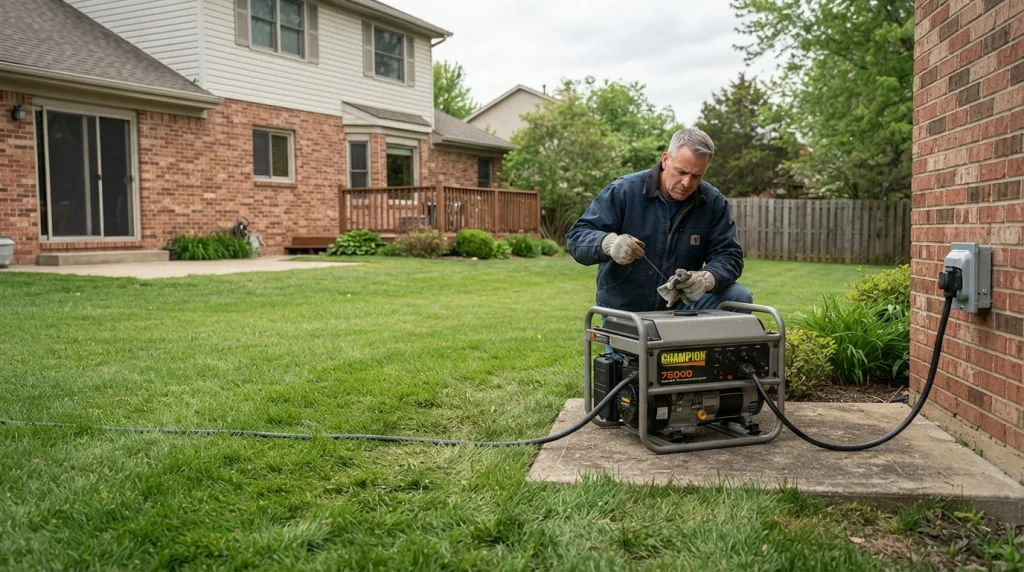
A generator is only useful if it starts when you need it. Maintenance is what makes that happen.
Both types need oil changes, air-filter checks, spark or fuel-system care, and regular test runs. Diesel models often need more attention to fuel filters and cold-weather care.
What maintenance should you plan for?
- Break-in: Follow your manual for the first oil change, often after 5 to 25 hours.
- Oil: Change oil per your manual, usually every 50 to 100 hours for portable models.
- Fuel system: Use fresh fuel, add stabilizer, and run the unit dry or drain the carburetor for storage.
- Air filter and spark plug: Inspect them seasonally, and replace them when dirty or worn.
- Battery: Keep electric-start batteries charged, especially before storm season.
Diesel engines often last longer in hours, but they can cost more to repair. Inverter generators have more electronics, so a failed inverter module can be costly.
Read independent reliability and safety notes from Consumer Reports when you compare brands and models.
What safety rules apply to both types?
Carbon monoxide is the biggest risk with any fuel-burning generator. It is colorless, odorless, and deadly in enclosed spaces.
Always run the unit outdoors, downwind, and at least 20 feet from your home. Keep it away from windows, doors, vents, and air intakes.
Use heavy-duty, outdoor-rated extension cords, and never overload the unit. Watch for low-oil shutdown, overload warnings, and surging as signs to reduce load or service the unit.
Safety note: Install battery-powered carbon monoxide alarms in your home, test them monthly, and move the generator farther away if you smell exhaust indoors.
Section Takeaway: The generator that starts reliably is the one you maintain, store correctly, and test monthly, regardless of fuel type.
Frequently Asked Questions
Can an inverter generator run a refrigerator?
Yes, most 2,000-watt or larger inverter generators can run a standard fridge. Check the fridge starting watts first, and leave headroom for the compressor surge.
Are diesel inverter generators available?
Yes, but they are uncommon and usually larger and heavier than gasoline inverter models. They suit buyers who want diesel runtime with cleaner inverter power.
Is diesel cheaper than gasoline for a generator?
Not always. Diesel can cost more per gallon, but it may run longer per gallon under heavy load, so compare total runtime cost for your typical load.
Can I run a diesel generator inside a garage?
No. Never run any generator indoors, in a garage, or near open windows. Always run it outdoors, at least 20 feet from your home.
How long can an inverter generator run continuously?
Many models run 8 to 12 hours at quarter load on one tank. Larger models run longer, but always refuel only after the unit cools down.
Do I need a transfer switch for home backup?
Yes, for safe whole-circuit backup, use a transfer switch or interlock installed by a licensed electrician. Extension cords work for a few appliances, but they cannot safely power hardwired circuits.
As of 2026, the choice is still simple. If you want quiet, portable, clean power, start with an inverter generator.
If you need long, heavy power for a large home, workshop, or farm, a diesel generator is the stronger long-term tool. Size it right, store fuel well, and test it monthly so it starts when it counts.

Hi, I’m Michael Turner. I own a generator workshop in the United States and founded HomeGeneratorBlog to share practical, hands-on guidance about generator installation, maintenance, troubleshooting, safety, and backup power solutions. My goal is to help homeowners make smarter, more confident decisions through clear and reliable information