Why Do Inverter Generators Convert AC to DC and Back to AC?
An inverter generator converts AC to DC and back to AC to break the link between engine speed and power quality. The DC stage lets the electronics rebuild a steady 120-volt, 60-hertz sine wave, even when the engine speeds up or slows down. That is why the power stays clean, quiet, and efficient.
It looks wasteful at first glance. Why make power, change it, then change it back again? The answer is control. A conventional generator has almost no control once the engine is spinning. An inverter generator takes that control back, one stage at a time.
The first time I ran a small inverter unit beside a conventional open-frame model during a neighborhood outage, the difference was not just the noise. The inverter unit dropped to a low hum when the fridge cycled off, while the older unit kept roaring at full speed for a handful of lights. That low hum was the AC to DC to AC process doing its job.
Why a Conventional Generator Is Locked to One Speed
A conventional portable generator makes AC directly from its alternator. In the United States, that AC must cycle 60 times per second to match what your home expects. Frequency is tied directly to how fast the alternator spins.
To hold 60 hertz, the engine must hold about 3,600 revolutions per minute. It has to hold that speed whether you are running a full house or charging one phone. A mechanical governor tries to correct every dip and surge, but it is always reacting after the fact.
That is the core problem. Load changes constantly. A fridge compressor kicks on. A well pump starts. A light switches off. Each change tugs at engine speed, and each tug can move voltage and frequency. For a heater or an old power tool, a small wobble may not matter. For a laptop, a modern furnace board, a CPAP machine, or a television, it can.
If you want a deeper look at how that speed and frequency link works, see this guide to portable generator frequency. The inverter approach solves the same problem from the other direction: it stops asking the engine to be perfect.
The Three Stages, in Plain English

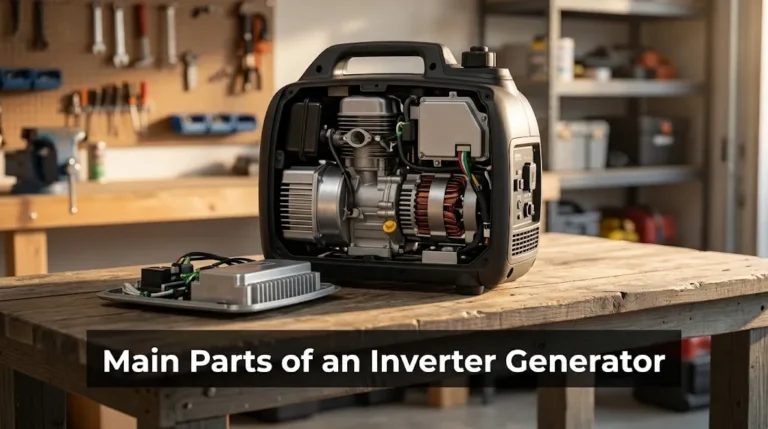
An inverter generator does not send alternator power straight to the outlets. It runs that power through three distinct stages. Each stage has one job, and each job makes the next one possible.
| Stage | What happens | Why it matters |
|---|---|---|
| 1. Engine and alternator | The engine spins a compact, often multi-phase alternator and makes raw, high-frequency AC. | This raw power does not need to be perfect, so the engine can change speed. |
| 2. Rectifier: AC to DC | A rectifier lets current flow in one direction only, turning AC into DC. | DC is steady in direction and easier to smooth, filter, and control. |
| 3. Inverter: DC to AC | A microprocessor-controlled inverter rebuilds DC into clean 120-volt, 60-hertz AC. | Your devices get a stable sine wave, even as load and engine speed change. |
Think of it like this. A conventional generator hands you the first draft. An inverter generator throws the first draft away and writes a clean copy. The clean copy is what reaches your outlets.
Step 1: The Alternator Makes Raw, High-Frequency AC
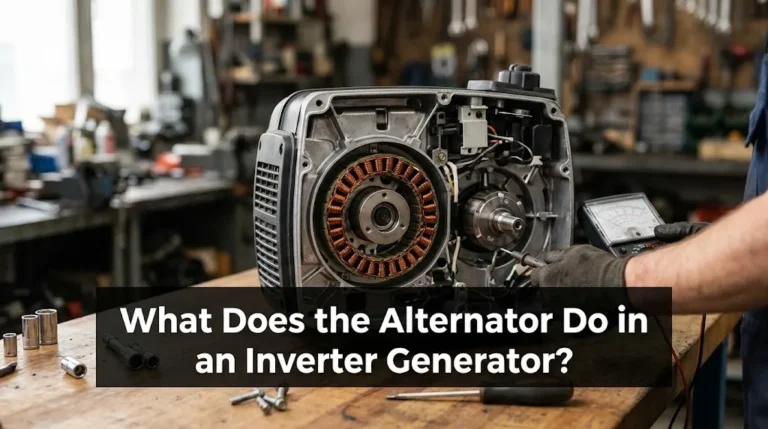
The engine still does the hard work. It burns gasoline, propane, or another fuel and spins the alternator. That alternator produces AC, which is alternating current: current that reverses direction many times per second.
In many inverter designs, that first AC is not the familiar 60-hertz household waveform. It is higher-frequency, multi-phase power. That matters for size. A high-frequency alternator can be smaller and lighter than a large, low-speed alternator built to make 60-hertz power directly.
It also matters for freedom. Because this raw AC will not go straight to your devices, it does not have to stay locked to one frequency. The engine can spin faster under heavy load and slower under light load. The raw waveform will change as speed changes. That is fine. It is only an intermediate step.
Step 2: Why Convert That AC to DC at All?
DC is direct current: current that flows in one direction. A rectifier, usually a set of diodes, acts like a one-way gate. It takes the back-and-forth AC and forces it into a single direction. Capacitors then smooth out the remaining ripples.
Why bother? Because DC is a clean slate.
Once power is DC, the messy history of the engine disappears. It no longer matters if the engine was spinning a little fast or a little slow a moment ago. It no longer matters if a sudden load made the raw voltage dip. The DC bus, the internal supply feeding the inverter, can be filtered and held far steadier than raw alternator output.
That reset is the whole trick. Without it, the inverter would have nothing stable to rebuild from. With it, the electronics can start fresh and build exactly the waveform your home needs, rather than trying to patch up a waveform that was never quite right.
This is also why an inverter generator can use a smaller alternator and still deliver good power. The alternator does not have to do the precision work. The electronics do.
Step 3: How the Inverter Rebuilds Clean AC
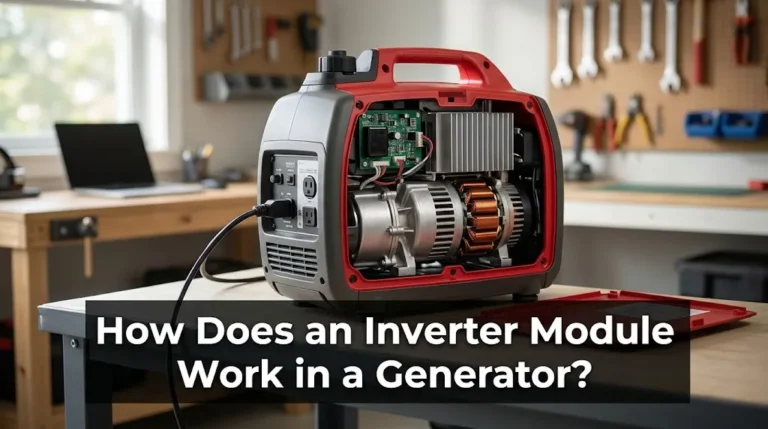
The inverter module takes DC and switches it on and off very rapidly, thousands of times per second in many designs. This switching technique is called pulse-width modulation. By varying the width of those pulses, the inverter shapes an output that averages out to a smooth sine wave.
A sine wave is the smooth, rolling waveform that grid power uses. A pure sine wave rises and falls gradually, with no sharp steps or jagged edges. Filters after the switching stage round off the remaining roughness.
A microprocessor watches the result and corrects it constantly. If load rises, it adjusts. If load falls, it adjusts again. The target stays the same: stable voltage and a steady 60 hertz, regardless of engine speed.
Honda describes this same multi-step process in its explanation of inverter advantages: the alternator makes high-voltage, multi-phase AC, that AC is converted to DC, and the inverter converts DC back to AC while smoothing and cleaning the power under microprocessor control. You can read that manufacturer explanation in Honda’s inverter generator advantages guide.
What Is THD, and Why Should You Care?
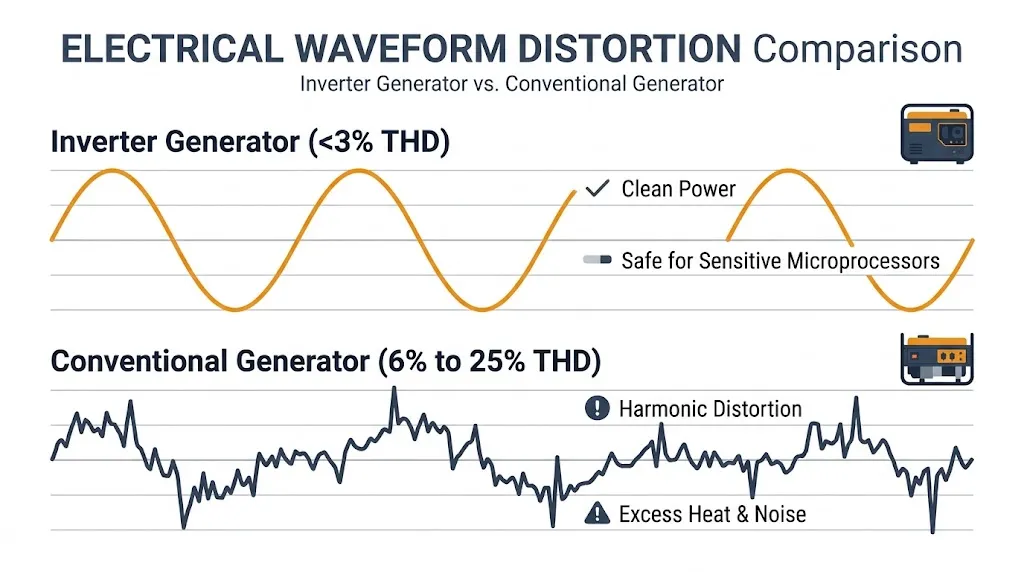
THD stands for total harmonic distortion. It measures how far a waveform strays from a perfect sine wave. Lower is better. A low THD number means smooth power. A high THD number means the waveform is distorted, with extra harmonics riding on top of the main wave.
Distortion is not just a spec-sheet curiosity. High distortion can cause extra heat in motors and power supplies, buzzing in audio gear, flicker in lights, glitches in control boards, and, over time, stress on sensitive electronics. It does not mean a conventional generator will instantly destroy every device you own. It does mean the margin for error is smaller.
Quality inverter generators are typically designed to keep THD under 3 percent, and many are well under that figure at normal loads. Conventional portable generators, by contrast, often run much higher, commonly in the 6 to 25 percent range depending on design and load. Check the spec sheet for the exact model you are considering, because the number is usually measured at a specific load point, not across every possible load.
That is the practical payoff of the AC to DC to AC detour. It is not magic. It is measurement and correction, repeated thousands of times per second.
Inverter vs. Conventional: What Changes in Real Use
| Factor | Inverter generator | Conventional generator |
|---|---|---|
| Engine speed | Varies with load | Held near 3,600 RPM for 60 hertz |
| Output control | Electronics rebuild voltage and frequency | Governor reacts to engine speed changes |
| Typical THD | Often under 3 percent | Often 6 to 25 percent |
| Noise at light load | Usually lower, because the engine slows down | Usually steady, because the engine cannot slow down |
| Fuel use at light load | Usually lower for the same reason | Higher, because full speed is maintained |
| Size and weight | Often smaller for the same running watts | Often larger and heavier |
None of this makes a conventional generator useless. For resistive loads like old-style heaters, incandescent lights, and many basic power tools, a conventional unit can be a solid, lower-cost choice. The inverter advantage shows up most when the load is electronic, variable, or expensive to replace.
Why Variable Engine Speed Saves Fuel and Noise
Once the inverter breaks the link between engine speed and output frequency, the engine is free to match the load. That is the second big reason for the double conversion, and it is easy to miss if you only focus on clean power.
Picture an outage evening. The fridge is running, a few LED lights are on, and phones are charging. That might be a few hundred watts. A conventional generator still runs at full speed to hold 60 hertz. An inverter generator can idle down, burn less fuel, and run noticeably quieter.
Then the fridge compressor starts. Starting watts, also called surge watts, spike well above running watts for a second or two. The inverter unit senses the demand, the engine speeds up, and the inverter keeps the output waveform steady through the change. When the surge passes, the engine settles back down.
That is why runtime claims and noise ratings need context. A quiet rating at quarter load tells you very little about full-load noise. A long runtime at light load tells you very little about a night of heavy use. The pattern matters more than any single number: light load, slow engine, less fuel, less noise.
For help matching that pattern to a real purchase, the inverter portable generator buying guide walks through power needs, fuel type, noise, and portability in the same order most buyers actually decide them.
Why Not Just Use DC Directly?
This is the question most people ask next, and it is a good one. If DC is so clean and easy to control, why convert back to AC at all?
Because almost everything in a North American home expects AC. Wall outlets deliver AC. Most appliances, chargers, motors, and control boards are designed around it. A DC-only generator would need a different outlet, a different plug, and a different appliance for nearly every load.
Some inverter generators do include a DC outlet, often for battery charging. That is a useful extra. It is not a replacement for the main AC output. The final conversion back to AC is what makes the generator plug-and-play with the home you already have.
The same logic applies to solar power stations and battery systems. They store DC, then invert it to AC for the same reason: the house runs on AC.
The Gap Most Explanations Skip: Conversion Is Not Free
Every conversion loses a little energy as heat. Rectifiers lose a little. Inverters lose a little. Filters lose a little. An inverter generator does not get clean power for nothing.
At full load, a well-designed inverter unit can still be efficient overall, because the engine is not wasting fuel holding an unnecessarily high speed at light load. At very light load, the electronics themselves draw some power, and that overhead matters more. The net gain comes from matching engine output to real demand over hours, not from any single instant.
Heat is the other trade-off. Inverter modules need cooling. That is one reason many inverter generators are enclosed, with carefully routed airflow, rather than open-frame. Block those vents, run the unit in a tight box, or cover it while it runs, and you are not just risking overheating. You are risking the exact electronics that make the power clean.
The inverter module is also a more complex failure point than a simple alternator winding. If it fails, the unit may not produce usable AC at all, even if the engine runs fine. That does not make inverter generators unreliable. It does make the manual, the warranty, and the overload rating worth reading before you buy.
When the Double Conversion Matters Most, and When It Matters Less
It matters most for devices with microprocessors, delicate power supplies, or tight voltage needs. Laptops, phones, routers, smart TVs, gaming consoles, modern furnace and air-conditioner control boards, medical devices such as CPAP machines, and variable-speed motors all fall in this group. For those loads, a pure sine wave with low THD is the safer default.
It matters less, though it still helps, for simple resistive loads. An old electric kettle, a basic resistive heater, or an incandescent bulb will not notice the difference between a clean sine wave and a rough one in the same way. They still benefit from stable voltage, but they are far more forgiving.
Power tools sit in the middle. Many corded tools will run on either type, but tools with electronic speed controls, soft-start features, or battery chargers can be pickier. When in doubt, check the tool manual for a pure sine wave recommendation before you assume.
That caution applies in the other direction too. Not every unit marketed as an inverter generator delivers the same quality. A few low-cost models produce a modified sine wave, which looks like a staircase rather than a smooth curve and can carry much higher distortion. If clean power is the reason you are buying an inverter, confirm pure sine wave output and a published THD figure on the spec sheet. If the seller cannot show either, treat the claim as unproven.
For a practical check on what should and should not go on an inverter, see what not to plug into an inverter. It is a useful companion to the theory here, because it turns waveform quality into a plug-in decision.
Does the Conversion Let Two Generators Work Together?
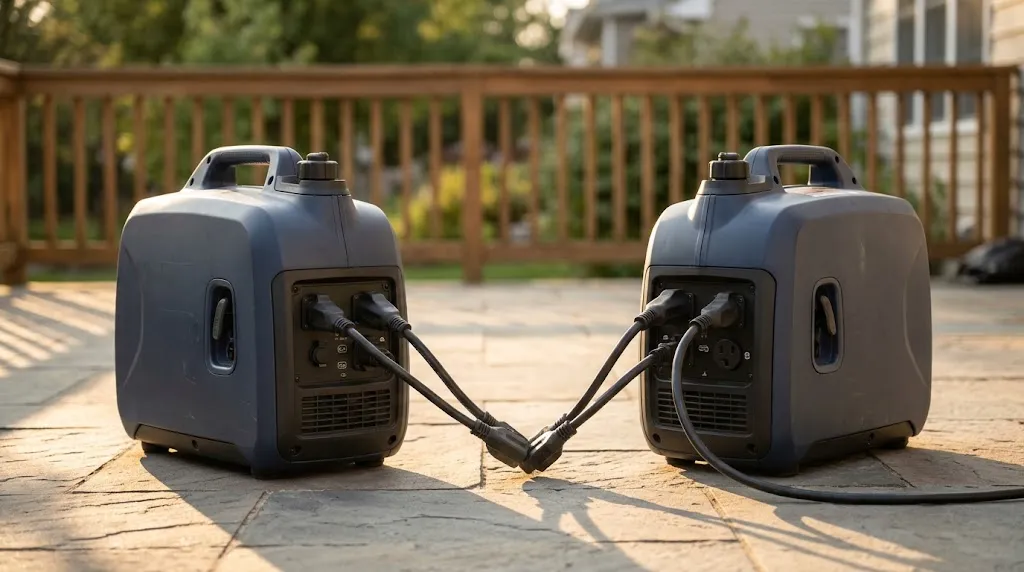
Yes, and this is another benefit that only exists because the waveform is rebuilt electronically. Many inverter generators offer parallel capability: two compatible units linked together to share a larger load.
Parallel operation works because each inverter can synchronize its rebuilt AC waveform with the other unit. Two conventional generators cannot simply be plugged together this way without specialized synchronization equipment, because their engine-driven waveforms would drift apart.
Parallel kits and compatible models vary by brand, and you should only pair units the manufacturer says are compatible. A portable inverter generator with parallel capability can be a practical way to start small and add capacity later, rather than buying a much larger unit up front. The key is that both units are rebuilding the same clean waveform, on purpose, at the same time.
A Note on Safety That Has Nothing to Do With Waveforms
Clean power does not make exhaust safe. An inverter generator still burns fuel and still produces carbon monoxide, which is colorless and odorless. Never run any fuel-powered generator inside your home, garage, or any enclosed or partially enclosed space, even with doors or windows open.
The CDC advises keeping portable generators outside, at least 20 feet from doors, windows, and vents, and using a battery-operated or battery-backup carbon monoxide detector when a generator is running. You can read that guidance directly in the CDC guide to preventing carbon monoxide poisoning.
Also follow the basics that apply to any generator: keep it dry without trapping heat, let it cool before refueling, do not overload it, and use a transfer switch or interlock kit installed by a licensed electrician if you plan to connect it to home wiring. Backfeeding, sending generator power back into utility lines, can injure utility workers and damage equipment. Check local code for your area.
For the electrical side of the output itself, the guide to portable generator AC power explains voltage, outlets, and capacity in more detail.
Conclusion
The extra conversion is not wasted work. It is the control step that lets a small engine make power your electronics can trust. Size the unit for your real starting watts, keep it outdoors and well away from the house, and let the inverter do the rebuilding. I am Michael Turner, and that is the check I still use before I plug anything in.
If clean, quiet power for electronics is the reason you are reading this, a portable inverter generator is the category to compare first, because its AC to DC to AC design is built specifically for that job.
Frequently Asked Questions
Why do inverter generators convert AC to DC and back to AC?
They convert AC to DC to reset the power and remove the effects of changing engine speed. They then invert DC back to AC to rebuild a steady 120-volt, 60-hertz sine wave. That rebuilt waveform stays clean even when the engine speeds up or slows down with load.
Is inverter generator power really cleaner than grid power?
It can be, at least in terms of waveform smoothness, because a quality inverter generator is designed to hold THD under 3 percent. Grid power varies by location and conditions, and it is usually good, but it is not guaranteed to be perfect. The fair comparison is not inverter versus grid in general, but a specific inverter model versus the power quality your devices actually need.
Can a conventional generator damage sensitive electronics?
It can increase the risk, especially for devices with delicate power supplies or control boards, because higher THD and voltage swings add heat and stress. Many devices will still run fine, and some have wide input tolerances. The risk is higher with cheap, poorly regulated units and with sudden load changes than with a well-maintained conventional unit running a steady, simple load.
Does the AC to DC to AC process waste a lot of power?
Each conversion loses a small amount of energy as heat, but the overall system often saves fuel because the engine can slow down at light load instead of running at full speed all the time. The net result depends on the model, the load pattern, and how many hours you run at light versus heavy load.
Do I still need an inverter generator if I only run basic tools and heaters?
Not necessarily. Simple resistive loads and many basic tools are forgiving and may run well on a conventional generator. An inverter generator becomes the safer default when you add laptops, phones, routers, modern appliance controls, medical devices, or anything you cannot afford to replace easily.

Hi, I’m Michael Turner. I own a generator workshop in the United States and founded HomeGeneratorBlog to share practical, hands-on guidance about generator installation, maintenance, troubleshooting, safety, and backup power solutions. My goal is to help homeowners make smarter, more confident decisions through clear and reliable information