How Much Power Does a 4000-Watt Inverter Generator Provide? What It Can Run, What It Cannot, and How to Use It Right
Quick Answer
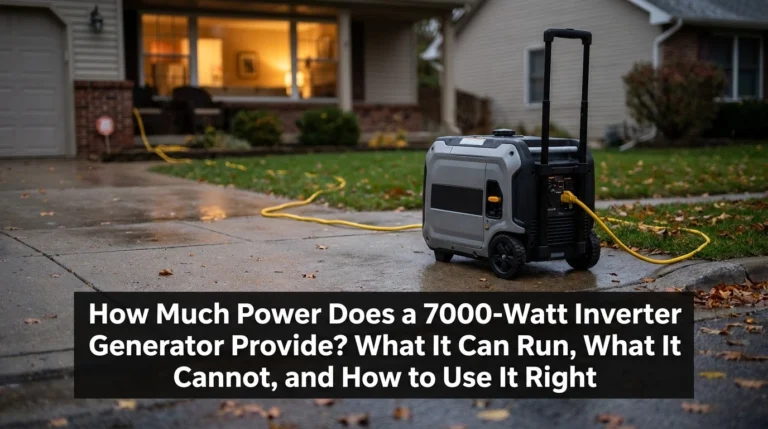
A 4000-watt inverter generator provides 4000 starting watts and about 3200 to 3600 running watts, depending on the model. That is enough for a fridge, lights, phones, a CPAP, a furnace blower, and a small RV air conditioner, but not for a whole house at once. Learn the wattage math for your own loads before you plug everything in.
What that power means in real use
- Running watts matter most: Your steady load must stay under 3200 to 3600 watts.
- Starting watts are brief: The 4000-watt surge lasts only seconds for motors starting up.
- One big motor at a time: Start the fridge or RV AC first, then add smaller loads.
- Clean power for electronics: Inverter output is safe for laptops, phones, and medical devices.
- Not whole-home power: It cannot run central AC, an electric water heater, and a well pump together.
Use it safely
- Run it outdoors, at least 20 feet from your home, with the exhaust pointed away from windows and doors.
- Keep total running watts under 80% of the rated running watts for long, steady use.
I’ve run a 4000-watt inverter generator through a three-day outage, a hot RV weekend, and more than one noisy campsite test. It sits in a sweet spot.
It’s bigger than a 2000-watt camping unit, but still light enough to move without help. In this guide, I’ll show you exactly what 4000 watts buys you in 2026.
You’ll get real appliance math, runtime at different loads, and the limits most listings skip. No guesswork, just the numbers that decide whether this size fits your home, RV, or campsite.
In This Guide
- What Does 4000 Watts Actually Mean?
- How Much Running Power vs Starting Power Do You Get?
- What Can a 4000-Watt Inverter Generator Run?
- What Can It Not Run?
- How Long Will a 4000-Watt Inverter Generator Run?
- Is 4000 Watts Enough for Home Backup, RV, and Camping?
- 4000-Watt vs 2000, 3000, and 5000-Watt Inverter Generators
- How to Get the Most Power From Your 4000-Watt Generator Safely
- Frequently Asked Questions
What Does 4000 Watts Actually Mean?
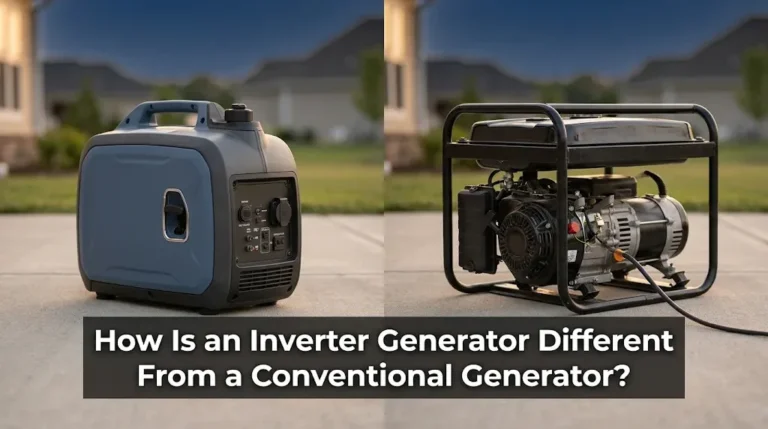
An inverter generator is a portable generator that makes clean, stable power for sensitive electronics. It converts raw engine power to DC, then inverts it back to smooth AC power.
That clean sine wave matters for laptops, phones, and CPAP machines. It also keeps voltage steady when loads change.
The “4000 watts” on the box is the starting wattage, not the steady output. Most 4000-watt models deliver 3200 to 3600 running watts.
Check the spec sheet for both numbers before you buy. The gap between them decides what you can run all day.
What is running wattage?
Running watts are the power a generator can supply nonstop. This is the number you must respect for steady loads.
A fridge that needs 700 running watts uses 700 watts for as long as it runs. Add up every running load to find your total.
What is starting wattage?
Starting watts, also called surge watts, are the short burst a motor needs to start. A fridge compressor may need 1200 to 2200 watts for a second or two.
That burst is why the headline number looks bigger than the steady number. It is real power, but it does not last.
Safety note: Run generators outdoors and well away from windows, doors, and vents. Carbon monoxide is colorless and odorless, so never run one in a garage, even with the door open.
Section Takeaway: A 4000-watt inverter generator gives you about 3200 to 3600 watts you can use all day, plus a 4000-watt burst to start motors.
How Much Running Power vs Starting Power Do You Get?
Most 4000-watt inverter generators provide 4000 starting watts and 3200 to 3600 running watts. Some dual-fuel models provide slightly less on propane, so check both fuel ratings.
That 400 to 800-watt gap is normal for this size. It leaves room for a motor to start without tripping the overload.
Think in amps too, because outlets have limits. At 120 volts, 3600 running watts is 30 amps.
Many 4000-watt models include a 30-amp RV outlet for that reason. It lets you use the full output through one plug.
How do you add running and starting watts correctly?
Add all running watts first. Then add only the largest starting wattage on top of that total.
You do not add every starting watt together. Motors rarely start at the exact same second.
Here is a quick example from my outage test. Fridge 700 running watts, freezer 500, lights 200, phones and laptop 150, and furnace blower 800.
That totals 2350 running watts. Add the fridge’s 1500-watt starting surge, and you need 3850 watts for a moment.
A 4000-watt unit handles that start. It then settles back to 2350 watts, well inside its running limit.
Why does altitude and heat reduce power?
Engines lose power as altitude rises and air thins. Heat and humidity can trim output too.
Manufacturers often rate a loss of about 3% per 1000 feet above sea level. Check your owner’s manual for the exact figure.
Leave a 15% to 20% safety margin in your math. That buffer covers hot days, high altitude, and a second motor starting.
Section Takeaway: Add running watts, add only the biggest starting surge, and keep the steady total under 3200 watts for comfortable long-term use.
What Can a 4000-Watt Inverter Generator Run?

A 4000-watt inverter generator can run the essentials that keep a home livable during an outage. It can also power most RV comforts and a well-stocked campsite.
The key is choosing one big motor load at a time. Then fill the remaining watts with lights and small electronics.
I ran this exact combo during a summer outage: fridge, freezer, furnace blower, lights, Wi-Fi, phones, and a CPAP at night. The generator stayed quiet and steady in eco mode most of the time.
| Appliance or Load | Running Watts (Typical) | Starting Watts (Typical) |
|---|---|---|
| Refrigerator | 600–800 | 1200–2200 |
| Chest freezer | 400–600 | 1000–1500 |
| Furnace blower (gas heat) | 600–900 | 1200–1800 |
| Sump pump (1/3 HP) | 800–1000 | 1500–2200 |
| Window AC (8,000 BTU) | 700–1000 | 1800–2500 |
| RV air conditioner (13,500 BTU) | 1200–1500 | 2800–3500 |
| Microwave (1000W) | 1000–1300 | 1000–1300 |
| CPAP machine | 30–60 | 30–60 |
| Laptop + phones + lights | 150–300 | 150–300 |
| Coffee maker | 800–1200 | 800–1200 |
Use the table as a guide, not a spec sheet. Your exact fridge, AC, or pump may need more or less power.
Check the label on each appliance for its rated watts or amps. Multiply amps by volts to get watts when only amps are listed.
Can it run a refrigerator and freezer together?
Yes, in most cases it can run both. A fridge and freezer together need about 1000 to 1400 running watts.
Start one, let it settle, then start the other. That stagger keeps the combined surge under 4000 watts.
For more detail on fridge loads, see this guide to the best portable generator for refrigerator use. It covers sizing and runtime for food safety.
Can it run an RV air conditioner?
Yes, a 4000-watt inverter generator can run a 13,500 BTU RV air conditioner. That AC needs about 1200 to 1500 running watts and up to 3500 watts to start.
Turn off the microwave and water heater first. Then start the AC and let it settle before adding other loads.
A 15,000 BTU RV AC is tighter and may need a soft-start kit. For RV-specific sizing, read this guide to the best generator for RV air conditioner setups.
Can it run a microwave, TV, and lights at once?
Yes, if you keep the big motor loads off. A microwave, TV, lights, and chargers together often total 1400 to 1800 watts.
That leaves room for a fridge running in the background. It does not leave room for a second heating appliance at the same time.
Section Takeaway: A 4000-watt inverter generator comfortably runs a fridge, freezer, lights, electronics, and one RV AC or window AC — just not all of them at full blast together.
What Can It Not Run?
A 4000-watt inverter generator cannot power a whole house like a standby unit. It is a portable power source, not a home electrical system.
That limit surprises first-time buyers. The box says 4000 watts, but a home can draw far more than that in seconds.
Central air is the biggest no. A typical central AC needs 3000 to 5000 running watts and a much larger starting surge.
Electric heat is another no. Space heaters, electric furnaces, and electric water heaters each draw 1500 to 5000 watts alone.
- Central AC: Needs far more starting power than 4000 watts can supply.
- Electric water heater: Usually draws 4000 to 5500 watts on its own.
- Well pump (deep well): Can need 2000 running watts and 4000 or more starting watts.
- Electric range or oven: Draws 2000 to 5000 watts and leaves nothing for anything else.
- Electric dryer: Draws 4000 to 5000 watts and will overload this size instantly.
- Whole house at once: Fridge, AC, water heater, and lights together exceed the running limit by a wide margin.
You can still run some of these loads one at a time with careful planning. A well pump alone, for example, may work if nothing else is running.
Do not test that idea by trial and error. Check the pump label, add its starting watts, and leave a margin.
Safety note: Never plug a generator into a wall outlet to backfeed your home. Use a transfer switch or interlock installed by a licensed electrician, and check your owner’s manual before use.
Section Takeaway: Skip central AC, electric heat, electric water heating, and a full electric kitchen — a 4000-watt unit is for essentials, not everything.
How Long Will a 4000-Watt Inverter Generator Run?
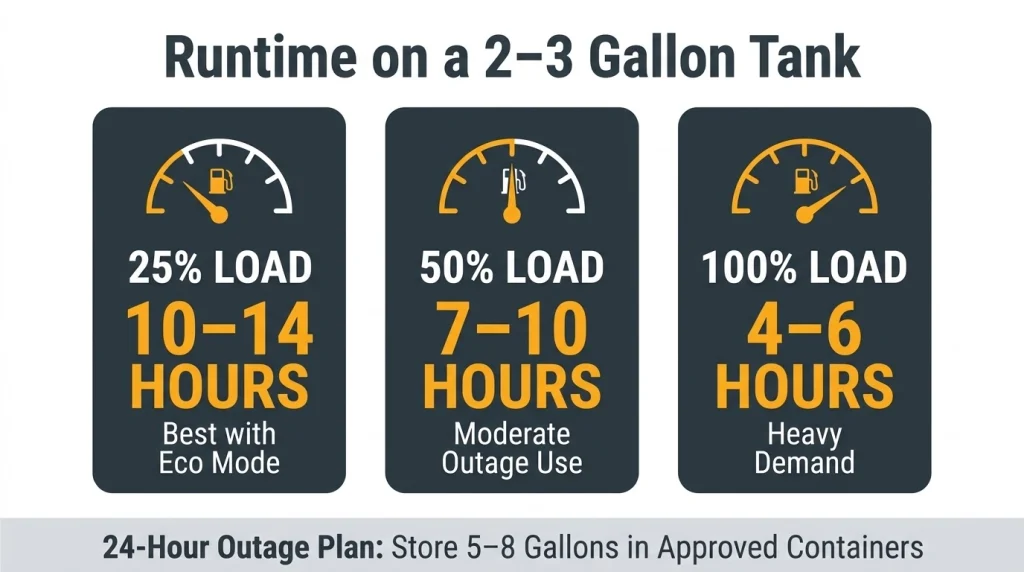
Runtime depends on load, tank size, and eco mode. Most 4000-watt inverter generators hold 2 to 3 gallons of fuel.
At 25% load, many models run 10 to 14 hours on one tank. At 50% load, that often drops to 7 to 10 hours.
At full load, expect far less, often 4 to 6 hours. Check the spec sheet for the exact 25% and 50% figures for your model.
Eco mode, also called eco-throttle, stretches runtime when loads are light. It slows the engine when demand drops and speeds it up when demand rises.
How does load change fuel use?
Light loads sip fuel. Heavy loads burn it fast.
A fridge, lights, and phones may keep you near 25% load for hours. Add an RV AC and a microwave, and you jump toward 70% or more.
That jump cuts runtime by hours. It also raises noise, because the engine works harder.
How much fuel should you store?
Plan for at least 24 hours of outage use. For a 4000-watt unit at moderate load, that often means 5 to 8 gallons.
Store gasoline in approved containers, away from the house and heat. Use fuel stabilizer and rotate stored fuel every few months.
Stale fuel is the top cause of hard starts I see in the field. It clogs the carburetor and turns a good generator into a paperweight.
For safety and storage guidance, the Consumer Product Safety Commission and Centers for Disease Control and Prevention publish generator CO safety guidance worth reading before an outage.
Section Takeaway: Expect 10 to 14 hours at light load, 7 to 10 hours at half load, and much less at full load — eco mode and fuel planning make the difference.
Is 4000 Watts Enough for Home Backup, RV, and Camping?
For most homes, 4000 watts is enough for essentials, but not for comfort on every circuit. For most RVs, it is enough for AC plus basics. For camping, it is often more than enough.
Your answer depends on your must-run list. Write it down before you shop.
Is it enough for home backup?
Yes, for a focused backup plan. Fridge, freezer, sump pump, furnace blower, lights, Wi-Fi, and phones fit inside 3200 to 3600 running watts.
Rotate the big loads if you need to. Run the sump pump, then the microwave, then the coffee maker.
Do not expect to run the whole house through a transfer switch without choosing circuits. Pick 4 to 6 essential circuits and leave the rest off.
If you are still deciding on size, this guide to what size inverter generator you need walks through the same math by use case.
Is it enough for an RV?
Yes, for most travel trailers and smaller motorhomes. A 4000-watt unit runs a 13,500 BTU AC, charges batteries, and powers lights and a TV.
It struggles with a 15,000 BTU AC plus a microwave and electric water heater at once. Switch the water heater to propane and stagger the microwave.
Noise matters at campgrounds too. Inverter models are quieter than open-frame models, but check the dB rating at 25% load and at a real distance.
Is it enough for camping and tailgating?
Yes, and often with watts to spare. Lights, fans, a mini fridge, speakers, and phone charging rarely top 1500 watts.
The extra headroom helps when a friend plugs in a coffee maker or an air mattress pump. It also lets you run a small window AC in a tent trailer.
Weight is the trade-off here. A 4000-watt inverter generator often weighs 70 to 100 pounds, so check the wheels and handles.
Section Takeaway: 4000 watts covers home essentials, most RV AC use, and all normal camping loads — it only falls short when you try to run everything at once.
4000-Watt vs 2000, 3000, and 5000-Watt Inverter Generators
Size is a trade-off between power, weight, noise, and price. A 4000-watt unit sits between light camping power and serious home backup.
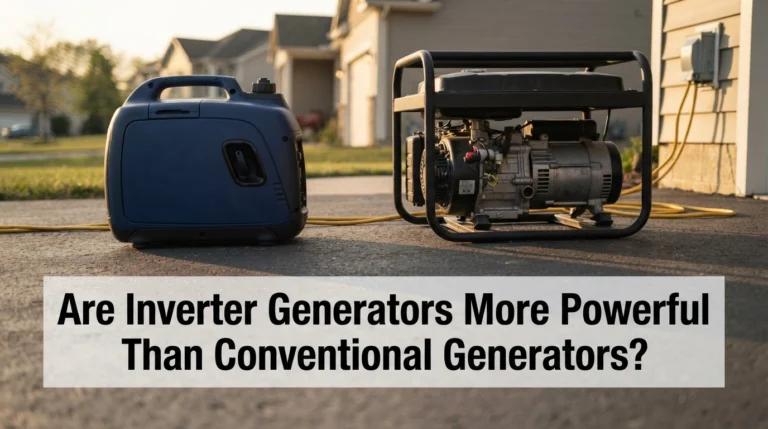
A 2000-watt unit is easy to carry and quiet. It cannot run an RV AC or a fridge plus a freezer with much headroom.
A 3000-watt unit can run a fridge and some RV ACs, but the margin is thin. A 5000-watt unit runs more, but it costs more and weighs more.
| Generator Size | Running Watts (Typical) | Best For | Key Limit |
|---|---|---|---|
| 2000 watts | 1600–1800 | Camping, phones, lights, CPAP | No RV AC, no fridge + freezer |
| 3000 watts | 2600–2800 | Small RV, fridge, home essentials | Tight for 13,500 BTU AC + fridge |
| 4000 watts | 3200–3600 | Home essentials, RV AC, camping | No central AC or electric heat |
| 5000 watts | 4000–4500 | Larger RV, more home circuits | Heavier, louder, pricier |
Parallel capability can change this math. Two 2000-watt units in parallel can match a 4000-watt unit, but you pay for two engines and a kit.
A single 4000-watt unit is simpler to fuel and move. It also gives you a 30-amp outlet in one box.
Price rises with size, but so does capability. Compare the cost of stepping up to 5000 watts against the cost of a transfer switch and the circuits you truly need.
For price context, see how much a 3000-watt inverter generator costs. It shows how size, brand, and features move the price.
Section Takeaway: 4000 watts is the first size that reliably runs an RV AC plus home essentials without the weight and cost jump to 5000 watts.
How to Get the Most Power From Your 4000-Watt Generator Safely
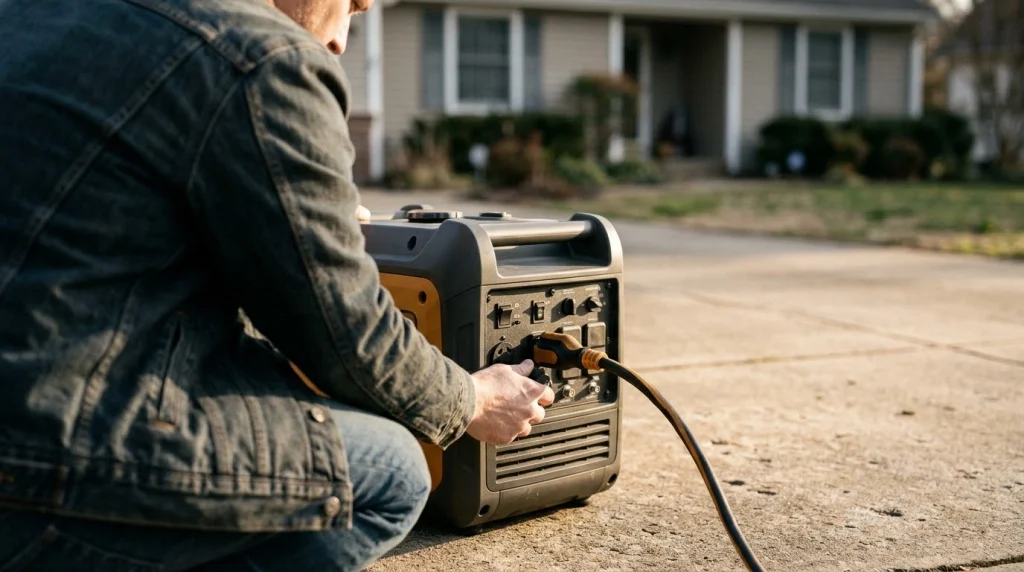
You get the most power by managing loads, not by pushing the generator harder. A calm load plan beats an overload shutdown every time.
Start with the biggest motor first. Then add small loads one at a time.
Use eco mode for light loads and turn it off for heavy motor starts. Eco mode can delay the engine response when a big motor kicks in.
What should you plug in first?
- Start the fridge or AC first: Let the motor settle before you add anything else.
- Add lights and chargers next: These small loads barely move the total.
- Add heating loads last: Microwaves and coffee makers draw steady high watts.
- Never add two motors at once: Stagger sump pumps, fridges, and AC starts by a minute or more.
What maintenance keeps full power?
Change the oil on schedule, per your manual. Fresh oil protects the engine under heavy load.
Clean or replace the air filter and spark plug on schedule too. A clogged filter can cut power and raise fuel use.
Run the generator monthly for 15 to 20 minutes under a light load. That keeps fuel fresh and parts moving.
For more on safe home use, the U.S. Department of Energy and Environmental Protection Agency publish home energy and generator safety guidance. The Consumer Reports site also covers generator testing and safety features.
Safety note: Keep the generator outdoors, on dry, level ground, and away from windows, doors, and vents. Use a transfer switch or interlock installed by a licensed electrician for any home connection.
If you are comparing models, start with the best 4000-watt portable generator picks for this size. Compare running watts, tank size, noise, and outlets, not just the headline number.
Section Takeaway: Start big motors first, stagger loads, use eco mode wisely, and keep up with oil and fuel care to hold full power.
Frequently Asked Questions
How much power does a 4000-watt inverter generator provide?
A 4000-watt inverter generator provides 4000 starting watts and about 3200 to 3600 running watts. That steady output runs a fridge, freezer, lights, electronics, and a small RV AC, but not a whole house at once.
Can a 4000-watt inverter generator run a house?
It can run essential circuits in a house, but not the whole house. Pick a fridge, freezer, furnace blower, sump pump, lights, and phones, and use a transfer switch or interlock installed by a licensed electrician.
Can a 4000-watt generator run a 13,500 BTU RV air conditioner?
Yes, most 4000-watt models can run a 13,500 BTU RV AC. It needs about 1200 to 1500 running watts and up to 3500 watts to start, so turn off the microwave and water heater first.
How long will a 4000-watt inverter generator run on a tank of gas?
Most models run 10 to 14 hours at 25% load and 7 to 10 hours at 50% load on a 2 to 3-gallon tank. Full load cuts that to about 4 to 6 hours, so check your model’s spec sheet.
Is 4000 watts enough for a refrigerator and freezer?
Yes, a fridge and freezer together need about 1000 to 1400 running watts. Start one first, let it settle, then start the other to keep the combined surge under 4000 watts.
What is the difference between 4000 starting watts and 4000 running watts?
Starting watts are a brief surge for motors, while running watts are the steady power you can use nonstop. A 4000-watt model usually offers 4000 starting watts but only 3200 to 3600 running watts.
Can I run a 4000-watt inverter generator in parallel with another one?
Many 4000-watt inverter models are parallel-capable, but only with a compatible kit and a matching unit. Check your manual for the kit, the cable, and whether the combined output doubles the running watts.
A 4000-watt inverter generator is the right size when you want real backup power without stepping up to a heavy 5000-watt unit. It runs the fridge, the RV AC, and the essentials that matter most, as long as you respect the running-watt limit.
Do the math once, write down your must-run list, and test it before the next outage. That one test will tell you more than any spec sheet can.

Hi, I’m Michael Turner. I own a generator workshop in the United States and founded HomeGeneratorBlog to share practical, hands-on guidance about generator installation, maintenance, troubleshooting, safety, and backup power solutions. My goal is to help homeowners make smarter, more confident decisions through clear and reliable information