What Is an Enclosed Inverter Generator? Explained
Quick Answer
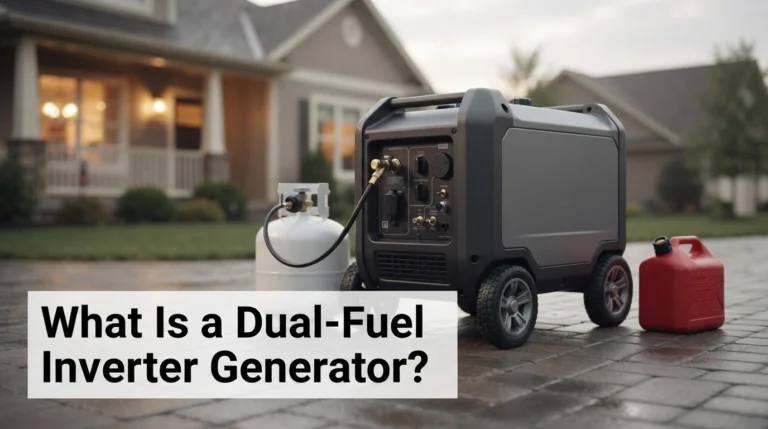
An enclosed inverter generator is a portable inverter generator with a full plastic housing around the engine and inverter module. That case cuts noise, shields the parts from rain and dust, and makes clean, stable power for phones, laptops, and other sensitive electronics, as explained in how an inverter generator works.
At a glance
- Closed case: The housing covers the engine, fuel tank, and inverter parts.
- Quieter sound: The case muffles engine noise and helps with campsite rules.
- Clean power: The inverter makes a smooth sine wave with low distortion.
- Fuel saving: The engine speeds up and slows down with the load.
- Easy carry: Most models have a handle and weigh less than open-frame units of similar size.
Before you buy
- Add up running watts first, then check starting watts for motors.
- Check the noise rating and the fuel type before you pay.
If you have ever stood next to a loud open-frame generator at a campsite, you know why the closed case matters. The sound drops, the machine looks neater, and the power stays steady enough for a laptop.
This guide explains what an enclosed inverter generator is, how it works, and when it beats an open-frame model. It also covers sizing, noise, safety, and upkeep, so you can pick one with confidence in 2026.
In This Guide
- What Is an Enclosed Inverter Generator?
- How Does an Enclosed Inverter Generator Work?
- Enclosed vs Open-Frame Inverter Generator: What’s the Difference?
- Why Are Enclosed Inverter Generators Quieter?
- What Can an Enclosed Inverter Generator Power?
- How Do You Choose the Right Size?
- How Do You Use and Maintain One Safely?
- Frequently Asked Questions
What Is an Enclosed Inverter Generator?
An enclosed inverter generator is a portable generator that pairs inverter power electronics with a full outer housing. The case hides the engine, alternator, fuel tank, and control panel behind moulded panels.
Most enclosed models look like a small suitcase with a carry handle. The outlets sit on one flat panel, and vents let cooling air in and hot air out.
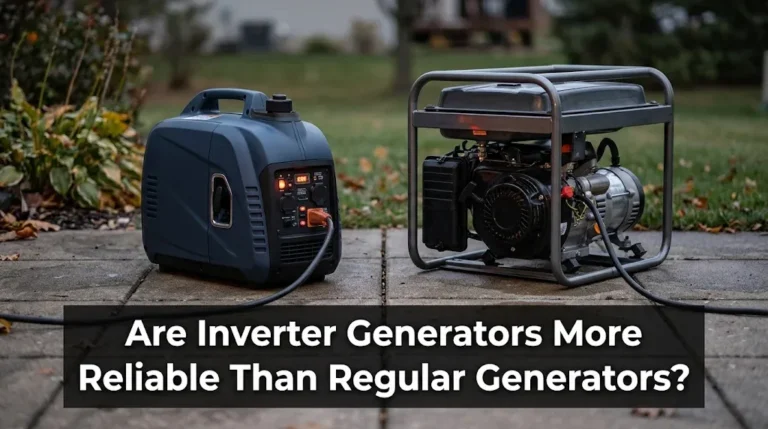
That closed shape is the main difference from an open-frame inverter generator. An open-frame model shows its steel tube frame, engine, and tank in plain view.
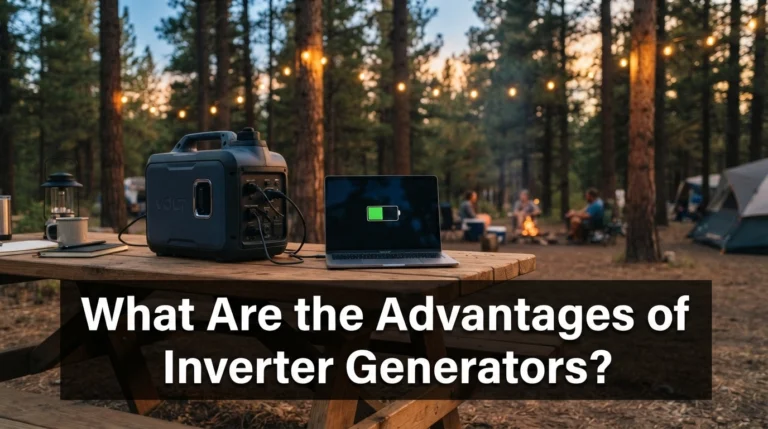
Enclosed models are built for quiet, clean power in places where noise and space matter. They suit camping, RV trips, tailgating, and short home outages.
What sits inside the case?
The case holds the same core parts as other inverter generators, just packed tighter. Each part has a clear job, and the layout keeps wires and hot parts out of reach.
- Engine: Burns gasoline or propane and spins the alternator.
- Alternator: Makes raw AC power from the spinning engine.
- Inverter module: Turns that raw power into clean, steady AC.
- Fuel tank: Holds fuel for the engine, often 1 to 4 gallons on small models.
- Control panel: Holds outlets, switches, and warning lights.
- Cooling vents: Pull cool air in and push hot air out.
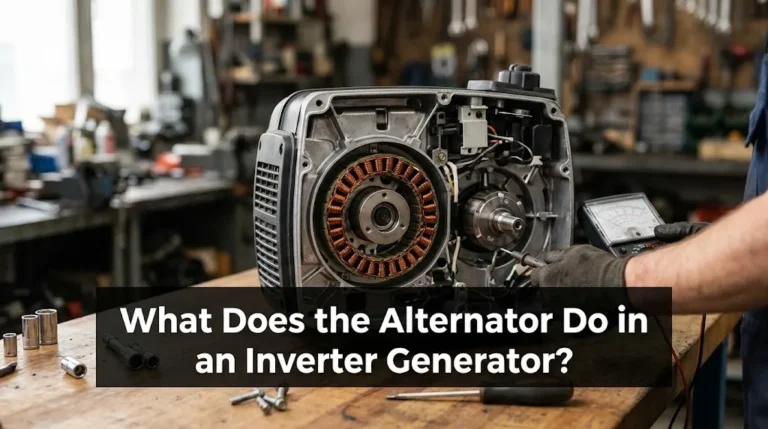
You can see how those parts fit together in our guide to what is inside an inverter generator. The enclosed case does not change the power path.
What does “inverter” mean here?
“Inverter” describes how the generator shapes its power. A normal portable generator ties engine speed to power frequency, so it must run fast all the time.
An inverter generator breaks that link. It makes raw AC, turns it into DC, then rebuilds it as clean AC at a steady 60 Hz in the US.
Clean sine wave means smooth, grid-like power with low distortion. THD, or total harmonic distortion, measures that distortion.
Most inverter generators keep THD under 3%. That low level is why they suit laptops, phones, CPAP machines, and modern fridges.
Section Takeaway: An enclosed inverter generator is an inverter generator in a closed case, built for quiet, clean, portable power.
How Does an Enclosed Inverter Generator Work?
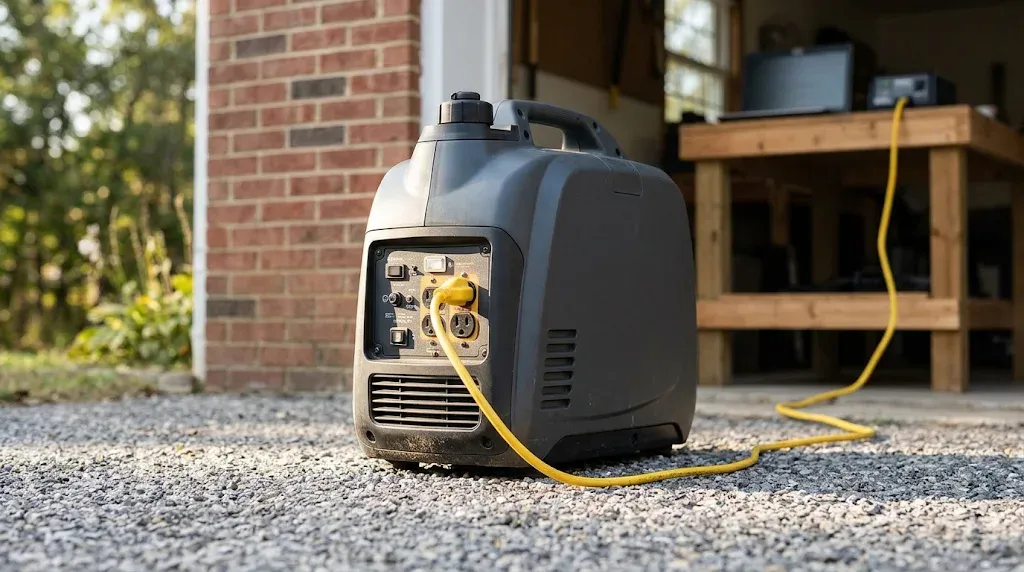
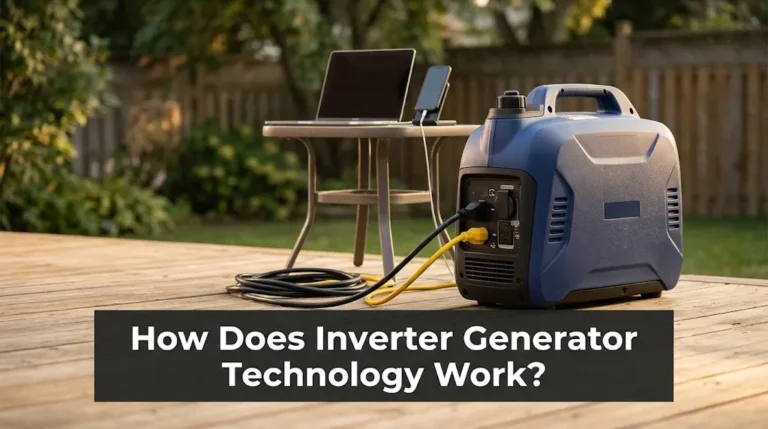
An enclosed inverter generator works in three clear stages. Fuel becomes motion, motion becomes raw power, and raw power becomes clean power.
The engine burns fuel and spins the alternator. The alternator makes high-frequency AC that would be rough on its own.
The inverter module then cleans it up. It changes the raw AC to DC, then rebuilds it as smooth AC at a steady voltage and frequency.
That rebuild is why the engine can slow down at light loads. The inverter holds the output steady while the engine speed follows demand.
What does eco mode do?
Eco mode, also called economy mode or eco-throttle, lets the engine idle down when the load is light. It saves fuel and cuts noise at the same time.
A fridge starting up needs a short surge. The engine then speeds up fast to meet it.
Turn eco mode off for large motor loads. A slow engine may lag when a compressor or pump kicks in.
Why does the case need vents?
A closed case traps heat fast. The engine, exhaust, and inverter module all make heat while they work.
Vents and a cooling fan move air through the case. Cool air comes in low, hot air leaves high, and the fan keeps that flow going.
Blocked vents change that balance. The engine runs hotter, the inverter may shut down, and parts wear faster.
Keep at least a few feet of clear space around the vents. Never stack gear against the case while it runs.
Safety note: Run any generator outdoors, at least 20 feet from your home, with the exhaust pointed away from windows, doors, and vents.
Section Takeaway: Fuel spins the engine, the inverter cleans the power, and the vents keep the closed case cool enough to work.
Enclosed vs Open-Frame Inverter Generator: What’s the Difference?
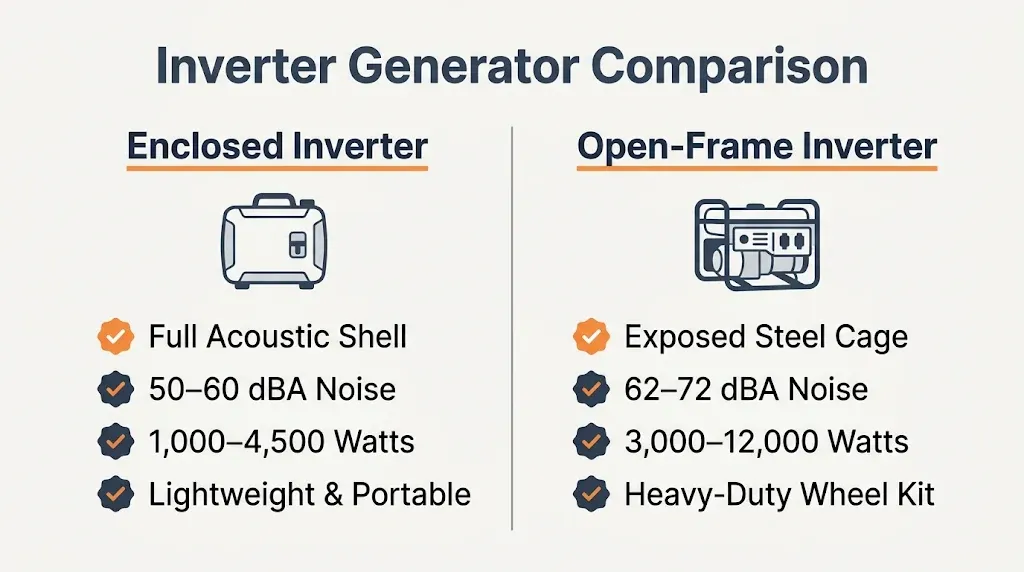
Enclosed and open-frame inverter generators share the same inverter idea. They differ in shape, sound, weight, service access, and price.
An open-frame inverter generator has a steel tube frame and exposed parts. You can see the engine, tank, and wiring without removing a panel.
An enclosed model hides those parts behind plastic panels. That case cuts noise and keeps rain and dust off the parts, but it also hides them from view.
Neither type is better for every job. The right pick depends on where you will use it and what you will power.
| Feature | Enclosed inverter | Open-frame inverter | Conventional open-frame |
|---|---|---|---|
| Design | Full plastic housing | Steel tube frame, parts exposed | Steel tube frame, parts exposed |
| Noise | Quietest, often 50-60 dBA at quarter load | Quieter than conventional, louder than enclosed | Loudest, often 68-78 dBA |
| Power quality | Clean sine wave, low THD | Clean sine wave, low THD | Rougher power, higher THD |
| Typical size | 1,000-4,500 running watts | 3,000-12,000 running watts | 3,000-15,000 running watts |
| Weight | Light for its size, easy to carry | Heavier, often needs wheels | Heaviest, wheels common |
| Best for | Camping, RV, quiet backup | RV air conditioning, larger loads | Job sites, heavy tools, low cost |
Noise figures above are typical ranges at quarter load, not promises for one model. Always check the spec sheet for the exact model you are eyeing.
Section Takeaway: Enclosed means quieter and easier to carry, while open-frame means more watts and easier access for the same money.
Why Are Enclosed Inverter Generators Quieter?
Enclosed inverter generators are quieter for three reasons at once. The case blocks sound, the engine runs slower at light loads, and the exhaust path is tuned for low noise.
The plastic housing acts like a sound box in reverse. It absorbs and reflects engine noise before it reaches your ears.
What do dB ratings mean?
A dB rating measures sound pressure on a logarithmic scale. A 10 dB rise sounds about twice as loud to most ears.
That is why a small gap matters. A 52 dBA generator sounds far quieter than a 62 dBA one, even though the numbers look close.
Check the distance behind each rating. Most makers test at 23 feet, or about 7 metres, at quarter load.
Compare ratings only at the same distance and load. A rating at full load will always look worse than one at quarter load.
For a shortlist of low-noise picks, see our guide to the quietest portable generators. Use it to compare ratings at the same distance and load.
Section Takeaway: The case, the slow engine, and the tuned exhaust work together, and a 10 dB gap is bigger than it looks.
What Can an Enclosed Inverter Generator Power?
An enclosed inverter generator can power small and medium loads with clean, stable power. Phones, laptops, lights, fans, and a fridge are common fits.
It can also run a CPAP machine, a TV, a router, and a small window AC on the right size. The key is matching watts, not guessing.
Most enclosed models range from about 1,000 to 4,500 running watts. That range covers camping and light home backup, but not a whole house.
Check both watt numbers before you plug in. Running watts are what a load needs to keep going.
Starting watts, also called surge watts, are the short extra burst a motor needs to start. A fridge may need twice its running watts for a second or two.
Typical loads at a glance
- Phone charger: 5-15 running watts, no surge to worry about.
- Laptop: 45-90 running watts, steady and clean.
- LED lights: 10-60 running watts for a small set.
- Box fan: 50-100 running watts, small start surge.
- Full-size fridge: 150-200 running watts, 600-1,200 starting watts.
- CPAP machine: 30-60 running watts without a heated humidifier.
- Small window AC: 500-1,000 running watts, 1,500-2,500 starting watts.
- RV air conditioner: 1,200-1,800 running watts, 2,800-3,500 starting watts.
Those are typical ranges, not specs for your exact appliance. Read the label on your appliance or check its manual for its own numbers.
Clean power matters most for electronics. A laptop charger, a CPAP, and a modern fridge board all prefer low THD power.
That is why many buyers pick an enclosed inverter for sensitive electronics. The smooth sine wave protects the gear and keeps it running steady.
Section Takeaway: Add up running watts, add starting watts for motors, and keep the total under the generator’s rated running watts.
How Do You Choose the Right Size?
Choose size by load, not by the biggest number on the box. A 4,500-watt model is wasted if you only charge phones and run lights.
Start with a short list of what you must power. Add the running watts, then add the largest starting watts on top.
Leave a safety margin of about 20%. That gap keeps the generator from running flat out for hours.
How do you do the watt math?
- List must-run loads: Fridge, lights, phone chargers, CPAP, and router.
- Add running watts: Use the label or manual for each item.
- Add the biggest surge: Add the largest starting watts once, not for every motor.
- Add a 20% margin: Multiply the total by 1.2 and round up.
- Match the result: Pick a model with at least that many running watts.
For size and model ideas, see our roundup of the best portable inverter generator picks. Compare running watts, not just peak watts.
Section Takeaway: List your loads, add the biggest surge once, add 20%, and pick a model that clears that number.
How Do You Use and Maintain One Safely?
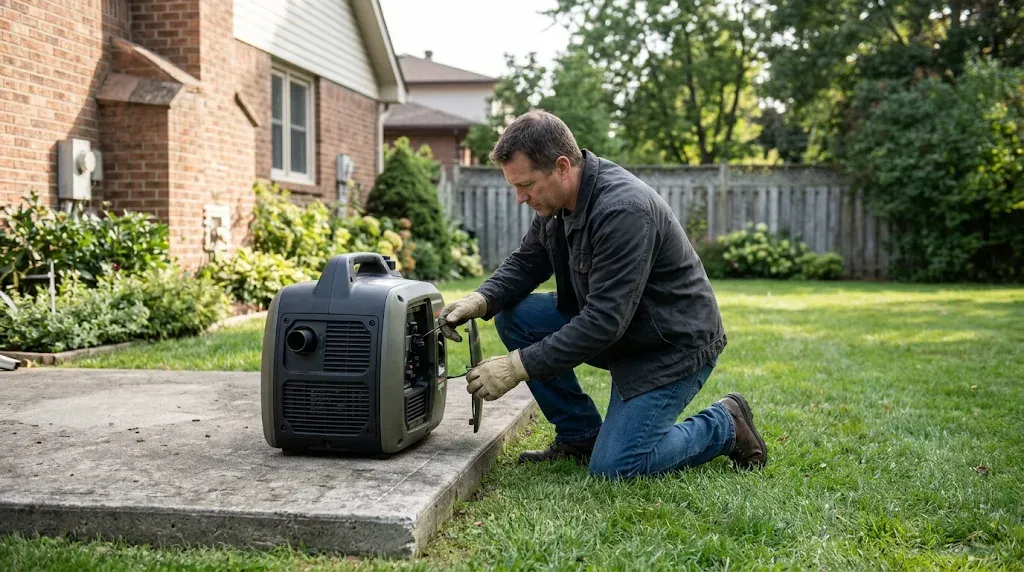
Safe use starts with placement. A generator belongs outdoors, far from the house, with the exhaust pointed away from people.
Carbon monoxide is colourless and odourless. It can build up fast in a garage, shed, or tent, even with a door open.
The CDC warns that generators should never run inside a home, garage, or enclosed space. Keep a battery CO alarm nearby when you run one.
Use a transfer switch or interlock for home hookups. A licensed electrician should install it, and it stops power from feeding back into the grid.
Safety note: Never backfeed a house through a wall outlet, and never run a generator in rain without a proper open-sided shelter.
What upkeep does the case add?
Enclosed models need the same oil, air filter, and spark plug care as other generators. The case just makes access a little tighter.
Follow your owner’s manual for oil-change intervals. Many small models need a first change after 20-25 hours, then every 50-100 hours.
Check the vents at every use. Dust, leaves, and mud can block airflow and push temperatures up.
That heat risk is real in a closed case. Our guide on whether an enclosed generator can overheat explains the warning signs and what to check first.
Store fuel right, too. Use fresh gasoline, add stabiliser if you store it for months, and run the carburettor dry before long storage.
Stale fuel is a top cause of hard starts. A clean carburettor and fresh fuel fix most no-start calls I hear about.
The CPSC and Energy.gov both publish generator safety guidance worth reading before your first outage.
Consumer Reports also covers safe placement and CO alarms in its generator guides.
Section Takeaway: Place it outdoors, use a transfer switch for home power, and keep vents clear so the closed case stays cool.
Frequently Asked Questions
Is an enclosed inverter generator the same as a quiet generator?
Not quite, but the terms overlap a lot. Most enclosed inverter generators are quiet, yet quiet also depends on size, load, and eco mode, so check the dB rating at the same distance and load.
Can I run an enclosed inverter generator in the rain?
You can run it in light rain with a proper open-sided shelter, but never in a closed box or tent. The case is not waterproof, so keep the outlets dry, the exhaust clear, and the vents open.
Can an enclosed inverter generator power a house?
It can power a few key circuits, such as a fridge, lights, and phones, but not a whole house. Central AC, electric heat, and large kitchen loads need far more watts, so use a transfer switch for safe hookups.
How long can an enclosed inverter generator run?
Runtime depends on tank size, load, and eco mode. Small models often run 6-10 hours at light load on one tank, so check the spec sheet for runtime at 25% and 50% load.
Are enclosed inverter generators good for RVs?
Yes, for most RV camping use. They are quiet, light, and easy to store, and they make clean power for RV electronics, though a large RV air conditioner needs a starting-watts check or parallel units.
Do enclosed inverter generators need more maintenance?
No, the core upkeep is the same as other inverter generators. Change oil per the manual, clean the air filter, and keep the vents clear, allowing extra time because the case makes access tighter.
An enclosed inverter generator is a simple trade. You give up some service access and some top-end watts, and you gain quiet, clean, portable power.
If you camp, travel in an RV, or want calm backup power for a few key loads, that trade is worth it. Pick your size by watt math, keep it outdoors, and keep the vents clear.

Hi, I’m Michael Turner. I own a generator workshop in the United States and founded HomeGeneratorBlog to share practical, hands-on guidance about generator installation, maintenance, troubleshooting, safety, and backup power solutions. My goal is to help homeowners make smarter, more confident decisions through clear and reliable information