What Are the Advantages of Inverter Generators?
Quick Answer
Inverter generators are quieter, lighter, more fuel-efficient, and produce cleaner power than most conventional portable generators. They adjust engine speed to match the load, so they sip fuel at low demand and stay quiet enough for campsites, RV parks, and home backup. If you want a dependable, portable source for sensitive electronics, camping, or outages, start with the best inverter generators for your wattage needs.
The biggest advantages at a glance
- Quieter operation: Enclosed design and variable speed keep noise low, often in the 50 to 60 dB range at partial load.
- Clean sine wave power: Low total harmonic distortion, often under 3%, protects laptops, phones, CPAP machines, and TVs.
- Better fuel efficiency: Eco-throttle slows the engine when demand drops, so a tank lasts longer.
- Light and portable: Many 2,000-watt models weigh under 50 pounds and fit in a car trunk or RV bay.
- Parallel capability: Two matching units can link together for double the power when you need it.
- Stable voltage and frequency: Electronics get steady power, even as loads switch on and off.
Best for
- Home backup for a fridge, lights, and phones during a short outage.
- RV camping, tailgating, and job sites where noise and weight matter.
- Anyone who powers sensitive electronics and wants fuel savings over a long weekend.
I’ve run inverter generators through multi-day outages, quiet campgrounds, and noisy job sites, and the difference is easy to hear and feel. This guide goes beyond the marketing claims to show how each advantage works in real life.
You’ll learn why they’re quieter, what clean power really means, how much fuel they save, and when a bigger conventional generator still makes more sense. As of 2026, inverter models remain my first pick for most portable-power jobs under 4,500 running watts.
In This Guide
- What Is an Inverter Generator?
- Are Inverter Generators Quieter Than Conventional Generators?
- Why Is Clean Power One of the Biggest Advantages?
- How Do Inverter Generators Save Fuel?
- Are Inverter Generators Easier to Carry and Store?
- Can You Run More Power With Parallel Capability?
- Inverter Generator vs. Conventional Generator
- When Is an Inverter Generator Not the Best Choice?
- Frequently Asked Questions
What Is an Inverter Generator?
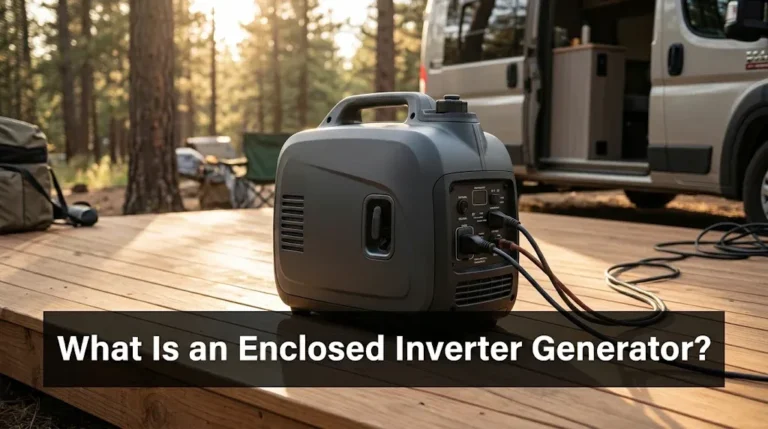
An inverter generator is a portable generator that creates clean, stable AC power by converting raw power to DC, then back to AC through an inverter module. That extra step smooths the output and keeps voltage and frequency steady.
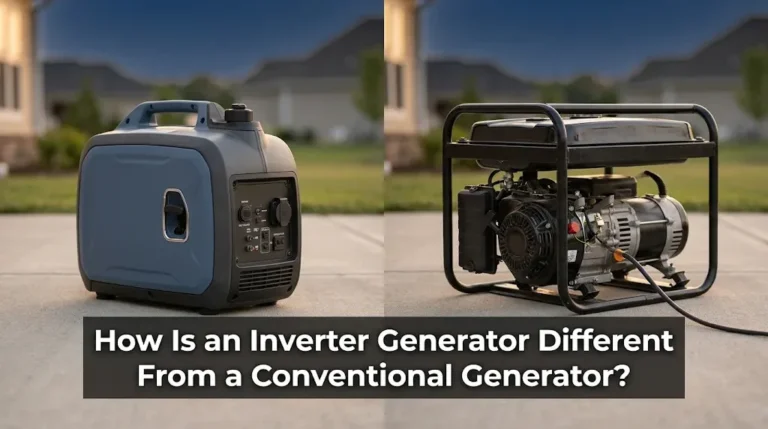
A conventional generator, by contrast, spins its engine at a fixed speed and sends raw AC straight to your outlets. Its power can waver when loads change, and the engine stays loud even when you only charge a phone.
How inverter technology changes the job
The inverter module watches demand in real time. It lets the engine slow down at light loads and speed up only when you add a fridge, a microwave, or a power tool.
That control is why inverter models feel calmer in use. They hum instead of roaring, and they sip fuel instead of burning through a tank overnight.
- Engine: A small gasoline, propane, or dual-fuel engine that drives an alternator.
- Alternator: Creates raw, high-frequency AC power from the engine.
- Rectifier: Changes that raw AC into DC power.
- Inverter module: Turns DC back into clean, stable AC at 120 volts and 60 Hz.
- Eco-throttle: Adjusts engine speed to match the load you plug in.
I first noticed the difference at a campground in Maine. My old open-frame unit rattled the picnic table at idle, while a neighbor’s inverter model sat nearby and sounded like a quiet conversation.
That night, I ran a fridge, a fan, and two phone chargers from a 2,200-watt inverter unit. It stayed steady, and no one asked me to move it farther away.
Learn the basics in more depth in this guide to what an inverter generator is and how it works. It also helps to know the different types of inverter generators, from gasoline and propane models to dual-fuel and tri-fuel designs.
Section Takeaway: An inverter generator trades raw brute force for smart, steady power, and that control drives almost every advantage below.
Are Inverter Generators Quieter Than Conventional Generators?

Yes, inverter generators are usually much quieter than conventional open-frame generators. Most small inverter models run around 50 to 60 dB at a quarter load, measured at about 23 feet.
A conventional portable generator often runs at 70 dB or more under the same load. That gap matters, because every 10 dB increase sounds roughly twice as loud to the human ear.
Why are they so much quieter?
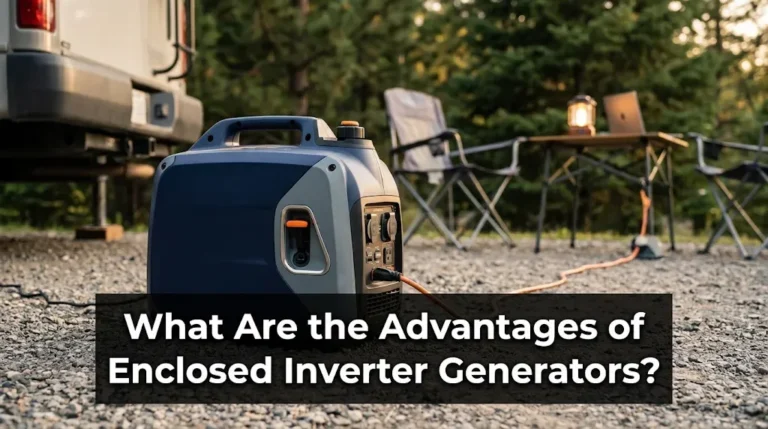
Three design choices work together to cut noise. First, the enclosed case muffles engine sound and vibration.
Second, the variable-speed engine does not race at full throttle when demand is low. Third, many models use a larger muffler and better insulation than an open-frame unit.
- Enclosed housing: Plastic and foam panels absorb sound before it reaches your ears.
- Variable speed: The engine idles down when you only run lights or chargers.
- Better muffler design: A tuned exhaust path cuts the sharp bark of an open-frame engine.
- Lower vibration: Rubber mounts and a compact layout reduce rattling on hard ground.
At a crowded RV park, I once placed a 2,000-watt inverter unit about 15 feet from my trailer. We talked over it without raising our voices, and the neighbors never complained.
The same spot with a conventional unit would have been a different story. I have tried that too, and the drone carried across three campsites.
What does quiet mean in real use?
Noise ratings help, but distance and load matter just as much. A unit rated at 52 dB at quarter load will sound louder at full load, or if you stand right next to it.
Check the spec sheet for the dB rating, the load level, and the test distance. Those three details tell you far more than a single number on a box.
Section Takeaway: Quiet is not a luxury here, it is the advantage that lets you use power at a campsite, in an RV park, or near a home without wearing out your welcome.
Why Is Clean Power One of the Biggest Advantages?
Clean power means stable voltage and frequency with low total harmonic distortion, or THD. Most inverter generators keep THD under 3%, which is safe for sensitive electronics.
Conventional generators can produce higher THD, often 15% or more, with voltage spikes when loads switch. That rough power can stress laptops, TVs, CPAP machines, and modern furnace controls.
What is THD, in plain terms?
THD measures how far the power waveform strays from a smooth sine wave. A clean sine wave is smooth and even, like a calm ocean swell.
A dirty waveform is choppy and uneven. Sensitive circuits have to work harder to use it, and they can overheat or shut down over time.
- Laptops and phones: Need steady voltage to charge safely and avoid battery stress.
- CPAP machines: Need clean power for steady airflow and reliable medical use.
- TVs and gaming consoles: Use delicate boards that dislike surges and dips.
- Modern appliances: Many fridges and furnaces now use electronic controls that expect clean power.
During a three-day outage, I ran a fridge and a CPAP from a 3,000-watt inverter unit. Both ran without a hiccup, and the fridge compressor cycled on and off without a surge or a stall.
I would not trust that same load to a rough open-frame unit for three nights. The risk is not always instant damage, but it is not worth taking when clean power costs so little extra.
Energy efficiency guidance from Energy.gov also points to matching the right power source to the load. Clean, right-sized power wastes less energy and protects the devices you depend on.
Section Takeaway: If you power anything with a chip in it, clean sine wave output is the advantage that protects your gear while it keeps the lights on.
How Do Inverter Generators Save Fuel?
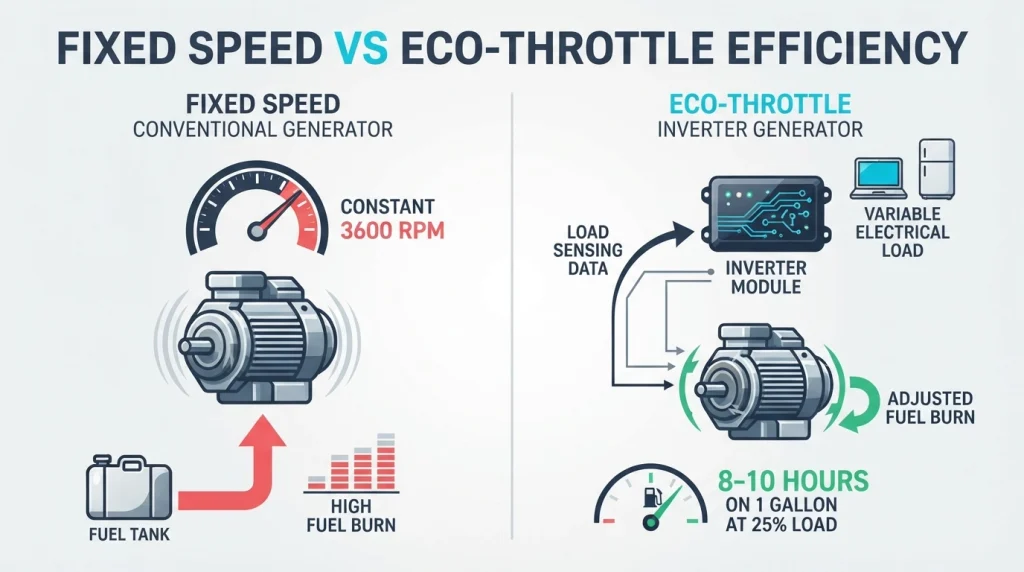
Inverter generators save fuel by slowing the engine when demand is low. Eco-throttle, also called economy mode, matches engine speed to the load instead of running flat-out all the time.
A conventional generator must hold a fixed speed to hold 60 Hz, even when you only charge a phone. An inverter unit can idle down, burn less gas, and stretch a tank for hours longer.
How much longer can they run?
Runtime depends on tank size, load, and eco-mode use. A small 2,000-watt inverter unit can often run 8 to 10 hours at a quarter load on about a gallon of fuel.
That same load on a conventional unit may burn through fuel faster, because the engine never gets a break. Check the spec sheet for runtime at 25% and 50% load, not just the headline number.
- Eco-mode on: Best for lights, chargers, fans, and a fridge cycling on and off.
- Eco-mode off: Best for startup surges, air conditioners, and power tools that need full power fast.
- Partial load: This is where inverter models win, because most home and camping loads are light most of the time.
- Full load: Fuel use rises, and the gap narrows, but the inverter still holds voltage better.
On a camping trip, I ran a 2,200-watt unit in eco-mode for two evenings. It powered lights, phones, and a small fan, and I still had fuel left on the third morning.
That kind of runtime changes how you pack. You carry less spare fuel, you stop less often, and you sleep without refueling at 2 a.m.
Safety note: Store fuel in an approved container, away from heat and living spaces, and never refuel a hot generator. Let it cool first, and check your owner’s manual for fuel type and storage limits.
Fuel and emissions guidance from the EPA also reminds owners to use fresh fuel and follow the manual. Stale gas is a top cause of hard starts and carburetor clogs.
For the most efficient picks, compare the best fuel-efficient portable generators before you buy. Runtime at partial load is the number that matters most for real trips.
Section Takeaway: Eco-throttle turns light loads into long runtimes, so you buy less fuel, carry less fuel, and refuel far less often.
Are Inverter Generators Easier to Carry and Store?
Yes, most inverter generators are easier to carry and store than conventional models of the same wattage. Many 2,000-watt units weigh 40 to 50 pounds, with a built-in handle and a compact, suitcase-like shape.
A comparable open-frame unit can weigh 90 pounds or more, with a wide steel frame that snags on doorways. That weight gap shows up every time you lift it into a truck or carry it to a campsite.
What makes them so portable?
The enclosed case does more than cut noise. It creates a clean shape with no exposed frame, no sharp edges, and a handle that balances the load.
Many models also stack well in a garage or RV bay. They tuck into a corner, sit under a bench, or ride in a trunk without taking over the whole space.
- Light weight: A single person can lift most 2,000-watt models without help.
- Compact footprint: The case is often smaller than a large cooler.
- Built-in handle: A top handle makes short carries simple and safe.
- Clean storage: No open frame to catch dust, tools, or camping gear.
I once carried a 2,200-watt unit from my truck to a tent site in one trip. My back thanked me, and I did not need a second person or a ramp.
That same trip with a heavy open-frame unit would have meant a wheel kit, a longer walk, and a lot more grunting. Portability is not just comfort, it is the reason you actually bring the generator.
Safety note: Run generators outdoors and well away from windows, doors, and vents. Never run one in a garage, tent, or enclosed space, even with the door open.
Section Takeaway: Light, compact, and easy to lift, an inverter generator is the portable power source you will actually use, not the one you leave in the garage.
Can You Run More Power With Parallel Capability?
Yes, many inverter generators can link together with a parallel kit to double your power. Two 2,000-watt units can work as one 4,000-watt system when you need more running watts.
That flexibility is hard to beat. You can run one small unit for a weekend trip, then pair it with a second unit for a home outage or an RV air conditioner.
How does parallel power work?
A parallel kit connects the two units and syncs their output. You plug your load into the kit, not into a single generator.
Both engines share the load, so each one works less hard than it would alone. You get more power without buying a huge, heavy single unit.
- Start small: Buy one unit now and add a second later if your needs grow.
- Run light: Use one unit for phones and lights, and save fuel.
- Run heavy: Link two units for a fridge, a window AC, or a microwave.
- Stay portable: Two light units are still easier to move than one very heavy unit.
I tested this setup with a friend who owns two matching 2,200-watt units. One ran his lights and chargers, and both together started his RV air conditioner without tripping an overload.
That kind of scale-up is the smart way to buy power. You do not pay for a big generator you rarely need, and you do not get stuck with a small one when you need more.
See how the kit works in this guide to a portable generator parallel kit. Use only a kit made for your model, and follow the manual for the correct outlets and load limits.
Section Takeaway: Parallel capability lets you start small, stay portable, and scale up only when the job demands it.
Inverter Generator vs. Conventional Generator
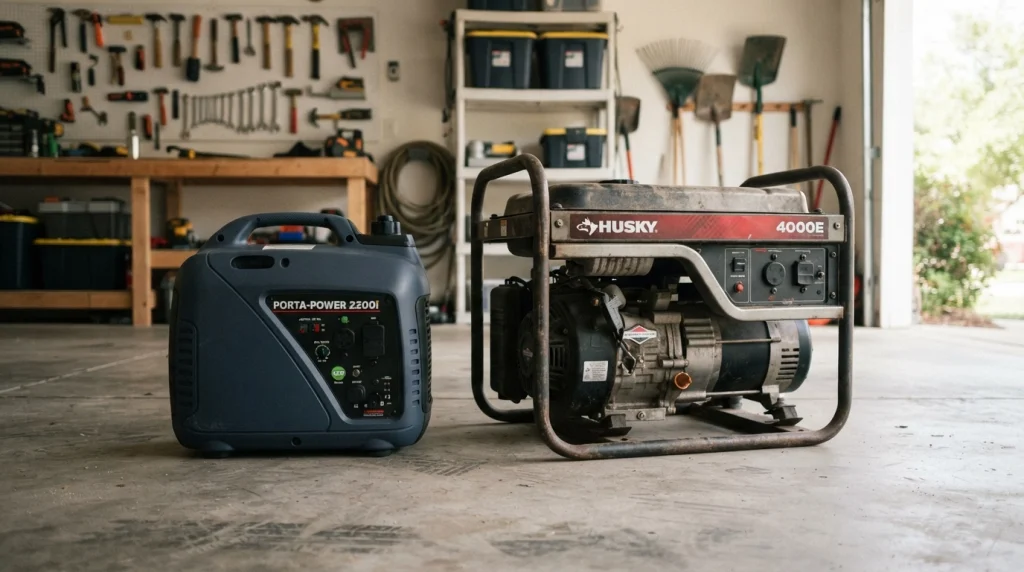
An inverter generator wins on noise, clean power, fuel use, and portability. A conventional generator wins on raw wattage per dollar and on simple, high-power jobs.
The right pick depends on what you power most. For electronics, camping, and RV use, the inverter is the clear winner. For a whole-house backup or a large job site, a bigger conventional or standby unit may fit better.
| Feature | Inverter Generator | Conventional Generator |
|---|---|---|
| Noise at 25% load | Often 50 to 60 dB | Often 70 dB or more |
| Power quality (THD) | Often under 3%, clean sine wave | Often 15% or more |
| Fuel use | Low at light loads, eco-mode helps | Higher, fixed engine speed |
| Weight, 2,000 watts | Often 40 to 50 pounds | Often 90 pounds or more |
| Best for | Electronics, camping, RV, short outages | High-watt tools, large loads, low cost per watt |
| Parallel use | Common, easy to scale | Less common on basic models |
| Typical price | Higher per watt | Lower per watt |
Check the spec sheet before you trust any number in a table. Brands test noise and runtime in different ways, and real-world load changes the result.
Independent testing notes from Consumer Reports can help you compare models on noise, power quality, and ease of use. Use those notes alongside the manual, not instead of it.
Section Takeaway: The inverter wins where it counts for most portable use, while the conventional unit still wins when you need maximum watts for minimum money.
When Is an Inverter Generator Not the Best Choice?
An inverter generator is not the best choice when you need very high wattage for a low price. Large conventional, dual-fuel, or standby units give you more running watts per dollar.
They also fit better when you need to power a whole home, a large well pump, or several heavy tools at once. A small inverter unit will trip its overload protection if you ask too much of it.
What are the trade-offs?
Cost is the first trade-off. Inverter models cost more per watt than open-frame units, especially above 4,500 watts.
Size is the second trade-off. Most portable inverter models top out below the wattage of a large conventional unit, unless you link two together.
- Whole-home backup: A standby generator or large portable unit may fit better.
- Large AC units: A 13,500 BTU RV AC needs careful sizing and a soft start, or a larger unit.
- Heavy job-site tools: Table saws and compressors need high starting watts.
- Long outages: A larger tank or a dual-fuel model may reduce refueling.
I learned this the hard way during a summer outage. A 2,200-watt inverter ran my fridge and lights with ease, but it could not start my window AC and the fridge at the same time.
That was not a failure of the generator. It was a sizing mistake, and it taught me to add up running watts and starting watts before I buy.
How do you size it right?
List every load you plan to run at once. Add the running watts, then add the highest starting watts from the list.
Leave a margin of 10 to 20 percent. That margin keeps the generator from running at its limit and gives you room for a surprise load.
Safety note: Carbon monoxide kills quickly and without warning. Run generators outdoors, at least 20 feet from your home, and away from windows, doors, and vents. Use a battery-powered CO alarm indoors, and follow guidance from the CDC and the CPSC on generator placement. For home hookups, use a transfer switch or interlock installed by a licensed electrician, and check your owner’s manual before use.
Section Takeaway: An inverter generator is the best portable choice for most people, but honest sizing is what keeps it from becoming the wrong choice.
Frequently Asked Questions
What are the main advantages of inverter generators?
The main advantages are quieter operation, clean sine wave power, better fuel efficiency, light weight, and parallel capability. They adjust engine speed to match the load, so they run quieter and longer at partial load than conventional generators.
Are inverter generators worth the extra cost?
Yes, for most camping, RV, and home backup use, the extra cost pays off in quiet operation, clean power, and fuel savings. If you only need raw watts for heavy tools, a conventional unit may give you more power per dollar.
Can an inverter generator run a refrigerator?
Yes, most 2,000-watt inverter generators can run a modern fridge, which often needs 100 to 200 running watts and 600 to 1,200 starting watts. Add up all loads you run at once, and leave a margin for the fridge compressor startup.
Can an inverter generator power a CPAP machine?
Yes, a small inverter generator is a good fit for a CPAP machine, because it provides clean, stable power with low THD. Check your CPAP wattage, use eco-mode for light loads, and keep the generator outdoors with a long, rated extension cord.
How long can an inverter generator run?
Runtime depends on tank size and load, but many small models run 8 to 10 hours at a quarter load in eco-mode. Larger models run longer, and dual-fuel models can switch to propane for easier storage and longer shelf life.
Are inverter generators safe for laptops and phones?
Yes, inverter generators are generally safe for laptops, phones, and other sensitive electronics, because they produce a clean sine wave with low THD. Use a surge protector for extra safety, and check the spec sheet for THD under 3%.
Do inverter generators need a lot of maintenance?
No, maintenance is simple but regular. Change the oil per your manual, use fresh fuel, run the unit every few months, and clean the air filter. That routine prevents most hard starts and carburetor clogs.
Final takeaway: Choose an inverter generator when you want quiet, clean, fuel-efficient power you can actually carry. Size it with a margin, run it outdoors, and it will handle a fridge, a CPAP, your phones, and a quiet night at camp without a fuss.
If you camp, RV, or prep for outages, start with your wattage list, pick a model with eco-mode and parallel capability, and test it before you need it. That one test run will tell you more than any spec sheet ever will.

Hi, I’m Michael Turner. I own a generator workshop in the United States and founded HomeGeneratorBlog to share practical, hands-on guidance about generator installation, maintenance, troubleshooting, safety, and backup power solutions. My goal is to help homeowners make smarter, more confident decisions through clear and reliable information