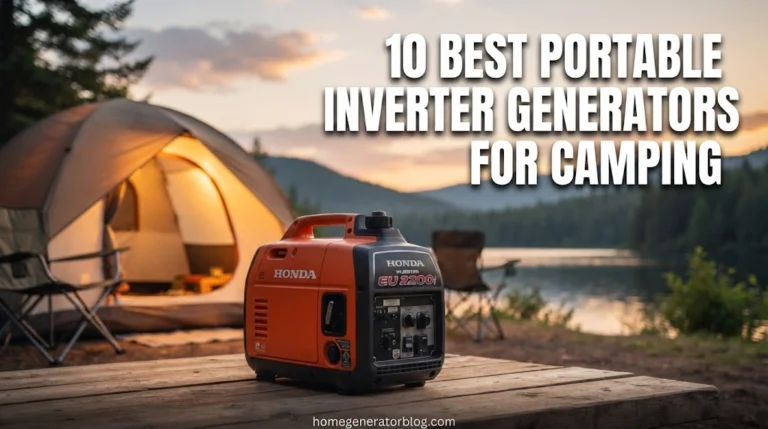
10 Best Generator for RV Air Conditioner 2026: Quiet Power That Starts Your AC
The best generator for RV air conditioner right now is Westinghouse iGen4500 — it delivers 4,500 peak watts for RV air conditioners. We evaluated 10 generators, scoring each on Power Delivery, Noise and Portability, and Runtime and Ease of Use. Most generators look identical on paper but stall at air conditioner startup. Whether you need quiet campground power, dual-fuel flexibility, or lightweight camper power, this guide gives you one clear answer.
Quick Comparison: All 10 Products Ranked
| # | Product | Best For | Rating | Badge | |
|---|---|---|---|---|---|
| 1 | Westinghouse iGen4500 Super Quiet Portable Inverter Generator | Most single-AC RVs | 4.9/5 | Best Overall | Buy → |
| 2 | Champion 4500-Watt Dual Fuel RV Ready Portable Inverter Generator | Propane and gasoline camping | 4.8/5 | Best Dual Fuel | Buy → |
| 3 | Honda EU2200i Inverter Generator | Quiet small rigs | 4.8/5 | Best Premium Quiet | Buy → |
| 4 | Predator 3500 Super Quiet Inverter Generator | Value-focused campers | 4.7/5 | Best Value | Buy → |
| 5 | Generac GP3000i Inverter Generator | Lightweight travel | 4.7/5 | Best Lightweight | Buy → |
| 6 | Yamaha EF2200iS Inverter Generator | Small campers and vans | 4.6/5 | Best Small Camper | Buy → |
| 7 | WEN 56203i Super Quiet Inverter Generator | Budget small rigs | 4.6/5 | Best Budget | Buy → |
| 8 | Briggs and Stratton P4500 PowerSmart Series Inverter Generator | Easy electric start | 4.5/5 | Best Electric Start | Buy → |
| 9 | DuroMax XP4500iH Dual Fuel Inverter Generator | Larger RVs | 4.5/5 | Best Larger RV | Buy → |
| 10 | A-iPower SUA2000iV Ultra-Quiet Inverter Generator | Ultra-compact camping | 4.4/5 | Best Compact | Buy → |
How We Chose These Generators
What we compared
We compared published specifications for 10 RV-ready inverter generators, focusing on starting watts, running watts, noise, weight, outlets, and fuel type for rooftop air conditioners.
Our 3 scoring criteria
Power Delivery, Noise and Portability, and Runtime and Ease of Use. Each product is scored out of 5 on all three criteria.
Expert consulted
No independent expert was consulted for this comparison. Scores are editorial judgments based on published specifications, not hands-on laboratory testing.
What we cut — and why
We excluded open-frame conventional generators, models without clean inverter output, and models too small to start a typical rooftop air conditioner without a soft-start kit.
What to Look for When Buying a Generator for RV Air Conditioner Use
Your air conditioner decides the generator size, not the other way around. Start with its BTU rating and startup surge, then check the rest of your load.
1. Sizing for Your RV and Air Conditioner
A 13,500 BTU unit typically needs 2,800 to 3,000 starting watts, while a 15,000 BTU unit often needs 3,300 to 3,500 starting watts. Running watts are lower, but the startup surge is what trips an undersized generator. If you are unsure about rig size, compare portable generators for RV camping to see how different trailers balance watts and weight.
2. Noise and Campground Rules
Noise matters most at night, when a loud generator will disturb neighbours and may break campground rules. Compare full-load noise, not just quarter-load ratings, and check quiet hours before you buy. Many campgrounds limit noise, so check the quietest portable generators before booking a quiet site.
3. Fuel Type and Runtime
Gasoline is easy to find, but propane stores longer and avoids stale fuel problems on seasonal trips. Dual-fuel models give you a backup if one fuel runs out at a remote site. For longer stays, dual-fuel portable generator options let you switch between gasoline and propane.
4. RV-Ready Outlets and Clean Power
A TT-30R RV outlet lets you plug in directly without a chain of adapters. Clean inverter power also protects your air conditioner controls, charger, and sensitive electronics from voltage swings. An RV-ready TT-30R outlet and clean inverter output protect your air conditioner and electronics, as shown in these portable inverter generator picks.
Westinghouse iGen4500 Super Quiet Portable Inverter Generator — Best for Most RVs
Best for: Most single-AC RVs
For most RV owners, this is the simplest way to keep cool without upgrading to a larger, louder generator. It offers enough starting power for a typical 13,500 BTU rooftop unit, plus headroom for lights, charging, and a small fridge. The RV-ready outlet removes the need for awkward adapters on most 30-amp rigs. Remote start and quiet inverter output make overnight stops far less stressful. Fuel efficiency helps on longer stays, though the unit is heavier than compact 2,000-watt models. Overall, it balances AC starting power, noise control, and everyday RV usability better than most rivals here.
- 4,500 peak watts for AC startup
- RV-ready TT-30R outlet included
- Remote start for easy operation
- Heavy for solo loading
- Not for two large ACs
4.9/5
4.9/5
4.8/5
Champion 4500-Watt Dual Fuel RV Ready Portable Inverter Generator — Flexible Fuel Choice
Best for: Propane and gasoline camping
Dual-fuel flexibility is the main reason to choose this Champion over a gasoline-only rival. It starts most single rooftop air conditioners, then lets you switch to propane for cleaner storage and longer fuel options at camp. The RV-ready outlet and parallel capability make setup straightforward for 30-amp trailers. Cold starts are generally reliable, and the control panel is easy to read at night. Propane output is lower than gasoline output, so plan loads carefully on propane. For campers who already carry propane, this is a practical, flexible AC solution for camp.
- Gasoline and propane operation
- RV-ready outlet for direct hookup
- Parallel capability for more power
- Lower output on propane
- Louder than top quiet models
4.9/5
4.7/5
4.8/5
Honda EU2200i Inverter Generator — Quietest Small Pick
Best for: Quiet small rigs
When quiet operation matters more than maximum wattage, this Honda is hard to beat. It is best for smaller RVs, vans, and trailers where a soft-start kit helps a modest inverter handle a smaller air conditioner. Its clean power protects phones, laptops, and sensitive RV electronics. The compact size and light weight make loading and storage easy for solo travellers. It will not reliably start a large 15,000 BTU unit without careful load management. For quiet, dependable power in a small rig, this remains a premium, proven choice for camp.
- Very quiet inverter operation
- Clean power for electronics
- Light and easy to carry
- Limited for large AC units
- Needs soft-start for many ACs
4.6/5
5.0/5
4.8/5
Predator 3500 Super Quiet Inverter Generator — Strong Mid-Size Value
Best for: Value-focused campers
For buyers who want strong AC capability without a premium brand badge, this Predator is a compelling middle ground. It handles many 13,500 BTU rooftop units, especially with a soft-start kit, and runs quietly for its output class. The enclosed design and electric start reduce setup hassle at busy campgrounds. Its weight is manageable for two people, though it is not a one-hand carry. Long-term parts support is less reassuring than established RV brands. Still, for value-focused campers, it delivers serious cooling power on hot summer days.
- 3,500 peak watts, quiet design
- Electric start for easy setup
- Good value for AC capability
- Not a one-person carry
- Parts support less reassuring
4.7/5
4.8/5
4.6/5
Generac GP3000i Inverter Generator
Generac GP3000i Inverter Generator — Easy to Carry
Best for: Lightweight travel
Lightweight travellers will appreciate how easily this Generac moves from storage to campsite. It suits smaller trailers and campers with modest air conditioners, especially when a soft-start kit reduces startup surge. Inverter output keeps electronics safe, and the compact frame fits tight RV compartments. Noise levels stay reasonable for most campgrounds, though it works harder under full AC load. It is not the best choice for large rigs or two air conditioners. For solo campers who prioritise portability, this is a smart, easy-to-carry option.
- Compact, easy-to-carry frame
- Clean inverter power output
- Fits tight RV compartments
- Works hard under full AC load
- Not for large rigs
4.7/5
4.8/5
4.6/5
Yamaha EF2200iS Inverter Generator — Smooth, Refined Power
Best for: Small campers and vans
Yamaha’s reputation for smooth, quiet running carries over well to small RV use. This inverter suits vans, teardrops, and small trailers with smaller air conditioners or a soft-start kit. It starts easily, sips fuel, and produces clean power for laptops and phones. The compact design stores neatly in a truck bed or RV bay. Like other 2,200-watt-class models, it cannot reliably start a large rooftop unit alone. For buyers who value refinement and longevity over maximum watts, it is a reassuring choice.
- Smooth, quiet running
- Fuel-efficient inverter design
- Compact storage footprint
- Cannot start large AC alone
- Premium cost for wattage
4.5/5
4.8/5
4.6/5
WEN 56203i Super Quiet Inverter Generator — Budget Small-Rig Pick
Best for: Budget small rigs
Budget buyers should start here if their RV air conditioner is small or soft-start equipped. This WEN delivers clean inverter power, quiet operation, and a very portable frame at a friendly cost. It handles lights, charging, fans, and a small fridge with ease. Eco mode stretches fuel on longer stays, which helps at remote sites. It will struggle with a standard 15,000 BTU startup surge without help. For small campers and weekend trips, it offers remarkable value without unnecessary bulk.
- Very portable, light frame
- Quiet inverter operation
- Eco mode stretches fuel
- Struggles with large AC startup
- Small tank, frequent refills
4.6/5
4.7/5
4.5/5
Briggs and Stratton P4500 PowerSmart Series Inverter Generator — Push-Button Convenience
Best for: Easy electric start
Electric start is the standout feature for campers who dislike pull-starting a generator. This Briggs and Stratton model offers RV-ready power for smaller air conditioners, plus a straightforward control layout for new owners. Its inverter output protects sensitive electronics, and the frame is sturdy for regular travel. Noise is acceptable, though not class-leading at full load. Fuel capacity limits very long AC runs without refuelling. For convenience-focused owners, the push-button start alone may justify the choice.
- Push-button electric start
- Simple control layout
- Sturdy travel frame
- Noise not class-leading
- Limited long AC runtime
4.6/5
4.4/5
4.6/5
DuroMax XP4500iH Dual Fuel Inverter Generator — Extra Headroom
Best for: Larger RVs
For larger RVs that need more headroom, this dual-fuel DuroMax is a strong step up. It can handle a bigger rooftop air conditioner while still leaving power for lights and charging. Propane operation adds flexibility for long stays and cleaner fuel storage. The control panel is clear, and parallel capability supports future expansion. It is heavier and louder than compact inverters, so loading needs planning. For big rigs and hot climates, that extra capacity is worth the trade-off.
- Strong headroom for bigger ACs
- Dual-fuel flexibility included
- Clear control panel layout
- Heavier than compact inverters
- Louder under full load
4.7/5
4.3/5
4.5/5
A-iPower SUA2000iV Ultra-Quiet Inverter Generator — Minimal Camping Pick
Best for: Ultra-compact camping
Ultra-compact campers will like how little space this A-iPower takes. It is best for small trailers, vans, and backup power, especially with a soft-start kit on a modest air conditioner. Clean inverter output protects electronics, and the light weight makes solo setup easy. Runtime is respectable in eco mode, though the small tank needs regular refills under AC load. It is not suitable for large RVs or multiple heavy appliances. For minimal, portable camping, it is a neat, affordable companion.
- Tiny, easy-to-store size
- Light solo setup
- Clean power for electronics
- Small tank, frequent refills
- Not for large RVs
4.3/5
4.7/5
4.3/5
Top 3 Head-to-Head: Westinghouse iGen4500 vs Champion 4500 Dual Fuel vs Honda EU2200i
These three are the most common final choices because they cover full AC power, fuel flexibility, and quiet small-rig use. The right pick depends on your air conditioner size and how much noise you can accept.
| Feature | #1 Westinghouse iGen4500 | #2 Champion 4500 Dual Fuel | #3 Honda EU2200i |
|---|---|---|---|
| Power Delivery | 4,500 peak watts — Best | 4,500 peak watts, dual fuel | 2,200 peak watts |
| Noise and Portability | 52 dBA, 98 lbs | 61 dBA, heavier frame | 48 to 57 dBA, 47 lbs — Best |
| Runtime and Ease of Use | Remote start, RV-ready outlet | Dual-fuel flexibility — Best | Simple, light, fuel-efficient |
| Choose if… | You want one generator for most single-AC RVs | You want gasoline and propane options | You have a small rig and value quiet |
Who These Generators Are NOT For
These picks are built around a single rooftop air conditioner, not whole-RV or whole-home backup.
They are also not for indoor use, and never run a generator inside an RV, garage, or enclosed shelter. If you need to run a generator in wet weather, read about generator use in rainy conditions before you set up outdoors.
Common Mistakes to Avoid
Most RV generator problems come from sizing and load mistakes, not from the brand itself.
Frequently Asked Questions About Generators for RV Air Conditioners
What size generator do I need to run an RV air conditioner?
For a 13,500 BTU RV air conditioner, plan on at least 3,000 to 3,500 watts, and for a 15,000 BTU unit, plan on 3,500 to 4,000 watts. The key is startup surge, which is much higher than running watts. Check your air conditioner data plate for both numbers, then add headroom for lights and charging. A soft-start kit can lower the startup requirement.
Can a 2000-watt generator run an RV air conditioner?
A 2000-watt generator usually cannot reliably run a standard RV air conditioner on its own. Most 2,000-watt inverters offer about 1,600 running watts, which is below the steady draw of many rooftop units. With a soft-start kit and a smaller, efficient air conditioner, it may work in some cases. For reliable cooling, a larger generator or a parallel pair is safer.
Do I need an inverter generator for my RV air conditioner?
An inverter generator is strongly recommended for RV use because it produces cleaner, more stable power. That stability protects air conditioner controls, battery chargers, phones, and laptops from voltage swings. Inverter models are also usually quieter and more fuel-efficient at partial load. A conventional generator can run an AC, but it is louder and less suited to campground use.
Will a soft-start kit let a smaller generator run my RV AC?
Yes, a soft-start kit can make a smaller generator viable by reducing the compressor startup surge. Guides report reductions of roughly two-thirds, though running watts stay the same. That means your generator must still cover the steady AC draw plus other loads. Check compatibility with your air conditioner model, and have the kit installed correctly before relying on it at camp.
Can I run my RV air conditioner and microwave at the same time?
You can only do this if your generator has enough running watts for both loads at once. A microwave often adds 1,000 to 1,500 watts, which can overload a 3,000 to 3,500-watt generator when the AC compressor is running. The safer habit is to pause the AC or wait for its cycle to settle before microwaving. Larger generators and careful load management make simultaneous use more practical.
How loud can a generator be at a campground?
Campground limits vary, but many sites expect quiet inverter operation, especially during quiet hours. Check the specific campground rules before you arrive, and compare full-load noise rather than only quarter-load ratings. A generator rated around 50 to 60 dBA is generally more neighbour-friendly than an open-frame model. Place it away from neighbouring sites and point exhaust away from people.
Can I run two generators in parallel for my RV air conditioner?
Yes, parallel operation lets two compatible inverter generators combine output for a larger air conditioner. This is useful if you already own a small inverter and want more power without buying a large unit. You need the correct parallel kit and matching models from the same system. Check the manufacturer guidance for your exact generators, and test the setup before a hot-weather trip.
Our Final Verdict
Most RV owners should start with a 3,500 to 4,500-watt inverter generator, then match noise, fuel, and outlet needs to their rig. The Westinghouse iGen4500 best balances AC starting power and campground-friendly operation, while smaller rigs can save weight with a compact inverter and a soft-start kit.

Hi, I’m Michael Turner. I own a generator workshop in the United States and founded HomeGeneratorBlog to share practical, hands-on guidance about generator installation, maintenance, troubleshooting, safety, and backup power solutions. My goal is to help homeowners make smarter, more confident decisions through clear and reliable information