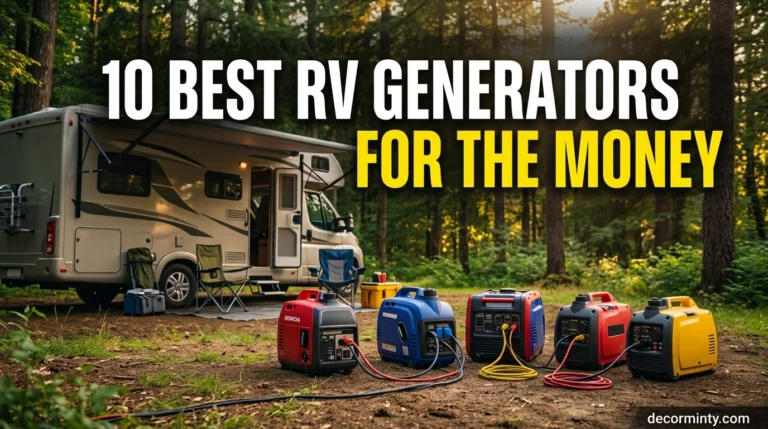
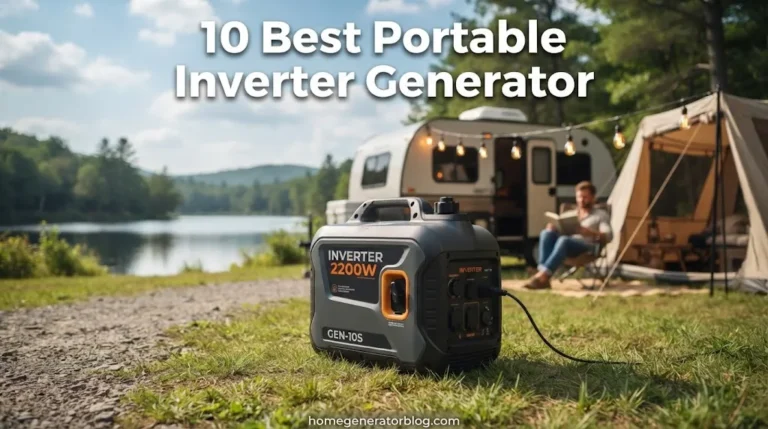
10 Best Gas Inverter Generator for RV in 2026: Power, Quietness and Portability
The 10 best gas inverter generator for RV options include the Westinghouse iGen4500, which combines substantial output with an RV-ready outlet and electric starting. We evaluated 10 generators using published power specifications, portability, and operating-noise information. Small generators can handle charging and lights but may struggle when an RV air conditioner starts. Whether you need lightweight boondocking power, everyday travel-trailer support, or greater air-conditioning capacity, this guide helps you choose.
Quick Comparison: All 10 Generators Ranked
This is a research-based shortlist, not a record of comparative laboratory testing. Specifications can vary by model suffix, revision, and regional version; confirm the manufacturer’s current documentation before buying.
| # | Generator | Best for | Indicative rating | Badge | Listing |
|---|---|---|---|---|---|
| 1 | Westinghouse iGen4500 | Many 30A RVs | 4.7/5 | Best Overall | View on Amazon → |
| 2 | WEN 56380i | RV-ready mid-size power | 4.5/5 | Best Value | View on Amazon → |
| 3 | Honda EU2200i | Quiet, light-duty camping | 4.6/5 | Best Compact | View on Amazon → |
| 4 | Champion 201319 4500W Dual Fuel | Higher output and fuel flexibility | 4.5/5 | Best Dual Fuel | View on Amazon → |
| 5 | Yamaha EF2200iS | Compact premium alternative | 4.4/5 | Best Alternative | View on Amazon → |
| 6 | Honda EU3000iS | More power with premium build | 4.4/5 | Best Premium | View on Amazon → |
| 7 | Generac iQ3500 | Mid-size portable power | 4.2/5 | Best Mid-Size | View on Amazon → |
| 8 | WEN 56235i | Budget lightweight power | 4.2/5 | Best Budget | View on Amazon → |
| 9 | Champion 201317 2500W | Lightweight camping | 4.1/5 | Best Portable | View on Amazon → |
| 10 | Westinghouse iGen2200 | Basic off-grid essentials | 4.0/5 | Best for Essentials | View on Amazon → |
How We Selected These RV Generators
The shortlist compares 10 gasoline-capable inverter generator models using manufacturer specifications and product-category considerations. We did not conduct physical tests, measure sound levels, or verify current inventory; ratings below are editorial assessments rather than measured test scores or customer-review averages.
Power and compatibility
Compared published running and starting output, RV receptacles, and likely appliance requirements.
Three scoring criteria
Power suitability, portability and operating noise, plus practical ownership value informed the editorial ranking.
Expert consultation
No individual expert was consulted for this article. Manufacturer documentation should be checked for the exact model.
What we excluded
Conventional non-inverter generators and models without a clear gasoline-compatible configuration were excluded from this shortlist.
What to Look for When Buying a Gas Inverter Generator for an RV
Choose an RV generator by matching its usable output to the appliances you will run simultaneously, not simply by picking the highest advertised starting wattage. The best match also needs suitable outlets, manageable noise, safe operating arrangements, and enough portability for your camping routine.
1. Running Watts and Starting Watts
Running watts describe the power a generator can continuously supply within its rating. Starting watts are temporary surge capacity for equipment such as air-conditioner compressors, which can demand substantially more power when starting than while running. Add up the running loads you expect to use together, then check the startup requirements of the largest motor-driven appliance. A small generator may charge electronics comfortably but lack the headroom for rooftop air conditioning.
2. RV Outlet and Electrical Compatibility
Many travel trailers use a 30-amp, 120-volt connection, while larger motorhomes may have 50-amp service. A TT-30R outlet is designed for a 120-volt, 30-amp RV connection, but its presence does not mean the generator can provide every load in the RV at once. A standard 20-amp receptacle is not equivalent to a 30-amp RV outlet. Follow the generator manual and use a properly rated connection or approved adapter when appropriate.
3. Noise, Fuel Use, and Runtime
Inverter generators can reduce engine speed under lighter loads, helping conserve fuel and reduce noise. Compare published sound ratings only when measurement distance and load conditions are similar. Runtime figures are also load-dependent: a manufacturer’s maximum runtime at a quarter load should not be treated as expected runtime while operating an air conditioner. Consider campground noise rules and the distance at which you can safely place the generator.
4. Weight, Starting Method, and Maintenance
A lightweight generator is easier to load, unload, and store, while a larger unit may require wheels or two people to move safely. Recoil starting is simple but requires physical effort; electric or remote starting can add convenience, depending on the model. Check oil-change intervals, air-filter access, spark-plug maintenance, warranty coverage, and authorized service availability before purchasing. If you want parallel operation, confirm that the exact models and required parallel kit are compatible.
Westinghouse iGen4500 — Best for Many 30A RVs
If your travel trailer needs more capacity than a compact camping generator offers, the Westinghouse iGen4500 deserves consideration. Published specifications for the commonly listed model describe approximately 3,700 running watts and 4,500 peak watts, with a 120-volt RV-ready receptacle. That output can suit many single-air-conditioner trailers when their actual startup demand fits the available capacity. Starting convenience is another attraction on equipped versions. However, this is a comparatively bulky portable unit, and the exact suffix matters because specifications and starting features differ between versions.
- Substantial running output for many single-AC trailers
- RV-ready outlet on commonly listed configurations
- Convenient starting features on equipped versions
- Heavy for frequent solo loading
- Model suffixes complicate feature comparisons
Power suitability: 4.8/5 | Portability and noise: 4.1/5 | Ownership value: 4.5/5
WEN 56380i — Practical Mid-Size Power
A generator that balances output and cost can make more sense than paying for capacity you rarely use. The WEN 56380i is a gasoline inverter model commonly advertised with 3,800 surge watts and 3,400 rated watts, putting it in a useful middle class for selected RV loads. Its enclosed inverter design is intended for cleaner power than many conventional open-frame generators. Buyers should check the specific receptacles and startup requirements for their appliances. It is still a substantial portable machine, so weight, lifting access, and maintenance arrangements deserve attention before choosing it for frequent road trips.
- 3,400 rated watts in common specifications
- Enclosed inverter-generator format
- Useful capacity for mixed camping loads
- Not as easy to lift as compact models
- Confirm RV outlet and starting compatibility
Power suitability: 4.5/5 | Portability and noise: 4.0/5 | Ownership value: 4.7/5
Honda EU2200i — Best for Quiet Camping Loads
For RV owners who prioritize portability and campground-friendly sound, the Honda EU2200i is a well-known compact option. Honda lists 1,800 running watts and 2,200 starting watts, with a published sound range of approximately 48–57 dB(A) depending on load. Its modest size suits charging devices, running lights, and powering selected small appliances. It can be paired with a compatible second unit for additional capacity. The limitation is straightforward: its output is not sufficient for every RV air conditioner or several heavy loads at once, so confirm your appliance demands first.
- 1,800 running watts in a compact package
- Published low-load noise from 48 dB(A)
- Parallel capability with compatible equipment
- Limited capacity for air-conditioning startup
- No built-in TT-30R outlet on the standard model
Power suitability: 4.0/5 | Portability and noise: 4.9/5 | Ownership value: 4.4/5
Champion 201319 4500W Dual Fuel — Flexible Fuel Options
Fuel flexibility matters when you want to use gasoline or carry propane as an alternative. The Champion 201319 is commonly listed as a 4,500-starting-watt dual-fuel inverter generator, with a lower rated output when running on gasoline and a further reduction on propane. Electric starting and an RV-style outlet make it attractive for suitable travel trailers. It can simplify fuel planning, but it remains a substantial piece of equipment. Before purchasing, verify output by fuel, the precise outlet arrangement, and whether the selected package includes all accessories you need.
- Gasoline and propane operating options
- Electric-start convenience
- Useful output for many single-AC RVs
- Propane output is lower than gasoline output
- Bulky for limited RV storage space
Power suitability: 4.7/5 | Portability and noise: 4.0/5 | Ownership value: 4.6/5
Yamaha EF2200iS — Compact Premium Alternative
The Yamaha EF2200iS targets campers who prefer a compact generator from an established outdoor-power brand. Its commonly published rating is 1,800 running watts and 2,200 starting watts, making it suitable for smaller simultaneous loads rather than demanding whole-RV power. The design emphasizes portability and inverter output for sensitive electronics. As with other generators in this class, air-conditioning performance depends on compressor startup demand and any soft-start equipment. It is worth considering for simpler camping setups, but buyers should compare outlet needs and current support availability before paying a premium over competing compact models.
- 1,800 rated watts for everyday essentials
- Compact inverter format
- Convenient for modest camping loads
- Limited capacity for large simultaneous loads
- Check outlet compatibility before ordering
Power suitability: 4.0/5 | Portability and noise: 4.7/5 | Ownership value: 4.2/5
Honda EU3000iS — More Output in a Premium Package
A larger inverter generator can be a sensible step when compact models leave too little headroom for everyday RV loads. The Honda EU3000iS is commonly specified at 2,800 running watts and 3,000 starting watts, giving it more continuous output than the EU2200i. Electric starting and an enclosed design support convenient operation for stationary camping. However, it is heavier and more expensive to transport than compact alternatives, and its rated capacity still needs to be compared against your air-conditioner startup requirement. This is a premium choice for planned loads, not a guarantee that every rooftop AC will start.
- 2,800 running watts in common specifications
- Electric starting
- More capacity than compact 2,200W models
- Heavy and awkward for solo lifting
- Not enough output for every large RV load
Power suitability: 4.3/5 | Portability and noise: 4.2/5 | Ownership value: 4.1/5
Generac iQ3500 — Mid-Size Portable Power
The Generac iQ3500 is worth examining if you want a mid-size inverter unit without moving straight to the heaviest RV generators. Its commonly published specifications list 3,000 running watts and 3,500 starting watts, with electric-start convenience on the standard configuration. This class can support a broader selection of appliances than a 2,200-watt portable generator, but the actual load must stay within its continuous rating. Check the receptacles, surge requirements, and model availability carefully. The trade-off is still weight and limited headroom for larger air-conditioning systems or multiple high-demand appliances.
- 3,000 running watts
- Electric-start convenience
- Useful step up from compact units
- Not a lightweight backpack-style option
- Verify outlet layout for RV use
Power suitability: 4.4/5 | Portability and noise: 4.0/5 | Ownership value: 4.1/5
WEN 56235i — Lightweight Budget Generator
A lightweight generator is useful when you camp in smaller vehicles or frequently move equipment between storage and the campsite. The WEN 56235i is commonly listed with 2,350 surge watts and 1,900 rated watts, putting it firmly in the compact category. It can serve charging, lighting, and selected small appliances, but should not be treated as a universal air-conditioning solution. Buyers should verify the precise outlet configuration and rated output before ordering. Its main appeal is approachable size and practical basic power, while the limited capacity makes careful load management essential.
- Compact design for easier storage
- 1,900 rated watts for essentials
- Suitable for basic off-grid power
- Limited headroom for compressor startup
- Check RV connection requirements carefully
Power suitability: 3.8/5 | Portability and noise: 4.6/5 | Ownership value: 4.5/5
Champion 201317 2500W — Lightweight Camping Power
When low carrying weight matters more than running every appliance in an RV, the Champion 201317 compact inverter is a reasonable option to compare. This gasoline model is commonly advertised with up to 2,500 starting watts and approximately 1,850 running watts, depending on the exact listing. Its compact format can work for device charging, lighting, and modest loads during dry camping. It is not a substitute for a larger RV-ready generator when air conditioning is essential. Confirm the model’s outlet arrangement, noise rating, and safety features because similarly named Champion units can differ.
- Compact form for easier transport
- Useful output for basic camping loads
- Inverter output for electronic devices
- Not intended for heavy simultaneous RV loads
- Outlet compatibility needs checking
Power suitability: 3.8/5 | Portability and noise: 4.5/5 | Ownership value: 4.2/5
Westinghouse iGen2200 — Simple Off-Grid Power
The Westinghouse iGen2200 suits campers who need straightforward portable electricity rather than a complete RV power source. Common specifications list 1,800 running watts and 2,200 peak watts, enough for many small electronics and selected appliances when their combined demand stays within limits. The inverter design and compact enclosure make it a useful option for basic off-grid use. The main drawback is the limited power ceiling: a rooftop air conditioner or multiple heating appliances may exceed its capacity. Check the exact version’s outlet layout and maintenance instructions before choosing it.
- 1,800 rated watts for basic essentials
- Compact gasoline inverter format
- Suitable for modest off-grid loads
- Not designed for large RV electrical loads
- Check current availability and exact specifications
Power suitability: 3.7/5 | Portability and noise: 4.5/5 | Ownership value: 4.1/5
Top 3 Head-to-Head: Westinghouse iGen4500 vs WEN 56380i vs Honda EU2200i
These three represent different priorities: higher output for many travel trailers, mid-size capacity for mixed loads, and compact portability for basic camping. Their rankings reflect suitability, not direct physical testing.
| Feature | #1 iGen4500 | #2 WEN 56380i | #3 EU2200i |
|---|---|---|---|
| Running watts | About 3,700 | 3,400 | 1,800 |
| Portability | Large, wheeled format on common version | Mid-size unit | Compact |
| RV connection | RV-ready outlet | Check exact configuration | Standard model lacks TT-30R |
| Choose if… | You need more output | You want a middle ground | You value compactness |
Who These Generators Are NOT For
Portable gasoline inverter generators are not the right answer for every RV electrical system or camping location.
These generators are also unsuitable for enclosed operation, locations where exhaust cannot disperse safely, or campgrounds that prohibit generator use. Owners of 50-amp RVs should not assume a single portable unit will supply every circuit at full demand.
Common RV Generator Mistakes to Avoid
A generator that looks right in a product listing can still be the wrong choice for your rig.
Frequently Asked Questions About Gas Inverter Generators for RVs
1. What size generator do I need for my RV?
The right size depends on your appliances and their startup requirements. Compact generators can handle charging and lights, while many RV air conditioners require a higher-output generator or a compatible soft-start arrangement. Add the running wattage of loads you will use simultaneously, then account for the largest startup surge. Match the result against the generator’s rated output, not just its advertised peak wattage.
2. Can a 2,000-watt inverter generator run an RV air conditioner?
Sometimes, but not reliably with every air conditioner. The generator must supply the air conditioner’s running demand and the temporary power required to start its compressor. A compatible soft-start device may reduce startup demand, but you must confirm the appliance and generator specifications. If the calculated startup requirement exceeds available surge output, choose a larger generator or another manufacturer-approved solution.
3. What is the difference between running watts and starting watts?
Running watts are the continuous electrical power the generator is rated to provide. Starting watts are a higher, temporary output intended to handle startup surges from motor-driven appliances. You should size the generator around both requirements: enough continuous power for the combined loads and enough short-term capacity for the largest startup event. Peak output cannot substitute for insufficient running capacity.
4. Are inverter generators safe for RV electronics?
Inverter generators generally provide regulated AC power suitable for many sensitive electronic devices, but verify the manufacturer’s output specifications and your equipment’s requirements. Use proper grounding and connection arrangements as directed in the manuals. An inverter design does not make every electrical connection safe, and it does not remove the need for appropriate overload protection or a properly configured RV power system.
5. How far should a generator be from an RV?
Follow the generator manufacturer’s clearance instructions and applicable safety guidance; portable gasoline generators are commonly required to be positioned at least 20 feet from occupied buildings and openings, with exhaust directed away. Site conditions and manufacturer requirements matter. Never run a generator inside the RV, in a storage compartment, or near doors, windows, or air intakes where carbon monoxide can accumulate.
6. Is a dual-fuel inverter generator better than gasoline-only?
A dual-fuel generator offers flexibility because it can run on gasoline or propane, provided the model supports both. Propane stores differently and can be convenient for RVers who already carry approved propane cylinders, but rated output and runtime may change with fuel type. Gasoline-only models can be simpler if gasoline is your preferred fuel. Compare both fuels’ rated output, storage rules, and availability for your route.
7. Can I connect two inverter generators together?
Some inverter generators support parallel operation using an approved compatible kit. The two units must be compatible according to the manufacturers, and the combined output must be connected using the specified equipment and instructions. Do not assume that matching wattage or the same brand is sufficient. Check the parallel-kit requirements, total available running watts, outlet configuration, and electrical safety instructions before attempting a connection.
Our Final Verdict
The Westinghouse iGen4500 is our leading candidate for many 30-amp RV owners who need more power than compact generators can supply. The WEN 56380i offers a useful mid-size alternative, while the Honda EU2200i is better suited to lighter camping loads. Before purchasing, prioritize rated output, startup requirements, safe placement, and compatible RV connections.

Hi, I’m Michael Turner. I own a generator workshop in the United States and founded HomeGeneratorBlog to share practical, hands-on guidance about generator installation, maintenance, troubleshooting, safety, and backup power solutions. My goal is to help homeowners make smarter, more confident decisions through clear and reliable information