Which Type of Inverter Generator Is Best for Different Applications?
Quick Answer
There is no single best inverter generator for every job. The right type depends on what you need to run, where you will run it, and how much noise and weight you can live with. A small enclosed model suits phones, laptops, and a CPAP, while a larger open-frame or parallel pair suits an RV air conditioner or a fridge plus a furnace blower. Start with your wattage list, then match the type to that list. Learn how an inverter generator works before you compare types.
Match the type to the job
- Home backup: Choose a larger dual-fuel or parallel-capable model with enough running watts for your essentials.
- RV and camping: Choose a quiet enclosed model, or a parallel pair, with an RV-ready outlet.
- Job sites: Choose an open-frame inverter with higher output, sturdy wheels, and GFCI outlets.
- Light use: Choose a small suitcase model you can carry with one hand.
- Sensitive electronics: Choose an inverter with clean power and low THD, and check the spec sheet.
Before you buy
- Add up running watts, then add the largest starting watts on top.
- Leave a safety margin of about 20% when you can.
- Plan fuel, storage, and outdoor placement before the first outage.
Hi, I am Michael Turner, and I have spent years helping people sort out portable power for homes, RVs, and job sites. This guide goes deeper than a short “buy this size” answer.
It explains each inverter generator type in plain English. It shows how to size one, where each type shines, and where it falls short.
In This Guide
- What Is an Inverter Generator, in Plain English?
- What Are the Main Types of Inverter Generators?
- How Do You Size an Inverter Generator for Your Loads?
- Which Type Is Best for Home Backup During an Outage?
- Which Type Is Best for RVs, Camping, and Tailgating?
- Which Type Is Best for Job Sites and Power Tools?
- How Do Fuel, Noise, and Runtime Change the Choice?
- Frequently Asked Questions
What Is an Inverter Generator, in Plain English?
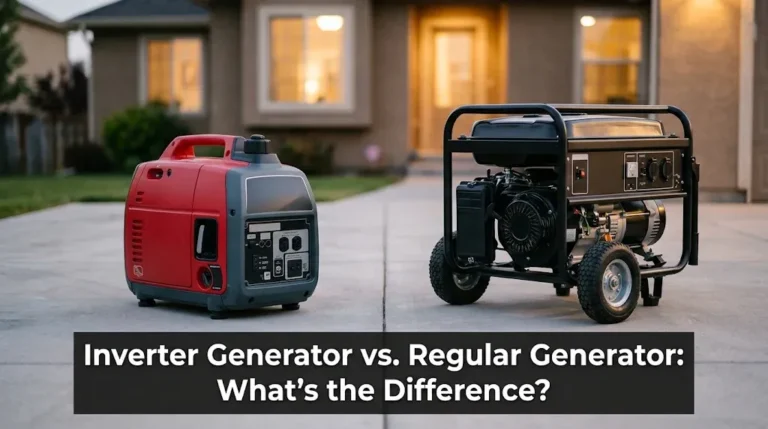
An inverter generator is a portable generator that makes steady, clean power for sensitive electronics. It creates raw AC power, turns it into DC, then rebuilds it as stable AC.
That three-step path is the key difference. It lets the engine speed rise and fall with the load.
A conventional generator must hold a fixed engine speed to hold frequency. An inverter generator can slow down when the load is light.
That is why many inverter models run quieter at low load.
What does “clean power” mean?
Clean power means a smooth sine wave with low total harmonic distortion, often called THD. THD measures how far the wave strays from a pure sine shape.
Most inverter generators list THD under 3%. Check the spec sheet for the exact figure.
Low THD matters for laptops, phones, CPAP machines, and modern furnace controls. Those devices expect the same kind of power they get from a wall outlet.
It does not make a generator safe to use indoors. Clean power and safe placement are two separate issues.
What is eco mode?
Eco mode, also called economy mode or eco-throttle, lets the engine idle down under light loads. It saves fuel and cuts noise.
Section Takeaway: An inverter generator rebuilds power into a steady sine wave, so it suits electronics and light loads, but you still need to match its watts to your real loads.
What Are the Main Types of Inverter Generators?

Most buyers meet five types first. Each one trades size, noise, output, and fuel choice in a different way.
Start with the job, not the brand. A type that is perfect for a tent trip can be useless for a home outage.
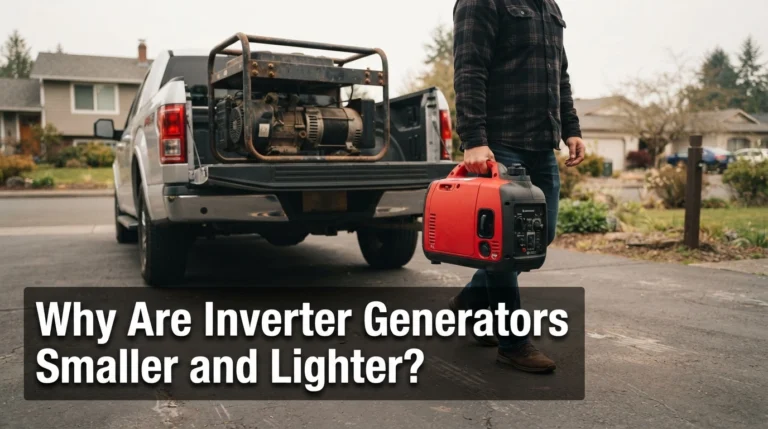
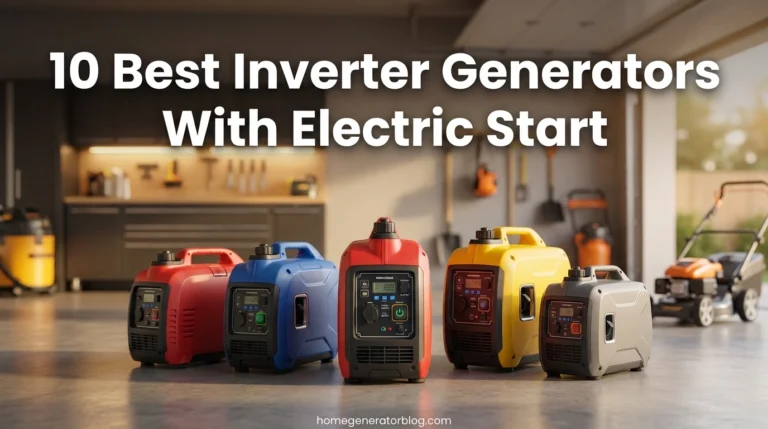
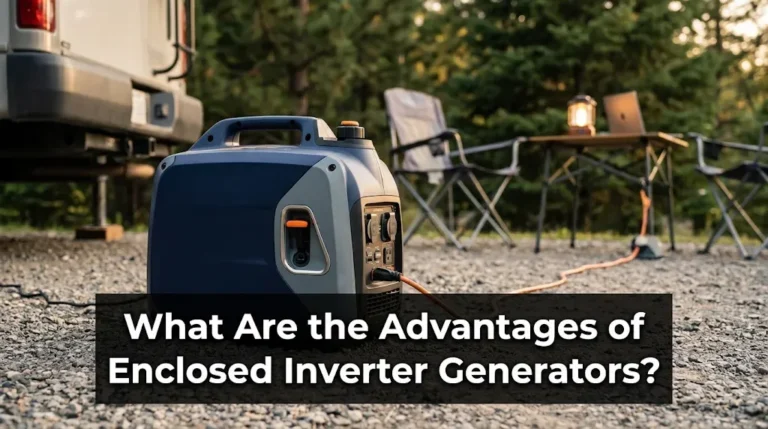
- Enclosed suitcase inverter: Small, quiet, and easy to carry, usually 1,000 to 2,200 running watts.
- Mid-size enclosed inverter: Still quiet, but stronger, often 3,000 to 4,500 running watts.
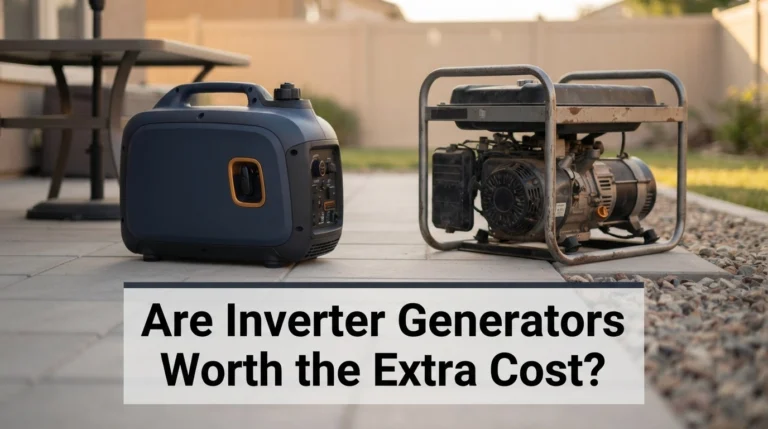
- Open-frame inverter: Larger and louder, but with more power for tools and large RV loads, often 4,500 to 9,500 running watts or more.
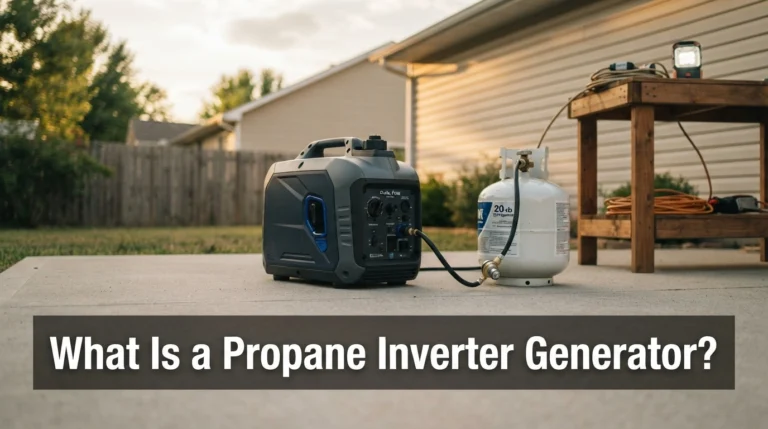
- Dual-fuel or tri-fuel inverter: Runs on gasoline plus propane, or gasoline plus propane plus natural gas.
- Parallel-capable inverter: Links two matching units with a parallel kit to double the available power.
- Portable power station: A battery unit, not a fuel generator, for short, silent, indoor-safe use.
| Type | Best for | Typical running watts | Main trade-off |
|---|---|---|---|
| Enclosed suitcase | Camping, phones, laptops, CPAP | 1,000–2,200 | Quiet and light, but limited power |
| Mid-size enclosed | RV without large AC, home essentials | 3,000–4,500 | Good balance, but heavier to lift |
| Open-frame inverter | Job sites, large RVs, whole essentials | 4,500–9,500+ | Strong output, but louder and heavier |
| Dual-fuel / tri-fuel | Outages, stored-fuel plans | Varies by fuel | Flexible fuel, but propane output is lower |
| Parallel pair | Growing RV or home needs | Two units combined | Scalable, but needs a kit and two units |
| Power station | Short indoor use, no fumes | Limited by battery size | Silent, but needs recharging |
Section Takeaway: Enclosed models win on quiet and portability, open-frame models win on raw output, and dual-fuel or parallel options win on flexibility.
How Do You Size an Inverter Generator for Your Loads?
Sizing starts with a list, not a guess. Write down every device you want to run at the same time.
Then find two numbers for each one. Running watts tell you what it uses while it runs.
Starting watts tell you what a motor needs for a few seconds at start-up. A fridge, sump pump, or air conditioner can need two to three times its running watts to start.
Add all running watts together. Then add only the largest starting watts in the group.
That total is your minimum. Add about 20% headroom if you can.
| Appliance | Typical running watts | Typical starting watts |
|---|---|---|
| Refrigerator | 150–200 | 600–1,200 |
| Furnace blower | 500–800 | 1,000–1,500 |
| Sump pump | 800–1,050 | 1,300–2,150 |
| Window AC, 10,000 BTU | 900–1,200 | 2,200–3,000 |
| RV air conditioner, 13,500 BTU | 1,200–1,500 | 2,800–3,500 |
These are typical ranges, not specs for your exact model. Check the label on your appliance and the spec sheet for your generator.
For a deeper walk-through, see our guide to running watts vs starting watts. It explains why that starting surge trips so many first-time buyers.
Safety note: Never plug a generator into a wall outlet to backfeed your home. Use a transfer switch or interlock installed by a licensed electrician.
Section Takeaway: Add running watts, add the largest starting watts once, then add headroom — that simple math prevents most overload shutdowns.
Which Type Is Best for Home Backup During an Outage?
For most homes, the best type is a mid-size or large inverter with enough running watts for your essentials. That usually means 3,000 to 7,500 running watts, depending on your list.
Start with the fridge, a few lights, phone charging, and medical needs. Add a furnace blower or sump pump only if your climate demands it.
A small suitcase model can keep food cold and phones charged. It cannot run a full home, a well pump, and an AC unit at once.
That limit is not a flaw. It is a mismatch between the tool and the job.
When does dual fuel help at home?
Dual fuel helps when gasoline is hard to store or hard to find during a long outage. Propane stores for years without going stale.
It also helps when you already keep propane tanks for a grill or RV. You gain a second fuel path without a second machine.
Remember the output drop on propane. Size the unit on its propane rating if propane is your backup plan.
A tri-fuel model adds natural gas for homes with a gas line. That can mean longer runtime without refuelling, if your hookup is installed correctly.
What about sensitive electronics at home?
Modern homes have more sensitive loads than most people expect. Furnace controls, routers, CPAP machines, and laptops all prefer clean power.
That is why an inverter is often a better home choice than a basic conventional generator. It gives you stable voltage and frequency for those loads.
For more on that point, see our guide to the best portable generator for sensitive electronics. It covers THD, outlets, and what to check before you plug in.
The CDC and the U.S. Consumer Product Safety Commission both warn that carbon monoxide from a generator can kill in minutes. Keep working CO alarms in your home.
Safety note: Run generators outdoors only, at least 20 feet from your home when possible, and never in a garage, basement, or enclosed porch.
Section Takeaway: For home backup, choose the size that covers your essentials on your backup fuel, with clean power for electronics and a safe outdoor hookup.
Which Type Is Best for RVs, Camping, and Tailgating?
For RVs and camping, the best type is usually a quiet enclosed inverter. Noise matters more at a campsite than it does at a job site.
Neighbours hear every decibel. Campground rules often set quiet hours, too.
A 2,200-watt enclosed model suits tent camping and light RV use. It runs lights, charging, a small fan, and a CPAP with ease.
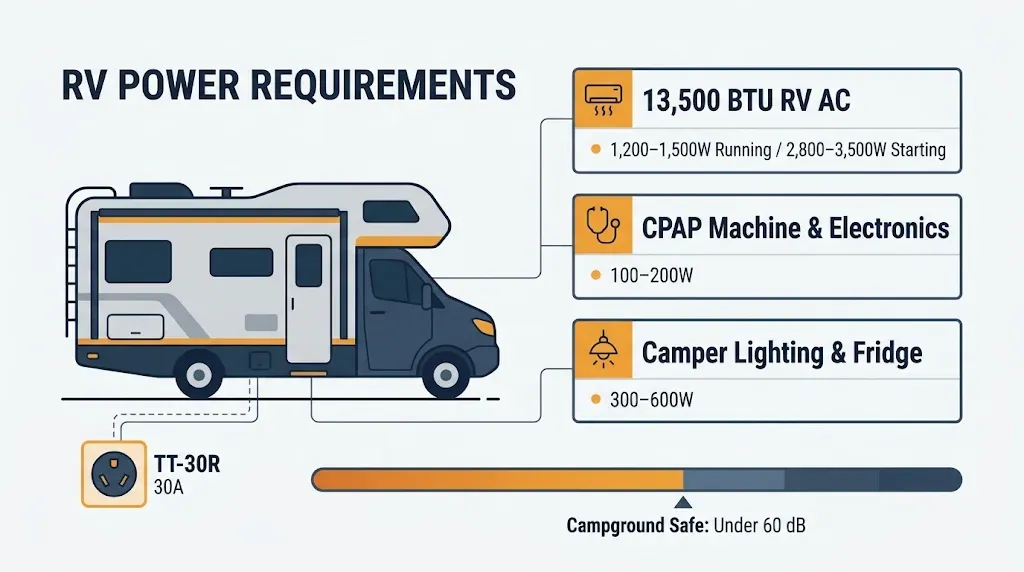
It will struggle with a 13,500 BTU RV air conditioner on its own. That AC needs a larger unit, a soft-start device, or a parallel pair.
What size do you need for RV air conditioning?
Check your AC label first. A 13,500 BTU unit often needs about 2,800 to 3,500 starting watts.
A single 3,000 to 4,500 running-watt enclosed inverter can handle it if the starting watts fit. A parallel pair of 2,200-watt units can also work.
Look for a 30-amp RV outlet on the generator. That outlet, often called TT-30R, makes the hookup simple and safe.
For a dedicated RV walk-through, see our guide to the best portable generator for motorhome use. It covers size, outlets, and noise for larger rigs.
For quiet picks, our roundup of the quietest portable generators explains dB ratings and real-distance noise in plain terms.
Safety note: Keep a generator outdoors at a campsite or tailgate, away from tents, RV windows, and sleeping areas, and let it cool before refuelling.
Section Takeaway: For RVs and camping, go quiet and enclosed first, then size up or parallel up only if your air conditioner demands it.
Which Type Is Best for Job Sites and Power Tools?

For job sites, the best type is usually a large open-frame inverter. Tools need high starting watts and tough build.
A circular saw, an air compressor, or a table saw can surge hard at start-up. A small enclosed unit will trip or stall under that load.
Open-frame models give you more watts per dollar. They also give you better access for oil checks and air-filter cleaning.
They are louder, so they suit work sites better than quiet campsites. Check local noise rules before you plan a long day.
What should you look for on a job-site inverter?
- High running watts: Match the largest tool plus the tools you run with it.
- GFCI outlets: These help protect you in wet or dusty conditions.
- Sturdy wheels and handles: You will move it across rough ground.
- Large fuel tank: A bigger tank means fewer refuel stops.
- Low-oil shutdown: This protects the engine if oil runs low.
The U.S. Department of Energy offers general guidance on portable power and energy use. Your tool manual is still the best source for its exact wattage.
Safety note: Keep a job-site generator outdoors, away from workers and building openings, and follow OSHA job-site guidance for cords and grounding.
Section Takeaway: For tools, choose output and toughness first — open-frame inverters handle surges and rough use better than small enclosed models.
How Do Fuel, Noise, and Runtime Change the Choice?
Fuel, noise, and runtime often decide the winner after wattage is settled. Two units with the same watts can feel very different in real use.
Gasoline is easy to find and gives full rated power. It goes stale in a few months without stabiliser, though.
Propane stores well and burns cleaner. It gives slightly less power, and you need to carry tanks.
How loud is “quiet” in real life?
Manufacturers list dB at a set distance, often 23 feet, at quarter load. That number is useful for comparison, not a promise for your campsite.
A 10 dB rise sounds about twice as loud to most people. A small gap on paper can feel large in person.
Enclosed models often list 50 to 60 dB at quarter load. Open-frame models often list 65 to 75 dB or more.
Check the spec sheet for the test distance and load. Compare like with like.
How long will it run?
Runtime depends on tank size, load, and eco mode. A small tank at half load may run 4 to 6 hours, while a larger tank can run 8 to 12 hours or more.
Eco mode stretches runtime under light loads. It does little when you run near full load.
For a full comparison of inverter options, see our guide to the best portable inverter generator picks. It groups models by use case rather than by brand alone.
Consumer Reports publishes general generator safety and buying guidance. Its Consumer Reports site is a useful second check before you buy.
Safety note: Store fuel outdoors in approved containers, away from heat and ignition sources, and check your manual before any maintenance.
Section Takeaway: After watts, fuel storage, noise at a stated distance, and runtime at your real load are the three factors that shape daily use.
Frequently Asked Questions
Can one inverter generator run a whole house?
Most portable inverters cannot run a whole house at once. They can run essentials such as a fridge, lights, charging, and a furnace blower, if the watts fit.
Is an inverter generator better than a conventional generator?
An inverter is better for sensitive electronics and quiet, light-load use. A conventional generator can be cheaper for high-watt, short-run tool use, but its power is less stable.
What size inverter generator do I need for camping?
Most campers do well with 2,000 to 3,500 running watts. That covers charging, lights, a fan, and a CPAP, with headroom for a small fridge.
Can an inverter generator run an RV air conditioner?
Yes, if the starting watts fit. A 13,500 BTU AC often needs 2,800 to 3,500 starting watts, so check your AC label and the generator spec sheet.
Are dual-fuel inverter generators worth it?
They are worth it if you want fuel flexibility during outages. Propane stores longer than gasoline, but it usually gives slightly less power.
Start with your load list. Match the type to that list, not to a brand name or a single dB number.
As of 2026, the best choice is still the one that covers your essentials, fits where you will use it, and stays within your fuel and noise limits. Pick that type first, then compare models in that group.

Hi, I’m Michael Turner. I own a generator workshop in the United States and founded HomeGeneratorBlog to share practical, hands-on guidance about generator installation, maintenance, troubleshooting, safety, and backup power solutions. My goal is to help homeowners make smarter, more confident decisions through clear and reliable information