Can You Parallel Two Inverter Generators of Different Wattages? How Load Sharing Really Works
Quick Answer
Yes — you can parallel two inverter generators of different wattages if both are parallel-capable, compatible, and linked with the right kit. The pair adds their running watts together, shares the load in proportion to size, and is limited by the kit outlet, which matters when you plan to run multiple appliances at once.
The Short Verdict
- Different sizes OK: A 2,000-watt and a 3,000-watt unit can pair if the maker allows that combination.
- Total watts add: Use running watts, not starting watts, for your combined continuous total.
- Load shares unevenly: The larger unit carries more, roughly in proportion to its rating.
- Kit outlet limits: A 30-amp kit caps output even if the math says more.
- Compatibility first: Same brand and family is safest, and some brands forbid mixed sizes.
- Never improvise: Use only a proper parallel kit, never a homemade double-ended cord.
Best Use Case
- You already own a small quiet unit and need extra watts only for an RV air conditioner or a heavy tool.
I get this question at campgrounds more than almost any other parallel question. Someone owns a light 2,000-watt unit, buys a bigger second unit on sale, and wonders if the mismatch will hurt anything.
In most compatible systems, it will not. This guide explains the math, the load sharing, the limits, and the checks I do before I ever pull a starter cord.
In This Guide
- Can You Parallel Two Inverter Generators of Different Wattages?
- How Much Power Do You Actually Get From Mixed Wattages?
- How Does Load Sharing Work Between Unequal Generators?
- What Compatibility Rules Decide If It Will Work?
- How Do You Connect Different-Wattage Generators Safely?
- Mixed Wattages vs Matched Pair: Which Is Better?
- What Mistakes and Limits Catch People Out?
- Frequently Asked Questions
Can You Parallel Two Inverter Generators of Different Wattages?
Yes, if both units are parallel-capable and the manufacturer allows mixed sizes in that model family. The inverter electronics sync voltage and frequency before the kit combines the output.
That sync is the whole reason this works. A conventional generator cannot be paired this casually.
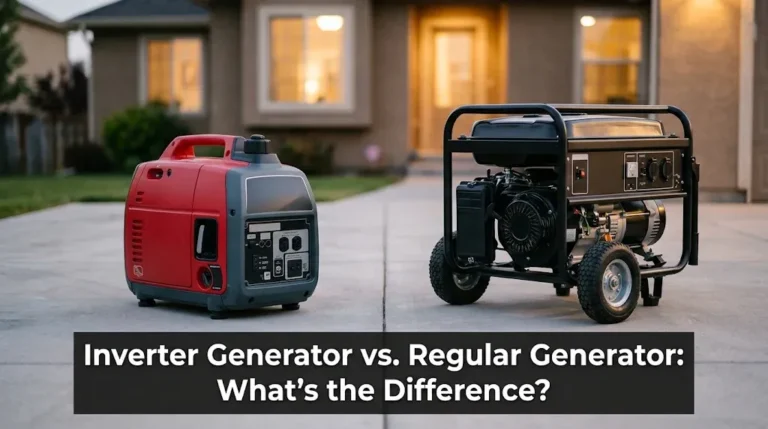
An inverter generator is a generator that makes raw AC power, converts it to DC, then inverts it back to clean, stable AC. That controlled output lets two units lock together instead of fighting each other.
When the answer is no
The answer flips to no in a few clear cases. Check these before you buy a kit.
- Not parallel-capable: One unit has no parallel ports at all.
- Maker forbids mixing: The manual limits pairing to identical models only.
- Different voltage: One unit is 120V only and the other is set to 240V mode.
- Wrong kit: The kit is made for a different brand or connector type.
I once watched a camper try to force a kit from another brand because the plugs looked close. They were not close enough, and the connection felt loose within minutes.
Section Takeaway: Different wattages are not the problem — incompatibility is. If both manuals approve the pairing and the kit matches, mixed sizes are a normal, supported setup.
How Much Power Do You Actually Get From Mixed Wattages?

You get the sum of the two running watt ratings, capped by the parallel kit and its outlet. Starting watts also add for brief surges, but you cannot run on that number continuously.
Use running watts for every plan. That one habit prevents most overload trips.
| Pair Example | Combined Running Watts | Practical Limit | Good Fit For |
|---|---|---|---|
| 2,000W + 2,000W matched | About 3,600W typical | 30A kit outlet | Small RV, essentials |
| 2,000W + 3,000W mixed | Add the two running ratings | 30A kit outlet, about 3,600W at 120V | RV AC plus fridge and lights |
| 2,500W + 3,500W mixed | Add the two running ratings | Kit rating may cap below the sum | Larger RV, tools, backup loads |
| One 5,000W single unit | Its own running rating | Its onboard outlets | Simple setup, heavier to move |
Notice the cap in the middle rows. A standard 30-amp, 120-volt outlet tops out around 3,600 watts, no matter how big the pair is.
That surprises people. They add 2,000 plus 3,000, expect a full 5,000 at the RV plug, and then learn the kit outlet is the bottleneck.
If you need that higher total for an RV, check our guide to what size inverter generator can run an RV air conditioner before you size the pair. It walks through the 13,500 and 15,000 BTU starting loads that drive most of these decisions.
Section Takeaway: Add running watts for the headline number, then check the kit outlet. The lower of those two numbers is the power you can actually use.
How Does Load Sharing Work Between Unequal Generators?
The larger generator carries a larger share, roughly in proportion to its rating. A 3,000-watt unit paired with a 2,000-watt unit will do about three-fifths of the work.
You do not set that split yourself. The inverter controls handle it once the units sync.
What that means in real use
- Fuel use differs: The harder-working larger unit may empty its tank sooner per hour.
- Noise differs: The unit under more load runs at higher RPM and sounds louder.
- Eco mode behaves differently: Many makers say to keep eco settings matched, so check the manual.
- Overload hits together: Push past the combined limit and both units can trip.
On a mixed pair I ran for a weekend, the bigger unit was clearly working harder whenever the AC compressor kicked on. That is normal, not a fault.
What would be a fault is one unit doing almost everything at a light load. That points to a bad parallel cable or a unit that never synced.
To sanity-check your load plan, compare it with what appliances a 3000-watt inverter generator can run on its own. Then add the second unit’s headroom on top.
What Compatibility Rules Decide If It Will Work?
Compatibility comes down to brand family, parallel ports, voltage, and the kit. Wattage difference alone rarely blocks a pairing.
Start with the manuals. They are the final word for your exact models.
My pre-pairing checklist
- Confirm both units list parallel operation as a supported feature.
- Confirm mixed wattages are allowed, not just identical models.
- Match the kit to the brand and to the outlet you need, TT-30 for many RVs or a standard 30-amp outlet.
- Confirm both units will run on the same voltage setting.
- Check fuel type and grounding instructions in both manuals.
Different brands are a separate question from different wattages. Some cross-brand pairs are claimed to work with universal kits, but maker support usually stops at their own family.
My rule is simple. If warranty and support matter to you, stay within one brand family.
For general safety guidance on portable generators, including carbon monoxide placement, the U.S. Consumer Product Safety Commission is a stable starting point. The U.S. Department of Energy also covers safe backup power basics.
Section Takeaway: Read both manuals for the mixed-size rule, then buy the exact kit for that family. Guessing on compatibility is how people waste money on kits they cannot use.
How Do You Connect Different-Wattage Generators Safely?

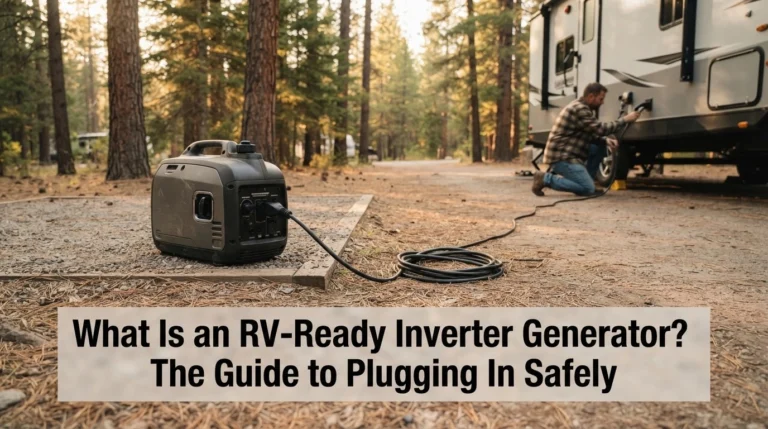
Connect the parallel kit with both units off, ground as directed, start the units in the maker’s order, then add load last. Disconnect in reverse, with the load removed first.
Order matters here. Rushing it is how overload lights and nuisance trips happen.
- Place both units outdoors, far from doors and windows, on flat ground.
- Connect the parallel cables and ground wire with both engines off.
- Plug nothing into the kit outlet yet.
- Start the first unit, let it stabilize, then start the second unit.
- Confirm no warning lights, then plug in and add loads one at a time.
- Start the biggest motor load, like the AC, before smaller steady loads fill the budget.
Safety note: Run generators outdoors only, at least 20 feet from the home with exhaust pointed away, and never backfeed a house panel. Follow both owner’s manuals and use a transfer switch or interlock installed by a qualified electrician for any house connection.
If your smaller unit will often run alone, remind yourself what it handles solo. Our breakdown of what appliances a 2000-watt inverter generator can run is a useful baseline.
That baseline helps you decide when you even need the second unit. On mild nights, one quiet generator is often enough.
Mixed Wattages vs Matched Pair: Which Is Better?
A matched pair is simpler and shares load evenly, while a mixed pair is often cheaper and more flexible. Neither is automatically better for everyone.
Your existing gear decides a lot. Most mixed pairs happen because someone already owns one unit.
| Factor | Mixed Wattages | Matched Pair |
|---|---|---|
| Cost | Use what you own, add one size that fits the gap | May mean buying two new units |
| Load sharing | Proportional, larger unit works harder | Even split |
| Solo use | Pick the right size for the day, small for quiet or large for tools | Same choice either way |
| Support | Check manual allows mixed sizes | Almost always supported in the family |
I prefer mixed pairs for RV owners who camp in different ways across the season. The small unit alone is quieter and sips fuel for lights, phones, and a fridge.
Paired, the same setup starts the AC on a hot afternoon. That flexibility is hard to get from one big unit, which is also why many shoppers start with the best portable generators for RV camping and then decide on one large or two smaller units.
Section Takeaway: Choose a matched pair for simplicity and even wear. Choose a mixed pair when you already own one unit or want a better solo option for light-load days.
What Mistakes and Limits Catch People Out?

The common mistakes are adding starting watts, ignoring the kit cap, and expecting 240 volts from a 120-volt parallel kit. Each one leads to a trip, a disappointment, or both.
None of them means mixed pairing is a bad idea. They just mean the math needs care.
- Starting-watt math: Plan on running watts, and leave headroom for motor starts.
- Kit cap ignored: A 30A kit will not deliver a 5,000-watt sum at 120V.
- 240V expectation: Most small parallel kits give 120V only, so check before planning for well pumps or dryers.
- One unit runs dry: When one shuts down for fuel, the other will overload and trip.
- Mismatched eco settings: Follow the manual so the units respond together under load.
On the 240-volt point, read can an inverter generator provide 240V power for household circuits if that is part of your plan. Most mixed small pairs will not get you there, and a larger 240V-capable unit may be the cleaner answer.
Fuel planning matters more with mixed tanks too. Top both units off before a long AC run, not just the bigger one.
Maker guidance from brands like Honda Power Equipment is also worth checking for your specific family, since kit part numbers change by model. As of 2026, that manual-first rule still holds across every brand I test.
Section Takeaway: Respect running watts, the kit outlet, and the 120V limit, and keep both tanks fueled. Do that, and a mixed pair runs predictably instead of tripping at the worst moment.
Frequently Asked Questions
Can you parallel a 2000-watt and a 3500-watt inverter generator?
Yes, if both are from a compatible family that allows mixed sizes and you use the correct kit. Add their running watts for the total, then check the kit outlet cap, which may limit usable output below that sum at 120 volts.
Will the smaller generator be damaged by the larger one?
No, not in a supported pairing with the proper kit. The inverter controls sync the units and share load proportionally, so the smaller unit is not forced to carry the larger unit’s share. Damage risk comes from improvised cords or incompatible kits.
Do you add starting watts when you parallel different wattages?
Starting watts add for a brief surge, which helps start motors like an RV air conditioner. You should still size your continuous load on combined running watts and leave headroom, because you cannot run appliances on the starting number for more than seconds.
Can you parallel different wattages from different brands?
That is riskier than mixing wattages within one brand. Some universal kits claim cross-brand use, but most makers only support and warrant pairing inside their own family. Check both manuals first, and expect limited support if you mix brands.
What happens if one generator in a mixed pair runs out of fuel?
The remaining generator suddenly faces the full load on its own. It will usually overload and trip, shutting the pair down. Keep both tanks fueled for long runs and reduce load promptly if one unit stops.
Can a mixed-wattage parallel pair give you 240 volts?
Usually no, with typical small 120-volt parallel kits. Those kits combine output into a 120-volt, 30-amp outlet. For 240-volt household circuits you generally need a single larger 240V-capable inverter generator or a system specifically designed for it.
Is it better to buy one bigger generator instead of paralleling mixed sizes?
It depends on how you use power. One bigger unit is simpler and may offer 240V, while two smaller units are easier to carry, quieter solo, and flexible. If you already own a good small unit, paralleling is often the cheaper path.
The Bottom Line on Paralleling Different Wattages
Yes, you can parallel two inverter generators of different wattages, and for a lot of owners it is the smartest way to grow power without replacing a unit they like. Check compatibility, add running watts, respect the kit cap, and connect in the right order.
Do those four things and the mismatch stops being a worry. You get a quiet solo option on light days and real AC-starting power when you pair them.

Hi, I’m Michael Turner. I own a generator workshop in the United States and founded HomeGeneratorBlog to share practical, hands-on guidance about generator installation, maintenance, troubleshooting, safety, and backup power solutions. My goal is to help homeowners make smarter, more confident decisions through clear and reliable information