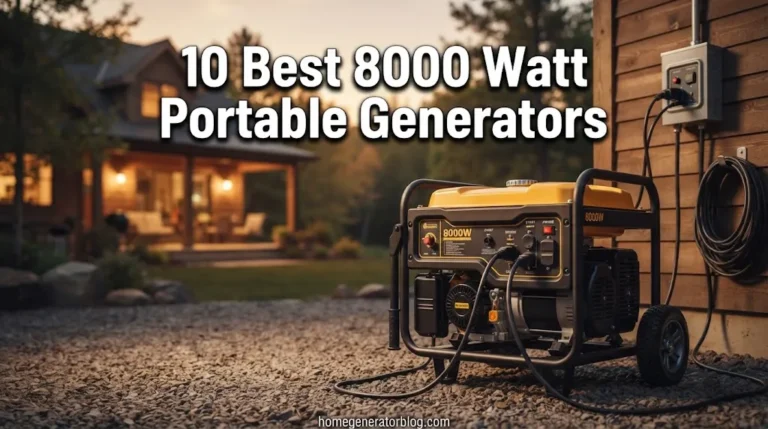
Dual Fuel Portable Generator: How to Choose the Right One
Quick answer: A dual fuel portable generator runs on either gasoline or propane, so you’re never stuck if one runs out. For most homes, a 7,500–9,000 running-watt unit covers a fridge, well pump, furnace blower, and lights. Expect to pay $700–$1,500, and budget an extra $150–$300 for a transfer switch or interlock kit.
If you’ve ever sat through a blackout watching your gas gauge drop with no station open for miles, you already understand the appeal of running on two fuels instead of one. That’s the whole pitch behind a dual fuel portable generator: gasoline when it’s around, propane when it isn’t.
But “dual fuel” gets thrown around loosely by manufacturers, and picking the wrong size or type wastes money fast. Here’s how to actually choose one.
Decision Framework: Which Generator Fits Your Situation
| Your Situation | Recommended Size | Why |
|---|---|---|
| Apartment or a few essentials (fridge, WiFi, lights) | 2,000–3,500W | Covers small loads without wasting fuel on unused capacity |
| Full home backup with well pump and furnace | 7,500–9,000W | Handles motor startup surge plus continuous household load |
| Large home, central AC, or workshop tools | 10,000–12,000W+ | High-draw appliances need real headroom, not bare minimums |
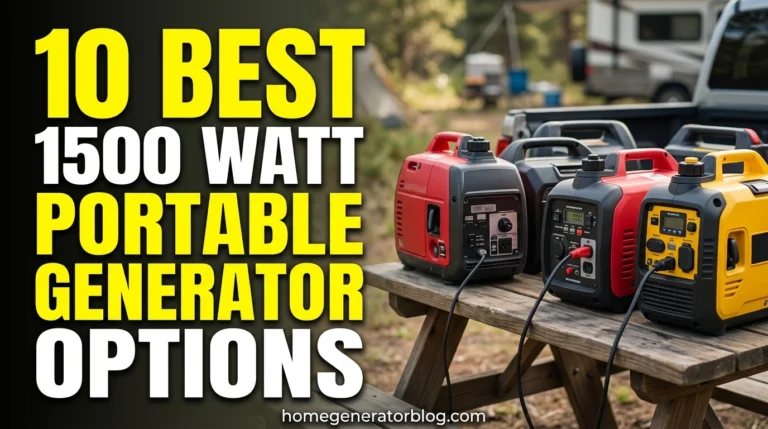
| RV, camping, tailgating | 2,200–4,500W inverter-style dual fuel | Cleaner power for electronics, quieter, easier to haul |
| Job site or contractor use | 5,000–7,500W open-frame | Durable frame handles rough handling and dusty conditions better than inverter units |
That table gets you in the right ballpark. The sections below explain the reasoning, so you’re not just trusting a chart.
Power Needs: Running Watts vs. Starting Watts
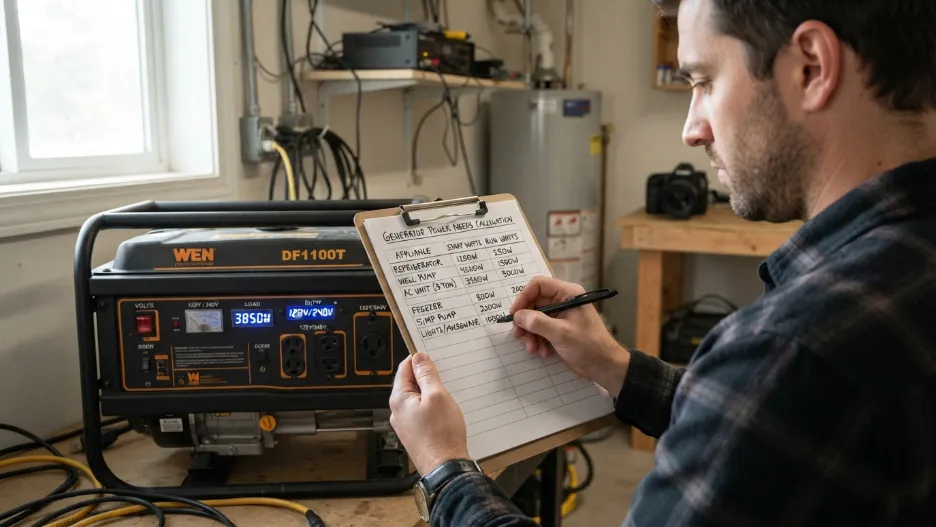
Every generator has two numbers that matter, and manufacturers love to print the bigger one on the box.
Running watts is what the generator can sustain continuously. Starting watts (sometimes called surge or peak watts) is the short burst needed when a motor — a fridge compressor, a well pump, an AC unit — kicks on. That surge can be two to three times the running draw, for about two to three seconds.
Miss this distinction and you’ll buy a generator that looks big enough on paper but trips or stalls the moment your fridge compressor cycles on. Add up the running watts of everything you want powered at once, then make sure the generator’s starting watts figure comfortably covers your single largest motor’s startup spike on top of that running load.
Fuel Type and How Switching Actually Works
On nearly every consumer dual fuel model, switching fuels means turning a selector valve or dial — not flipping a software setting. You typically can’t switch while the engine is under load; you shut down, switch, then restart. A few premium models (Champion’s “Switch and Go” line, for example) allow switching while running, but that’s the exception, not the rule.
Gasoline gives you more running watts per tank and is easier to find during normal times. Propane stores indefinitely without degrading, burns cleaner, and doesn’t gum up a carburetor if the generator sits unused for months. Most owners keep both on hand: gas for the first day or two, propane for the stretch after that when gas stations lose power too.
A dual fuel portable generator in the 7,500–9,000 watt range is the sweet spot where this fuel flexibility actually pays off, since that size runs long enough per outage that you’ll likely need to refuel at least once.
Noise Level
Open-frame generators typically run 68–74 dBA at a distance of 23 feet — loud enough that neighbors will notice, and loud enough to violate some HOA or municipal noise ordinances after certain hours. Inverter-style dual fuel units run quieter, often in the high 50s to mid-60s dBA, but usually cap out around 4,500–5,000 watts.
If you live somewhere with tight lot lines or a noise-sensitive HOA, that trade-off between wattage and decibels should weigh heavily in your decision — more than most buying guides give it credit for.
Portability
“Portable” is relative. A 9,000-watt open-frame unit can weigh 200+ pounds. Check for never-flat wheels, a fold-down handle, and — if you’re not built like a linebacker — an electric start rather than a pull cord, especially in cold weather when a cold engine fights back against manual starting.
Budget: What You’re Really Paying For
Entry-level 3,500–4,500 watt dual fuel units run $400–$600. The 7,500–9,000 watt range most homeowners actually need lands at $700–$1,200. Add a manual transfer switch ($200–$500 installed) or an interlock kit ($100–$200 plus installation) if you want to power your home’s existing circuits instead of running extension cords through a window.
Don’t forget propane tanks, a fuel stabilizer for stored gasoline, and possibly a generator cover or tent for weather protection — none of these show up in the sticker price but all of them are real costs.
Runtime Per Tank
Expect roughly 8–12 hours on gasoline at 50% load for a mid-size unit, and somewhat less on propane by volume, though propane’s stability makes up for the shorter per-tank runtime. Manufacturers list runtime at 25% or 50% load — real household draw during an outage often runs higher than that, so treat published runtime numbers as optimistic, not guaranteed.
Tank size matters more than most spec sheets suggest. A built-in gas tank on a 7,500-watt unit typically holds 5–7 gallons, while a standard 20-pound propane tank (the kind used for a home grill) runs a mid-size generator for roughly 5–7 hours at half load. Owners who want longer unattended runtime often plumb in a 100-pound propane tank instead, which stretches that to a day or more between refills — worth considering if you live somewhere prone to week-long outages rather than overnight ones.
Fuel Storage Between Uses
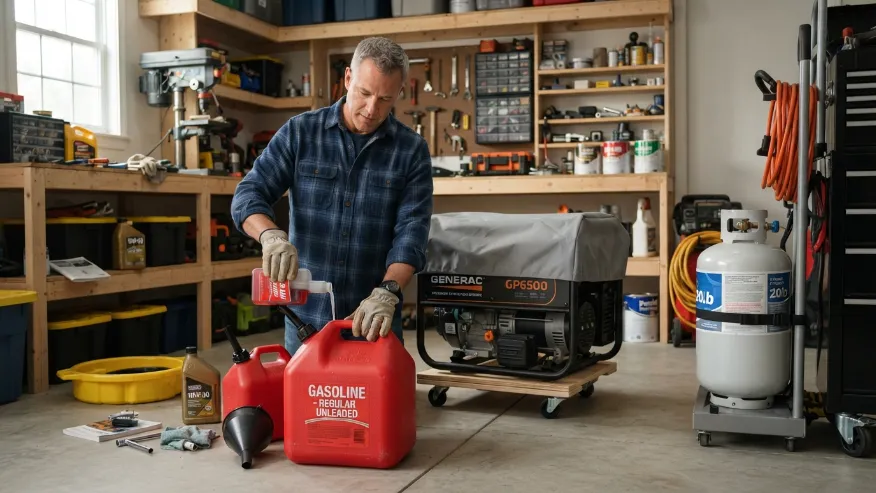
This is the part most buying guides skip entirely, and it’s where dual fuel actually shows its value beyond the outage itself. Gasoline left sitting in a tank starts to degrade within 30 to 60 days, gumming up the carburetor and making next spring’s first pull-start a fight. Add a fuel stabilizer at every fill-up if the generator isn’t run monthly, and consider running it dry before long storage stretches.
Propane, by contrast, doesn’t degrade in storage — a sealed tank from three years ago performs identically to one filled last week. That’s the real argument for keeping at least one propane tank on hand permanently: it’s the fuel source that’s still good no matter how long it’s been since the last outage.
Common Buyer Mistakes
- Buying by peak wattage alone. A “9,000 watt” listing might mean 9,000 starting watts and only 7,200 running watts — read both numbers.
- Skipping the transfer switch. Backfeeding power into your home’s panel through a regular outlet is illegal in most jurisdictions and can electrocute utility workers repairing the line outside.
- Storing gasoline without stabilizer. Untreated gas starts breaking down in as little as 30 days, gumming up the carburetor before you ever need the generator.
- Assuming propane runtime matches gasoline runtime. It usually runs 10–20% shorter per equivalent tank size, which matters when you’re planning fuel reserves for a multi-day outage.
- Ignoring the 20-foot clearance rule. Placing a generator too close to windows or doors is the single biggest cause of preventable carbon monoxide poisoning during outages.
Sizing It Correctly (Quick Version)
List every appliance you want to run simultaneously, add its running watts, then add the single largest starting-watt spike on top. Round up 20–25% for safety margin — motors work harder as they age, and voltage from a generator isn’t always as clean as utility power.
Dual Fuel vs. Tri-Fuel vs. Single Fuel: The Difference That Actually Matters
Single-fuel generators run on gasoline only — cheaper upfront, but you’re stuck if gas runs out. Dual fuel adds propane as backup. Tri-fuel goes one step further, adding natural gas so the unit can tap a home’s existing gas line for essentially unlimited runtime, provided that gas service stays on during the outage.
Most homeowners don’t need tri-fuel. It adds cost and complexity for a scenario — natural gas outage combined with electrical outage — that’s genuinely rare in most regions. Dual fuel covers the realistic middle ground: flexibility without paying for a capability you’ll likely never use.
Safety Essentials Specific to Dual Fuel Units
The fuel-switching valve introduces a step that single-fuel owners don’t have to think about: never open or close it while the engine is running, and never disconnect a propane line under load. Let the unit cool for a few minutes first.
Carbon monoxide risk doesn’t change based on fuel type — propane combustion still produces CO. The CDC’s generator safety guidance is direct on this: keep the unit at least 20 feet from doors, windows, and vents, and never run it in a garage even with the door open. Pair that with a battery-powered CO detector inside the house, since wind can carry exhaust back indoors regardless of distance.
The first time I ran a 7,500-watt dual fuel unit through a five-day ice storm outage, the thing that caught me off guard wasn’t the generator itself — it was how much colder propane burns in sub-freezing temps, which meant more frequent fuel checks than gasoline would’ve needed. I hadn’t planned for that, and it’s the kind of detail you only learn by actually running one through real weather.
Conclusion
A dual fuel portable generator earns its slightly higher price tag by removing the single point of failure that trips up single-fuel owners mid-outage. Size it by running watts plus your biggest motor’s surge, budget for a transfer switch, and respect the 20-foot rule every single time. Get those three right, and the rest is just picking a model that fits your garage space. — Michael Turner
Most homeowners land in the 7,500–9,000 watt range for full backup coverage. A solid option in that class gives you room for a fridge, well pump, and furnace blower with headroom to spare for startup surge.
Frequently Asked Questions
Is a dual fuel generator worth the extra cost over a gasoline-only model?
For most homeowners planning for outages longer than a day or two, yes. The price difference is usually $50–$150, and the ability to fall back on propane when gas stations lose power or run dry is a meaningful safety margin during real emergencies.
Can I run a dual fuel generator on propane only, all the time?
Yes, most dual fuel models run fine on propane exclusively. You’ll get slightly less running wattage and shorter runtime per tank compared to gasoline, and the engine may need adjusted maintenance intervals since propane burns cleaner but slightly hotter.
How long does a tank of gasoline or propane actually last?
At 50% load, expect roughly 8–12 hours on a full gasoline tank for a mid-size unit, and about 10–20% less runtime on an equivalent propane tank. Full-load operation cuts these numbers significantly, sometimes by half.
Do I need an electrician to install a transfer switch for a dual fuel generator?
Yes, for a transfer switch tied into your home’s panel, hire a licensed electrician — this involves your main electrical panel and, in most areas, requires a permit and inspection. Interlock kits are simpler but still involve panel work best left to a professional.
What size dual fuel generator do I need for a refrigerator, furnace, and a few lights?
That combination typically needs 3,000–4,000 running watts, with enough starting watts to cover the fridge or furnace blower motor’s surge — usually met by generators in the 4,500–5,500 watt starting range.

Hi, I’m Michael Turner. I own a generator workshop in the United States and founded HomeGeneratorBlog to share practical, hands-on guidance about generator installation, maintenance, troubleshooting, safety, and backup power solutions. My goal is to help homeowners make smarter, more confident decisions through clear and reliable information