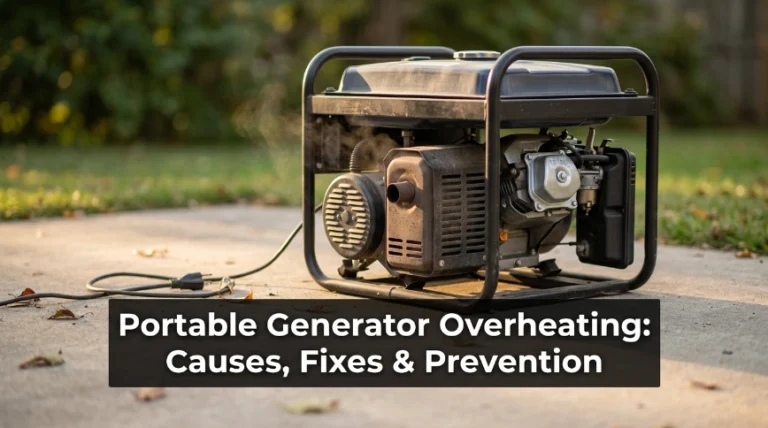
Electric Start Portable Generator: Worth the Extra Cost?
Quick answer: An electric start portable generator uses a battery-powered starter motor instead of a pull cord, so it fires up with a key turn or push button. It costs roughly $50–$300 more than a comparable recoil-start model, but it’s the better choice for anyone who’s older, has a shoulder or back issue, or needs the generator running fast during a storm.
If you’ve ever tried to yank a recoil cord on a 7,500-watt engine in the rain, you already know why electric start exists. It isn’t a luxury feature bolted on to sell you more generator than you need — it changes whether the machine actually gets used when you need it most.
This guide breaks down how electric start works, when it’s worth paying for, what it costs long-term, and the maintenance step almost nobody mentions until their battery is dead the one night they needed the generator to run.
How an Electric Start Generator Actually Works
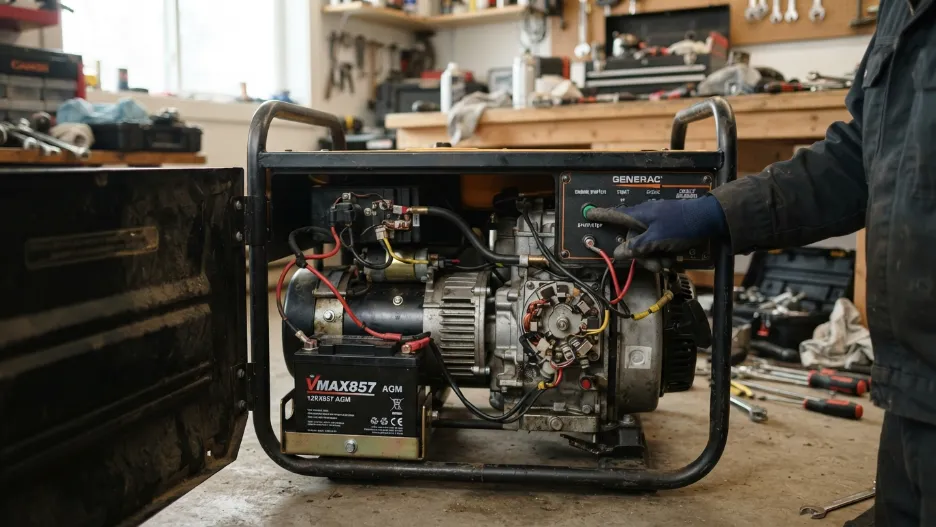
A recoil-start generator relies on you to spin the crankshaft fast enough to fire the engine — the same idea as starting a lawn mower. An electric start generator replaces that manual effort with a small starter motor, powered by an onboard battery, that spins the engine for you the moment you press a button or turn a key.
That battery needs 12 volts, similar to a small motorcycle battery, and most units keep it charged automatically off the generator’s own alternator once it’s running. Some higher-end models add wireless remote start, letting you fire up the generator from inside the house — genuinely useful if the unit lives outside on a pad and the weather is bad.
The tradeoff is mechanical complexity. A recoil generator has almost nothing to fail beyond a spring and a rope. An electric start unit adds a battery, a solenoid, and wiring — one more system that can go wrong if it isn’t maintained.
Electric Start vs. Recoil Start: Side-by-Side
Here’s how the two starting systems actually compare once you get past the marketing copy.
| Factor | Electric Start | Recoil Start |
|---|---|---|
| Effort to start | Button or key press | Manual pull, harder on large engines |
| Cold weather reliability | Strong, if battery is charged | Harder — thick oil resists pulling |
| Typical price premium | +$50 to +$300 over recoil-only | Baseline / cheapest option |
| Extra maintenance | Battery needs charging/trickle charger | None beyond the cord itself |
| Weight | Slightly heavier (battery + starter motor) | Lighter, more portable |
| Best for | Home backup, storm emergencies, limited mobility | Camping, worksites, budget buyers |
Neither system is objectively “better” — they solve for different priorities. Electric start solves for speed and physical ease. Recoil start solves for cost and simplicity.
Who Actually Needs Electric Start
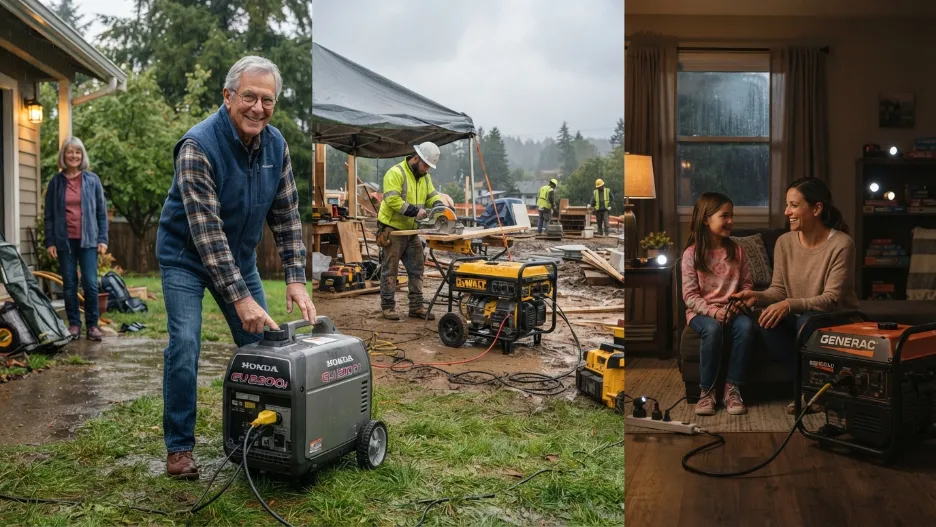
A decision framework helps more than a flat recommendation, because the right call depends entirely on how and when you’ll use the generator.
| Use Case | Recommendation |
|---|---|
| Home backup during outages, storms, hurricanes | Electric start — you need it running in seconds, often in bad weather |
| Older adult or limited upper-body strength | Electric start — recoil pulls on a 6,500W+ engine are genuinely hard |
| Weekend camping, tailgating, small loads | Recoil is fine — lighter, cheaper, one less thing to maintain |
| Construction or job site, generator runs daily | Electric start — repeated pulls add up over a workweek |
| Small inverter generator under 3,000W for electronics | Recoil is usually easy at this size — save the money |
The pattern is simple: the bigger the engine and the more urgent the situation, the more electric start earns its keep. A 2,200-watt inverter is easy to pull-start by hand. A 10,000-watt dual-fuel unit is not — and that’s exactly the size most homeowners buy for whole-home backup.
The Maintenance Step Nobody Warns You About
Here’s the part most buying guides skip entirely: an electric start generator is only as reliable as its battery. If that battery sits dead in the garage for six months, the electric start button does nothing — and you’re stuck pull-starting the exact generator you bought to avoid pull-starting.
Keep the starter battery on a small trickle charger year-round if the generator isn’t running weekly. Once a month, take ten minutes to run the unit under a light load — this keeps the battery topped off, cycles the fuel, and confirms the electric start actually works before you’re relying on it during a real outage.
I learned this one the hard way. The first winter I owned a 7,500-watt dual-fuel unit, I stored it in the shed and forgot about the battery entirely. Six months later, an ice storm knocked out power for two days — and the electric start did nothing but click. I ended up pull-starting a generator that wasn’t designed to be pull-started easily, in the dark, in freezing rain. A five-dollar trickle charger would have prevented the whole mess.
Key Factors Beyond the Start Type
Electric start is one decision inside a bigger purchase. Don’t let it overshadow the factors that determine whether the generator actually fits your life.
Power needs
Add up the running watts of what you actually need to power — fridge, well pump, a few lights, maybe a window AC — then add 20–25% headroom for starting surges. Most homes land somewhere between 5,000 and 10,000 running watts for partial backup.
Fuel type
Gasoline is the most available fuel during an emergency but degrades in storage. Propane stores indefinitely and burns cleaner. A dual-fuel electric start generator gives you both options, which matters most when gas stations lose power too.
Noise level
Open-frame generators typically run 65–75 dBA at full load — loud enough to hear through walls. Inverter models run quieter, often in the mid-50s to low-60s dBA, but usually top out at lower wattage.
Portability and weight
Electric start components add roughly 10–20 pounds. That’s rarely a dealbreaker for a home backup unit that lives on wheels, but it matters more for a generator you’re hauling to a campsite.
Budget and long-term cost
Factor in more than sticker price: fuel consumption, oil changes, and — for electric start — the occasional starter battery replacement every 3–5 years. It’s a real cost, just a small one compared to what you save in convenience.
Common Buyer Mistakes
- Buying electric start but skipping the battery maintenance. The feature is worthless if the battery is dead when the power goes out.
- Undersizing the generator to save money. A unit that can’t handle your fridge’s starting surge will trip constantly, electric start or not.
- Running it too close to the house. Carbon monoxide from generator exhaust is a leading cause of accidental poisoning deaths during outages, and starting method has nothing to do with that risk — placement does. The CDC’s generator safety fact sheet and the CPSC’s generator safety guidance both recommend running any portable generator at least 20 feet from doors, windows, and vents, with the exhaust pointed away from the home.
- Assuming remote start means whole-house automation. Remote start fires the engine; it doesn’t switch your home’s circuits. You still need a transfer switch or interlock kit for that.
How Much Generator Do You Actually Need?
Before you lock in a model, run your own numbers. List every appliance you want backed up, note its running watts, add the single highest starting-watt appliance on top (usually a well pump, AC, or fridge compressor), then add a 20–25% safety margin. For most households running a fridge, some lights, a sump pump, and a window AC, that lands in the 7,000–9,000 running watt range.
Conclusion
Electric start isn’t about laziness — it’s about whether the generator actually gets used when the power’s out, the weather’s bad, and you’re not at your physical best. If your budget allows the extra $50–$300, it’s one of the few upgrades that pays for itself the first time you need power fast. Just don’t forget the battery. Stay safe out there, and size the tank before the storm hits — Michael Turner.
If you’re leaning toward electric start for home backup, a dual-fuel model gives you the flexibility to run on gasoline or propane depending on what’s available during an outage — which matters more than most buyers expect once gas stations lose power too.
Is electric start worth the extra money on a portable generator?
For most home backup buyers, yes. The price difference is usually $50–$300, and the payoff is a generator that starts in seconds during a storm instead of requiring a strong, well-timed pull on a cold engine.
Do electric start generators need a special battery?
Most use a small 12-volt battery similar to a motorcycle battery. It’s charged automatically while the generator runs, but it needs a trickle charger or a monthly test run if the unit sits unused for long stretches.
Can I still pull-start an electric start generator if the battery dies?
Most electric start models include a backup recoil cord for exactly this reason. It’s harder to use on a large engine, but it means a dead battery won’t leave you without power entirely.
Are electric start generators heavier than recoil models?
Yes, typically by 10–20 pounds due to the added battery, starter motor, and wiring. It’s a minor difference for a generator that stays in one spot, but worth considering if you’re hauling it regularly.
Does electric start affect how many watts a generator produces?
No. Starting method has nothing to do with output. A 7,500-watt generator produces the same power whether it’s started with a key or a pull cord — electric start only changes how the engine turns over.

Hi, I’m Michael Turner. I own a generator workshop in the United States and founded HomeGeneratorBlog to share practical, hands-on guidance about generator installation, maintenance, troubleshooting, safety, and backup power solutions. My goal is to help homeowners make smarter, more confident decisions through clear and reliable information