Can You Cover a Generator with a Tarp? Safety Risks Explained
Quick Answer
No, you should never cover a running portable generator with a standard plastic tarp. Doing so creates severe fire hazards from trapped heat, blocks vital airflow needed for ventilation, increases the risk of lethal carbon monoxide buildup, and can cause electrical short circuits if moisture condenses underneath. However, you can use specialized, manufacturer-approved generator tents designed specifically to shield units from rain while maintaining proper clearance and ventilation.
The Immediate Dangers of Covering a Running Generator with a Tarp
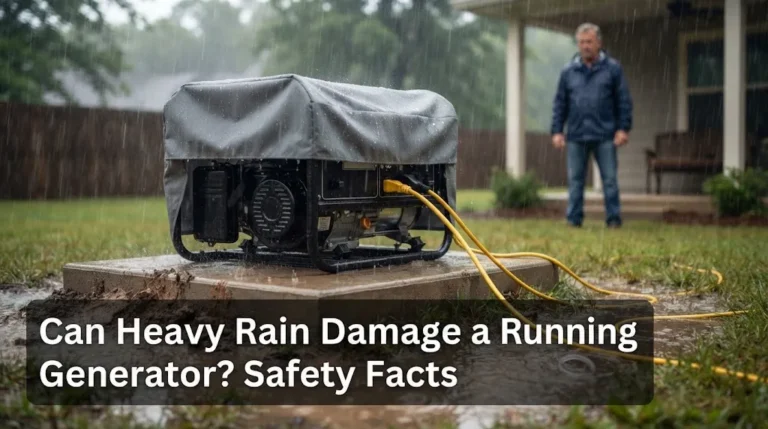
When severe weather strikes and the power goes out, protecting your portable generator from rain, snow, and ice is a natural priority. However, throwing a standard vinyl or polyethylene tarp directly over a running generator introduces multiple life-threatening hazards. Portable generators produce immense amounts of heat, exhaust gases, and electrical current, all of which require a carefully controlled operating environment.
Operating a generator under a standard flat tarp transforms a temporary shelter into an enclosed hazard zone. Without adequate clearance and cross-ventilation, the machine quickly overheats, putting strain on internal components while creating ideal conditions for electrical failures or structural combustion. Understanding these physical and chemical risks helps clarify why standard tarps are entirely unsuitable for running generators.
Fire Hazards and Trapped Engine Heat
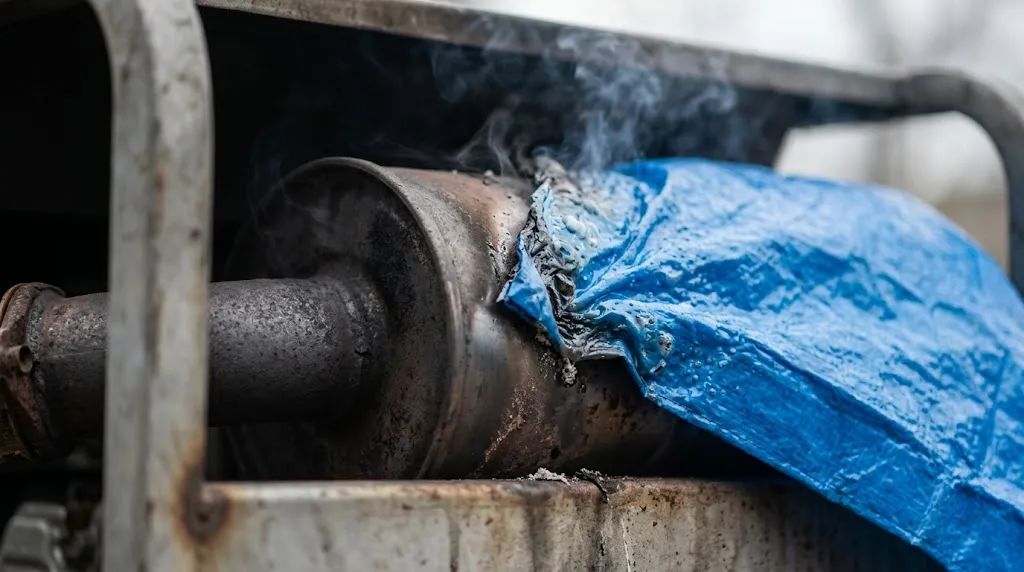
Combustion engines generate extreme temperatures during normal operation. The engine block, muffler, and exhaust manifold become hot enough to ignite flammable materials instantly. Standard plastic tarps are typically made of polyethylene or vinyl, materials that melt, scorch, or catch fire easily when exposed to high radiant heat.
When a tarp drapes directly over or sits too close to a running generator:
- Direct Contact Melts Plastic: The high heat of the exhaust muffler will melt a standard tarp within minutes, fusing molten plastic onto hot metal parts and creating a persistent smoke and fire hazard.
- Restricted Cooling Airflow: Generators rely on ambient airflow to cool the engine block and alternator windings. A restrictive cover traps hot air around the unit, causing thermal overload, oil breakdown, and permanent engine damage.
- Fuel Ignition Risks: If any minor fuel leak or overflow exists near the carburetor or fuel tank, trapped vapors combined with extreme heat and restricted ventilation can ignite rapidly under an enclosed tarp.
Warning
Never allow a plastic tarp, canvas, or any fabric material to touch the muffler or exhaust system of a running generator. Even heavy-duty canvas can smolder and ignite when exposed to prolonged engine heat.
Carbon Monoxide Accumulation and Ventilation Failure
Beyond fire risks, portable generators emit massive quantities of carbon monoxide (CO)—a colorless, odorless, and tasteless gas that can incapacitate and kill humans and pets within minutes in enclosed or semi-enclosed spaces.
A tarp draped closely over a generator creates a pocket that traps heavy exhaust gases. Instead of dispersing safely into the open atmosphere, carbon monoxide collects directly around the unit. If wind blows the tarp downward or shifts it against the exhaust port, exhaust gases can be forced backward toward the engine intake or pool near ground level.
Furthermore, restrictive covers often tempt users to place generators closer to structures, windows, or doors to keep the tarped unit sheltered, drastically increasing the chance that toxic exhaust fumes will seep into living areas.
Moisture Condensation and Electrical Shock Risks
Many homeowners assume that draping a tarp over a generator protects it from rain. In practice, a poorly ventilated tarp often achieves the exact opposite effect by trapping humidity.
As the engine runs in damp weather, moisture in the air gets trapped beneath the impermeable plastic sheet. As the generator cools down or experiences temperature swings, this trapped moisture condenses into liquid water directly on the control panel, electrical outlets, and alternator windings. Water accumulation on live electrical components creates severe risks of:
- Ground faults and short circuits that can ruin the generator’s alternator.
- Electrical shock hazards for anyone operating the control panel or plugging in extension cords.
- Accelerated corrosion and rust on metal frames, fasteners, and internal wiring.
Key Insight
Moisture management is about airflow, not total sealing. A generator running in wet weather needs active ventilation to disperse humidity rather than a tight plastic enclosure that traps condensation.
How to Safely Protect a Generator During Wet Weather
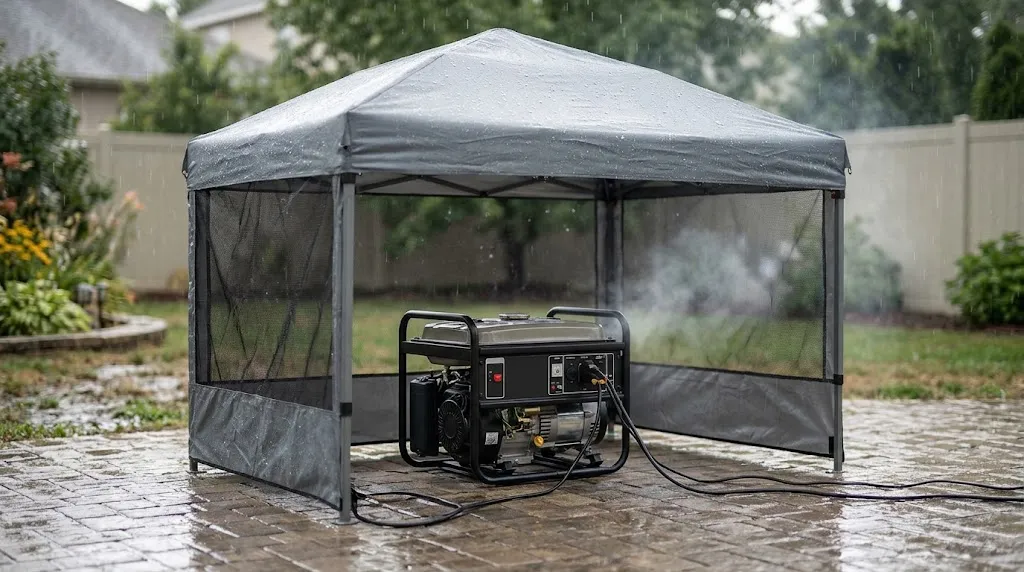
Protecting your equipment from heavy rain or snow without compromising safety requires proper engineering and adequate clearance. You do not have to leave your generator completely exposed to a torrential downpour, but any shelter must prioritize exhaust clearance and thermal dissipation.
Consider these approved methods for wet-weather generator operation:
- Use a Certified Generator Tent: Specially manufactured generator covers (often called canopy tents or running covers) feature flame-retardant fabric, rigid internal frames, and open or mesh-vented sides that allow exhaust to escape while shielding sensitive electrical panels from direct precipitation.
- Build a Custom Open-Sided Shed: A permanent or semi-permanent lean-to structure with a pitched roof and completely open sides provides excellent weather protection while ensuring unhindered cross-ventilation.
- Position Away From Living Spaces: Always place any temporary or permanent shelter at least 15 to 20 feet away from your home, with the exhaust pointing away from doors, windows, and air intake vents.
Tip
If you use a specialized generator tent, verify that it is rated for use while the engine is actively running. Many fabric covers are designed exclusively for off-season storage and will melt if left on during operation.
Can You Use a Tarp When the Generator Is Turned Off?
While tarps are dangerous during operation, using a weather-resistant cover or tarp when the generator is completely shut down and fully cooled is standard practice for long-term storage.
When storing a generator between uses:
- Wait for Full Cool Down: Ensure the engine, muffler, and alternator have cooled entirely to ambient temperature before placing any protective cover over the unit.
- Secure Against Wind: Tie down storage tarps securely so heavy winds do not whip loose plastic against the unit or uncover sensitive parts.
- Prevent Pest Intrusion: Ensure the cover allows some bottom ventilation to prevent moisture accumulation inside the alternator windings while keeping rodents and insects from nesting in the air filter or exhaust pipe.
Related Product
Portable Generator Tent & Running Cover
A weather-resistant, flame-retardant generator tent shields your unit from heavy rain and snow while maintaining proper clearance and exhaust ventilation during operation.
As an Amazon Associate, we earn from qualifying purchases.
Frequently Asked Questions
Can I use a canvas tarp instead of plastic on a running generator?
No. Even though heavy canvas is more heat-resistant than polyethylene plastic, draping any tight fabric directly over a running generator restricts crucial airflow, traps exhaust gases, and creates serious fire and carbon monoxide hazards.
What happens if rain gets on a running generator?
Light mist or indirect rain usually will not ruin a generator immediately, as most units are built with some weather resistance. However, heavy downpours can flood electrical outlets, short-circuit the control panel, and create shock hazards if water pools around live connections.
How far away from the house should a generator be operated?
Safety organizations recommend operating portable generators at least 15 to 20 feet away from structures, with the exhaust pointing outward and away from all doors, windows, and ventilation intake ports to prevent carbon monoxide poisoning.
Are generator tents safe to use in high winds?
High-quality generator tents feature heavy-duty steel or fiberglass frames designed to withstand moderate wind and snow loads. However, severe storms with gale-force winds may require securing or relocating the shelter to prevent structural collapse.
Can I run a generator inside a garage if the door is open?
No. Operating a portable generator inside a garage, carport, shed, or partially enclosed porch—even with doors and windows open—frequently leads to fatal carbon monoxide accumulation due to inadequate cross-ventilation.
How do I protect my generator’s outlets from rain if I don’t use a tent?
Always use heavy-duty outdoor-rated extension cords with weatherproof covers, ensure your generator features GFCI-protected outlets, and position the unit under a pitched overhang or open canopy that keeps water away from the control panel.
Conclusion
Protecting your portable generator from harsh weather is essential for longevity, but safety must always take precedence over convenience. Draping a standard tarp over a running generator introduces extreme fire hazards, blocks vital cooling airflow, traps lethal carbon monoxide, and increases the risk of electrical damage. When wet weather threatens your backup power setup, rely exclusively on manufacturer-approved generator tents or open-sided shelters designed specifically to keep moisture away from sensitive electrical components while ensuring unhindered exhaust ventilation. Save standard tarps for off-season storage only after your generator has cooled completely.

Hi, I’m Michael Turner. I own a generator workshop in the United States and founded HomeGeneratorBlog to share practical, hands-on guidance about generator installation, maintenance, troubleshooting, safety, and backup power solutions. My goal is to help homeowners make smarter, more confident decisions through clear and reliable information