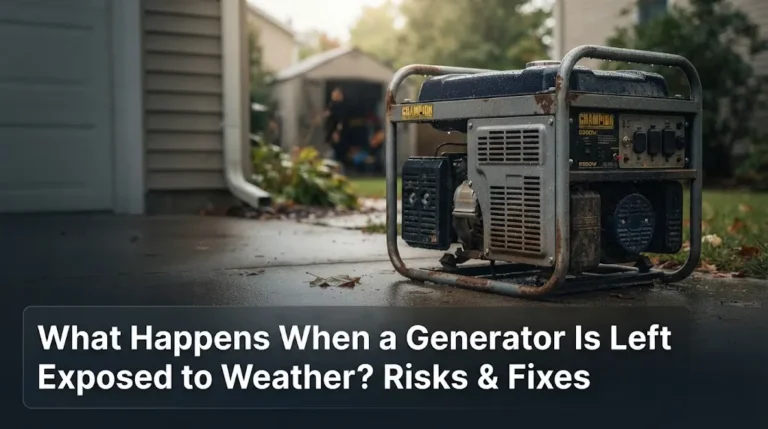
How to Ventilate a Generator in the Rain: Safe Setup Guide
Quick Answer
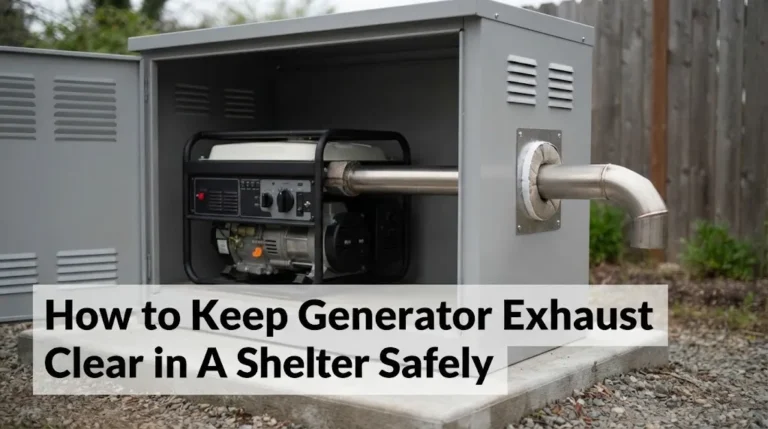
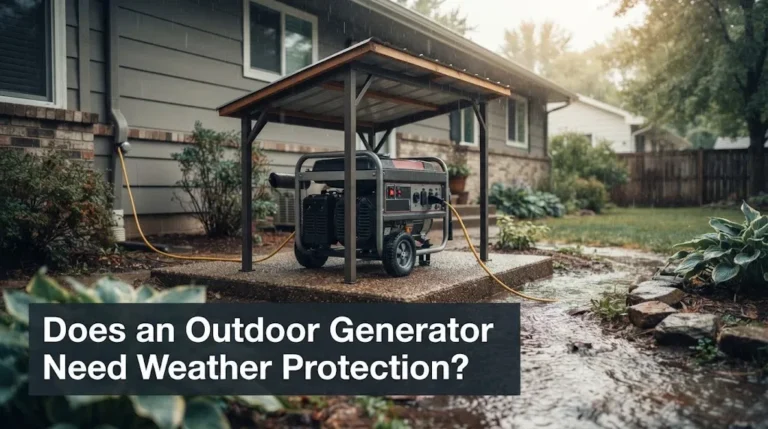
To safely ventilate a portable generator during rainy weather, you must keep the unit completely dry while maintaining an unobstructed, open-air flow of exhaust away from occupied spaces. Never run a generator indoors, inside a garage, or directly in the rain. Use a designated generator tent, a sloped open-air canopy, or a well-ventilated overhang positioned at least 15 to 20 feet away from windows, doors, and vents to prevent deadly carbon monoxide poisoning.
The Core Hazards of Running a Generator in the Rain
Operating a portable generator during a storm introduces two distinct, severe hazards: electrical shock and carbon monoxide (CO) poisoning. Balancing weather protection with safe exhaust ventilation requires understanding how both risks interact.
Water intrusion into a generator’s alternator, electrical panel, or power outlets can cause severe short circuits, permanent equipment damage, or electrocution. Conversely, enclosing a generator too tightly to keep it dry traps lethal carbon monoxide gas, which can quickly seep into a home.
Warning
Never place a portable generator inside a garage, shed, crawlspace, or partially enclosed patio, even with doors or windows open. Carbon monoxide is an odorless, colorless gas that can incapacitate and kill within minutes.
Safe Shelter Options for Wet Weather Operation
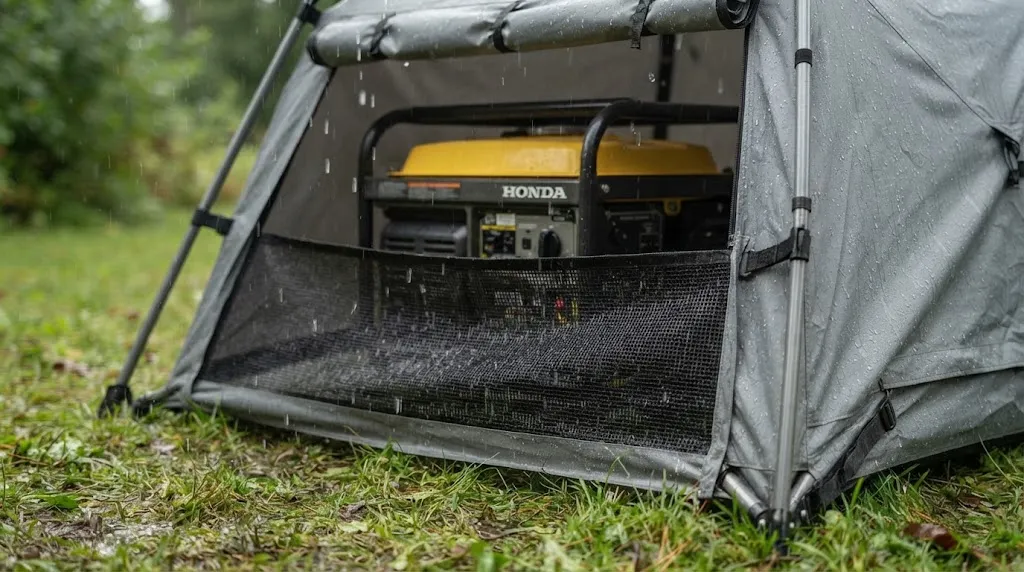
Protecting your generator from rain requires a setup that shields sensitive electrical components while allowing complete, unrestricted cross-ventilation for engine cooling and exhaust dissipation.
Commercial Generator Tents
Specially engineered generator tents or covers are designed to withstand wind and rain while keeping the unit operational. These structures feature flame-retardant fabric, open sides or mesh skirts for airflow, and sturdy frames that anchor securely to the ground.
Open-Air Tarps and Canopies
If you use a standard pop-up canopy or rig a tarp, ensure the setup meets specific safety criteria:
- Maintain at least three to four feet of clearance on all sides of the running generator.
- Ensure the top of the canopy is high enough that heat and exhaust can rise freely without melting the fabric or trapping gas.
- Never lower the side walls of a canopy during operation; keep all sides completely open to the wind and air.
Proper Placement and Distance From Your Home
Ventilation is not just about airflow around the machine; it is about distance from living areas. Position the generator at least 15 to 20 feet away from your house, directing the exhaust muffler away from all doors, windows, and air intake vents.
Wind direction during a storm can shift exhaust gases back toward your home. Always point the exhaust tailpipe outward into open air, and install working, battery-operated carbon monoxide detectors on every level of your home, especially near sleeping areas.
Electrical Safety Guidelines in Wet Conditions
Managing moisture around electrical connections requires strict adherence to outdoor safety protocols. Even with a shelter overhead, splashing water, high humidity, and damp ground create hazardous conditions.
Tip
Always plug appliances directly into the generator or use heavy-duty, outdoor-rated extension cords with ground-fault circuit interrupter (GFCI) protection. Inspect all cords for cuts or frayed insulation before plugging them in.
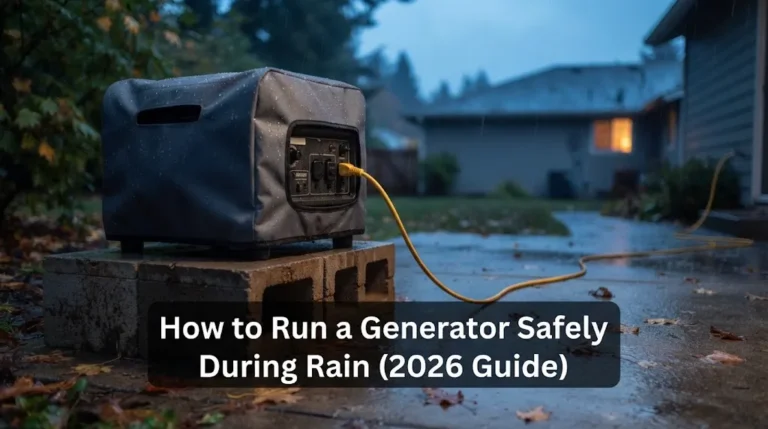
Keep extension cords elevated off wet grass or puddles, and ensure connections are sheltered or raised on blocks to prevent water pooling around plug junctions.
Refueling Safely During a Storm
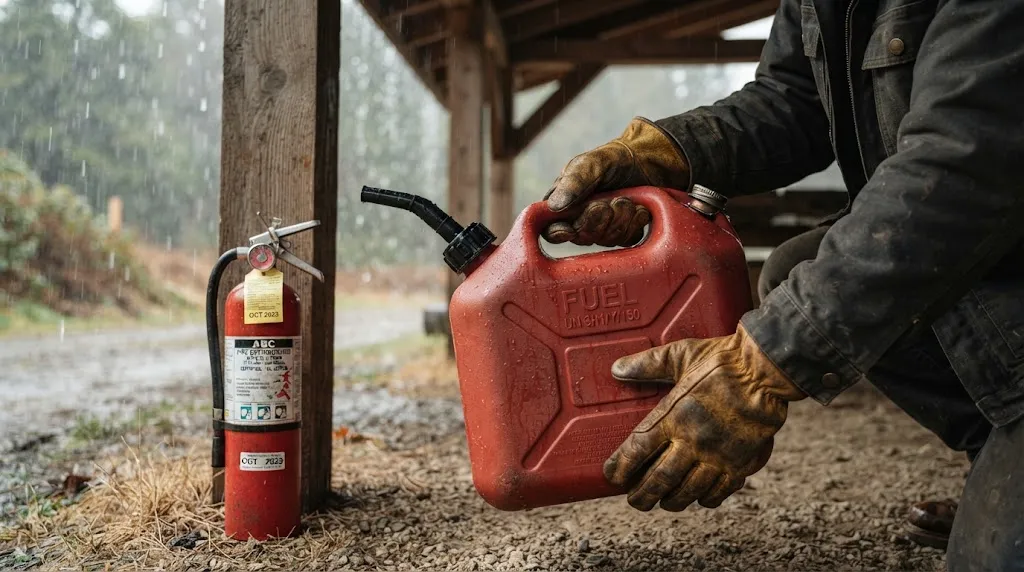
Refueling a generator in active rain introduces the risk of water contaminating the fuel tank or spilled fuel igniting on hot engine surfaces. Follow these steps to refuel safely:
- Turn off the generator and allow the engine to cool completely for at least 10 to 15 minutes.
- Move the fuel can and refueling activity away from hot exhaust components and pooled water if possible.
- Wipe away any spilled fuel immediately before restarting the unit.
- Keep a certified ABC fire extinguisher nearby.
Common Mistakes to Avoid
Avoiding critical errors ensures your emergency power setup remains safe throughout heavy downpours:
- Running indoors during a lull: Never bring the generator inside a garage or porch when the rain briefly stops. Residual exhaust lingers, and storms can return unexpectedly.
- Using household extension cords: Indoor-rated cords cannot handle wet environments or high wattage loads safely.
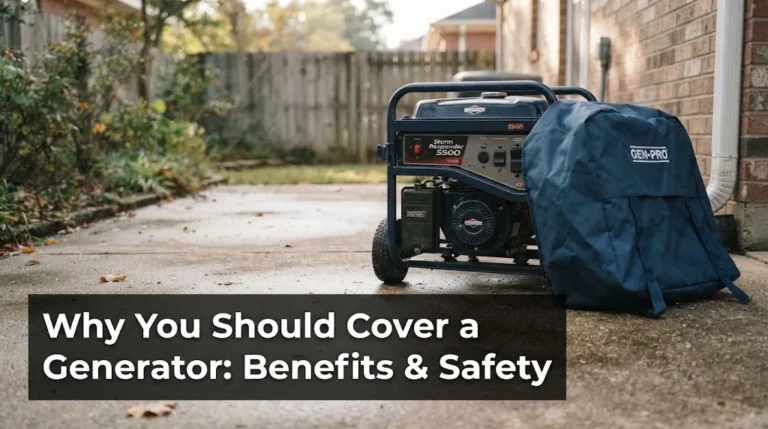
- Blocking airflow: Never drape plastic sheeting or drop cloths tightly over the generator to block rain; this starves the engine of oxygen and causes dangerous overheating or carbon monoxide buildup.
Related Product
Portable Generator Weather Tent
A heavy-duty, flame-retardant generator cover protects your unit from heavy rain and snow while maintaining open-air ventilation for safe operation.
As an Amazon Associate, we earn from qualifying purchases.
Frequently Asked Questions
Can I run a portable generator directly out in the open rain?
No. Running a generator directly exposed to heavy rain can allow water to enter the electrical outlets, alternator windings, or control panel, leading to short circuits, permanent damage, or severe shock hazards. Always use a proper waterproof cover or canopy.
How far away from the house should a generator be placed?
A portable generator should be operated at least 15 to 20 feet away from your home, with the exhaust pointing away from all doors, windows, and ventilation openings to prevent carbon monoxide from entering living spaces.
Can I use a standard plastic tarp to cover my generator?
You can use a tarp only if it is rigged as an open-air canopy or tent structure supported by a frame well above the unit. Never drape a tarp directly over the generator, as this restricts necessary cooling airflow and traps toxic exhaust gases.
What should I do if water gets into the generator outlets?
Immediately shut down the generator, disconnect all loads, and allow the unit to cool and dry completely before attempting to restart it. If water has penetrated the electrical panel or alternator, have a qualified technician inspect the unit before use.
Is it safe to refuel a generator while it is raining?
Refueling in the rain is hazardous due to potential water contamination in the fuel tank and electrical risks. Always shut down the generator, let it cool for 10 minutes, and refuel under a protective overhang or shelter.
Why is carbon monoxide risk higher during wet weather?
Storms often cause homeowners to place generators closer to or underneath sheltered home structures like porches, carports, or open garage doors to stay dry, which inadvertently traps lethal exhaust gases close to living areas.
Conclusion
Safely ventilating a generator during rainy weather requires striking a critical balance between protecting sensitive electrical components from moisture and ensuring unobstructed airflow for exhaust dissipation. By positioning the unit a safe distance from your home, utilizing an open-air tent or canopy, and strictly adhering to electrical safety guidelines, you can maintain reliable emergency power without compromising safety. Prioritize proper placement, keep exhaust paths clear, and always maintain working carbon monoxide detectors indoors to protect your household during severe weather events.

Hi, I’m Michael Turner. I own a generator workshop in the United States and founded HomeGeneratorBlog to share practical, hands-on guidance about generator installation, maintenance, troubleshooting, safety, and backup power solutions. My goal is to help homeowners make smarter, more confident decisions through clear and reliable information