Generator Shelter Clearance: Safe Distances & NFPA Rules
Quick Answer
For permanent standby generators near a structure or enclosure, standard codes require at least 5 feet of clearance from operable windows, doors, and wall openings, alongside specific manufacturer margins for airflow and service access. Portable generators must never be operated inside a closed shelter and generally require at least 20 feet of distance from occupied structures.
Placing a backup power source near a structure, enclosure, or customized generator shelter requires strict adherence to safety codes. Improper spacing can trap lethal carbon monoxide gas, create severe fire hazards, or cause the engine to overheat due to restricted airflow.
Clearance rules vary significantly depending on whether the unit is a permanent home standby system or a portable model. Understanding these spatial parameters ensures safe, code-compliant operation.
Understanding the Core NFPA 37 Standards
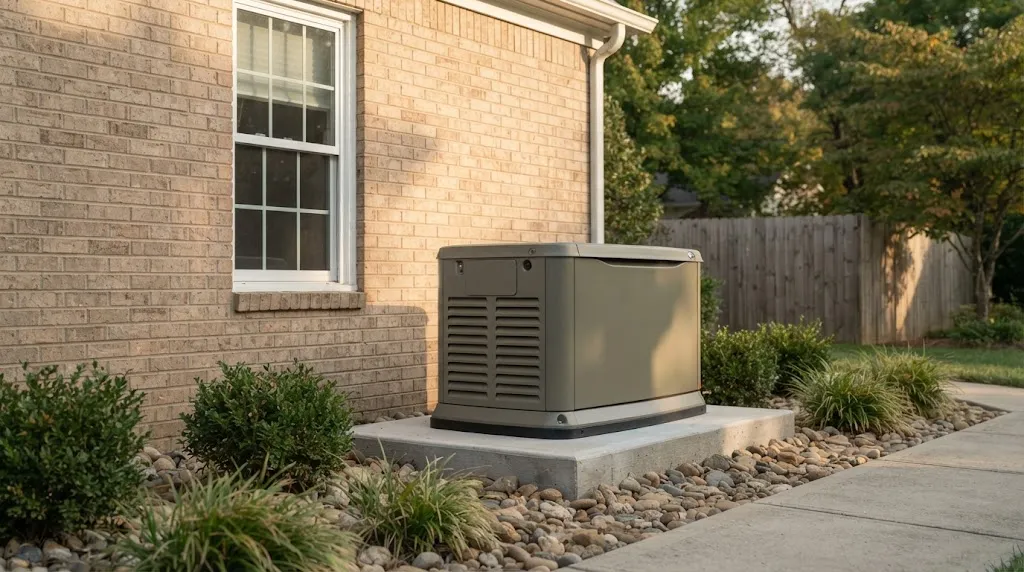
National fire safety standards provide the baseline for how close an engine-powered generator can sit next to a building or structural wall. According to National Fire Protection Association (NFPA) 37 guidelines, stationary generators must be placed at least 5 feet away from any operable openings in walls.
Operable openings include windows, doors, crawl space vents, and soffit intakes. If exhaust gases or engine heat can enter these openings, occupants face an immediate health risk.
However, the distance from a solid, noncombustible wall can sometimes be shorter. Many modern air-cooled standby generators are certified by third-party testing to be installed as close as 18 inches from a stationary noncombustible wall (such as brick or concrete block), provided local building codes permit it. Combustible walls, such as wood framing, typically demand greater separation unless protected by specialized fire-rated assemblies.
Clearance Rules for Permanent Standby Generators
Permanent standby units housed in fixed enclosures require careful planning for both safety and maintenance. Meeting the 5-foot rule from wall openings is only the first step. Installers must account for multiple spatial dimensions:
- Service Space: Maintain at least 3 feet of clear space at the front and both ends of the unit. Technicians need this workspace to remove access panels, check oil, and perform routine repairs.
- Overhead Clearance: Allow at least 5 feet of vertical space above the generator. Never install a permanent standby unit directly beneath a wooden deck, low balcony, roof overhang, or enclosed porch.
- Exhaust Direction: Point the exhaust discharge away from neighboring properties, outdoor living spaces, and your own HVAC intake vents.
Can You Place a Standby Generator Inside a Shed or Enclosure?
A common question among homeowners is whether a dedicated utility shed can house a generator. Standard residential generators are engineered for outdoor installation and rely on ambient air movement for cooling.
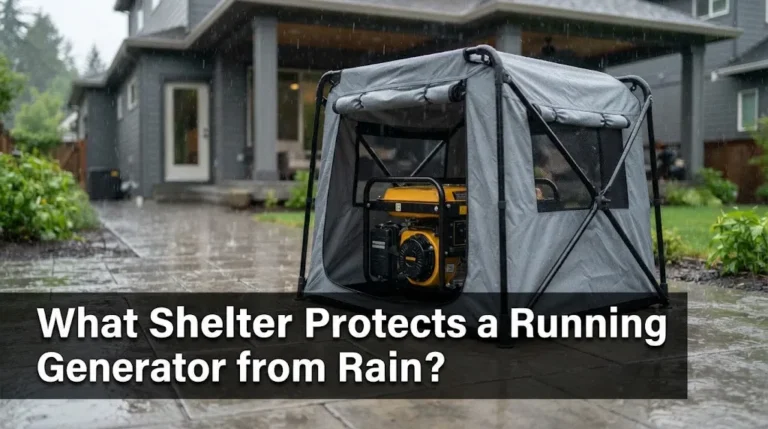
Placing a standard generator inside a completely enclosed shed—even with the doors open—traps carbon monoxide and restricts vital cooling airflow. If a specialized enclosure or prefabricated shelter is used, it must be engineered specifically for generator housing. These specialized structures feature engineered louvered vents, thermal barriers, and automatic exhaust ventilation systems designed to meet manufacturer specifications and local building codes.
Warning
Never operate any generator inside a garage, crawl space, basement, or unventilated shed. Accumulating carbon monoxide can reach fatal concentrations within minutes, even with open doors or windows.
Portable Generator Clearance vs. Standby Rules
Portable generators have entirely different operational parameters than permanent standby units. Because portables lack built-in cooling fans and weather-rated enclosures designed for tight spaces, they present a much higher risk of carbon monoxide poisoning and fire.
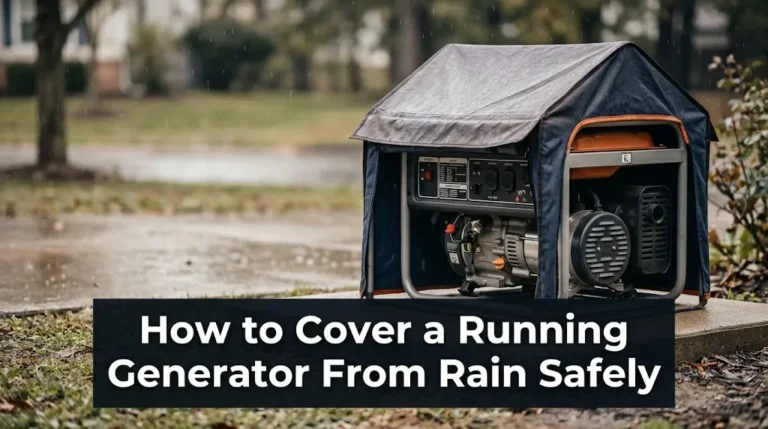
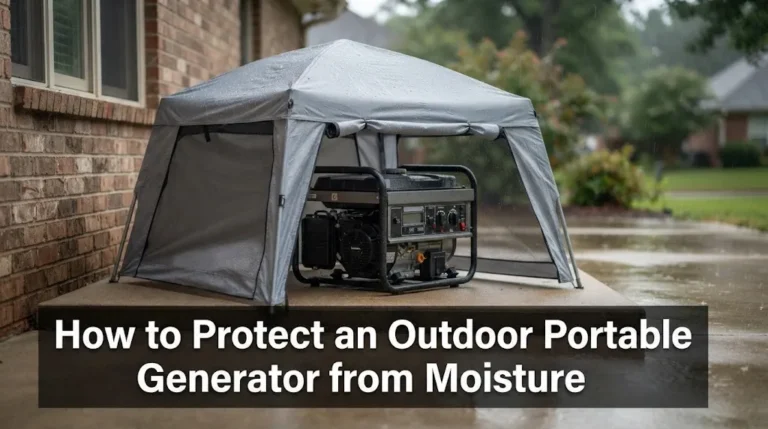
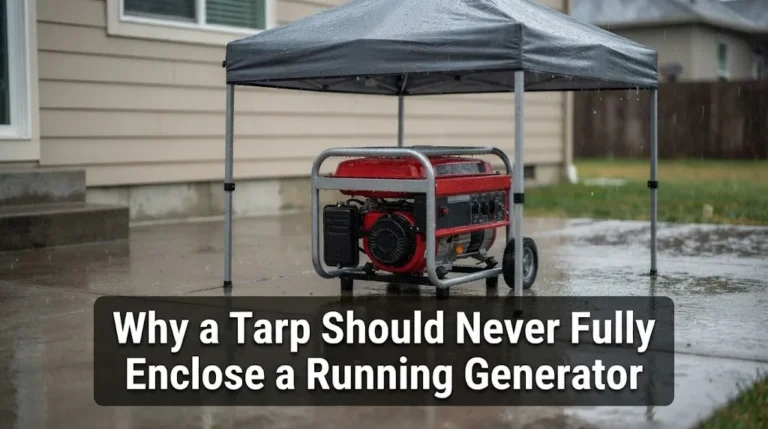
A portable generator should always be operated outdoors on a flat, stable surface at least 20 feet away from the home, with the exhaust pointing directly away from doors and windows. Utilizing a makeshift tent, porch covering, or standard tarp directly over a portable unit restricts airflow and creates a severe fire hazard. If temporary weather protection is necessary, it must be a certified, open-frame canopy specifically manufactured to maintain adequate airflow around the running engine.
Airflow and Environmental Factors to Consider
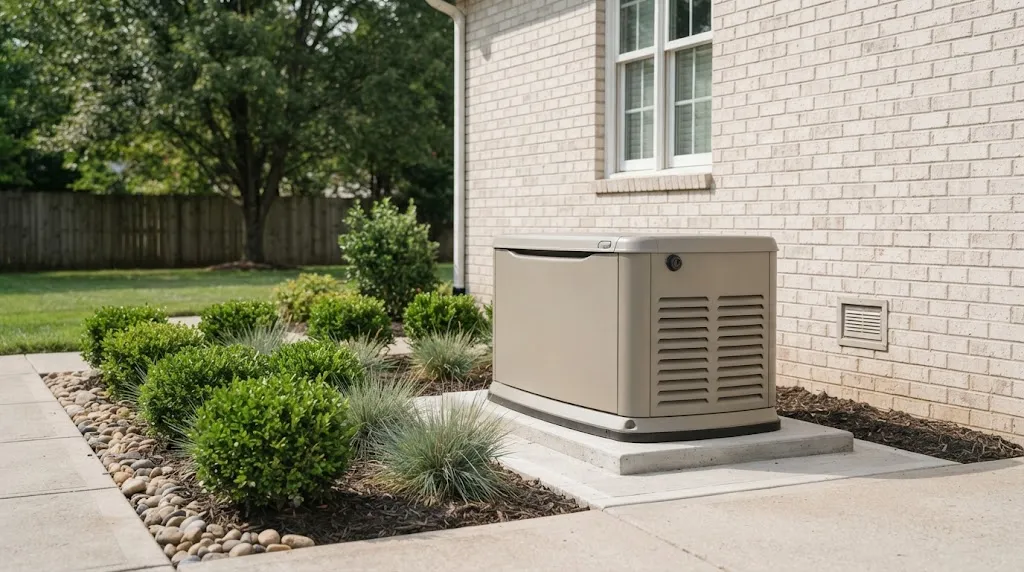
Beyond structural walls and openings, environmental variables dictate how much breathing room a generator needs. Proper thermal management prevents engine shutdown and premature component wear.
- Vegetation Control: Keep bushes, tall grass, and shrubs trimmed at least 3 to 5 feet away from all sides of the unit to prevent debris from clogging the intake grilles.
- Prevailing Winds: Position the unit so that prevailing winds do not blow exhaust fumes back toward the main structure or neighboring properties.
- Utility Meters: Maintain safe separation distances from gas utility meters, regulators, and propane tank fill valves as mandated by local utility providers.
Frequently Asked Questions
What happens if a generator is placed too close to a wall?
Placing a generator too close to a wall restricts intake and exhaust airflow, causing the engine to overheat and automatically shut down. It also increases the risk of heat transferring to combustible building materials.
Does the 5-foot rule apply to noncombustible brick walls?
Under NFPA 37 guidelines, the 5-foot rule specifically applies to operable openings and combustible walls. Many manufacturers allow noncombustible walls as close as 18 inches, provided local building codes and third-party testing endorse the distance.
Can I run a portable generator inside an open shelter or gazebo?
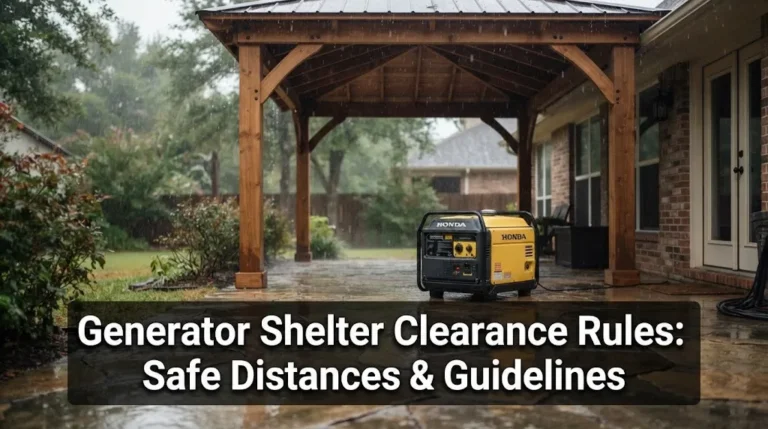
No. Even with open sides, partial enclosures like gazebos, carports, and covered porches can trap exhaust gases and cause carbon monoxide to drift into living spaces. Portables must remain in fully open outdoor areas.
How much overhead space is required for a standby generator?
Most manufacturers and safety guidelines require a minimum of 5 feet of clear vertical space above the unit to safely disperse exhaust heat and combustion gases.
Why is service clearance just as important as wall clearance?
Technicians require adequate working space—typically around 3 feet around the perimeter—to open service panels, replace filters, test electrical components, and perform safe maintenance.
Who determines the final clearance code compliance?
Local building inspectors and your Authority Having Jurisdiction (AHJ) hold final enforcement power over installation layouts. Always verify local municipal codes before pouring a concrete pad or installing a permanent unit.
Conclusion
Maintaining correct clearance around a generator shelter is vital for protecting property, ensuring proper airflow, and preventing dangerous carbon monoxide accumulation. While permanent standby units can sit closer to noncombustible walls under strict manufacturer guidelines, they must always respect the 5-foot buffer from openings and structural overhangs. Portable models demand a much wider open perimeter of at least 20 feet. Always cross-reference manufacturer specifications with local building codes before finalizing any generator placement.

Hi, I’m Michael Turner. I own a generator workshop in the United States and founded HomeGeneratorBlog to share practical, hands-on guidance about generator installation, maintenance, troubleshooting, safety, and backup power solutions. My goal is to help homeowners make smarter, more confident decisions through clear and reliable information