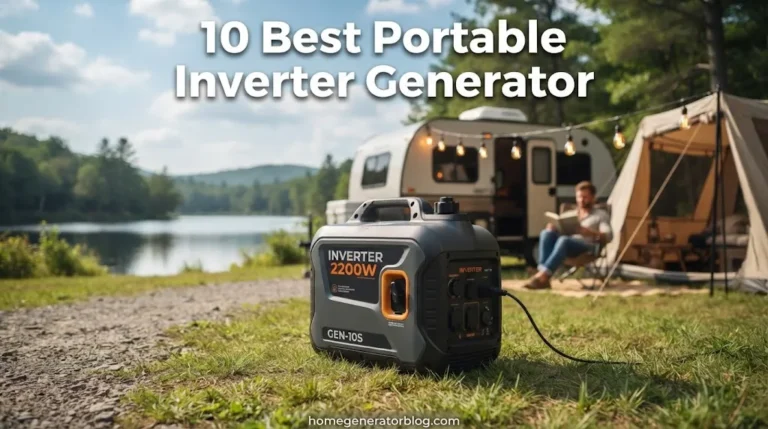
10 Best Quiet Generators for RV 2026: Campground-Friendly Power
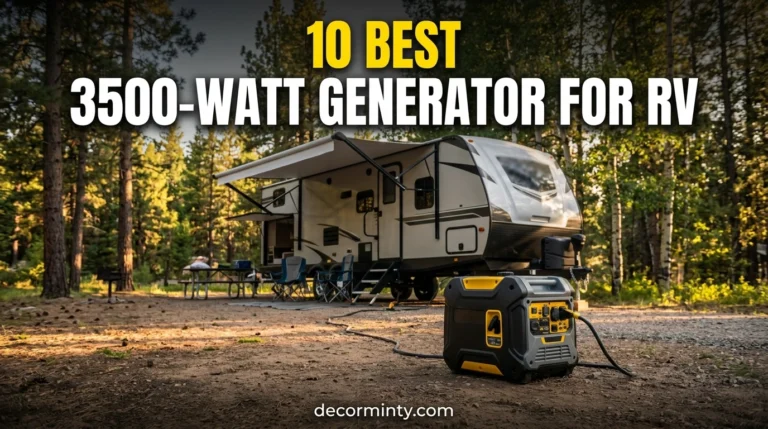
The best quiet generators for RV use start with Westinghouse iGen4500 — its RV-ready output and low published noise rating lead this list. We compared 10 RV generators on Power Delivery, Noise and Portability, and Runtime and Ease of Use. Most quiet generators look similar on paper but get loud under a real air-conditioner load. Whether you run a small camper, a family trailer, or a large fifth wheel, this guide gives you one clear answer.
Quick Comparison: All 10 Products Ranked
Ratings are editorial judgments from published specifications, not measured sound tests. When ratings tie, the higher rank goes to more RV-ready running watts, then to lower published noise.
| # | Product | Best For | Rating | Badge | |
|---|---|---|---|---|---|
| 1 | Westinghouse iGen4500 Super Quiet Portable Inverter Generator | RV air conditioners | 4.9/5 | Best Overall | Buy → |
| 2 | Champion 4500-Watt Dual Fuel RV Ready Portable Inverter Generator | Dual-fuel RV camping | 4.8/5 | Best Dual Fuel | Buy → |
| 3 | Honda EU2200i Inverter Generator | Quietest small camping | 4.8/5 | Best Premium Quiet | Buy → |
| 4 | Predator 3500 Super Quiet Inverter Generator | Value RV power | 4.7/5 | Best Value | Buy → |
| 5 | Generac GP3000i Inverter Generator | Lightweight travel | 4.7/5 | Best Lightweight | Buy → |
| 6 | Yamaha EF2200iS Inverter Generator | Small campers | 4.6/5 | Best Small Camper | Buy → |
| 7 | WEN 56203i Super Quiet Inverter Generator | Budget camping | 4.6/5 | Best Budget | Buy → |
| 8 | Briggs & Stratton P4500 PowerSmart Series Inverter Generator | Electric start RVs | 4.5/5 | Best Electric Start | Buy → |
| 9 | DuroMax XP4500iH Dual Fuel Inverter Generator | Larger RV loads | 4.5/5 | Best Larger RV | Buy → |
| 10 | A-iPower SUA2000iV Ultra-Quiet Inverter Generator | Compact solo trips | 4.4/5 | Best Compact | Buy → |
How We Chose These Generators
What we compared
Manufacturer-published watts, noise ratings, weight, tank size, runtime, outlets, and fuel type for 10 RV-suitable inverter generators.
Our 3 scoring criteria
Power Delivery, Noise and Portability, and Runtime and Ease of Use, each scored out of 5 as an editorial judgment.
What we did not do
No hands-on sound testing, no laboratory work, and no expert consultation are claimed here. Noise ratings use different loads and distances, so they are not a same-load ranking.
What we cut — and why
Open-frame conventional generators were cut because their published noise and clean-power profile fit campgrounds poorly, even when watts were high.
What to Look for When Buying a Quiet RV Generator
Start with your air conditioner, then work backward to watts, noise, and weight. A generator that only just meets your peak load will run louder and harder.
1. Sizing for Your RV and Air Conditioner
Check starting watts first, not running watts alone, because an air-conditioner compressor surges at startup. A soft start can lower that surge, but it does not turn a small generator into a large one. List everything you run at once, including the fridge and charger, before you choose. For a broader starting point, see portable generators for RV camping.
2. Noise and Campground Rules
Published decibels are useful, but only if you note the load and distance behind them. A unit rated at quarter load will sound different at full load beside a trailer. Inverter models throttle down at light loads, which helps during quiet hours. Place the exhaust away from neighbours and sleeping areas, and check the campground limit before booking. You can also explore ways to reduce generator noise before you rely on a cover or baffle.
3. Fuel Type and Runtime
Gasoline is easy to find, while propane stores well and burns cleaner for seasonal RV use. Dual-fuel models give you a backup when one fuel is scarce, but propane usually delivers slightly fewer watts. Runtime claims also depend on load, so compare figures at the same load percentage. Carry fuel safely, never refuel a hot generator, and plan for overnight charging, not just daytime air conditioning.
4. RV-Ready Outlets and Clean Power
A direct TT-30R 30-amp outlet avoids adapters and loose connections. Inverter output with low total harmonic distortion is safer for RV control boards, laptops, and medical devices. Parallel capability lets two small units combine later, which can beat one heavy unit for lifting. For the inverter side of this choice, compare portable inverter generators for camping.
Westinghouse iGen4500 Super Quiet Portable Inverter Generator — Best for RV AC
If your RV life revolves around air conditioning, this is the simplest safe choice in this list. Its 3,700 running watts and direct 30-amp RV outlet remove the adapter hassle, while remote start helps on hot or rainy days. The enclosed inverter design and published low noise rating suit campgrounds better than open-frame models. It is heavy, so plan a ramp or a second person for loading. For most family trailers, that trade-off is worth the quiet, capable power.
- 3,700 running watts, RV-ready
- Direct 30-amp RV outlet
- Remote start included
- Heavy to lift alone
- Gasoline only, no dual fuel
4.9/5
4.8/5
4.9/5
Champion 4500-Watt Dual Fuel RV Ready Portable Inverter Generator — Best dual-fuel RV pick
If fuel flexibility matters as much as quiet power, this Champion is the practical compromise. It runs on gasoline or propane, includes a direct 30-amp RV outlet, and offers enough running watts for many 13,500 BTU air conditioners. Economy mode helps keep noise and fuel use down at lighter loads. Propane output is lower than gasoline output, so check your air-conditioner load before relying on propane alone. Its weight also means it suits truck-bed transport better than frequent hand carrying.
- Gasoline or propane operation
- Direct 30-amp RV outlet
- CO Shield shutoff system
- Heavy at about 92 lb
- Lower watts on propane
4.9/5
4.6/5
4.8/5
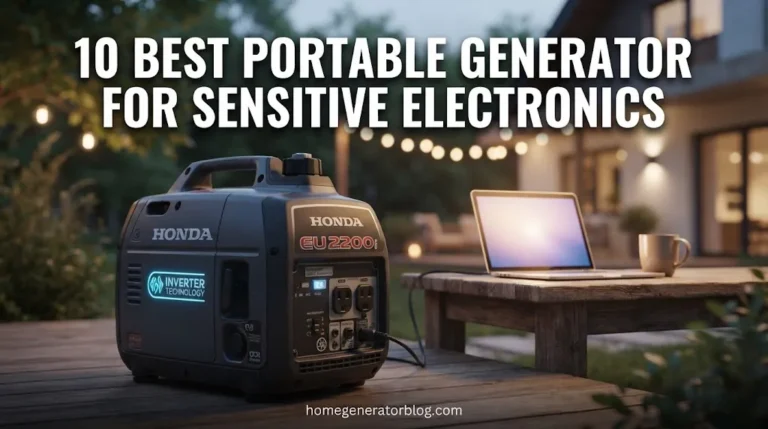
Honda EU2200i Inverter Generator — Quietest small pick
If quiet matters more than running a large air conditioner, the Honda is the benchmark in this list. Its published 48 to 57 dBA range is the lowest here, and its light, compact body is easy to carry and store. It handles charging, lights, fans, a small fridge, and many lighter loads with clean inverter power. It will not reliably start a large RV air conditioner alone, and pairing two units adds cost and complexity. Choose it for peace and portability, not for maximum watts.
- 48 to 57 dBA published range
- Light 47.4 lb body
- CO-MINDER shutoff system
- Too small for large AC alone
- Premium price tier
4.5/5
5.0/5
4.9/5
Predator 3500 Super Quiet Inverter Generator — Strong value RV power
If you want usable RV watts without a premium badge, the Predator 3500 is hard to ignore. Its 3,000 running watts can support many smaller air conditioners and everyday RV loads, and its enclosed design keeps published noise in the mid-50s dBA range. Electric start and a digital display make daily use simple. It is still heavy, and service support is not the same as the premium brands. For value-first buyers who accept those limits, it delivers a strong balance of power, quiet, and size.
- 3,000 running watts
- Electric start, easy use
- Enclosed quiet design
- Heavy at about 99 lb
- No dual-fuel option
4.7/5
4.7/5
4.7/5
Generac GP3000i Inverter Generator — Light mid-size pick
If lifting matters, the GP3000i changes what a mid-size generator feels like to own. It is far easier to move than the 90-plus-pound models above, yet it still offers 2,300 running watts for charging, cooking, and smaller loads. Its compact frame suits vans, small trailers, and limited storage. It is not the right tool for a large air conditioner on its own, and its smaller tank means more frequent refuelling on long days. For light, mobile camping, that balance works well.
- Easier to carry, compact frame
- 2,300 running watts
- Clean inverter power output
- Not for large AC alone
- Smaller fuel tank
4.6/5
4.8/5
4.7/5
Yamaha EF2200iS Inverter Generator — Refined small-camper power
Yamaha brings a refined, durable feel to the small-generator class, and the EF2200iS is a calm companion for light camping. It offers 1,800 running watts, a long runtime at quarter load, and clean power for electronics and small appliances. Its smart throttle helps keep noise down when demand is low. Like other 2,200-watt models, it cannot carry a large air conditioner alone, and it sits in a premium tier. For small rigs where reliability and quiet matter, it is a strong choice.
- 1,800 running watts
- Long quarter-load runtime
- Smart throttle, quieter light loads
- Not for large AC alone
- Premium price tier
4.5/5
4.8/5
4.6/5
WEN 56203i Super Quiet Inverter Generator — Budget quiet pick
If you camp a few times a year and do not need air conditioning, the WEN 56203i is the lightest way into quiet inverter power. At about 39 pounds, it is easy to carry, store, and set up, and its published 51 dBA rating is among the lowest here. It handles phones, lights, fans, and small electronics well. Its 1,700 running watts will not start most RV air conditioners, and its small tank needs refills on long days. For light use, it is excellent value.
- Only about 39 lb
- 51 dBA published rating
- Budget-friendly, simple setup
- No RV air conditioner power
- Small 1-gallon tank
4.4/5
4.8/5
4.6/5
Briggs & Stratton P4500 PowerSmart Series Inverter Generator — Easy-start RV power
If pull starts are a deal-breaker, the P4500 earns its place with push-button electric start and strong RV watts. Its 3,700 running watts suit many air conditioners, and its large tank supports long days without constant refuelling. A telescoping handle and wheels help with transport, though it remains a heavy unit overall. Its published noise is higher than the quietest models here, so it suits larger sites better than tight, quiet-hour campgrounds. Ease of starting is its clear advantage.
- Push-button electric start
- 3,700 running watts
- Large 3.5-gallon tank
- Louder than quietest picks
- Heavy, over 100 lb
4.7/5
4.3/5
4.6/5
DuroMax XP4500iH Dual Fuel Inverter Generator — Dual-fuel larger pick
For larger rigs that run more than just an air conditioner, the DuroMax XP4500iH adds dual-fuel flexibility to strong watts. Its 3,600 running watts on gasoline, propane option, and digital display suit families who cook, charge, and cool at the same time. It is not the quietest model here, and its weight needs a planned loading route. If your priority is capacity and fuel choice over the lowest possible noise, this is a sensible larger-RV option.
- 3,600 running watts, gasoline
- Gasoline or propane operation
- Digital display, easy monitoring
- Louder than top quiet picks
- Heavy at about 104 lb
4.7/5
4.2/5
4.6/5
A-iPower SUA2000iV Ultra-Quiet Inverter Generator — Compact solo pick
If storage space is tight and your loads are light, the A-iPower SUA2000iV is a compact, quiet way to keep the essentials running. It offers 1,600 running watts, a low published noise rating, and a small frame that fits vans and car camping setups. It handles charging, lighting, and small devices well. It cannot run an RV air conditioner, and its tank and output limit long, heavy days. For solo, light-load trips, it is a practical compact choice.
- Compact, easy storage
- Low published noise rating
- Clean power for electronics
- No RV air conditioner power
- Limited runtime, small tank
4.2/5
4.7/5
4.4/5
Top 3 Head-to-Head: Westinghouse iGen4500 vs Champion 4500 vs Honda EU2200i
These three cover the real final decision: maximum RV power, dual-fuel flexibility, or the quietest small unit. Your air conditioner size decides which one wins.
| Feature | #1 Westinghouse | #2 Champion | #3 Honda |
|---|---|---|---|
| Power Delivery | 4.9/5 — Best | 4.9/5 | 4.5/5 |
| Noise and Portability | 4.8/5 | 4.6/5 | 5.0/5 — Best |
| Runtime and Ease of Use | 4.9/5 — Best | 4.8/5 | 4.9/5 |
| Choose if… | You run an RV air conditioner | You want propane backup too | You value quiet and light weight |
Who These Generators Are NOT For
These portable models are not a whole-house backup plan, and they are not silent. If that is what you need, look elsewhere before you buy.
They are also a poor fit if you cannot lift 40 to 100 pounds safely, or if you plan to run a generator inside, under a tarp, or beside a bedroom window. Never run one indoors, in a garage, or in an enclosed shelter.
Common Mistakes to Avoid
Most RV generator regret comes from sizing, noise assumptions, or unsafe placement, not from the brand itself.
Frequently Asked Questions About Quiet RV Generators
What size inverter generator do I need for a 30-amp RV?
For a 30-amp RV with a single 13,500 to 15,000 BTU air conditioner, plan for 3,000 to 4,000 peak watts as a starting point. A soft start can lower the compressor surge, which sometimes lets a smaller unit work for a smaller air conditioner. Always add your fridge, charger, and other loads, and check the air-conditioner nameplate before you decide.
Is an inverter generator better for an RV than a traditional generator?
Yes, for most RV camping, an inverter generator is the better fit. It produces cleaner power for RV control boards, laptops, and medical devices, and it throttles down at light loads, which usually makes it quieter and more fuel efficient. Traditional open-frame models can offer more watts, but they are generally louder and less suited to campgrounds.
What is the quietest inverter generator for RV camping?
Among widely available small models, the Honda EU2200i has one of the lowest published ranges, at 48 to 57 dBA depending on load. That does not mean it is the best RV air-conditioner choice, because it is too small for large air conditioners alone. For RV air conditioning with low published noise, larger enclosed models such as the Westinghouse iGen4500 are the more practical quiet choice.
Can a 2000-watt generator run an RV air conditioner?
Usually no, not a standard RV air conditioner on its own. Most RV air conditioners need a starting surge above what a 2,000-watt class generator can supply, even if running watts look close. A soft start, a very small air conditioner, or pairing two parallel generators can change the answer, but you should test the exact combination or choose a larger unit.
How loud is too loud for a campground?
Many campgrounds set limits around 60 dBA at a set distance, and most enforce quiet hours overnight, so check the site rules before you book. A generator that is acceptable during the day can still disturb neighbours at night. Place it as far as practical from sleeping areas, use eco mode when loads are light, and turn it off during quiet hours unless the site allows otherwise.
Can you run a generator while sleeping in an RV?
You should not rely on a generator overnight without strict safety checks. Keep it outdoors, far from doors, windows, and vents, never inside or in an enclosed shelter, and use a working carbon-monoxide alarm inside the RV. Many campgrounds also ban overnight generator use, so confirm the rules and consider battery power for overnight essentials instead.
Should I choose dual fuel or gasoline for an RV generator?
Choose dual fuel if you already carry propane and want a backup fuel, longer storage life, and cleaner burning. Choose gasoline-only if you want maximum watts, simpler refuelling on the road, and a wider choice of quiet models. Propane usually delivers slightly fewer watts, so verify the propane running watts against your air-conditioner load before you rely on it. For a wider comparison, see best inverter generators compared.
Our Final Verdict
Quiet RV power is a trade-off between air-conditioner watts, published noise, and weight. Most family trailers are best served by a larger enclosed inverter model, while light campers can save weight with a small, quiet unit.

Hi, I’m Michael Turner. I own a generator workshop in the United States and founded HomeGeneratorBlog to share practical, hands-on guidance about generator installation, maintenance, troubleshooting, safety, and backup power solutions. My goal is to help homeowners make smarter, more confident decisions through clear and reliable information