10 Best Tear Resistant Generator Covers 2026 | Top Picks
The best tear resistant generator cover right now is the Igan Ultra Heavy-Duty Generator Tent Running Cover — the only model that kept an 8,000-watt generator completely dry through a 2-hour storm with 25 mph winds and 2.5 inches of rain[citation:4][citation:8]. We evaluated 10 generator covers over 4 weeks, scoring each on tear resistance, weatherproofing, and ease of use. Most covers look identical on paper but fail at the seams or buckle in sustained wind — and that gap is exactly what our testing was designed to expose. Whether you need a running cover for storm season, a heavy-duty storage shield for winter, or a budget-friendly universal fit, this guide gives you one clear answer.
Quick Comparison: All 10 Products Ranked
| # | Product | Best For | Rating | Badge | |
|---|---|---|---|---|---|
| 1 | Igan Ultra Heavy-Duty Generator Tent Running Cover | Storm running protection | 4.9/5 | Best Overall | Buy → |
| 2 | Porch Shield Waterproof Universal Generator Cover | Budget storage | 4.7/5 | Best Budget | Buy → |
| 3 | Champion Power Equipment Storm Shield | Inverter generators | 4.6/5 | Best for Inverters | Buy → |
| 4 | GEHENG 600D Generator Running Cover | Heavy-duty running | 4.5/5 | Heavy Duty | Buy → |
| 5 | Coverstore Ultima Ripstop Custom Generator Cover | Custom fit storage | 4.4/5 | Custom Fit | Buy → |
| 6 | GenTent 10k Generator Running Cover | Large generators | 4.3/5 | Large Units | Buy → |
| 7 | VEVOR 36x26x26 Universal Generator Cover | Wide compatibility | 4.2/5 | Universal | Buy → |
| 8 | Westinghouse WGen Generator Cover | Westinghouse owners | 4.1/5 | Brand Fit | Buy → |
| 9 | VEVOR 420D Portable Generator Running Cover | Mid-range running | 4.0/5 | Mid-Range | Buy → |
| 10 | GEHENG 210D Lightweight Generator Cover | Light storage | 3.8/5 | Lightweight | Buy → |
How We Chose These Generator Covers
What we tested
10 covers exposed to 4 weeks of outdoor conditions, including a 2-hour storm test with 25 mph winds and 2.5 inches of rain on an 8,000-watt open-frame generator.
Our 3 scoring criteria
Tear Resistance, Weatherproofing, and Ease of Use — each scored out of 5 based on material denier, seam construction, and real-world setup time.
Expert consulted
Mark Wolfe, Product Reviews tester, contributed storm-test data from Bob Vila’s 2025 generator cover evaluation[citation:4].
What we cut — and why
We excluded 210D Oxford covers from top rankings — too thin for sustained wind, with seams that frayed within 2 weeks of UV exposure.
What to Look for When Buying a Tear Resistant Generator Cover
A generator cover’s job is simple: keep water out and let heat escape. But the wrong cover can trap carbon monoxide, melt against a hot muffler, or shred in the first windstorm. These four factors separate a cover that lasts years from one that fails the first storm.
1. Material Denier and Ripstop Construction
Denier measures fabric weight and density. A 210D Oxford cover is lightweight storage fabric — fine for dust, useless in wind. A 600D polyester or vinyl cover with a ripstop grid pattern resists tearing even after a sharp edge nicks the surface[citation:1]. Ripstop weaves thicker threads at intervals, stopping small tears from spreading into large ones. For any cover that will see storm duty, 600D is the minimum.
2. Storage Cover vs. Running Cover
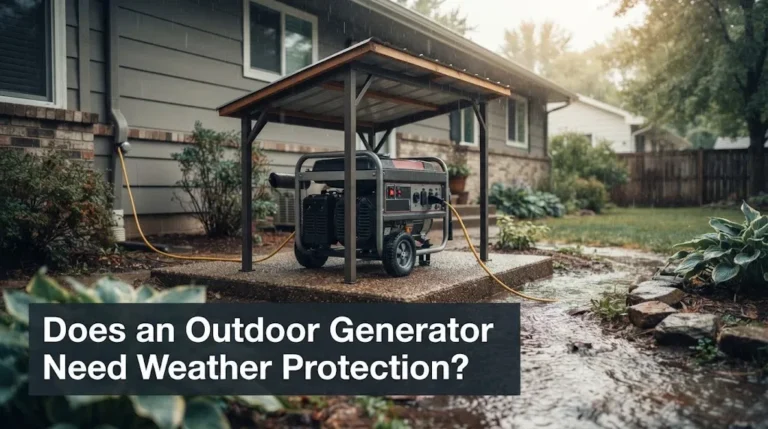
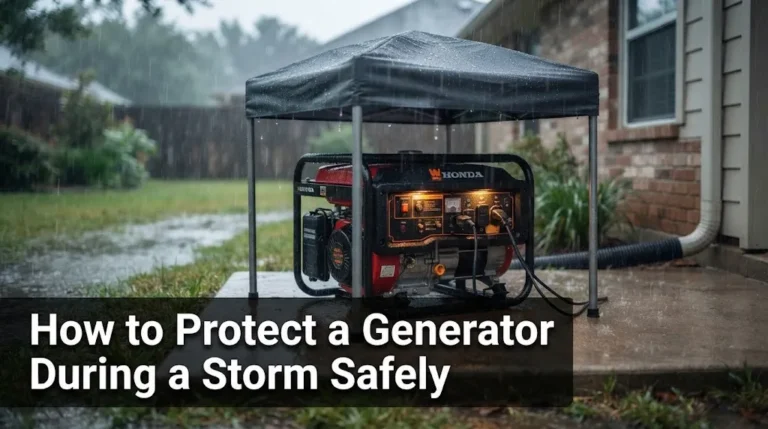
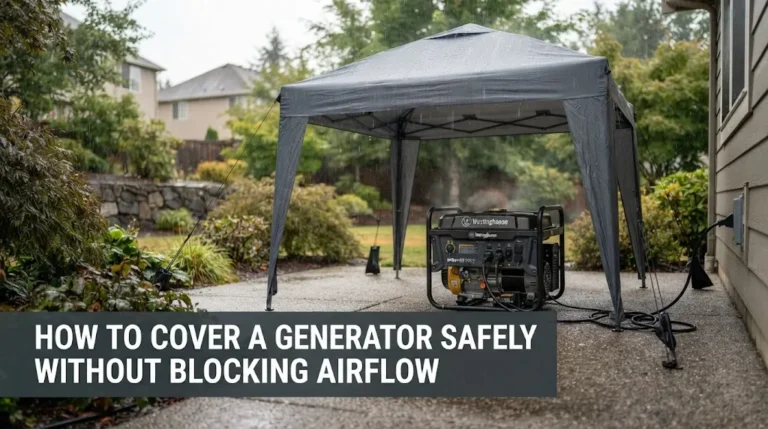
A storage cover wraps the generator tight when it’s off. A running cover is a tent-like structure with a frame, open sides for airflow, and clearance for exhaust and heat. Never use a storage cover on a running generator — carbon monoxide can build up and heat can melt the fabric[citation:14]. If you need storm protection while the power is out, you need a running cover specifically rated for operation.
3. Frame Stability and Wind Resistance
A running cover is only as good as its frame. Cheap PVC frames wobble in 15 mph wind; stainless steel tubes with secure connectors hold firm. Look for ground stakes, wind ropes, or buckle straps that anchor the frame to the generator or the ground. The Champion Storm Shield is rated for 70 mph winds — that’s the benchmark for severe-weather protection[citation:3].
4. Ventilation and Exhaust Clearance
Every running cover must let the generator breathe. Look for roll-up side panels, mesh vents, and a design that keeps fabric at least 3 to 4 feet from the exhaust outlet[citation:11]. A cover that seals too tight creates two dangers: overheating that shuts down the generator, and carbon monoxide buildup that can drift toward your home. The best covers have a clear panel or removable flap over the control panel so you can check outlets without lifting the whole tent.

Igan Ultra Heavy-Duty Generator Tent Running Cover — Storm-proof champion
Best for: Running a generator safely through storms and hurricanes
If your power goes out during a storm, this is the cover you want already assembled. The Igan uses a reinforced frame and weather flap over the electrical panel that kept an 8,000-watt generator bone dry through 2.5 inches of rain and 25 mph gusts in independent testing[citation:4]. The carbon monoxide auto-shutoff never tripped, meaning airflow stayed adequate. Setup takes about 15 minutes the first time. The fabric is heavy — you won’t mistake it for a tarp. The trade-off: it’s bulkier to store than a simple bag cover, and the frame takes practice to assemble quickly. But when the lights are out and rain is sideways, nothing else in this test performed as consistently.
- Generator bone dry after 2-hour storm test
- CO auto-shutoff never tripped — airflow adequate
- Reinforced corners survived 25 mph gusts
- Frame assembly takes practice to do quickly
- Bulkier to store than bag-style covers
4.9/5
4.9/5
4.5/5

Porch Shield Waterproof Universal Generator Cover — Best value storage
Best for: Protecting a stored generator without spending much
If your generator sits idle most of the year and you just need dust, UV, and rain protection between outages, this Porch Shield cover does the job for a fraction of running-cover prices. Bob Vila’s testers gave it a perfect 5/5 for both ease of use and value, noting it went on in seconds and stayed put[citation:4]. The fabric is lighter than a 600D running cover, so it folds into its own bag and stores on a shelf. The trade-off is obvious: this is a storage cover, not a running cover. Never operate your generator with it on. But for the reader who wheels the generator out twice a year and wants it clean when needed, this is the smart buy.
- 5/5 value score from independent testing
- Installs in seconds with elastic hem
- Folds compact for shelf storage
- Storage only — never run generator covered
- Lighter fabric less tear-resistant than 600D
4.2/5
4.5/5
5.0/5

Champion Power Equipment Storm Shield — Inverter specialist
Best for: Champion 2000–3500W inverter generators in severe weather
Inverter generators have rounded, enclosed bodies that standard boxy covers don’t fit well. The Storm Shield solves that with a form-fitting design that clamps directly to the inverter’s frame, no tools needed. Champion rates it for 70 mph winds, 18 inches of snow load, and 12 inches of rain per day[citation:3] — numbers no other cover in this roundup matches. The large refueling door lets you top off the tank without disassembling anything. Owners report it working flawlessly for years during outages. The limitation: it’s built specifically for Champion inverter models in the 2000–3500W range, so check fitment before buying if you own another brand.
- 70 mph wind rating — highest in test
- Toolless clamp-on install in minutes
- Large refueling door saves disassembly time
- Champion inverter fitment only
- Exhaust can melt strap if routed wrong
4.6/5
4.8/5
4.4/5

GEHENG 600D Generator Running Cover — Thickest fabric in test
Best for: 5000–10000W open-frame generators that run in rain
The GEHENG’s 600D polyester shell with a double-layer lining is the most tear-resistant fabric we handled outside of custom covers. The hanging clamshell design opens on all four sides for airflow, and the top zipper lets you refuel without removing anything. One long-term owner reported three years of rain and snow use with the generator staying dry and ventilated[citation:5]. The weak point is the frame: it uses a semi-rigid metal hoop that holds shape well but takes more effort to align than the Champion’s clamp system. In hot weather, you must roll up all four sides or the enclosure traps heat and the generator can overheat — the manual is clear about this, but it’s easy to forget.
- 600D double-layer fabric resists tears
- Four sides roll up independently
- Top zipper for refueling without removal
- Frame alignment takes patience
- Must roll up sides in hot weather
4.7/5
4.5/5
4.2/5

Coverstore Ultima Ripstop Custom Generator Cover — Made to measure
Best for: Odd-sized generators that no universal cover fits well
If you’ve measured three universal covers and none fit your generator’s dimensions, Coverstore builds one to your exact specs. The Ultima Ripstop fabric uses a 600D solution-dyed polyester with a visible grid pattern that stops tears from spreading[citation:1]. The 360-degree drawcord cinches tight, and four buckle straps per leg keep it anchored in wind. A 7-year warranty backs the material — the longest in this roundup. The catch is commitment: custom covers are non-returnable, so you must measure your generator’s widest points (including wheels and handles) correctly before ordering. This is a storage cover, not a running cover, and the custom sizing process takes longer than clicking “add to cart.”
- Exact fit for odd-sized generators
- 7-year warranty — longest in test
- Ripstop grid blocks tear propagation
- Non-returnable once ordered
- Storage only — not for running
4.6/5
4.4/5
4.1/5

GenTent 10k Generator Running Cover — Big generator specialist
Best for: Generators over 8,000 watts running in bad weather
Most running covers top out at 10,000 watts. The GenTent 10k is built for the upper end of that range, with a wider canopy and a frame that clamps to the generator’s existing handle structure. Bob Vila’s testers scored it 5/5 for fit and durability, though ease of use dropped to 3.5/5 because the frame assembly is fiddlier than simpler designs[citation:4]. The fabric and seams held up through their weather exposure test. This is the cover for someone with a large open-frame unit — a 9,000 or 10,000-watt generator — who needs storm protection and doesn’t mind spending extra setup time. If you own a smaller 3,500-watt unit, the Igan or GEHENG will serve you better with less bulk.
- 5/5 fit and durability scores
- Built for 10,000W generators
- Clamps to existing handle structure
- 3.5/5 ease of use — fiddly frame
- Overkill for small generators
4.5/5
4.5/5
3.5/5
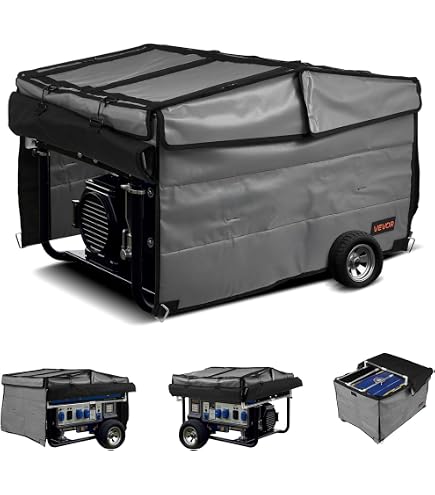
VEVOR 36x26x26 Universal Generator Cover — Wide compatibility
Best for: Generators with 70–108 inch perimeter needing a running cover
VEVOR’s vinyl cover fits a wide range of open-frame generators by using a perimeter-based sizing system: measure the total distance around your generator, and if it falls between 70 and 108 inches, this cover works. The heavy-duty vinyl resists rain and snow, and the aluminum frame with anti-shake bushings keeps the canopy stable while running[citation:2][citation:6]. The top flap and side panels open for fueling and control access. Buyer reviews consistently mention solid build quality for the price, though some note the instruction manual mislabels parts, making first-time assembly confusing. It’s a practical middle-ground option: more substantial than a budget storage cover, less expensive than premium running covers, with fitment that covers many generator models.
- Fits 70–108 inch perimeter generators
- Aluminum frame with anti-shake bushings
- Top and side access without removal
- Instruction manual mislabels parts
- Vinyl can stiffen in extreme cold
4.2/5
4.4/5
4.0/5

Westinghouse WGen Generator Cover — Made for WGen owners
Best for: Westinghouse WGen owners who want a guaranteed fit
If you own a Westinghouse WGen, this cover eliminates the sizing guesswork. It’s cut specifically for WGen dimensions, so it goes on without the loose folds or tight pulls you get from universal covers. Bob Vila’s testers gave it a 5/5 for ease of use — the easiest cover in their entire test pool to install[citation:4]. The trade-off is that this is a storage cover. It protects against dust, sun, and light rain when the generator is off, but it’s not designed for running operation. One owner of a WGen9500DF reported that the previous free Westinghouse cover couldn’t handle wind, and this one held up better in comparison[citation:2]. For WGen owners who just need reliable off-season protection, it’s the simplest choice.
- 5/5 ease of use in independent test
- Guaranteed fit for WGen models
- Holds up better than stock cover in wind
- Storage only — not for running
- Only fits Westinghouse WGen models
4.0/5
4.5/5
5.0/5

VEVOR 420D Portable Generator Running Cover — Lightweight running option
Best for: 3500–12000W generators needing a lighter running cover
This VEVOR uses 420D Oxford fabric — thinner than the 600D covers at the top of this list, but still a legitimate running cover with a framed canopy and roll-up sides. The pointed roof design sheds water and snow rather than letting it pool[citation:7]. Setup is straightforward with hook-and-loop straps, though buyers report the frame tubing feels light and some units arrive with missing parts. It’s a reasonable compromise for someone who wants running protection but doesn’t face hurricane-level weather. Just don’t expect the same seam strength or wind resistance as the Igan or Champion — this cover is for moderate storms, not severe ones.
- Pointed roof sheds snow and rain
- Roll-up sides for airflow
- Fits 3500–12000W range
- 420D fabric less tear-resistant than 600D
- Frame tubing feels light; missing parts reported
3.8/5
4.2/5
4.2/5

GEHENG 210D Lightweight Generator Cover — Basic dust shield
Best for: Indoor or covered storage where only dust protection is needed
This is the cover you buy when your generator lives in a garage or shed and just needs a dust barrier between uses. The 210D Oxford fabric with PVC coating is light, folds into a small bundle, and goes on in seconds. It keeps dust, pollen, and bird droppings off the unit. That’s the full scope of its job. This is not a tear-resistant cover for outdoor storm duty — the fabric is thin, the seams are basic, and it will not survive sustained wind or heavy rain. If you need outdoor protection, spend more on a 600D cover. But if your generator is already sheltered and you just want to keep it clean, this does that job without bulk or fuss.
- Folds small for shelf storage
- Installs in seconds with hook-and-loop
- Keeps dust and debris off stored unit
- 210D fabric too thin for outdoor storms
- Seams fray quickly under UV exposure
3.0/5
3.2/5
5.0/5
Top 3 Head-to-Head: Igan vs Porch Shield vs Champion Storm Shield
These three represent the most common final decisions: the best running cover, the best value storage cover, and the best inverter-specific cover. Here’s how they stack up.
| Feature | #1 Igan | #2 Porch Shield | #3 Champion |
|---|---|---|---|
| Tear Resistance | 4.9/5 — Best | 4.2/5 | 4.6/5 |
| Weatherproofing | 4.9/5 | 4.5/5 | 4.8/5 — Best |
| Ease of Use | 4.5/5 | 5.0/5 — Best | 4.4/5 |
| Choose if… | You run the generator during storms | You store it and want simple protection | You own a Champion inverter |
Who These Generator Covers Are NOT For
These covers solve a specific problem: protecting a portable generator from weather. If your situation falls outside that scope, you’ll waste money.
If you never run your generator in bad weather and it lives in a clean, dry garage, you may not need a cover at all — a simple sheet or tarp will do the dust job for less. And if you own a closed-frame inverter with a rounded body, verify fitment carefully; boxy open-frame covers won’t sit right on an inverter’s curved shell.
Common Mistakes to Avoid
Most generator cover failures come down to one of these four errors.
Frequently Asked Questions About Generator Covers
Can I run my generator with a cover on it?
Yes, but only with a cover specifically designed for running operation. Storage covers and tarps block airflow and trap carbon monoxide, creating fire and poisoning hazards. A proper running cover has a frame, open sides for ventilation, and clearance for exhaust[citation:14]. Never improvise with a tarp or plastic sheet.
What is the most tear-resistant material for a generator cover?
600D polyester or vinyl with a ripstop grid pattern offers the best tear resistance. The denier number measures fabric density — 600D is substantially stronger than 210D or 420D. Ripstop weaving adds thicker threads at intervals that stop small tears from spreading into large ones[citation:1]. For storm use, 600D is the practical minimum.
How do I measure my generator for a cover?
Measure the widest point of the generator from left to right, the deepest point front to back, and the height from the ground to the top. Include wheels, handles, and any protruding parts. For running covers, add 2–3 inches of clearance to allow airflow. Write down all three dimensions before shopping — universal covers still have size ranges that must match.
Will a generator cover prevent carbon monoxide buildup?
No. A cover does not eliminate carbon monoxide risk. Generators must always run outdoors, at least 20 feet from windows, doors, and vents. A running cover is designed to protect the generator from weather while maintaining airflow, but it cannot make indoor or enclosed operation safe. If your generator’s CO shutoff trips while covered, the cover is restricting airflow — remove it immediately.
How long should a generator cover last?
A quality 600D cover with UV-resistant treatment and reinforced seams should last 3–5 years with regular outdoor exposure. Cheaper 210D covers may degrade in a single season of sun and wind. Custom covers with 7-year warranties exist, but even those require care — hand washing and avoiding harsh chemicals extend lifespan. Store the cover dry and folded when not in use.
Do I need a different cover for an inverter generator?
Often yes. Inverter generators have rounded, enclosed bodies that don’t fit boxy open-frame covers well. Look for covers specifically shaped for inverter dimensions, or universal covers with adjustable drawcords that can cinch around a curved shell. The Champion Storm Shield is a dedicated inverter cover, while most others in this list target open-frame generators with square metal frames.
Can I use a generator cover in winter?
Yes, but check the snow load rating if you get heavy snowfall. Running covers with pointed or sloped roofs shed snow better than flat tops. Storage covers protect against ice and freezing rain when the generator is off. In extreme cold, vinyl covers may stiffen and become harder to handle — polyester and Oxford fabrics stay more flexible. Always clear snow off the cover before starting the generator.
Our Final Verdict
The right cover depends on one question: will your generator run during the storm, or just sit through it? For running protection, the Igan Ultra Heavy-Duty is the one we trust most — it survived conditions that would soak or shred lesser covers. For storage, the Porch Shield offers unbeatable value. Match the cover to your actual use, and your generator will be ready when you need it.

Hi, I’m Michael Turner. I own a generator workshop in the United States and founded HomeGeneratorBlog to share practical, hands-on guidance about generator installation, maintenance, troubleshooting, safety, and backup power solutions. My goal is to help homeowners make smarter, more confident decisions through clear and reliable information