Generator Shelter Ventilation: Why It Matters for Safety
Quick Answer
Generator shelter ventilation matters because a shelter can trap carbon monoxide, trap heat, and starve the engine of the air it needs to run. Without a clear path for cool air in and exhaust and hot air out, a rain shelter can become more dangerous than no shelter at all. Ventilation is what keeps weather protection from turning into a hazard.
A generator shelter solves one problem and creates another. It keeps rain off the controls, outlets, and fuel system, but walls and a roof also slow the movement of air. A running generator is not a quiet appliance that merely needs a dry corner. It is a small engine producing exhaust, heat, and vibration, and it depends on constant airflow to stay safe and useful.
That is why ventilation is not a finishing detail. It is the condition that makes the rest of the shelter work.
Why a Shelter Changes the Air Around a Generator
In open air, exhaust disperses, heat rises away from the machine, and fresh air reaches the intake from every direction. A shelter interrupts all three processes at once. Even a shelter with large openings can create pockets of still air, especially on the exhaust side or under a low roof.
Wind makes the effect less predictable. A breeze outside can be blocked or redirected by a wall, fence, or neighbouring building, and exhaust that would normally drift away can curl back toward the intake, a doorway, or a vent.
Ventilation Has Three Separate Jobs
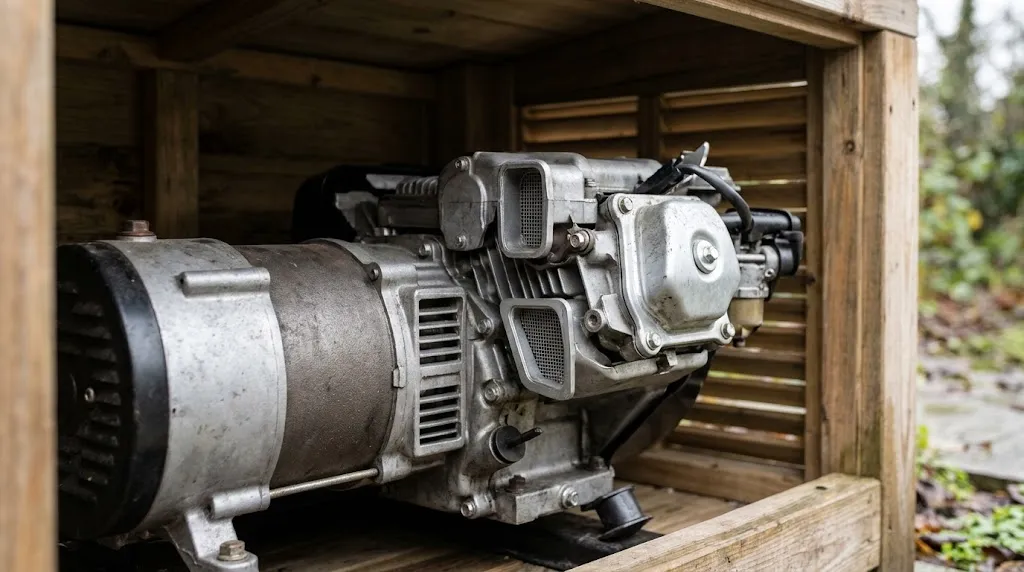
It helps to separate ventilation into three jobs, because fixing one does not automatically fix the others. A shelter can have enough air to cool the engine yet still trap exhaust near people, or it can move exhaust away while feeding the engine hot, thin air.
| Airflow job | What it protects | What happens when it fails |
|---|---|---|
| Remove exhaust | People and animals nearby | Carbon monoxide can accumulate or drift indoors |
| Remove heat | Engine, alternator, controls, and shelter materials | Overheating, shutdowns, and faster wear |
| Supply fresh air | Combustion and cooling | Poor running, lost output, and more harmful exhaust |
When one path is blocked, the problem rarely stays in one category: heat can damage controls, poor combustion can worsen exhaust, and trapped exhaust can turn a performance issue into a safety emergency.
The First Reason: Carbon Monoxide Has Nowhere Safe to Go
Carbon monoxide is colourless and odourless, so a shelter cannot be judged safe by smell or by how the air feels. A generator can produce dangerous exhaust even while it sounds normal and powers the house well. In a confined or partly confined space, that exhaust does not need long to build up.
This is also why distance and direction matter as much as the shelter itself. The Centers for Disease Control and Prevention advises keeping portable generators at least 20 feet from the house, away from doors, windows, and vents, and using a battery-operated carbon monoxide detector. A shelter does not cancel that guidance. If exhaust can reach an opening, it can still enter a living space.
Recirculation is the hidden version of the same problem. Exhaust leaves the muffler, hits a wall or roof, and is drawn back into the shelter or toward the house. That is why the exhaust path deserves separate attention from general airflow, and why our guide to preventing exhaust buildup in generator shelters treats routing as a safety issue, not a cosmetic one.
Warning
If a carbon monoxide alarm sounds, leave the area for fresh air and call emergency services. Do not stay inside to look for the source, restart the generator, or open more shelter panels first.
The Second Reason: Heat Builds Up Faster Than It Escapes
A generator turns only part of its fuel energy into electricity. Much of the rest becomes heat in the engine, exhaust, and alternator. In open air, that heat can disperse. Inside a shelter, the same heat warms the air around the machine, and the machine then draws that warmed air back in for cooling.
That loop is the core heat problem. Cooling becomes less effective as intake air gets hotter, so temperatures climb further. The result can be a protective shutdown, unstable output, or later damage. Hot surfaces also raise fire risk if a cover or stored item falls onto the machine.
Heat also explains why a shelter can fail on a mild day. The relevant temperature is not only the weather outside. It is the temperature inside the shelter, around the engine, after the generator has been running under load for an hour or more. A design that feels airy at setup can still trap a rising layer of hot air under the roof. For the overheating side of this problem in more detail, see how to prevent overheating under a shelter enclosure.
The Third Reason: The Engine Needs Air to Burn Fuel Cleanly
Ventilation is often described as cooling, but combustion air is a separate need. An engine needs oxygen to burn fuel. If the intake is starved, restricted, or fed with exhaust, combustion becomes less complete and the engine can run roughly, lose power, or produce more harmful exhaust.
Cooling air and combustion air also compete for the same limited openings in a tight shelter. A single small vent cannot be assumed to serve both purposes at full load. A generator that copes at idle may struggle once a large load starts, because heat output and air demand rise together.
The Slower Reason: Moisture, Corrosion, and Long-Term Wear
Ventilation also affects what happens after the generator stops. Warm, humid air trapped in a shelter can condense on cooler metal, controls, and electrical parts as temperatures fall. Repeated condensation encourages rust and corrosion, and it can shorten the life of connections and components that looked fine during the outage.
Good airflow therefore protects the machine between runs as well as during them. It does not replace dry storage, regular inspection, or the manufacturer’s maintenance schedule.
What Good Ventilation Actually Does
Good ventilation is a path, not a single opening. Cool air should enter low and reach the intake without first passing through exhaust. Hot air and exhaust should have a clear exit, ideally opposite or above, without being forced back toward the machine or house.
That path also needs to stay clear in real conditions. Leaves, snow, stored fuel cans, spare panels, and extension cords can all narrow it. Clearance around the generator is part of ventilation, not a separate tidy-up task, which is why generator shelter clearance should be checked alongside airflow.
For a practical breakdown of layouts and airflow patterns, see how to ventilate a generator shelter. For sizing, which depends on the generator and shelter rather than a single universal vent size, see how much ventilation a generator shelter needs. This article stays focused on why those decisions matter; those guides cover the how and how much.
Key Insight
An opening is not the same as airflow. Air must enter, pass the machine, and leave without short-circuiting back to the intake or into the house.
When Ventilation Alone Is Not Enough
The most important limit is also the easiest to misunderstand. Adding vents to a garage, shed, or enclosed porch does not automatically make it safe for a portable generator. Portable generators are meant to run outdoors, away from occupied buildings, unless the installation is professionally designed and vented for that purpose.
Ventilation also cannot fix a bad location. If the shelter sits too close to a window, door, dryer vent, or HVAC intake, exhaust may still find its way indoors. If wind regularly pushes exhaust toward the house, a vent on the wrong side can make the path worse. In those cases, the answer is different placement or exhaust direction, not a larger opening in the same place.
Noise control creates a similar trap. Closing vents to quiet the machine, or adding dense soundproofing over openings, can restore the very heat and exhaust problems ventilation was meant to solve. Quiet and safe are both legitimate goals, but they have to be solved together, not by sacrificing airflow.
Signs the Airflow Is Not Working
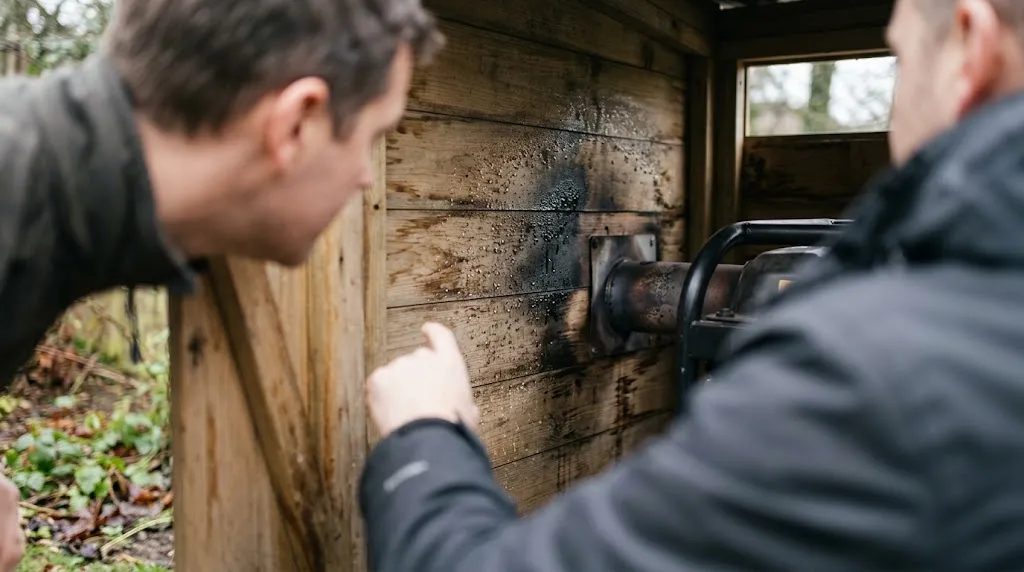
Ventilation problems do not always announce themselves with an alarm. Watch for a pattern, rather than judging by one short run:
- Frequent shutdowns or unstable output under normal load
- A shelter that feels much hotter inside than outside, even after the generator has warmed up
- Exhaust smell lingering around the shelter or near house openings
- Soot, discoloration, or heat damage on shelter panels
- Heavy condensation, rust, or damp electrical parts after use
- A carbon monoxide alarm sounding at any time
Any of these signs is a reason to stop, let the machine cool, and check the intake, exhaust path, and clearance before running it again in that shelter.
Related Product
Ventilated Generator Running Cover
A running cover designed with ventilation openings can protect the controls and outlets from rain while keeping an airflow path open, rather than sealing heat and exhaust around the machine.
As an Amazon Associate, we earn from qualifying purchases.
Frequently Asked Questions
Does a ventilated shelter make it safe to run a portable generator in a garage?
No. A few vents do not turn a garage into an outdoor location. Portable generators should run outdoors, away from openings, unless the system was professionally installed and vented for indoor use. If the only available shelter is enclosed, move the generator outside instead.
Is one open side enough ventilation?
Not reliably. One opening can let some air in and out, but it can also leave still pockets, especially on the exhaust side. A useful path usually needs separate intake and exit routes so air moves across the machine instead of swirling in one opening.
Why would a generator overheat inside a shelter on a cool day?
Because the shelter traps the generator’s own heat. The engine warms the air around it, then draws that warmed air back in for cooling. Once that loop starts, the temperature inside the shelter can climb well above the outdoor temperature, even when the weather feels mild.
Can good ventilation replace keeping the generator away from the house?
No. Ventilation controls airflow inside and immediately around the shelter, but distance and exhaust direction control whether exhaust can reach doors, windows, and vents. Both are needed. A well-ventilated shelter placed too close to the house is still a risk.
Does ventilation matter for a factory-built standby generator enclosure?
Yes, but the design is different. A factory enclosure is usually engineered with defined intake, cooling, and exhaust paths for that model. Follow the manufacturer’s installation and clearance instructions for that unit rather than applying portable-shelter rules to it.
Should shelter vents stay open in rain or snow?
Yes, the airflow path should not be closed to keep weather out. Use a shelter design that deflects rain and snow while leaving intake and exhaust routes open, and clear snow, leaves, and debris from vents before and during use.
Conclusion
Ventilation matters because it decides what a shelter does with the three things a generator cannot avoid producing: exhaust, heat, and demand for fresh air. A shelter that protects against rain but traps any of those three has traded a weather problem for a safety or reliability problem. Keep the intake clear, give heat and exhaust a separate exit, keep the shelter away from house openings, and treat any alarm, shutdown, or lingering exhaust smell as a stop signal. When airflow is treated as part of the shelter, not an afterthought, weather protection and safe operation can work together.

Hi, I’m Michael Turner. I own a generator workshop in the United States and founded HomeGeneratorBlog to share practical, hands-on guidance about generator installation, maintenance, troubleshooting, safety, and backup power solutions. My goal is to help homeowners make smarter, more confident decisions through clear and reliable information