10 Best Generator for Home Essentials in 2026: Power What Matters Most
The best generator for home essentials right now is the Westinghouse iGen4500, with 3,700 running watts for fridges, lights, and phones. We compared 10 generators on load coverage, runtime and fuel efficiency, and ease of use and safety. Most generators look identical on paper but fail when a fridge starts up during an outage. Whether you need quiet overnight power, whole-home essentials, or a simple backup, this guide gives you one clear answer.
Quick Comparison: All 10 Products Ranked
| # | Product | Best For | Rating | Badge | |
|---|---|---|---|---|---|
| 1 | Westinghouse iGen4500 | Most households | 4.9/5 | Best Overall | Buy → |
| 2 | Honda EU2200i | Quiet small-home backup | 4.8/5 | Best Quiet Premium | Buy → |
| 3 | Champion 100416 Tri-Fuel | Fuel flexibility | 4.7/5 | Best Fuel Flexibility | Buy → |
| 4 | Generac GP6500 | Mid-size home backup | 4.6/5 | Best Mid-Size Backup | Buy → |
| 5 | DuroMax XP13000EH | Maximum essential load | 4.5/5 | Best Maximum Output | Buy → |
| 6 | Champion 200988 | Dual-fuel inverter use | 4.4/5 | Best Dual-Fuel Inverter | Buy → |
| 7 | Predator 5000 | Value dual-fuel backup | 4.3/5 | Best Value Dual Fuel | Buy → |
| 8 | WEN 56380i | Value inverter backup | 4.2/5 | Best Value Inverter | Buy → |
| 9 | Westinghouse WGen7500 | Open-frame home backup | 4.1/5 | Best Open-Frame Value | Buy → |
| 10 | Yamaha EF2200iS | Lightweight small backup | 4.0/5 | Best Lightweight Alternative | Buy → |
How We Chose These Generators
What we compared
Manufacturer specifications for 10 portable generators, including running watts, starting watts, tank size, runtime, weight, noise, outlets, and safety features.
Our 3 scoring criteria
Essential-load coverage, runtime and fuel efficiency, and ease of use and safety. Scores are editorial judgements from those specifications, not measured test results.
What this ranking is not
This is not a hands-on test report. No testing duration, sample size, laboratory result, or expert consultation is claimed, and wattages should be checked against your own appliances.
What we cut — and why
Permanently installed standby units and small camping-only models were excluded, because this list is for portable home essentials during an outage, not whole-house automation or recreation alone.
What to Look for When Buying a Generator for Home Essentials
Start with the loads you cannot lose, then work backwards to wattage, fuel, and placement. A generator that looks powerful on a headline number can still trip when several motors start at once.
1. Total Running Watts and Starting Watts
List every essential item, add its running watts, then add the highest starting watts for one motor-driven item such as a fridge or sump pump. Running watts decide what can stay on together, while starting watts decide whether a motor will start without tripping the overload. If you are planning for a storm, this emergency generator guide for homes is a useful next check on outage planning.
2. Runtime, Fuel Type, and Storage
Runtime figures only make sense at a stated load, so compare like with like and plan for refuelling or tank changes in the dark. Gasoline is widely available but degrades in storage, while propane stores longer and dual-fuel models give a second option. A larger tank helps overnight, but only if you have safe, ventilated storage and a realistic refuelling routine. This portable versus standby generator comparison helps clarify whether a portable model fits your outage pattern.
3. Clean Power for Sensitive Electronics
Phones, routers, laptops, and many modern appliances prefer stable inverter output with low total harmonic distortion. Conventional open-frame models can still run lights and simple motors, but they are a weaker match for sensitive electronics. Check the stated distortion figure, the outlet types you will actually use, and whether the model has overload protection. If your essential list is mostly electronics, prioritise inverter output over raw peak watts.
4. Noise, Weight, and Placement Safety
Noise matters most at night, weight matters most when you move the unit alone, and placement matters most for safety. Generators must run outdoors, away from doors, windows, and vents, with carbon monoxide protection where fitted. A quiet inverter may cost more per watt, but it is easier to live with during a long outage. For a tighter budget, compare the best home generator for the money alongside weight and noise, not wattage alone.
Westinghouse iGen4500 Super Quiet Portable Inverter Generator — Quiet Mid-Size Home Backup
Best for: Most households needing fridge, lights, and charging
When power fails, the urgent problem is keeping food cold, lights on, and phones charged without refuelling every few hours. The iGen4500 addresses that with 3,700 running watts, clean inverter output for sensitive electronics, and remote start for dark, wet nights. Its 3.4-gallon tank runs up to 18 hours at 25% load, which helps overnight essentials feel less fragile. Wheels and a telescoping handle make it movable, although 98 pounds still needs a careful lift. It suits households wanting a quiet, mid-size backup without installing a transfer switch.
- 3,700 running watts for core essentials
- Remote start plus electric start
- 18 hours at 25% load
- 98 pounds needs careful lifting
- Not whole-house power
| Running watts | 3,700 W |
| Starting watts | 4,500 W |
| Fuel | Gasoline |
| Tank | 3.4 gallons |
| Runtime | Up to 18 hours at 25% load |
| Weight | 98 lb |
4.9/5
4.9/5
4.8/5
Honda EU2200i Super Quiet Inverter Generator — Light, Quiet Small Backup
Best for: Quiet fridge, router, lights, and charging
For a small home, the main challenge is quiet, clean power for a fridge, router, lights, and charging, not running every appliance at once. The EU2200i meets that need with 1,800 running watts, inverter output below 3% total harmonic distortion, and a 48 to 57 dBA noise range. Its 0.95-gallon tank runs up to 8.1 hours at 25% load, so a calm evening is possible without constant refuelling. At 47.4 pounds, one adult can usually carry it, while CO-MINDER adds an important safety shutoff. The trade-off is capacity: large motor loads need careful sequencing or a larger model.
- Only 47.4 pounds to carry
- 48 to 57 dBA noise range
- Clean power below 3% distortion
- Recoil start only
- 1,800 running watts limits loads
| Running watts | 1,800 W |
| Starting watts | 2,200 W |
| Fuel | Gasoline |
| Tank | 0.95 gallons |
| Runtime | Up to 8.1 hours at 25% load |
| Weight | 47.4 lb |
4.6/5
4.8/5
4.9/5
Champion Power Equipment 100416 10000-Watt Tri-Fuel Portable Generator — Three Fuels, Serious Capacity
Best for: Households wanting gasoline, propane, and natural gas
When fuel availability is uncertain, a gasoline-only generator can become useless even if its engine is perfect. The 100416 solves that with gasoline, propane, and natural gas operation, plus 8,000 running watts on gasoline for several essentials at once. On propane it delivers 7,200 running watts, and on natural gas 7,000, so fuel choice does not mean losing the whole backup plan. Its 8.5-gallon gasoline tank runs up to 12.5 hours at 50% load, while electric start and CO Shield support safer operation. At about 205 pounds, it needs a planned storage spot and a ramp or second person.
- Three fuel options included
- 8,000 running watts on gasoline
- CO Shield safety shutdown
- About 205 pounds to move
- 74 dBA is not quiet
| Running watts, gasoline | 8,000 W |
| Running watts, propane | 7,200 W |
| Running watts, natural gas | 7,000 W |
| Tank | 8.5 gallons |
| Runtime | Up to 12.5 hours at 50% load |
| Weight | 204.6 lb |
4.9/5
4.5/5
4.7/5
Generac GP6500 Portable Generator with COsense — Strong Middle-Ground Backup
Best for: Fridge, sump pump, lights, and smaller appliances
Many households need more than a small inverter but do not want a permanently installed standby system. The GP6500 fills that middle ground with 6,500 running watts and 8,125 starting watts for a fridge, sump pump, lights, and smaller appliances. Its 6.9-gallon tank runs about 10.5 hours at 50% load, while COsense shuts the unit down if carbon monoxide rises. A 120/240-volt outlet supports a transfer-switch setup, although professional installation is still required for safe home connection. At 172 pounds, wheels and a fold-down handle are essential, not optional.
- 6,500 running watts, 120/240 volts
- COsense carbon monoxide shutdown
- Transfer-switch-ready outlet
- Recoil start only
- Not inverter-clean for all electronics
| Running watts | 6,500 W |
| Starting watts | 8,125 W |
| Fuel | Gasoline |
| Tank | 6.9 gallons |
| Runtime | About 10.5 hours at 50% load |
| Weight | 172 lb |
4.7/5
4.6/5
4.6/5
DuroMax XP13000EH Dual Fuel Portable Generator — For Larger Essential Loads
Best for: Larger homes with high essential loads
For larger essential loads, including a well pump, electric water heater circuit, or multiple large appliances, a small inverter will simply overload. The XP13000EH provides 10,500 running watts on gasoline and 9,975 on propane, with a 50-amp outlet for transfer-switch use. Its 8.3-gallon tank runs about eight hours at 50% load on gasoline, while dual-fuel operation gives a second fuel option during shortages. Electric start, remote start, and CO Alert support easier and safer operation. At 234 pounds and 74 dBA, it needs space, distance from bedrooms, and a firm moving plan.
- 10,500 running watts on gasoline
- 50-amp transfer-switch outlet
- Dual fuel with remote start
- 234 pounds, needs moving plan
- 74 dBA, louder than inverters
| Running watts, gasoline | 10,500 W |
| Running watts, propane | 9,975 W |
| Fuel | Gasoline or propane |
| Tank | 8.3 gallons |
| Runtime | About 8 hours at 50% load, gasoline |
| Weight | 234 lb |
4.9/5
4.2/5
4.4/5
Champion Power Equipment 200988 4500-Watt Dual Fuel Inverter Generator — Clean Power, Two Fuels
Best for: Fridge, lights, router, and charging on either fuel
Dual-fuel flexibility matters most when gasoline stations close or propane is already stored at home. The 200988 delivers 3,500 running watts on gasoline and 3,150 on propane, enough for a fridge, lights, router, and charging with careful load management. Its propane runtime reaches about 21 hours at 25% load from a 20-pound tank, which is useful for longer outages. Electric start, Cold Start Technology, and a 61 dBA noise level keep operation straightforward and neighbour-friendly. At 103 pounds, it is portable for a garage, but not a one-hand carry.
- Gasoline or propane operation
- 21 hours on propane at 25%
- Electric start with cold start
- 103 pounds to move
- Lower output on propane
| Running watts, gasoline | 3,500 W |
| Running watts, propane | 3,150 W |
| Starting watts | 4,500 W |
| Noise | 61 dBA |
| Runtime, propane | About 21 hours at 25% load |
| Weight | 103 lb |
4.5/5
4.4/5
4.3/5
Predator 5000 Watt Dual-Fuel Super Quiet Inverter Generator — Value Without Forcing a Compromise
Best for: Budget-conscious dual-fuel home backup
Budget buyers often face a choice between clean inverter power and dual-fuel flexibility, and this Predator model avoids forcing that compromise. It produces 3,900 running watts on gasoline and 3,600 on propane, with a 5,000-watt starting capacity for motor-driven essentials. Gasoline runtime reaches about 18.2 hours at 25% load, while propane lasts about 14.6 hours from a 20-pound tank at the same load. Remote start, CO SECURE shutdown, and a digital display make nightly operation easier. At 110 pounds, its wheels and telescoping handle matter for moving and storage.
- Dual fuel plus inverter output
- Remote start and digital display
- 18.2 hours on gasoline at 25%
- 110 pounds to move
- 120 volts only, no 240 volts
| Running watts, gasoline | 3,900 W |
| Running watts, propane | 3,600 W |
| Starting watts | 5,000 W |
| Noise | 61 dBA at 25% load |
| Runtime, gasoline | About 18.2 hours at 25% load |
| Weight | 110 lb |
4.5/5
4.4/5
4.1/5
WEN 56380i Super Quiet 3800-Watt Portable Inverter Generator — Value Inverter With RV Flexibility
Best for: Essential backup plus RV-ready flexibility
Value inverters often cut corners on outlets, starting, or clean power, which defeats the point for home electronics. The 56380i avoids most of that with 3,400 running watts, 3,800 starting watts, and inverter output below 1.2% total harmonic distortion. Its 2.2-gallon tank runs over 8.5 hours at half load, while electric start and a TT-30R outlet support simple setup. At 57 dBA at quarter load, it is quieter than open-frame models, though not silent beside a bedroom window. It suits households wanting RV-ready flexibility and essential home backup in one mid-size unit.
- Clean power below 1.2% distortion
- Electric start, RV-ready outlet
- 57 dBA at quarter load
- Gasoline only, no propane
- 2.2-gallon tank needs refuelling
| Running watts | 3,400 W |
| Starting watts | 3,800 W |
| Fuel | Gasoline |
| Tank | 2.2 gallons |
| Runtime | Over 8.5 hours at half load |
| Noise | 57 dBA at quarter load |
4.4/5
4.2/5
4.1/5
Westinghouse WGen7500 Portable Generator — High Capacity, Straightforward Backup
Best for: Several essentials running together
When several essentials must run together, a 2,200-watt inverter can feel like a constant exercise in switching things off. The WGen7500 provides 7,500 running watts and 9,500 starting watts, with a transfer-switch-ready 120/240-volt outlet for a safer home connection. Its 6.6-gallon tank runs about 11 hours at 50% load, while remote and electric start reduce fumbling during a dark outage. GFCI household outlets and low-oil shutdown add practical protection. At 196 pounds and about 72 dBA, it needs a dedicated outdoor spot away from living areas.
- 7,500 running watts, transfer ready
- Remote and electric start
- 11 hours at 50% load
- 196 pounds, needs planned placement
- About 72 dBA, not quiet
| Running watts | 7,500 W |
| Starting watts | 9,500 W |
| Fuel | Gasoline |
| Tank | 6.6 gallons |
| Runtime | About 11 hours at 50% load |
| Weight | 196 lb |
4.6/5
4.0/5
3.8/5
Yamaha EF2200iS Inverter Generator — Longer Low-Load Runtime in a Small Frame
Best for: Small essentials with long low-load runtime
Some buyers want Honda-level refinement with a longer low-load runtime and a visible fuel gauge. The EF2200iS offers 1,800 running watts and 2,200 starting watts, with inverter power for laptops, phones, and small medical devices. Its 1.24-gallon tank runs up to 10.5 hours at 25% load, which is useful for overnight essentials. Smart Throttle adjusts engine speed to load, while a CO sensor adds a safety layer. At 55.2 pounds, it is heavier than the Honda, and recoil-only starting may matter for users with limited arm strength.
- 10.5 hours at 25% load
- Built-in fuel gauge included
- CO sensor safety shutdown
- Recoil start only
- Heavier than Honda at 55.2 lb
| Running watts | 1,800 W |
| Starting watts | 2,200 W |
| Fuel | Gasoline |
| Tank | 1.24 gallons |
| Runtime | Up to 10.5 hours at 25% load |
| Weight | 55.2 lb |
4.2/5
4.3/5
3.6/5
Top 3 Head-to-Head: Westinghouse iGen4500 vs Honda EU2200i vs Champion 100416
These three are the common final choices because they cover quiet small backup, balanced mid-size backup, and high-capacity fuel flexibility. The right pick depends on whether your priority is silence, simplicity, or maximum load.
| Feature | #1 iGen4500 | #2 EU2200i | #3 Champion 100416 |
|---|---|---|---|
| Load coverage | 3,700 running watts | 1,800 running watts | 8,000 running watts, gasoline — Best |
| Runtime | Up to 18 hours at 25% load — Best | Up to 8.1 hours at 25% load | Up to 12.5 hours at 50% load |
| Ease / safety | Remote start, 98 lb | 47.4 lb, CO-MINDER — Best | Electric start, CO Shield, 204.6 lb |
| Choose if… | You want balanced essentials coverage | You want the lightest, quietest option | You want the largest load and fuel choice |
Who These Generators Are NOT For
Portable generators are a practical outage tool, but they are not a silent, automatic, whole-house system.
They are also not for indoor use, for running sensitive medical equipment without checking its wattage and power requirements, or for anyone who cannot safely move, fuel, and store a heavy unit outdoors.
Common Mistakes to Avoid
Most generator regret comes from planning, not from the engine itself.
Frequently Asked Questions About Generators for Home Essentials
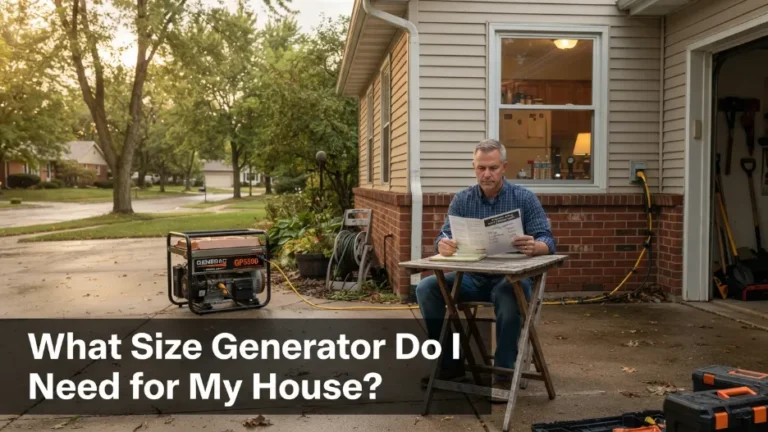
What size generator do I need for home essentials?
Add the running watts of the essentials you must run together, then add the highest starting watts for one motor-driven item. For many homes, a fridge, lights, router, and charging fit within 1,800 to 3,700 running watts, while a sump pump or well pump pushes the total higher. Always check the nameplate watts on your own appliances before choosing.
Can a generator run a refrigerator and lights at the same time?
Yes, if the combined running watts stay below the generator’s continuous rating and the fridge’s starting surge does not trip the overload. A typical fridge needs several hundred running watts, while LED lights add very little, so this combination is realistic for most mid-size models. Sequence other motor loads rather than starting everything at once.
Is an inverter generator better for home essentials?
For phones, laptops, routers, and many modern appliances, an inverter generator is usually better because it produces cleaner, more stable power with lower distortion. Conventional models can still run lights and simple motors, but they are less suited to sensitive electronics. If your essential list is mostly electronics, choose inverter output even if peak watts are lower.
How long can a portable generator run during an outage?
Runtime depends on tank size, fuel type, and load, so always compare figures at the same load percentage. A small inverter may run about eight hours at quarter load, while larger models can run 10 to 18 hours at light or moderate load. Plan fuel storage, safe refuelling, and rest breaks, and never refuel a hot generator.
Can I run a portable generator indoors or in a garage?
No, portable fuel generators must run outdoors, away from doors, windows, vents, and occupied spaces. Carbon monoxide is colourless and odourless, and a garage with an open door is not safe ventilation. Use outdoor-rated extension cords, keep the unit dry without enclosing exhaust, and follow the manual’s placement and carbon monoxide guidance.
Should I choose gasoline or a dual-fuel generator?
Choose dual fuel if you want a backup fuel when gasoline is hard to buy or store, because propane stores longer and is often available separately. Gasoline models are simpler and widely fuelled, but fuel degrades over time and needs stabiliser and rotation. Dual-fuel output is usually lower on propane, so size the unit on its propane running watts if that is your outage fuel.
Our Final Verdict
For most homes, the iGen4500 strikes the best balance between essential-load power, long low-load runtime, and manageable noise. Larger homes should step up to tri-fuel or high-output models, while small households can save weight with a 2,200-watt inverter. Start with your fridge and medical loads, then choose capacity, not just peak watts.

Hi, I’m Michael Turner. I own a generator workshop in the United States and founded HomeGeneratorBlog to share practical, hands-on guidance about generator installation, maintenance, troubleshooting, safety, and backup power solutions. My goal is to help homeowners make smarter, more confident decisions through clear and reliable information