10 Best Briggs & Stratton Portable Generators for 2026: Reliable Backup Power
The best Briggs & Stratton portable generator right now is the Q6500 QuietPower Inverter Generator, with 6,500 starting watts and 14-hour quarter-load runtime. We compared 10 portable models on power for essentials, runtime and efficiency, and ease of use and portability. Most portable generators look similar on paper but fail when startup watts, runtime and noise collide in a real outage. Whether you need home backup, RV power, or worksite tools, this guide gives you one clear answer.
Quick Comparison: All 10 Products Ranked
This is a specification comparison, not a hands-on test. Ratings are the rounded average of the three scores shown in each product card, and tied ratings are ordered by running watts, then portability.
| # | Product | Best For | Rating | Badge | |
|---|---|---|---|---|---|
| 1 | Briggs & Stratton Q6500 QuietPower Series Inverter Generator | Home backup, RVs and sensitive electronics | 4.9/5 | Best Overall | Buy → |
| 2 | Briggs & Stratton P4500 PowerSmart Series Inverter Generator | RVs, camping and quiet home backup | 4.8/5 | Best for RVs | Buy → |
| 3 | Briggs & Stratton P3000 PowerSmart Series Inverter Generator | Camping, tailgating and light home backup | 4.7/5 | Best Mid-Size | Buy → |
| 4 | Briggs & Stratton Elite 7000 Portable Generator | Worksite tools and storm backup | 4.6/5 | Best Heavy-Duty | Buy → |
| 5 | Briggs & Stratton 10000 Watt Portable Generator | Larger homes and multiple appliances | 4.5/5 | Best High Output | Buy → |
| 6 | Briggs & Stratton Storm Responder 6250 Portable Generator | Storm outages and essential circuits | 4.4/5 | Best Storm Backup | Buy → |
| 7 | Briggs & Stratton P2400 PowerSmart Series Inverter Generator | Camping, tailgating and small electronics | 4.4/5 | Best Portable Inverter | Buy → |
| 8 | Briggs & Stratton P2200 PowerSmart Series Inverter Generator | Solo camping and light backup | 4.3/5 | Best Compact | Buy → |
| 9 | Briggs & Stratton 6250 Watt Dual Fuel Open Frame Inverter Generator | RVs and flexible fuel backup | 4.3/5 | Best Dual Fuel | Buy → |
| 10 | Briggs & Stratton 5750 Watt Portable Generator | Basic backup and outdoor tools | 4.2/5 | Best Budget Open-Frame | Buy → |
How We Chose These Portable Generators
What we compared
10 Briggs & Stratton portable models, from 2,200 to 10,000 starting watts, using published specifications and catalog listings.
Our 3 scoring criteria
Power for essentials, runtime and efficiency, and ease of use and portability, applied identically to every model.
What we did not claim
No hands-on testing, test duration, expert consultation or laboratory result is claimed in this specification comparison.
What we cut — and why
Home standby generators were excluded because they are not portable, and duplicate variants were kept to one representative model.
What to Look for When Buying a Portable Generator
Start with the loads you must run, then work backwards to watts, runtime and placement. A generator that looks strong on a headline wattage figure can still fail on startup surge, fuel or noise.
1. Running watts versus starting watts
Running watts are what a generator sustains, while starting watts cover the brief surge when a motor starts. Add the running watts of everything you plan to run together, then add the largest single startup surge. If that total is close to the limit, step up a size or sequence loads. For electronics, inverter generators for sensitive electronics are usually the safer comparison point.
2. Runtime and fuel type
Runtime depends on tank size, load and fuel. A larger tank helps during a long outage, but only if you can store fuel safely and refresh it. Dual-fuel models add flexibility when gasoline is scarce, although output can differ by fuel. For a planned outage load, generators for home essentials give a useful load checklist to compare against.
3. Safety, noise and placement
Every portable generator must run outdoors, well away from doors, windows and vents, with a carbon monoxide alarm indoors. CO Guard and similar shutdown systems add protection, but they do not make indoor or garage use safe. Noise matters too, especially for camping and neighbours. Compare portable generators with CO shutoff before choosing a model for overnight use.
4. Starting, outlets and portability
Recoil start is simple and reliable, but electric or remote start is easier in cold weather or at night. Check outlet types for your RV, tools or transfer switch, and check weight, wheels and handles honestly against who will move it. Also compare portable generators with electric start if easy starting is a priority for you.

Briggs & Stratton Q6500 QuietPower Series Inverter Generator — Quiet inverter power for whole essentials
Best for: Home backup, RVs and sensitive electronics
For a reader who wants one generator to cover a fridge, lights, fans, phones and a few larger essentials during an outage, the Q6500 is the most complete Briggs & Stratton inverter here. Its 6,500 starting watts and 5,000 running watts give useful headroom for motor startup, while inverter output suits phones, laptops and other sensitive electronics. The five-gallon tank and long quarter-load runtime reduce refuelling during a long outage. Its main trade-off is weight and size, so plan a firm, ventilated spot rather than carrying it like a camping unit. Before buying, list your must-run items and add their running watts, then leave headroom for the largest motor startup.
- 6500 starting watts, 5000 running watts
- Up to 14 hours at quarter load
- Seven outlets including two USB ports
- CO Guard carbon monoxide shutdown
- Heavier than compact inverter models
- Recoil start only on this version
5.0/5
4.9/5
4.8/5

Briggs & Stratton P4500 PowerSmart Series Inverter Generator — Remote-start inverter for RV life
Best for: RVs, camping and quiet home backup
For RV owners and campers who want quiet, clean power without a huge open-frame unit, the P4500 sits in a practical middle ground. It delivers enough power for RV essentials, charging and small appliances, while inverter technology helps protect sensitive electronics. Remote and electric start versions make it easier to use in bad weather or at night. The trade-off is startup discipline: large motor loads still need to be added one at a time, and it will not replace a whole-house standby system. Check the outlet layout and cord length before buying, because a short cord can force an unsafe placement near doors.
- 4500 starting watts, 3700 running watts
- Up to 16 hours at quarter load
- Remote and electric start versions
- Parallel capable for extra power
- Needs careful load management at startup
- Larger than ultra-compact inverters
4.8/5
4.9/5
4.7/5

Briggs & Stratton P3000 PowerSmart Series Inverter Generator — Balanced mid-size inverter pick
Best for: Camping, tailgating and light home backup
For campers, tailgaters and households that need light backup rather than whole-home power, the P3000 offers a balanced mix of output, runtime and portability. Its 3,000 starting watts cover a small fridge, lights, fans and charging, while the LCD display helps you watch load and remaining runtime. It is easier to move and store than large open-frame models. The limit is clear: central heating, large air conditioning and several heavy appliances at once are beyond its sensible range. Match the generator to your longest likely outage, not just the first hour, and keep fuel stored safely outdoors.
- 3000 starting watts, 2600 running watts
- Up to 10 hours at quarter load
- LCD display for load and runtime
- RV-ready outlet for camping
- Not sized for large central appliances
- Single large appliance needs planning
4.6/5
4.8/5
4.7/5

Briggs & Stratton Elite 7000 Portable Generator — Rugged open-frame storm power
Best for: Worksite tools and storm backup
For worksites and storm backup where raw output matters more than quiet inverter operation, the Elite 7000 is a straightforward heavy-duty choice. It can start and run larger tools and several household essentials together, and its open-frame design is built for outdoor work. Electric start with remote choke on some variants helps in cold or urgent conditions. The trade-off is noise and weight: it is not the right pick for quiet campsites or for carrying alone over distance. Keep a clear outdoor run area and a carbon monoxide alarm indoors, even though the generator itself must stay outside.
- 8750 starting watts, 7000 running watts
- Large fuel tank for longer runs
- Built for tools and appliances
- CO Guard on current versions
- Louder than inverter models
- Heavier to move without help
4.9/5
4.5/5
4.4/5

Briggs & Stratton 10000 Watt Portable Generator — Maximum output in this list
Best for: Larger homes and multiple appliances
For a larger home outage where several appliances must run together, this 10,000-watt portable model offers the highest output in this list. It is best suited to a planned setup with a transfer switch or careful extension-cord use, rather than casual camping. Its strength is headroom for motor startup and multiple loads. The trade-offs are fuel use at heavy load, size and the need for safe outdoor placement well away from doors and windows. Plan the transfer or cord route before an outage, and never connect a portable generator directly to house wiring without a transfer switch.
- 10000 starting watts, 8000 running watts
- Powers several large loads together
- Sized for serious outage backup
- Transfer-switch ready outlet options
- Highest fuel use at heavy load
- Needs firm placement and ventilation
5.0/5
4.3/5
4.2/5
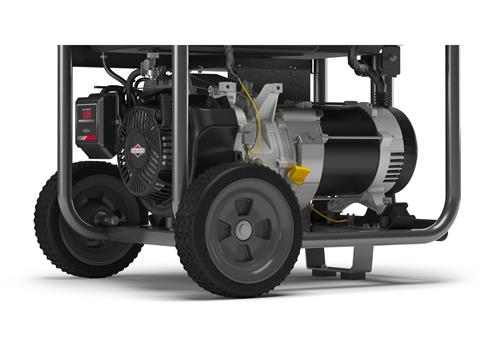
Briggs & Stratton Storm Responder 6250 Portable Generator — Storm-ready 6250-watt backup
Best for: Storm outages and essential circuits
For storm preparation, the Storm Responder 6250 focuses on the essentials: fridge, freezer, lights, fans, phones and small tools. Its 8,500 starting watts help with motor startup, while 6,250 running watts cover a sensible outage load. Controls are simple, which matters when power fails at night. It is not an inverter model for the most sensitive electronics, and it is louder than closed-frame inverters, so use it outdoors with proper distance and ventilation. Store fuel, oil and a spare spark plug with the unit, so a storm does not turn a small problem into a long outage.
- 8500 starting watts, 6250 running watts
- Designed for outage essentials
- Durable frame for outdoor use
- Simple controls for urgent use
- No inverter-clean output claim
- Noise higher than inverter models
4.7/5
4.3/5
4.2/5

Briggs & Stratton P2400 PowerSmart Series Inverter Generator — Light inverter with CO Guard
Best for: Camping, tailgating and small electronics
For campers who want inverter power in a unit that is easy to carry, store and set up, the P2400 is a strong step up from ultra-compact models. It covers phones, laptops, lights, fans and small electronics, and CO Guard adds a safety shutdown if carbon monoxide builds up. Its closed-frame design helps with noise. The limit is output: heating appliances, large power tools and RV air conditioning will usually need a larger generator or careful load sequencing. Test the unit monthly under a light load, and refresh stored fuel, so it starts reliably when you actually need it.
- 2400 starting watts, 1800 running watts
- Compact closed-frame inverter design
- Quiet Power Technology for campsites
- CO Guard shutdown included
- Limited power for heating appliances
- Small tank needs refills often
4.1/5
4.4/5
4.8/5
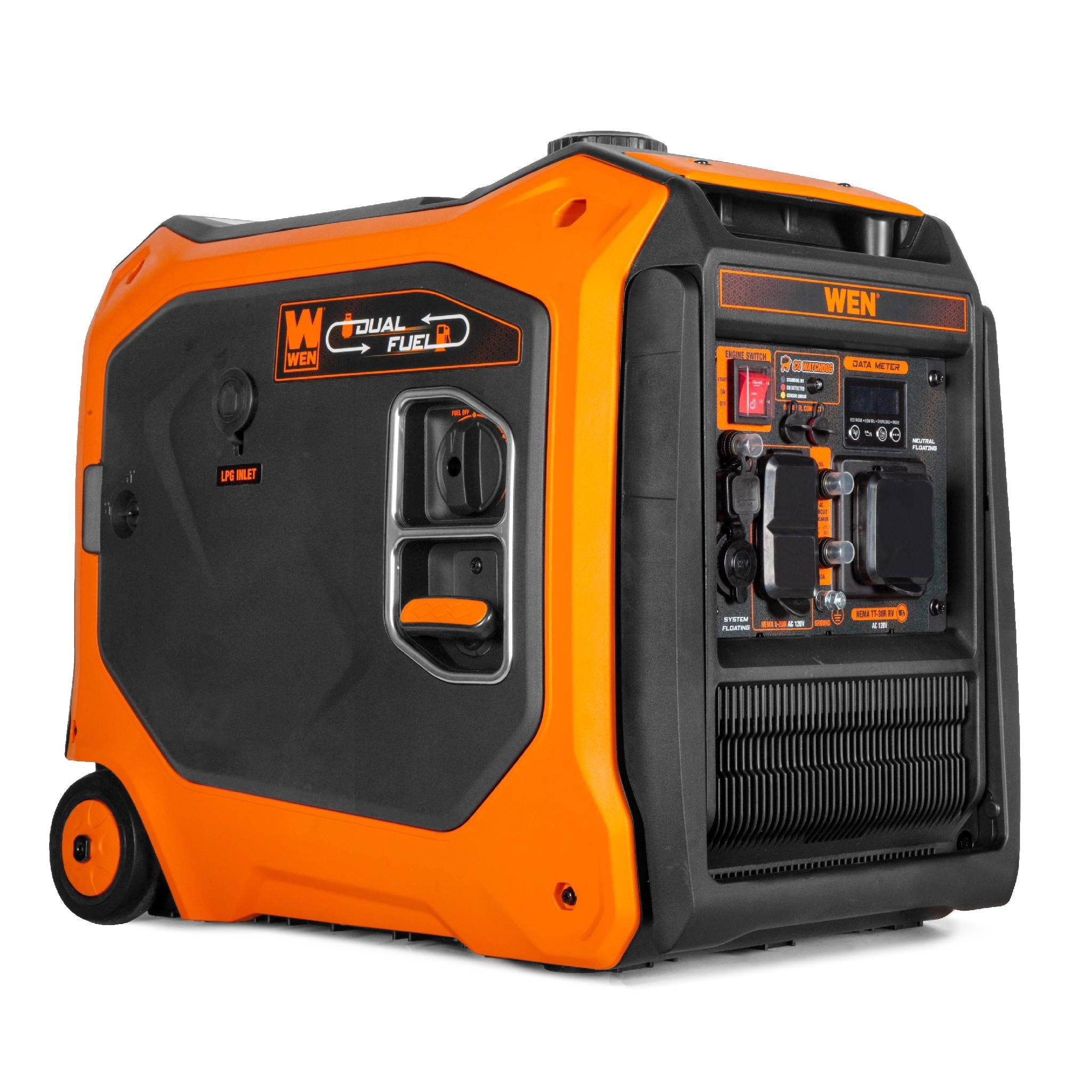
Briggs & Stratton P2200 PowerSmart Series Inverter Generator — Smallest, easiest to carry
Best for: Solo camping and light backup
For solo camping, tailgating and very light home backup, the P2200 is the easiest Briggs & Stratton generator in this list to carry and store. It powers phones, laptops, lamps, fans and small electronics, and parallel capability lets you pair two units later if your needs grow. That flexibility is its main advantage. The limit is also clear: a single P2200 will not run most RV air conditioners or several large appliances at once, and its one-gallon tank needs refills. If you later need more power, the parallel option is cheaper than replacing a working unit, but check the required parallel kit first.
- 2200 starting watts, 1700 running watts
- About 8 hours at quarter load
- Parallel capable with second unit
- Very easy to store and carry
- Too small for most RV air conditioners
- One gallon tank limits runtime
3.8/5
4.2/5
4.8/5

Briggs & Stratton 6250 Watt Dual Fuel Open Frame Inverter Generator — Gas or propane inverter power
Best for: RVs and flexible fuel backup
For buyers who want fuel flexibility, this dual-fuel open-frame inverter lets you use gasoline or propane, which can help when one fuel is hard to find during an outage. Propane also stores well and avoids some gasoline storage problems. Inverter output suits electronics, and RV-ready output helps at campsites. The trade-offs are noise from the open frame and different output on propane, so check the fuel-specific rating before planning a critical load. Compare the gasoline and propane ratings side by side, because the fuel you plan to use decides the loads you can run.
- 6250 starting watts on gasoline
- Runs on gasoline or propane
- RV-ready 120/240V output
- Inverter power for electronics
- Open frame is louder than closed inverters
- Propane output differs from gasoline
4.5/5
4.2/5
4.1/5

Briggs & Stratton 5750 Watt Portable Generator — Simple 5750-watt workhorse
Best for: Basic backup and outdoor tools
For basic backup and outdoor work on a simpler budget, this 5,750-watt open-frame model covers tools, lights and essential appliances without inverter complexity. It is easy to understand and maintain, and its output suits a fridge, freezer and several smaller loads. The main limits are runtime at heavy load and output quality: it is not the best choice for sensitive electronics, and it needs the same careful outdoor placement and ventilation as every portable generator. Read the manual for oil type, break-in and maintenance intervals before the first outage, not during one.
- 7150 starting watts, 5750 running watts
- Straightforward open-frame design
- Useful for tools and essentials
- Easy to understand controls
- No inverter output for sensitive gear
- Shorter runtime at heavy load
4.6/5
4.0/5
3.9/5
Top 3 Head-to-Head: Q6500 vs P4500 vs P3000
These three are the most common final choices because they cover large backup, RV use and light backup without jumping to a standby system.
| Feature | #1 Q6500 | #2 P4500 | #3 P3000 |
|---|---|---|---|
| Power for essentials | 5.0/5 — Best | 4.8/5 | 4.6/5 |
| Runtime and efficiency | 4.9/5 — Best | 4.9/5 — Best | 4.8/5 |
| Ease of use and portability | 4.8/5 — Best | 4.7/5 | 4.7/5 |
| Choose if… | You want maximum backup in one inverter | You want RV power with easy starting | You want light, quiet backup |
Who These Portable Generators Are NOT For
Portable generators are a bridge during an outage, not a silent whole-house replacement.
They are also not for indoor use, apartment balconies or any space where exhaust can reach people. If you cannot place one safely outdoors, do not buy one to use indoors.
Common Mistakes to Avoid
Most portable generator problems come from planning, not from the engine.
Frequently Asked Questions About Briggs & Stratton Portable Generators
What size Briggs & Stratton portable generator do I need for home backup?
Add the running watts of the items you must run together, then add the largest startup surge. A small fridge, lights, fans and charging often fit a mid-size inverter, while several large appliances need a 6,000-watt class or larger model. If your total is close to a limit, choose the larger size or sequence loads carefully.
Are Briggs & Stratton inverter generators safe for sensitive electronics?
Inverter models are designed to produce cleaner, more stable power than many open-frame models, which helps phones, laptops and other sensitive electronics. That does not remove all risk, so use surge protection, avoid overloading, and follow the manual for the specific model and load you plan to run.
How long can a Briggs & Stratton portable generator run continuously?
Runtime depends on tank size, fuel type and load, and most headline figures are at quarter load. Larger tanks and lighter loads extend runtime, while heavy loads shorten it sharply. Plan fuel storage, refuelling breaks and rest periods, and never run a generator unattended in an unsafe location.
Should I choose gasoline or a dual-fuel Briggs & Stratton generator?
Gasoline is widely available and simple, while dual-fuel models add propane as a backup fuel that stores well and can help during shortages. Check both fuel ratings before buying, because output can differ by fuel. If you already store propane for other equipment, dual fuel is often the more flexible choice.
What does CO Guard do on a Briggs & Stratton generator?
CO Guard monitors carbon monoxide levels and shuts the generator down if they become dangerous. It is an important safety layer, but it does not make indoor, garage or enclosed use safe. Always run a portable generator outdoors, well away from doors, windows and vents, with a carbon monoxide alarm indoors.
Can I run a portable generator in rain or leave it outside?
A portable generator needs protection from direct rain and wet ground, but it must never be fully enclosed while running, because heat and exhaust need airflow. Use a ventilated generator cover or canopy designed for running use, keep it on a dry, level surface, and read this guide on how to protect a portable generator outdoors before setting up in wet weather.
Our Final Verdict
Briggs & Stratton covers the full portable range, from light camping inverters to high-output storm backup. The key trade-off is output versus portability: choose the smallest model that still covers your must-run loads with startup headroom. Check watts, startup surge and safe placement first.

Hi, I’m Michael Turner. I own a generator workshop in the United States and founded HomeGeneratorBlog to share practical, hands-on guidance about generator installation, maintenance, troubleshooting, safety, and backup power solutions. My goal is to help homeowners make smarter, more confident decisions through clear and reliable information