Portable Generator Extension Cord: Safe Size & Gauge Guide
Quick Answer
For most portable generator setups, use a heavy-duty, grounded, outdoor-rated extension cord that can safely carry the appliance’s full amperage. A 12/3 cord is my preferred general-purpose choice for many 120-volt loads, while 30-amp generator outlets need a properly matched generator cord, often 10-gauge. OSHA also recommends using properly rated grounded extension cords and removing damaged cords from service.
What to check before plugging in
- Check the amp rating: The cord rating must equal or exceed the load connected to it.
- Choose heavier wire: Lower AWG numbers mean thicker conductors and less voltage drop.
- Keep it short: Longer cords create more resistance, voltage drop, and potential heat.
- Use outdoor-rated cable: Look for markings such as SJTW or another rating suitable for your conditions.
- Use three conductors: Grounded equipment should use a three-wire cord with an intact grounding pin.
- Match the connector: A 30-amp locking outlet requires the correct 30-amp plug and receptacle configuration.
My simple rule
- If you’re unsure whether a cord is large enough, move to the heavier cord rather than pushing a smaller one to its limit.
A portable generator extension cord looks simple, but choosing the wrong one can cause frustrating voltage drop, hot plugs, tripped breakers, or damaged equipment.
I recommend sizing the cord around the appliance load, cord length, outlet configuration, and environment instead of choosing by price alone.
What Extension Cord Should I Use With a Portable Generator?
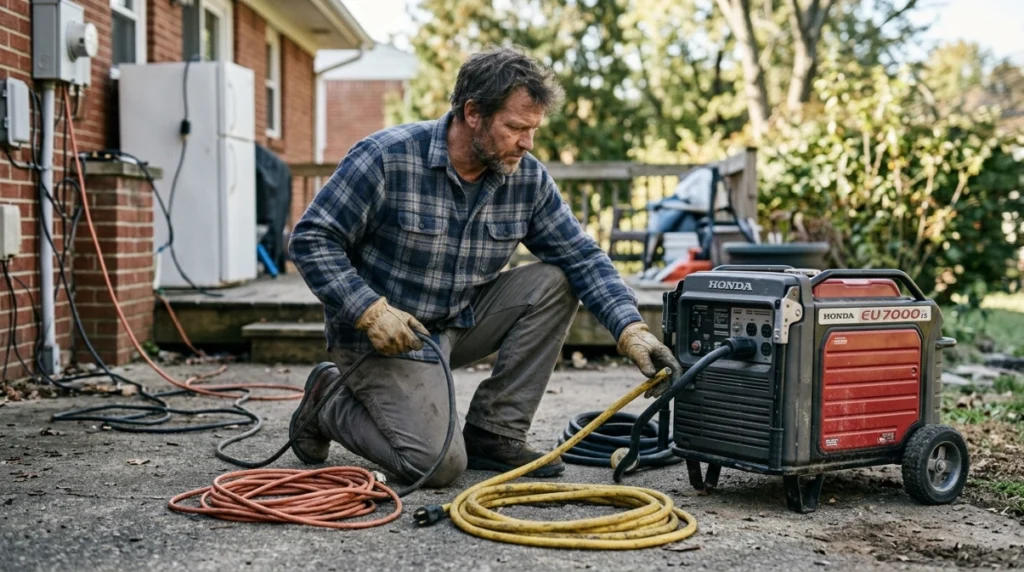
Use a heavy-duty, grounded, outdoor-rated cord whose voltage and amperage ratings match your generator outlet and connected equipment.
For ordinary 120-volt appliances, a quality 12/3 outdoor cord is a useful starting point. High-amperage generator outlets need dedicated generator cords with matching connectors.
- Light household loads: A properly rated 14/3 cord may work for shorter runs and modest loads.
- General generator use: I prefer 12/3 for refrigerators, freezers, pumps, tools, and similar 120-volt equipment when the cord’s listed amp rating supports the load.
- Longer or demanding runs: Moving to 10-gauge wire can reduce voltage drop where the connector and cord rating fit the application.
- 30-amp outlets: Use a dedicated 30-amp generator cord with the exact plug configuration your generator provides.
The AWG number alone doesn’t determine the entire cord rating. Always read the label because the plug, receptacle, insulation, voltage rating, and listing also matter.
What Gauge Extension Cord Do I Need for a Portable Generator?
The correct gauge depends mainly on amperage and distance. Lower American Wire Gauge, or AWG, numbers indicate thicker conductors.
A 12-gauge wire is thicker than 14-gauge wire. A 10-gauge conductor is thicker again.
| Typical Setup | Cord Type I Would Consider | Main Reason | Important Check |
|---|---|---|---|
| Small electronics and lights | 14/3 or heavier | Modest current demand | Confirm total watts and cord rating |
| Refrigerator or freezer | 12/3 preferred | Extra margin for motor starting load | Check appliance nameplate and starting demand |
| Pump or higher-draw 120V tool | 12/3 or heavier | Helps control voltage drop | Do not exceed the cord’s listed amperage |
| 30A generator connection | Purpose-built 30A cord, commonly 10-gauge | Designed for higher-current generator outlets | Match L5-30, L14-30, TT-30, or other connector exactly |
Don’t assume a 12-gauge cord automatically carries 20 amps. For example, some 12/3 cords use a NEMA 5-15 plug and carry a listed maximum of 15 amps.
How do I calculate generator cord amperage?
For a basic 120-volt resistive load, divide watts by volts to estimate current. A 1,500-watt appliance at 120 volts draws about 12.5 amps.
Motors complicate the calculation because refrigerators, pumps, compressors, and power tools can require extra current while starting.
- 1,000 watts ÷ 120 volts: About 8.3 amps.
- 1,500 watts ÷ 120 volts: About 12.5 amps.
- 1,800 watts ÷ 120 volts: About 15 amps.
Use the appliance nameplate and owner’s manual whenever possible. They’re more useful than a generic wattage estimate.
How Long Can a Portable Generator Extension Cord Be?
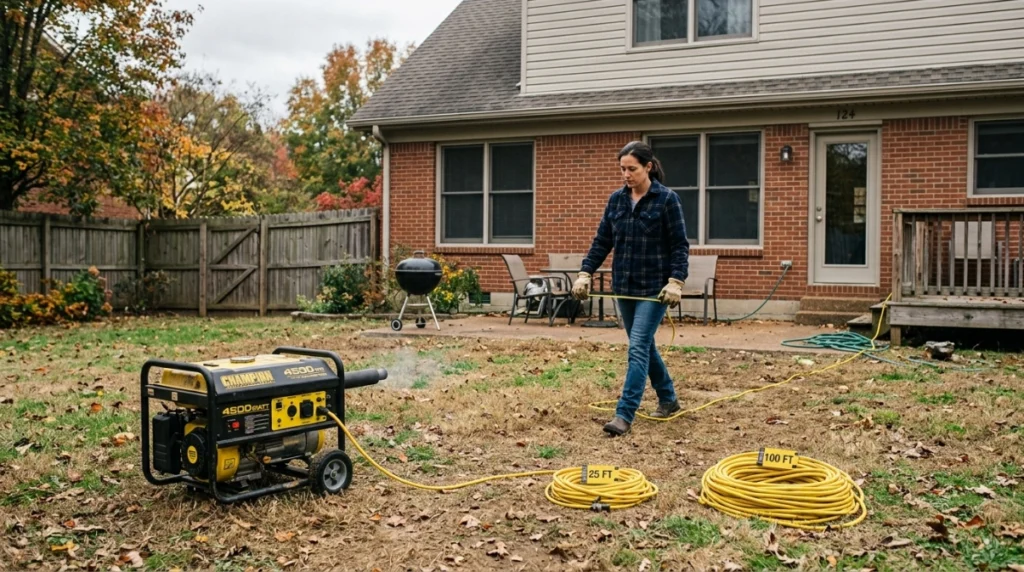
Use the shortest cord that lets you place the generator safely outdoors. Increasing cord length increases electrical resistance and voltage drop.
That creates an important balance because the generator must also remain far enough from the building to control carbon monoxide exposure.
The CDC advises operating a portable generator outdoors more than 20 feet from windows, doors, and vents. It specifically notes that a cord longer than 20 feet can help maintain that safe separation.
- 25 feet: Excellent when it safely reaches the appliance.
- 50 feet: A practical household length, especially with heavier 12-gauge cable.
- 100 feet: Requires closer attention to wire size, load, and voltage drop.
- Multiple cords joined together: Avoid when one properly sized cord can do the job.
You can review the CDC’s power outage generator safety guidance when planning generator placement.
Can I Use a Regular Extension Cord With a Generator?
You can use an extension cord only when it is properly rated for the load and conditions. A lightweight indoor cord is not what I would choose for emergency generator service.
Portable generator cords face outdoor moisture, abrasion, foot traffic, heat, and higher electrical loads. Their construction needs to match those conditions.
- Choose an outdoor-rated jacket.
- Use an intact three-prong grounding plug when grounding is required.
- Inspect the complete cord before each setup.
- Replace cords with cracked insulation, crushed sections, burned plugs, or missing pins.
- Keep plug-and-socket connections away from standing water.
- Don’t run cords where doors or windows can crush them.
OSHA warns that flexible cords are vulnerable to abrasion, damaged insulation, strain, and moisture. Its portable generator and extension cord guidance also recognizes extension cords as cord-and-plug-connected equipment.
Why Does Generator Extension Cord Length Matter?
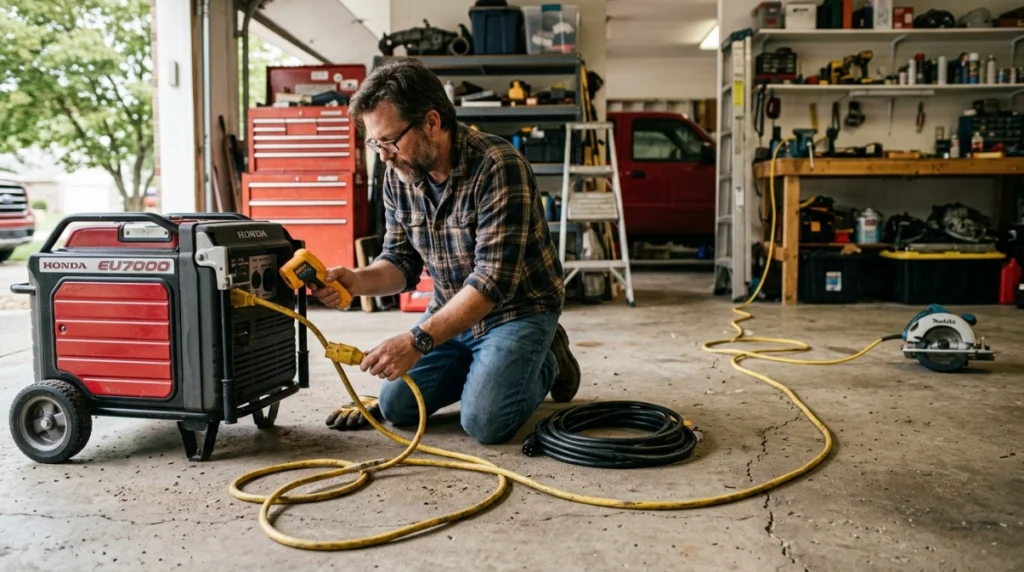
Every conductor has resistance. As the cord gets longer, more voltage can be lost before electricity reaches your appliance.
A motor receiving excessive voltage drop may struggle during startup. A heavily loaded undersized cord can also become noticeably warm.
- Longer distance: More electrical resistance.
- Higher amperage: More demanding conditions for the conductor.
- Smaller wire: Greater resistance than a thicker wire of the same length.
- Poor connections: Loose or damaged connectors can add heat at plugs and receptacles.
My practical approach is simple: shorten the run when possible, then use a heavier cord when distance or load increases.
30-Amp Generator Cord vs Household Extension Cord
A household extension cord and a 30-amp generator cord serve different jobs. Don’t choose between them based only on which one physically reaches farther.
The generator receptacle and the equipment you’re powering determine the connector type you need.
| Example Cord | Length | Wire | Rating | Best Use |
|---|---|---|---|---|
| Southwire 2588SW0002 | 50 ft | 12/3 SJTW | 15A, 125V, 1,875W | General 120V appliance connections |
| Champion 48034 | 25 ft | 10-gauge | 30A, 125V | 30A generator outlet to multiple household-style outlets |
| FIRMAN 1130 | 25 ft | 10-gauge | 30A, 120/240V, up to 7,500W | L14-30P to L14-30R generator connections |
The important detail is compatibility. Never modify plugs, remove grounding pins, or force mismatched connectors together.
How Do I Use a Portable Generator Extension Cord Safely?
Start by placing the generator outdoors in a dry location that follows the manufacturer’s clearance requirements and current safety guidance.
Then route the cord so people, doors, water, vehicles, and sharp edges won’t damage it.
- Inspect the cord. Look for cuts, exposed conductors, crushed sections, bent pins, or burned connectors.
- Confirm the rating. Check amperage, voltage, wire gauge, and outdoor-use markings.
- Match the receptacle. Use the correct generator outlet and plug configuration.
- Fully uncoil the cord. Don’t leave a heavily loaded cord tightly bundled where heat can build.
- Keep connections dry. Elevate connections and use weather-resistant protection appropriate for the application.
- Connect manageable loads. Avoid exceeding either the cord rating or generator running capacity.
- Add loads gradually. This is particularly useful when appliances contain motors or compressors.
- Check during operation. Stop using a cord if a plug or connector becomes abnormally hot, damaged, or discolored.
The U.S. Fire Administration also recommends connecting portable-generator appliances with heavy-duty extension cords.
Never use a generator cord to backfeed your house
Never connect a portable generator to a household receptacle using a male-to-male cord. That dangerous practice can energize wiring unexpectedly and expose people to lethal voltage.
If you want the generator to supply circuits in your electrical panel, use a properly designed transfer system installed according to applicable codes and manufacturer instructions.
- Use a transfer switch or another approved transfer method appropriate for your installation.
- Use a proper exterior generator inlet where required.
- Have panel-level generator connections handled by a qualified electrician.
- Never improvise a connection through a dryer, range, or ordinary wall receptacle.
Common Portable Generator Extension Cord Mistakes
Most cord problems are preventable. The biggest mistakes usually involve load, distance, physical damage, or the wrong connector.
- Using a thin indoor cord: It may not handle the electrical load or outdoor environment.
- Choosing by wattage alone: Connector configuration, amperage, voltage, and cord rating also matter.
- Ignoring startup current: Motors can demand extra power when starting.
- Running excessive length: Long cords increase voltage drop.
- Daisy-chaining cords: Extra connection points add opportunities for poor contact and damage.
- Leaving damaged cords in service: Cracked jackets and burned connectors aren’t cosmetic problems.
- Letting connectors sit in water: Moisture raises shock risk.
- Using adapters to defeat grounding: Never remove or bypass safety features to make a plug fit.
Generator safety goes beyond the electrical cord. Carbon monoxide from engine exhaust can cause sudden illness or death.
Review the CDC’s current carbon monoxide guidance and keep a running generator outdoors and away from openings.
Which Portable Generator Extension Cords Are Worth Considering?
For 2026, I would choose the cord by outlet type first and brand second. These three options cover distinctly different generator setups.
🏆 BEST GENERAL-PURPOSE PICK
Southwire 2588SW0002 12/3 SJTW 50-Foot Cord
★★★★½
This 50-foot 12/3 SJTW cord is rated for 15 amps, 125 volts, and 1,875 watts. I like this format for ordinary 120-volt appliance connections because the 12-gauge conductors give useful margin without making the cord excessively bulky.
🔌 BEST FOR MULTIPLE 120V LOADS
Champion 48034 25-Foot 30A Generator Extension Cord
★★★★½
Champion’s 10-gauge cord extends a 30-amp, 125-volt generator connection and provides three household-style outlets. I prefer this type of fan cord when several compatible 120-volt loads need power without placing a collection of small cords beside the generator.
⚡ BEST FOR L14-30 CONNECTIONS
FIRMAN 1130 25-Foot 30A Generator Extension Cord
★★★★☆
The FIRMAN 1130 uses 10-gauge wiring with L14-30P and L14-30R connectors. It’s rated for 30 amps and 120/240-volt service, making it my pick when a generator setup specifically calls for an L14-30 extension rather than ordinary household receptacles.
Frequently Asked Questions
Can I use a 16-gauge extension cord with a portable generator?
A 16-gauge cord may be rated for some light electrical loads, but I don’t consider it a good general-purpose generator cord. Generator setups often involve longer distances and appliances with meaningful startup current, so a properly rated 14/3 or 12/3 cord is usually a more practical choice.
Is 12/3 extension cord good for a generator?
Yes, a properly listed 12/3 outdoor cord can be an excellent choice for many 120-volt portable generator loads. However, check its actual amperage, voltage, plug style, length, and manufacturer rating because the 12-gauge wire size alone doesn’t define the cord’s complete capacity.
Can I run a refrigerator from a generator with an extension cord?
Yes, provided the generator and cord can handle both the refrigerator’s normal running demand and its compressor startup demand. I favor a grounded outdoor-rated 12/3 cord for many refrigerator setups and keep the run as short as practical.
Can I plug a power strip into a generator extension cord?
Only use a power strip when its manufacturer allows the application and every component is properly rated for the total load and environment. For emergency generator use, I prefer minimizing adapters and connection points rather than building a long chain of cords and strips.
Do I need a 30-amp extension cord for my generator?
You need a 30-amp cord when you intend to use a compatible 30-amp generator outlet and equipment or distribution system designed for that connection. Match the plug exactly, because L5-30, L14-30, and TT-30 connections aren’t interchangeable.
Final Takeaway
The best portable generator extension cord isn’t automatically the thickest or most expensive option. It is the cord that safely matches your load, length, voltage, amperage, connector, and operating environment.
For many household 120-volt loads, I start by considering a quality 12/3 outdoor cord. For a 30-amp generator outlet, I use a purpose-built 30-amp cord with the exact connector required by the generator.
Inspect everything before every outage, keep connections dry, and never use an extension cord to backfeed household wiring. Those habits matter more than any brand name printed on the jacket.

Hi, I’m Michael Turner. I own a generator workshop in the United States and founded HomeGeneratorBlog to share practical, hands-on guidance about generator installation, maintenance, troubleshooting, safety, and backup power solutions. My goal is to help homeowners make smarter, more confident decisions through clear and reliable information