10 Best Generator Covers for Camping 2026: Rain-Ready Picks
The 10 best generator covers for camping start with the GenTent Inverter Kit, a running cover for encased inverters. We compared 10 covers on weather protection, camping portability, and fit and safe ventilation. Most covers look similar online but fail at camp when wind, rain, or heat builds up. Whether you need running rain protection, compact storage, or simple camp setup, this guide gives one clear answer.
Quick Comparison: All 10 Products Ranked
| # | Product | Best For | Rating | Badge | |
|---|---|---|---|---|---|
| 1 | GenTent Inverter Kit Running Cover (Standard, Tan) | Running an encased inverter in rain | 4.9/5 | Best Overall | Buy → |
| 2 | Westinghouse WGenTent Portable Generator Running Cover | Running an open-frame generator | 4.8/5 | Best Open-Frame Running Cover | Buy → |
| 3 | Storm Shield Severe Weather Inverter Generator Cover by GenTent | Severe weather running use | 4.8/5 | Best Severe Weather Cover | Buy → |
| 4 | Champion Power Equipment Weather-Resistant Storage Cover for 2000-Watt Inverter Generators | Simple storage for small inverters | 4.7/5 | Best Budget | Buy → |
| 5 | WEN GNC235 Weatherproof Generator Cover | 2000 and 2350-watt inverters | 4.6/5 | Best Small Inverter Fit | Buy → |
| 6 | Sun Joe Universal Weatherproof Generator Cover, Large | 3000 to 4500-watt generators | 4.5/5 | Best Universal Fit | Buy → |
| 7 | FIRMAN 1002 Medium Generator Cover | 3000 to 4800-watt FIRMAN units | 4.5/5 | Best Brand-Fit Storage | Buy → |
| 8 | Honda Silver EU3000i Handi Generator Cover | Honda EU3000i owners | 4.4/5 | Best Premium Brand Fit | Buy → |
| 9 | VEVOR Generator Cover, 34 x 26 x 21 Inch | Larger base-camp generators | 4.4/5 | Best Heavy-Duty Value | Buy → |
| 10 | Covers & All Outdoor Generator Cover, 26 x 20 x 20 Inch | Compact camp storage | 4.3/5 | Best Compact Storage | Buy → |
How We Compared These Covers
How we compared
We compared 10 named covers on manufacturer-stated fit ranges, running-cover versus storage-cover design, material and weather claims, and camp-relevant size and portability.
Our 3 scoring criteria
Weather protection, camping portability, and fit and safe ventilation, each scored out of 5.
What we did not claim
No hands-on testing, test duration, laboratory work, or expert consultation is claimed. Scores are comparative specification ratings, not measured test results.
What we cut — and why
Very large whole-house enclosures and plain tarps without generator-specific fit, access, or ventilation were cut because they are a poor match for typical portable camping use.
What to Look for When Buying Generator Covers for Camping
A camp cover must do two jobs well: protect a generator in transit and storage, and, if it is a running cover, protect it safely while it works. Get the first decision wrong and the rest of the features do not matter.
1. Fit and Size
Measure length, width, and height with any handles, wheels, and protruding parts included, then compare those numbers to the cover’s stated range. A cover that is too tight strains seams and zippers, while one that is far too loose flaps, pools water, and catches wind. For changing camp weather, also consider all-weather generator cover options that are sized for your exact unit.
2. Running Cover or Storage Cover
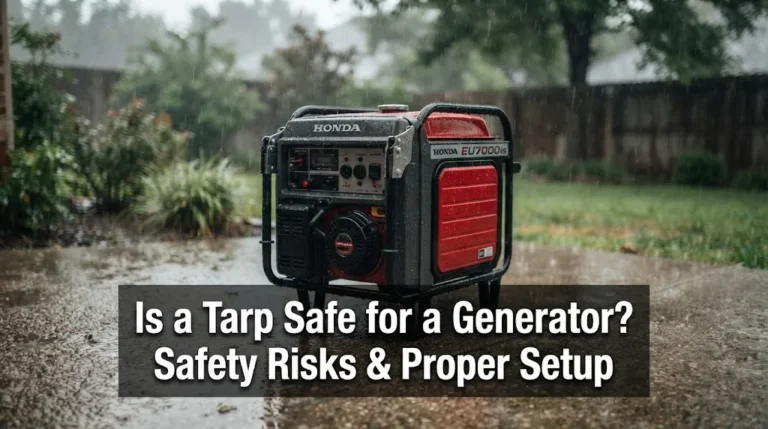
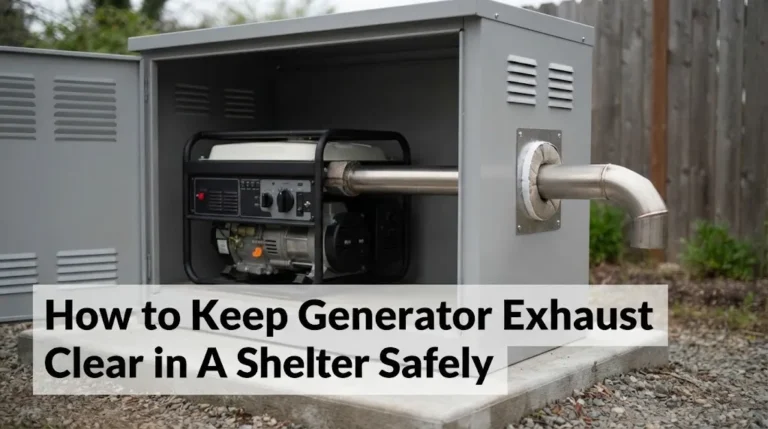
This is the safety decision. A storage cover is for a cool, switched-off generator. A running cover, such as a GenTent-style tent, is designed to stay in place while the generator runs, with space for exhaust, intake, and heat to escape. Never run a generator under a standard storage cover, and never use a running cover as a substitute for safe distance, carbon monoxide precautions, and the manufacturer’s instructions.
3. Material and Weather Protection
Look for a clear weather claim, sealed or covered seams where stated, and a material that resists tearing at campsites with branches, gravel, and repeated packing. A heavier fabric may last longer but can be harder to pack, so match thickness to how often you move camp. For rain-first buying, a waterproof generator cover guide can help you compare claims before you choose.
4. Portability and Pack-Down
At camp, a cover that is awkward to fold, carry, or stow will be left behind or left off. Check whether it folds flat, fits in your storage bin or vehicle, and can be put on quickly in rain. Smaller inverter covers usually win here, while large universal covers suit a base camp where the generator stays in one place.
5. Ventilation, Access, and Tie-Downs
Good access matters for fuel, oil checks, and controls without removing the whole cover in bad weather. Vents, mesh, or a running-cover frame help reduce trapped heat and moisture, but they must not compromise rain protection. Strong tie-downs, elastic hems, or clamps help in wind. Compare generator covers with ventilation if heat or moisture is your main concern.
GenTent Inverter Kit Running Cover (Standard, Tan) — Rain cover for running inverters
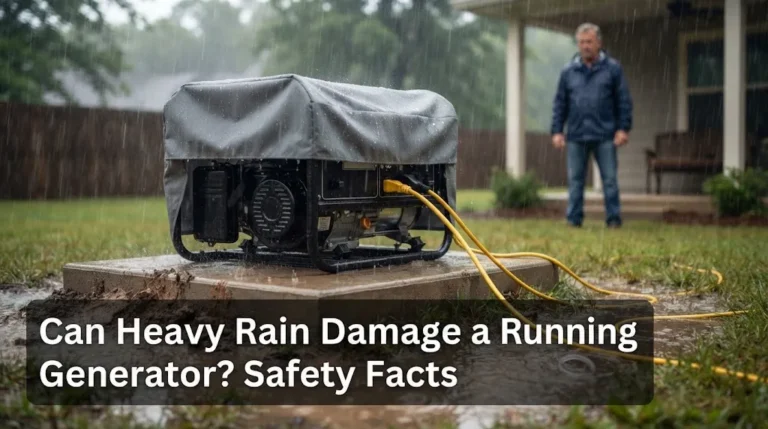
If rain arrives while your inverter is running, this is the type of cover that solves the real camp problem. It is designed as a running cover for fully encased inverter generators, with a tent-style shape that keeps rain off the unit while leaving room for operation. That design matters more at a campsite than a thicker storage cover, because you do not have to choose between power and protection. The trade-off is fit: it is made for encased inverters, so open-frame owners should choose a different running cover.
- Designed for running encased inverters
- Rain protection without removing cover
- Flame-retardant waterproof vinyl design
- Not for open-frame generators
- Needs correct inverter size match
4.9/5
4.8/5
5.0/5
Westinghouse WGenTent Portable Generator Running Cover — Tent for open-frame units
Open-frame generators are common at larger campsites, but most storage covers cannot stay on while they run. This Westinghouse running tent is the open-frame answer to that problem, giving the generator a rain shelter while it operates. It suits base-camp setups better than ultralight trips, because an open-frame generator and its tent take more space. Check the stated fit for your Westinghouse model and frame size before buying, since open-frame dimensions vary widely.
- Running cover for open frames
- Tent shape sheds rain
- Suits larger camp generators
- Bulkier than inverter covers
- Model fit must be checked
4.9/5
4.6/5
4.9/5
Storm Shield Severe Weather Inverter Generator Cover by GenTent — Heavy rain running cover
When the forecast is uncertain, a standard storage cover forces you to stop, uncover, and restart in the worst weather. Storm Shield is aimed at that scenario: a GenTent severe-weather cover for inverter generators from 2,000 to 8,500 starting watts. It keeps the focus on running protection rather than simple storage, which is why it ranks above most storage covers for campers who depend on power overnight. As with all running covers, confirm fit, clearance, and manufacturer guidance before use.
- Severe-weather running design
- Wide 2000 to 8500-watt range
- GenTent running-cover system
- Not a universal storage cover
- Needs careful fit check
5.0/5
4.6/5
4.8/5
Champion Power Equipment Weather-Resistant Storage Cover for 2000-Watt Inverter Generators — Simple small-inverter storage
Not every camper needs a running tent, and this Champion cover is honest about that job. It is a weather-resistant storage cover for 2000-watt inverter generators, so it protects a small, cool generator in transit, at camp, and back home. Its main advantage is simplicity: a brand-matched fit for a common small inverter, without the bulk of a tent system. The clear limit is that it is not a running cover, so it must come off before the generator starts.
- Simple small-inverter storage fit
- Compact for camp packing
- Weather-resistant storage design
- Storage only, not running
- Narrow 2000-watt fit range
4.7/5
4.9/5
4.5/5
WEN GNC235 Weatherproof Generator Cover — Cover for 2000 and 2350-watt inverters
Small inverter generators are the easiest camp power option to carry, and they deserve a cover that fits without excess fabric. The WEN GNC235 is made for WEN 2000 and 2350-watt inverter generators, so it avoids the loose, wind-catching fit of a large universal cover. It is a weatherproof storage cover, not a running tent, so its job is to protect the unit when it is off, in transit, or stored at camp. That narrow, brand-matched fit is both its strength and its limit.
- Matched 2000 and 2350-watt fit
- Compact small-inverter storage
- Weatherproof storage design
- Storage only, not running
- Narrow model range
4.6/5
4.8/5
4.5/5
Sun Joe Universal Weatherproof Generator Cover, Large — Universal cover for mid-size units
If you borrow, upgrade, or share generators, a brand-specific cover can become useless quickly. This Sun Joe large universal cover is designed for most generator brands from 3000 to 4500 watts, so it is a practical fallback for mid-size camp units. Universal fit is a compromise: it covers more models, but it may not hug one model as closely as a brand-matched cover. Measure first, and use tie-downs or an elastic hem to reduce wind flap at exposed sites.
- Fits most 3000 to 4500-watt units
- Useful across brands
- Weatherproof storage design
- Less precise than brand fit
- Storage only, not running
4.6/5
4.4/5
4.5/5
FIRMAN 1002 Medium Generator Cover — Cover for 3000 to 4800-watt units
A medium FIRMAN inverter is a popular camp size, and a cover made for that range is less likely to bunch, sag, or leave corners exposed. The FIRMAN 1002 is a medium cover for 3000 to 4800-watt inverter generators, so it suits campers who want a straightforward storage cover for a known model range. It does not turn a storage cover into a running cover, so the same safety rule applies: cool the generator, switch it off, and then cover it for storage or transit.
- Matched 3000 to 4800-watt range
- Straightforward medium storage cover
- Good camp transit protection
- Storage only, not running
- Not for small 2000-watt units
4.5/5
4.4/5
4.6/5
Honda Silver EU3000i Handi Generator Cover — Brand-matched storage cover
If you already own a Honda EU3000i, a universal cover is a guess you do not need to make. This silver Honda cover is made for that Handi generator shape, so it should sit more neatly than a generic slip cover and protect the unit during transport and storage. It is a storage cover, not a running tent, so it is best for campers who set up, run, and then cover the cooled generator. Its narrow fit is the point, but it also means it is not a good choice for other models.
- Brand-matched EU3000i fit
- Neat storage and transit cover
- Silver, camp-friendly finish
- Storage only, not running
- Single-model fit only
4.5/5
4.3/5
4.4/5
VEVOR Generator Cover, 34 x 26 x 21 Inch — Large universal waterproof cover
Base camp is different from a weekend tent trip: the generator is bigger, it stays put longer, and it faces more weather. This VEVOR cover, at 34 by 26 by 21 inches for most generators from 3500 to 12000 watts, is a large waterproof universal option for that job. Its size is the trade-off. It is too large for a small inverter, but for a larger camp generator it gives full coverage without a tight, seam-straining fit. It remains a storage cover, not a running cover.
- Large 34 by 26 by 21-inch size
- Waterproof universal design
- Suits larger camp generators
- Too large for small inverters
- Storage only, not running
4.6/5
4.2/5
4.4/5
Covers & All Outdoor Generator Cover, 26 x 20 x 20 Inch — Compact outdoor storage cover
When vehicle space is tight, a compact cover that actually fits is better than a large cover folded around a small generator. This Covers & All outdoor cover, at 26 by 20 by 20 inches, is sized for compact generators and simple outdoor storage. It is best for campers who want dust, rain, and sun protection during transit and storage, without carrying a tent system. Measure carefully, because its compact size is an advantage only if your generator fits inside it.
- Compact 26 by 20 by 20-inch size
- Easy camp packing
- Outdoor storage design
- Storage only, not running
- Too small for larger units
4.3/5
4.5/5
4.2/5
Top 3 Head-to-Head: GenTent Inverter Kit vs Westinghouse WGenTent vs Storm Shield
These three are the common final choices for campers who want to keep power running in rain, because all three are running covers rather than storage covers.
| Feature | #1 GenTent Inverter | #2 Westinghouse WGenTent | #3 Storm Shield |
|---|---|---|---|
| Weather protection | 4.9/5 | 4.9/5 | 5.0/5 — Best |
| Camping portability | 4.8/5 — Best | 4.6/5 | 4.6/5 |
| Fit and safe ventilation | 5.0/5 — Best | 4.9/5 | 4.8/5 |
| Choose if… | You run an encased inverter | You run an open-frame unit | Storm weather is your main risk |
Who These Generator Covers Are NOT For
These covers are not a substitute for a permanent enclosure, a shelter, or safe generator placement.
If you need a permanent home standby enclosure, a whole-house shelter, or a cover for a generator you never move, a camp-focused cover will be too small, too light, or the wrong design. Choose a permanent or home-specific solution instead.
Common Mistakes to Avoid
Most camp cover problems come from fit, timing, or wind, not from the fabric alone.
Frequently Asked Questions About Generator Covers for Camping
Can you run a generator with a cover on it while camping?
Yes, but only with a running cover designed for operation, such as a GenTent-style tent. A standard storage cover must be removed before the generator starts, because it can trap heat and exhaust. Always follow the cover and generator manufacturer guidance, keep safe clearance, and never run a generator in an enclosed space.
What size generator cover do I need for a camping inverter generator?
Measure your generator’s length, width, and height, including handles, wheels, and protruding parts. Then choose a cover whose stated range comfortably includes all three measurements. A brand-matched cover is usually the safest choice for a common inverter, while a universal cover needs a careful size check to avoid a loose, wind-catching fit.
Are waterproof generator covers safe in rain at a campsite?
A waterproof storage cover can protect a cool, switched-off generator in rain, but waterproofing alone does not make it safe to run under. For rain while running, use a running cover designed for that purpose, place the generator away from sleeping areas, and keep exhaust clear. Dry the cover before packing to reduce moisture damage.
How do I keep a generator cover from blowing away while camping?
Use the cover’s tie-downs, elastic hem, clamps, or straps, and check them after gusts and overnight. A closer fit helps, as does placing the generator in a sheltered spot that still allows safe exhaust clearance. Avoid adding loose tarps or ropes that could block vents, trap heat, or create a tripping hazard around the unit.
Should I cover my generator at night while camping?
Cover a cool, switched-off generator at night to protect it from dew, dust, and rain, but do not cover a running generator with a storage cover. If you need overnight power in rain, use a running cover designed for operation, keep the generator outside and away from tents, and follow carbon monoxide safety guidance for distance and alarms.
How do I store a generator cover when packing up camp?
Let the cover dry, shake off dirt and leaves, fold it flat, and store it separately from fuel and hot parts. A dry, clean cover packs smaller, lasts longer, and avoids musty smells on the next trip. If the cover is damaged, torn, or no longer fits tightly, replace it before relying on it in rain.
Our Final Verdict
For most campers, the deciding factor is not thickness but use: running covers for rain while working, and storage covers for cool, packed units. Start with your generator type, then fit, then weather protection.

Hi, I’m Michael Turner. I own a generator workshop in the United States and founded HomeGeneratorBlog to share practical, hands-on guidance about generator installation, maintenance, troubleshooting, safety, and backup power solutions. My goal is to help homeowners make smarter, more confident decisions through clear and reliable information