Can an Inverter Generator Run a Washing Machine? Sizing, Wattage & Safe Laundry Setup
Quick Answer
Yes, an inverter generator can run most washing machines. Most washers need 500 to 1,200 running watts and 1,200 to 2,200 starting watts, so a 3,000-watt inverter generator is a safe pick for most homes. Check your washer label first, then match it to a generator sized for your full laundry load.
The Short Version
- Best size: A 3,000-watt inverter generator handles most top-load and front-load washers with room to spare.
- Small washers: A compact or portable washer can run on a 2,000-watt inverter generator if nothing else is plugged in.
- Heated wash: A washer with a built-in water heater can draw far more power than a cold-wash model.
- Motor surge: The motor needs a short burst of extra power each time it starts a spin cycle.
- Safe hookup: Use a short, heavy-duty outdoor extension cord and keep the generator outside.
Do This First
- Read the watts on your washer label, add 25% headroom, and run a cold wash for your first test load.
I have run laundry through outages, in an RV, and at a cabin with a small inverter generator. Clean clothes feel like a small win when the power is out.
This guide covers real washer wattage, the right inverter generator size, safe setup, and runtime. You will know exactly what to check before you plug in.
In This Guide
- How Much Power Does a Washing Machine Actually Use?
- What Size Inverter Generator Do You Need for a Washing Machine?
- Can a 2000-Watt Inverter Generator Run a Washing Machine?
- Top-Load vs Front-Load: Which Washer Is Easier to Run?
- How to Run a Washing Machine on an Inverter Generator Safely
- How Long Can You Run a Washer on One Tank of Fuel?
- What Else Can You Run With Your Washing Machine?
- Common Problems When a Washer Trips Your Generator
- Is an Inverter Generator the Best Choice for Laundry Backup?
- Frequently Asked Questions
How Much Power Does a Washing Machine Actually Use?
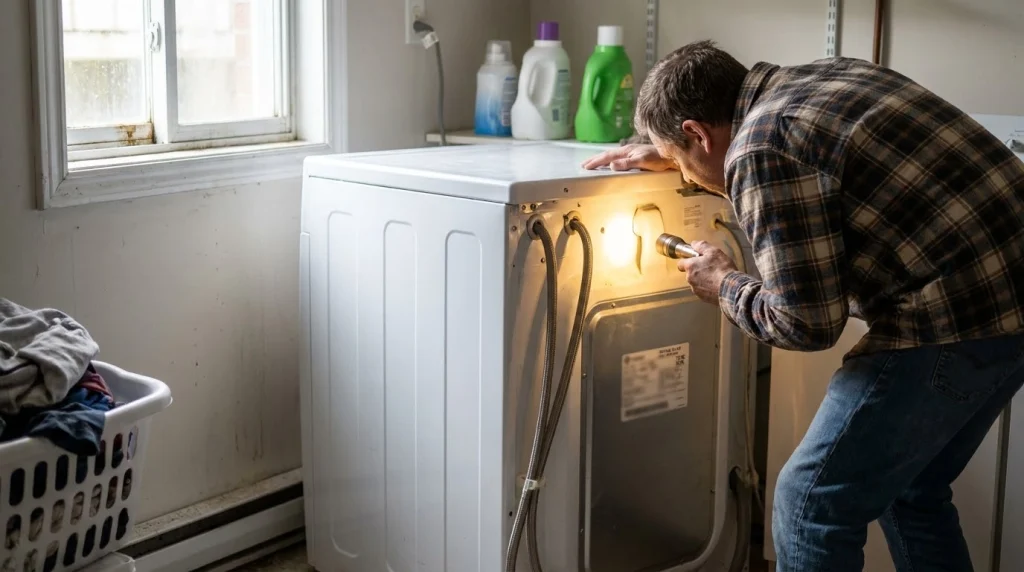
A standard home washing machine uses about 500 to 1,200 running watts. The exact number depends on the motor, the cycle, and whether it heats its own water.
Starting watts are higher than running watts. The motor draws a short surge when it kicks on, often 1,200 to 2,200 watts for a full-size washer.
What Is an Inverter Generator?
An inverter generator is a portable power source that makes clean, stable electricity. It converts raw power to DC, then back to smooth AC power.
That clean sine wave matters for a modern washer. Its control board and sensors are sensitive to rough power, so a stable supply helps it run without errors.
Washing Machine Wattage by Type
| Washer Type | Running Watts | Starting Watts | Best Generator Size |
|---|---|---|---|
| Compact / portable washer | 300–500 | 600–1,000 | 2,000 watts |
| Standard top-load washer | 500–800 | 1,200–1,800 | 2,500–3,000 watts |
| Standard front-load washer | 400–1,000 | 1,000–2,000 | 3,000 watts |
| Washer with built-in heater | 1,000–2,000 | 2,000–2,500 | 3,500 watts or more |
| Washer-dryer combo | 1,200–2,500 | 2,000–3,000 | 4,000 watts or more |
These are typical ranges, not a promise for your model. Check the label on the back of your washer or in your manual before you size a generator.
If the label lists amps instead of watts, multiply amps by volts. A 5-amp washer on 120 volts uses about 600 watts.
Section takeaway: Most washers need 500 to 1,200 running watts, but the starting surge is what decides your generator size.
What Size Inverter Generator Do You Need for a Washing Machine?
For one standard washer and nothing else, a 3,000-watt inverter generator is the sweet spot. It covers the starting surge and leaves headroom for the spin cycle.
A 2,000-watt unit can work for a small or efficient washer. It gets tight once you add lights, a fridge, or a phone charger to the same load.
How Do You Calculate the Generator Wattage You Need?
Start with the washer’s running watts from its label. Then add the highest starting watts for any motor that starts while the washer is running.
Add a 20 to 25% safety margin on top of that total. That margin keeps the generator from running at full load for a whole wash cycle.
- Washer running watts: 700 watts
- Washer starting surge: 1,500 watts
- Other loads running at the same time: 200 watts
- Total to cover: 1,700 watts at the peak moment
- With 25% headroom: about 2,125 watts minimum
That math shows why a 2,000-watt generator can feel borderline. A 3,000-watt model gives you a calmer, quieter run and room for a few small extras.
If you want a full walk-through of the same math for a fridge, lights, and other loads, use this guide to calculate the generator wattage you need before you buy.
Section takeaway: Size for starting watts plus a 25% margin, and a 3,000-watt inverter generator is the safest all-round choice for laundry.
Can a 2000-Watt Inverter Generator Run a Washing Machine?
Yes, a 2,000-watt inverter generator can run many washing machines. It works best with a compact washer, a small top-load model, or an efficient front-load washer on a cold cycle.
It will struggle with a large washer, a heated wash, or a washer-dryer combo. The spin cycle is the moment most 2,000-watt units trip.
What Is Starting Wattage in an Inverter Generator?
Starting watts, also called surge watts, are the short burst a motor needs to start. Running watts are the steady power it needs once it is moving.
A washer motor can draw two to three times its running watts for a few seconds. That is why the label on the generator matters more than the washer’s average draw.
Learn the full difference in this guide to starting wattage in an inverter generator. It also explains why surge ratings are time-limited.
How to Make a 2000-Watt Generator Work
- Run the washer alone, with no fridge or heater on the same generator.
- Use a cold or warm wash, not a hot wash with a built-in heater.
- Turn off eco mode for the first test, so the engine can respond to the surge.
- Use a short, heavy-duty cord, not a long, thin extension cord.
- Let the generator warm up for two to three minutes before you start the washer.
I once ran a small top-load washer on a 2,000-watt inverter generator during a storm outage. It finished the wash, but the spin cycle made the engine note climb hard.
That load worked because nothing else was plugged in. It would not have worked with a fridge kicking on at the same time.
Section takeaway: A 2,000-watt inverter generator can run a small washer alone, but a 3,000-watt model is far more forgiving.
Top-Load vs Front-Load: Which Washer Is Easier to Run?
Front-load washers are often easier on a generator. They use less water, spin faster, and many models draw less steady power than an older top-load washer.
Top-load washers with an agitator can draw more power during the wash. High-efficiency top-load models without an agitator sit closer to front-load models.
The Heater Changes Everything
Some front-load washers heat their own water. That heater can add 1,000 watts or more, and it can push a 2,000-watt generator over its limit.
Use cold water from your tap when you are on generator power. You save watts, and the wash still cleans well for most everyday loads.
Washer-Dryer Combos Need More Power
A washer-dryer combo sounds handy during an outage. Its dryer heater is the problem, and it can draw more than a small inverter generator can give.
Wash on generator power, then line-dry or air-dry the clothes. That split keeps your laundry moving without overloading the generator.
Section takeaway: Front-load washers are often gentler on generator power, unless a built-in heater is running.
How to Run a Washing Machine on an Inverter Generator Safely
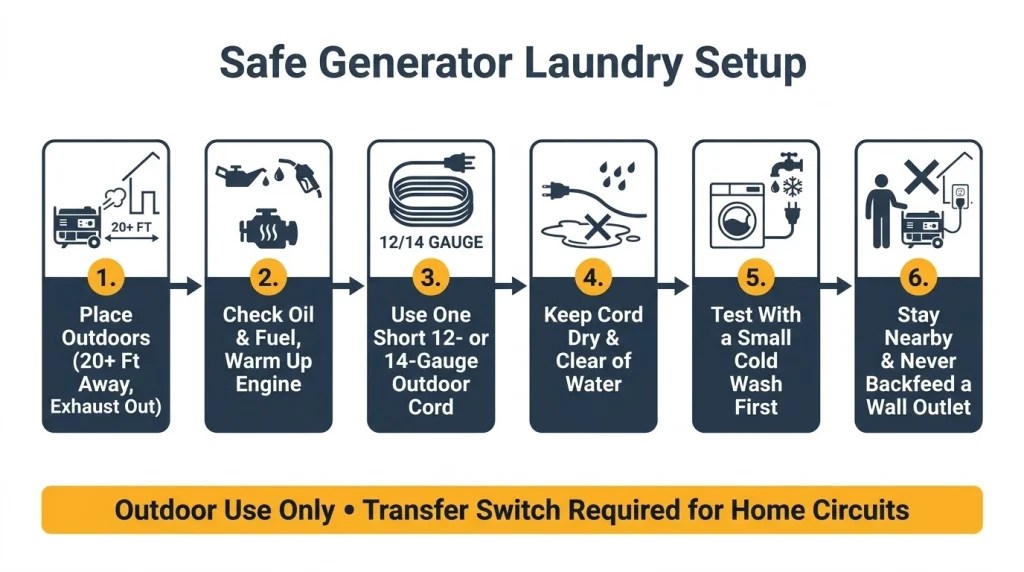
Safe setup starts outside. Run the generator outdoors, at least 20 feet from your home, with the exhaust pointed away from windows and doors.
Carbon monoxide is colorless and odorless. The CDC warns that generator exhaust can kill in minutes indoors, so never run a generator in a garage, even with the door open.
Safety note: run generators outdoors and well away from windows, doors, and vents; use a transfer switch or interlock installed by a licensed electrician for any hardwired home hookup; check your owner’s manual before use.
Step-by-Step Safe Setup
- Place the generator on dry, level ground outside, away from the house.
- Check the oil and fuel level, then start the generator and let it warm up.
- Plug the washer into a short, heavy-duty outdoor extension cord rated for the load.
- Keep the cord dry and clear of walkways, water, and the washer drain hose.
- Start a cold wash with a small load first, then check for overload warnings.
- Stay nearby during the first cycle and listen for strain or surging.
Never plug a generator into a wall outlet. That backfeed can hurt utility workers and damage your home wiring, and the CPSC lists it as a serious generator safety risk.
If you want the washer on a house circuit, use a transfer switch or interlock. Have a licensed electrician install it before the next outage, not during one.
Extension Cord Rules for a Washer
- Use a 12-gauge or 14-gauge outdoor cord, as short as you can manage.
- Do not daisy-chain two cords together for extra reach.
- Check the cord for cuts, heat, or a loose plug before each use.
- Keep plugs off wet ground and out of puddles near the washer drain.
Section takeaway: Keep the generator outside, use one short heavy-duty cord, and never backfeed a wall outlet.
How Long Can You Run a Washer on One Tank of Fuel?
A typical wash cycle takes 30 to 60 minutes. A 3,000-watt inverter generator can often run three to five loads on one tank, depending on tank size and load.
Eco mode helps, but it can also slow the engine response to a surge. Turn eco mode off for the spin cycle if your generator hesitates or trips.
Fuel Use in Real Terms
A washer is not a steady load. It draws more during agitation and spin, and less during fill and soak, so fuel use varies through the cycle.
A small 2,000-watt generator with a one-gallon tank may run for four to six hours at light load. That is often enough for several wash loads in a day.
Check your spec sheet for runtime at 25% and 50% load. Those two numbers tell you more than a single headline runtime claim.
How to Stretch Fuel During an Outage
- Wash full loads, not half loads, to cut the number of cycles.
- Use cold water and a short cycle for everyday clothes.
- Turn the generator off between loads instead of letting it idle.
- Keep fresh fuel on hand and use stabilizer if fuel will sit for weeks.
Learn how a larger unit changes that math in this guide to how much power a 3000-watt inverter generator provides. It helps you plan loads beyond laundry too.
Section takeaway: One tank can cover several wash loads, especially with cold water, full loads, and the generator off between cycles.
What Else Can You Run With Your Washing Machine?

On a 3,000-watt inverter generator, you can often run a washer plus a few small loads. Think LED lights, phone chargers, and a laptop, not a dryer or space heater.
A fridge is the tricky one. Its compressor can start at the same moment as the washer spin, and that combined surge can trip the overload breaker.
| Load With Washer | Typical Running Watts | Safe on 3,000W? |
|---|---|---|
| LED lights + phone chargers | 50–100 | Yes |
| Laptop + Wi-Fi router | 100–150 | Yes |
| Fridge, steady running | 150–200 | Often, with care |
| Electric dryer | 2,000–5,000 | No |
| Space heater | 1,000–1,500 | No, run it alone |
| Microwave | 1,000–1,500 | No, run it alone |
The safest plan is simple: run the washer alone, then switch to the fridge or microwave. You lose a few minutes, but you avoid a tripped breaker mid-cycle.
If you need more headroom, parallel capability can help. Two matching inverter generators linked with a parallel kit can share the load, as covered in this guide to the best portable generator with parallel capability.
Section takeaway: Small electronics are fine with a washer, but run big heating or motor loads one at a time.
Common Problems When a Washer Trips Your Generator
The most common problem is an overload at the spin cycle. The motor surge plus another load starting at the same time can push the generator past its limit.
The washer may stop, show an error code, or restart the cycle. The generator may shut down or show an overload light.
Why Does My Generator Trip During Spin?
Spin is the hardest part of the cycle. The motor speeds up fast, and the load changes as water leaves the drum.
Eco mode can make it worse. The engine is running slow when the surge hits, so it cannot ramp up fast enough.
- Turn off eco mode before the spin cycle starts.
- Unplug other loads before you start the washer.
- Use a smaller load and a lower spin speed if your washer allows it.
- Use a shorter cord and check for a hot plug or loose connection.
Washer Shows an Error Code on Generator Power
Modern washers watch voltage and frequency closely. A dip during a surge can trigger a fault, even if the generator does not trip.
Clean sine wave output from an inverter generator helps here. A conventional open-frame generator can cause more errors on sensitive control boards.
If errors keep coming back, try a larger generator or a shorter cord. Check the washer manual for its power requirements before you test again.
Section takeaway: Most trips happen at spin, and turning off eco mode plus running the washer alone fixes most of them.
Is an Inverter Generator the Best Choice for Laundry Backup?
Yes, for most homes an inverter generator is the best portable choice for laundry. It gives clean power for the washer’s electronics, runs quieter than an open-frame model, and sips fuel at light load.
A conventional generator can run a washer too. It is louder, less fuel-efficient at part load, and rougher on sensitive control boards.
When to Choose a Larger Generator Instead
Choose a larger inverter generator if you want laundry plus a fridge, lights, and a furnace blower at the same time. A 4,000- to 5,000-watt model gives you that room.
A dual-fuel model can help during a long outage. Propane stores longer than gasoline, and you can switch fuels if one runs low.
The U.S. Department of Energy also notes that right-sizing backup power saves fuel and cuts wear. A generator running near its limit all day is not a good long-term plan.
For a deeper comparison, read this guide to the difference between running watts and starting watts. It is the key to sizing any appliance, not just a washer.
Section takeaway: An inverter generator is the best portable pick for laundry, and a larger model is worth it if you want whole-home backup at the same time.
Frequently Asked Questions
Can an inverter generator run a washing machine and dryer at the same time?
No, not on a typical portable inverter generator. An electric dryer alone can draw 2,000 to 5,000 watts, so wash first, then line-dry or use a gas dryer if you have one.
What size inverter generator do I need for a front-load washer?
A 3,000-watt inverter generator is a safe pick for most front-load washers. Use a cold wash if your model has a built-in heater, and check the label for exact watts.
Can a 2000-watt inverter generator run a washing machine?
Yes, for a small or efficient washer run alone on a cold cycle. It may trip during spin on a large washer, a heated wash, or a washer-dryer combo.
Is it safe to plug a washing machine into a generator?
Yes, if the generator is outside and you use a short, heavy-duty outdoor cord. Never plug a generator into a wall outlet, and never run it in a garage or indoors.
How many watts does a washing machine use?
Most washers use 500 to 1,200 running watts and 1,200 to 2,200 starting watts. Compact washers use less, while models with a built-in heater use more.
Can I run my washer on eco mode?
You can try eco mode, but turn it off if the generator strains or trips during spin. Eco mode slows the engine, and a fast surge needs a fast response.
The Bottom Line on Laundry and Inverter Generators
Yes, an inverter generator can run a washing machine in 2026. A 3,000-watt model is the safest pick for most homes, while a 2,000-watt model works for a small washer run alone.
Check your washer label, use cold water, and run the washer alone for the first load. Keep the generator outside, use a short heavy-duty cord, and you can keep laundry moving through an outage.
The EPA also reminds owners to follow local rules for generator use and fuel storage. A little planning before the storm beats a rushed setup during one.

Hi, I’m Michael Turner. I own a generator workshop in the United States and founded HomeGeneratorBlog to share practical, hands-on guidance about generator installation, maintenance, troubleshooting, safety, and backup power solutions. My goal is to help homeowners make smarter, more confident decisions through clear and reliable information