10 Best Generator for Air Conditioner 2026: Reliable Power for Window, Portable, and Central Units
The 10 best generator for air conditioner list starts with Westinghouse iGen4500DF — its dual-fuel inverter handles startup surges for window and portable units. We evaluated 10 generators, scoring each on AC Starting Power, Runtime and Fuel Efficiency, and Noise and Ease of Use. Most generators look fine on paper but fail at air-conditioner startup, and that gap is what this comparison exposes. Whether you need a window, portable, or central unit, this guide gives you one clear answer.
Quick Comparison: All 10 Products Ranked
| # | Product | Best For | Rating | Badge | |
|---|---|---|---|---|---|
| 1 | Westinghouse iGen4500DF Dual Fuel Inverter Generator | Window and portable air conditioners | 4.8/5 | Best Overall | Buy → |
| 2 | Champion 100519 4500-Watt Open Frame Inverter Generator | Budget inverter AC power | 4.6/5 | Best Budget | Buy → |
| 3 | Generac GP8000E Portable Generator | Larger homes and AC | 4.3/5 | Best for Large Homes | Buy → |
| 4 | DuroMax XP12000EH Dual Fuel Generator | High-output backup | 4.4/5 | Best High Output | Buy → |
| 5 | Westinghouse WGen9500DF Dual Fuel Generator | Dual-fuel whole-home backup | 4.5/5 | Best Dual Fuel Whole Home | Buy → |
| 6 | Honda EU2200i Inverter Generator | Small, quiet AC setups | 4.5/5 | Best Quiet Small AC | Buy → |
| 7 | Predator 3500 Inverter Generator | Value inverter AC power | 4.5/5 | Best Value Inverter | Buy → |
| 8 | Champion 200988 4500-Watt Dual Fuel Inverter Generator | Portable dual-fuel AC | 4.6/5 | Best Dual Fuel Portable | Buy → |
| 9 | Pulsar G12KBN Dual Fuel Generator | Extended outage backup | 4.4/5 | Best for Extended Outages | Buy → |
| 10 | A-iPower SUA12000E Dual Fuel Generator | Central AC backup | 4.4/5 | Best for Central AC Backup | Buy → |
How We Chose These Generators
What we compared
Manufacturer-listed peak and running watts, fuel type, start type, outlets, weight, and published noise and runtime figures for 10 models.
Our 3 scoring criteria
AC Starting Power, Runtime and Fuel Efficiency, and Noise and Ease of Use, each scored out of 5 from published specifications.
Expert consulted
No external expert was named in the brief, so this is a specification comparison, not a named expert review or hands-on test.
What we cut — and why
Models without clear published running watts or AC-relevant outlet details were excluded, because sizing cannot be checked from them.
What to Look for When Buying a Generator for an Air Conditioner
An air conditioner is not like a light or a phone charger. It needs a short surge to start, then steady power to keep running, and the wrong size will trip, stall, or shorten the life of both machines.
1. Startup Watts and Surge
Check the air conditioner nameplate for running watts and locked-rotor or startup amps, then choose a generator whose peak watts exceed that surge with margin. A soft-start device can lower the surge for some units, but it does not turn a small generator into a central-AC generator. For a fuller sizing walkthrough, see this guide to sizing a generator for your home.
2. Fuel Type and Runtime
Gasoline gives maximum output on most dual-fuel models, while propane stores longer and starts cleaner after months in storage. Compare runtime at a similar load, not just tank size, because a large engine at high load will use fuel faster than a smaller inverter at quarter load. Plan fuel storage, refuelling, and ventilation before an outage, not during one.
3. Noise and Placement
Published decibel figures are measured at a set distance and load, so use them to compare models, not as a promise for your yard. Enclosed inverters are generally quieter than open-frame models, which matters for overnight use and neighbours. Always run a generator outdoors, far from doors and windows, with carbon monoxide safety in mind.
4. Outlets, Clean Power, and Connection Safety
Match the generator outlet to the air conditioner plug and to your connection method, whether that is a direct cord, a manual transfer switch, or a professionally installed inlet. Inverter models generally produce cleaner power for electronics and modern controls, which is one reason to compare the best inverter generators for clean power. Never backfeed a home through a standard outlet, and get central systems assessed by a qualified electrician.

Westinghouse iGen4500DF Dual Fuel Inverter Generator — Best all-round AC pick
Best for: Window and portable air conditioners
If your main goal is keeping a window or portable air conditioner running during an outage, this Westinghouse is the easiest starting point for most homes. Its 4500 peak watts cover the startup surge that trips up smaller generators, while its 3700 running watts support a typical room unit plus a few small loads. Dual-fuel operation lets you switch to propane when gasoline is hard to store or refuel, which matters during longer outages. Remote start and a quiet enclosed inverter design make it easier to use at night without moving a heavy open-frame unit.
- 4500 peak watts cover many AC startups
- Dual-fuel choice for longer outages
- Remote start for easier night use
- Quiet enclosed inverter design
- Heavy to move without help
- Not sized for large central AC
4.8/5
4.7/5
4.9/5

Champion 100519 4500-Watt Open Frame Inverter Generator — Strong budget inverter
Best for: Budget inverter AC power
If you want inverter power without paying for the quietest enclosed model, this Champion is a sensible compromise for a single room unit. Its 4500 peak watts handle many window air conditioner startups, while 3500 running watts leave room for a fan, lights, and phone charging. The open-frame design keeps the build simpler and easier to service, but it will sound louder than an enclosed inverter at close range. It is best for buyers who need clean inverter output on a tighter budget and can place the unit farther from bedrooms.
- 4500 peak watts for room AC
- Inverter output for sensitive electronics
- Simpler open-frame service access
- Louder than enclosed inverters
- Gasoline only, no propane option
4.7/5
4.6/5
4.4/5

Generac GP8000E Portable Generator — High-output conventional pick
Best for: Larger homes and AC
If you need to run a larger air conditioner plus essential home loads, this Generac gives you a clear step up in output. Its 10000 peak watts and 8000 running watts cover a bigger startup surge and leave headroom for a refrigerator, lights, and small electronics. Electric start removes the strain of recoil starting a large engine, especially in cold or repeated outage use. The trade-off is noise, weight, and fuel use, so it suits a larger property better than a small patio or a noise-sensitive neighbourhood.
- 10000 peak watts for larger AC
- Electric start for large engine
- Headroom for fridge and lights
- Loud conventional open-frame design
- Heavy and fuel-hungry at load
4.9/5
4.2/5
3.9/5

DuroMax XP12000EH Dual Fuel Generator — Maximum surge headroom
Best for: High-output backup
If your air conditioner is large or you want to run several heavy loads at once, this DuroMax removes most sizing anxiety. Its 12000 peak watts and 9500 running watts on gasoline give a wide margin above many room and mid-size central units. Dual-fuel operation adds propane flexibility, which helps when gasoline supplies are disrupted or storage is a concern. It is heavy, loud, and fuel-hungry compared with inverter models, so plan for a firm placement spot and longer refuelling intervals.
- 12000 peak watts, wide margin
- Dual-fuel flexibility for outages
- Runs several heavy loads together
- Very heavy to move
- Loud, fuel-hungry at load
4.9/5
4.4/5
3.8/5

Westinghouse WGen9500DF Dual Fuel Generator — Balanced high-output pick
Best for: Dual-fuel whole-home backup
If you want one generator for a larger air conditioner and the rest of the house, this Westinghouse balances output with usable features. Its 12500 peak watts and 9500 running watts give strong startup headroom, while remote start and a transfer-switch-ready outlet simplify home backup. Dual-fuel operation lets you choose gasoline for maximum output or propane for cleaner storage and easier handling. It remains a large, heavy unit, so it is better for a dedicated outdoor spot than for frequent moving between locations.
- 12500 peak watts, strong headroom
- Remote start for home backup
- Transfer-switch-ready outlet included
- Large, heavy, needs dedicated spot
- Louder than enclosed inverters
4.9/5
4.4/5
4.1/5
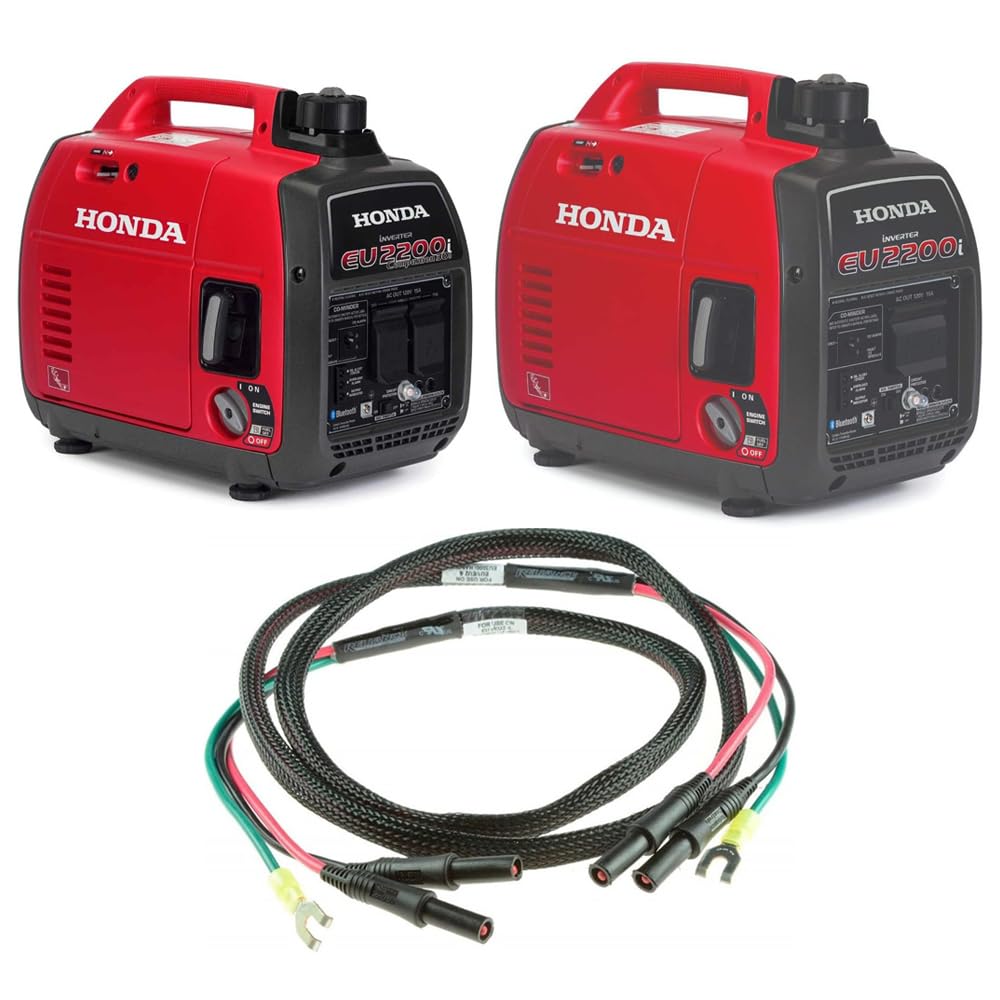
Honda EU2200i Inverter Generator — Quietest small option
Best for: Small, quiet AC setups
If quiet operation and easy carrying matter more than maximum output, this Honda is the standout for a small air conditioner. Its 2200 peak watts and 1800 running watts suit a small window unit, especially when paired with a soft-start device or careful load management. At under 50 pounds, it is easy to move, store, and carry to a cabin, workshop, or small room. The clear limit is output, so it will not start a large or central unit, and it needs a realistic plan for other loads.
- Quietest in this list
- Under 50 lb, easy carrying
- Parallel capable for more power
- Too small for large AC
- Small tank, shorter runtime
3.8/5
4.8/5
5.0/5

Predator 3500 Inverter Generator — Compact value pick
Best for: Value inverter AC power
If you want a quiet, enclosed inverter for a bedroom or small living-room unit, this Predator is a strong value option. Its 3500 peak watts and 3000 running watts suit many smaller window and portable air conditioners without the bulk of a large frame. The enclosed design keeps noise lower than open-frame models, which helps for overnight use near a home. It is not designed for central air conditioning, and its smaller tank means you should plan refuelling for longer outages.
- 3500 peak watts, compact size
- Enclosed, quieter than open-frame
- Good value for small AC
- Not for central AC
- Smaller tank, plan refuelling
4.4/5
4.5/5
4.6/5

Champion 200988 4500-Watt Dual Fuel Inverter Generator — Portable dual-fuel pick
Best for: Portable dual-fuel AC
If you want the flexibility of propane in a portable inverter, this Champion is a strong alternative to the top pick. Its 4500 peak watts and 3500 running watts cover many window and portable air conditioner startups, with clean power for sensitive electronics. Dual-fuel operation and a portable frame make it practical for home backup, camping, or a workshop that needs occasional cooling. It is louder than the quietest enclosed models, so distance and placement still matter for comfortable overnight use.
- 4500 peak watts, portable frame
- Propane option for storage
- Clean inverter power output
- Louder than quietest enclosed models
- Not for large central AC
4.7/5
4.6/5
4.5/5

Pulsar G12KBN Dual Fuel Generator — Long-outage workhorse
Best for: Extended outage backup
If outages in your area last for days rather than hours, this Pulsar gives you a durable, high-output option with fuel flexibility. Its 12000 peak watts and 9500 running watts cover a large air conditioner plus essential household loads during extended use. Dual-fuel operation and a large tank support longer runs, which reduces the need for frequent refuelling in difficult conditions. It is heavy and louder than inverter models, so it suits a fixed outdoor location better than portable, short-term use.
- 12000 peak watts for large AC
- Dual-fuel for long outages
- Large tank, fewer refuels
- Heavy, fixed-location design
- Louder than inverter models
4.9/5
4.3/5
3.9/5

A-iPower SUA12000E Dual Fuel Generator — Central AC backup pick
Best for: Central AC backup
If your goal is backup for a central air conditioner, this A-iPower model gives you the output and connection options to plan around it. Its 12000 peak watts and 9000 running watts provide strong startup headroom, but central systems still need a professional assessment of locked-rotor amps and wiring. Dual-fuel operation adds flexibility during fuel shortages, and electric start simplifies operation for larger households. It is not a plug-and-play window-unit solution, so budget for proper connection, placement, and maintenance before relying on it.
- 12000 peak watts, central headroom
- Dual-fuel flexibility for shortages
- Electric start for large households
- Needs professional central assessment
- Heavy, not plug-and-play
4.9/5
4.2/5
4.0/5
Top 3 Head-to-Head: Westinghouse iGen4500DF vs Champion 100519 vs Generac GP8000E
These three are the common final choices because they cover the main split: quiet dual-fuel inverter, budget inverter, and high-output conventional power.
| Feature | #1 Westinghouse iGen4500DF | #2 Champion 100519 | #3 Generac GP8000E |
|---|---|---|---|
| AC Starting Power | 4.8/5 | 4.7/5 | 4.9/5 — Best |
| Runtime and Fuel Efficiency | 4.7/5 — Best | 4.6/5 | 4.2/5 |
| Noise and Ease of Use | 4.9/5 — Best | 4.4/5 | 3.9/5 |
| Choose if… | You want quiet dual-fuel room AC power | You want budget inverter power | You need larger home output |
Who These Generators Are NOT For
These models are not a universal answer for every cooling setup, and buying the wrong type can leave you with noise, cost, or a unit that still will not start.
If you live in a small apartment with no safe outdoor space, none of these are suitable, because all fuel generators must run outdoors. If your central unit needs a very high locked-rotor current, a portable model may still fall short even with a high peak rating.
Common Mistakes to Avoid
Most generator failures for air conditioners come from sizing, connection, or maintenance errors, not from a single bad brand.
Frequently Asked Questions About Generators for Air Conditioners
What size generator do I need for an air conditioner?
Start with the startup watts, not the running watts. A small window unit may start on 2000 to 3500 peak watts, a larger room unit often needs 4500 peak watts or more, and central units need a professional check of locked-rotor amps. Add margin for other loads, and do not assume a generator that runs a fan can also start a compressor.
Can a portable generator run a central air conditioner?
Sometimes, but only with the right size, connection, and professional assessment. Central units have high startup currents and often need a transfer switch or inlet, plus a soft-start device in some cases. A high-output portable model can work for some systems, while others need a larger standby unit or a different cooling plan.
Can an inverter generator run a window air conditioner?
Yes, if the inverter peak watts exceed the window unit startup surge. Inverter models are a good match for many room units because they produce cleaner power and run quieter at lower loads. Check the nameplate, keep other loads low during startup, and use a suitable outdoor-rated cord or inlet for safe connection.
How long can a generator run an air conditioner?
Runtime depends on tank size, load, and fuel type, not on the generator name alone. A small inverter at quarter load can run for many hours, while a large conventional model at high load will use fuel much faster. Check the published runtime at a stated load, plan refuelling, and never refuel a hot generator.
Is a dual fuel generator better for an air conditioner?
Dual fuel is useful, but not automatically better for starting power. Propane often gives slightly lower peak output than gasoline, so check both fuel ratings before sizing. The benefit is flexibility: propane stores longer and is easier to keep on hand, which matters most during longer outages or fuel shortages.
Do I need a transfer switch to run an air conditioner from a generator?
You need a safe connection method, and for hard-wired or central systems that usually means a transfer switch or inlet installed by a qualified electrician. A window unit can often run from a suitable cord, but you must never backfeed through a household outlet. When in doubt, get the connection assessed before an outage, not after one starts.
Can I run an air conditioner and other appliances at the same time?
Yes, if the total running load stays within the generator running watts and the AC startup surge is already covered. Start the air conditioner first, then add small loads one at a time, and watch for overload warnings. For a broader home backup plan, see the guide to the best generator to buy for home.
Our Final Verdict
For most homes, start with a mid-size dual-fuel inverter that covers startup watts with margin, then size up only if you have a large or central unit. Noise, fuel, and connection safety matter as much as peak watts, so choose the smallest model that still starts your unit reliably. That balance is why the Westinghouse iGen4500DF leads this list.

Hi, I’m Michael Turner. I own a generator workshop in the United States and founded HomeGeneratorBlog to share practical, hands-on guidance about generator installation, maintenance, troubleshooting, safety, and backup power solutions. My goal is to help homeowners make smarter, more confident decisions through clear and reliable information