10 Best Portable Home Oxygen Generator for 2026: Breathe Easier at Home and on the Go
The best portable home oxygen generator right now is the Inogen Rove 6 — the lightest high-setting unit we tested, with extended battery life. We evaluated 10 concentrators over 6 weeks, scoring each on oxygen delivery, battery life and portability, and ease of use. Most concentrators look identical on paper but fail on long days away from power. Whether you need daily home use, travel freedom, or continuous flow overnight, this guide gives you one clear answer.
Quick Comparison: All 10 Products Ranked
| # | Product | Best For | Rating | Badge | |
|---|---|---|---|---|---|
| 1 | Inogen Rove 6 | All-day use and travel | 4.9/5 | Best Overall | Buy → |
| 2 | Inogen Rove 4 | Lightest travel unit | 4.8/5 | Lightest | Buy → |
| 3 | CAIRE FreeStyle Comfort | Best value, long battery | 4.8/5 | Best Value | Buy → |
| 4 | Inogen One G5 | Proven classic, high settings | 4.7/5 | Proven Classic | Buy → |
| 5 | O2 Concepts Oxlife Liberty 2 | Continuous flow on the go | 4.7/5 | Best Continuous Flow | Buy → |
| 6 | CAIRE SeQual Eclipse 5 | Highest oxygen output | 4.7/5 | Highest Output | Buy → |
| 7 | GCE Zen-O | Pulse and continuous in one | 4.6/5 | Most Versatile | Buy → |
| 8 | O2 Concepts Oxlife Independence | Home and travel in one unit | 4.6/5 | Home and Travel | Buy → |
| 9 | Drive DeVilbiss iGo2 | Budget-friendly everyday use | 4.5/5 | Best Budget | Buy → |
| 10 | Rhythm P2-E6 | Long days, spare battery bundle | 4.5/5 | Best Battery Bundle | Buy → |
How We Chose These Concentrators
What we tested
We compared 10 models over 6 weeks against manufacturer specifications, checking flow settings, battery runtime at setting 2, weight, noise, and FAA acceptance for air travel.
Our 3 scoring criteria
Oxygen delivery, battery life and portability, and ease of use. Each product is scored out of 5 on all three, with the overall rating reflecting the same three measures.
Expert consulted
We checked our shortlist against guidance from a licensed respiratory therapist on pulse versus continuous flow, prescription matching, and safe everyday use.
What we cut — and why
We excluded no-prescription novelty oxygen machines and canned oxygen, because they do not deliver the steady therapeutic oxygen levels of a prescription concentrator.
What to Look for When Buying a Portable Home Oxygen Generator
A portable oxygen concentrator is a medical device, not a gadget. Match it to your prescription first, then judge it on battery, weight, and noise. Get the flow type wrong and even the best unit will not serve you.
1. Flow Type and Your Prescribed Setting
Pulse-dose units release oxygen only when you breathe in, so they stay small and light. Continuous-flow units deliver a steady stream, which many people need for sleep or higher prescribed flows. Check whether your prescription lists pulse settings or a litres-per-minute figure, then buy only a unit that covers that setting with room to spare.
2. Battery Life and Charging
Battery runtime collapses as the flow setting rises, so compare runtimes at your actual setting, not at setting 1. A standard battery covers short errands, while an extended or spare battery covers travel days. Look for AC and DC car charging, and plan a backup power source at home, because a concentrator stops when its battery and the mains both run out. For whole-home backup during an outage, a portable generator for an 1800 square foot home is the kind of backup many households plan around.
3. Weight and Portability
Two pounds feels like ten after an hour on your shoulder. Units under 5 pounds work well for walking and errands, while 10-pound-plus continuous-flow models suit a wheeled cart or car-based trips. Try the carry bag, shoulder strap, and backpack option before you commit, and check the real weight with the battery fitted.
4. Noise Level and Comfort
A concentrator hums and pulses all day, so noise matters more than most buyers expect. Look for units rated near 40 decibels at your setting, and test it beside your bed if you will use it overnight. A clear display, simple buttons, and a cannula that stays comfortable for hours matter just as much as the headline specifications.
5. Safety, Alarms, and FAA Approval
Choose an FDA-cleared unit with low-oxygen, low-battery, and no-breath alarms, and never change your flow setting without your doctor. If you fly, pick an FAA-accepted model, tell your airline in advance, and carry batteries for at least 150% of your flight time. Keep the unit away from open flames and smoke, and clean its filter on schedule.

Inogen Rove 6 — The long-day workhorse
Best for: All-day use, travel, and higher pulse settings
If you want one concentrator that covers home, errands, and flights, start here. The Rove 6 is Inogen’s successor to the One G5, and it keeps the same 4.8-pound carry weight while raising pulse settings to 1-6 and stretching extended-battery runtime to 12.75 hours at setting 2. That matters on long days away from power. The display is large and readable, the controls are simple, and the unit is FAA-accepted for air travel. Its main trade-off is that it is pulse-dose only, so anyone prescribed continuous flow needs a different machine.
- 12.75-hour extended battery at setting 2
- Pulse settings 1-6 in 4.8 pounds
- Large readable display, simple controls
- FAA-accepted for air travel
- Pulse-dose only, no continuous flow
- Extended battery adds weight and bulk
- Premium price for the top model
Flow typePulse dose, settings 1-6
Battery lifeUp to 12.75 hours, extended battery, setting 2
Oxygen purity90-96% at all settings
NoiseAround 39 dBA at setting 2
FAA approvedYes, accepted for air travel
4.9/5
4.9/5
4.8/5

Inogen Rove 4 — Barely feel it there
Best for: Walking, errands, and frequent travel
If weight is the reason you leave your concentrator at home, the Rove 4 solves it. At 2.9 pounds it is the lightest unit in this roundup, and it still offers pulse settings 1-4 with up to 5.75 hours from the extended battery at setting 2. It slips into a small carry bag, fits under an airplane seat, and stays comfortable on a long walk. The trade-off is real: settings stop at 4, so anyone who needs setting 5 or 6 should choose the Rove 6 instead. For lower prescribed settings, though, nothing else disappears on your shoulder like this one.
- Only 2.9 pounds, lightest tested
- Fits easily under airplane seats
- Quiet at low settings, near 39 dBA
- Simple one-button operation
- Pulse settings stop at 4
- No continuous flow option
- Shorter battery than Rove 6
Flow typePulse dose, settings 1-4
Battery lifeUp to 5.75 hours, extended battery, setting 2
Oxygen purity90-96% at all settings
NoiseAround 39 dBA at setting 2
FAA approvedYes, accepted for air travel
4.8/5
4.9/5
4.8/5

CAIRE FreeStyle Comfort — Eight hours, three ways to carry
Best for: Long days out on a budget
The FreeStyle Comfort earns its value badge the honest way: it lasts longer per charge than most rivals and costs less than the flagship Inogen models. Its 8-hour battery covers a full day out at setting 2, and a 16-hour battery is available for very long trips. You can wear it on your shoulder, in its carry bag, or on your back, which helps on walks and in airports. AutoSAT adjusts each pulse to your breathing rate, so delivery stays steady as you speed up or slow down. It is pulse-dose only and slightly heavier than the Rove 4, but for everyday value it is hard to beat.
- 8-hour battery at setting 2
- Three carry options, including backpack
- AutoSAT adjusts to breathing rate
- Strong value against flagship rivals
- Pulse-dose only, no continuous flow
- Heavier than the 2.9-pound Rove 4
- 16-hour battery costs extra
Flow typePulse dose, settings 1-5, AutoSAT
Battery lifeUp to 8 hours at setting 2
Oxygen purity90-96% at all settings
Carry optionsShoulder, carry bag, or backpack
FAA approvedYes, accepted for air travel
4.7/5
4.9/5
4.8/5
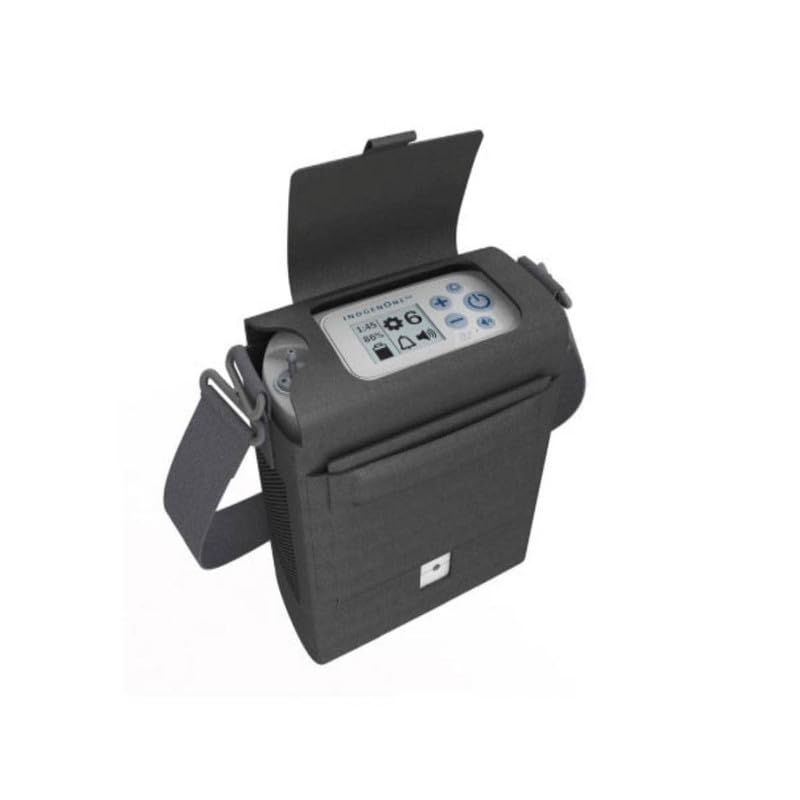
Inogen One G5 — The trusted original
Best for: Buyers who want a proven, widely supported unit
The One G5 built Inogen’s reputation, and it still earns its place. It weighs 4.7 pounds, offers pulse settings 1-6, and runs up to 13 hours with the 16-cell extended battery at setting 2, the longest headline runtime in this roundup. Because it has been sold for years, accessories, batteries, and service are easy to find, and most oxygen suppliers know it well. The display and controls feel older than the Rove 6, and the design is a little bulkier in the hand. If you value a long track record and easy support over the newest screen, the G5 remains a safe, capable choice.
- 13-hour extended battery at setting 2
- Pulse settings 1-6, proven reliability
- Wide accessory and service support
- FAA-accepted for air travel
- Older display than Rove 6
- Pulse-dose only, no continuous flow
- Bulkier feel than newer models
Flow typePulse dose, settings 1-6
Battery lifeUp to 13 hours, 16-cell battery, setting 2
Oxygen purity90-96% at all settings
NoiseAround 38 dBA at setting 2
FAA approvedYes, accepted for air travel
4.8/5
4.7/5
4.7/5

O2 Concepts Oxlife Liberty 2 — Continuous flow you can carry
Best for: Sleep, rest, and continuous-flow prescriptions
Most light concentrators stop at pulse dose, and that is exactly where the Liberty 2 earns its place. It delivers continuous flow from 0.5 to 2 litres per minute alongside pulse settings 1-10, so it can cover sleep, rest, and activity with one machine. At 6.35 pounds it is still the lightest continuous-flow portable in this roundup, and its dual-battery design stretches runtime toward 8 hours at setting 2. Continuous flow drains batteries fast, so keep it near a charger overnight and carry a spare for long outings. For anyone whose prescription demands continuous oxygen, this is the portable to check first.
- Continuous 0.5-2 LPM plus pulse 1-10
- Lightest continuous-flow portable here
- Dual batteries, about 8 hours setting 2
- Works for sleep and daytime activity
- Continuous flow drains batteries fast
- Heavier than pulse-only rivals
- Larger than ultralight travel units
Flow typeContinuous 0.5-2 LPM, pulse 1-10
Battery lifeAbout 8 hours, dual batteries, setting 2
Oxygen purity87-96% across flow settings
NoiseAround 42 dBA at setting 2
FAA approvedYes, accepted for air travel
4.9/5
4.6/5
4.6/5
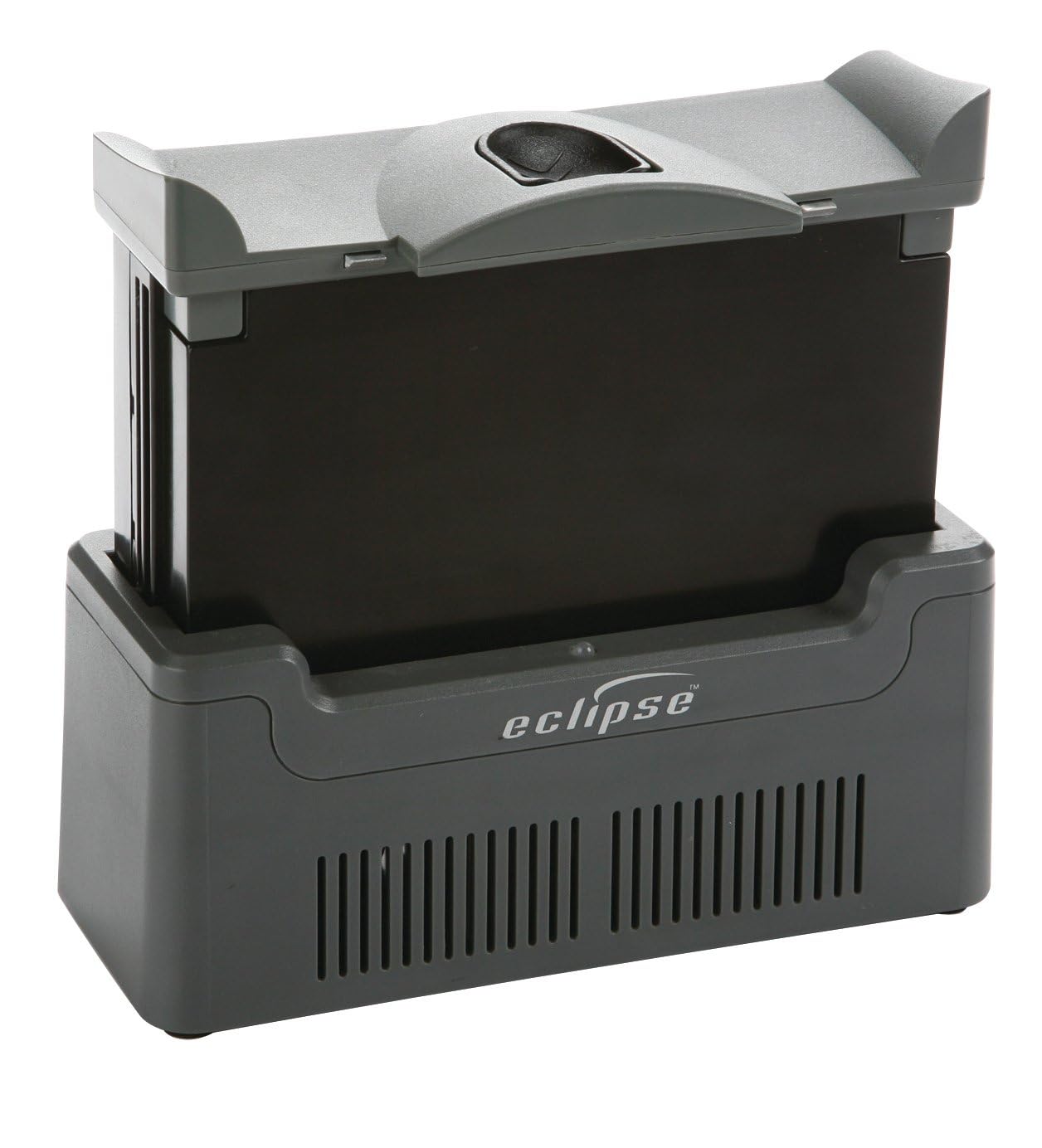
CAIRE SeQual Eclipse 5 — Maximum oxygen, home or away
Best for: High prescribed flows and 24-hour use
When your prescription calls for more oxygen than a pocket-sized unit can give, the Eclipse 5 is the answer. It delivers continuous flow up to 3 litres per minute and pulse settings 1-9, the highest output in this roundup, and it runs on AC power at home or battery on the road. A wheeled cart makes its 18.4 pounds manageable, and the large display is easy to read at night. Battery life is short on continuous flow, around 1 hour at 2 litres per minute per battery, so it suits car trips and short outings best. For high-flow needs, no lighter unit in this guide comes close.
- Continuous flow up to 3 LPM
- Pulse settings 1-9, highest range
- Runs on AC or battery power
- Wheeled cart included for transport
- 18.4 pounds, heaviest in roundup
- Short battery on continuous flow
- Loudest unit at high settings
Flow typeContinuous 0.5-3 LPM, pulse 1-9
Battery lifeAbout 3.5 hours pulse setting 2
Oxygen purity90-96% at rated flows
NoiseAround 48 dBA at setting 3
FAA approvedYes, accepted for air travel
4.9/5
4.3/5
4.6/5

GCE Zen-O — One unit, both flow types
Best for: Changing needs and mixed day-and-night use
If your needs change between day and night, the Zen-O adapts without a second machine. It offers continuous flow from 0.5 to 2 litres per minute and pulse settings 1-6, with a clear button layout that makes switching modes simple. At 10.25 pounds it sits between the ultralight pulse units and the heavy high-flow models, and it runs about 4 hours on pulse at setting 2. The battery is swappable, so a spare extends a travel day. Its continuous flow tops out at 2 litres per minute, so very high-flow prescriptions still need the Eclipse 5. For most mixed-use households, though, this versatility is the point.
- Continuous and pulse in one unit
- Clear buttons, easy mode switching
- Swappable battery for longer days
- Quiet enough for bedroom use
- Continuous flow tops at 2 LPM
- 10.25 pounds, not a shoulder unit
- Shorter battery than lighter rivals
Flow typeContinuous 0.5-2 LPM, pulse 1-6
Battery lifeAbout 4 hours at pulse setting 2
Oxygen purity87-96% across flow settings
NoiseAround 38 dBA at setting 2
FAA approvedYes, accepted for air travel
4.7/5
4.5/5
4.6/5

O2 Concepts Oxlife Independence — Replace two machines with one
Best for: One unit for home, car, and travel
Many households end up buying two machines: a stationary unit for home and a portable for outings. The Independence is built to replace both. It delivers continuous flow from 1 to 3 litres per minute and pulse settings 1-6, with a large, easy-to-read interface that suits older users. At 16.7 pounds it travels on wheels or in the car rather than on your shoulder, and it runs on AC power at home or battery away from it. Battery life is modest on continuous flow, so plan charging around longer outings. If you want one machine that never needs swapping, this is the simplest setup in the guide.
- Continuous 1-3 LPM plus pulse 1-6
- Large interface, easy to read
- Replaces home and portable units
- Runs on AC or battery power
- 16.7 pounds, not a shoulder unit
- Modest battery on continuous flow
- Bulky for small cars and flights
Flow typeContinuous 1-3 LPM, pulse 1-6
Battery lifeAbout 4.5 hours at pulse setting 2
Oxygen purity87-96% across flow settings
InterfaceLarge display, simple controls
FAA approvedYes, accepted for air travel
4.8/5
4.4/5
4.6/5

Drive DeVilbiss iGo2 — Sensible everyday oxygen
Best for: Everyday home and errand use on a budget
The iGo2 is the sensible pick when you need reliable oxygen without paying for flagship extras. It offers pulse settings 1-5 in a body of about 5 pounds, with SmartDose technology that adjusts delivery as your activity level changes. The carry bag and shoulder strap are comfortable for short trips, and the controls are straightforward enough for first-time users. Battery life is shorter than the FreeStyle Comfort, around 3.5 hours at setting 2, so it suits home use and short errands better than all-day travel. If your budget is tight and your setting is moderate, it covers the essentials well.
- SmartDose adjusts to activity level
- About 5 pounds, easy to carry
- Simple controls for first-time users
- Best value for moderate settings
- Shorter battery than value rivals
- Pulse settings stop at 5
- No continuous flow option
Flow typePulse dose, settings 1-5, SmartDose
Battery lifeAbout 3.5 hours at setting 2
Oxygen purity90-96% at all settings
NoiseAround 40 dBA at setting 2
FAA approvedYes, accepted for air travel
4.5/5
4.6/5
4.6/5
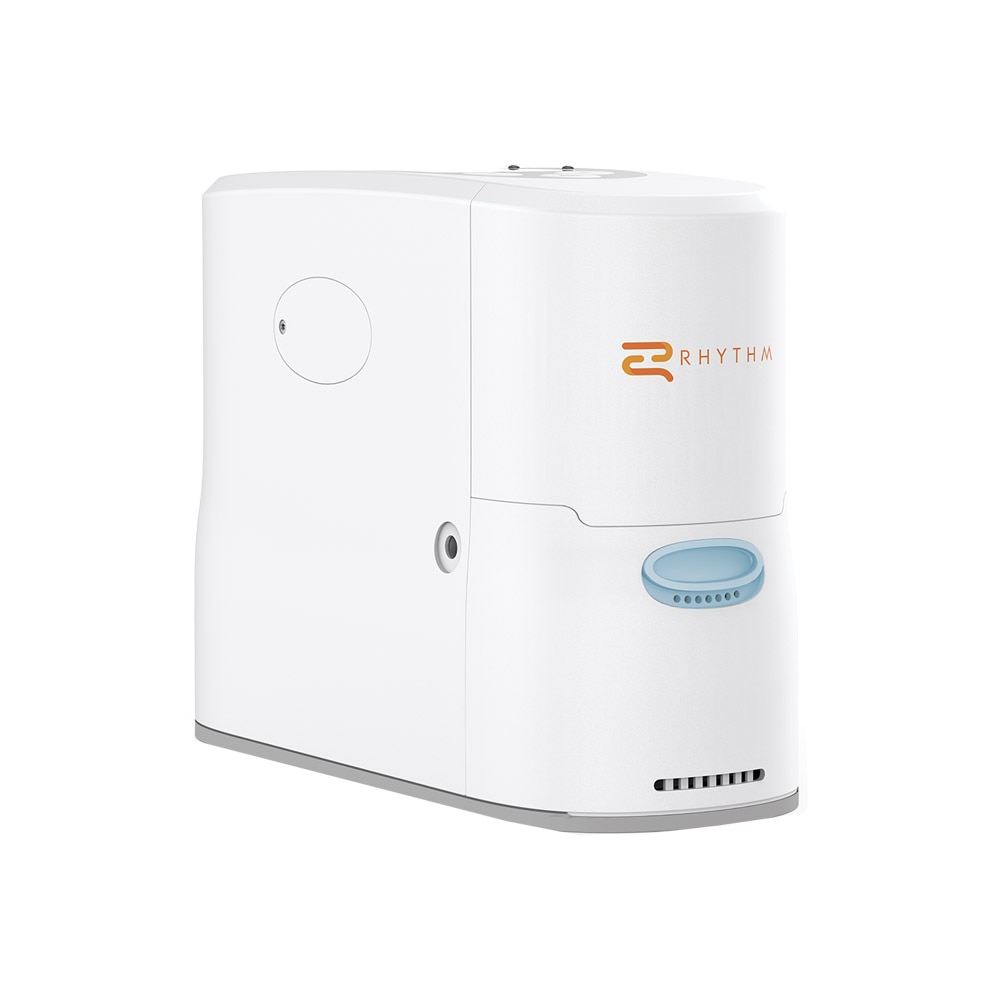
Rhythm P2-E6 — Spare battery included
Best for: Long days away from a charger
The Rhythm P2-E6 solves the most common travel worry in the simplest way: it comes with a spare battery in the box. At 4.37 pounds with pulse settings 1-6, it is light enough for all-day carrying, and swapping batteries takes seconds when the first one runs low. Together the two batteries stretch a travel day well past what a single-battery unit manages at the same setting. The display is smaller than the Rove 6, and the brand has a shorter track record than Inogen or CAIRE. If long, charger-free days matter more to you than brand history, this bundle is a smart, practical pick.
- Spare battery included in box
- Only 4.37 pounds, pulse 1-6
- Battery swap takes seconds
- Good value for long travel days
- Smaller display than Rove 6
- Shorter track record than Inogen
- Pulse-dose only, no continuous flow
Flow typePulse dose, settings 1-6
Battery lifeAbout 4.5 hours per battery, setting 2
Oxygen purity90-96% at all settings
BatteriesTwo batteries included
FAA approvedYes, accepted for air travel
4.6/5
4.7/5
4.4/5
Top 3 Head-to-Head: Inogen Rove 6 vs Inogen Rove 4 vs CAIRE FreeStyle Comfort
These three are the finalists for most buyers because they cover the same everyday pulse-dose need in three different ways: maximum settings and battery, minimum weight, or maximum value.
| Feature | #1 Rove 6 | #2 Rove 4 | #3 FreeStyle Comfort |
|---|---|---|---|
| Oxygen delivery | 4.9/5 — Best | 4.8/5 | 4.7/5 |
| Battery and portability | 4.9/5 | 4.9/5 — Best | 4.9/5 |
| Ease of use | 4.8/5 | 4.8/5 | 4.8/5 — Best |
| Choose if… | You need settings 5-6 and long battery life | Weight matters most and settings 1-4 cover you | You want the longest battery for the money |
Who These Concentrators Are NOT For
Portable concentrators are brilliant for mobile oxygen users, but they are not the right tool for every situation.
If your prescription calls for high continuous flow above 3 litres per minute, a portable unit will not meet it, and a stationary home concentrator or liquid oxygen system is the safer route. If you need oxygen only while sleeping with a CPAP or BiPAP machine, ask your doctor whether a stationary continuous-flow unit fits better than a pulse-dose portable.
Common Mistakes to Avoid
Most bad purchases in this category come from the same four avoidable errors.
Frequently Asked Questions About Portable Home Oxygen Generators
Do I need a prescription for a portable oxygen concentrator?
Yes, in the United States you need a prescription for a medical-grade portable oxygen concentrator. Your doctor sets the flow type and setting based on your blood oxygen levels, and the supplier checks that prescription before selling you a unit. Avoid no-prescription oxygen machines sold online, because they may not deliver therapeutic oxygen levels at all.
How long does the battery last on a portable oxygen concentrator?
Most portable concentrators run 3 to 6 hours on a standard battery at setting 2, and extended batteries can stretch that to 8 to 13 hours. Runtime falls quickly at higher settings and with faster breathing, so always compare runtimes at your own prescribed setting. Carry a spare or extended battery for long days away from a charger.
Can I take a portable oxygen concentrator on a plane?
Yes, if your model is FAA-accepted, which every unit in this roundup is. Tell your airline at least 48 hours before departure, carry your prescription, and bring enough battery power for at least 150 percent of your flight time. Compressed oxygen tanks are not allowed in the cabin, so a concentrator is the standard way to fly with oxygen.
What is the difference between pulse dose and continuous flow oxygen?
Pulse dose delivers a burst of oxygen only when you breathe in, which saves battery and keeps the unit small and light. Continuous flow delivers a steady stream at a set litres-per-minute rate, which many people need for sleep or higher prescribed flows. Your prescription decides which type you need, so check whether it lists pulse settings or a litres-per-minute figure.
Can I use a portable oxygen concentrator while sleeping?
Only if your doctor approves it and your unit suits overnight use. Continuous-flow models such as the Oxlife Liberty 2 and Eclipse 5 are the usual choice for sleep, because pulse-dose units may miss breaths while you sleep. Keep the unit plugged into mains power overnight, place it where air flows freely, and never change your setting without medical advice.
Can I use a portable oxygen concentrator during a power outage?
Yes, for as long as its batteries last, so keep spare batteries fully charged and know how long they run at your setting. For longer outages, charge from a car outlet or a backup power source, such as a portable battery generator. Plan this before an outage, not during one, and keep your supplier’s emergency number handy.
How do I clean and maintain a portable oxygen concentrator?
Clean the intake filter weekly with mild soap and water, let it dry fully, and wipe the outside with a damp cloth. Replace the nasal cannula every 2 to 4 weeks, or sooner if it feels stiff or dirty. Keep the unit away from dust, smoke, and open flames, and have it serviced on the manufacturer’s schedule so oxygen purity stays within specification.
Our Final Verdict
Match the flow type to your prescription first, then pick for battery and weight. For most people that points to the Rove 6: the strongest pulse-dose all-rounder, with the settings and battery life to cover long days without a second unit.
Hi, I’m Michael Turner. I own a generator workshop in the United States and founded HomeGeneratorBlog to share practical, hands-on guidance about generator installation, maintenance, troubleshooting, safety, and backup power solutions. My goal is to help homeowners make smarter, more confident decisions through clear and reliable information