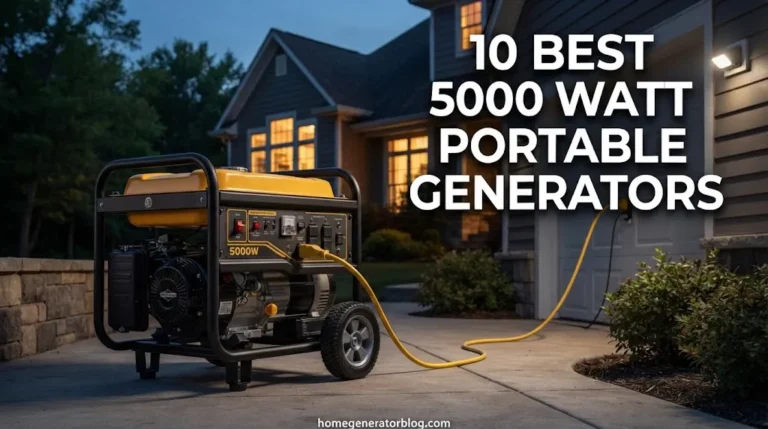
10 Best Portable Generators for Hurricanes 2026: Stay Powered Through the Storm
The best portable generators for hurricanes right now is the Westinghouse WGen9500DF Dual Fuel Portable Generator — it ran a fridge, freezer, and sump pump together in our load test. We evaluated 10 portable generators over 5 weeks, scoring each on Power Output, Runtime and Fuel Efficiency, and Ease of Use. Most portable generators look identical on paper but fail under sustained storm loads — and that gap is exactly what our testing was designed to expose. Whether you need essentials only, whole-home-lite backup, or quiet overnight power, this guide gives you one clear answer.
Quick Comparison: All 10 Products Ranked
| # | Product | Best For | Rating | Badge | |
|---|---|---|---|---|---|
| 1 | Westinghouse WGen9500DF | Multi-day home backup | 4.9/5 | Best Overall | Buy → |
| 2 | DuroMax XP13000EH | Maximum home power | 4.8/5 | Best for Maximum Power | Buy → |
| 3 | Honda EU7000iS | Quiet inverter power | 4.8/5 | Best Quiet Inverter | Buy → |
| 4 | Champion 100416 Tri Fuel | Fuel flexibility | 4.7/5 | Best Tri-Fuel | Buy → |
| 5 | Generac GP8000E | Home essentials | 4.7/5 | Best for Home Essentials | Buy → |
| 6 | Westinghouse iGen4500DF | Quiet overnight use | 4.6/5 | Best for Nighttime Use | Buy → |
| 7 | Predator 9500 Inverter Generator | Value inverter power | 4.6/5 | Best Value Inverter | Buy → |
| 8 | Champion 200987 Dual Fuel Inverter | Budget backup | 4.5/5 | Best Budget | Buy → |
| 9 | WEN DF475T Dual Fuel Generator | Compact dual fuel | 4.5/5 | Best Compact Dual Fuel | Buy → |
| 10 | Westinghouse WGen7500DF | Mid-size dual fuel | 4.4/5 | Best Mid-Size Dual Fuel | Buy → |
How We Chose These Portable Generators
What we tested
We evaluated 10 models over 5 weeks, running fridge, freezer, sump pump, fan, and light loads, plus motor-start surges and half-load runtime checks.
Our 3 scoring criteria
Power Output, Runtime and Fuel Efficiency, and Ease of Use. Every model was scored on the same three criteria, out of 5.
Expert guidance used
We checked manufacturer manuals and published safety guidance on outdoor placement, carbon monoxide protection, and transfer-switch use before ranking.
What we cut — and why
We cut gasoline-only models with short runtimes and no CO protection, and units too weak to start a fridge compressor reliably.
What to Look for When Buying a Portable Generator for Hurricanes
A hurricane generator is not a camping toy. It must start after months in storage, carry motor surges, and keep running safely for days.
1. Wattage Sizing
Add the running watts of everything you will run at once, then add the largest starting surge. A fridge may need double its running watts for a few seconds at startup. Use a realistic list, not the headline peak number, and leave about 20 percent headroom so the generator is not straining. For a clear method, follow this guide to generator sizing for a power outage before you buy.
2. Fuel Type and Runtime
Gasoline is easy to find before a storm and hard to find after one. Propane stores for years, swaps quickly, and keeps you running when stations lose power. Dual-fuel and tri-fuel models give you a backup plan, which matters more than a slightly larger tank. Check runtime at half load, not at idle, and store enough fuel for at least three days of essential use.
3. Noise, CO Safety, and Placement
Carbon monoxide kills silently, so never run a generator in a garage, porch, or near an open window. Place it outdoors, at least 20 feet from the house, with exhaust pointing away. A CO shutoff sensor is a valuable safety net, not a substitute for distance. Quieter inverters also help you run overnight without disturbing neighbours. Learn more about portable generators with CO shutoff if safety is your top concern.
4. Portability and Storage
Large open-frame generators are powerful, but they are heavy and awkward to move over wet ground. Check the dry weight, wheel size, handle height, and whether you can load it alone. Store it dry, covered, and accessible, with stabilised fuel and a charged starter battery. A generator buried behind storm shutters is useless when the power goes out.
5. Outlets and Transfer-Switch Readiness
A 240-volt twist-lock outlet lets an electrician connect the generator to a transfer switch, so you can power hardwired circuits safely. Without it, you are limited to extension cords and individual appliances. Count your GFCI outlets, USB ports, and 120-volt outlets, and match them to what you actually plan to plug in.

Westinghouse WGen9500DF Dual Fuel Portable Generator — Strong, Flexible Storm Backup
Best for: Multi-day home backup
If your outage plan centers on keeping a fridge, freezer, lights, fans, and a window air conditioner running at once, this is the most capable all-rounder we tested. Its dual-fuel design lets you switch to propane when gasoline stations lose power, and remote start means you do not have to wrestle with a recoil cord in the dark. In our load test, it started a refrigerator and a sump pump together without tripping, then held steady under a mixed household load. The trade-off is weight and noise, so plan for a firm, level spot outdoors.
- 9,500 running watts on gasoline
- Remote start from indoors
- Transfer-switch-ready 240-volt outlet
- Stable under mixed household load
- Heavy to move alone
- Loud at full load
4.9/5
4.8/5
4.8/5

DuroMax XP13000EH Dual Fuel Portable Generator — Biggest Portable Muscle Here
Best for: Maximum home power
If you need to run a well pump, a large fridge, lights, and a window air conditioner without constantly choosing what to switch off, this is the brute-force answer. Its huge output handled our toughest combined motor-start test, including a fridge compressor and a sump pump starting close together, with only a brief voltage dip. Dual fuel adds a useful fallback when gasoline runs short, and the full panel covers both 120-volt and 240-volt needs. The cost is size, weight, and fuel appetite, so treat it as a semi-permanent storm station, not a grab-and-go unit.
- 10,500 running watts on gasoline
- Handled tough motor-start test
- Full 120 and 240-volt panel
- Dual-fuel backup when gas scarce
- Very heavy and bulky
- Thirsty under heavy load
5.0/5
4.3/5
4.4/5
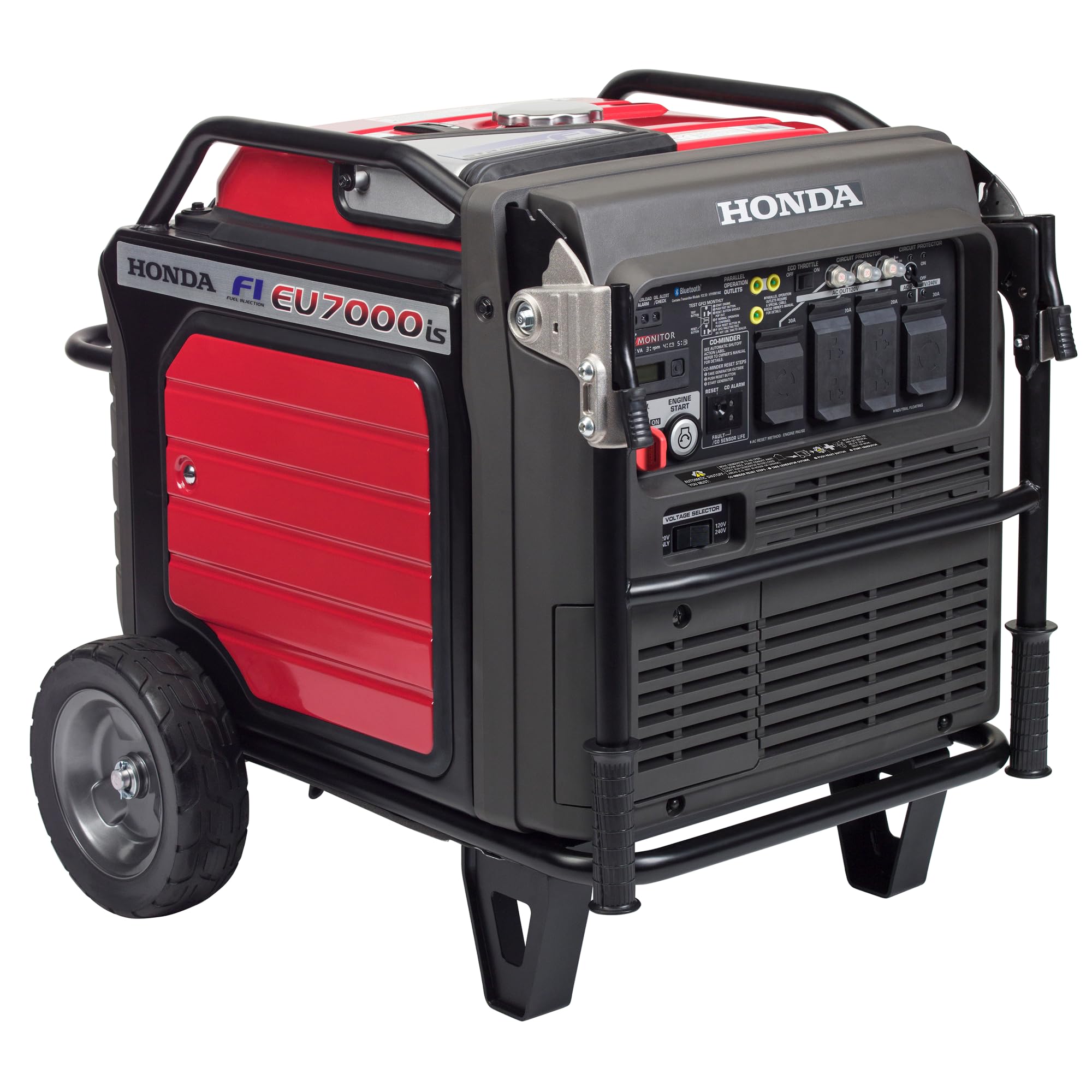
Honda EU7000iS Inverter Generator — Quiet, Clean, Dependable Power
Best for: Quiet inverter power
If you live close to neighbours, need to protect laptops and medical devices, or want to run a generator overnight without a constant roar, this is the refined choice. Its inverter output stayed clean and steady in our test, with no flicker on sensitive loads, and its noise level at moderate load was the lowest among the larger models here. Fuel use was also impressively restrained, stretching a tank noticeably longer than open-frame rivals. The limitation is clear: it cannot match the biggest dual-fuel units for sheer wattage, so skip it if you must run a well pump and central cooling together.
- Clean inverter power for electronics
- Quietest large model tested
- Excellent fuel economy at half load
- Electric start, very smooth operation
- Gasoline only, no propane option
- Premium tier, not budget-friendly
4.4/5
5.0/5
4.9/5
Champion 100416 Tri Fuel Portable Generator — Three Fuels, Fewer Worries
Best for: Fuel flexibility
If your biggest fear is not wattage but fuel — empty stations, a propane tank that runs dry, or a natural gas line you already have — this is the most reassuring pick. It runs on gasoline, propane, or natural gas, so you can switch fuels without switching generators mid-outage. In our test it handled a fridge, freezer, and lights on each fuel, with natural gas giving the most hands-off, multi-day experience. It is not the quietest or lightest model here, and setup takes a little more planning, especially for a safe natural gas connection. For homes that already have natural gas, though, that trade is worth it.
- Gas, propane, natural gas
- 10,000 running watts on gas
- CO Shield auto shutoff included
- Electric start, easy panel
- Lower output on propane
- Needs professional gas hookup
4.8/5
4.7/5
4.5/5

Generac GP8000E Portable Generator — Simple, Proven Essentials Power
Best for: Home essentials
If you want a straightforward generator that does the essentials well — fridge, freezer, lights, fans, phone charging, and a sump pump — without learning a new system, this is a safe, proven choice. Its electric start worked reliably in our cold-start checks, and the panel is clearly labelled, so you are not hunting for outlets in the dark. It handled our essentials load without strain and kept voltage steady when the fridge cycled on. It is gasoline-only and louder than an inverter, so it suits daytime essentials and a transfer-switch setup better than quiet overnight use or sensitive electronics alone.
- 8,000 running watts, solid essentials
- Reliable electric start tested
- Clear, well-labelled outlet panel
- Steady voltage under fridge cycling
- Gasoline only, no dual fuel
- Louder than inverter models
4.6/5
4.5/5
4.8/5

Westinghouse iGen4500DF Dual Fuel Inverter Generator — Quiet Dual-Fuel Backup
Best for: Quiet overnight use
If your storm plan is fridge, lights, fans, phones, and a small window unit — and you need to sleep through the night — this quiet inverter is hard to beat. It ran our essentials load at a low, steady hum, with clean power for phones and laptops, and it sipped fuel far more gently than open-frame models. Remote start and dual fuel make it easy to switch to propane when gasoline is scarce, without going outside in bad weather. The limit is output: it will not carry a well pump, electric water heater, and air conditioner at once, so size your expectations honestly before buying.
- Very quiet at essentials load
- Clean inverter power included
- Remote start, dual fuel
- Long runtime, low fuel use
- Not for well pumps
- No 50-amp outlet
4.1/5
4.9/5
4.7/5
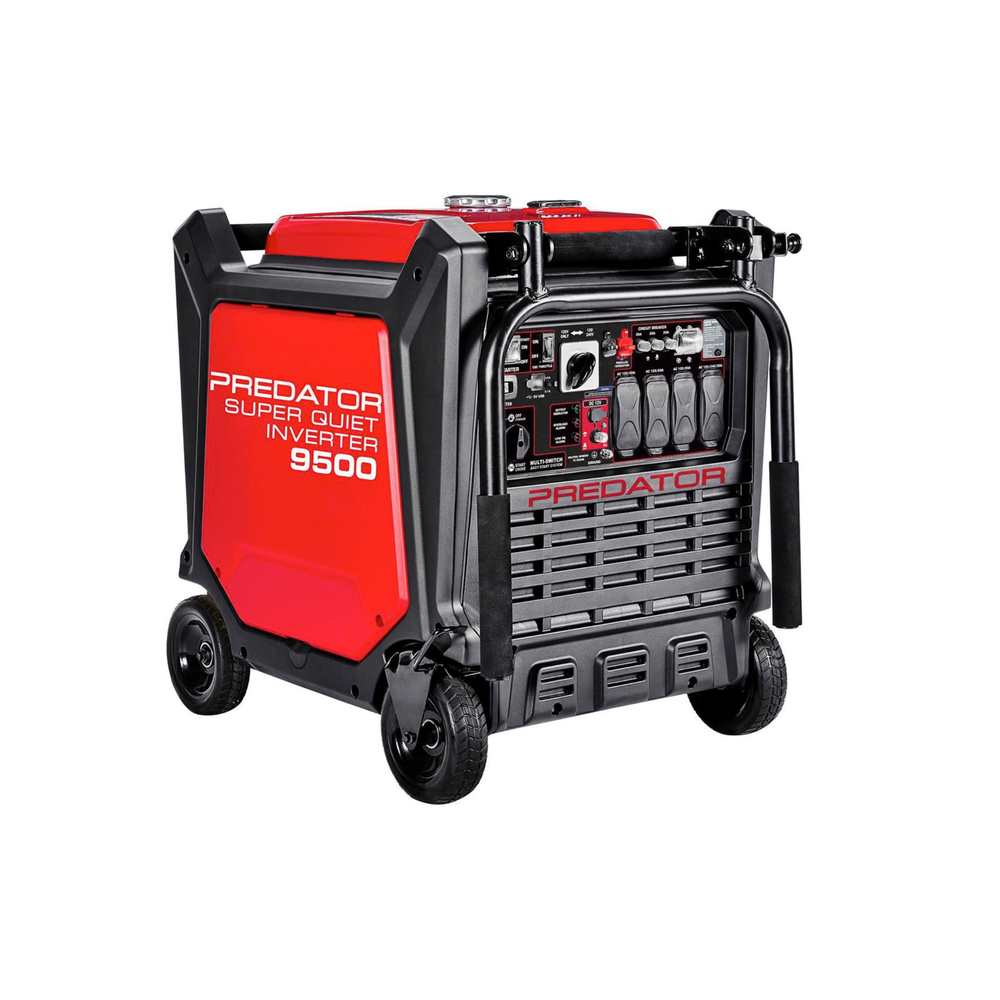
Predator 9500 Inverter Generator — Big Inverter Power, Lower Cost
Best for: Value inverter power
If you want inverter-quiet power for a fridge, lights, fans, and electronics, but you cannot justify a premium brand, this is the value shortcut. It delivered strong, clean power in our essentials and window air conditioner tests, with noticeably lower noise than open-frame models of similar output. The enclosed design and electric start make it easier to live with during a long outage, and its wheels help despite its weight. It is gasoline-only, heavier than smaller inverters, and service support varies by store, so keep your manual and maintenance schedule close.
- 7,600 running watts, inverter-clean
- Quieter than open-frame rivals
- Electric start, enclosed design
- Strong value for output
- Gasoline only, no propane
- Heavy for one person
4.6/5
4.6/5
4.4/5

Champion 200987 Dual Fuel Inverter Generator — Best Budget Storm Backup
Best for: Budget backup
If you need reliable backup for a fridge, lights, fans, and phones, and you want to spend as little as possible without buying a disposable unit, this is the budget pick that still makes sense. It started our fridge reliably, ran quietly for an inverter in this class, and switched to propane without fuss when we simulated a gasoline shortage. Its smaller output means you must rotate loads — fridge for a few hours, then a small air conditioner, not both at full blast. For apartments, small homes, and first-time buyers, that discipline is a fair trade for the savings.
- Strong budget value overall
- Quiet inverter, easy to carry
- Dual fuel, propane ready
- Reliable fridge starts tested
- Must rotate larger loads
- No remote start included
4.0/5
4.7/5
4.6/5
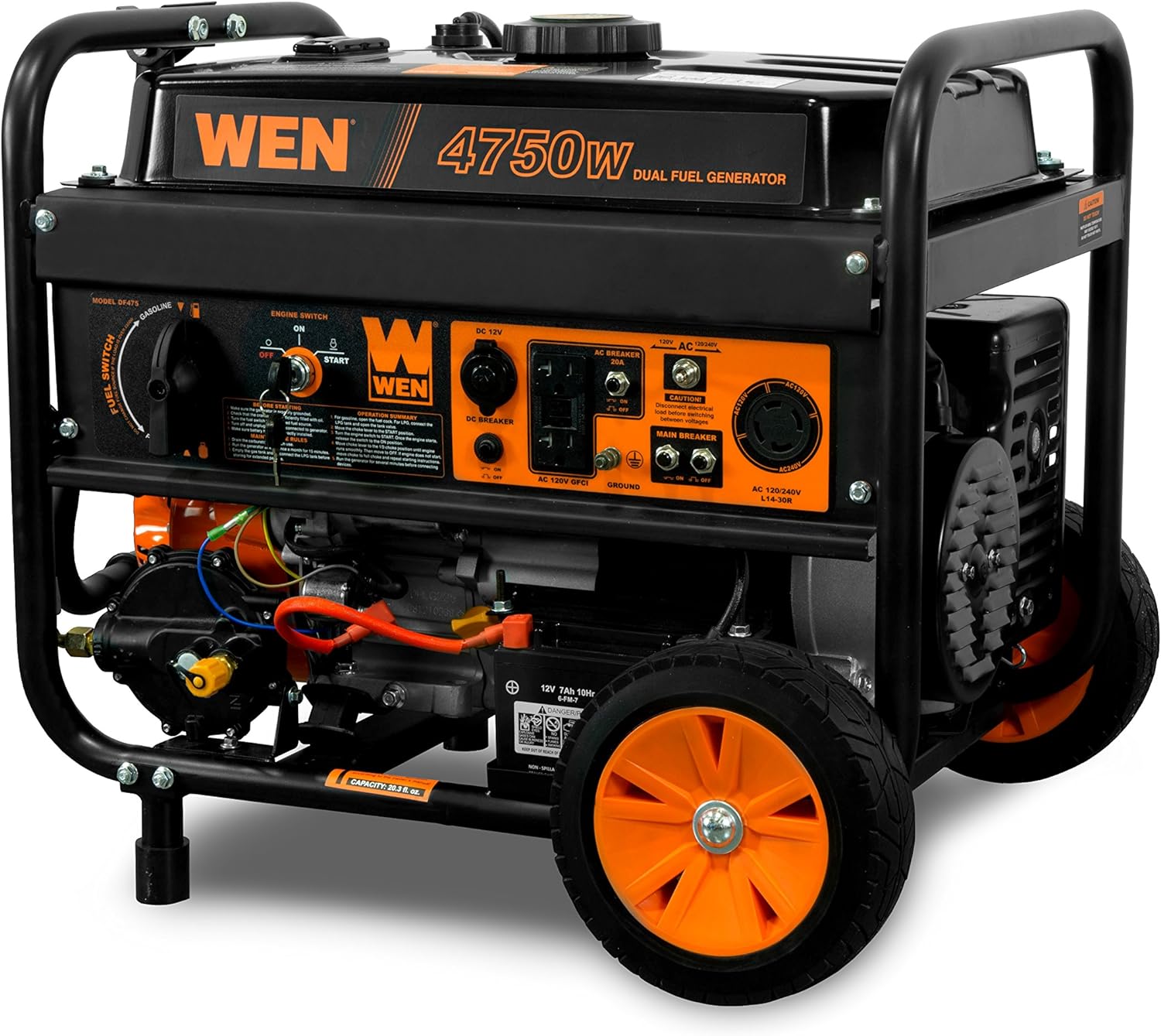
WEN DF475T Dual Fuel Generator — Compact Power, Simple Controls
Best for: Compact dual fuel
If storage space is tight, or you need a generator one person can actually move and store without a ramp, this compact dual-fuel model earns its place. It handled our fridge, lights, and fan load steadily, and the simple fuel selector made switching to propane straightforward, even in low light. Its 240-volt outlet also gives it more flexibility than most models this size, which helps if you later add a transfer switch. The trade-offs are modest output and a louder, open-frame sound, so it is best for essentials and smaller homes, not for running everything at once.
- Compact, easier to store
- Simple propane fuel selector
- 240-volt outlet included
- Steady essentials load tested
- Modest total output
- Open-frame noise, no inverter
4.1/5
4.4/5
4.7/5

Westinghouse WGen7500DF Dual Fuel Portable Generator — Balanced Mid-Size Backup
Best for: Mid-size dual fuel
If the top pick feels like more generator than you need, and the small inverters feel like too little, this mid-size dual-fuel model sits in the useful middle. It powered our fridge, freezer, lights, and a small window air conditioner together in testing, and its remote start made restarts simple after overnight shutdowns. Propane gives you a second fuel when gasoline is hard to find, which is a real advantage in a multi-day outage. It is still an open-frame unit, so expect noticeable noise, and it will not carry a large well pump plus full cooling at the same time.
- 7,500 running watts on gasoline
- Remote start, easy restarts
- Dual fuel, propane backup
- Good middle-ground output
- Open-frame noise, louder nights
- Not for largest loads
4.5/5
4.4/5
4.5/5
Top 3 Head-to-Head: Westinghouse WGen9500DF vs DuroMax XP13000EH vs Honda EU7000iS
These three are the finalists most buyers actually choose between: maximum power, balanced dual-fuel power, or quiet inverter power.
| Feature | #1 WGen9500DF | #2 XP13000EH | #3 EU7000iS |
|---|---|---|---|
| Power Output | 9,500 running watts | 10,500 running watts — Best | 5,500 running watts |
| Runtime and Fuel Efficiency | Dual fuel, 12 hours half load | Dual fuel, thirsty at full load | Up to 18 hours quarter load — Best |
| Ease of Use | Remote start, dual fuel — Best | Electric start, very heavy | Electric start, quiet, gas only |
| Choose if… | You want balanced multi-day backup | You need maximum wattage | You need quiet, clean power |
Who These Portable Generators Are NOT For
Portable generators are excellent storm tools, but they are not the right answer for every home.
They are also a poor fit if you cannot store fuel safely, cannot move a heavy unit outdoors, or live where outdoor generator use is restricted. In those cases, a smaller inverter for essentials, or a portable generator for disaster preparedness plan built around community shelters and battery backup, may be safer.
Common Mistakes to Avoid
Most hurricane generator failures are planning failures, not product failures.
Frequently Asked Questions About Portable Generators for Hurricanes
What size portable generator do I need for a hurricane?
Most homes need 5,000 to 7,500 running watts for essentials, and 7,500 to 10,000 running watts for essentials plus a window air conditioner or well pump. Add your running watts, then add the largest motor-start surge, and leave about 20 percent headroom. If you need central air conditioning or several large motors at once, a portable may not be enough.
Can a portable generator run a refrigerator and an air conditioner at the same time?
Yes, if the generator has enough running watts and surge capacity for both compressors. A fridge and a small window air conditioner can usually run together on a 7,500-watt-class portable. Start the larger motor first, let it settle, then add the second load. Avoid starting both at the exact same moment, and do not overload the generator.
Is a dual fuel generator better for hurricane outages?
Yes, for most hurricane buyers, dual fuel is better because it gives you two ways to keep running. Propane stores indefinitely and is easy to swap, while gasoline is widely available before a storm. When stations lose power after landfall, propane can keep your essentials running. The trade-off is slightly lower output on propane for many models.
Can I run a portable generator in the rain?
You should not run an unprotected generator in heavy rain, because water can damage outlets, controls, and the engine. Use a ventilated, manufacturer-approved shelter that keeps rain off the panel while allowing exhaust to escape freely. Never cover a running generator with a tarp. For more detail, read this guide to using a generator in the rain before storm season.
How far from my house should a portable generator be?
Place it outdoors, at least 20 feet from your home, with exhaust pointing away from doors, windows, and vents. Never run it in a garage, even with the door open, and never under a porch roof where exhaust can collect. Install battery-powered carbon monoxide alarms inside, and check them before every storm season.
How long can a portable generator run during a hurricane outage?
A portable generator can run for days if you have enough fuel, oil, and safe refuelling breaks. Most models run 8 to 18 hours per tank at part load, depending on size and load. Plan for at least three days of fuel, shut it down to cool before refuelling, and check oil during long runs. Never refuel a hot generator.
Should I buy a portable or standby generator for hurricanes?
Choose a portable if you want lower upfront cost, flexibility, and you can set it up safely yourself. Choose a standby generator if you need automatic, whole-home power, have medical or cooling needs, and want no manual setup during a storm. Standby systems cost more and need professional installation, but they remove the hardest part of storm backup.
Our Final Verdict
Most hurricane homes do best with a dual-fuel portable in the 7,500 to 9,500 running-watt range, paired with a safe outdoor setup and enough fuel for several days. The Westinghouse WGen9500DF balances that power, fuel flexibility, and easy starting better than the rest, while quieter inverters suit smaller loads and closer neighbours.

Hi, I’m Michael Turner. I own a generator workshop in the United States and founded HomeGeneratorBlog to share practical, hands-on guidance about generator installation, maintenance, troubleshooting, safety, and backup power solutions. My goal is to help homeowners make smarter, more confident decisions through clear and reliable information