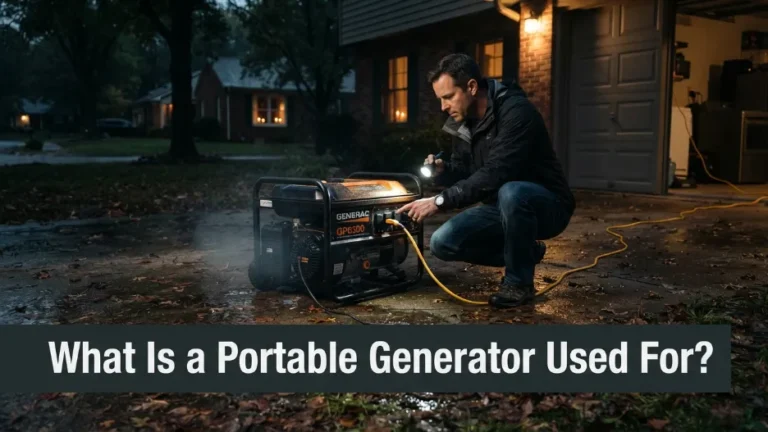
Generac GP6500 Portable Generator Review: Specs & Verdict
The Generac GP6500 is a gasoline-powered, open-frame portable generator rated for 6,500 running watts and 8,125 starting watts. It is designed to supply essential household appliances and selected circuits during outages, as well as suitable outdoor equipment.
This Generac 6500 portable generator review focuses on the recoil-start GP6500 COsense configuration, not the differently equipped GP6500E electric-start model. Figures below are based on Generac’s published specifications, not a claimed hands-on test.
🏆 My Quick Verdict
💡 Best For: Homeowners who need practical, manually started backup power for carefully selected essential loads.
⚡ Key Specs:
6,500 running watts; 8,125 starting watts; 389cc OHV engine; 120/240V output; recoil starting; COsense shutoff.
✅ Bottom Line: Strong backup-power capacity and useful safety features make the GP6500 appealing. Its manual starting, weight and conventional open-frame design require realistic expectations.
At a Glance
- Rated continuous power is 6,500 watts, with 8,125 watts available for starting surges.
- A 120/240V twist-lock outlet supports compatible professionally installed home-backup connections.
- COsense can shut down the engine when dangerous carbon monoxide accumulates nearby.
- Generac lists up to 11.5 hours at 50% load for the 7.9-gallon configuration.
- The standard GP6500 reviewed here starts with a recoil cord, not a push button.
- Some other GP6500 production units are subject to a 2026 recall; check model and serial numbers.
Generac GP6500 Specifications
| Specification | GP6500 COsense, recoil start |
|---|---|
| Running / starting watts | 6,500W / 8,125W |
| Engine | 389cc OHV, gasoline |
| Output / frequency | 120/240V AC, 60Hz |
| Start method | Recoil pull start |
| Fuel capacity | 7.9 gallons (29.9L) |
| Claimed runtime at 50% load | 11.5 hours |
| Dry weight | 172 lb (78kg) |
| Dimensions | 27.2 × 27 × 26.5 inches |
| Residential warranty | 3-year limited |
| Protection | COsense, low-oil shutdown, breakers |
The figures above come from Generac’s GP6500 COsense specification sheet. Differences between production versions should be checked against the exact listing.
Design & Build Quality
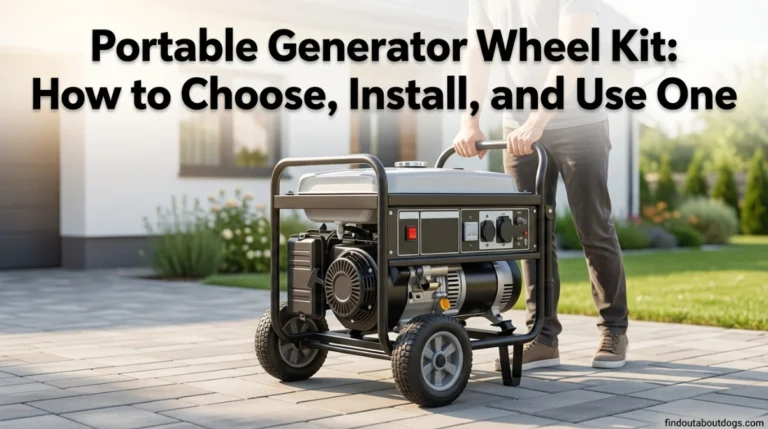
The GP6500 has a sturdy open steel-tube frame, a folding handle and never-flat wheels. Its construction favors accessible mechanical components and durability over compact, enclosed styling.
At 172 pounds dry, this is movable rather than lightweight equipment. The wheels help on firm ground, but lifting the machine into a vehicle calls for appropriate assistance.
The published footprint is 27.2 by 27 inches before extending the handle. Allow additional clearance around the generator during operation and keep the exhaust unobstructed.
Setup, Installation & Ease of Use
- Inspect the unpacked generator for transport damage and confirm the model plate matches your order.
- Attach the included wheel-and-handle assembly according to Generac’s model-specific instructions.
- Add the specified engine oil before initial startup and verify the dipstick reading.
- Choose an outdoor location at least 20 feet from buildings, with exhaust directed away from openings.
- Check fuel, fuel valve, engine switch and choke positions before pulling the starter cord.
- Connect appliances using correctly rated cables and increase electrical loads gradually.
- Store the cooled generator dry, following the manual’s fuel-storage and maintenance directions.
Core Performance & Feature Breakdown
The GP6500’s most valuable capability is its 6,500-watt continuous output. That places it in the practical essentials-backup category, rather than automatic whole-house standby power.
Refrigeration, lighting, a furnace blower and certain pumps may fit within this output budget. The actual answer depends on each appliance’s running watts and motor-starting demand.
The 8,125-watt starting rating is momentary capacity, not permission to operate an 8,125-watt load continuously. Avoid simultaneous high-startup appliances when a refrigerator or pump may switch on.
Expert Insight
Calculate simultaneous running load, then account for the largest realistic motor surge; use our generator power-capacity guide before choosing circuits.
Generac’s claimed 11.5-hour runtime applies at half load with the specified 7.9-gallon tank. Heavier demand, engine condition and operating conditions change real consumption.
The standard generator provides conventional regulated AC rather than an inverter generator’s electronically reconstructed output. Buyers with unusually sensitive electronics should check their device manufacturer’s power-quality requirements.
A 120/240V, 30A L14-30R outlet supports compatible home-backup equipment, but its connection limit remains important. An electrician can match the generator to approved transfer hardware and your selected loads.
Key Features Explained
COsense Carbon Monoxide Shutdown
COsense monitors nearby carbon monoxide and can stop the engine if hazardous concentrations are detected. It is a supplementary safeguard, never a reason to use the generator inside or near an open garage.
PowerRush Starting Support
PowerRush improves short-duration motor-starting capability when appliances demand a brief electrical surge. Its benefit is limited by the generator’s published starting rating and your combined load.
Low-Oil Shutdown and Hour Meter
Automatic low-oil shutdown helps protect the engine when lubrication is insufficient. The hour meter makes it easier to plan oil changes and inspections without guessing operating time.
120/240-Volt Connections
GFCI-protected household receptacles and a 30-amp twist-lock outlet provide useful connection options. The outlet configuration does not eliminate the need for approved building isolation equipment.
Real-World Usability & Maintenance
A manual-start generator asks more of its owner than an automatic standby system. Keep a working flashlight, suitable cords and startup instructions together for emergency deployment.
Oil condition, clean airflow and properly stored gasoline affect reliability over months of intermittent use. Follow the portable generator maintenance schedule while treating Generac’s own manual as the controlling reference.
Run the GP6500 outdoors only, at least 20 feet from the house, with exhaust aimed away from windows and vents. Our carbon monoxide safety guide explains placement and indoor alarm requirements.
Pros & Cons
Pros
- 6,500 continuous watts offer useful headroom for selected essential household loads.
- COsense provides additional carbon monoxide shutdown protection.
- Wheel kit and folding handle improve transport around a property.
- The hour meter and low-oil shutdown support routine engine care.
Cons
- Recoil starting is less convenient than electric or automatic starting.
- The heavy open-frame format is less portable than compact enclosed units.
- Gasoline maintenance and safe outdoor placement require ongoing attention.
Common Issues & Fixes
Engine Will Not Start
A no-start condition may involve missing fuel, incorrect choke position or low engine oil. Verify the operator’s checklist before considering mechanical repairs.
Breaker Trips Under Load
An overloaded outlet or simultaneous motor surge can trip a breaker. Disconnect equipment, investigate the load and restore power only within the prescribed ratings.
Unexpected COsense Shutdown
A COsense warning may indicate dangerous exhaust concentration or a system fault. Leave the area, follow the warning label and contact authorized support rather than bypassing the sensor.
What to Know Before You Buy
GP6500 listings can refer to different model generations, tank configurations and starting methods. Confirm the exact model number, fuel capacity, included accessories and receptacles on the listing you intend to order.
Review the April 16, 2026 U.S. recall notice before using a potentially affected unit. Certain GP6500 units bearing model numbers G0076802 or G0076722 were listed within limited serial-number ranges; confirm eligibility with Generac’s official recall lookup.
Affected owners must follow the recall instructions and arrange the specified repair when applicable. This recall does not mean every GP6500 was recalled, but checking matters particularly with older stock.
For household wiring, plan a professional connection through suitable approved transfer equipment. Our portable generator transfer switch guide details the compatibility questions worth asking.
Who Should Buy It / Who Should Skip It
✅ Who Should Buy It
- Homeowners prioritizing essential-circuit backup instead of full-home automation.
- Buyers comfortable with recoil starting and basic gasoline-engine maintenance.
- People needing conventional 120/240V portable output for compatible equipment.
✗ Who Should Skip It
- Anyone needing automatic startup without visiting the generator outdoors.
- Buyers unable to provide safe outdoor operating clearance.
- Users seeking lightweight, enclosed inverter-style portability.
Alternatives to Consider
Westinghouse WGen7500
Best For: Buyers seeking greater running output and convenient starting.
Main Advantage: Remote and electric starting with more continuous power.
Trade-off: The published 196-pound weight further reduces liftability.
Key Spec: 7,500 running watts and 9,500 peak watts.
Champion 100462
Best For: Buyers comparing generators with matching headline output.
Main Advantage: The same continuous and starting wattage class.
Trade-off: This manual-start model still requires hands-on operation.
Key Spec: 6,500 running watts and 8,125 starting watts.
Is the Generac GP6500 Worth It?
The GP6500 makes sense when the goal is reliable capacity for selected circuits without investing in a permanently installed standby system. Compare its total ownership costs, including fuel, servicing, wiring and storage.
Its value weakens for buyers who will rarely tolerate manual deployment or who require quieter, compact equipment. Your backup plan should determine the purchase, not peak-watt numbers alone.
Final Verdict
The Generac GP6500 COsense is a credible essentials-backup choice for owners who can manage manual operation and safe outdoor installation. Verify the exact variant and any recall status before buying or using one.
Frequently Asked Questions
Can the Generac GP6500 power a house?
It can power selected household loads, not necessarily an entire home. Check simultaneous demand and use approved professional transfer equipment for hardwired circuits.
Does the GP6500 have electric start?
The recoil-start GP6500 COsense reviewed here does not. Generac offers different electric-start variants; check the exact model before ordering.
What size outlet does the GP6500 use for home backup?
The reviewed configuration has a 120/240V, 30A L14-30R twist-lock outlet. An electrician must verify inlet, cord, breaker and neutral compatibility.
How long does the GP6500 run on gasoline?
Generac specifies up to 11.5 hours at 50% load on its 7.9-gallon version. Actual duration varies with electrical demand and conditions.
What warranty applies to the Generac GP6500?
Generac’s published specification lists a three-year limited residential warranty. Commercial coverage is separately listed as one year, subject to the applicable terms.
What maintenance does the GP6500 require?
It requires routine oil, air-filter, fuel-system and spark-plug care. Use the exact owner’s manual for intervals and storage procedures.
Affiliate disclosure: HomeGeneratorBlog earns a small commission when you purchase through links on this page — at no extra cost to you. Our editorial process is independent: affiliate relationships never influence which products we recommend or how we rank them.

Hi, I’m Michael Turner. I own a generator workshop in the United States and founded HomeGeneratorBlog to share practical, hands-on guidance about generator installation, maintenance, troubleshooting, safety, and backup power solutions. My goal is to help homeowners make smarter, more confident decisions through clear and reliable information