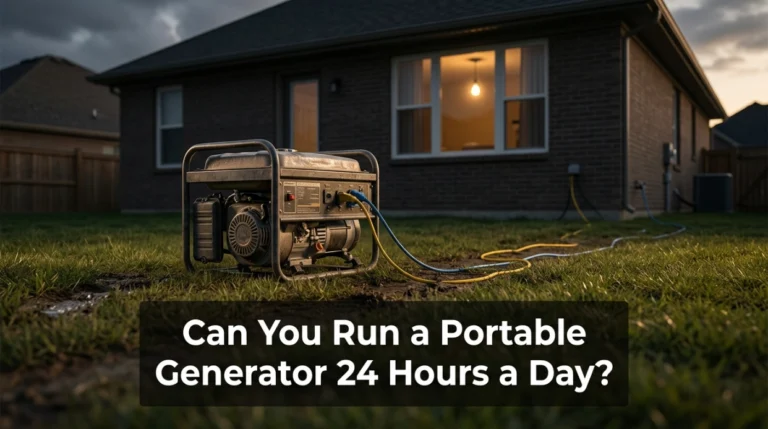
Is It Okay to Run a Generator 24 Hours a Day?
Quick Answer
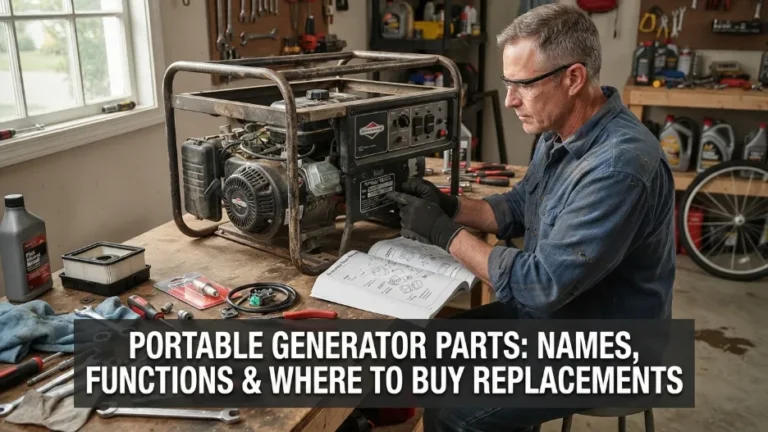
You can run some generators for 24 hours during a long outage, but you should not assume every generator is designed for nonstop operation. Portable generators usually need refueling, oil checks, cooling time, and maintenance according to the owner’s manual, while some standby generators are built for extended operation but still require scheduled inspections and shutdowns. Use a proper portable generator maintenance schedule instead of treating 24 hours as a universal safe runtime.
Before running a generator all day
- Check the manual: Your manufacturer’s runtime and maintenance instructions override general advice.
- Watch the oil: Long operating periods can bring you to an oil-check or oil-change interval quickly.
- Manage the load: Running near maximum output creates more heat and burns fuel faster.
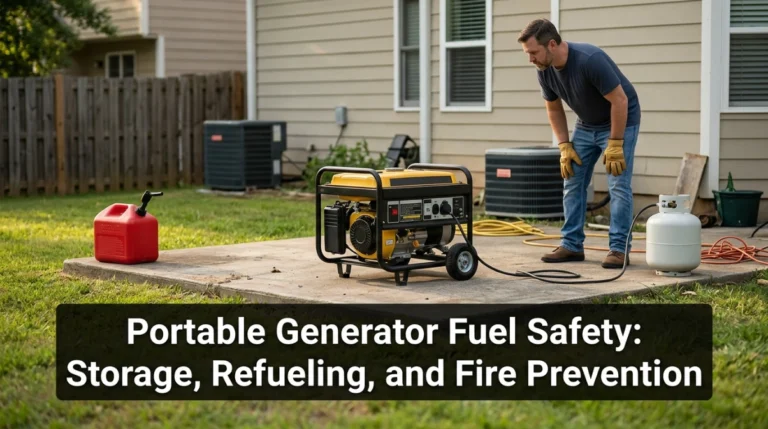
- Refuel safely: Shut a portable generator down and let it cool before adding gasoline.
- Keep it outdoors: Portable generators must stay outside and away from doors, windows, and vents.
My practical rule
- If an outage lasts all day, plan short shutdown windows for inspection, fuel, oil, and any maintenance your specific model requires.
When the power has been out since morning, letting the generator run around the clock can feel like the obvious solution. The problem is that “24 hours” tells me almost nothing about whether a particular machine is operating safely.
Generator type, load, fuel supply, engine temperature, oil condition, weather, and the manufacturer’s service schedule all matter. Here is how I would decide whether continuous operation makes sense in 2026.
Is It Safe to Run a Generator for 24 Hours Straight?
It can be safe for certain generators, but only when the manufacturer permits extended operation and you follow its maintenance requirements. A 24-hour outage does not automatically mean the engine should remain running for 24 uninterrupted hours.
Generator continuous runtime means the amount of time a generator can operate before it needs fuel, inspection, scheduled service, or a manufacturer-required shutdown. It is different from the generator’s total expected lifespan.
A portable model may empty its fuel tank long before 24 hours. Even if you can keep refilling it, fuel availability does not cancel oil, cooling, inspection, or service requirements.
- Portable gasoline generators: Usually limited first by tank runtime, refueling, and engine-service intervals.
- Portable inverter generators: Often stretch fuel longer at lighter loads, but they still follow model-specific service requirements.
- Home standby generators: Designed for longer outage duty, although continuous-use maintenance can still require shutdowns.
- Commercial generators: May support much longer duty cycles when installed, fueled, loaded, and maintained for that purpose.
The distinction matters because total engine life is also affected by how hard the unit works. My guide to portable generator lifespan explains why operating hours and maintenance matter more than simply counting calendar years.
How Long Can a Portable Generator Run Continuously?
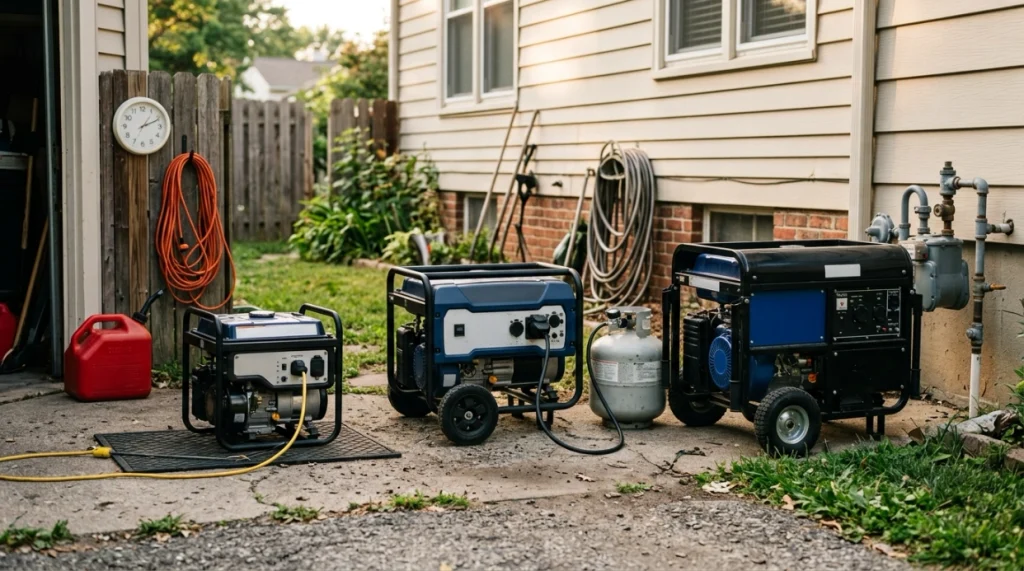
Many portable generators provide roughly one workday or overnight period on a tank, but published runtime changes dramatically with load and fuel type. Real manufacturer specifications show why there is no single runtime number.
| Generator | Gasoline Running Output | Published Runtime Example | Fuel Options |
|---|---|---|---|
| Champion 201176 | 7,250 W | 14 hours gasoline at 25% load | Gasoline, propane, natural gas |
| Westinghouse WGen9500TFc | 9,500 W | Up to 12 hours on gasoline | Gasoline, propane, natural gas |
| DuroMax XP13000HXT | 10,500 W | 17 hours at 25% load; 8.5 hours at 50% | Gasoline, propane, natural gas |
Those numbers also show why load matters. The same DuroMax specification drops from 17 hours at 25% load to 8.5 hours at 50% load on gasoline.
I avoid planning an outage around the longest advertised runtime alone. Published runtime is measured under stated conditions, while your refrigerator, pumps, furnace blower, air conditioner, and other loads constantly change demand.
What Happens If You Run a Generator Nonstop?
Long operation compresses days or weeks of normal generator use into a short outage. That makes routine checks and service intervals arrive much sooner than many owners expect.
- Oil gets hours quickly: An engine running 24 hours accumulates a full 24 operating hours in one day.
- Heat stays elevated: Restricted airflow, high ambient temperatures, debris, and heavy loads can make cooling harder.
- Fuel disappears faster: Higher electrical loads normally shorten tank runtime.
- Filters work continuously: Dust and debris can restrict cooling airflow or contaminate an air filter.
- Small problems become important: An oil leak, fuel leak, loose connection, or blocked vent matters more during extended duty.
This is also where right-sizing helps. A generator operating comfortably within its capacity is usually a better outage setup than an undersized machine struggling near maximum load.
If fuel economy is a priority, see my comparison of which generator type is most efficient. Inverter designs can reduce engine speed under lighter loads, which can stretch portable-generator fuel.
Can a Standby Generator Run 24 Hours a Day?
Many home standby generators are intended to handle extended power outages, but “automatic” does not mean maintenance-free. Some manufacturers specifically require continuous-use inspections after 24 hours.
Generac’s current guidance for certain air-cooled home standby models defines continuous use as approaching or exceeding 24 hours. It instructs owners to shut those applicable units down for at least 30 minutes after each 24-hour continuous period so maintenance checks can be performed.
Those tasks can include checking engine oil, looking for fuel or oil leaks, and clearing debris from enclosure louvers. Service such as an oil and filter change may also become due as operating hours accumulate.
You can review Generac’s continuous-use maintenance guidance for the covered models. Your own model’s manual should always be the final reference.
How Often Should You Shut a Generator Down During a Long Outage?
There is no universal shutdown interval that applies to every generator. Use the schedule in your owner’s manual, then plan shutdowns around inspection, refueling, oil checks, and required service.
For a portable gasoline generator, I would never keep it running simply because I have more fuel ready. Refueling itself normally creates a required shutdown because gasoline should not be added to a hot or operating unit.
- Disconnect or reduce electrical loads using the procedure in your manual.
- Shut the engine down correctly rather than stopping it under a heavy load.
- Allow hot parts to cool before adding gasoline or touching service areas.
- Check the oil level on the level surface and by the method specified by the manufacturer.
- Inspect for leaks, debris, and damage before restarting.
- Record operating hours so an oil change or other service interval does not pass unnoticed.
For long emergencies, the U.S. Department of Energy also recommends thinking ahead about backup-power operation and fuel supply. Its energy emergency guidance highlights fuel availability as part of backup-power planning.
Is It Okay to Leave a Generator Running Overnight?
A generator can be needed overnight, but unattended operation increases the importance of correct placement, weather protection, fuel planning, and carbon-monoxide alarms. Never move a portable generator indoors because rain, theft, noise, or cold weather makes outdoor operation inconvenient.
The U.S. Consumer Product Safety Commission says portable generators should be operated outside at least 20 feet from the home, with exhaust directed away. It also recommends working carbon-monoxide alarms on every level and outside sleeping areas.
See the CPSC’s carbon monoxide safety guidance before planning overnight operation.
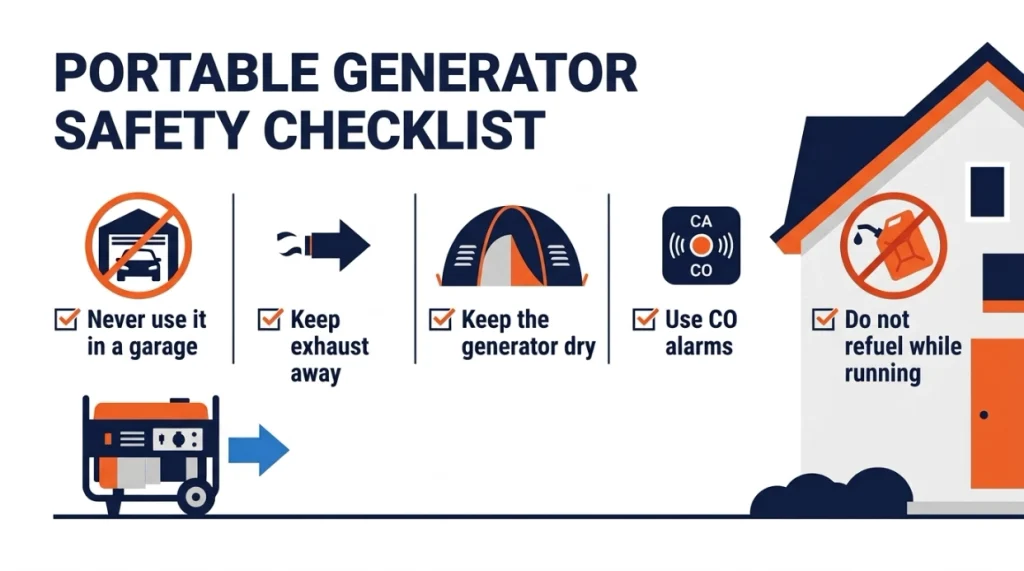
- Never use it in a garage: Opening the garage door does not make indoor generator use safe.
- Keep exhaust away: Face exhaust away from buildings and openings.
- Keep the generator dry: Use only a weather-protection arrangement that preserves safe ventilation.
- Use CO alarms: A CO sensor on the generator does not replace alarms inside the home.
- Do not refuel while running: Shut down and cool the engine first.
OSHA also warns about carbon monoxide, electrical shock, fire, and wet-condition hazards. Its portable generator safety guidance is worth keeping with your outage plan.
Does Generator Load Affect How Long You Can Run It?
Yes. Load has a major effect on fuel consumption, heat, and available runtime. A generator powering a modest emergency load can behave differently from the same machine supplying several motor-heavy appliances.
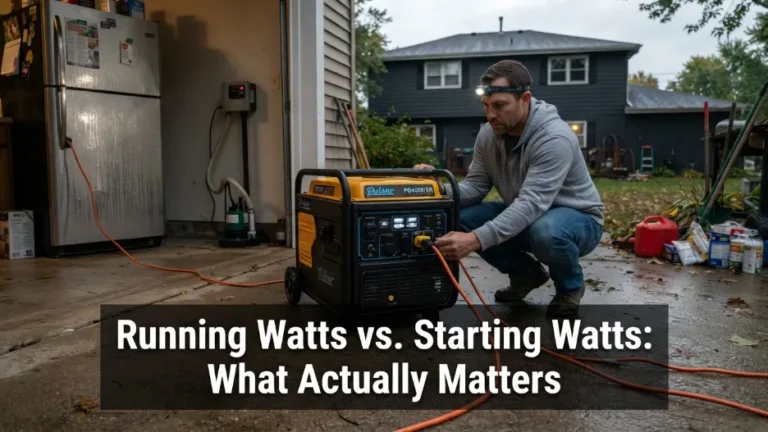
I first calculate what must stay powered, then avoid turning an outage into an attempt to run every appliance at once. That approach also helps prevent overload when refrigerators, pumps, or air conditioners start.
| Operating Situation | What Usually Changes | Practical Response |
|---|---|---|
| Light load | Lower fuel demand | Prioritize essential circuits |
| Moderate load | Balanced output and runtime | Monitor fuel and operating hours |
| Near maximum load | More fuel use and less surge headroom | Shed nonessential loads |
If your generator routinely struggles with the intended appliances, calculate your demand again. My home generator sizing guide walks through running watts and starting surge.
Should You Use Gasoline, Propane, or Natural Gas for 24-Hour Operation?
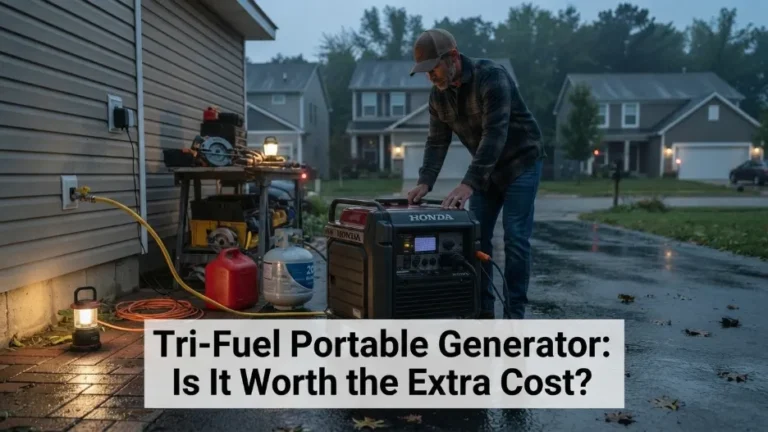
Fuel choice affects storage, refueling, available wattage, and outage convenience. Tri-fuel and dual-fuel machines can be valuable during a long outage because they reduce dependence on one fuel source.
- Gasoline: Widely available and often provides the generator’s highest rated output, but safe refueling requires shutdown and cooling.
- Propane: Stores well and avoids stale gasoline sitting in a carburetor, but portable cylinders still have finite runtime.
- Natural gas: Can remove repeated tank refueling where utility gas remains available, but output may be lower on multi-fuel portable models.
Fuel cost alone does not tell the full story. I compare energy content, published runtime, local fuel prices, storage, and rated output in my guide to whether propane or gasoline is cheaper for a generator.
When Should You Shut the Generator Down Immediately?
Do not wait for a scheduled break if the generator shows signs of an unsafe condition. Stop operation according to the manual when something looks, smells, or sounds wrong.
- Oil warning: Low oil, oil-pressure warnings, or an unexplained oil leak need attention.
- Fuel leak: Stop if you see or strongly smell leaking fuel around the generator.
- Overload: Repeated breaker trips or overload warnings mean the electrical demand needs correction.
- Abnormal sound: Knocking, grinding, or a sudden change in engine speed deserves investigation.
- Excessive heat: Blocked cooling airflow or an overheating warning should not be ignored.
- Damaged wiring: Burnt plugs, melted insulation, or smoking electrical equipment requires immediate shutdown.
I would rather lose power for a short inspection than turn a manageable generator problem into engine damage or a fire hazard. Extended outages reward preventive checks.
My 24-Hour Generator Operation Checklist
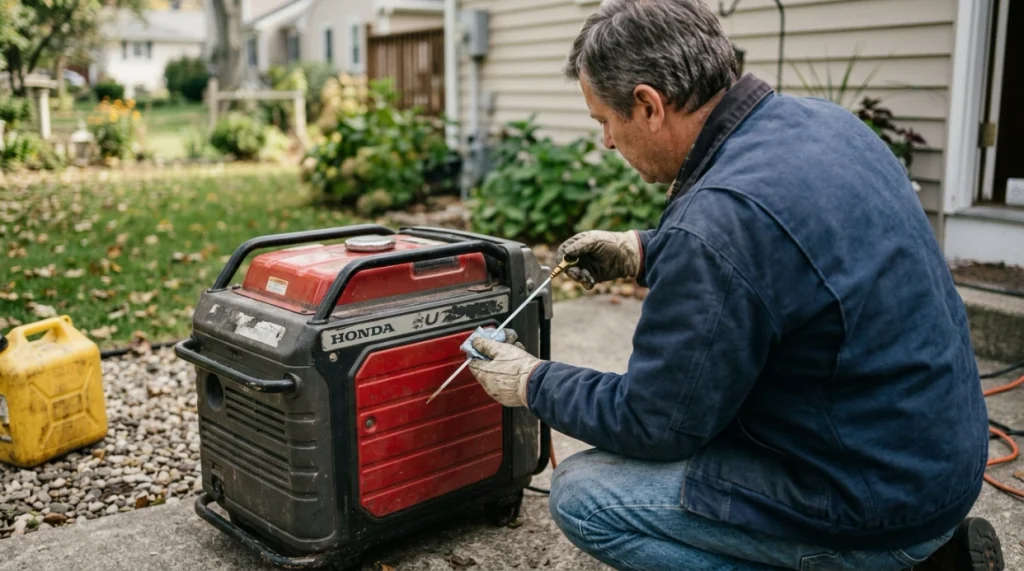
If I expect an outage to last all day, I plan the generator schedule before the first tank empties. That keeps fuel, maintenance, and electrical loads predictable.
- Read the model-specific continuous-operation and maintenance instructions.
- Record the hour meter reading when the outage begins.
- Check the engine-oil level as required by the manual.
- Keep cooling openings clear of leaves, dust, snow, and debris.
- Run only the loads that genuinely matter.
- Keep gasoline and other fuel stored according to applicable safety instructions.
- Plan a safe shutdown before refueling a portable gasoline generator.
- Test household carbon-monoxide alarms.
- Keep the generator outdoors and far from occupied buildings.
- Watch the hour meter so scheduled service is not missed.
If you’re preparing for multi-day outages, these are three generator configurations I would put on the comparison list rather than choosing only by peak wattage:
🏆 Best All-Around Home Backup
Westinghouse WGen9500TFc
★★★★☆ 4.7/5 editor fit
It provides 9,500 running watts on gasoline and supports gasoline, propane, or natural gas. I like the tri-fuel flexibility for extended outages because one unavailable fuel does not automatically leave the house without backup power.
⛽ Best Fuel-Efficient Tri-Fuel Pick
Champion 201176 9000W Tri-Fuel Inverter
★★★★☆ 4.6/5 editor fit
This open-frame inverter provides 7,250 running watts on gasoline and a published 14-hour gasoline runtime at 25% load. I would consider it when fuel efficiency under changing household loads matters more than maximum portable-generator output.
⚡ Best for Higher Backup Loads
DuroMax XP13000HXT
★★★★☆ 4.7/5 editor fit
The XP13000HXT delivers 10,500 gasoline running watts and supports three fuel types. Its published 17-hour gasoline runtime at 25% load makes it worth comparing when you need more capacity without giving up fuel flexibility.
Frequently Asked Questions
Can a generator run 24 hours without stopping?
Some generators can operate through a 24-hour outage, but that does not mean they should run for 24 uninterrupted hours. Fuel, oil, load, maintenance intervals, and the manufacturer’s continuous-operation instructions determine when the generator needs inspection or shutdown.
How long should I let a generator rest?
There is no universal rest period for every generator. Follow your model’s manual. For certain Generac air-cooled standby models, current continuous-use guidance calls for at least a 30-minute shutdown after every 24 hours of continuous operation so maintenance checks can be performed.
Can I refuel a generator while it is running?
No. Shut a portable gasoline generator down and allow it to cool before refueling. Spilled gasoline can ignite when it contacts hot engine or exhaust components, so refueling convenience should never override fire safety.
Is it better to run a generator continuously or turn it off at night?
If you do not need overnight power, shutting it down reduces fuel use, noise, and accumulated engine hours. If critical loads require overnight power, operate the generator according to its manual and follow outdoor-placement, CO-alarm, weather, load, and maintenance precautions.
Will running a generator all day damage it?
Running all day does not automatically damage a generator designed for extended use. Problems are more likely when owners overload the unit, miss oil or service intervals, block cooling airflow, use contaminated fuel, or keep operating despite warning signs.
Final Takeaway
So, is it okay to run a generator 24 hours a day? Sometimes yes, but I would never use “24 hours” as permission to ignore the owner’s manual, refueling safety, oil checks, maintenance intervals, load, or cooling.
For a portable generator, plan safe shutdowns around fuel and service needs. For a standby generator, follow its specific continuous-use maintenance schedule throughout a long outage.
The goal is not to prove how long the engine can stay running. It is to keep reliable power available for the entire outage without sacrificing safety or the generator you may still need tomorrow.
“`
—
SEO METADATA (for WordPress SEO plugin — do not paste into content):
Meta Title: Can You Run a Generator 24 Hours a Day? Safety Guide
Meta Description: Learn if a generator can run 24 hours a day, when to stop, refuel, check oil, and safely operate portable or standby generators.
URL Slug: run-generator-24-hours-a-day
Focus Keyword: Is it okay to run a generator 24 hours a day?
Internal links placed from sitemap/cluster:
* https://homegeneratorblog.com/generators/portable-generator/portable-generator-maintenance-schedule/ → placed in the Quick Answer box with anchor text “portable generator maintenance schedule”
* https://homegeneratorblog.com/generators/portable-generator/portable-generator-lifespan/ → placed in section “Is It Safe to Run a Generator for 24 Hours Straight?” with anchor text “portable generator lifespan”
* https://homegeneratorblog.com/generators/what-type-of-generator-is-most-efficient/ → placed in section “What Happens If You Run a Generator Nonstop?” with anchor text “which generator type is most efficient”
* https://homegeneratorblog.com/generators/portable-generator/what-size-generator-home/ → placed in section “Does Generator Load Affect How Long You Can Run It?” with anchor text “home generator sizing guide”
* https://homegeneratorblog.com/generators/is-it-cheaper-to-run-your-generator-on-propane-or-gas/ → placed in section “Should You Use Gasoline, Propane, or Natural Gas for 24-Hour Operation?” with anchor text “propane or gasoline is cheaper for a generator”
Links to manually verify before publishing:
* https://homegeneratorblog.com/sitemap_index.xml — the sitemap index could not be directly parsed by the browsing environment; the selected internal pages were independently confirmed live on HomeGeneratorBlog, but their current sitemap inclusion should be checked before publication.
* Amazon affiliate search links — search URLs are structurally valid, but product availability and search-result ordering can change.
—

Hi, I’m Michael Turner. I own a generator workshop in the United States and founded HomeGeneratorBlog to share practical, hands-on guidance about generator installation, maintenance, troubleshooting, safety, and backup power solutions. My goal is to help homeowners make smarter, more confident decisions through clear and reliable information