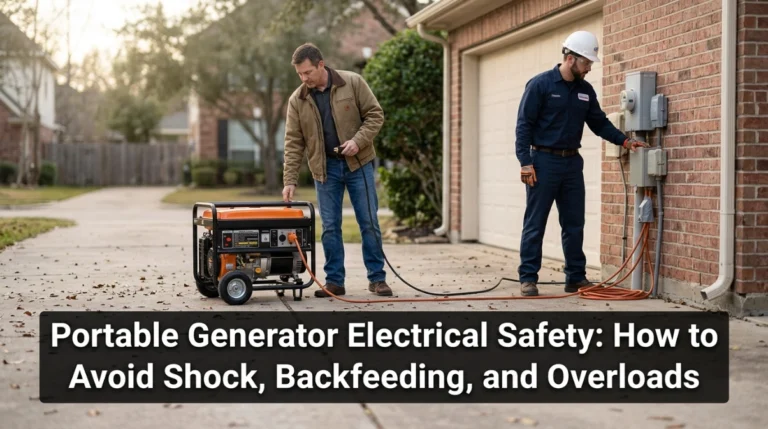
Is It Okay to Leave a Generator Running All Night?
Quick Answer
I don’t recommend leaving a portable gasoline, propane, or dual-fuel generator running unattended all night while everyone sleeps. If it must operate late into the night, follow strict portable generator carbon monoxide safety rules, monitor the machine, and follow its manual for runtime, oil checks, weather protection, and shutdowns. A professionally installed automatic standby generator is different because it is designed for automatic outage operation.
Before running a generator overnight
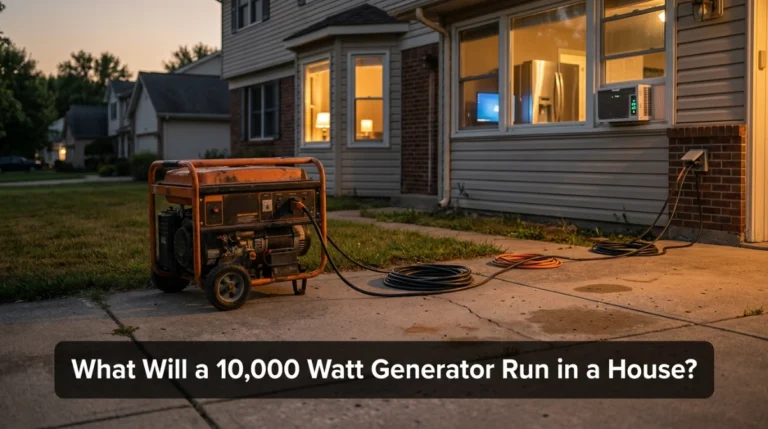
- Keep it outside: Place a portable generator at least 20 feet from the home, windows, doors, and vents.
- Aim exhaust away: Exhaust should point away from your home and any nearby occupied building.
- Use CO alarms: Working battery-powered or battery-backup carbon monoxide alarms are essential inside the home.
- Keep it dry: Never expose electrical generator components to rain or use an improvised enclosure that traps exhaust or heat.
- Plan maintenance: Check oil, operating hours, load, fuel, and the service schedule before a long run.
- Never hot-refuel: Shut the engine down and let it cool before adding gasoline.
My practical rule
- If nobody will be awake to notice a CO alarm, fuel leak, overload, weather change, or mechanical problem, I prefer shutting a portable generator down rather than treating tank capacity as permission to run unattended.
A long outage makes overnight generator use tempting. The refrigerator is full, the sump pump matters, and nobody wants the furnace blower stopping at 2 a.m.
The key is separating a portable combustion generator from a professionally installed standby system. They may both make electricity, but they are not intended to be operated in the same way.
What Does “Running a Generator All Night” Actually Mean?
Overnight generator operation means keeping backup power running for several hours while household members are sleeping. With a portable generator, the biggest concern isn’t simply engine runtime; it’s operating a fuel-burning machine when supervision is limited.
As of 2026, the CDC’s carbon monoxide guidance says portable generators should operate outside, more than 20 feet from windows, doors, and vents. A battery-powered or battery-backup CO detector should also be used inside.
Is It Safe to Leave a Portable Generator Running All Night?
I would not leave a portable fuel-burning generator running unattended all night. Even when correctly positioned outdoors, the machine still involves exhaust, heat, fuel, electricity, changing weather, and engine maintenance.
That doesn’t mean every long generator run is automatically unsafe. It means an overnight run needs active planning rather than a “fill the tank and go to sleep” approach.
| Backup Type | Combustion Exhaust | Automatic Operation | Overnight Approach |
|---|---|---|---|
| Portable gas/propane generator | Yes | Usually no | Avoid unattended overnight operation; follow manual and CO rules |
| Automatic home standby generator | Yes | Yes, when correctly installed | Designed for extended outage operation, subject to maintenance requirements |
| Battery power station | No combustion exhaust during normal battery use | Model dependent | Often convenient for quiet overnight essential loads |
What Are the Main Risks of Running a Generator Overnight?
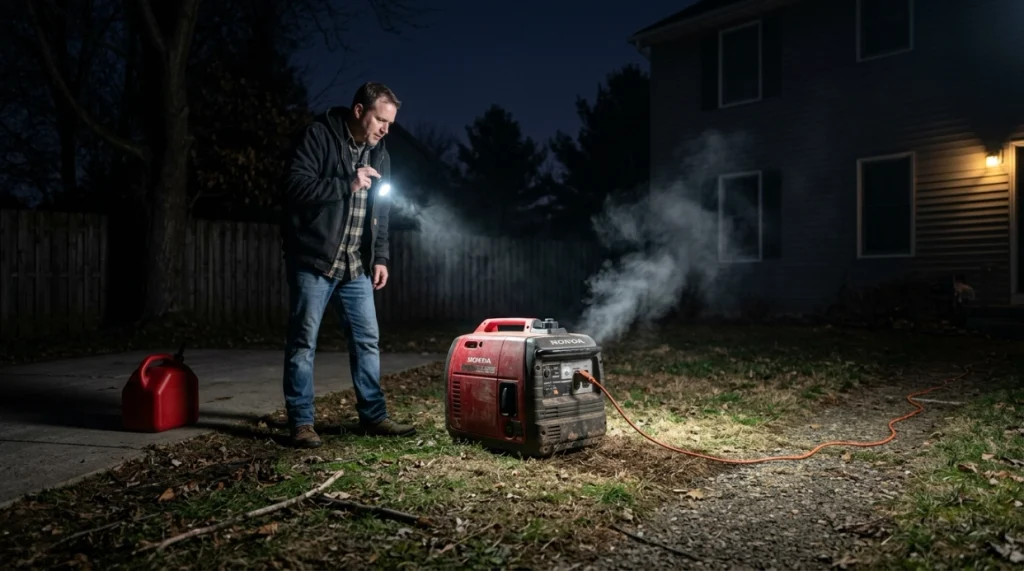
The biggest overnight danger is carbon monoxide poisoning. CO has no color or smell, so sleeping occupants cannot depend on their senses to detect a problem.
The U.S. Consumer Product Safety Commission says portable generators should never operate inside homes, garages, basements, crawlspaces, sheds, porches, or carports.
- Carbon monoxide: Exhaust can enter through windows, doors, vents, soffits, HVAC openings, and other gaps.
- Fire and fuel: Gasoline and hot engine or exhaust components are a dangerous combination, especially during refueling.
- Electrical shock: Rain, wet cords, damaged plugs, or incorrect connections can create electrocution hazards.
- Overheating: Blocked cooling airflow, excessive load, low oil, or an unsuitable enclosure can make a long run harder on the machine.
- Missed warning signs: Sleeping occupants may not notice unusual vibration, smoke, leaking fuel, overload warnings, or changing weather.
I treat a portable generator as operating machinery, not as an outdoor appliance that can be ignored after startup. That mindset becomes even more important after dark.
How Long Can a Portable Generator Run Continuously?
There is no universal safe number of hours for every portable generator. Fuel capacity tells you how long an engine might run between refueling, but it does not replace the owner’s manual, oil checks, service intervals, or supervision.
A model advertised for long runtime at a light load may run much less at a heavier load. Temperature, altitude, fuel type, Eco mode, and appliance cycling can change actual runtime too.
Maintenance hours still count during an outage
Long outages can accumulate service hours surprisingly fast. A generator operating 20 hours each day reaches 100 hours in only five days.
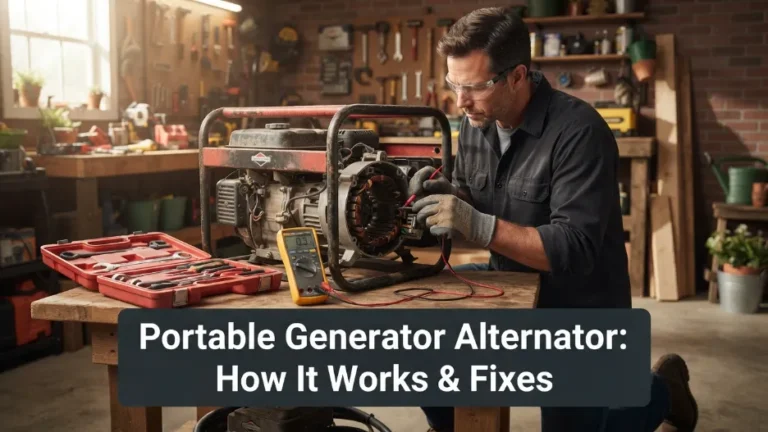
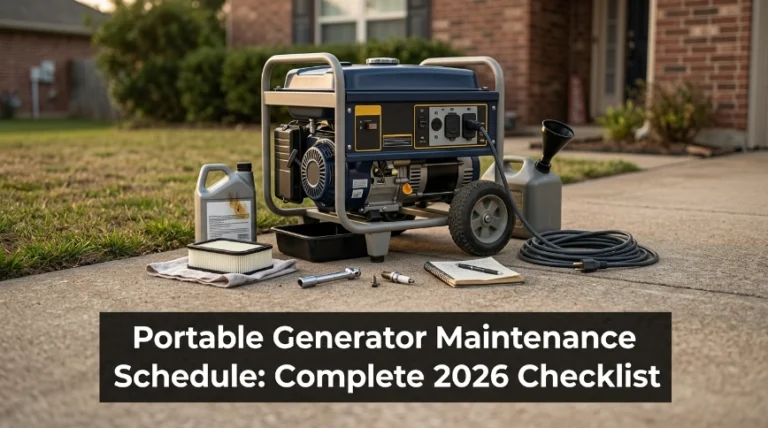
That’s why I recommend tracking hours from the beginning of an outage. Our portable generator maintenance schedule explains the checks and service points worth planning before storm season.
- Check oil: Follow the manual’s procedure before extended operation and at the intervals it specifies.
- Watch airflow: Clear leaves, snow, plastic, grass, or storm debris from cooling areas.
- Track service time: Don’t postpone maintenance just because utility power is still out.
- Inspect for leaks: Look around fuel lines, the tank, carburetor, and crankcase.
- Monitor the load: Avoid operating continuously at or beyond the generator’s rated output.
If your run hours reach an oil-service interval during an extended outage, plan a proper shutdown. This portable generator oil-change guide covers the basic process and why model-specific intervals matter.
What Should You Check Before Running a Generator Late at Night?
Do the safety inspection before you’re tired. Waiting until midnight to find a damaged cord, low oil level, or nearly empty fuel can encourage shortcuts.
The American Red Cross generator safety guidance also stresses outdoor operation, keeping generators dry, preventing overload, and using safe electrical connections.
- Placement: Keep the portable generator outside and at least 20 feet from the home and openings.
- Exhaust direction: Point exhaust away from occupied structures.
- CO protection: Confirm working CO alarms on every level and outside sleeping areas.
- Weather: Check the forecast before committing to a long run.
- Oil: Verify the oil level using the manufacturer’s instructions.
- Fuel: Start with enough fuel for your planned operating window without unsafe hot refueling.
- Cords: Use heavy-duty outdoor-rated cords sized for the connected load.
- Load: Add up what you are powering and leave reasonable capacity for motor starting surges.
- Shutdown plan: Decide when someone will inspect or stop the generator instead of relying solely on the fuel tank running dry.
Fuel deserves its own plan. Review my portable generator fuel-safety guide before storing or handling gasoline during a multi-day outage.
Can you run a generator overnight in the rain?
A generator should not simply sit exposed to rain. At the same time, putting it inside a garage, porch, shed, homemade box, or tightly wrapped tarp can create much more serious exhaust, heat, and CO hazards.
The CPSC advises following the generator manufacturer’s wet-weather instructions, which may permit a properly rated noncombustible generator tent. Never assume an improvised cover provides safe airflow and exhaust clearance.
Should You Turn a Portable Generator Off While You Sleep?
If the generator does not need to run, shutting it down while everyone sleeps is the approach I prefer. You can cool the engine, conserve fuel, reduce noise, and remove several hours of unattended mechanical operation.
Prioritize what genuinely requires continuous electricity. Refrigeration, medical equipment, heating systems, sump pumps, and other critical loads deserve different planning than televisions, decorative lights, or convenience appliances.
Could a power station handle the overnight load instead?
Sometimes, yes. A battery power station can handle selected low-to-moderate overnight loads without producing combustion exhaust at the point of use.
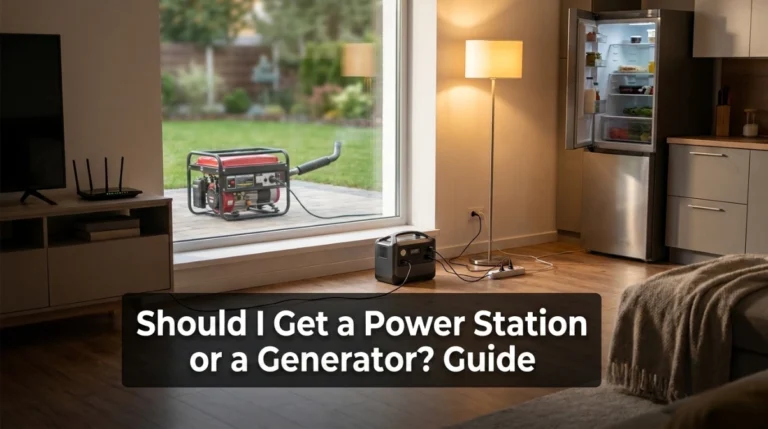
A practical hybrid plan is to use the fuel generator during supervised daytime hours and battery power for selected overnight loads. My power station vs. generator comparison explains where each option makes sense.
Are Standby Generators Safe to Run All Night?
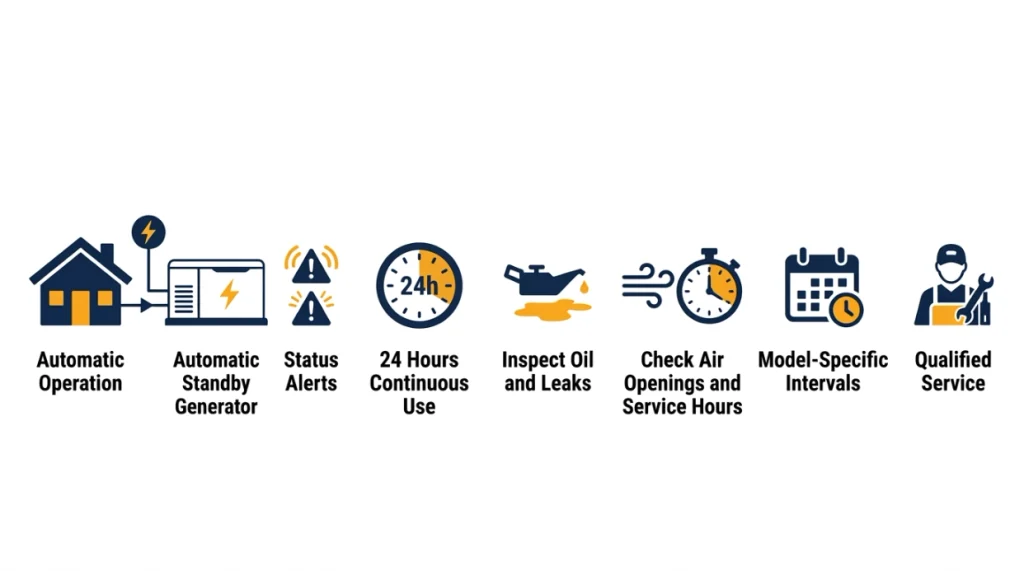
A correctly installed automatic standby generator is specifically designed to start during a utility outage and can continue operating overnight. That is different from leaving a portable generator unattended.
However, a standby unit is not maintenance-free. Fuel supply, oil, ventilation, load, scheduled service, fault warnings, and manufacturer requirements still matter.
For example, Generac’s 2026 continuous-use guidance defines continuous use for covered air-cooled standby models as approaching or exceeding 24 hours. It calls for a shutdown and maintenance checks after each 24-hour continuous operating period for those models.
- Use automatic mode correctly: Follow the manufacturer’s operating instructions.
- Check status alerts: Don’t ignore warnings simply because the generator is still producing power.
- Inspect during extended outages: Oil level, leaks, air openings, and service hours still need attention.
- Follow model-specific intervals: Maintenance schedules vary between generator families.
- Use qualified service: Electrical, gas, transfer-switch, and installation problems are jobs for the appropriate professional.
What Is the Safest Overnight Generator Strategy?
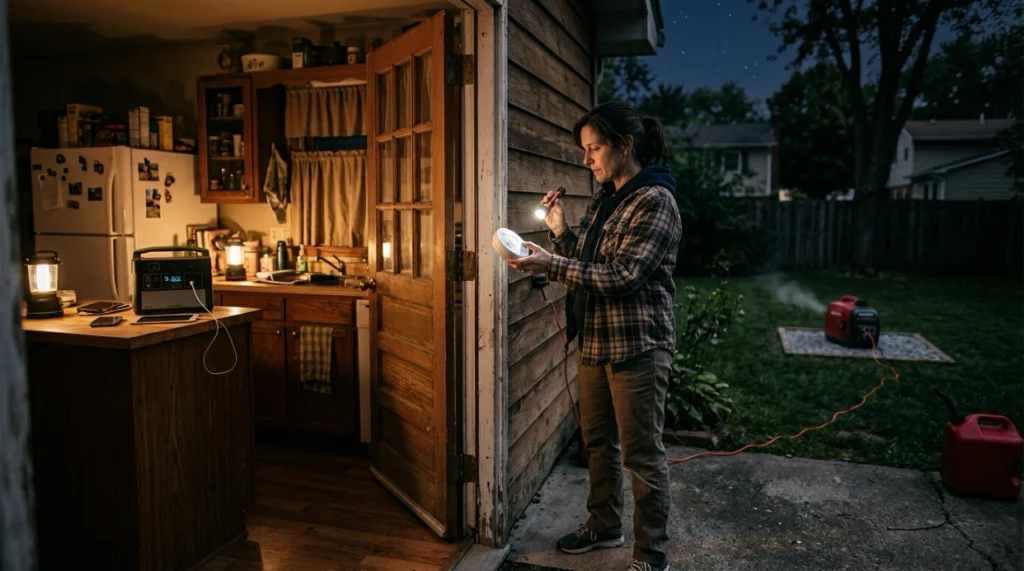
My preferred strategy is to reduce overnight demand first, then decide whether continuous portable-generator operation is even necessary. This often saves fuel and makes the outage easier to manage.
- List the critical loads. Separate must-run equipment from convenience loads.
- Run high-demand appliances while awake. Charge batteries and power stations, pump water, cool refrigerators, and complete cooking earlier when practical.
- Check CO alarms before bed. Never assume an alarm works because it worked last season.
- Inspect generator placement. Confirm the 20-foot distance, exhaust direction, dry operating setup, and clear airflow.
- Check oil and operating hours. Don’t begin a long run close to a required service interval without a plan.
- Avoid hot refueling. Schedule refueling around a shutdown and cool-down period.
- Reduce the electrical load. Turn off equipment you don’t need overnight.
- Use battery backup where practical. Quiet battery power can reduce the need for continuous engine runtime.
- Follow the owner’s manual. Your exact generator’s operating limits always outrank a general rule online.
The biggest mistake I see in overnight planning is focusing only on how many hours the fuel tank lasts. Safe runtime is a system involving location, CO detection, weather, fuel, maintenance, load, and supervision.
Useful Safety Gear for Extended Generator Operation
If you’re preparing for a long outage, I would prioritize safety equipment before convenience accessories. These are three practical items that address CO detection, weather exposure, and outdoor power distribution.
🏆 Best Safety Essential
Kidde KN-COB-LP2 Battery Carbon Monoxide Alarm
★★★★★ 4.8/5 editorial rating
This battery-operated CO alarm uses two AA batteries, so it can keep monitoring during a power outage. I consider working CO detection inside the home essential whenever a combustion generator is operating outside.
🌧️ Best for Wet Weather
GenTent Universal Clamp Generator Running Cover
★★★★☆ 4.7/5 editorial rating
GenTent’s current universal system is designed for compatible open-frame generators while preserving cooling airflow and exhaust clearance. I prefer a purpose-built running cover over improvised tarps, but fitment and your generator manual still need to be checked.
🔌 Best Outdoor Cord
Southwire 2588SW0002 12/3 50-Foot Outdoor Extension Cord
★★★★☆ 4.6/5 editorial rating
This 12/3 SJTW cord is rated for 15 amps, 125 volts, and 1,875 watts. I like a heavy-duty outdoor cord for suitable 120-volt loads, but every connected appliance must stay within the cord, outlet, and generator ratings.
Frequently Asked Questions
Can I run a portable generator for 8 hours straight?
Many portable generators can mechanically operate for several hours, but the correct limit depends on the exact model, fuel supply, load, oil level, temperature, and maintenance schedule. Follow the owner’s manual and inspect the generator during extended operation rather than assuming eight hours is automatically safe.
Can I sleep while my generator is running outside?
I don’t recommend leaving a portable combustion generator completely unattended while everyone sleeps. Correct outdoor placement and CO alarms reduce major risks, but they do not eliminate concerns involving fuel leaks, electrical faults, weather, overheating, overloads, or mechanical problems.
How far should a generator be from the house at night?
CDC and CPSC guidance says portable generators should operate outside at least 20 feet from the home, with exhaust directed away from the building. Keep the generator away from windows, doors, vents, and other openings that could allow carbon monoxide inside.
Can I run a generator in the garage overnight if the door is open?
No. Never operate a portable generator in a garage, even with the garage door open, because carbon monoxide can accumulate and enter the home. A porch, carport, basement, crawlspace, or shed is also not a safe substitute for proper outdoor placement.
Can a whole-house standby generator run overnight?
Yes, a properly installed automatic standby generator is designed to operate automatically through outages, including overnight. Extended operation still requires manufacturer-specified inspections and maintenance, and some models call for checks or scheduled shutdowns after continuous operation reaches certain hour limits.
Final Takeaway
So, is it okay to leave a generator running all night? For a portable fuel-burning generator, I would not treat unattended overnight operation as the default plan.
Place it correctly, use working CO alarms, keep it dry, track runtime, avoid hot refueling, inspect the electrical load, and follow the exact owner’s manual. If quiet overnight power is a regular need, an automatic standby system or appropriately sized battery backup may be a better long-term setup.
Plan before the outage instead of making safety decisions in the dark. A few minutes spent checking placement, CO alarms, fuel, oil, and backup options can make the entire night easier to manage.

Hi, I’m Michael Turner. I own a generator workshop in the United States and founded HomeGeneratorBlog to share practical, hands-on guidance about generator installation, maintenance, troubleshooting, safety, and backup power solutions. My goal is to help homeowners make smarter, more confident decisions through clear and reliable information