Can I Use 1 Year Old Gas in My Generator?
Quick Answer
I would not normally use 1-year-old gasoline in a generator, especially if it was untreated or stored in a partly filled container. Gasoline can oxidize, lose volatility, absorb moisture, and leave deposits that cause hard starting or carburetor problems. Honda’s generator fuel recommendations also warn that fuel deterioration can happen far sooner than one year under unfavorable storage conditions.
What I would check first
- Was it stabilized? Fuel treated while fresh has a better chance of surviving extended storage.
- Was it sealed? A properly closed approved fuel container limits exposure to air and moisture.
- Does it look normal? Darkening, sediment, cloudiness, or separated layers are warning signs.
- Does it smell stale? A sour or varnish-like odor suggests significant deterioration.
- Is reliability important? During an outage, fresh gasoline is worth using instead of gambling on questionable fuel.
My safest approach
- If I cannot confirm that year-old gas was stabilized and stored correctly, I replace it with fresh gasoline before relying on the generator.
I understand why people hesitate to throw away stored gasoline. You bought it for an emergency, and after a quiet year it may still look usable inside the can.
Generators are less forgiving than many people expect, though. Small carburetor passages can react badly to degraded fuel, so I would rather solve the fuel problem before an outage than during one.
Can You Put 1-Year-Old Gas in a Generator?
You technically may be able to start a generator with year-old gasoline, but that does not mean the fuel is in good condition. Whether it works depends on how the gasoline was treated, sealed, stored, and exposed to heat or moisture.
For a generator I depend on during outages, I consider untreated gasoline that has been sitting for a year too questionable to use as my primary fuel.
- Untreated for one year: I would replace it.
- Stabilized while fresh: It may still be usable, depending on the stabilizer and storage conditions.
- Unknown history: I treat it as questionable fuel.
- Visible contamination: I do not put it into the generator.
- Water or separated layers: I keep it out of the fuel system.
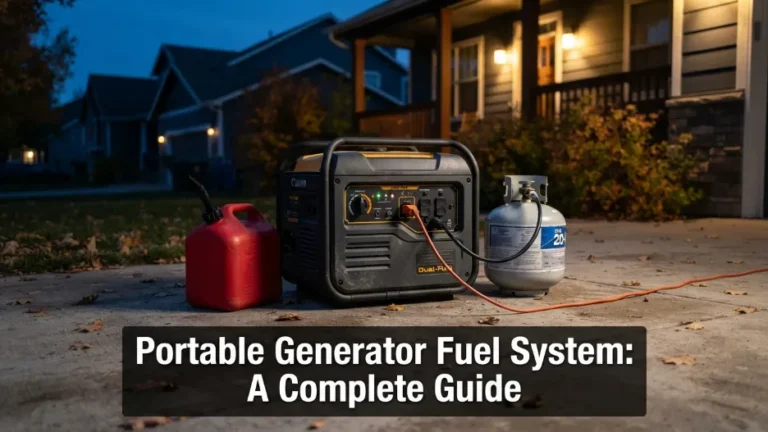
If you’re trying to understand what happens after fuel reaches the tank, my guide to the portable generator fuel system explains the tank, fuel valve, carburetor, and engine side in more detail.
Why Does Old Gas Cause Problems in a Generator?
Old gasoline is gasoline that has changed enough during storage to affect combustion or the fuel system. Oxidation, evaporation, moisture, and ethanol-related changes can all contribute.
The biggest issue is not simply the number printed on a calendar. Storage conditions determine how quickly those changes become a problem.
- Oxidation: Gasoline reacts with oxygen as it sits.
- Volatile components escape: The fuel can become harder to ignite properly.
- Deposits form: Degraded fuel may leave gum or varnish in small fuel passages.
- Moisture enters: Poorly sealed containers can expose fuel to humid air.
- Ethanol attracts water: Ethanol-blended fuel deserves extra attention during storage.
Honda notes that fuel deterioration problems can occur in less than 30 days under some conditions. Warm temperatures, humidity, older fuel, and extra air inside a partly filled tank can accelerate deterioration.
That does not mean every gallon suddenly becomes unusable on day 31. It means gasoline storage life varies enough that I don’t judge it by age alone.
What Happens if You Run a Generator With Stale Gas?
A generator running on stale gasoline may become difficult to start, surge, run roughly, lose power, or stop. Deposits can also restrict the carburetor’s tiny passages.
The frustrating part is that the problem may not appear immediately.
- Longer cranking before the engine starts
- Repeated starting and stalling
- Uneven engine speed
- Reduced ability to handle electrical loads
- Fuel-system deposits
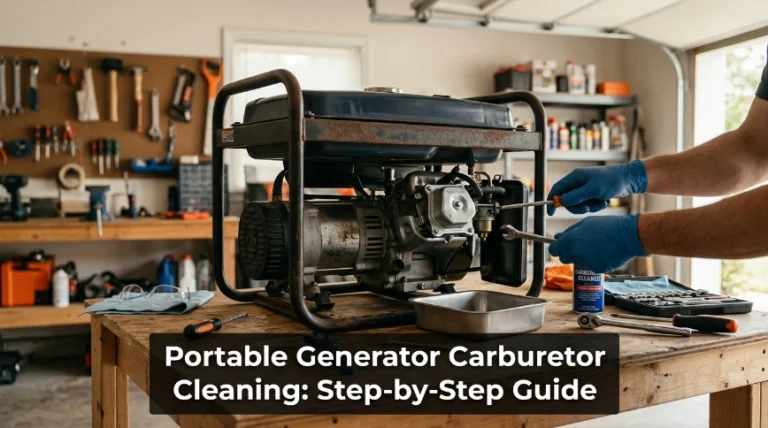
- Carburetor cleaning becoming necessary
I’ve found that emergency equipment is the wrong place to test questionable fuel. A generator that runs for five minutes in the driveway still needs to remain dependable when a refrigerator, pump, or furnace blower is connected.
How Can I Tell if Year-Old Gas Is Bad?
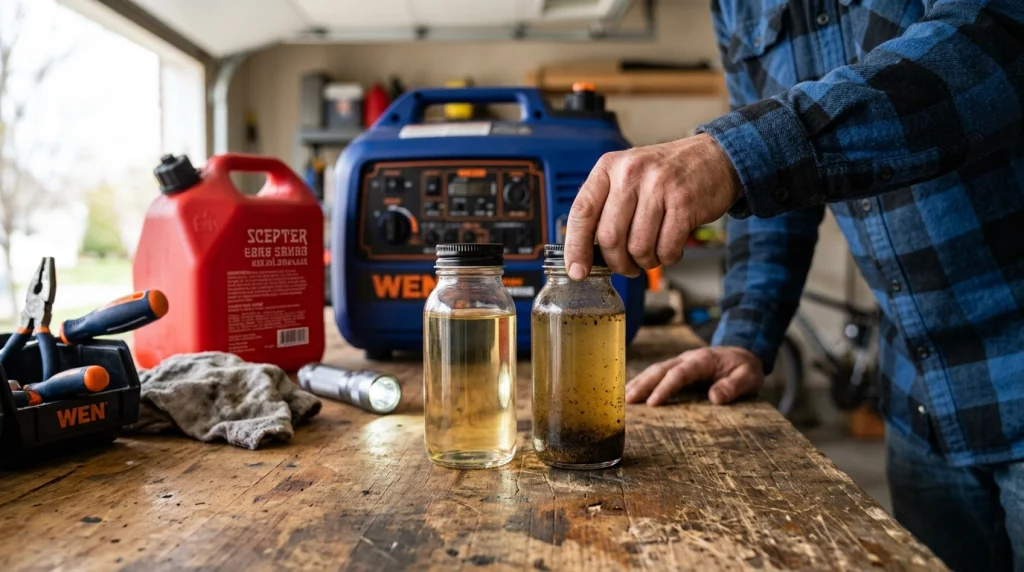
Start by inspecting the fuel before it ever reaches your generator. Appearance and odor cannot prove that gasoline is good, but obvious changes can tell you when not to use it.
I check stored gasoline in good light and compare it with fresh fuel when possible.
| Check | Better Sign | Warning Sign | What I Would Do |
|---|---|---|---|
| Color | Similar to fresh gasoline | Noticeably dark or discolored | Avoid using questionable fuel |
| Clarity | Clear and uniform | Cloudy, sediment, or debris | Keep contaminants out of generator |
| Layers | One consistent liquid layer | Visible separation | Do not rely on it |
| Odor | Normal gasoline smell | Sour or varnish-like smell | Replace with fresh fuel |
| Storage history | Sealed, cool, stabilized | Unknown, hot, vented, untreated | Choose fresh gasoline |
Never intentionally inhale gasoline fumes to test fuel. Work outdoors, avoid flames and ignition sources, and follow local rules when handling or disposing of gasoline.
Can Fuel Stabilizer Make 1-Year-Old Gas Good Again?
No. Fuel stabilizer is mainly a preventive treatment for gasoline that is still fresh; it does not reverse significant deterioration that has already happened.
This distinction matters because pouring stabilizer into stale fuel after a year is not the same as treating fresh gasoline before storage.
Honda specifically notes that stabilizer will not reconstitute stale gasoline. Its generator guidance also recommends adding stabilizer when the fuel is fresh and following the storage procedure in the owner’s manual.
- Good use: Adding the correct amount to fresh gasoline before storage.
- Good practice: Running treated fuel through the generator when the manufacturer instructs you to do so.
- Bad assumption: Adding stabilizer to badly degraded gasoline and expecting it to become fresh again.
Some stabilizer manufacturers advertise extended storage periods when their products are added correctly to fresh gasoline. Always follow the exact product instructions rather than guessing the dose.
What Should I Do With Gas That Has Been Sitting for a Year?
If I cannot verify its condition and storage history, I keep year-old gasoline out of the generator. I then deal with the old fuel according to local disposal or recycling requirements.
Do not pour gasoline onto the ground, into a drain, or into household trash.
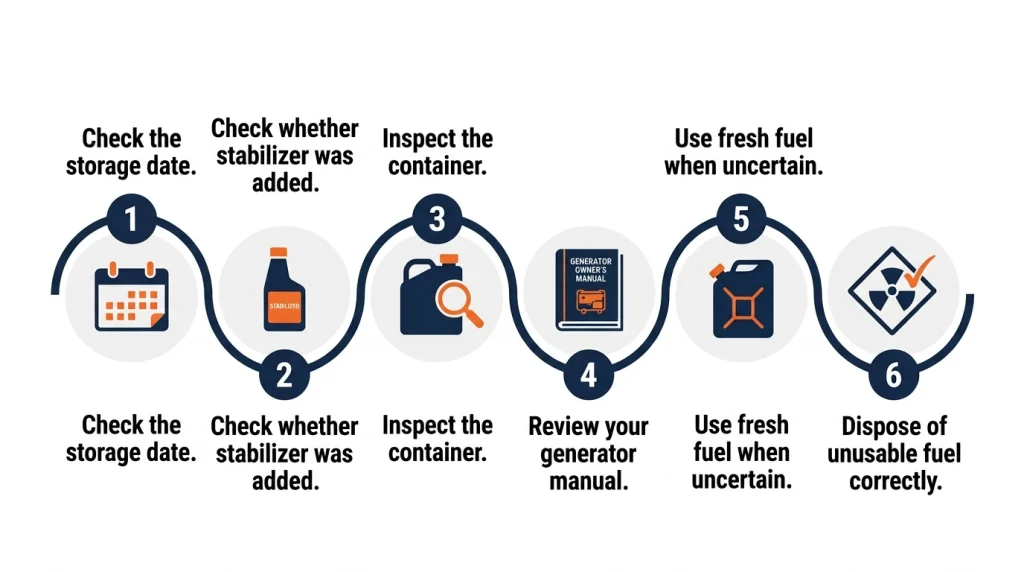
- Check the storage date. Confirm how old the gasoline really is.
- Check whether stabilizer was added. Ideally, it was mixed with the gasoline while the fuel was fresh.
- Inspect the container. Look for water, debris, cloudiness, or separated layers.
- Review your generator manual. Follow its fuel and storage specifications.
- Use fresh fuel when uncertain. Reliability is more valuable than saving a questionable gallon.
- Dispose of unusable fuel correctly. Contact your local household hazardous-waste program or appropriate local authority.
If long-term gasoline storage is becoming a recurring headache, it may also be worth comparing generator fuel options such as gasoline, propane, diesel, and natural gas.
Can I Mix Old Gas With Fresh Gas for My Generator?
I don’t recommend using dilution as a rescue strategy for clearly stale, contaminated, or separated gasoline. Adding fresh gas does not remove water, debris, oxidation products, or deposits already present.
For emergency backup equipment, I prefer starting with fuel I trust.
There may be situations where properly stabilized stored gasoline remains within the product manufacturer’s stated storage period. That’s different from trying to dilute visibly degraded fuel.
- Never mix visibly contaminated gasoline into fresh fuel.
- Do not assume fresh gasoline repairs stale gasoline.
- Check the generator manufacturer’s fuel specification first.
- Use the correct octane and ethanol level for your engine.
How Long Should Gas Sit in a Generator?
There is no universal safe storage period for every generator and gasoline blend. Manufacturer instructions should control your maintenance schedule.
Honda says deterioration may occur in less than 30 days in unfavorable conditions and recommends following model-specific storage procedures when equipment will sit unused.
For generators used only during outages, I build fuel rotation into normal maintenance instead of waiting for the next storm.
- Date every container. I want to know when the gasoline was purchased.
- Treat fresh fuel. I add stabilizer before storage when appropriate.
- Use approved containers. They should close properly and be designed for gasoline.
- Keep fuel cool. Heat and direct sunlight are poor storage conditions.
- Rotate supplies. Don’t let emergency gasoline become forgotten gasoline.
If you’re calculating how much fresh fuel to keep available, see how long a generator can run on one gallon of gas. Runtime varies significantly with generator size and electrical load.
Is Ethanol-Free Gas Better for Generator Storage?
Ethanol-free gasoline can simplify storage because ethanol attracts water, but you should still treat gasoline as a fuel with a limited storage life. Ethanol-free does not mean deterioration-free.
The generator manual remains the first place I check for acceptable fuel specifications.
Many small engines are designed for ordinary unleaded gasoline containing limited ethanol. Honda, for example, instructs owners not to use gasoline containing more than 10% ethanol in its generators.
If storage convenience matters more than maximum gasoline output, a dual-fuel generator can also make propane attractive. My propane vs. gasoline generator cost comparison covers the operating-cost side of that decision.
How Do I Prevent Generator Gas From Going Bad?
The best solution is to manage the gasoline while it’s fresh. A simple rotation system costs less than cleaning a clogged carburetor before an outage.
My routine is straightforward.
- Buy fresh gasoline. Start with fuel from a busy, reputable station.
- Use the right container. Choose an approved gasoline container that seals properly.
- Add stabilizer if needed. Measure it according to the label.
- Label the purchase date. A piece of tape and a marker work fine.
- Store fuel appropriately. Keep it away from living areas, heat, sparks, and flames.
- Rotate the gasoline. Replace stored fuel before it becomes questionable.
- Follow the generator manual. Storage procedures differ between models.
Consumer Reports also recommends storing gasoline in an approved container away from living areas and ignition sources. It advises treating stored generator fuel carefully rather than leaving old gasoline forgotten inside the machine.
What if My Generator Already Has Year-Old Gas in the Tank?
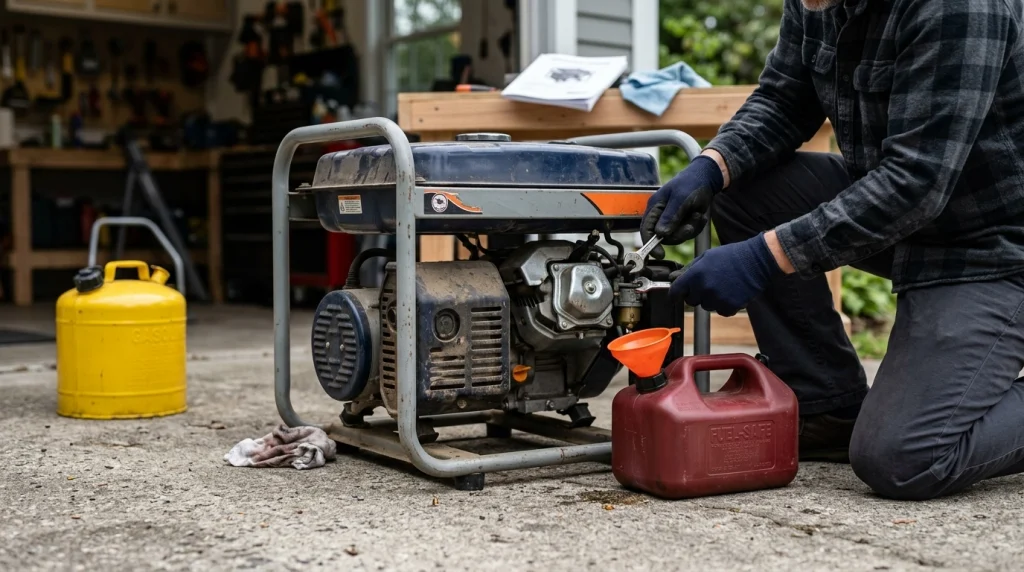
I would avoid simply topping the tank with fresh gasoline and hoping for the best. Check the owner’s manual for its approved draining and storage procedure first.
Fuel may also remain in the carburetor even after the main tank is emptied.
- Turn the generator off and let it cool completely.
- Work outdoors away from flames or sparks.
- Follow the manufacturer’s fuel-draining procedure.
- Inspect removed fuel for obvious contamination.
- Use fresh gasoline that meets the manual’s specification.
- Seek professional service if the engine still will not start or runs poorly.
Don’t improvise around gasoline. Different generator designs use different tanks, carburetor drains, fuel valves, and storage procedures.
Useful Products for Better Generator Fuel Storage
If you’re ready to improve your fuel-storage routine, these are the two practical items I’d consider first. Neither replaces proper fuel rotation or the instructions in your generator manual.
🏆 Best for Stored Gasoline
STA-BIL Storage Fuel Stabilizer
★★★★☆
This stabilizer is designed to be mixed with fresh gasoline before storage. I like it for generators because the measured treatment approach is much easier than trying to rescue forgotten fuel later.
⛽ Best for Controlled Refueling
No-Spill 1450 5-Gallon Gas Can
★★★★☆
The 1450 uses a push-button flow-control system and has a five-gallon capacity. I prefer a controlled-pour container around generator filler necks because avoiding spills matters as much as convenient storage.
Frequently Asked Questions
Will a generator run on 1-year-old gas?
It might, but successful starting does not prove the gasoline is in good condition. One-year-old untreated gas can cause hard starting, rough running, or deposits, so I would use fresh fuel when generator reliability matters.
Is 1-year-old gas still good if I added stabilizer?
Possibly. Fuel treated while fresh and stored correctly can last much longer than untreated gasoline, but the exact period depends on the stabilizer, gasoline, container, temperature, and manufacturer guidance. Stabilizer cannot restore fuel after it has already gone stale.
Can I add fuel stabilizer to old gas?
You can physically add it, but don’t expect it to make deteriorated gasoline fresh again. Fuel stabilizer works best as a preventive treatment added to fresh gasoline before storage.
Should I drain old gas from my generator?
If the gasoline is clearly stale, contaminated, or outside the storage procedure recommended for your generator, follow the owner’s manual for safe draining. Some models also require draining the carburetor during extended storage.
How often should I replace stored generator gasoline?
There is no single interval that applies to every fuel and storage method. Label each container, follow your stabilizer instructions and generator manual, and rotate fuel before its condition becomes uncertain.
Final Takeaway
So, can you use 1-year-old gas in your generator? In some carefully controlled storage situations it may still run, but I would not depend on untreated or unknown year-old gasoline during an emergency.
Fresh fuel is cheap insurance compared with troubleshooting a clogged carburetor during a power outage. Store gasoline correctly, stabilize it while fresh when appropriate, date your containers, and rotate your supply before you need the generator.

Hi, I’m Michael Turner. I own a generator workshop in the United States and founded HomeGeneratorBlog to share practical, hands-on guidance about generator installation, maintenance, troubleshooting, safety, and backup power solutions. My goal is to help homeowners make smarter, more confident decisions through clear and reliable information