What Will a 12,000 Watt Generator Run in a House?
Quick Answer
A true 12,000-running-watt generator can power most essential household loads at the same time, including a refrigerator, freezer, lights, furnace blower, sump pump, well pump, internet equipment, microwave, and many air-conditioning systems. It may not comfortably run central air, an electric water heater, electric range, clothes dryer, and other high-wattage appliances together, so calculate your actual generator power capacity before deciding what stays on.
What 12,000 watts can usually cover
- Cold food: A refrigerator and separate freezer are normally manageable.
- Water systems: Many sump pumps and residential well pumps fit comfortably when starting surge is included.
- Heating: A gas or oil furnace blower normally uses only a fraction of this capacity.
- Cooling: Window units, mini-splits, and some central air systems may run if their startup demand fits.
- Daily essentials: Lighting, Wi-Fi, televisions, computers, chargers, and a microwave leave plenty of usable capacity.
- Heavy appliances: Electric dryers, ranges, water heaters, and resistance heating require more careful load management.
Check this before connecting anything
- Confirm whether the advertised 12,000 watts are running watts or only short-term peak watts.
A 12,000-watt generator sits in a useful middle ground between basic emergency backup and a large automatic standby system. It gives most homeowners enough power to keep far more than the refrigerator and a few lights running.
The catch is that the number on the generator’s nameplate doesn’t tell the whole story. What matters is which appliances run together and how much power their motors need when starting.
What Can a 12,000 Watt Generator Run in a House?
A 12,000-running-watt generator can usually support most essential circuits plus several comfort appliances. In many homes, that means normal refrigeration, water pumping, heating controls, lighting, electronics, and selected kitchen or cooling loads.
I treat 12,000 watts as a power budget rather than permission to switch on every breaker. That simple mindset prevents most overload problems.
- Refrigerator and freezer: Usually easy loads once their compressors are running.
- Gas furnace: The generator powers the blower, controls, and ignition rather than producing the heat itself.
- Sump pump: Usually practical, although its motor creates a short startup surge.
- Well pump: Often possible, but pump horsepower and voltage matter.
- Lighting: Modern LED lighting contributes relatively little to the total.
- Internet and electronics: Routers, televisions, laptops, and chargers are comparatively small loads.
- Microwave or coffee maker: Usually fine when used one at a time with larger loads monitored.
- Window air conditioner: Normally manageable on a generator this large.
- Central air conditioner: Often possible, but compressor starting demand can determine whether it works.
Definition: A 12,000-watt generator is a generator capable of supplying up to a stated electrical output, but you must determine whether that figure represents continuous running output or temporary starting output.
Is a 12,000 Watt Generator Enough to Run a Whole House?
It can provide broad household backup, but “whole house” needs a careful definition. A house with gas heat and modest electrical loads is much easier to power than one with electric heat, electric water heating, central air, an electric range, and an electric dryer.
Square footage alone isn’t a dependable sizing method. Two 2,000-square-foot houses can have completely different electrical demands.
A 12,000-running-watt unit is especially capable when the home uses natural gas or propane for several major appliances. That leaves more generator capacity for pumps, refrigeration, air conditioning, and outlets.
How Many Watts Do Common Household Appliances Need?
The figures below are practical planning ranges rather than guaranteed specifications. Always use the appliance nameplate or owner’s manual when calculating your final load.
| Household Load | Typical Running Watts | Possible Starting Demand | 12,000W Generator? |
|---|---|---|---|
| Refrigerator/freezer | 150–700 W | 800–2,200 W | Usually easy |
| Gas furnace blower | 300–800 W | 1,000–2,350 W | Usually easy |
| 1/3 HP sump pump | 800–1,050 W | 1,300–2,150 W | Usually easy |
| 1/2 HP well pump | 1,000–1,500 W | 2,000–3,500+ W | Usually manageable |
| Window air conditioner | 700–1,500 W | 1,800–3,600+ W | Usually manageable |
| 3-ton central air conditioner | 3,500–5,000 W | 5,000–7,500+ W | Depends on startup demand |
| Microwave | 1,000–1,500 W | Little extra surge | Usually easy |
| Electric water heater | About 4,000–4,500 W | Little extra surge | Possible with load management |
| Portable space heater | About 1,500 W | Minimal | Possible, but power hungry |
| LED lights, router, TV and chargers | Roughly 250–500 W combined | Minimal | Easy |
What Does a Real 12,000-Watt House Load Look Like?
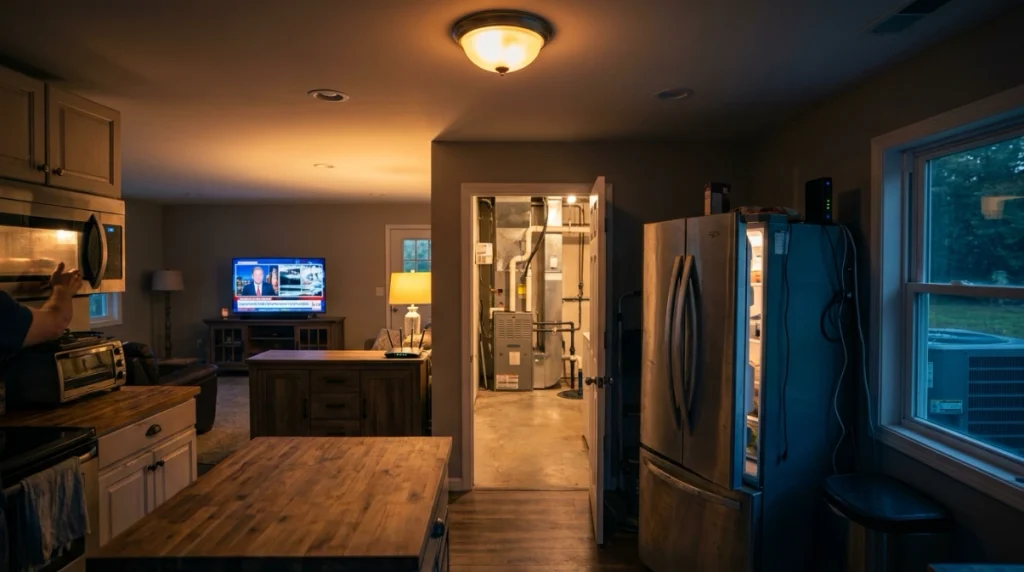
Suppose I want to keep a typical outage setup comfortable without treating the generator like unlimited utility power. A reasonable example might look like this:
- Refrigerator: 350 running watts
- Furnace blower: 600 running watts
- Sump pump: 800 running watts
- Well pump: 1,200 running watts
- LED lighting: 150 running watts
- Router, television, and charging: 200 running watts
- Microwave while operating: 1,200 running watts
- Central air conditioner: 4,000 running watts
That example totals about 8,500 running watts. It leaves useful headroom below a true 12,000-watt continuous rating.
Startup is the next test. If the air conditioner normally draws 4,000 watts but briefly requires 7,000 watts during compressor startup, the approximate momentary load becomes 11,500 watts.
The calculation is 8,500 minus the A/C’s 4,000 running watts, then plus its 7,000-watt startup demand. That keeps you from accidentally counting the same appliance twice.
Will a 12,000 Watt Generator Run Central Air Conditioning?
Many 12,000-running-watt generators can operate a residential central air conditioner, but the compressor’s startup demand is the deciding factor. A generator can handle the steady running load and still struggle when the compressor first engages.
Check your equipment label for voltage, amperage, locked-rotor amps, or manufacturer startup information. My detailed generator sizing guide for air conditioners explains how those numbers affect generator selection.
A soft-start device may reduce compressor startup demand on compatible systems. Have HVAC and electrical equipment matched by qualified professionals rather than assuming every central A/C system will behave the same way.
What Won’t a 12,000 Watt Generator Run at the Same Time?
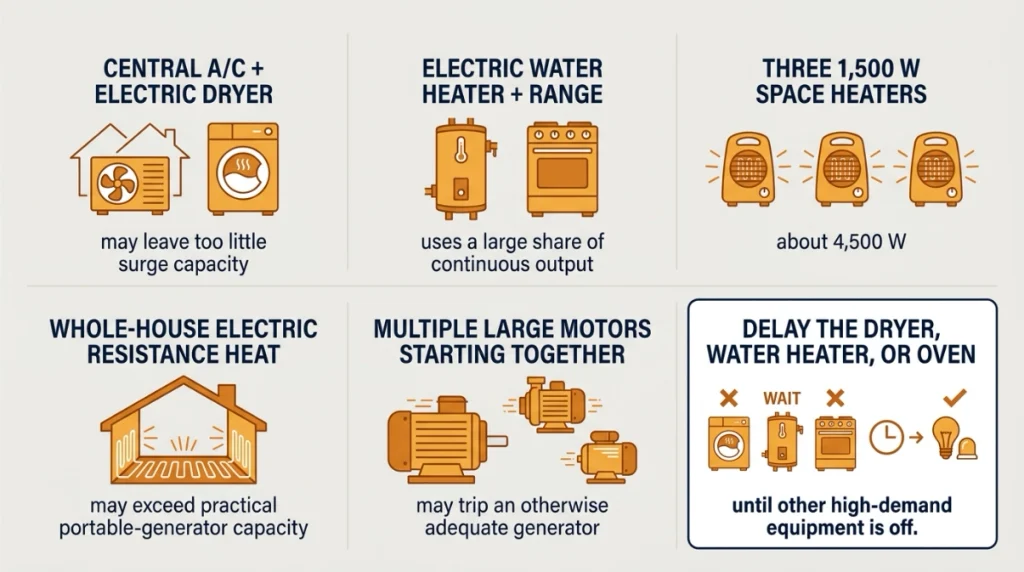
The biggest limitation is usually electric resistance heating. Electric water heaters, dryers, ranges, ovens, and space heaters can consume thousands of watts without providing much flexibility.
You may be able to operate one of these loads, but stacking several together can quickly overwhelm the generator.
- Central A/C plus electric dryer: May leave too little surge capacity when the compressor starts.
- Electric water heater plus range: Can consume a large portion of the generator’s continuous output.
- Several space heaters: Three 1,500-watt heaters alone use about 4,500 watts.
- Electric heating system: Whole-house electric resistance heat can exceed what a portable 12 kW generator should handle.
- Multiple large motors starting together: Simultaneous pump and compressor starts may trip an otherwise adequate generator.
The solution is load management. Delay the dryer, water heater, or oven until the air conditioner and other high-demand equipment are off.
Does “12,000 Watt Generator” Mean Running or Starting Watts?
Not always. Generator marketing often places the larger peak-watt figure prominently, while the continuous rated output is lower.
This is why I always size from running watts versus starting watts, not the biggest number printed on the box.
| Generator Label | What It Means | How to Size Your House |
|---|---|---|
| 12,000 running watts | Can continuously supply about 12 kW under rated conditions | Use 12,000 W as the continuous ceiling |
| 12,000 starting or peak watts | Can reach 12 kW briefly for motor startup | Use the lower rated-watt figure for continuous loads |
Does Fuel Type Change How Much the Generator Can Run?
Yes. Multi-fuel generators often produce different output on gasoline, propane, and natural gas.
For example, a machine capable of nearly 12,000 running watts on gasoline may deliver less when switched to another fuel. Always calculate your household load using the rating for the fuel you actually plan to use.
This matters most when your system is already close to its limit. Losing even 1,000 to 2,000 watts of rated capacity can determine whether a large compressor or pump starts reliably.
How Should a 12,000 Watt Generator Be Connected to a House?
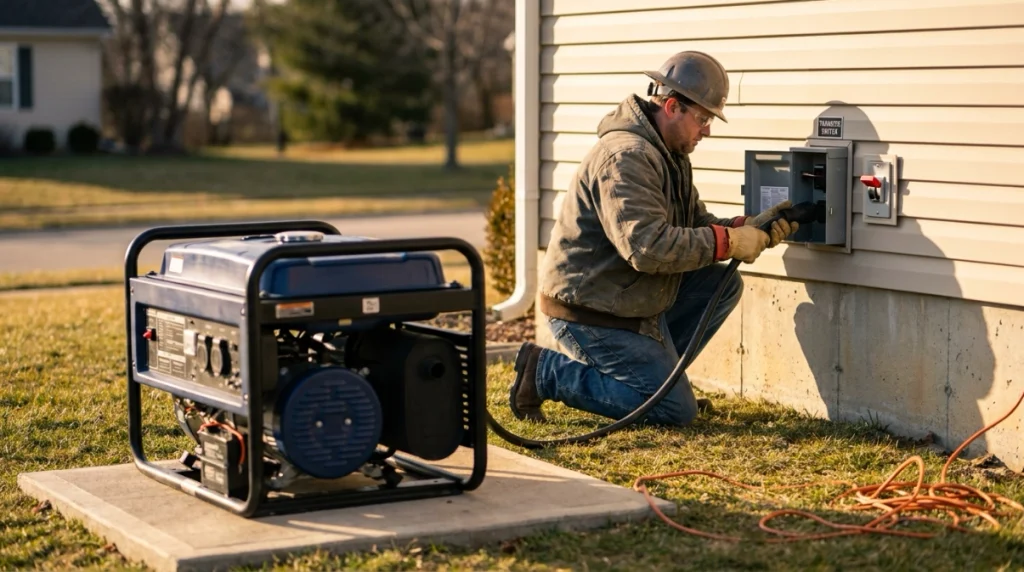
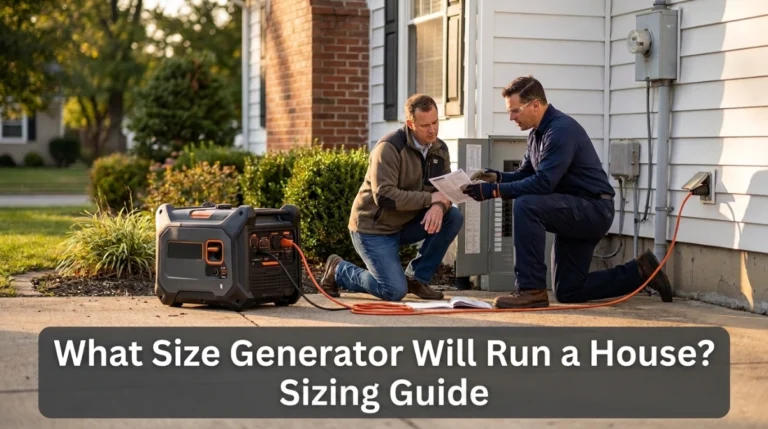
A generator this large is commonly paired with a properly sized inlet and transfer equipment rather than a collection of extension cords. A transfer switch or approved interlock arrangement isolates generator power from the utility supply.
See my portable generator transfer switch guide for the basic setup. Installation and compatibility should be handled according to local electrical requirements and the generator manufacturer’s instructions.
The Federal Emergency Management Agency warns against directly connecting a portable generator to household wiring without appropriate transfer equipment. FEMA recommends using a qualified electrician for the proper connection equipment.
The U.S. Department of Energy also explains that transfer switches separate backup power from utility power. This isolation prevents generator electricity from feeding back toward the grid.
Where should a portable generator be operated?
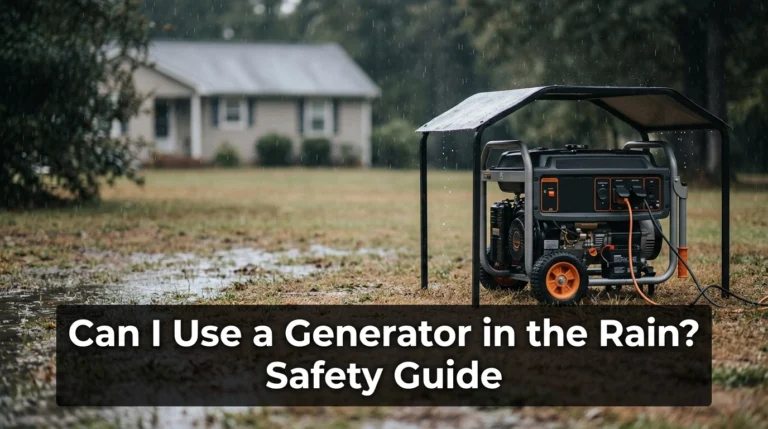
Portable generators belong outdoors, never inside a house, basement, garage, crawlspace, shed, porch, or similar enclosed area. Carbon monoxide can build to deadly concentrations before anyone realizes something is wrong.
The U.S. Consumer Product Safety Commission advises operating portable generators outside and away from doors, windows, and vents. Current CPSC guidance specifies at least 20 feet from the home, with exhaust directed away.
How Do You Know Whether 12,000 Watts Is Enough?
Start with the appliances you genuinely need during an outage. Then calculate the highest combination likely to operate at the same time.
- Write down every essential load. Include refrigeration, pumps, heating equipment, cooling, lights, and communications.
- Record running watts. Use appliance labels or manufacturer specifications whenever possible.
- Check motor startup demand. Pay special attention to air conditioners, well pumps, sump pumps, refrigerators, and furnace blowers.
- Calculate the normal running total. Add only equipment expected to operate simultaneously.
- Test the largest startup event. Replace that appliance’s normal running draw with its startup demand.
- Leave operating headroom. Avoid planning a system that depends on sitting at maximum output continuously.
- Repeat the calculation for your chosen fuel. Propane and natural-gas ratings may differ from gasoline ratings.
If you’re choosing equipment in this capacity range, these are the three models I’d put on the comparison list first:
🏆 Best for 12 kW Running Power
Champion 201161 Tri-Fuel Portable Generator
★★★★★
This model is rated for 15,000 starting and 12,000 running watts on gasoline, with lower ratings on propane and natural gas. I like it for this specific topic because it shows what a genuine 12,000-running-watt portable generator can provide.
⛽ Best Fuel Flexibility
Westinghouse WGen11500TFc
★★★★☆
It delivers 11,500 running watts on gasoline, 10,500 on propane, and 9,500 on natural gas, with tri-fuel capability and transfer-switch-ready outlets. I especially like it as an example of why you should size from the rating for your chosen fuel rather than the largest advertised number.
🏠 Best Heavy-Duty Alternative
DuroMax XP13000HXT
★★★★☆
The XP13000HXT produces 10,500 running watts on gasoline, 9,500 on propane, and 8,500 on natural gas, with 13,000 peak watts on gasoline. It suits homeowners who value tri-fuel flexibility but are prepared to manage the continuous load below a true 12 kW level.
Frequently Asked Questions
Can a 12,000 watt generator run a refrigerator and central air?
Yes, many 12,000-running-watt generators can power a refrigerator and residential central air together. The deciding factor is the air conditioner’s compressor startup demand, so check its electrical specifications and leave enough generator capacity for the surge.
Will a 12,000 watt generator run a well pump?
A 12,000-watt generator can run many residential well pumps, including common 240-volt systems. Pump horsepower, depth, motor design, and startup current vary, so verify the pump’s nameplate rather than choosing the generator from horsepower alone.
Can a 12,000 watt generator run an electric water heater?
Yes, many standard electric water heaters use roughly 4,000 to 4,500 watts while an element is energized. That is a large share of generator capacity, so avoid running several other high-wattage appliances at the same time.
How many amps is 12,000 watts at 240 volts?
A 12,000-watt load at 240 volts equals 50 amps when using the basic watts ÷ volts calculation. Actual usable output still depends on the generator’s receptacles, breakers, rated continuous output, fuel type, wiring, and installation.
Is a 12,000 watt generator considered whole-house backup?
It can provide broad whole-house-style backup when loads are managed, especially in homes with gas heating and fewer large electric appliances. Homes relying heavily on electric heat, large central air, dryers, ranges, or water heating may need more capacity.
Final Takeaway
A true 12,000-running-watt generator can keep a surprisingly capable household operating during an outage. Refrigeration, lights, pumps, furnace equipment, communications, kitchen essentials, and many cooling systems can often run together when the load is planned correctly.
Don’t size from the words “12,000 watts” alone. Check continuous output, starting demand, fuel-specific ratings, and your actual appliance labels before deciding which circuits to power.
My rule is simple: use 12,000 watts as a ceiling, not a target. A little unused capacity gives motors room to start and makes the entire backup setup easier to manage.

Hi, I’m Michael Turner. I own a generator workshop in the United States and founded HomeGeneratorBlog to share practical, hands-on guidance about generator installation, maintenance, troubleshooting, safety, and backup power solutions. My goal is to help homeowners make smarter, more confident decisions through clear and reliable information