How Close Should a Generator Be to a House?
Quick Answer
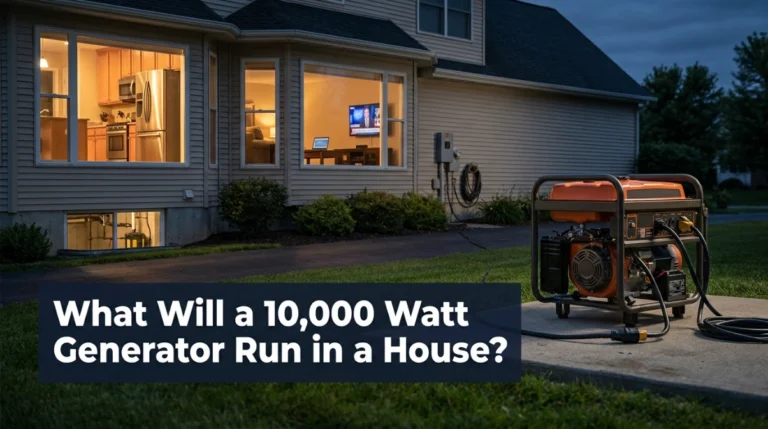
A portable generator should normally be operated outdoors at least 20 feet away from your house, with the exhaust pointed away from the building. That distance should also keep the generator away from doors, windows, vents, garages, and other places where carbon monoxide could enter, following CPSC generator safety guidance.
Safe generator placement checklist
- Use 20 feet: Keep portable generators at least 20 feet from the house whenever space allows.
- Point exhaust away: Never direct exhaust toward windows, doors, vents, garages, or neighboring buildings.
- Stay outside: Never run a generator in a garage, basement, shed, porch, or carport.
- Allow airflow: Leave open space around the generator so heat and exhaust can escape.
- Use CO alarms: Keep working carbon monoxide alarms inside your home, especially near sleeping areas.
What about standby generators?
- Permanent standby generators follow model-specific installation instructions and local codes, so don’t automatically apply the portable-generator 20-foot rule to them.
If you’re asking how close a generator can safely sit to your home, the answer depends first on the type of generator. Portable units and permanently installed standby generators have different placement requirements.
For portable generators, I use one simple starting rule: 20 feet from the house, outdoors, with exhaust pointed away. Then I check windows, vents, nearby structures, weather exposure, and cord routing before starting the engine.
Why Should a Portable Generator Be 20 Feet From the House?
The main reason is carbon monoxide, or CO. It’s a poisonous gas produced when gasoline, propane, or other fuels burn.
You can’t reliably see or smell CO. That makes generator exhaust especially dangerous around occupied buildings.
The CDC’s carbon monoxide guidance says portable generators should be operated outdoors more than 20 feet from windows, doors, and vents.
- Distance reduces exposure: More separation gives exhaust additional space to disperse.
- Exhaust direction matters: Point the exhaust away from your house and other occupied structures.
- Open windows matter: A generator may be outside yet still send exhaust through a nearby opening.
- Wind can change: Don’t rely on today’s wind direction as your only safety measure.
Twenty feet should therefore be treated as a minimum portable-generator safety target, not permission to ignore nearby openings or airflow.
How Far Should Different Types of Generators Be From a House?
There isn’t one distance that applies to every generator. The operating environment and installation method change the answer.
| Generator Type | Typical Placement Approach | Main Concern |
|---|---|---|
| Portable gasoline generator | 20+ feet from the house | CO, fire, weather, exhaust direction |
| Portable dual-fuel generator | 20+ feet from the house | CO is still produced when using propane |
| Portable inverter generator | 20+ feet from the house | Lower noise doesn’t mean lower CO risk |
| Permanent standby generator | Follow manufacturer clearance instructions and local code | Fire clearance, exhaust, openings, airflow |
A quiet inverter generator is still a fuel-burning engine. Don’t move it closer simply because you can barely hear it from inside.
Can a Generator Be Run in a Garage With the Door Open?
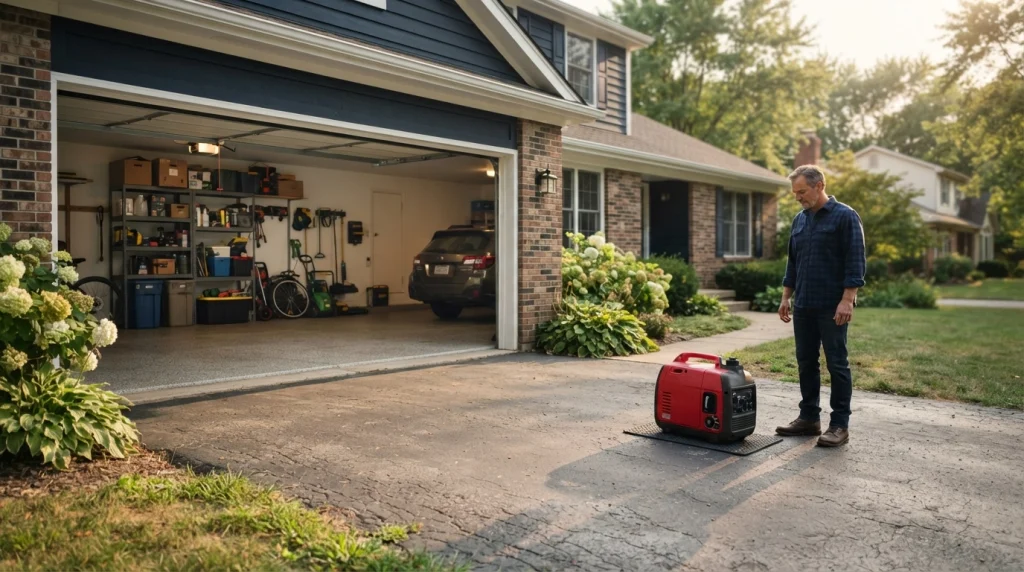
No. A portable generator should never operate inside a garage, even when the main garage door is open.
The same rule applies to basements, sheds, crawl spaces and other enclosed or partly enclosed locations.
The OSHA portable-generator safety guidance also says generators should remain outdoors and at least 20 feet from doors, windows, and vents.
- Don’t run one just inside an open garage door.
- Don’t place one in a carport beside the house.
- Don’t operate one on an enclosed porch.
- Don’t build a homemade sealed generator box.
Opening a door or window doesn’t convert an enclosed space into a safe generator location.
Does the Generator Exhaust Direction Matter?
Yes. Distance and exhaust direction work together.
I would rather place a generator slightly farther away than meet exactly 20 feet while pointing its exhaust toward a bedroom window.
Position the exhaust so fumes travel away from the house, nearby doors, windows, vents, crawl-space openings and other occupied buildings.
- Check your own home: Look for dryer vents, soffit vents, basement windows and fresh-air intakes.
- Check neighboring homes: Your exhaust shouldn’t create a hazard for someone next door.
- Look above the unit: Avoid decks, low overhangs and other areas that can trap heat or exhaust.
- Keep the area open: Don’t surround a running portable generator with solid walls.
How Much Open Space Does a Generator Need Around It?
A generator needs enough space for cooling and exhaust flow in addition to its distance from your home.
OSHA guidance for generator operation notes the need for several feet of clear space around and above generators for ventilation and cooling.
Always follow your own model’s manual if it specifies greater clearance.
Practical tip: Don’t confuse “20 feet from the house” with “20 feet of empty space on every side.” The first protects the home from exhaust; the generator’s manual determines required operating clearance around the machine.
What Changes for a Permanent Standby Generator?
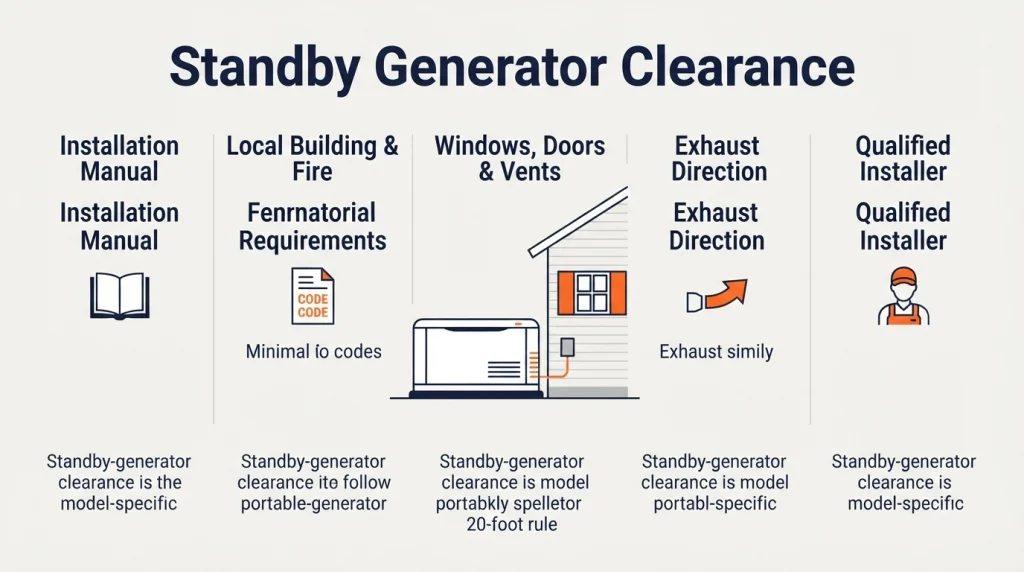
Standby generators are different because they’re designed as permanent installations. They aren’t simply portable generators placed beside a wall.
Installation clearances depend on the exact generator, certification, building openings and locally adopted codes.
For example, Generac’s current standby-generator clearance guidance discusses several separate measurements, including clearance from openings, sides, vegetation and overhead structures.
Some approved installations can place parts of a standby enclosure much closer to a wall than 20 feet. That doesn’t mean a portable generator can safely be placed there.
- Read the exact installation manual.
- Check local building and fire requirements.
- Identify windows, doors and vents.
- Consider where exhaust will travel.
- Use a qualified installer when required.
What About Rain When the Generator Is 20 Feet Away?
Weather is one reason people are tempted to move generators under porches or into garages. That solves one problem while creating a potentially deadly one.
Keep the generator outdoors while protecting it according to the manufacturer’s instructions.
Never throw an ordinary tarp directly over a running generator. It can restrict airflow, trap heat or contact hot components.
If you need weather protection, use a running cover specifically designed for generator operation and verify compatibility with your model.
Should You Have a Carbon Monoxide Alarm?
Yes. Proper generator placement and CO alarms should be used together.
The CPSC recommends working CO alarms throughout the home, including outside sleeping areas. Battery-powered or battery-backup units remain useful during an outage.
- Test your alarms regularly.
- Replace alarms according to their rated service life.
- Don’t move a generator closer because you own an alarm.
- Leave the building immediately if a CO alarm activates.
A CO alarm is a backup safety layer. It isn’t a substitute for safe generator placement.
Portable Generator Placement: A Simple Setup Example
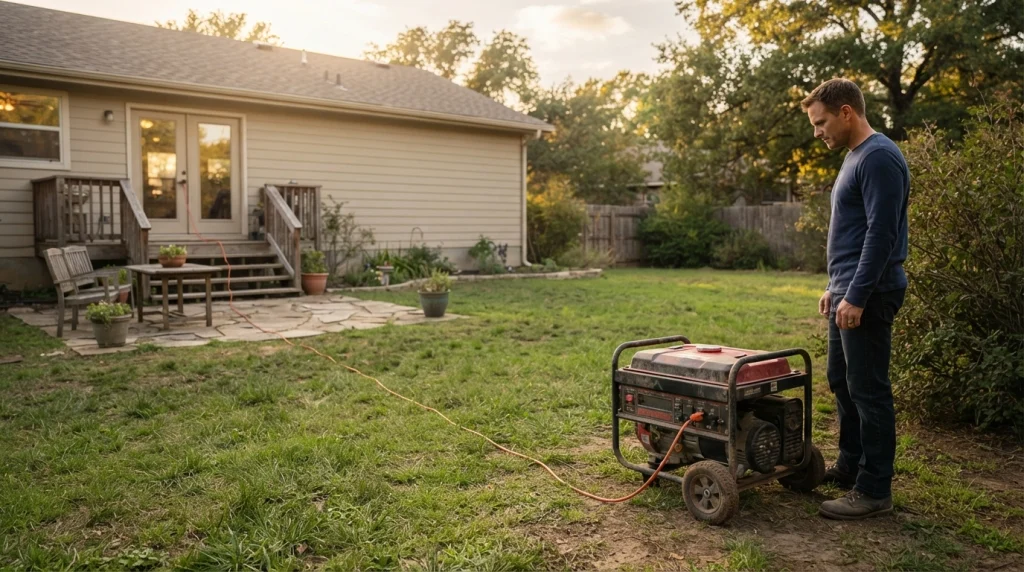
Suppose your back door opens onto a patio and your nearest clear lawn area starts 12 feet away. I wouldn’t stop at the edge of that lawn just because it’s outdoors.
I’d continue until the generator is at least 20 feet from the house and then orient its exhaust away from the building.
- Measure at least 20 feet from the house.
- Look for doors, windows and ventilation openings.
- Choose a level, stable operating surface.
- Point exhaust away from occupied structures.
- Maintain the generator’s required operating clearance.
- Route properly rated cords where they won’t sit in water or create a trip hazard.
- Confirm your indoor CO alarms are working.
This check takes only a few minutes. It’s much safer than choosing a convenient location first and trying to make it work afterward.
Common Generator Placement Mistakes to Avoid
- Running it on a porch: A porch may still be too close to your home.
- Using an open garage: Exhaust can accumulate and enter the living area.
- Pointing exhaust toward the house: Distance alone doesn’t correct poor exhaust direction.
- Ignoring neighboring buildings: Safe placement should protect nearby occupants too.
- Using a makeshift enclosure: Improvised covers can interfere with cooling or exhaust.
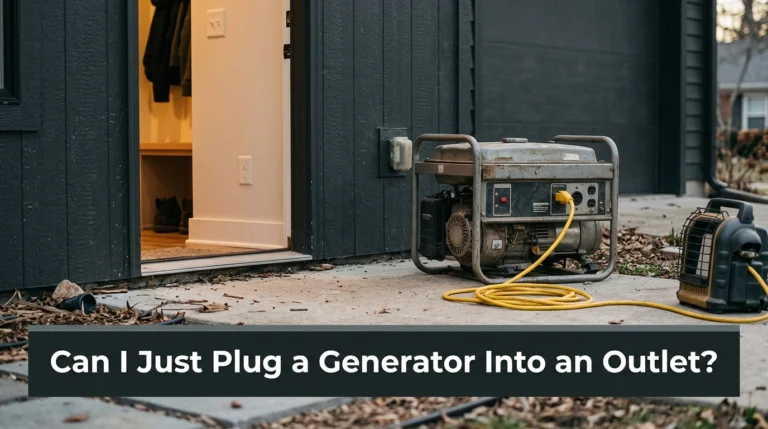
- Backfeeding a wall outlet: A portable generator should never be connected to home wiring this way.
If you want to power household circuits, have a suitable transfer switch or other approved connection equipment installed as required.
Generator Safety Gear I Recommend
If you’re setting up portable backup power, these are the types of products I’d prioritize before worrying about convenience accessories.
🏆 BEST COMPACT GENERATOR
Honda EU2200i
★★★★½
This 2,200-watt inverter generator includes Honda’s CO-MINDER carbon monoxide detection system. I like it for smaller backup loads where portability and clean inverter power matter.
🌧️ BEST WEATHER ACCESSORY
GenTent Generator Running Cover
★★★★½
GenTent makes purpose-built covers that protect compatible generators while maintaining cooling and exhaust airflow. I’d choose an engineered running cover rather than moving a generator into a garage when bad weather arrives.
🛡️ BEST SAFETY BACKUP
Kidde COBD Carbon Monoxide Alarm
★★★★½
The COBD uses AA batteries and includes a backlit digital display. Battery power is especially useful during outages, so this is the safety product I’d pair with proper outdoor generator placement.
Frequently Asked Questions
Is 10 feet far enough for a generator from a house?
For a portable generator, I wouldn’t consider 10 feet the normal safe target. Current CPSC, CDC, and OSHA guidance recommends operating portable generators outdoors at least 20 feet from the home, doors, windows, and vents.
Can I put my generator 20 feet from a window but closer to a wall?
For a portable generator, the safest simple approach is to maintain at least 20 feet from the house rather than measuring only from one window. Also point the exhaust away and follow any greater clearance stated in your generator manual.
Can I run a generator under a covered patio?
A covered patio can trap exhaust and may place the generator too close to doors or windows. Portable generators should operate fully outdoors, away from the house and occupied structures, rather than under an attached patio or porch.
Does propane make a generator safe to use closer to the house?
No. Propane-powered generators still produce carbon monoxide. A dual-fuel generator shouldn’t be moved closer to the house simply because you’re operating it on propane instead of gasoline.
How close can a standby generator be to a house?
Standby-generator clearance depends on the specific model, installation instructions and locally adopted codes. Some listed systems allow closer wall clearances, but openings, airflow and exhaust requirements still apply. Follow the installation manual rather than the portable-generator 20-foot rule.
Final Takeaway
For a portable generator, remember one number first: 20 feet. Keep it outdoors, point the exhaust away from your home, and stay clear of doors, windows and vents.
Permanent standby generators are different. Follow the exact manufacturer’s installation requirements and local code instead of assuming the same distance applies.
Finally, keep working CO alarms inside your home. Good placement, safe electrical connections and carbon monoxide detection work together to make backup power much safer.

Hi, I’m Michael Turner. I own a generator workshop in the United States and founded HomeGeneratorBlog to share practical, hands-on guidance about generator installation, maintenance, troubleshooting, safety, and backup power solutions. My goal is to help homeowners make smarter, more confident decisions through clear and reliable information