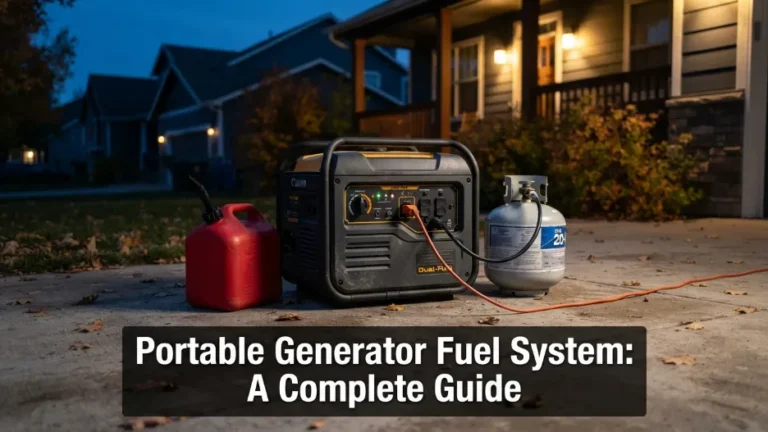
Portable Generator No Power Output: Causes, Tests, and Fixes
Quick Answer
If your portable generator runs but has no power output, unplug every load first and reset its circuit breakers and GFCI outlets. Then test a receptacle with a known-good appliance or voltage tester. If it still produces no electricity, common causes include lost residual magnetism, worn brushes, a failed voltage regulator, damaged wiring, or an alternator fault. Generac’s portable generator troubleshooting guidance also recommends checking the load and breakers before moving into alternator-related faults.
Check These First
- Disconnect all loads: Start troubleshooting with nothing plugged into the generator.
- Reset breakers: A tripped AC breaker can leave the engine running normally with dead receptacles.
- Reset the GFCI: Press the reset button if your generator uses protected 120-volt outlets.
- Test the outlet: Use a known-good lamp, fan, receptacle tester, or properly rated multimeter.
- Listen to the engine: An engine running unusually slowly may also produce low or unstable voltage.
- Stop before internal repairs: Brush, AVR, capacitor, rotor, and stator testing can expose dangerous live electrical parts.
Fast Verification Tip
- If every outlet reads zero volts after the breakers and GFCI are reset, the fault is probably beyond the appliance or extension cord.
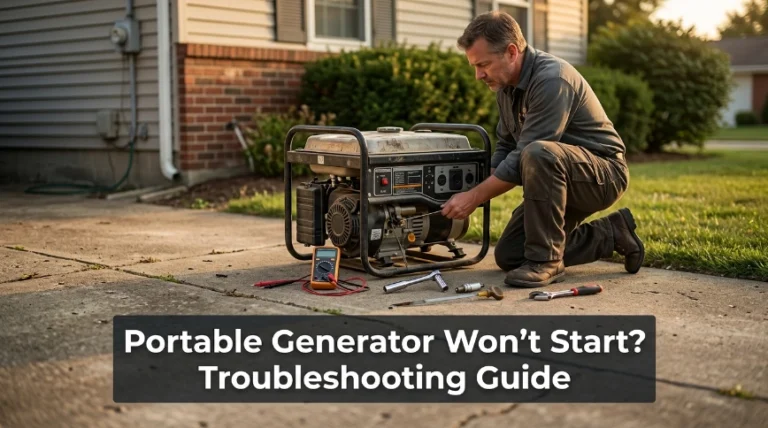
A portable generator that starts normally but refuses to power anything can be confusing. The engine sounds healthy, yet the outlets seem completely dead.
I troubleshoot this problem from the outside inward. Simple breaker, load, and receptacle checks come first because opening the alternator too early wastes time and adds electrical risk.
What Does “Portable Generator No Power Output” Mean?
Portable generator no power output means the engine operates, but usable AC electricity isn’t reaching one or more receptacles. The problem sits somewhere between electrical generation and the connected load.
This is different from a generator that won’t start. Fuel, spark, and carburetor problems may keep the engine from running, while a no-output problem usually points toward the electrical side.
- Engine runs, all outlets dead: Suspect breakers, excitation, brushes, AVR, capacitor, wiring, or alternator damage.
- One outlet works: Look closely at that receptacle, GFCI circuit, or its wiring.
- Voltage is present but low: Engine speed or voltage-control components may be involved.
- Power disappears under load: Check overload conditions, engine performance, breakers, connections, and alternator capacity.
A generator can therefore sound normal while having a serious electrical problem. Engine noise alone doesn’t confirm that the alternator is producing correct voltage.
Why Is My Portable Generator Running but Not Producing Electricity?
The most common causes range from a simple tripped breaker to an alternator component failure. Start with the easy external checks before assuming the generator needs major repair.
1. The Generator Circuit Breaker Tripped
A breaker can trip when the connected load exceeds its rating or when a tool or appliance creates a sudden current surge. The engine may keep running after the breaker opens.
Unplug everything before resetting it. If the breaker immediately trips again with no load attached, don’t keep forcing it back on.
2. A GFCI Receptacle Needs to Be Reset
Many portable generators use ground-fault circuit interrupter, or GFCI, receptacles. A GFCI shuts off power when it detects current traveling along an unintended path.
Press the receptacle’s reset button after removing connected equipment. If it won’t reset, the generator may have an electrical fault that needs further testing.
3. The Generator Was Overloaded
Portable generators have running-watt and starting-watt limits. Motors in refrigerators, pumps, compressors, and air conditioners can briefly require far more power during startup.
- Disconnect every appliance.
- Reset the generator breaker.
- Restart the generator according to its manual.
- Let the engine stabilize.
- Add loads individually rather than all at once.
If output returns with the load removed, overloading becomes a strong suspect. Check appliance wattage before reconnecting everything.
4. The Generator Lost Residual Magnetism
Some alternators depend on a small amount of magnetism left in their rotor to begin building voltage. This is called residual magnetism.
A generator stored for a long period can sometimes lose enough residual magnetism that the engine runs without generating usable electricity. Manufacturers may describe restoring it as field flashing.
Don’t use an improvised field-flashing procedure from an unverified video. The correct process varies by generator design and can expose you to electrical shock or equipment damage.
5. Carbon Brushes Are Worn or Sticking
Brushed alternators use carbon brushes to transfer current to rotating slip rings. Worn, broken, contaminated, or sticking brushes can interrupt excitation and stop voltage production.
Brush access and specifications differ by model. I treat internal brush inspection as a service-manual job rather than a universal DIY procedure.
6. The Automatic Voltage Regulator Failed
An automatic voltage regulator, usually called an AVR, helps control generator output voltage. A failed AVR can cause zero, low, or unstable output.
Don’t automatically order an AVR because the outlets are dead. Breakers, excitation, brushes, wiring, and alternator windings can create similar symptoms.
7. A Capacitor Failed
Some generator designs use a capacitor instead of an AVR-based excitation system. A failed capacitor can prevent the alternator from developing normal voltage.
Capacitors can retain an electrical charge after shutdown. I don’t recommend handling or testing one unless you understand the manufacturer’s discharge and service procedures.
8. The Engine Is Running Too Slowly
Conventional generators rely heavily on engine speed to maintain proper electrical frequency and voltage. A weak governor, restricted fuel supply, dirty carburetor, or overloaded engine can lower speed.
Don’t adjust the governor by ear. Incorrect adjustment can create unsafe frequency or voltage and may damage connected electronics.
9. The Rotor, Stator, Wiring, or Receptacle Is Damaged
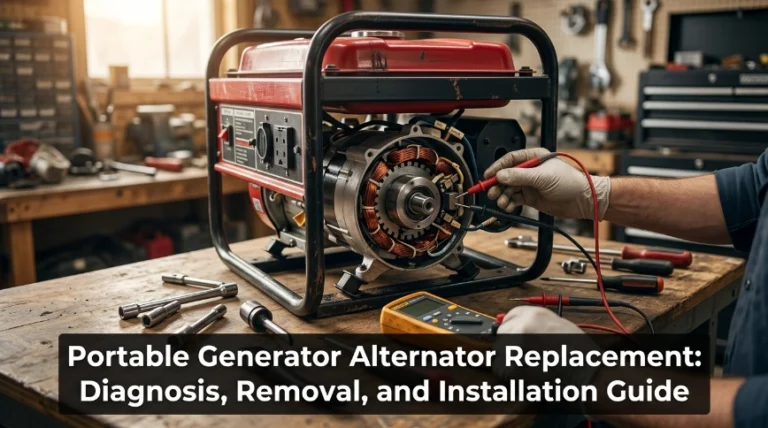
The rotor and stator form the main electromagnetic parts of the alternator. Burned windings, broken wires, damaged connectors, or a failed receptacle can stop power from reaching your equipment.
Visible melted insulation or a burned smell is a stop sign. Shut the generator down and arrange professional service.
How Do I Troubleshoot a Portable Generator With No Power?
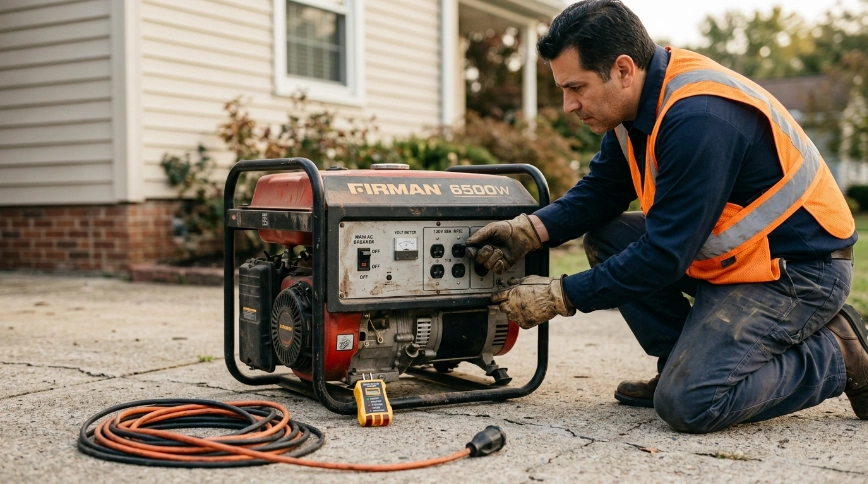
Use a simple outside-to-inside troubleshooting order. It reduces unnecessary disassembly and helps you separate a load problem from a generator problem.
- Move the generator to a safe operating location. Run it outdoors and keep exhaust away from buildings.
- Disconnect every load. Remove extension cords, appliances, transfer equipment, and tools before testing.
- Check the main AC breaker. Reset it once after removing the load.
- Reset GFCI receptacles. Check every protected outlet on the control panel.
- Inspect the outlets. Look for heat damage, loose parts, discoloration, moisture, or debris.
- Test a receptacle. Use a known-good low-wattage appliance or a properly rated tester.
- Compare multiple outlets. Determine whether the failure affects one receptacle or the entire generator.
- Check engine behavior. Note surging, unusually low speed, or major speed changes when a small load connects.
- Consult the service manual. If output remains absent, move to model-specific alternator diagnostics or qualified service.
Briggs & Stratton also recommends checking breakers and reducing generator load when troubleshooting low or missing output. You can review its generator power troubleshooting information for manufacturer-level guidance.
Can I Check Generator Output With a Multimeter?
Yes, but live AC voltage testing carries shock risk. A simple plug-in receptacle tester is often the easier first choice for a standard 120-volt outlet.
If you use a multimeter, it must be correctly rated and configured for the circuit. Follow both the meter instructions and the generator’s service documentation.
Never remove alternator covers and probe exposed energized terminals merely to find the fault. That moves the job beyond basic homeowner troubleshooting.
What Do the Voltage Readings Tell You?
The pattern matters more than one isolated number. Compare outlets and observe what changes when a small known-good load is connected.
| Test Result | What It Suggests | Best Next Step |
|---|---|---|
| About nominal 120V at the outlet | Generator is producing voltage at that receptacle | Check extension cords and connected equipment |
| 0V at every receptacle | Breaker, excitation, brush, regulator, capacitor, wiring, or alternator fault | Verify resets, then use model-specific service procedures |
| One outlet dead, another works | Localized receptacle, GFCI, breaker, or wiring issue | Stop using the faulty outlet and have its circuit inspected |
| Voltage well below nominal | Low engine speed, AVR, capacitor, excitation, or winding problem | Remove the load and check engine operation before electrical service |
| Normal unloaded, drops sharply under a small load | Engine performance, connection, regulation, or alternator problem | Stop adding loads and diagnose before further use |
Use your generator’s manual as the final authority for acceptable voltage and frequency. Inverter generators also use different electronic control systems than many conventional generators.
What Should I Do If the Breaker Keeps Tripping?
A breaker that repeatedly trips is protecting the circuit from a condition it considers unsafe. Don’t hold it in position or keep resetting it repeatedly.
- Unplug all loads: Determine whether the generator trips with nothing connected.
- Inspect extension cords: Replace damaged, undersized, wet, or overheated cords.
- Check appliance wattage: Include motor starting watts, not only running watts.
- Reconnect one device: A specific appliance may be causing the trip.
- Stop if it trips unloaded: An internal generator fault may require service.
Never replace a breaker with a higher-amperage model just to stop nuisance trips. Breaker ratings protect the generator’s wiring and components.
Can I Field Flash a Portable Generator Myself?
Field flashing can restore excitation on some generator designs, but there isn’t one safe procedure for every portable generator. Some inverter generators and brushless alternators use completely different systems.
If your manufacturer provides a field-flashing procedure for your exact model, follow that documentation precisely. Otherwise, I recommend having a qualified generator technician handle it.
Generac specifically notes that generators stored for extended periods may lose residual magnetism. That makes excitation loss worth considering after the easy external checks fail.
When Should I Stop Troubleshooting and Call a Technician?
Stop DIY troubleshooting when diagnosis requires opening energized alternator components or testing internal high-voltage circuits. The potential savings aren’t worth an electrical injury or damaged generator.
- The breaker trips with nothing connected.
- All receptacles remain dead after external resets.
- You smell burned insulation or see melted wiring.
- Output voltage is unstable or far from the model’s specification.
- The generator produces power intermittently.
- The alternator needs brush, AVR, capacitor, rotor, or stator testing.
- You aren’t comfortable making live electrical measurements.
Electrical safety matters even on smaller portable units. OSHA publishes portable generator electrical safety resources covering shock, grounding, and connection hazards.
How Can I Prevent a Generator From Losing Power Output?
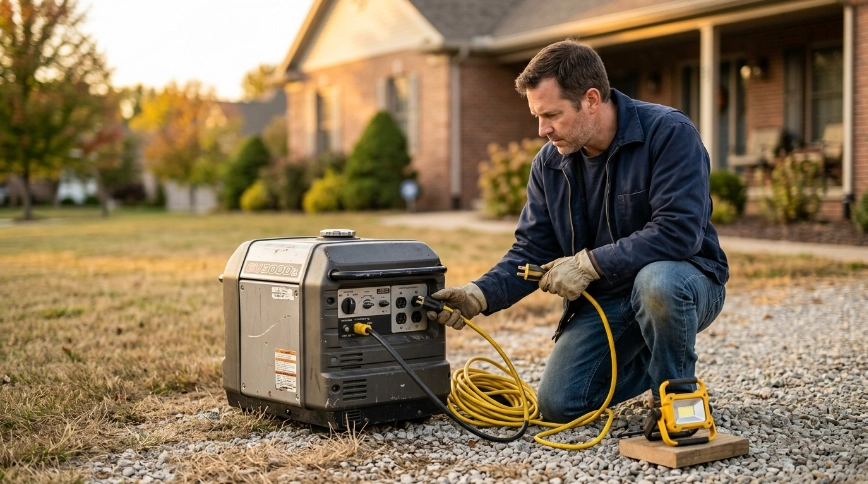
Regular operation and sensible loading can prevent several common problems. I prefer a short maintenance routine rather than discovering an electrical fault during an outage.
- Exercise the generator: Follow the manufacturer’s recommended storage and exercise schedule.
- Keep it dry: Protect the generator from rain and standing water while preserving safe ventilation.
- Avoid overloads: Know the running and starting watt requirements of your appliances.
- Inspect cords: Replace cords with cracked insulation, burned plugs, or loose terminals.
- Keep receptacles clean: Dirt, corrosion, and moisture create connection problems.
- Service the engine: Poor engine speed can affect electrical output on conventional generators.
- Test before storm season: Confirm that the generator powers a small known-good load before you depend on it.
Generator location matters just as much as maintenance. The U.S. Consumer Product Safety Commission advises operating portable generators outdoors, at least 20 feet from the home, with exhaust directed away from openings.
Ready.gov provides similar power outage and generator safety guidance. Keep working carbon monoxide alarms inside the home whenever a fuel-burning generator is in use.
Tools I Recommend for Basic Generator Output Checks
You don’t need a bench full of electrical equipment for the first troubleshooting steps. These are the types of testers I find most useful before a repair moves into internal alternator work.
🏆 Best Overall
Fluke 117 Electrician’s Multimeter
★★★★★ 4.8/5
The Fluke 117 provides AC/DC voltage measurement, True-RMS capability, and non-contact voltage detection. I like it when troubleshooting extends beyond a simple outlet check and I want one meter for broader electrical work.
💰 Best Budget
Klein Tools MM325 Digital Multimeter
★★★★☆ 4.5/5
The MM325 measures AC/DC voltage, resistance, continuity, and other basic electrical values up to its stated ranges. I’d choose it for occasional generator and household testing when a premium meter isn’t necessary.
🔌 Easiest Outlet Check
Klein Tools RT250 GFCI Receptacle Tester
★★★★★ 4.7/5
The RT250 is designed for North American 120V three-wire outlets and displays voltage while checking common wiring conditions and GFCI operation. I prefer a plug-in tester for quick receptacle checks because there’s no need to hold meter probes in a live outlet.
Frequently Asked Questions
Why does my generator run but have no power at the outlets?
A running generator with dead outlets commonly has a tripped breaker, tripped GFCI, overload condition, excitation problem, worn brushes, failed AVR or capacitor, damaged wiring, or alternator fault. Disconnect all loads, reset protective devices, and test a receptacle before considering internal repairs.
How do I reset a portable generator that isn’t producing power?
Unplug all appliances, shut the generator down according to its manual, inspect and reset its breakers, then restart it without a load. Reset any GFCI receptacles and test with a small known-good appliance. Model-specific electronic inverter generators may have additional reset procedures.
Can low oil cause a generator to run but produce no electricity?
Low oil protection normally shuts the engine down rather than allowing it to run normally with dead outlets. However, designs vary. Check the oil level because engine protection systems, warning indicators, and control logic differ between portable generator models.
Can a bad AVR cause zero generator output?
Yes. A failed automatic voltage regulator can cause missing, low, or unstable output on generators that use an AVR. However, the same symptoms can come from lost excitation, worn brushes, damaged wiring, or alternator windings, so test the complete system before replacing parts.
How do I know if my generator alternator is bad?
An alternator problem becomes more likely when the engine runs correctly, breakers and GFCIs are reset, all outlets remain dead, and model-specific excitation checks don’t restore power. A technician may need to test brushes, regulators, capacitors, rotor windings, stator windings, and internal connections.
Final Takeaway
When a portable generator has no power output, don’t begin by replacing the AVR or opening the alternator. Start with the load, breaker, GFCI, receptacles, and a simple output test.
If those checks don’t restore electricity, the problem may involve excitation, brushes, voltage regulation, wiring, or the alternator itself. At that point, use the service manual or a qualified generator technician instead of experimenting around live electrical components.
Most important, troubleshoot safely. Keep the generator outdoors, protect it from moisture, disconnect loads before resets, and never backfeed a home through a wall outlet.
ap_index.xml — confirm the sitemap is publicly fetchable and add 3–5 relevant internal links once its article URLs can be read.

Hi, I’m Michael Turner. I own a generator workshop in the United States and founded HomeGeneratorBlog to share practical, hands-on guidance about generator installation, maintenance, troubleshooting, safety, and backup power solutions. My goal is to help homeowners make smarter, more confident decisions through clear and reliable information