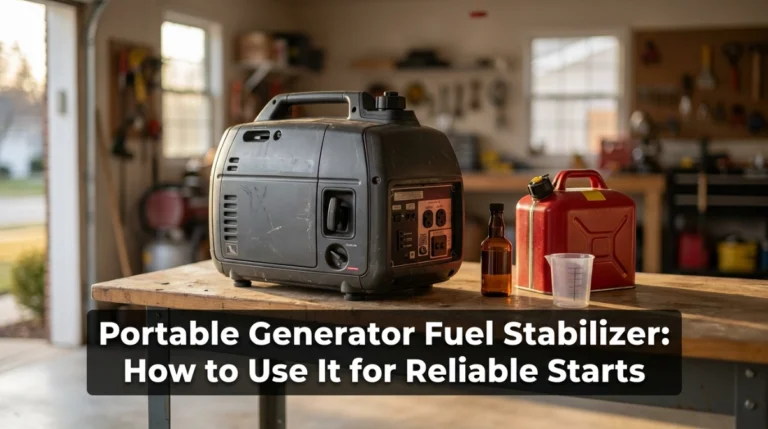
Portable Generator Won’t Start? Troubleshooting Guide
Quick Answer
If your portable generator won’t start, check the engine switch, fuel valve, choke, fuel quality, and oil level first. If those are correct, move on to the spark plug, starting battery, air filter, and portable generator fuel system. A generator that cranks normally but won’t fire usually has a fuel, spark, or low-oil shutdown problem.
Check these first
- Engine switch: Make sure it is firmly set to Run or On.
- Fuel valve: Open the shutoff valve so fuel can reach the carburetor.
- Fresh fuel: Replace gasoline that smells stale or has sat untreated for months.
- Oil level: Fill to the manufacturer’s specified level because low-oil protection may prevent starting.
- Choke position: Use the starting position for a cold engine and open it as the engine warms.
- Spark plug: Check for fouling, damage, loose connections, or an incorrect gap.
Best diagnostic clue
- First determine whether the engine does not crank, cranks but will not fire, or starts and then dies. Each symptom points toward a different group of faults.
When a generator refuses to start during an outage, random parts swapping wastes time. I get much faster results by separating the problem into fuel, spark, air, oil protection, and starting-system checks.
The order matters. This 2026 guide walks you from the easy five-minute checks to the problems that justify professional service.
What Does It Mean When a Portable Generator Won’t Start?
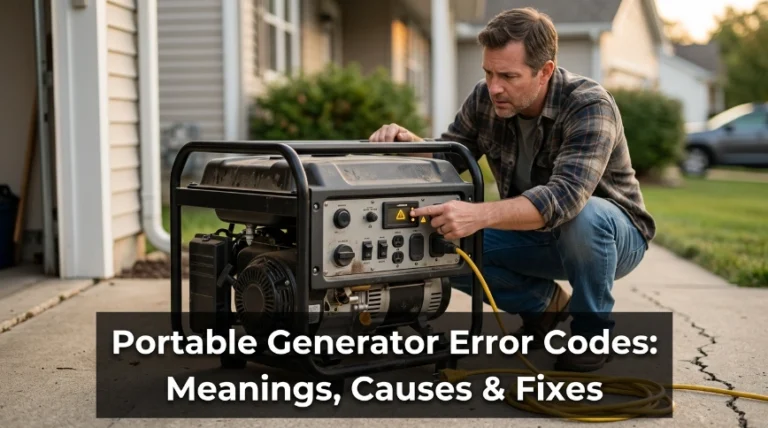
A no-start condition doesn’t always mean the same thing. The sound and behavior during your starting attempt give you the first useful diagnostic clue.
Definition: A portable generator no-start condition means its engine cannot begin and sustain normal combustion, even though you are following the manufacturer’s normal starting procedure.
I separate no-start complaints into four groups:
- No crank: The starter does nothing, or the recoil system cannot turn the engine.
- Click but no crank: An electric-start model clicks but doesn’t spin the engine.
- Cranks but won’t fire: The engine turns normally but never begins running.
- Starts then dies: Combustion begins, but something stops fuel, air, ignition, or a safety system.
| What You Notice | Check First | Common Direction | Next Move |
|---|---|---|---|
| No sound or movement | Switch and battery | Starting circuit | Check battery connections and controls |
| Clicks but won’t crank | 12-volt starting battery | Weak battery, cable, or starter | Charge and inspect connections |
| Cranks but won’t fire | Fuel, choke, oil, spark | Combustion problem | Follow the checks below in order |
| Starts, then stalls | Choke and fuel flow | Restriction or safety shutdown | Check oil, fuel delivery, air, and CO system |
Why Won’t My Portable Generator Start?
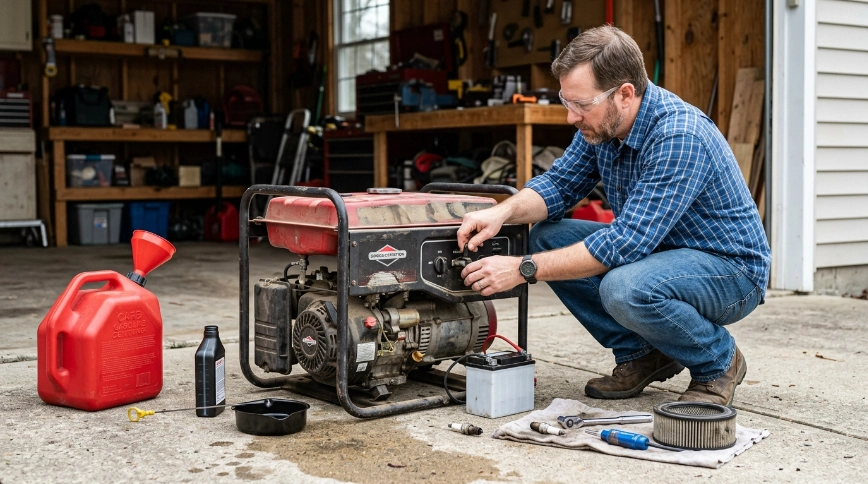
The most common causes are incorrect starting controls, old fuel, low oil, a fouled spark plug, a weak battery, or a restricted carburetor. Generac also identifies old fuel left in the fuel system as a common cause of portable-generator startup problems.
Start with simple causes before opening the carburetor. That approach prevents unnecessary repairs.
1. Check the Engine Switch, Fuel Valve, and Choke
These controls sound obvious, but they’re where I start every diagnosis. One control in the wrong position can make a healthy generator look completely dead.
- Disconnect appliances from the generator.
- Set the engine or ignition switch to On or Run.
- Open the fuel shutoff valve.
- Set the choke according to your owner’s manual.
- Try the normal starting procedure again.
A cold gasoline engine usually needs a richer mixture during startup. Leaving the choke fully closed after the engine catches can make it stumble or stall.
Generac’s portable generator troubleshooting guidance follows the same basic order: fuel, oil, spark plug, choke, switch, and starting system.
2. Replace Old or Questionable Gasoline
If the generator ran last season but won’t start today, I become suspicious of the gasoline quickly. Fuel can degrade during storage and leave deposits inside small carburetor passages.
Don’t keep pulling the starter for twenty minutes hoping old fuel suddenly improves. Drain questionable gasoline only after the engine has cooled and work outdoors away from flames or sparks.
- Use the fuel type and octane specified in your owner’s manual.
- Inspect stored fuel for contamination or water.
- Confirm the tank vent is working if your model uses a vented cap.
- Check the fuel line for kinks, cracking, or obvious leaks.
- Never open a hot fuel system beside an ignition source.
3. Check the Oil Level Before Chasing Electrical Problems
Many modern generators use low-oil protection that can prevent the engine from running. A generator can therefore crank normally while producing no sustained ignition.
Put the generator on level ground and check the oil exactly as the manufacturer specifies. Don’t assume oil is adequate because you changed it months ago.
Champion’s open-frame generator no-start guidance also begins with verifying the correct oil level.
I don’t recommend permanently bypassing a low-oil sensor. It protects an engine that can otherwise suffer expensive damage within a short period of low-oil operation.
4. Does an Electric-Start Generator Have a Dead Battery?
If you hear a click or slow cranking, check the starting battery before touching the carburetor. Electric-start generators depend on a small 12-volt battery and clean cable connections.
The starting system is explained in more detail in my guide to an electric start portable generator.
- Look for loose battery terminals.
- Clean visible corrosion using the battery manufacturer’s recommended method.
- Charge the battery with a compatible charger if it is discharged.
- Replace a battery that cannot hold a proper charge.
- Inspect the starter fuse if your model has one.
A multimeter can help with basic battery checks. Don’t probe live 120- or 240-volt generator circuits unless you’re trained to work safely around those voltages.
5. Inspect the Spark Plug
The engine needs a strong ignition spark at the correct moment. A fouled, damaged, wet, or incorrectly gapped spark plug can cause hard starting or no starting.
Remove the plug only after the engine is off and cool. Disconnect the plug wire before doing maintenance near moving engine parts.
- Check the electrode for heavy carbon deposits.
- Look for cracked ceramic insulation.
- Compare the gap with your exact owner’s manual specification.
- Replace the plug if its condition is questionable.
- Make sure the plug cap snaps back on securely.
Generator spark plugs aren’t universally interchangeable. Use the model number and engine information before ordering any portable generator replacement parts.
6. Test Whether the Engine Is Producing Spark
An inline spark tester is safer and clearer than holding a loose plug near metal while cranking. It lets you confirm whether the ignition system is sending energy toward the spark plug.
No visible spark moves your diagnosis toward the plug, plug cap, ignition coil, wiring, switch, or a shutdown circuit. Follow your model’s service instructions before disconnecting safety wiring.
7. Check the Air Filter
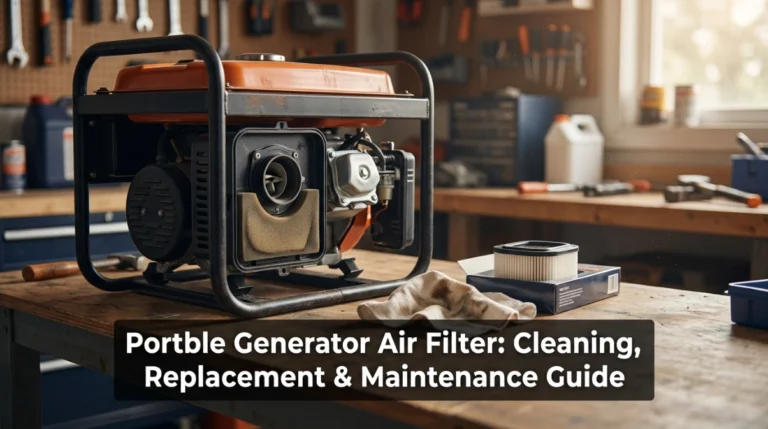
An engine needs the correct fuel-to-air mixture. A filter packed with dirt, nesting material, or oily debris can restrict airflow enough to create starting and running problems.
- Remove the filter according to the owner’s manual.
- Inspect the air box for debris.
- Clean reusable foam elements only as specified by the manufacturer.
- Replace damaged or heavily contaminated filters.
Don’t run the generator for extended periods without its filter. Dirt entering the engine can cause much more expensive wear than a replacement filter costs.
8. Could the Carburetor Be Clogged?
If fresh fuel reaches the carburetor and you have spark, the carburetor becomes a stronger suspect. Small jets can become restricted after gasoline sits in the bowl for long periods.
This is one of the cases where storage history matters. A generator that worked before months of storage but now cranks without firing often points me toward the fuel bowl and carburetor passages.
- Shut the fuel valve before opening fuel-system components.
- Let the engine cool completely.
- Work outdoors in a ventilated area.
- Catch drained gasoline in an approved container.
- Follow your model-specific carburetor cleaning procedure.
If you’re uncomfortable working around gasoline, stop here and use a small-engine technician. Fuel leaks and incorrect carburetor assembly create fire risks.
9. Check the Fuel Selector on Dual-Fuel and Tri-Fuel Models
Multi-fuel generators introduce another possible fault: the selected fuel and connected supply don’t match. Propane models can also fail to start when a cylinder valve, hose, regulator, or selector isn’t set correctly.
Follow the starting procedure for the fuel you’re using. Don’t assume the gasoline starting sequence matches the propane or natural-gas sequence.
10. Consider Compression or Internal Engine Problems Last
Fuel, air, and spark won’t help an engine that cannot create adequate compression. Internal problems can include valve issues, cylinder wear, timing faults, or mechanical damage.
You can learn how these parts interact in my guide to the portable generator engine.
I put compression testing near the end because common no-start causes are easier to rule out first. Internal engine diagnosis also requires more specialized tools and model-specific specifications.
Why Does My Generator Start and Then Die?
A generator that starts and dies has already proven that the engine can combust fuel. The problem is often restricted fuel flow, incorrect choke operation, low oil, restricted airflow, or a safety shutdown.
Watch exactly how long it runs. A repeatable shutdown pattern can be more useful than simply saying the generator “won’t stay running.”
- Dies as choke opens: Suspect a lean fuel condition or restricted carburetor passage.
- Runs only with choke partly closed: Check fuel delivery and carburetor cleanliness.
- Dies after connecting appliances: Disconnect loads and check for overloading.
- Dies on uneven ground: Recheck the oil level on a level surface.
- Displays a CO warning: Move the unit to safe outdoor placement and follow the manual.
Can a Low-Oil Sensor Keep a Generator From Starting?
Yes. Many portable generators use low-oil shutdown protection that stops ignition or shuts the engine down when the oil level is too low.
Check the oil on level ground before assuming the sensor itself has failed. Overfilling isn’t the answer either, so use your owner’s manual’s fill procedure.
A stuck or failed sensor is possible, but I treat that as a diagnosis rather than an excuse to remove the protection. Manufacturer-specific testing is the safer route.
How Can I Troubleshoot a Generator Safely?
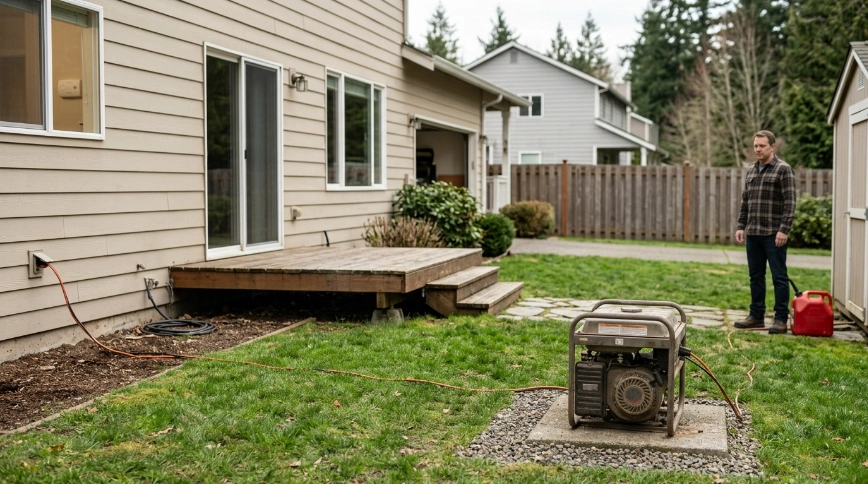
Always troubleshoot a combustion generator outdoors with the exhaust directed away from buildings. Carbon monoxide is colorless and odorless, so smell cannot tell you whether the area is safe.
The U.S. Consumer Product Safety Commission says portable generators should operate outside at least 20 feet from homes, with exhaust facing away.
- Never run a generator inside a home or garage.
- Don’t run it on a porch or in a carport.
- Keep the exhaust pointed away from doors, windows, and vents.
- Keep the generator dry while following the manufacturer’s weather guidance.
- Let the engine cool before refueling.
- Keep gasoline away from flames, cigarettes, and sparks.
The CDC’s carbon monoxide guidance also recommends using battery-powered or battery-backup CO detectors inside the home.
For a deeper setup checklist, see my portable generator carbon monoxide safety guide.
When Should You Stop Troubleshooting and Call a Technician?
Basic fuel, oil, battery, filter, and spark-plug checks are reasonable for many owners. Internal engine, high-voltage, and persistent fuel-system faults deserve more caution.
I would stop DIY troubleshooting in these situations:
- The generator leaks gasoline.
- Wiring insulation is melted or burned.
- The engine is mechanically locked.
- The recoil starter cannot turn the engine.
- There is no spark after simple plug and connection checks.
- Compression appears low.
- The generator repeatedly blows a fuse.
- A CO shutdown warning will not clear after correct outdoor placement.
- You need to troubleshoot live 120- or 240-volt circuits.
At that point, a qualified small-engine or generator technician can test the ignition, compression, starter, safety circuits, and carburetor without relying on guesswork.
Useful Tools for Diagnosing Generator Starting Problems
You don’t need a full repair shop for basic troubleshooting. These are three items I’d rather have on the shelf before an outage begins.
🏆 Best for Spark Diagnosis
Lisle 20610 Inline Spark Tester
★★★★★ 4.8/5 practical fit
This tester connects between the spark plug and plug wire and gives a visible ignition check. I like it because it answers the spark-or-no-spark question without improvising around an exposed plug.
🔧 Best Diagnostic Meter
Klein Tools MM325 Digital Multimeter
★★★★½ 4.6/5 practical fit
The MM325 measures AC/DC voltage up to 600 volts and also handles resistance, continuity, batteries, and diodes. I mainly recommend it here for basic starting-battery and continuity checks, not live generator-output diagnosis by inexperienced users.
⛽ Best for Storage Prevention
STA-BIL Storage Fuel Stabilizer
★★★★½ 4.5/5 practical fit
STA-BIL markets this formula for protecting stored gasoline and preventing gum and varnish formation. It won’t repair an already clogged carburetor, but I see it as inexpensive prevention when gasoline will sit between outages.
Frequently Asked Questions
Why won’t my generator start after sitting for months?
Old gasoline and carburetor deposits are common suspects after long storage. Drain questionable fuel safely, add fresh manufacturer-approved fuel, verify the oil level and controls, then check the spark plug if the engine still cranks without starting.
Why does my generator have spark but still won’t start?
If spark is present, focus on fuel delivery, choke operation, airflow, compression, and shutdown systems. Confirm fresh fuel reaches the carburetor and inspect the air filter before assuming the carburetor or internal engine has failed.
Can too much oil stop a portable generator from starting?
Yes, an incorrect oil level can cause engine problems, and some designs are sensitive to oil-level conditions. Keep the generator level and fill only to the amount or dipstick level specified in the owner’s manual rather than guessing.
Why won’t my generator start with the electric starter?
A weak battery, corroded terminal, blown fuse, loose cable, starter relay, or starter motor can prevent cranking. If the engine starts normally with its recoil starter, that strongly shifts your attention toward the electric starting circuit.
Should I use starting fluid on a generator that won’t start?
I don’t recommend making starting fluid your first diagnostic step. Small engines and intake systems differ, and improper use can create fire or engine-damage risks. Check fuel, oil, choke, spark, airflow, and the manufacturer’s troubleshooting procedure first.
Final Takeaway
When a portable generator won’t start, don’t start by buying a carburetor. First identify whether it won’t crank, cranks without firing, or starts and dies.
Then work through the controls, fresh fuel, oil level, battery, spark plug, airflow, and fuel delivery in that order. Most common no-start problems reveal themselves somewhere along that path.
Once the generator runs, test it outdoors before the next outage rather than assuming today’s repair guarantees tomorrow’s start. A few minutes of preventive checking is much easier than troubleshooting by flashlight when the power is already out.
Hi, I’m Michael Turner. I own a generator workshop in the United States and founded HomeGeneratorBlog to share practical, hands-on guidance about generator installation, maintenance, troubleshooting, safety, and backup power solutions. My goal is to help homeowners make smarter, more confident decisions through clear and reliable information