10 Best Portable Generators for Caravan for 2026: Quiet, Campsite-Friendly Power
The best portable generators for caravan use right now is the Honda EU2200i, a quiet inverter generator that suits small caravans without dominating a pitch. We compared 10 portable generators on quiet operation, caravan power fit, and ease of use. Most caravan generators look similar on paper but fail on noise, starting load, or hookup fit. Whether you need weekend lights and charging, steady air-conditioning power, or quiet overnight backup, this guide gives you one clear answer.
Quick Comparison: All 10 Products Ranked
| # | Product | Best For | Rating | Badge | |
|---|---|---|---|---|---|
| 1 | Honda EU2200i | Small to mid-size caravans | 4.9/5 | Best Overall | Buy → |
| 2 | Westinghouse iGen4500DF | Caravan air conditioning | 4.8/5 | Best for AC | Buy → |
| 3 | Champion 100519 4500-Watt Dual Fuel Inverter | Dual-fuel flexibility | 4.7/5 | Best Dual Fuel | Buy → |
| 4 | Yamaha EF2200iS | Quiet, light touring | 4.7/5 | Best Quiet Alternative | Buy → |
| 5 | Predator 3500 Super Quiet Inverter | Value large inverter | 4.6/5 | Best Value | Buy → |
| 6 | WEN 56225i | Budget weekend trips | 4.6/5 | Best Budget | Buy → |
| 7 | Firman W03083 | 30-amp hookup | 4.5/5 | Best 30-Amp Ready | Buy → |
| 8 | Generac GP3500iO | Open-frame inverter | 4.5/5 | Best Open-Frame | Buy → |
| 9 | Pulsar PG2300iS | Lightweight touring | 4.4/5 | Best Lightweight | Buy → |
| 10 | DuroMax XP2300iH | Compact dual fuel | 4.4/5 | Best Compact Dual Fuel | Buy → |
How We Chose These Portable Generators
What we compared
Manufacturer specifications for 10 inverter generators: rated and starting watts, noise level, weight, outlets, fuel type, and runtime claims.
Our 3 scoring criteria
Quiet Operation, Caravan Power Fit, and Ease of Use. Ties were broken by Caravan Power Fit first, then Quiet Operation.
Specification comparison, not testing
No hands-on testing, expert consultation, or measured test result is claimed in this article. Ratings are editorial scores based on the specifications compared.
What we cut — and why
Large open-frame conventional generators were excluded when their noise, weight, or power quality made them a poor caravan fit.
What to Look for When Buying a Portable Generator for a Caravan
A caravan generator must be quiet enough for neighbours, strong enough for starting loads, and easy enough to move, store, and connect. Start with your real loads, not the headline wattage.
1. Wattage and Starting Loads
Add up running watts for lights, fridge, charger, and entertainment, then check the starting watts for air conditioning or a microwave. An inverter in the 2,200 to 4,500 starting-watt range covers many caravans, but a large air conditioner may need the upper end or a soft-start device. For a broader RV-focused comparison, see portable RV generator options.
2. Noise and Campsite Rules
Noise ratings are usually measured at quarter load, so compare like-for-like figures and check campsite quiet hours before you buy. Inverter models generally run quieter and vary engine speed with load, which also helps fuel use. If silence matters most, start with quiet generators for RV use.
3. Hookup, Outlets, and Parallel Capability
Check whether your caravan needs a 30-amp RV outlet, a standard household outlet, or an adapter, and confirm the plug type before travelling. Parallel capability lets two smaller inverters work together, which can be easier to lift than one large unit. See 30-amp RV generator choices for that hookup specifically.
4. Weight, Fuel, and Runtime
Weight matters every time you load, unload, and position the unit, so check dry weight and handle design, not just watts. Dual-fuel models add propane flexibility, while a larger tank or lower load extends runtime. Always run a generator outdoors, away from the caravan, with carbon monoxide safety in mind.

Honda EU2200i — Quiet, Portable Caravan Power
For most caravan owners, the Honda EU2200i is the simplest decision because it balances quiet inverter output, clean power for electronics, and a size one person can realistically move. Its 2,200 starting watts and 1,800 running watts suit lights, fridge, battery charging, laptops, and small appliances, though it is not the right choice for every large air conditioner. The inverter design helps protect sensitive electronics, while Eco-Throttle reduces noise and fuel use at lighter loads. The main trade-off is capacity: you must prioritise loads, or pair it in parallel for more power.
- Very quiet inverter output
- Easy one-person portability
- Clean power for electronics
- Limited for large air conditioners
- Premium positioning in its class
4.9/5
4.8/5
4.9/5
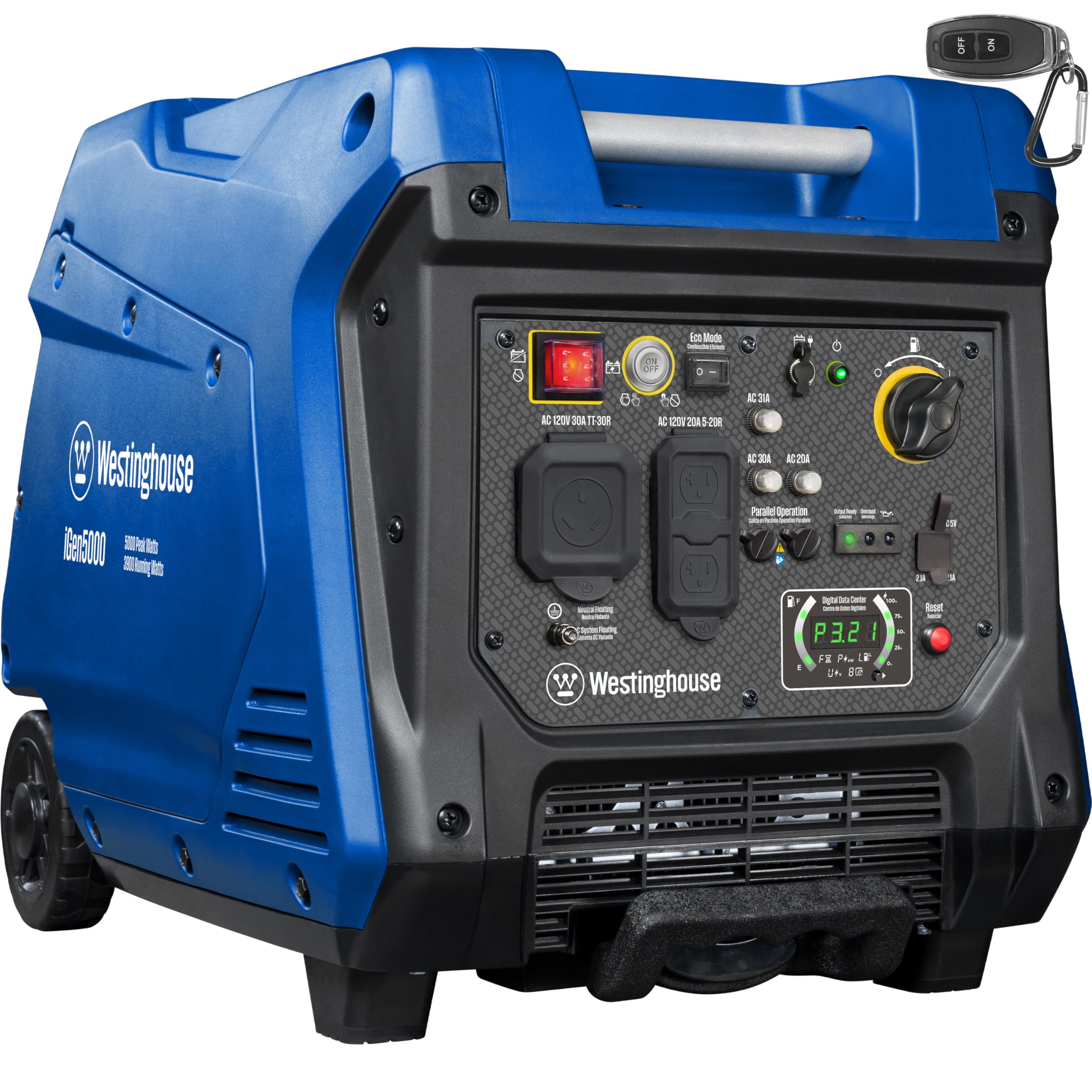
Westinghouse iGen4500DF — Dual-Fuel Caravan Air-Conditioning Power
If air conditioning is the reason you are buying, the Westinghouse iGen4500DF is the stronger caravan pick than a compact 2,200-watt inverter. It offers 4,500 starting watts and 3,700 running watts on gasoline, with dual-fuel operation for propane flexibility on longer stays. Remote start adds real convenience when the unit sits outside, and its inverter output suits electronics better than a conventional generator. The trade-offs are size and weight: it is heavier and larger to store and lift than the Honda, so check your storage space and lifting ability before choosing capacity over portability.
- Strong air-conditioner starting power
- Gasoline and propane flexibility
- Remote start convenience
- Heavier than compact inverters
- Larger storage footprint
4.7/5
4.9/5
4.7/5

Champion 100519 4500-Watt Dual Fuel Inverter — Flexible Fuel for Longer Stays
Champion’s dual-fuel inverter suits caravanners who do not want to depend on one fuel supply, especially on longer or more remote stays. With 4,500 starting watts on gasoline, it can support air conditioning, fridge, charging, and other caravan loads, while propane offers cleaner storage and an alternative when petrol is inconvenient. Electric start and an RV-ready outlet keep setup straightforward, and the inverter output is suitable for electronics. Its size and weight are the compromise: this is a lift-and-wheel unit rather than a carry-in-one-hand compact, so plan storage and positioning carefully.
- Gasoline and propane choice
- Strong starting watts
- Electric start simplicity
- Bulky for small storage
- Lower propane running watts
4.7/5
4.8/5
4.6/5
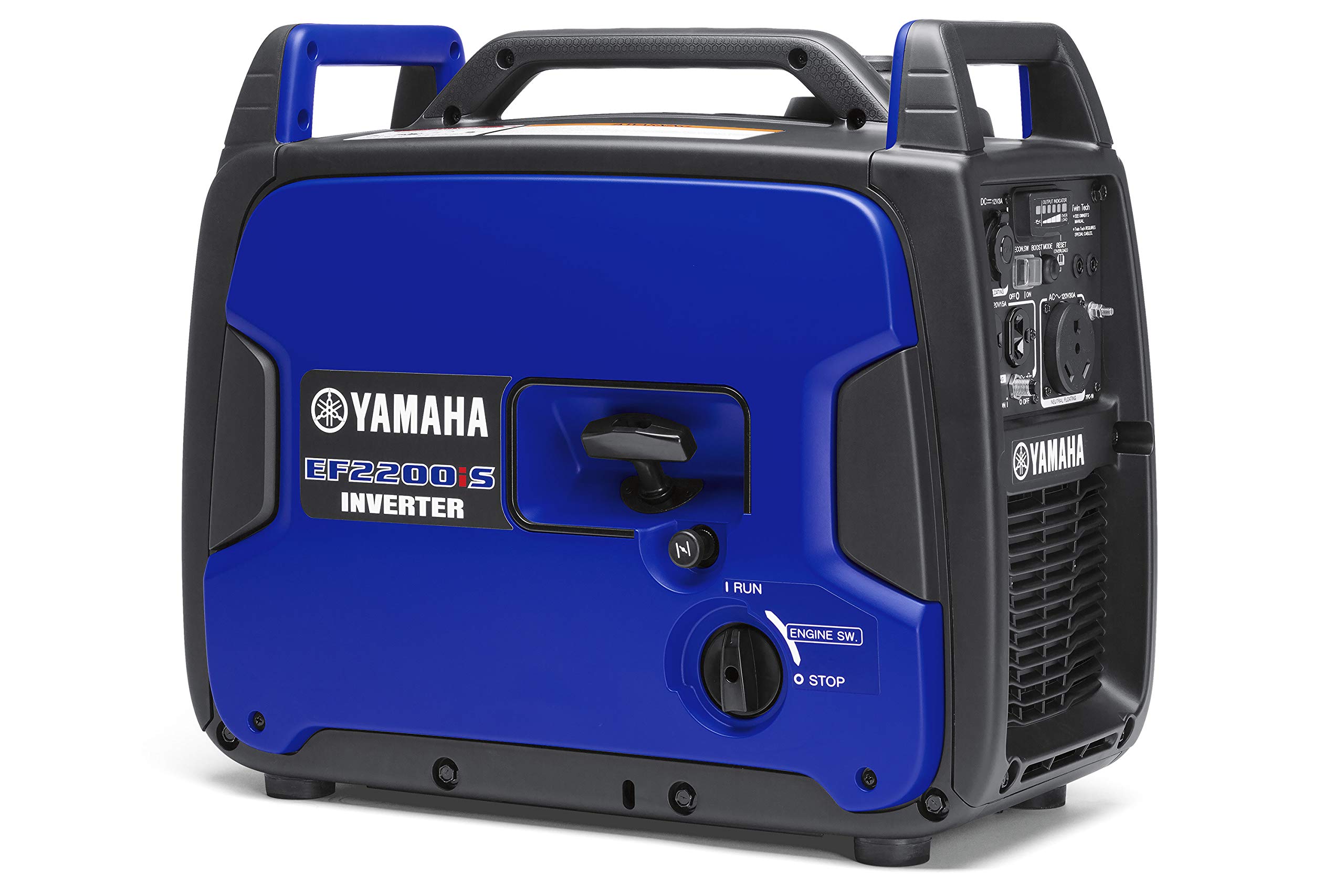
Yamaha EF2200iS — Quiet, Light Touring Alternative
The Yamaha EF2200iS is a close alternative to the Honda for caravanners who value quiet operation and easy handling above maximum capacity. It provides 2,200 starting watts and 1,800 running watts, enough for lights, fridge, charging, and small appliances, with inverter power suitable for electronics. Its smart throttle helps keep noise and fuel use down at lighter loads, and its compact size suits touring storage. Like other compact inverters, it is not the best match for a large air conditioner on its own, so check starting watts carefully or consider parallel operation.
- Very quiet at light loads
- Compact touring size
- Clean inverter power
- Limited large AC capacity
- Needs parallel for more power
4.9/5
4.5/5
4.8/5

Predator 3500 Super Quiet Inverter — Value Power for Larger Caravans
The Predator 3500 is a value-led step up from compact inverters, offering 3,500 starting watts and 3,000 running watts for caravans with heavier combined loads. Its enclosed inverter design keeps noise lower than an open-frame generator, while electric start and an RV-ready outlet simplify setup. It can support more appliances at once than a 2,200-watt model, including smaller air conditioners, depending on starting load. The compromise is weight and bulk: at around 100 pounds, it is best moved with wheels and a second pair of hands, not carried casually.
- Strong value per watt
- Electric start included
- RV-ready outlet
- Heavy to lift
- Gasoline only
4.6/5
4.7/5
4.5/5

WEN 56225i — Budget Inverter for Weekend Caravan Trips
The WEN 56225i is the budget pick for caravanners who mainly need lights, fridge, charging, and small appliances, rather than full air-conditioning power. It offers 2,250 starting watts and 1,800 running watts in a compact, relatively light inverter package, with clean power for electronics and an eco mode for lighter loads. Fuel shutoff helps protect the carburettor during storage, a useful feature for seasonal caravan use. Its limits are clear: large starting loads will overwhelm it, so prioritise loads and keep expectations realistic for the size.
- Budget-friendly compact inverter
- Fuel shutoff for storage
- Light, easy to move
- Not for large AC units
- Smaller fuel tank
4.6/5
4.4/5
4.7/5

Firman W03083 — Straightforward 30-Amp Caravan Hookup
Firman W03083 suits caravanners who want a clear 30-amp connection without extra adapters or guesswork. It provides 3,300 starting watts and 3,000 running watts, enough for many caravan loads including smaller air conditioners, subject to starting watts. Electric start, an RV-ready outlet, and wheels help with setup and movement, while inverter output suits electronics. It is heavier than compact models, so it is best treated as a wheel-to-pitch unit. Check your caravan inlet, cable, and adapter before ordering, because outlet fit matters as much as wattage.
- Clear 30-amp RV outlet
- Electric start included
- Wheels for positioning
- Heavier than compact models
- Gasoline only
4.5/5
4.6/5
4.5/5

Generac GP3500iO — Open-Frame Inverter with Caravan Capacity
The Generac GP3500iO combines an open-frame layout with inverter output, giving caravan owners 3,500 starting watts and 3,000 running watts in a design that is easier to access for maintenance. It suits mid-size caravan loads, including smaller air conditioners depending on starting watts, and provides clean power for electronics. The open frame can make it louder than enclosed inverters, so it is a better fit where campsite noise rules are less strict or distance from neighbours is greater. Check weight, outlets, and noise before choosing this style over an enclosed model.
- Accessible open-frame design
- Solid mid-size capacity
- Clean inverter power
- Louder than enclosed inverters
- Less weather-shielded design
4.3/5
4.6/5
4.5/5

Pulsar PG2300iS — Light Inverter for Touring Caravans
The Pulsar PG2300iS is for caravanners who move often and want the lightest practical inverter for essential loads. It offers 2,300 starting watts and 1,800 running watts, enough for lights, fridge, charging, and small appliances, with inverter power for electronics. Its compact size helps when storage is tight and every kilogram counts. The trade-off is capacity: it is not a large air-conditioner solution on its own, and you will need to manage loads carefully or use parallel capability where supported.
- Very light for its class
- Compact touring footprint
- Clean inverter power
- Limited for large loads
- Smaller fuel capacity
4.4/5
4.3/5
4.5/5

DuroMax XP2300iH — Compact Dual-Fuel Inverter for Small Caravans
The DuroMax XP2300iH gives small-caravan owners dual-fuel flexibility without moving to a large, heavy unit. It offers 2,300 starting watts and 1,800 running watts on gasoline, with propane as an alternative for storage and refuelling convenience. That makes it useful for lights, fridge, charging, and small appliances, while keeping the package compact enough for touring. As with other compact inverters, it is not a large air-conditioner solution on its own, so check starting watts and prioritise loads before relying on it for cooling.
- Compact dual-fuel choice
- Easy touring size
- Clean inverter power
- Limited for large AC units
- Lower propane running watts
4.4/5
4.3/5
4.5/5
Top 3 Head-to-Head: Honda EU2200i vs Westinghouse iGen4500DF vs Champion 100519
These three are the common final choices because they cover the main caravan trade-off: quiet portability, air-conditioning capacity, and fuel flexibility.
| Feature | #1 Honda | #2 Westinghouse | #3 Champion |
|---|---|---|---|
| Quiet Operation | 4.9/5 — Best | 4.7/5 | 4.7/5 |
| Caravan Power Fit | 4.8/5 | 4.9/5 — Best | 4.8/5 |
| Ease of Use | 4.9/5 — Best | 4.7/5 | 4.6/5 |
| Choose if… | You want quiet, easy touring power | You need air-conditioning capacity | You want dual-fuel flexibility |
Who These Portable Generators Are NOT For
A portable generator is not the right answer for every caravan setup, and buying one will not fix a poor electrical plan.
If you camp only on sites with electric hookup, a generator may add weight, fuel, and maintenance for little benefit. If weight is your main constraint, compare lightweight generator for RV use first. If you need silent overnight power, a battery system is usually a better fit than any fuel generator.
Common Mistakes to Avoid
Most caravan generator problems come from sizing, noise, or connection mistakes, not from the generator itself.
Frequently Asked Questions About Portable Generators for Caravans
What size portable generator do I need for a caravan?
It depends on your loads, but many caravans work with 2,200 to 4,500 starting watts. Add running watts for lights, fridge, and charging, then add starting watts for the largest motor, usually air conditioning. If you only need essentials, a compact inverter is enough. If you run air conditioning, choose the higher end or use parallel operation.
Can a portable generator run a caravan air conditioner?
Yes, if its starting watts cover the air conditioner’s startup draw. Smaller units may trip or stall, while 3,500 to 4,500 starting-watt inverters are better suited to many caravan air conditioners. For air-conditioning specifics, see RV air-conditioner generator options. Check the air conditioner rating plate and consider a soft-start device where appropriate.
Are inverter generators better for caravans?
Inverter generators are usually better for caravans because they produce cleaner power for electronics, run quieter at light loads, and adjust engine speed to demand. Conventional generators can be cheaper per watt, but they are often louder and less suitable for laptops, chargers, and caravan electronics. For most touring use, an inverter is the safer default choice.
How quiet should a caravan generator be?
Look for a quarter-load noise figure in the high-40s to high-50s dBA range, and compare figures measured the same way. A few decibels make a noticeable difference on a quiet site, and distance, barriers, and eco mode also affect what neighbours hear. Always check campsite quiet hours, because even a quiet generator may be restricted overnight.
Do I need a 30-amp outlet for my caravan?
Not always, but many North American RV-style caravans use a 30-amp connection, and a matching outlet avoids adapters and confusion. Check your caravan inlet, existing cable, and the generator outlet before buying. If your setup uses a standard household plug, a compact inverter may be enough, but confirm the plug type and cable rating first.
Can I run a portable generator at night in a caravan park?
Often no, because many parks restrict generator hours and noise, especially overnight. Even a quiet inverter can disturb neighbours in a close-packed site. Check the site rules before travelling, use battery power overnight where possible, and keep the generator outdoors, well away from sleeping areas, whenever it is running.
Is dual fuel worth it for caravan use?
Dual fuel is worth it if you tour longer, store fuel seasonally, or want a backup when petrol is inconvenient. Propane stores well and avoids some petrol storage problems, but running watts are usually lower on propane. If you only take short trips and petrol is easy to obtain, a gasoline-only inverter may be simpler and lighter.
Our Final Verdict
For most caravan owners, quiet portability matters more than maximum watts, but air conditioning changes the choice. Start with your starting loads, outlet, and campsite rules, then pick the smallest inverter that comfortably covers them.

Hi, I’m Michael Turner. I own a generator workshop in the United States and founded HomeGeneratorBlog to share practical, hands-on guidance about generator installation, maintenance, troubleshooting, safety, and backup power solutions. My goal is to help homeowners make smarter, more confident decisions through clear and reliable information