10 Best Portable Generator With Low THD for 2026: Clean Power for Sensitive Electronics
The best portable generator with low thd is the Honda EU2200i — under 3% THD in a 47.4-pound inverter. We compared 10 inverter generators against published specifications, scoring each on Clean Power Quality, Power and Runtime, and Ease of Use. Most portable generators look similar on paper but can still damage sensitive electronics with dirty power. Whether you need home-office backup, RV power, or quiet camping power, this guide gives you one clear answer.
Quick Comparison: All 10 Products Ranked
| # | Product | Best For | Rating | Badge | |
|---|---|---|---|---|---|
| 1 | Honda EU2200i Super Quiet Portable Inverter Generator | Home-office and camping electronics | 4.9/5 | Best Overall | Buy → |
| 2 | Westinghouse iGen4500 Super Quiet Portable Inverter Generator | RV and longer home backup | 4.8/5 | Best for RV Power | Buy → |
| 3 | Champion 4500-Watt Dual Fuel Portable Inverter Generator | Fuel-flexible RV and outage backup | 4.8/5 | Best Dual Fuel | Buy → |
| 4 | Yamaha EF2200iS Portable Inverter Generator | Premium compact camping power | 4.7/5 | Best Premium Compact | Buy → |
| 5 | Generac iQ3500 Portable Inverter Generator | Quiet mid-size home and RV use | 4.7/5 | Best Quiet Mid-Size | Buy → |
| 6 | Westinghouse iGen2200 Super Quiet Portable Inverter Generator | Light everyday backup and camping | 4.7/5 | Best Lightweight Backup | Buy → |
| 7 | Honda EU3000iS Portable Inverter Generator | Larger quiet home backup | 4.6/5 | Best Large Quiet Inverter | Buy → |
| 8 | Generac GP2200i Portable Inverter Generator | Compact value for small electronics | 4.6/5 | Best Compact Value | Buy → |
| 9 | WEN 56235i Super Quiet 2350-Watt Portable Inverter Generator | Ultralight camping and light backup | 4.6/5 | Best Ultralight Value | Buy → |
| 10 | Predator 3500 Super Quiet Portable Inverter Generator | Budget-sensitive electronics backup | 4.6/5 | Best Budget Inverter | Buy → |
How We Chose These Generators
What we compared
10 inverter generators, compared from published manufacturer specifications. No hands-on testing period and no expert interview were supplied, so no testing claim is made.
Our 3 scoring criteria
Clean Power Quality, Power and Runtime, and Ease of Use. Overall ratings are the rounded average of those three scores, with ties ordered by Clean Power Quality, then Power and Runtime.
Limits of this comparison
Scores are editorial estimates from specifications, not measured results. Verify the exact variant, THD figure, and outlet set before buying, as specifications can change.
What we cut — and why
Conventional open-frame generators were excluded because their THD is typically much higher than inverter models, making them a weaker fit for sensitive electronics.
What to Look for When Buying a Low-THD Portable Generator
Low THD is not a marketing word. It describes how close the output waveform is to a clean sine wave, and that closeness is what protects modern electronics.
1. THD and inverter design
Start with the published THD figure, not the word clean alone. Under 3% is the usual safe line for sensitive electronics, while under 5% is cleaner than a conventional generator but less tight. An inverter design is the usual route to that result, and comparing best inverter generators compared can help you see how capacity and noise differ at the same THD level.
2. Wattage and load sizing
Add up running watts first, then check starting watts for any motor load such as a refrigerator. A generator that is too small will trip or strain, while a much larger unit costs more and weighs more. For a laptop, router, and television, a 1,800-watt running model is often enough, but a refrigerator changes the calculation. See also generators for sensitive electronics for loads that need extra care.
3. Outlets, parallel capability, and sensitive loads
Check that the outlets match your real loads: household outlets, an RV outlet, USB ports, and parallel ports all serve different jobs. Parallel capability is useful because two smaller inverters can be paired later instead of replacing a unit that is too small. Keep cords short, dry, and rated for the load, and never run a generator indoors or in an enclosed space.
4. Runtime, fuel, and noise
Runtime figures depend on load, so compare them at the same load level, usually 25% or 50%. Dual fuel adds flexibility during a long outage, but propane running watts are often lower than gasoline running watts. Noise also rises with load, so a low-load dBA figure alone does not tell the whole story.
5. Portability and safety
Weight, handles, and wheels decide whether a generator is actually portable for you. A 39-pound inverter and a 131-pound inverter are different tools, even if both are called portable. Look for carbon-monoxide shutoff where available, keep the unit outdoors away from windows and doors, and follow the manual for grounding and refuelling.
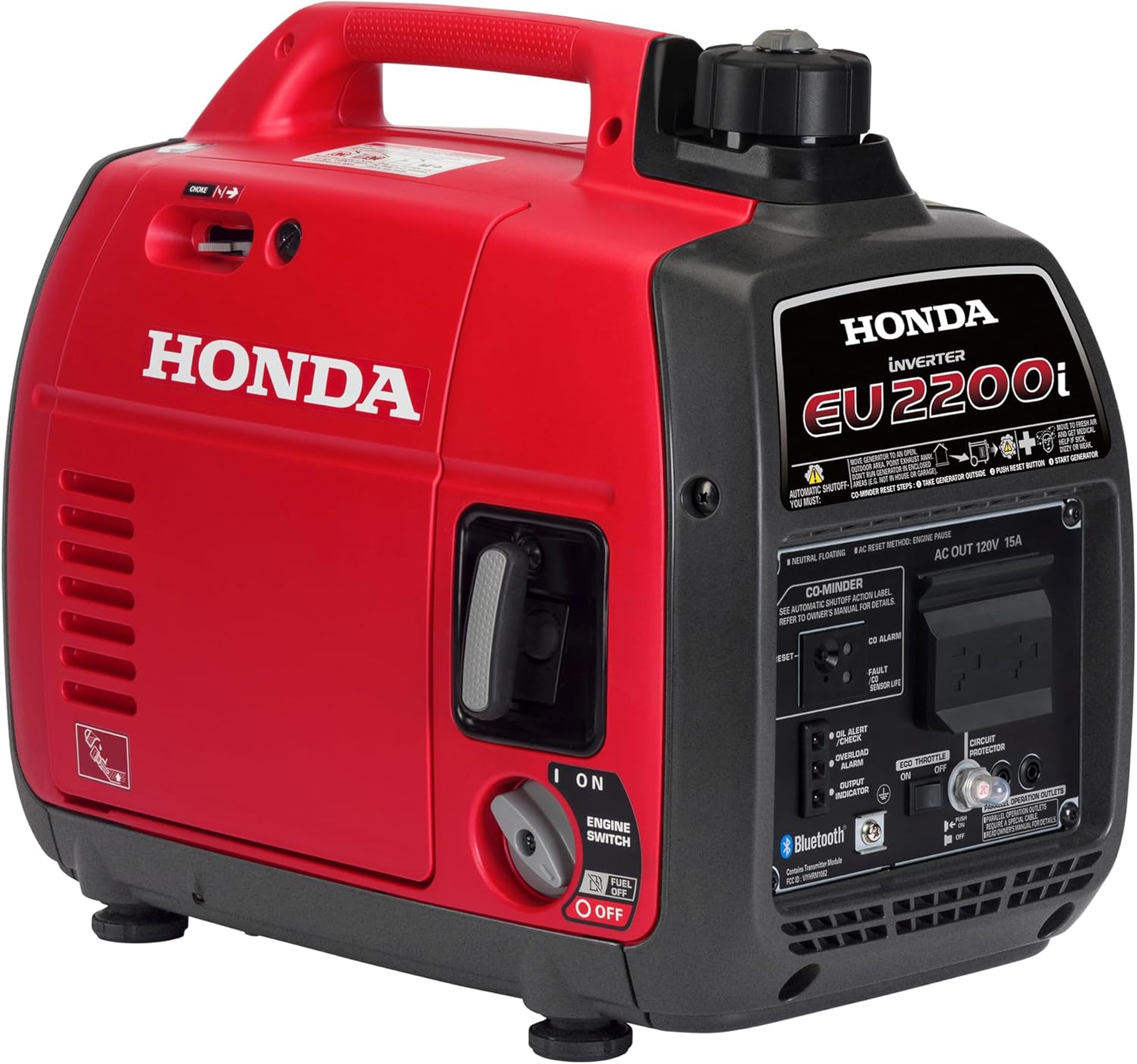
Honda EU2200i Super Quiet Portable Inverter Generator — Cleanest first choice
If your priority is clean power for a laptop, router, television, or CPAP machine, the Honda EU2200i is the safest starting point in this list. Its inverter output stays under 3% total harmonic distortion, so sensitive electronics are far less likely to face the rough waveform that conventional generators can produce. With 1,800 running watts, it covers a home office, chargers, lights, and small appliances, but it will not run a whole house. The compact, 47.4-pound design travels well, and Eco-Throttle helps stretch fuel at lighter loads. The main trade-off is capacity: larger motor loads need a bigger model or a parallel pair.
- Under 3% THD protects sensitive electronics
- Only 47.4 pounds, easy to carry
- Quiet 48 to 57 dBA range
- Only 1,800 running watts available
- Recoil start, no electric start
5.0/5
4.7/5
4.9/5

Westinghouse iGen4500 Super Quiet Portable Inverter Generator — Strong RV clean power
The Westinghouse iGen4500 is the pick when clean power also needs real capacity. It delivers 3,700 running watts at under 3% THD, which is enough for many RV air conditioners, a refrigerator, and a home office at the same time, provided the combined load is sized carefully. Remote start, an LED data display, and up to 18 hours of runtime make it easier to live with during an outage or a long trip. It is heavier and bulkier than a suitcase inverter, so it suits a fixed RV bay or garage spot better than frequent hand-carrying. For electronics plus larger essentials, it is a strong balance.
- Under 3% THD, RV-ready output
- Remote start with key fob
- Up to 18 hours runtime
- Heavier than suitcase inverters
- No dual-fuel option here
4.9/5
4.8/5
4.8/5

Champion 4500-Watt Dual Fuel Portable Inverter Generator — Flexible clean power
Champion’s dual-fuel inverter is built for buyers who want clean power without being tied to one fuel. On gasoline it offers 4,500 starting watts and 3,500 running watts, while propane gives the same starting figure with 3,150 running watts, so load planning still matters. Under 3% THD keeps laptops, televisions, and modern appliance controls in safer territory than a conventional generator would. Electric start and CO Shield add everyday convenience and a safety layer, but the unit is louder than the smallest suitcase models. If fuel flexibility matters more than whisper-quiet operation, this is the practical compromise.
- Under 3% THD on clean inverter output
- Runs on gasoline or propane
- Electric start with CO Shield
- Louder than smaller suitcase inverters
- Propane running watts are lower
4.8/5
4.9/5
4.7/5
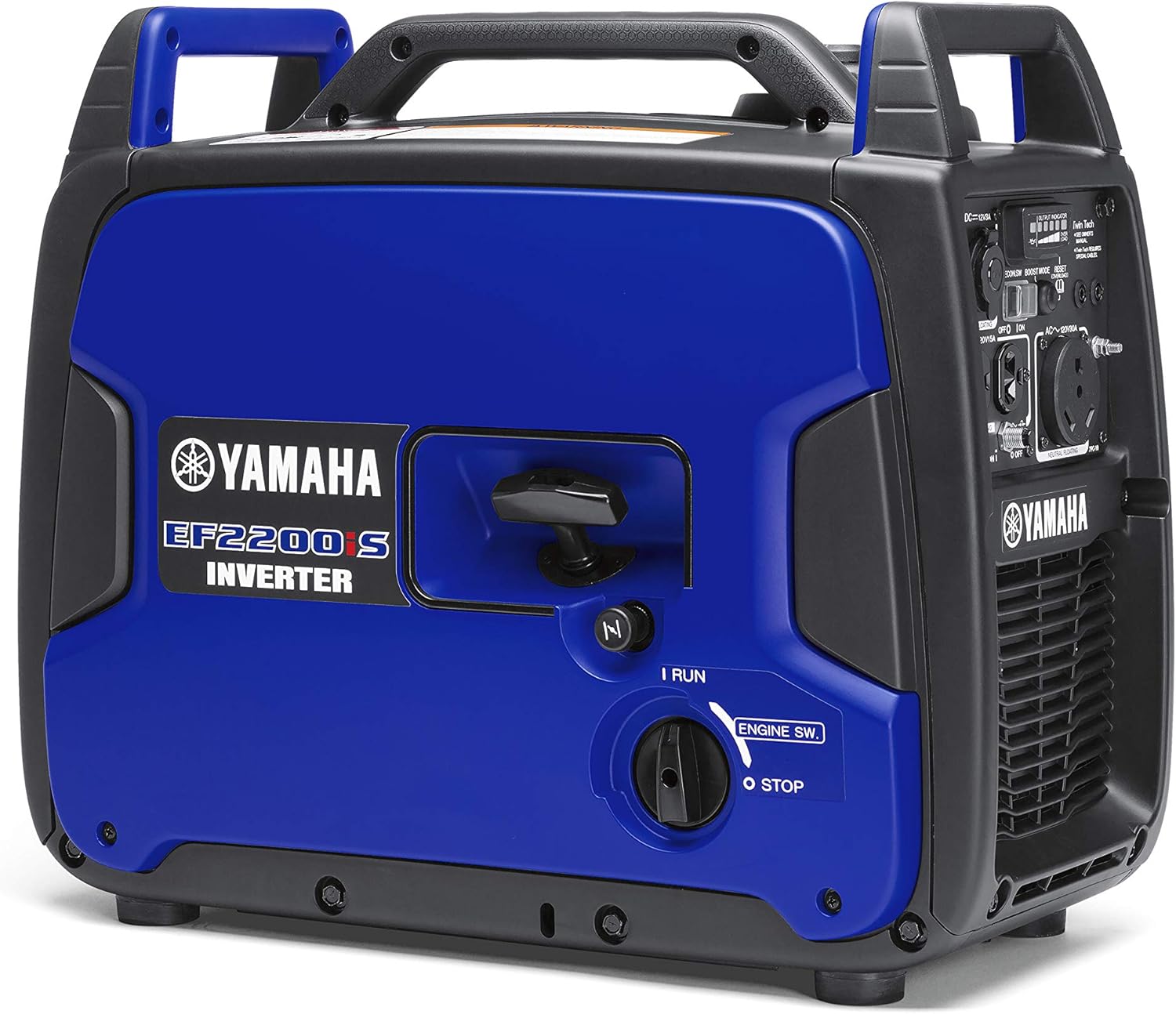
Yamaha EF2200iS Portable Inverter Generator — Cleanest compact pick
The Yamaha EF2200iS stands out for buyers who want the cleanest small-inverter output on this list. Its published THD is under 2.5%, which gives extra headroom for sensitive electronics, medical devices, and modern control boards. Like the Honda, it offers 2,200 starting watts and 1,800 running watts, so it suits a laptop setup, television, router, and CPAP machine rather than large appliances. The tri-handle design helps with carrying, although at 55.2 pounds it is heavier than its closest Honda rival. Check current availability carefully, as this model has been subject to changing retailer stock.
- Under 2.5% THD, very clean output
- Compact tri-handle carrying design
- Quiet 48 to 51.5 dBA range
- Only 1,800 running watts available
- Heavier than Honda EU2200i
4.9/5
4.5/5
4.7/5
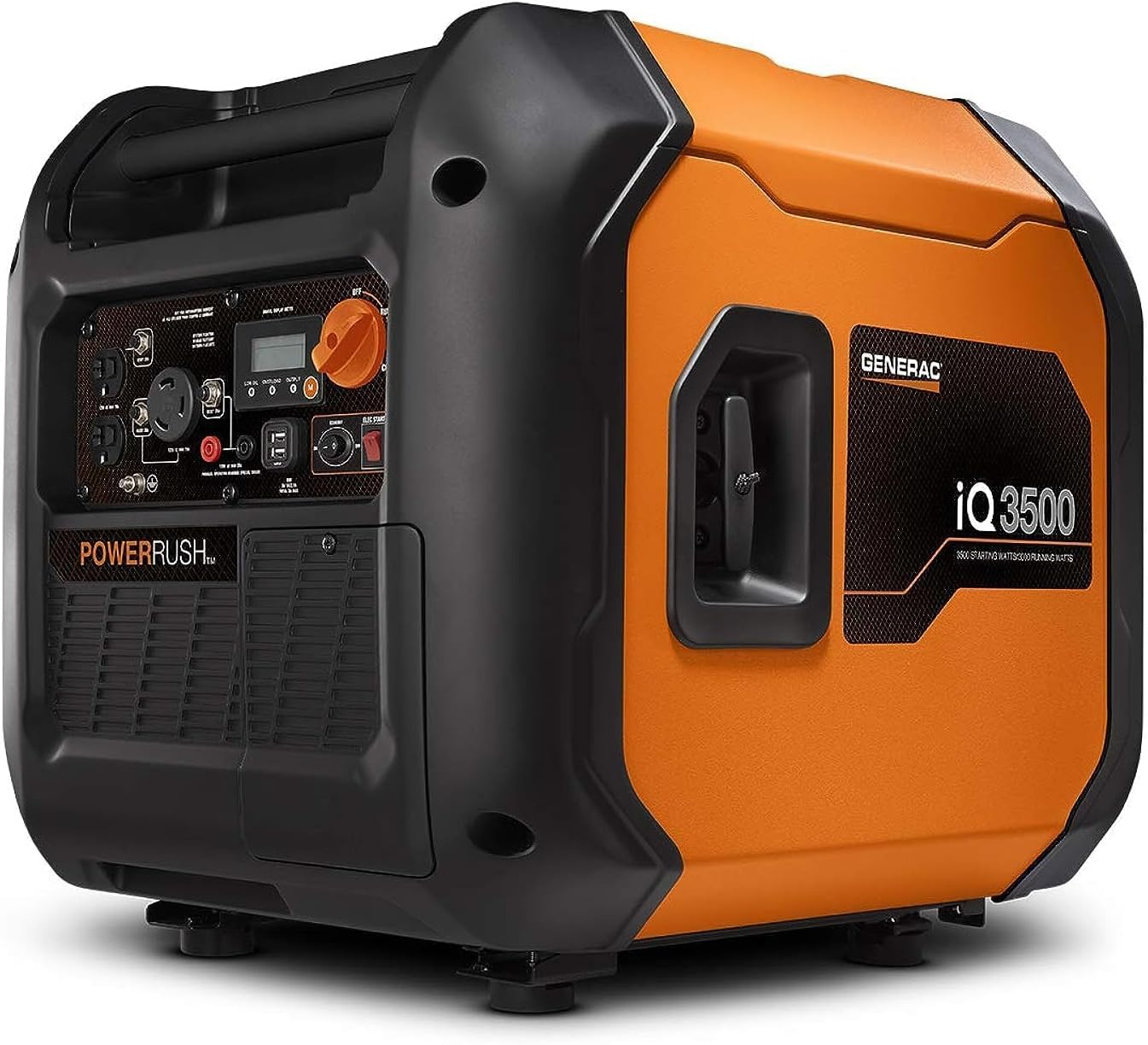
Generac iQ3500 Portable Inverter Generator — Quiet mid-size pick
Generac’s iQ3500 is a mid-size inverter that pairs clean power with a useful step up in capacity. At 3,000 running watts and under 3% THD, it can support a refrigerator, a home office, and lights together, as long as starting watts are checked first. The digital display shows wattage, remaining runtime, fuel level, and status, which removes much of the guesswork during an outage. Electric start helps, and the 14.1-hour runtime at quarter load is strong for its size. It is not a dual-fuel model and it is heavier than a suitcase inverter, but for quiet mid-size backup it is well judged.
- Under 3% THD for electronics
- Electric start, digital display
- Up to 14.1 hours at 25% load
- No dual-fuel option here
- Heavier than suitcase models
4.8/5
4.6/5
4.8/5

Westinghouse iGen2200 Super Quiet Portable Inverter Generator — Light clean backup
The Westinghouse iGen2200 is a lighter, simpler way to get clean inverter power for everyday electronics. It offers the same 2,200 starting watts and 1,800 running watts as the leading suitcase models, with under 3% THD for laptops, phones, routers, and televisions. At about 46 pounds it is easy to move between a garage, a campsite, and a vehicle, and USB outlets are handy for small devices. The trade-off is the same as with every model in this size class: it will not run large appliances or a full house. For light backup and camping, its balance of weight, noise, and clean output is hard to fault.
- Under 3% THD, clean inverter power
- Lightweight at about 46 pounds
- USB outlets for small devices
- Only 1,800 running watts available
- No electric start on base model
4.8/5
4.4/5
4.8/5

Honda EU3000iS Portable Inverter Generator — Larger quiet backup
Honda’s EU3000iS is the choice when clean power needs to last longer and run more than a small office. With 2,800 running watts at under 3% THD, it can cover a refrigerator, lights, a television, and communications gear together, subject to careful load sizing. Electric start and up to 20 hours of runtime at quarter load make extended outages less stressful. The cost of that capability is size and weight: at 131 pounds it is a wheeled, semi-permanent unit rather than a carry-anywhere inverter. If you have a dedicated storage spot and want premium quiet power, it earns its place.
- Under 3% THD, premium inverter output
- Electric start, long runtime
- 2,800 running watts available
- Very heavy at 131 pounds
- Large footprint for storage
4.9/5
4.8/5
4.0/5

Generac GP2200i Portable Inverter Generator — Compact value pick
The Generac GP2200i is a compact, value-focused inverter for buyers whose electronics load is modest. Its under 3% THD output suits laptops, routers, televisions, chargers, and a CPAP machine, while the 46.6-pound weight keeps it genuinely portable. Parallel capability is a useful escape route: pairing two units can raise capacity later without buying a much larger generator now. The limit is running power, at 1,700 watts, so a refrigerator or other motor load needs careful checking. For small, clean, portable power at a lower tier than the premium suitcase models, it is a sensible pick.
- Under 3% THD for electronics
- Lightweight at 46.6 pounds
- Parallel-ready for extra power
- Only 1,700 running watts available
- No electric start here
4.8/5
4.3/5
4.7/5

WEN 56235i Super Quiet 2350-Watt Portable Inverter Generator — Ultralight value pick
WEN’s 56235i is the lightest inverter in this roundup, and that matters if you will carry a generator to a campsite, a tailgate, or a remote cabin. At 39 pounds it still provides 1,900 running watts of low-THD inverter power for laptops, phones, lights, and small televisions. Noise is rated at 51 dBA, which is quiet for its class, and the compact size stores easily. The trade-offs are capacity and tank size: it is not the right tool for a refrigerator plus several other loads at once. For ultralight, electronics-first use, however, it is one of the easiest models to live with.
- Low-THD inverter output for electronics
- Very light at 39 pounds
- Quiet 51 dBA operation
- Only 1,900 running watts available
- Smaller fuel tank than rivals
4.7/5
4.4/5
4.8/5

Predator 3500 Super Quiet Portable Inverter Generator — Budget inverter pick
The Predator 3500 is the budget route to inverter power with useful capacity. It offers 3,000 running watts, electric start, and wheels, which makes it practical for home backup, camping, and jobsite use. Its THD is published at under 5%, which is cleaner than a conventional generator but not as tight as the sub-3% models above, so the most sensitive electronics deserve extra care and a check of the device maker’s guidance. At about 99 pounds it is also heavy to lift, although wheels help on flat ground. If budget and capacity come first, it is a reasonable compromise.
- Clean inverter power under 5% THD
- 3,000 running watts available
- Electric start, wheeled design
- THD is higher than sub-3% rivals
- Heavy at about 99 pounds
4.6/5
4.7/5
4.5/5
Top 3 Head-to-Head: Honda EU2200i vs Westinghouse iGen4500 vs Champion 4500-Watt Dual Fuel
These three are the most common final choices because they cover small, mid-size, and fuel-flexible clean power without moving to a conventional generator.
| Feature | #1 Honda EU2200i | #2 Westinghouse iGen4500 | #3 Champion 4500 |
|---|---|---|---|
| Clean Power Quality | 5.0/5 — Best | 4.9/5 | 4.8/5 |
| Power and Runtime | 4.7/5 | 4.8/5 | 4.9/5 — Best |
| Ease of Use | 4.9/5 — Best | 4.8/5 | 4.7/5 |
| Choose if… | You want the cleanest, lightest first choice | You need RV capacity and long runtime | You want gasoline or propane flexibility |
Who These Generators Are NOT For
A low-THD portable inverter is not the right tool for every backup job, even when the power is clean.
If you need a permanently installed, automatic system, a portable generator is also the wrong category. Portable units need manual setup, outdoor placement, and refuelling, while standby units are a different purchase. For smaller, electronics-first loads, portable inverter generator options remain the better comparison.
Common Mistakes to Avoid
Most low-THD problems come from sizing, placement, or trusting a label instead of a specification.
Frequently Asked Questions About Low-THD Portable Generators
What THD is safe for sensitive electronics?
Under 3% THD is the usual safe line for sensitive electronics, including laptops, televisions, routers, and modern appliance controls. It means the output waveform is close to a clean sine wave, which reduces stress on power supplies and control boards. Under 5% is cleaner than a conventional generator, but it is less tight than sub-3% models, so check the device maker’s guidance for medical or especially sensitive equipment.
Is an inverter generator always low THD?
No, not always, even though inverter generators are usually much cleaner than conventional generators. Inverter design helps produce a stable sine wave, but the published THD figure still varies by model and variant. Always check the exact THD specification for the unit you plan to buy, rather than assuming every inverter on a store page meets the same standard.
Can I run a laptop and a television from a 2,200-watt inverter?
Yes, in most cases a 2,200-watt starting and 1,800-watt running inverter can run a laptop, a television, a router, and chargers together, because those loads are relatively small. The key is total running watts, not the headline starting figure. For laptop-focused loads, laptop-ready portable generators are a useful comparison, but always add up your actual devices first.
Does low THD mean a generator is quiet?
No, low THD and low noise are different qualities, although many inverter generators happen to offer both. THD describes waveform quality, while noise is measured in dBA and rises with load. A quiet inverter can still be too small for your load, and a low-THD open-frame inverter can be louder than a suitcase model, so check both figures separately.
Should I choose dual fuel if I want clean power?
Dual fuel does not by itself make power cleaner or dirtier; THD is set by the inverter design, not by gasoline versus propane. The benefit of dual fuel is flexibility during a long outage, when one fuel may be easier to store or obtain. Just remember that propane running watts are often lower than gasoline running watts, so size the load on the fuel you expect to use most.
How do I size a low-THD generator for a CPAP machine or a refrigerator?
Start with the running watts of the CPAP machine or refrigerator, then add its starting watts if it uses a motor, and keep a margin for other must-run items. A CPAP machine alone is a small load, while a refrigerator needs a larger starting allowance. If the combined list is close to a model’s running limit, choose the next size up or stagger loads rather than running everything at once.
Our Final Verdict
Low-THD portable power is really a sizing decision once inverter quality is settled. The Honda EU2200i is the cleanest small first choice, while larger or dual-fuel models trade portability for capacity. Size on running watts, confirm the exact THD figure, and keep the unit outdoors.

Hi, I’m Michael Turner. I own a generator workshop in the United States and founded HomeGeneratorBlog to share practical, hands-on guidance about generator installation, maintenance, troubleshooting, safety, and backup power solutions. My goal is to help homeowners make smarter, more confident decisions through clear and reliable information