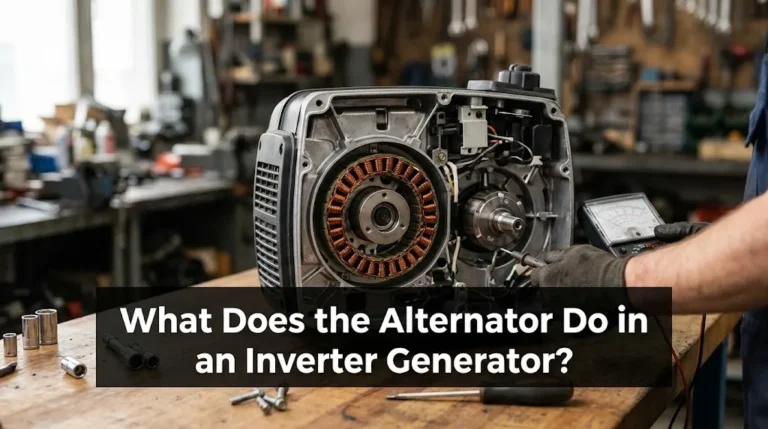
What Does an Inverter Generator Do?
An inverter generator turns fuel into clean, stable electricity for your home, RV, or campsite. It makes raw power, converts it to direct current, then rebuilds it as a smooth 120-volt sine wave. That extra step protects sensitive electronics, lets the engine slow down under light loads, and usually means quieter running and less fuel use.
What an inverter generator actually does
An inverter generator does one job: it makes usable household electricity away from a wall outlet. A small gasoline or dual-fuel engine spins an alternator, and the electronics inside clean up that power before it reaches your fridge, laptop, router, or CPAP machine.
It is not a battery. It does not store power for later, and it does not create electricity from sunlight. As long as it has fuel, oil, and air, it keeps making power. When the fuel runs out, the power stops. That distinction matters in an outage, because a power station can run silently indoors for a few hours, while a fuel generator must stay outside and keep being refueled.
The first time I ran a small inverter through a three-night outage, the thing I did not expect was how quiet it stayed when only the fridge and a lamp were on. I kept walking out to check it was still running. The fridge cycled, the lights held steady, and the laptop charged without the screen flickering I had seen on an older open-frame unit.
If you are still deciding what kind of unit fits your home, the inverter portable generator buying guide is a useful next read after this explanation.
How it makes power, step by step
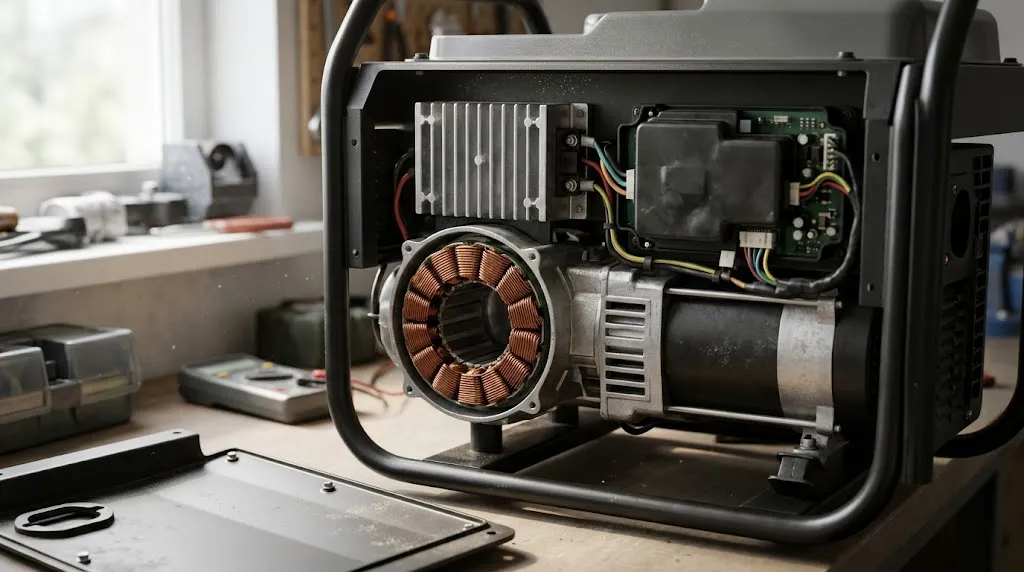
The process has three stages. None of them is magic, and each one solves a problem the previous stage creates.
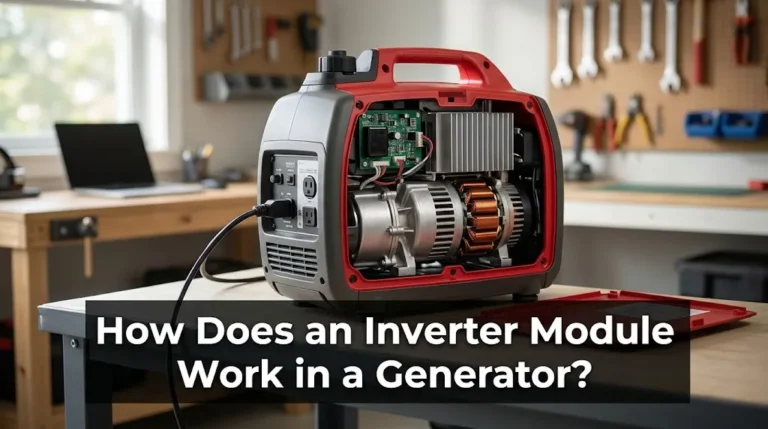
- Make raw power. The engine turns an alternator and produces high-frequency alternating current (AC). AC is the type of power that flows from a wall outlet, but at this stage it is rough and it changes with engine speed and load.
- Convert it to direct current (DC). A rectifier turns that raw AC into DC. DC is the type of power a battery supplies. It flows in one direction, which makes it easier for electronics to control.
- Rebuild clean AC. The inverter module turns DC back into AC, this time as a smooth, tightly controlled sine wave at the voltage and frequency your appliances expect, usually 120 volts at 60 hertz in the United States.
A microprocessor watches the load the whole time. Plug in a phone charger and it tells the engine to idle down. Start a fridge compressor and it tells the engine to ramp up. The electronics, not the engine speed, set the output frequency. That break between engine speed and output is the whole trick.
| Part | What it does |
|---|---|
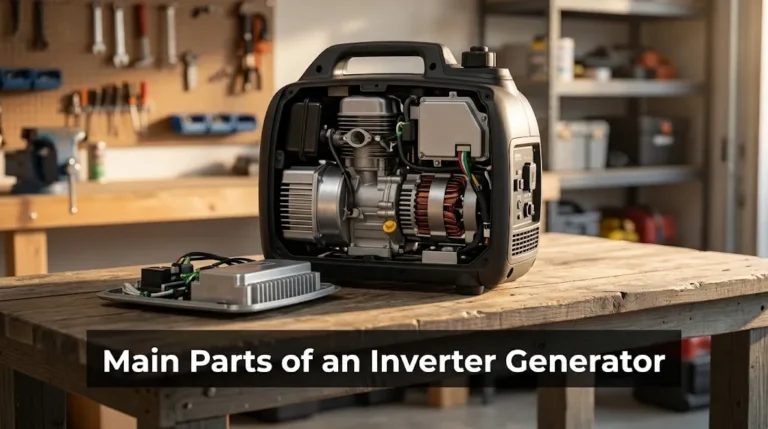
| Engine | Burns fuel and provides the mechanical power that starts the whole chain. |
| Alternator | Turns that mechanical power into raw, high-frequency AC electricity. |
| Rectifier | Converts raw AC into DC so the output can be controlled precisely. |
| Inverter module | Rebuilds DC into a clean, stable AC sine wave for your outlets. |
| Microprocessor | Senses load changes and adjusts engine speed and output to match. |
What clean power really means
Clean power does not mean green power. It means the electrical wave is close to a perfect sine wave, with steady voltage and steady frequency. The usual measure is total harmonic distortion, or THD. THD describes how far the wave strays from that perfect shape. Lower is cleaner.
Many quality inverter generators hold THD below 3 percent. That is the figure manufacturers publish most often, and it is a useful line to look for on a spec sheet. Conventional open-frame generators often run much higher, commonly in the 10 to 25 percent range depending on load and design, which can mean extra heat and stress for delicate control boards.
That is why a portable inverter generator is often the default for a modern home. Laptops, phones, routers, smart TVs, furnace control boards, and CPAP machines all rely on small electronics that expect power to behave. A rough wave will not always break them on the first night, but it raises the odds of glitches, overheating, and shortened life.
Honda describes the same AC to DC to AC process and notes that the inverter, controlled by a microprocessor, smooths and cleans the power to high-quality levels with less total harmonic distortion than a traditional generator. Generac likewise rates its portable inverters at less than 3 percent THD for clean power. Those are manufacturer explanations, not guarantees for every model, so check the spec sheet for the exact unit you are considering.
Useful sources on this point include Honda on how an inverter generator works and Generac on clean power and THD.
Inverter vs. conventional generator
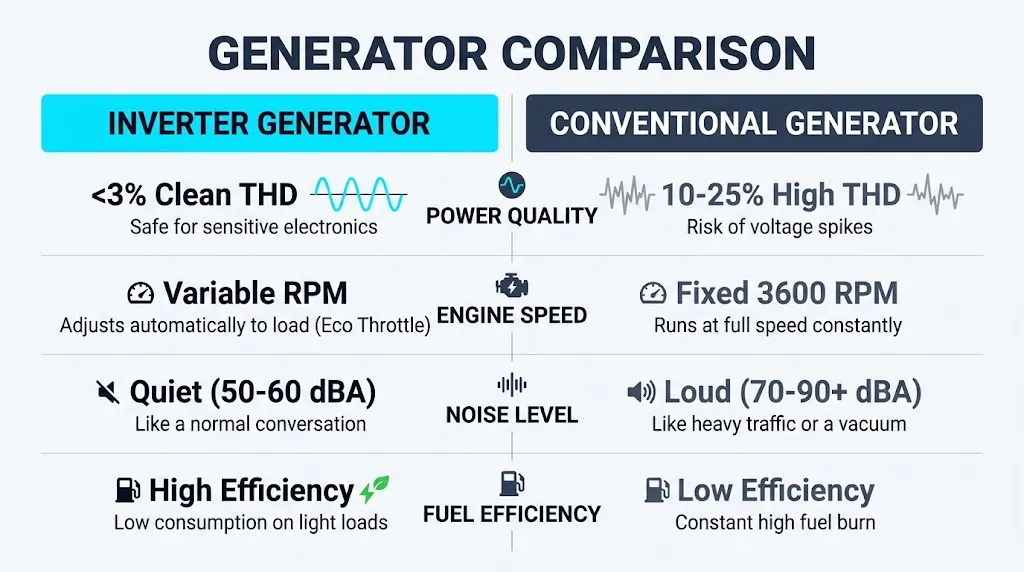
A conventional generator ties engine speed directly to output. To make 60-hertz power, it must hold roughly 3,600 revolutions per minute whether you are running a whole workshop or one lamp. An inverter generator breaks that tie. The engine can slow down because the inverter rebuilds the frequency electronically.
| Factor | Inverter generator | Conventional generator |
|---|---|---|
| Power quality | Clean sine wave, often below 3% THD | Rougher wave, often much higher THD |
| Engine speed | Varies with load | Fixed, even at light load |
| Noise | Usually quieter, especially at light load | Usually louder, with an open frame |
| Fuel use at light load | Lower, because the engine idles down | Higher, because the engine stays at full speed |
| Size and weight | Often smaller and easier to carry at the same class | Often larger and heavier for high wattage |
| Best for | Electronics, camping, RV use, home essentials | Heavy tools, large motors, high continuous load |
Conventional units still earn their place. If your main job is running a big air compressor, a welder, or several large motors at once, raw wattage per dollar can matter more than waveform polish. For most outage lists, though, the load is a fridge, lights, a router, a phone, and maybe a furnace fan. That is inverter territory.
What it can power, and where it stops
Size by running watts, not by the headline number on the box. Running watts are what the generator can sustain. Starting watts, also called surge watts, are the brief extra push a motor needs to start. A fridge might draw only 150 watts while running, then need several times that for a second when the compressor kicks on.
Here is a realistic light-outage list for a small inverter rated around 2,200 running watts:
| Item | Typical running watts |
|---|---|
| Fridge, running | 150 |
| LED lights | 40 |
| Router and modem | 20 |
| Laptop charger | 65 |
| CPAP machine, without heated humidifier | 90 |
| Phone chargers | 20 |
| Running total | 385 |
That total leaves room for the fridge start surge and for one more small load, which is the point. Add a microwave, a kettle, or a window air conditioner at the same time and the picture changes fast. Those are heat and motor loads that can each eat 1,000 watts or more. Plan in turns if you must: run the fridge, then the microwave, not both at full draw.
It will not, on its own, run a whole house the way a standby unit does. Central air conditioning, an electric range, an electric water heater, and a large well pump usually need far more power, and often 240 volts and a proper house connection. For help sizing that list, see the guide to generator size for a power outage, and check what not to plug into an inverter before you connect anything unusual.
Why the engine slows down, and why that matters
Most inverters have an eco mode, sometimes called economy or smart throttle. With it on, the engine drops to a low idle when demand is light. Fuel lasts longer. Noise drops. The unit vibrates less, and neighbors notice the difference at night.
Turn eco mode off when you start a large motor. A fridge compressor, a sump pump, or a power tool can stumble if the engine is idling too low to respond quickly. Once the load is running steadily, you can often switch eco back on. Think of it as a setting to manage, not a switch to set once and forget.
That variable speed is also why a quiet inverter generator works so well at a campsite or in a quiet neighborhood. At a quarter load, many small inverters sit in the 50 to 60 decibel range, roughly conversation level, while a conventional unit at fixed speed stays loud even when almost nothing is plugged in.
Where an inverter generator fits best
- Home outages: fridge, lights, router, phones, and a furnace fan or CPAP machine, as long as the total stays inside the running watts.
- RVs and camping: clean power for RV electronics, phone charging, and small appliances, without hauling a loud open-frame unit. See the best RV inverter generator options for size ideas.
- Remote work: a laptop, monitor, and router can run for hours on a small tank at light load, which is often cheaper and quieter than running a large generator for a tiny load.
- Medical backup: CPAP machines and medication refrigeration are common uses, but do not rely on a single portable unit as your only plan for life-critical equipment. Keep a backup battery and a backup plan, and follow your device maker’s power guidance.
- Light job-site work: battery chargers, lights, and small tools fit well. Heavy saws and compressors may need a larger conventional or open-frame inverter unit.
Parallel capability is a useful bonus on many models. Two compatible inverters can be linked with a parallel kit to share a larger load, which lets you start small and add capacity later. Check compatibility first, because not every model pairs with every other model, even from the same brand.
What it does not do
An inverter generator is not the same as a standalone power inverter. A power inverter takes DC from a battery and turns it into AC, but it makes no power itself. A solar generator, usually a battery power station with solar panels, stores power and runs silently, but it cannot refuel from a gas can. An inverter generator makes power from fuel, on demand, for as long as you keep feeding it.
It also does not make a house connection safe by itself. Plugging a generator into a wall outlet to backfeed a house panel is dangerous and can injure utility workers. A manual transfer switch or an interlock kit, installed by a licensed electrician, is the correct route for house circuits. Check local code and your utility rules before you plan that work.
Finally, it does not remove the need for maintenance. Oil, air filter, spark plug, and fuel care still decide whether it starts on the night you need it. Ethanol-free fuel or a fuel stabilizer, a monthly test run, and dry storage help more than any feature on the spec sheet. A cover helps between uses; see the best inverter generator covers for storage options.
Using one safely
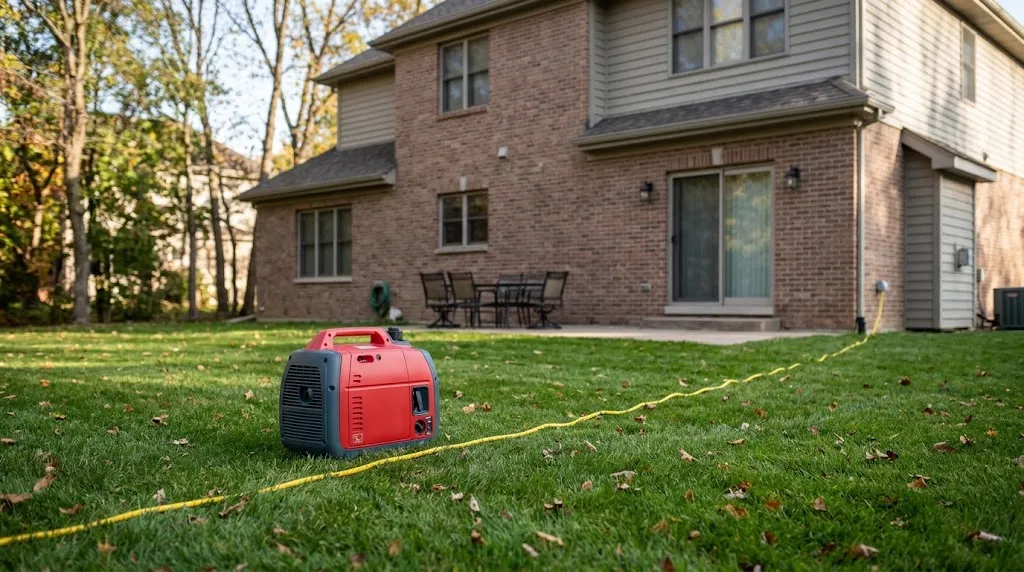
Carbon monoxide warning: every fuel generator makes carbon monoxide, a colorless and odorless gas that can kill. Inverter technology does not change that.
Run it outdoors only, at least 20 feet from the house, with exhaust pointed away from doors, windows, and vents. Never run it in a garage, even with the door open. Use a battery carbon monoxide alarm inside the house, and stop and move the unit farther away if the alarm sounds or a CO shutoff sensor trips.
Use outdoor-rated extension cords sized for the load, keep connections dry, and do not overload a single outlet. Let the unit cool before refueling, and store fuel away from living spaces in an approved container. Read the manual for grounding and GFCI guidance for your model, because requirements vary by design and by how you connect it.
Do you actually need one?
Ask three questions. First, do you run sensitive electronics during an outage, such as a laptop for work, a CPAP machine, or a modern furnace board? Second, will noise matter, because you have close neighbors, a campsite rule, or a sleeping household? Third, is your usual load light most of the time, with occasional motor starts, rather than a constant heavy draw?
If the answers are yes, yes, and light load, an inverter is usually the right tool. If your load is mostly large motors, welders, or whole-house heating and cooling, compare larger open-frame inverters, conventional portables, and standby units before you buy. The cleanest power in the world does not help if the unit trips every time the air conditioner starts.
For medical use specifically, the best generator for a CPAP machine guide covers runtime and outlet details that matter more than the headline wattage.
Conclusion
An inverter generator cleans and steadies the power it makes, so sensitive electronics can run safely while the engine works only as hard as the load demands. Add up your must-run watts, leave a margin for motor starts, and check the THD figure on the spec sheet before you buy. I am Michael Turner, and that wattage check is still the first one I do.
If you need clean, quiet backup for home essentials, a portable inverter generator is a solid place to start. Size it to your must-run list, not to the biggest number on the box.
FAQ
Can an inverter generator power a house?
It can power essential circuits and appliances, as long as the total running watts stay inside its rating and you connect them safely. It cannot usually run a whole house at once, especially central air conditioning, an electric range, and an electric water heater together. For house circuits, use a transfer switch or interlock installed by a licensed electrician.
Is inverter power safe for laptops and CPAP machines?
Yes, in most cases, because inverter output is a clean sine wave with low total harmonic distortion, often below 3 percent. That is much closer to normal wall power than a rough conventional output. Check your device manual and the generator spec sheet, and keep a backup battery for any medical device that cannot afford an interruption.
Does an inverter generator use less fuel than a regular generator?
Usually, yes at light and medium loads, because the engine slows down when demand drops instead of holding full speed all the time. At full load, the advantage shrinks, since the engine must work hard in either design. Eco mode helps most when the load is small for long stretches, such as overnight fridge and lights.
Can I run an inverter generator indoors or in a garage?
No. All fuel generators produce carbon monoxide, including inverter models. Run it outdoors only, at least 20 feet from the house, with exhaust pointed away from doors and windows. Use a carbon monoxide alarm indoors, and never rely on an open garage door or a fan to make indoor running safe.
What is the difference between an inverter generator and a power inverter?
An inverter generator makes electricity from fuel using an engine, alternator, rectifier, and inverter module. A power inverter makes no electricity itself; it converts DC power from a battery into AC power for a device. If you need power for days from fuel, you want the generator. If you need silent power for a few hours from a battery, you want a power station or inverter setup.

Hi, I’m Michael Turner. I own a generator workshop in the United States and founded HomeGeneratorBlog to share practical, hands-on guidance about generator installation, maintenance, troubleshooting, safety, and backup power solutions. My goal is to help homeowners make smarter, more confident decisions through clear and reliable information