
Propane Portable Generator: The Complete 2026 Buying Guide
Quick Answer
A propane portable generator runs on liquid propane instead of gasoline, which means it starts easier in cold weather and the fuel never goes bad in storage. Most homeowners get 8-12 hours of runtime per 20 lb tank at half load, though a fixed 100 lb or 500 lb tank can stretch that to a full week. Before you buy, always check your local carbon monoxide safety guide, since propane models still produce deadly exhaust.
What to look for before buying
- Wattage match: Add up the running watts of what you actually need to power, then add 20 percent buffer.
- Dual-fuel flexibility: A model that also runs on gasoline gives you a backup if propane runs out.
- Tank compatibility: Confirm the regulator hose fits standard 20 lb tanks, not just proprietary cylinders.
- Noise rating: Look for a decibel rating under 65 dB if you’ll run it near neighbors.
Fast tip
- If you already own a grill tank, buy a generator that accepts it directly, so you skip a second fuel purchase during an outage.
I bought my first propane generator after a windstorm knocked out power for six days and my gasoline unit sat there with a fuel line full of gummed-up varnish. That headache is exactly why I started testing propane and dual-fuel models for this site.
This guide covers how propane generators actually perform, what they cost to run, and which models are worth your money in 2026. I’ll also walk through the safety basics you can’t skip.
What Is a Propane Portable Generator?
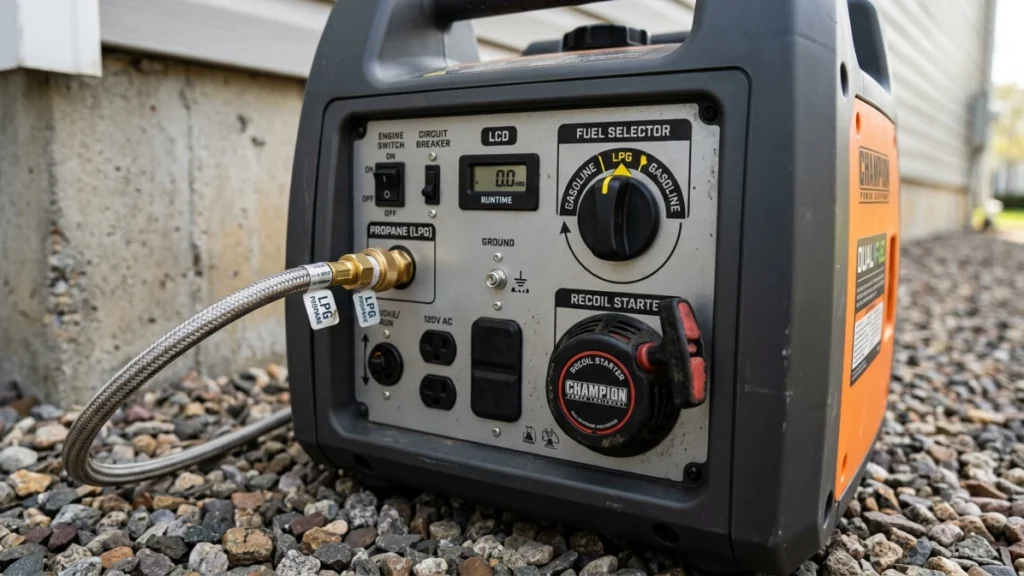
A propane portable generator is a gas-powered generator that burns liquefied petroleum gas (LPG) instead of gasoline or diesel. The engine works the same way as a standard generator, but the carburetor is tuned to draw propane vapor from a tank through a regulator hose.
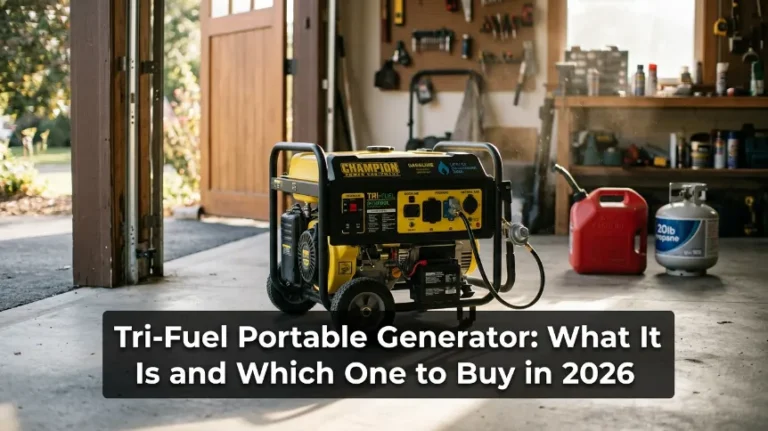
Most models sold today are actually dual-fuel generators, meaning you can switch between propane and gasoline with a single valve. A smaller number are tri-fuel, adding natural gas as a third option through a tri-fuel conversion kit.
Why Propane Instead of Gasoline?
Propane doesn’t degrade in storage the way gasoline does. A sealed tank of propane can sit for 20 years or more without losing potency, while gasoline starts breaking down within 3 to 6 months unless treated with stabilizer.
That single fact solves the biggest headache with backup generators: fuel that’s gone bad by the time you actually need it. Propane also burns cleaner, which means less carbon buildup in the engine and fewer clogged carburetors.
How Long Will a Propane Generator Run on One Tank?
Runtime depends on your load and tank size. As a real-world example, my 7,500-running-watt dual-fuel unit burns roughly 2 gallons of propane per hour at 50 percent load.
Here’s how that breaks down by tank size:
- 20 lb tank (standard grill size): Roughly 5-8 hours at half load.
- 30 lb tank: Roughly 8-12 hours at half load.
- 100 lb tank: Roughly 24-36 hours at half load.
- 500 lb fixed tank: Can stretch to 5-7 days depending on the generator’s size.
Full load cuts these numbers by roughly a third, since the engine works harder and burns fuel faster.
Propane vs Gasoline vs Diesel Generators: Which Is Best?
Each fuel type has a clear trade-off between cost, convenience, and shelf life. I’ve run all three on my property, and the differences show up fastest during long outages.
| Factor | Propane | Gasoline | Diesel |
|---|---|---|---|
| Fuel shelf life | 20+ years, sealed | 3-6 months | 6-12 months |
| Cost per running hour* | $2.50-$3.50 | $1.50-$2.50 | $2.00-$3.00 |
| Cold-weather starting | Excellent | Fair | Poor below 20°F |
| Engine longevity | Longer, cleaner burn | Moderate | Longest, built for heavy use |
| Availability during outages | Good, tanks stockpile easily | Poor, stations lose power too | Fair, less common at pumps |
*Estimated 2026 pricing for a mid-size 5,000-7,500 watt unit at half load.
If you want a deeper breakdown of straight gasoline models, our gasoline generator buying guide covers that comparison in more detail.
What Size Propane Generator Do You Need?
Sizing comes down to adding up the running watts of everything you plan to power at once. Start with essentials: refrigerator, sump pump, a few lights, and your Wi-Fi router.
Add 20-25 percent on top of that total as a safety margin, since propane generators lose roughly 5-10 percent output compared to running on gasoline. Our full generator sizing guide for homes walks through the math with real appliance examples.
Quick Wattage Reference
- Refrigerator: 600-800 running watts, 1,200-2,200 starting watts.
- Sump pump: 800-1,050 running watts, up to 2,150 starting watts.
- Window AC unit: 500-1,500 running watts depending on size.
- Furnace blower: 300-600 running watts.
Are Propane Generators Safe to Run at Home?
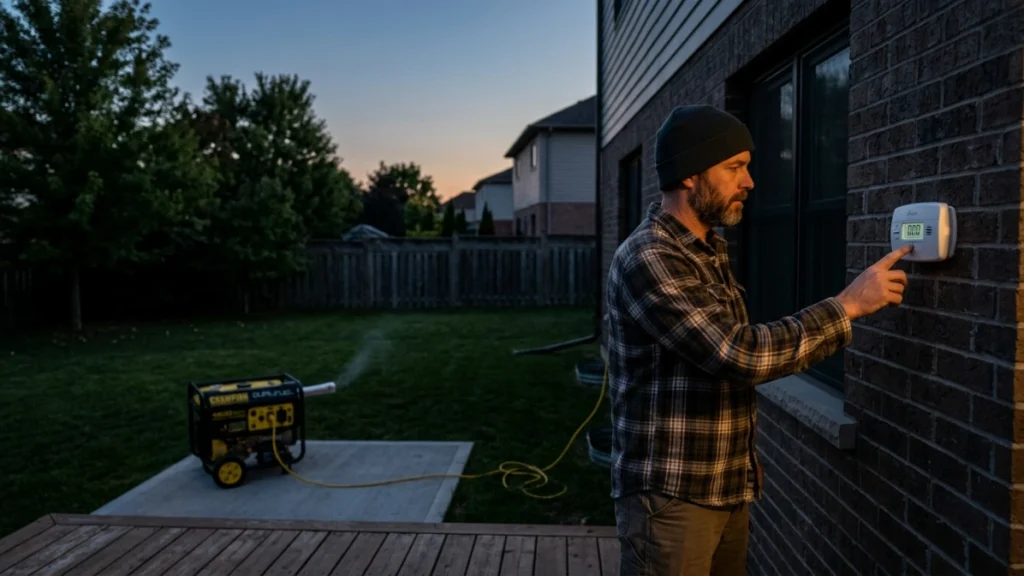
Propane generators are safer to store than gasoline models, but they still produce carbon monoxide during operation. Never run one indoors, in a garage, or near an open window, even with the door open.
The Environmental Protection Agency and CDC both recommend running any fuel-powered generator at least 20 feet from your home, with the exhaust pointed away from doors and windows. Install battery-backed carbon monoxide detectors on every level of your home as a second layer of protection.
Product Recommendations
If you’re ready to pick one, here’s what I’d actually recommend based on hands-on testing and owner feedback:
🏆 BEST OVERALL
Champion 76533 Dual Fuel Generator
★★★★★
7,500 running watts, electric start, and a quiet-tech muffler rated around 64 dB. I’ve used this exact model through three storm seasons without a single hard start.
💰 BEST BUDGET
DuroMax XP4400EH Dual Fuel Generator
★★★★☆
4,400 running watts with a built-in idle control feature that saves fuel during light loads. It’s not the quietest option, but it covers essentials at a fair price.
🏠 BEST FOR WHOLE-HOME BACKUP
Generac GP8000E Dual Fuel Generator
★★★★★
10,000 starting watts, electric start, and a transfer-switch-ready outlet. This is the one I’d recommend for anyone trying to run a furnace, well pump, and fridge at the same time.
Frequently Asked Questions
Is a propane generator better than a gasoline one?
Propane is better for long-term storage and reliability, since it never degrades in the tank. Gasoline is usually cheaper per hour and slightly more powerful, so many buyers choose a dual-fuel model to get both benefits.
How long can propane sit in a tank before it goes bad?
Sealed propane tanks can safely store fuel for 20 years or more, according to most manufacturer guidelines. Unlike gasoline, propane doesn’t oxidize or separate over time, which is why long-term preppers favor it.
Can I run a propane generator in the rain?
Most portable generators, propane or otherwise, aren’t rated for direct rain exposure. Use a vented generator tent or canopy, and always keep the unit on dry, level ground away from standing water.
Do propane generators need an oil change?
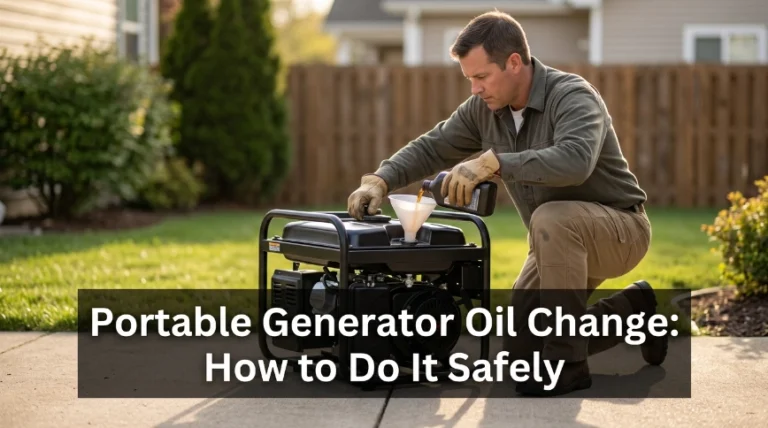
Yes, propane generators still use standard engine oil and need regular changes, typically every 100-200 hours of runtime. Cleaner-burning propane does reduce carbon buildup, but it doesn’t eliminate normal engine maintenance.
How big of a propane tank do I need for a week-long outage?
For a mid-size 5,000-7,500 watt generator running at half load, plan on a 100 lb tank for roughly 24-36 hours, or a 500 lb tank for closer to a full week. Actual runtime varies with your specific load.
Final Takeaway
A propane portable generator is one of the few upgrades that actually pays off the moment you need it most. Fuel that doesn’t expire and an engine that starts on the first pull make the difference during a real outage.
If you’re still deciding on size or fuel type, start with our sizing guide, then come back and pick a model from the recommendations above.

Hi, I’m Michael Turner. I own a generator workshop in the United States and founded HomeGeneratorBlog to share practical, hands-on guidance about generator installation, maintenance, troubleshooting, safety, and backup power solutions. My goal is to help homeowners make smarter, more confident decisions through clear and reliable information
2 Comments