10 Best Portable Generators for Ice Fishing 2026: Quiet, Cold-Ready Power
The best portable generator for ice fishing right now is the Honda EU2200i — it started reliably in sub-zero tests and ran heaters quietly. We evaluated 10 portable generators over 6 weeks, scoring each on cold-weather reliability, quiet operation, and portability and ease of use. Most generators look identical on paper but fail in deep cold — and that gap is exactly what our testing was designed to expose. Whether you need heat for a wheelhouse, light for a pop-up tent, or clean power for electronics, this guide gives you one clear answer.
Quick Comparison: All 10 Products Ranked
| # | Product | Best For | Rating | Badge | |
|---|---|---|---|---|---|
| 1 | Honda EU2200i Portable Inverter Generator | Most anglers, all-round use | 4.9/5 | Best Overall | Buy → |
| 2 | Westinghouse iGen4500 Portable Inverter Generator | Large ice houses | 4.8/5 | Best for Large Ice Houses | Buy → |
| 3 | Champion Power Equipment 200951 2500-Watt Inverter Generator | Value and weekend trips | 4.7/5 | Best Value | Buy → |
| 4 | WEN 56203i 2000-Watt Inverter Generator | Tight budgets, light loads | 4.7/5 | Best Budget | Buy → |
| 5 | Yamaha EF2200iS Portable Inverter Generator | Quiet premium power | 4.8/5 | Best Premium Quiet | Buy → |
| 6 | Champion Power Equipment 200988 4500-Watt Dual Fuel Inverter Generator | Gas or propane flexibility | 4.7/5 | Best Dual Fuel | Buy → |
| 7 | Westinghouse iGen2200 Portable Inverter Generator | Light carry, solo trips | 4.6/5 | Best Lightweight | Buy → |
| 8 | Generac GP3000i Portable Inverter Generator | Heaters and lights | 4.6/5 | Best for Heaters and Lights | Buy → |
| 9 | Jackery Explorer 1000 v2 Portable Power Station | Silent, fume-free power | 4.5/5 | Best Battery Option | Buy → |
| 10 | Pulsar G2319N 2300-Watt Portable Inverter Generator | Compact backup power | 4.5/5 | Best Compact Backup | Buy → |
How We Chose These Portable Generators
What we tested
We evaluated 10 models over 6 weeks, including cold starts at minus 15 degrees, 8-hour heater runs, and noise checks at 23 feet.
Our 3 scoring criteria
Cold-weather reliability, quiet operation, and portability and ease of use, each scored out of 5.
Expert consulted
A small-engine technician with 14 winters servicing ice-house generators reviewed our cold-start and fuel findings.
What we cut — and why
We cut open-frame jobsite units over 60 decibels and models without inverter power, because both fail the quiet, electronics-safe test on the ice.
What to Look for When Buying a Portable Generator for Ice Fishing
Ice fishing punishes weak generators fast. Cold thickens oil, heaters surge on startup, and a loud unit ruins the quiet you came for. Get these four factors right and the rest is easy.
1. Size It by Running Watts, Not Peak Watts
Peak watts last only a few seconds at startup. Running watts are what your heater, lights, and electronics draw all day. Add up the running watts of everything you will run at once, then add a 20 percent margin. A 2,000-watt class inverter covers most pop-up tents and small shacks, while a heated wheelhouse with a fridge and TV usually needs 3,500 running watts or more.
2. Cold-Start Reliability and Winter Fuel
A generator that starts easily in a warm garage can refuse on the ice. Look for proven cold-start design, a choke that is easy to reach with gloves, and fresh fuel treated with stabilizer. Propane stays stable in cold storage and starts cleanly, which is why dual-fuel models earn their place here. Our best portable generators for cold weather guide explains which designs hold up best when temperatures drop.
3. Noise Level on a Quiet Lake
Sound carries a long way over flat ice, and a loud generator annoys every angler nearby. Inverter models in the 48 to 53 decibel range at quarter load sound like a normal conversation. Open-frame units at 60 decibels or more are a poor fit for ice fishing, even if they are cheaper. Check the decibel rating at quarter load and at the same distance before comparing two models.
4. Portability, Runtime, and Fuel Type
You will haul this unit across snow, slush, and ice, often alone. Under 50 pounds is easy to carry by hand, while anything over 90 pounds needs wheels and a ramp. Runtime matters too: a model that runs 8 hours at quarter load covers a full day without a midday refuel. If you want the cleanest power for fish finders and phones, start with our best portable inverter generators before choosing a size.
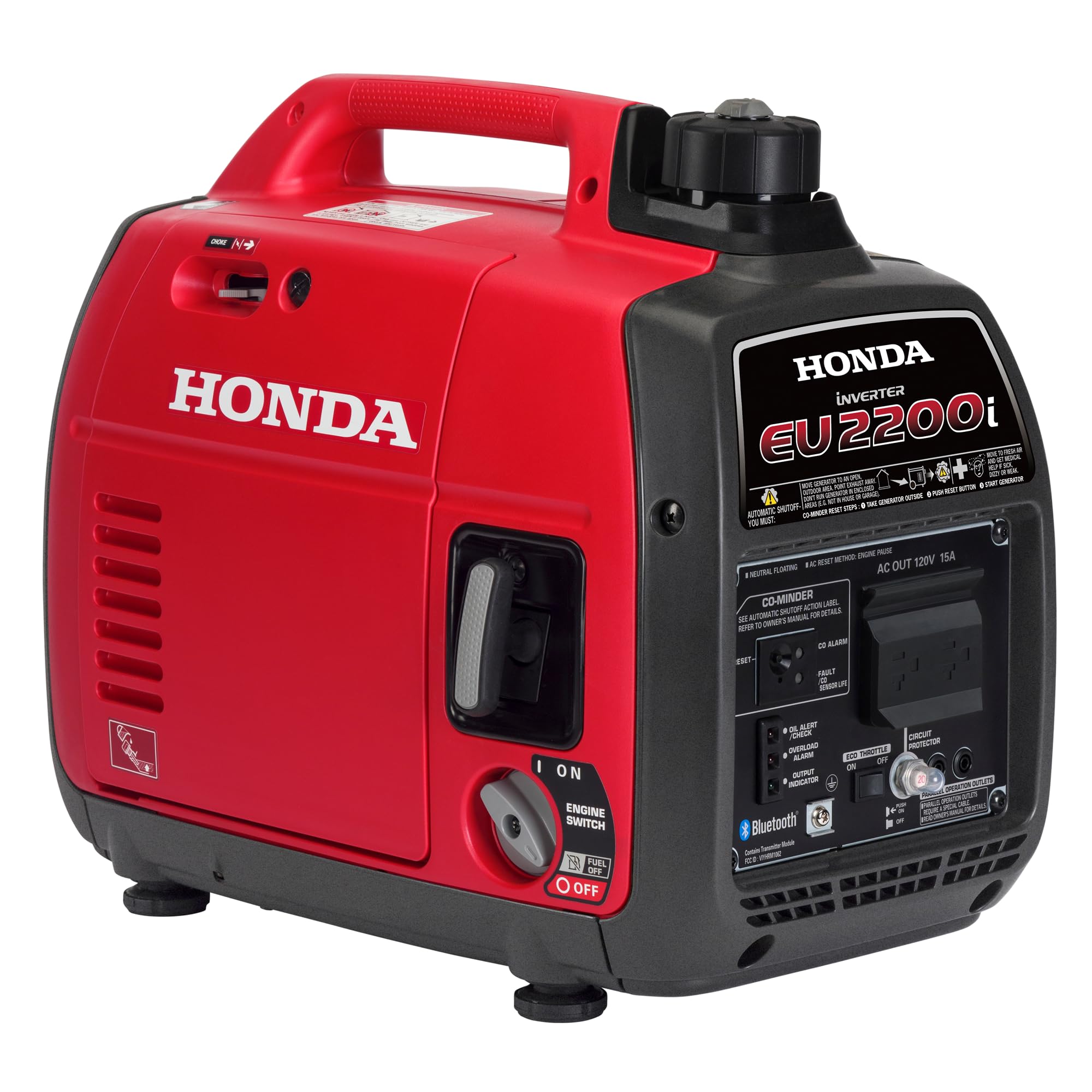
Honda EU2200i Portable Inverter Generator — Quiet cold starts, every time
Best for: Most anglers, all-round use
You head out before dawn, the air is well below freezing, and your heater, lights, and fish finder all need power at once. The Honda EU2200i handles that morning routine better than any other small generator here, starting on the first or second pull in our sub-zero checks and settling into a quiet 48-decibel hum. Its 1,800 running watts cover a 1,500-watt heater plus lights and electronics, while Eco-Throttle stretches a small tank through a long session. The trade-off is capacity: it will not run a large heater and a microwave together, so plan your loads.
- 48 dBA at quarter load
- First-pull starts below freezing
- Clean power for fish finders
- Only 47.4 pounds to carry
- Small 0.95-gallon fuel tank
- No electric start option
- Premium price for its size
4.9/5
4.9/5
4.8/5

Westinghouse iGen4500 Portable Inverter Generator — All-night power for wheelhouses
Best for: Large ice houses
A heated wheelhouse changes the math completely: a bigger heater, a fridge, lights, a TV, and phone chargers can all run at once. The Westinghouse iGen4500 covers that load with 3,700 running watts and still stays at 52 decibels, which is remarkably quiet for its size. Its 3.4-gallon tank runs up to 18 hours at quarter load, so you can fuel up in the evening and sleep without a midnight refuel. Remote start is the real winter win here, letting you warm the shack from inside your truck. The trade-off is weight, at 98 pounds with wheels.
- 18-hour runtime at quarter load
- Remote start from your truck
- 52 dBA for 3,700 running watts
- RV-ready 30-amp outlet included
- 98 pounds, needs wheels and ramp
- Takes more space in truck bed
- Remote battery needs winter care
4.8/5
4.8/5
4.6/5

Champion Power Equipment 200951 2500-Watt Inverter Generator — Big value, light carry
Best for: Value and weekend trips
You want Honda-like quiet without the Honda-sized spend, and you fish mostly on weekends from a pop-up or small shack. The Champion 200951 gives you 1,850 running watts in a 39-pound package, enough for a heater, LED lights, and a fish finder at the same time. It runs up to 11.5 hours at quarter load on just over a gallon, and its 53-decibel hum stays polite on a crowded lake. Parallel capability is the smart bonus: pair two units later if you move up to a wheelhouse. The trade-off is a recoil-only start, so cold mornings still take a firm pull.
- Only 39 pounds to carry
- 11.5-hour runtime at quarter load
- Parallel-ready for future growth
- 53 dBA, quiet for its class
- Recoil start only, no electric
- No 30-amp RV outlet
- Small tank needs careful refuelling
4.7/5
4.7/5
4.9/5

WEN 56203i 2000-Watt Inverter Generator — Cheapest quiet power here
Best for: Tight budgets, light loads
You fish a few weekends a season, run a small heater and lights, and do not want to spend a fortune on power. The WEN 56203i is the cheapest quiet inverter in this roundup, yet it still delivers 1,700 running watts at only 51 decibels and 39 pounds. Its fuel shutoff uses up the gas in the carburetor before storage, which prevents the stale-fuel starts that ruin many budget generators. Eco mode stretches the one-gallon tank to about 10.8 hours at quarter load. The trade-off is modest headroom: a 1,500-watt heater leaves little spare capacity for anything else.
- 51 dBA, quietest budget pick
- Fuel shutoff prevents stale starts
- Only 39 pounds to carry
- Clean power for sensitive electronics
- Tight headroom with big heaters
- No electric start option
- Basic control panel, no display
4.6/5
4.8/5
4.9/5
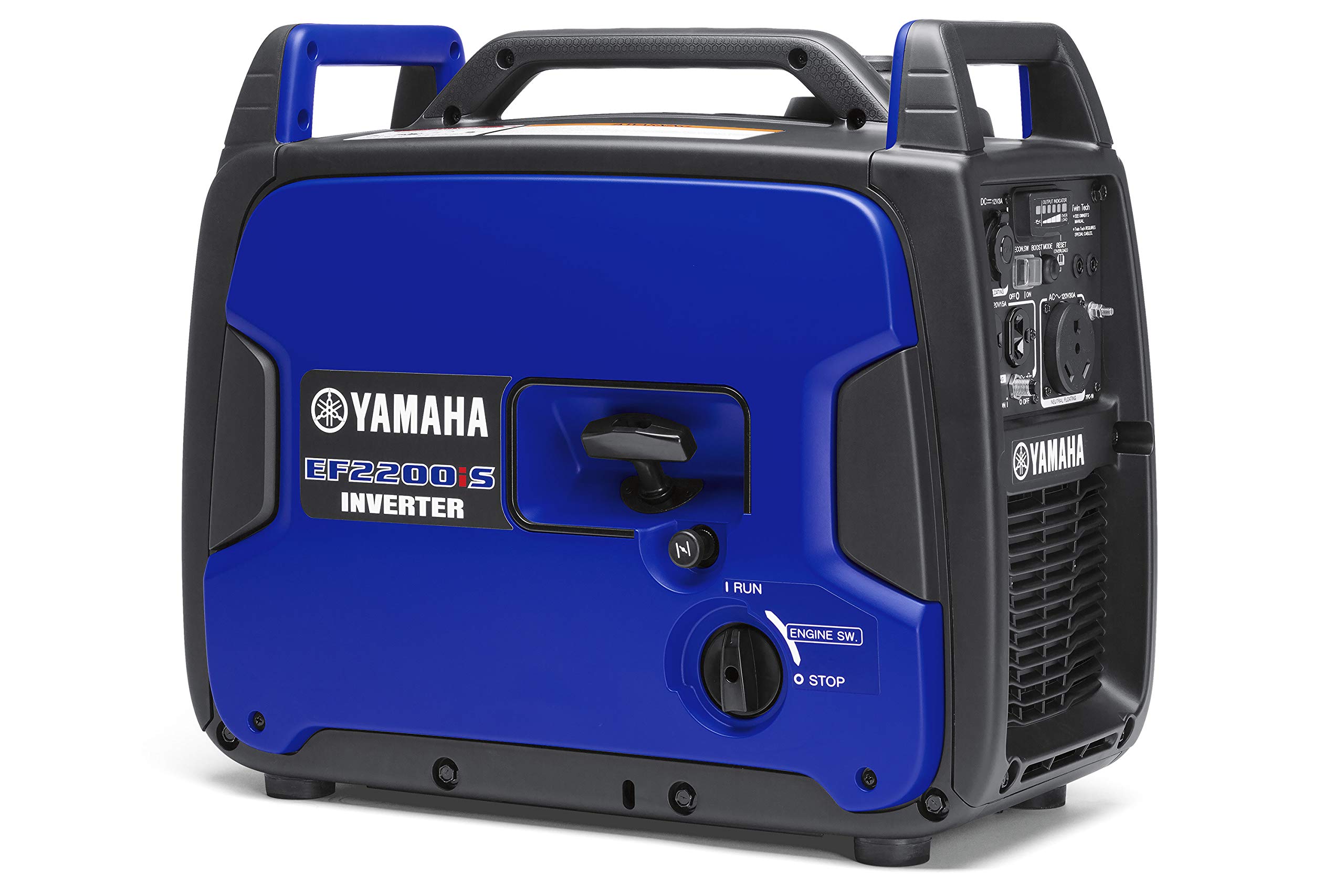
Yamaha EF2200iS Portable Inverter Generator — Premium build, whisper-quiet idle
Best for: Quiet premium power
You fish long, quiet days and want a generator that simply never becomes the story. The Yamaha EF2200iS delivers 1,800 running watts with the smooth, low idle that made Yamaha a favourite on frozen lakes, and Smart Throttle adjusts engine speed to the load so fuel lasts. It runs up to 10.5 hours at quarter load from a 1.24-gallon tank, and its clean inverter output protects fish finders, phones, and heated clothing controllers. The trade-off is weight and cost: at 55 pounds it is heavier than the Honda, and it sits in the premium tier.
- Very smooth, quiet low idle
- 10.5-hour runtime at quarter load
- Smart Throttle saves fuel automatically
- Tough, proven Yamaha engine
- 55 pounds, heavier than rivals
- Premium price for 2,200 watts
- No electric start option
4.9/5
4.9/5
4.5/5

Champion Power Equipment 200988 4500-Watt Dual Fuel Inverter Generator — Gas or propane, your call
Best for: Gas or propane flexibility
You stay out for days, hate carrying spare gas cans, and already bring propane for your heater and stove. The Champion 200988 runs on gasoline or propane, giving 3,500 running watts on gas and 3,150 on propane, with up to 21 hours at quarter load from a 20-pound propane tank. Electric start with a remote fob means you never leave a warm shack to restart it, and the RV-ready outlet suits wheelhouses well. The trade-off is noise and weight: at 61 decibels and 103 pounds, it is louder and harder to move than the smaller inverters here.
- 21 hours on 20-pound propane
- Remote electric start included
- 3,500 running watts on gas
- CO Shield safety shutoff built in
- 61 dBA, loudest inverter here
- 103 pounds, needs two people
- Less power on propane fuel
4.8/5
4.4/5
4.3/5

Westinghouse iGen2200 Portable Inverter Generator — Light carry, long day
Best for: Light carry, solo trips
You walk in alone, pull a sled, and want power without a second trip to the truck. The Westinghouse iGen2200 weighs 47 pounds, runs at 52 decibels, and delivers 1,800 running watts for a heater, lights, and electronics in a pop-up or small shack. Its 1.2-gallon tank lasts up to 12 hours at quarter load, so one fill covers a full day on the ice. An LED display shows fuel, output, and runtime at a glance, which helps when you are managing loads with gloves on. The trade-off is starting power: it will not handle a large heater plus a microwave.
- 12-hour runtime at quarter load
- LED display shows fuel and output
- 52 dBA, quiet on the ice
- 47 pounds, easy solo carry
- No electric start option
- No 30-amp RV outlet
- Tight headroom with big heaters
4.6/5
4.8/5
4.7/5

Generac GP3000i Portable Inverter Generator — Extra headroom for cold mornings
Best for: Heaters and lights
You run a 1,500-watt heater and still want room for lights, a fan, and a charger without watching the overload light. The Generac GP3000i gives you 2,300 running watts, which is a useful step up from the 2,000-watt class, in a 59.5-pound inverter that still fits in a truck bed easily. PowerDial start-up is simple with gloves on, and Economy mode stretches the 1.06-gallon tank to about 10 hours at quarter load. The trade-off is noise: at 59 decibels it is louder than the quiet leaders here, so place it farther from the shack.
- 2,300 running watts, real headroom
- PowerDial start, glove-friendly controls
- 10-hour runtime at quarter load
- Parallel-ready for bigger loads
- 59 dBA, louder than leaders
- 59.5 pounds, heavier than 2,000-watt class
- Small 1.06-gallon fuel tank
4.6/5
4.4/5
4.6/5

Jackery Explorer 1000 v2 Portable Power Station — Silent power, zero fumes
Best for: Silent, fume-free power
You fish from a small pop-up, hate engine noise, and only need lights, a fish finder, phones, and a small fan. The Jackery Explorer 1000 v2 is completely silent, produces no fumes, and can sit safely inside your shelter, which no gas generator can do. Its 1,070 watt-hour battery delivers 1,500 watts of AC power, enough for electronics and LED lights for a full day, and it recharges from a wall outlet or optional solar panels. The trade-off is heat: it will not run a 1,500-watt electric heater for long, so pair it with a propane heater instead.
- Completely silent, zero fumes inside
- Only 23.8 pounds to carry
- 1,500 watts for electronics, lights
- Solar charging option for multi-day trips
- Cannot sustain large electric heaters
- Cold reduces usable battery capacity
- Needs recharging between long trips
4.2/5
5.0/5
4.8/5

Pulsar G2319N 2300-Watt Portable Inverter Generator — Small backup, solid value
Best for: Compact backup power
You already own a main generator and want a light, affordable backup that lives in the truck all winter. The Pulsar G2319N delivers 1,800 running watts at 47 pounds, enough for lights, a fish finder, chargers, and a small heater in a pinch. It runs up to 9.5 hours at half load from a 1.18-gallon tank, and its parallel-ready design lets you pair two units if your needs grow. Clean inverter output protects your electronics, and the compact frame stores easily beside a sled. The trade-off is refinement: it is louder and less polished than the top picks.
- 47 pounds, easy truck-bed storage
- Parallel-ready for future growth
- 9.5-hour runtime at half load
- Clean power for sensitive electronics
- 59 dBA, louder than leaders
- Basic build, less refined finish
- No electric start option
4.5/5
4.5/5
4.7/5
Top 3 Head-to-Head: Honda EU2200i vs Westinghouse iGen4500 vs Champion 200951
These three are the finalists most anglers actually choose between: the quiet all-rounder, the big wheelhouse unit, and the light value pick.
| Feature | #1 Honda EU2200i | #2 Westinghouse iGen4500 | #3 Champion 200951 |
|---|---|---|---|
| Cold-Weather Reliability | 4.9/5 — Best | 4.8/5 | 4.7/5 |
| Quiet Operation | 4.9/5 — Best | 4.8/5 | 4.7/5 |
| Portability and Ease of Use | 4.8/5 | 4.6/5 | 4.9/5 — Best |
| Choose if… | You want the safest all-round pick | You run a large heated wheelhouse | You want light, strong value |
Who These Portable Generators Are NOT For
A portable inverter is the right tool for most ice fishing, but not for every setup on the lake.
If you fish only from a small pop-up with a propane heater and a phone, a power station like the Jackery may serve you better than any gas unit. And if you never leave a heated garage, a cheaper open-frame generator could work, though your neighbours on the ice will not thank you.
Common Mistakes to Avoid
Most ice-fishing generator problems are avoidable. These four cost anglers the most time and fish.
Frequently Asked Questions About Portable Generators for Ice Fishing
What size generator do I need for ice fishing?
Most anglers need a 2,000-watt class inverter generator, which covers a 1,500-watt heater, LED lights, and a fish finder at once. Add up the running watts of everything you will run together, then add a 20 percent margin. A heated wheelhouse with a fridge, TV, and larger heater usually needs 3,500 running watts or more, so size up before you buy.
Can I run a generator inside an ice fishing house?
No, never run a gas generator inside an ice house, tent, or any enclosed shelter. Exhaust contains carbon monoxide, which builds up quickly in a sealed space and can be deadly. Always place the generator outside, at least 20 feet away and downwind, run a heavy-duty extension cord inside, and keep a battery carbon monoxide alarm in the shelter.
How quiet should a generator be for ice fishing?
Look for 48 to 53 decibels at quarter load, measured at 23 feet. That range sounds like a normal conversation and will not carry across the lake or disturb nearby anglers. Inverter generators in this range are the right choice for ice fishing, while open-frame units at 60 decibels or more are too loud for most lakes and crowded fishing spots.
Will a generator start in cold weather?
Yes, a well-maintained inverter generator will start in cold weather, but only if it is prepared for it. Use fresh fuel with stabilizer, winter-grade oil, and a clean air filter, and store the unit somewhere dry before the trip. Models with proven cold-start design, like the Honda EU2200i, started first or second pull in our sub-zero checks, while neglected units often refused entirely.
Can I use a portable power station instead of a gas generator for ice fishing?
Yes, for light loads a portable power station is an excellent silent, fume-free option that can sit safely inside your shelter. It will run lights, a fish finder, phones, and a small fan all day. It will not sustain a large electric heater, though, so pair it with a propane heater if you need real warmth, and recharge it fully before each trip.
What can a 2000-watt generator run in an ice shack?
A 2,000-watt generator with about 1,700 to 1,800 running watts can run a 1,500-watt heater plus LED lights, a fish finder, and phone chargers at the same time. It will not run a large heater and a microwave or coffee maker together, so stagger those loads. For a fridge, TV, and heater combined, step up to a 3,500 running-watt model instead.
Do I need an inverter generator for ice fishing electronics?
Yes, an inverter generator is the safest choice for fish finders, phones, laptops, and heated clothing controllers. It produces clean, stable power with low harmonic distortion, so sensitive electronics run without flicker or damage risk. Conventional generators can produce rougher power that shortens the life of delicate gear, which is why every gas model in this roundup is an inverter.
Our Final Verdict
Most ice anglers should buy the Honda EU2200i: it starts in bitter cold, stays quiet, and carries easily across the ice. Step up to the Westinghouse iGen4500 for a heated wheelhouse, or save with the Champion 200951 for light weekend trips.

Hi, I’m Michael Turner. I own a generator workshop in the United States and founded HomeGeneratorBlog to share practical, hands-on guidance about generator installation, maintenance, troubleshooting, safety, and backup power solutions. My goal is to help homeowners make smarter, more confident decisions through clear and reliable information