Inverter Generator vs. Portable Power Station: What’s the Difference?
Quick Answer
An inverter generator makes power by burning fuel, while a portable power station stores power in a battery and releases it silently. Choose the generator for long run times and high-wattage loads, and choose the power station for quiet, indoor-safe, short-term use. If you want to understand how an inverter generator works, start with fuel, engine speed, and clean output.
The core difference in 15 seconds
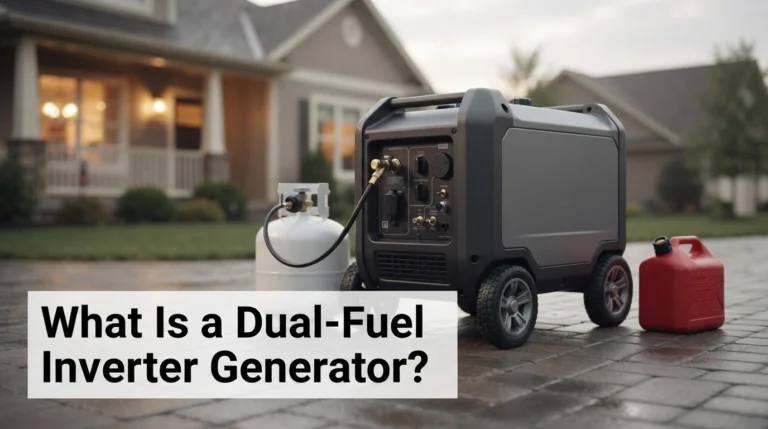
- Power source: A generator burns gasoline or propane, while a power station runs on a charged lithium battery.
- Run time: A generator runs as long as you add fuel, while a power station stops when its battery is empty.
- Noise and fumes: A generator makes noise and exhaust, while a power station is silent and fume-free.
- Indoor use: A power station is safe indoors, while a generator must always stay outdoors.
- Best for: Generators suit fridges, AC units, and multi-day outages, while power stations suit phones, laptops, lights, and CPAP machines.
My quick rule
- If you need power for hours or days, pick the inverter generator.
- If you need quiet power for a night or a work session, pick the power station.
- If you can, own both and use each where it shines.
I’ve run both side by side through outages, campsites, and RV trips. The difference became clear fast.
This guide goes deeper than a spec sheet. You’ll see how each one makes power, what it can run, how long it lasts, and which one fits your home, camper, or job site in 2026.
In This Guide
- What Is an Inverter Generator?
- What Is a Portable Power Station?
- Inverter Generator vs. Portable Power Station: Side-by-Side Comparison
- How Do They Compare on Power and Runtime?
- Which Is Quieter and Safer to Use?
- Which Is Better for Home Backup, Camping, and RV Use?
- What Do They Cost to Buy and Maintain?
- How to Choose Between Them
- Frequently Asked Questions
What Is an Inverter Generator?

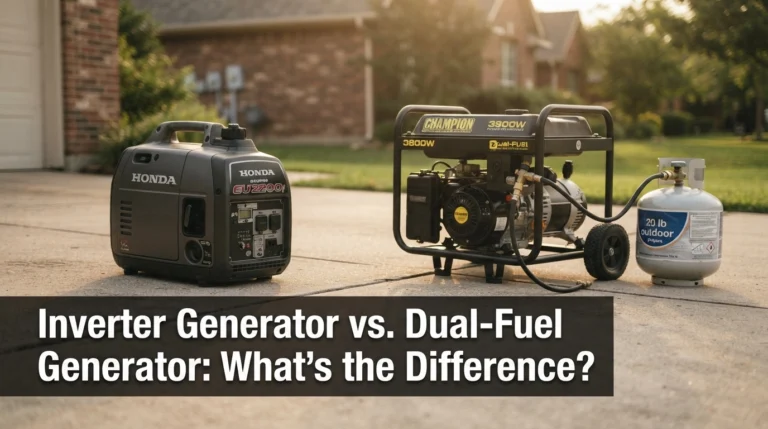
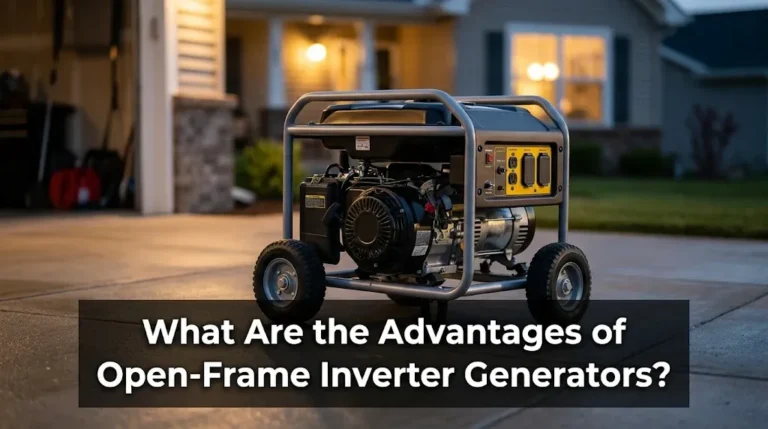
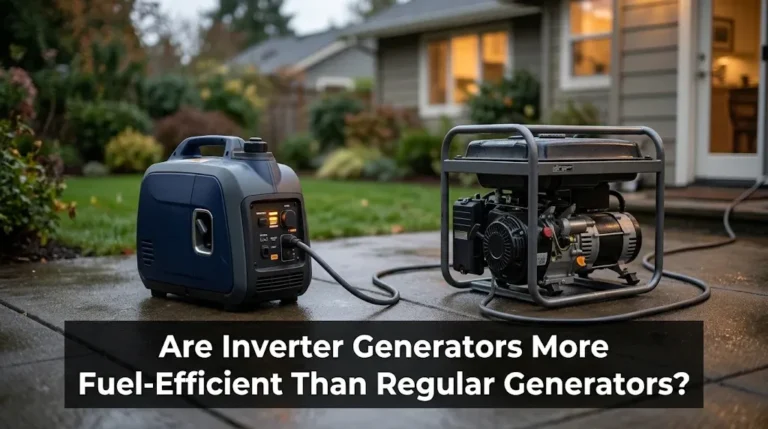
An inverter generator is a portable generator that burns fuel to make raw AC power, converts it to DC, then inverts it back to clean, stable AC power. That extra step is the whole point.
It keeps voltage and frequency steady, even when the load changes. Your fridge, laptop, and CPAP get power that stays within a tight range.
How does an inverter generator make clean power?
A small engine spins an alternator and makes rough, high-frequency AC power. Electronics then clean it up into a pure sine wave.
Pure sine wave means smooth power, like grid power. Modified sine wave can buzz, heat up, or harm sensitive electronics.
Most inverter generators also keep total harmonic distortion, or THD, low. THD measures how distorted the power waveform is, and lower is better for electronics.
- Engine: Burns gasoline, propane, or both and spins the alternator.
- Alternator: Creates raw AC power at varying speed.
- Inverter module: Converts AC to DC, then back to clean AC.
- Eco-throttle: Slows the engine under light loads to save fuel and cut noise.
I’ve watched a conventional generator surge when my window AC kicked on. My inverter generator barely flinched.
That steadiness matters for modern gear. Laptops, phones, routers, and medical devices all prefer clean power.
What sizes do inverter generators come in?
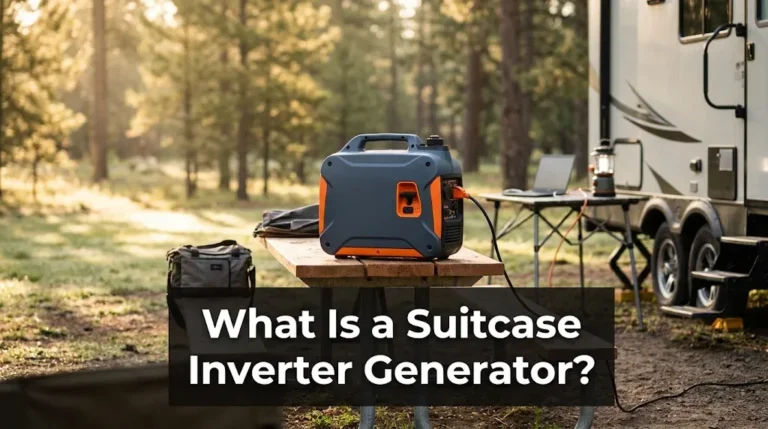
Small suitcase models run 1,000 to 2,200 watts. They suit phones, lights, and small fans.
Mid-size models run 2,500 to 4,500 watts. They can run a fridge, a microwave, or an RV air conditioner with care.
Large models run 5,000 watts and up. Some can link in parallel with a second unit for more power.
Parallel capability lets you join two matching generators with a kit. You get more watts without buying one huge, heavy unit.
If you want the full range, read about the different types of inverter generators before you shop. Size, fuel type, and outlets change the fit fast.
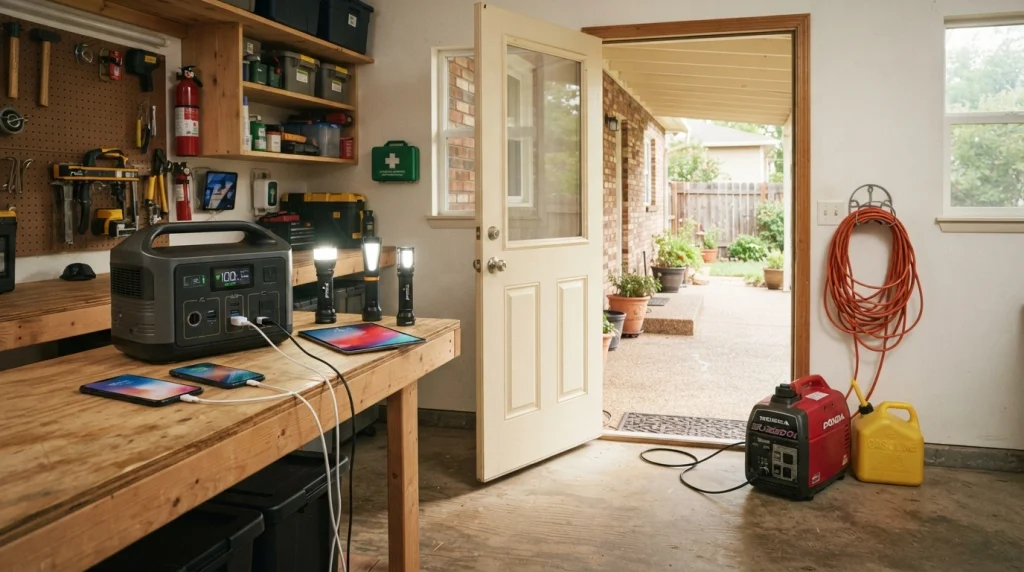
Safety note: Run generators outdoors and well away from windows, doors, and vents. Never run one in a garage, even with the door open.
Section Takeaway: An inverter generator burns fuel to make clean, stable power on demand, and it keeps running as long as you keep feeding it fuel.
What Is a Portable Power Station?
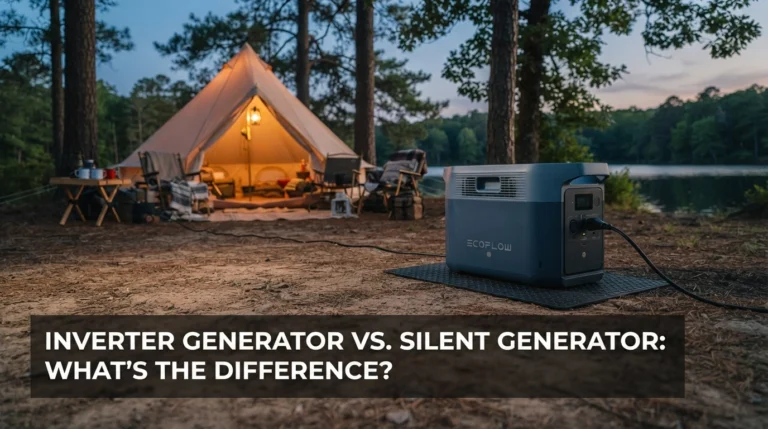
A portable power station is a large rechargeable battery with built-in outlets, an inverter, and a charge controller. People also call it a solar generator, though it makes no power by itself.
It stores energy, then releases it as AC power for your devices. No engine, no fuel, no exhaust.
How does a portable power station work?
You charge it from a wall outlet, a car outlet, or solar panels. The battery holds that energy until you need it.
When you plug in a device, the built-in inverter turns battery DC power into AC power. USB ports run phones and tablets directly.
Capacity is measured in watt-hours, or Wh. A 1,000Wh station can run a 100-watt load for about 10 hours in theory, minus losses.
- Battery: Usually lithium iron phosphate (LiFePO4) or lithium-ion, sized in Wh.
- Inverter: Turns DC into AC, rated in running watts.
- Charge ports: AC wall charging, solar input, and sometimes car charging.
- Outputs: AC outlets, USB-A, USB-C, 12V car socket, and sometimes a 30A RV outlet.
I used one overnight for a CPAP and a phone charger during a storm. It stayed silent all night.
That silence is the superpower. You can use it in a bedroom, a tent, or an apartment without fumes or noise complaints.
What can a portable power station run?
Small stations run phones, laptops, lights, fans, and routers for hours. They are ideal for work, study, and short outages.
Mid-size stations can run a mini-fridge, a CPAP, a TV, and a small microwave for a short time. Watch the starting watts on motors.
Large stations can run a full-size fridge for several hours. They still struggle with central AC, electric heaters, and large power tools.
Starting watts, or surge watts, are the brief spike a motor needs to start. Running watts are what it needs to keep going.
For a shortlist of proven options, see the best portable battery generator picks for home and camping use. Capacity and outlet mix matter more than brand name alone.
Section Takeaway: A portable power station is a silent, indoor-safe battery that gives you clean power until it runs out, then needs a recharge.
Inverter Generator vs. Portable Power Station: Side-by-Side Comparison
Put them side by side and the trade-offs jump out. One wins on endurance, the other wins on silence and ease.
Use this table to match the tool to the job, not the hype to the purchase.
| Feature | Inverter Generator | Portable Power Station |
|---|---|---|
| Power source | Gasoline, propane, or dual fuel | Rechargeable lithium battery |
| Run time | Hours to days with refueling | Hours, limited by battery size |
| Typical output | 1,000 to 7,500+ watts | 300 to 3,000+ watts |
| Noise | 50 to 65 dB at typical load | Near silent, fan only |
| Indoor use | No, outdoor only | Yes, safe indoors |
| Recharge / refuel | Minutes with a gas can | 1 to 6 hours by wall or solar |
| Maintenance | Oil, spark plug, fuel care | Very little, keep charged |
| Best for | Long outages, RV AC, job sites | Quiet nights, apartments, electronics |
Notice the pattern here. The generator trades silence for stamina.
The power station trades stamina for silence. Neither is better in every case.
Section Takeaway: The generator wins on run time and raw power, while the power station wins on quiet, clean, indoor-safe use.
How Do They Compare on Power and Runtime?
Power is about watts, and runtime is about fuel or battery. Get both wrong and you’ll overload one or drain the other.
Start with your loads, not the box label. Add running watts, then add the biggest starting spike.
What can each one actually run?
A 2,200-watt inverter generator can run a fridge, a few lights, and a phone charger at once. It will struggle with a fridge plus a microwave plus a space heater.
A 1,000Wh power station can run a 60-watt CPAP for a full night. It will drain fast on a 1,000-watt microwave or a 1,500-watt heater.
Motors need extra power to start. A fridge may need 600 watts to run but 1,200 watts to start.
- Phone charger: 5 to 20 watts, easy for both.
- Laptop: 45 to 90 watts, easy for both.
- Full-size fridge: 150 to 200 watts running, 800 to 1,200 watts starting.
- Window AC: 900 to 1,500 watts running, much higher to start.
- Microwave: 1,000 to 1,500 watts, heavy for most power stations.
Check the spec sheet for every model you consider. Do not guess starting watts from the running watts alone.
To do the math right, learn running watts vs. starting watts before you size either option. That one concept prevents most overload trips.
How long will each one last?
An inverter generator with a 1-gallon tank can run 8 to 12 hours at 25% load in eco mode. Add fuel and it keeps going.
A power station with 1,000Wh gives you about 800 to 900 usable watt-hours after inverter losses. That is roughly 8 hours at 100 watts.
Solar can stretch a power station through the day. A 200-watt panel in good sun can add meaningful charge, but clouds cut it fast.
During a three-day outage, I refueled my generator twice a day. My power station needed a full recharge after one night of fridge use.
Safety note: Let a generator cool before refueling, and store fuel in approved containers away from living spaces. Check your owner’s manual before use.
Section Takeaway: Size by starting watts first, then by runtime, and remember that fuel refills in minutes while batteries recharge in hours.
Which Is Quieter and Safer to Use?

Noise and safety often decide the purchase. They should, because they shape where you can use each one.
A quiet campsite and a safe home setup are not luxuries. They are the point.
How loud is each one?
Inverter generators are quiet for generators, but they still make engine noise. Expect roughly 50 to 60 dB at quarter load, measured at 23 feet.
That sounds like normal conversation. It still carries across a quiet campground at night.
Power stations make almost no sound. You may hear a small fan under heavy load, but nothing like an engine.
Campsite etiquette matters here. I shut my generator off at quiet hours and switched to the power station for lights and charging.
What are the safety differences?
Generators produce carbon monoxide, or CO. CO is colorless, odorless, and deadly in enclosed spaces.
Run a generator at least 20 feet from your home, with the exhaust pointing away. Use battery CO alarms inside, and follow guidance from the CDC and the Consumer Product Safety Commission on generator placement.
Power stations have no exhaust and no fuel to spill. They still need care around heat, water, and damaged batteries.
- Generator risks: CO poisoning, fuel fire, hot exhaust, and backfeeding a home panel.
- Power station risks: Overheating, overloading, and battery damage from drops or water.
- Shared rule: Never plug a generator or a large power station into a home outlet to backfeed the house.
For home hookups, use a transfer switch or interlock installed by a licensed electrician. That keeps utility workers and your home safe.
Safety note: Run generators outdoors and well away from windows, doors, and vents. Use a transfer switch or interlock installed by a licensed electrician.
Section Takeaway: A power station is quieter and safer indoors, while a generator demands strict outdoor placement and CO precautions.
Which Is Better for Home Backup, Camping, and RV Use?
The best pick changes with the setting. A home outage is not a campsite, and an RV is not a job site.
Match the tool to the place, the loads, and the rules around you.
Which is better for home backup?
For a multi-day outage, an inverter generator wins. It can run a fridge, a furnace blower, lights, and chargers for days with fuel.
For a short outage, a power station wins on ease. You carry it inside, plug in, and go with no setup or noise.
Many homes use both. The generator handles the fridge and heavy loads, while the power station handles the bedroom at night.
I ran my fridge on the generator during the day and moved my CPAP to the power station at night. That split saved fuel and sleep.
Which is better for camping and RV use?
For dry camping with an RV air conditioner, a generator is often the only practical choice. AC units need high starting watts.
For tent camping, a power station is the clear winner. It charges phones, runs lights, and powers a fan without waking the site.
For RVs with solar, a power station can cover lights and electronics all day. Add a generator for AC and battery charging on cloudy days.
Check campground rules before you go. Many sites limit generator hours or ban them in certain loops.
Which is better for sensitive electronics?
Both can be safe for laptops and phones if they make clean power. Inverter generators and quality power stations both output a pure sine wave.
Cheap power stations may cut corners on waveform quality. Cheap conventional generators are worse.
If you run medical gear, routers, or high-end audio, choose a model with low THD and a pure sine wave output. For help picking one, see the best portable generator for sensitive electronics guide.
Section Takeaway: Use a generator for long outages and RV AC, and use a power station for quiet nights, tents, and indoor electronics.
What Do They Cost to Buy and Maintain?
Price per watt can mislead you. A cheap generator and a cheap power station fail in different ways.
Look at total cost over three to five years, not just the checkout price.
What is the upfront cost?
Small inverter generators often cost $400 to $900. Mid-size models run $900 to $2,000, and large models can pass $3,000.
Small power stations often cost $200 to $600. Mid-size models run $600 to $1,500, and large models can pass $2,500.
Price ranges shift with battery size, brand, and sales. Check the spec sheet for watts, Wh, and outlets before you compare prices.
A 2,000-watt generator and a 2,000-watt power station are not equal. The generator can run 2,000 watts for hours, while the station can run it for under an hour.
What does maintenance cost?
Generators need oil changes, spark plugs, air filters, and fuel stabilizer. Stale fuel is the top cause of hard starts I see.
Run the generator monthly, use fresh fuel, and follow the break-in schedule in your manual. Store it dry or stabilized.
Power stations need almost no maintenance. Keep the battery between 20% and 80% for storage, and recharge it every few months.
- Generator upkeep: Oil, fuel, filters, and periodic test runs.
- Power station upkeep: Charge cycles, firmware updates, and safe storage.
- Lifespan: A cared-for generator can last years, while a LiFePO4 station can last thousands of cycles.
For long-term value, the U.S. Department of Energy and Consumer Reports offer useful background on backup power and energy use. Use their guidance to size and store your setup safely.
Section Takeaway: Generators cost more to maintain but deliver more energy per dollar, while power stations cost less to maintain but need a bigger battery for the same runtime.
How to Choose Between Them
Choose by your longest outage, your loudest load, and where you’ll use it. Those three answers narrow the field fast.
Don’t buy for a fantasy trip. Buy for the next real outage or campout.
Pick an inverter generator if you need long runtime and high power
Choose a generator if you need to run a fridge for days. Choose it if you need RV AC, a sump pump, or power tools.
Choose it if you have fuel storage and outdoor space. It rewards owners who maintain it and test it before they need it.
Pick a portable power station if you need quiet, indoor power
Choose a power station if you live in an apartment or a quiet neighborhood. Choose it if you need overnight CPAP, laptop, or phone power.
Choose it if you want solar charging and zero fumes. It rewards owners who keep it charged and sized to their real loads.
Consider owning both for the best backup plan
Many experienced owners keep both. The generator covers the heavy, long jobs, and the station covers the quiet, indoor jobs.
Pair a 2,000-watt inverter generator with a 1,000Wh power station. That combo covers most homes, camps, and RV trips without overbuying.
If you plan to recharge with the sun, explore portable generators with solar panels and solar-ready power stations. Panel wattage and sun hours decide how fast you refill.
Test your setup before an outage. Run your fridge on it, charge your devices, and time how long it lasts.
Safety note: Check your owner’s manual before use, and test your transfer switch, inlet, and CO alarms before storm season.
Section Takeaway: Pick the generator for endurance, pick the power station for quiet indoor use, and pair them when you want the most flexible backup plan.
Frequently Asked Questions
Can a portable power station replace an inverter generator?
It can replace a generator for short, light loads like phones, laptops, lights, and CPAP machines. It cannot match a generator for multi-day fridge use, RV air conditioning, or high-wattage tools.
Can I use a portable power station indoors?
Yes, you can use a portable power station indoors because it has no engine, fuel, or exhaust. Keep it dry, ventilated, and away from heat sources.
Can I use an inverter generator indoors?
No, never use an inverter generator indoors, in a garage, or on a covered porch. Always run it outdoors, at least 20 feet from your home, with exhaust pointing away.
Which is better for a CPAP machine?
A portable power station is often better for overnight CPAP use because it is silent and safe in a bedroom. An inverter generator works too, but it must stay outdoors with a long cord.
Can I charge a portable power station with solar panels?
Yes, most power stations accept solar input through a built-in charge controller. Check the max solar watts, voltage range, and connector type before you buy panels.
Can I run a refrigerator on a portable power station?
Yes, a large power station can run a fridge for several hours, but it will drain fast. A generator is better for keeping a fridge cold for days.
Do I need both a generator and a power station?
You do not need both, but many owners find the pair covers more situations. The generator handles long outages, while the power station handles quiet nights and indoor use.
As of 2026, the smartest backup plan is the one you have tested. Pick the tool that fits your longest outage, then test it with your real loads before you need it.
If you want a simple next step, list your must-run devices, add up their running and starting watts, and choose the option that covers them with a safety margin. Your fridge, your CPAP, and your peace of mind will thank you.

Hi, I’m Michael Turner. I own a generator workshop in the United States and founded HomeGeneratorBlog to share practical, hands-on guidance about generator installation, maintenance, troubleshooting, safety, and backup power solutions. My goal is to help homeowners make smarter, more confident decisions through clear and reliable information